

15 Stylish Bathroom Floor Tile Trends for Small Spaces
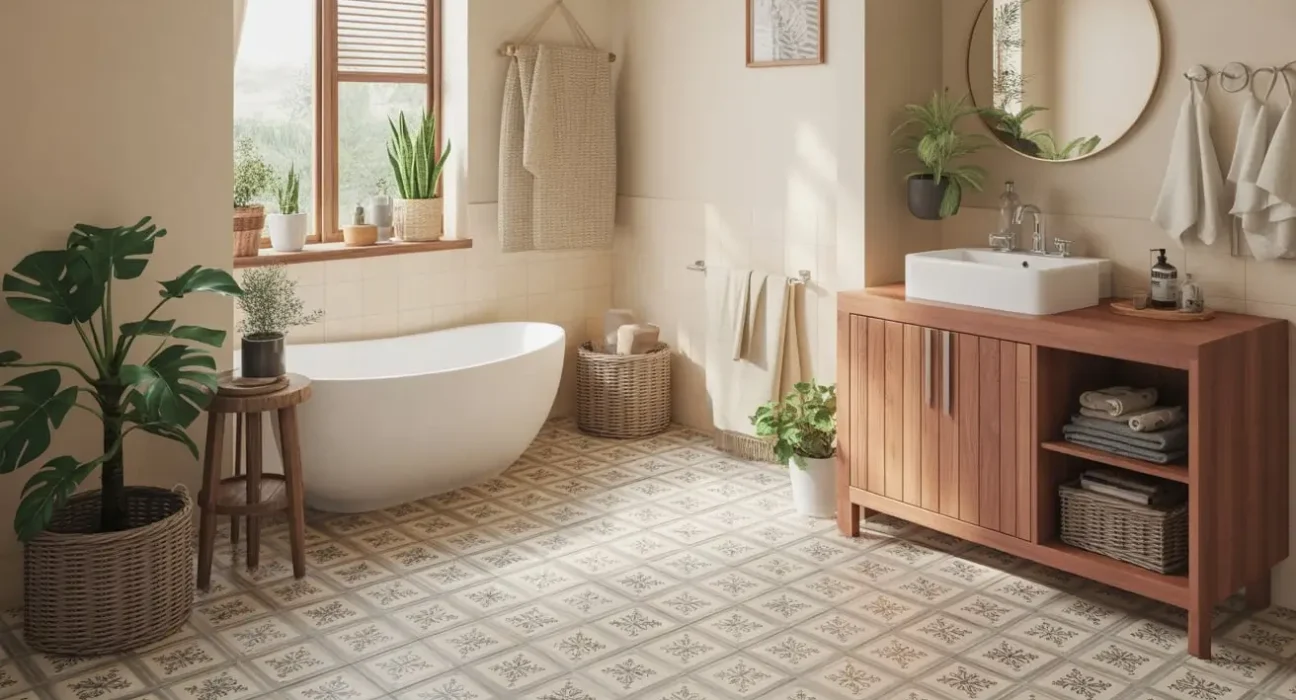
Alright, let’s have a real talk. You’re standing in the doorway of your small bathroom, head cocked, hand on your hip, and thinking, “How can a room this tiny cause me so much design stress?”
I’ve been there. My first apartment bathroom was, to put it kindly, a glorified closet with plumbing. It felt cramped, dated, and honestly, a little bit sad.
The floor tile was the worst offender—tiny, grimy squares that screamed “1980s rental.” But here’s the secret I learned: the right floor tile is basically a magic wand for a small bathroom.
It’s not just something you walk on; it’s the foundation of the entire room’s vibe. It can trick the eye, make the space feel twice as big, and inject a serious dose of personality.
So, forget the idea that small spaces are a lost cause. We’re going to turn that design frown upside down. I’ve gone through the trenches of bathroom renovations, scrolled through endless design feeds, and made a few mistakes along the way so you don’t have to.
Together, we’re going to explore 15 floor tile trends that absolutely kill it in small bathrooms. Ready to give your tiny bathroom the glow-up it deserves? Let’s get to it.
1. Modern Marble Bathroom Floor Tile
There’s a reason marble has been the go-to for, oh, a few thousand years. It’s the epitome of luxury. You might think, “Marble? In my tiny bathroom? Isn’t that a bit… much?” Absolutely not. When you use it correctly, it’s a game-changer.
Why It Works in a Small Bathroom
The key here is two-fold: light and scale. Marble, especially lighter varieties like Carrara or Calacatta, is fantastic at reflecting light. In a small, often windowless bathroom, this is a godsend. It bounces light around the room, instantly making it feel brighter and more open.
The second trick is to go for large-format marble tiles. Fewer grout lines create a more seamless, unbroken surface, which our brains perceive as a larger, more expansive area. A floor with a thousand tiny grout lines just looks busy and makes the room feel cluttered.
Styling Tips & Tricks
- Go Polished (with caution): A polished finish will reflect the most light, but it can be slippery when wet. A honed or matte finish is a safer, though slightly less reflective, alternative.
- Pair with Warmth: To keep the marble from feeling too cold or clinical, introduce warm elements. Think brass or matte black fixtures, a wooden vanity, or some plush, colorful towels.
- Continue it Up the Wall: For a truly luxurious, spa-like feel, run the same marble tile from the floor partway up the shower wall. This continuity blurs the lines of where the floor ends and the wall begins, making the room feel taller.
A Word of Caution
Real marble is a diva. It’s porous, which means it can stain from things like makeup, hair dye, or that glass of red wine you’re enjoying in the tub (no judgment). It requires regular sealing to protect it. If that sounds like too much maintenance, don’t sweat it. The market for marble-look porcelain is incredible these days. You get the high-end look without the high-maintenance attitude.
2. Patterned Mosaic Floor Tile Designs
Okay, I know I just said to go big with your tiles, but now I’m telling you to consider tiny mosaics. Make up your mind, right? Hear me out. There’s a method to this madness. While a busy, all-over pattern can be overwhelming, a contained, statement-making mosaic can work wonders.
Why It Works in a Small Bathroom
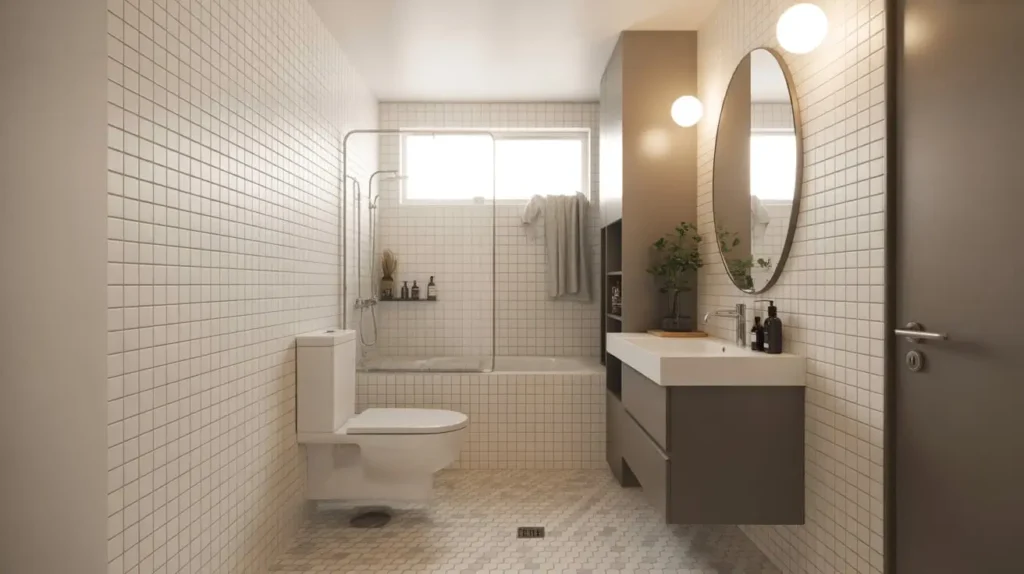
Think of a patterned mosaic floor as an area rug made of tile. It creates a defined focal point, drawing the eye to the beautiful floor and away from the room’s small dimensions. This works especially well in powder rooms or guest baths where you want to make a big impact in a small footprint.
A classic penny tile, a chic hexagon, or a sophisticated basketweave pattern can add texture and interest without visually shrinking the space. The trick is to keep the color palette simple. A black-and-white mosaic, for instance, is timeless and impactful.
Styling Tips & Tricks
- Let the Floor Be the Star: If you go bold on the floor, you must keep everything else simple. I’m talking solid, neutral-colored walls, a simple vanity, and minimalist fixtures. Let the floor have its moment.
- Match Grout to Tile: To create a more cohesive, less “grid-like” look, choose a grout color that closely matches the main color of your mosaic tile. This helps the pattern blend together beautifully.
- Create a “Rug” Inlay: A really clever designer trick is to use a simple, large-format tile around the perimeter of the room and create an “inlay” of the patterned mosaic in the center. This gives you the best of both worlds!
A Word of Caution
One word: grout. Mosaics, by their nature, have a lot of it. And grout, as we all know, loves to collect dirt. Choosing a darker grout can help hide grime, but be prepared for a little extra scrubbing. Your new hobby might just become cleaning grout lines. Fun, right?
Also Read: 15 Elegant Green Tile Bathroom Designs for a Modern Look
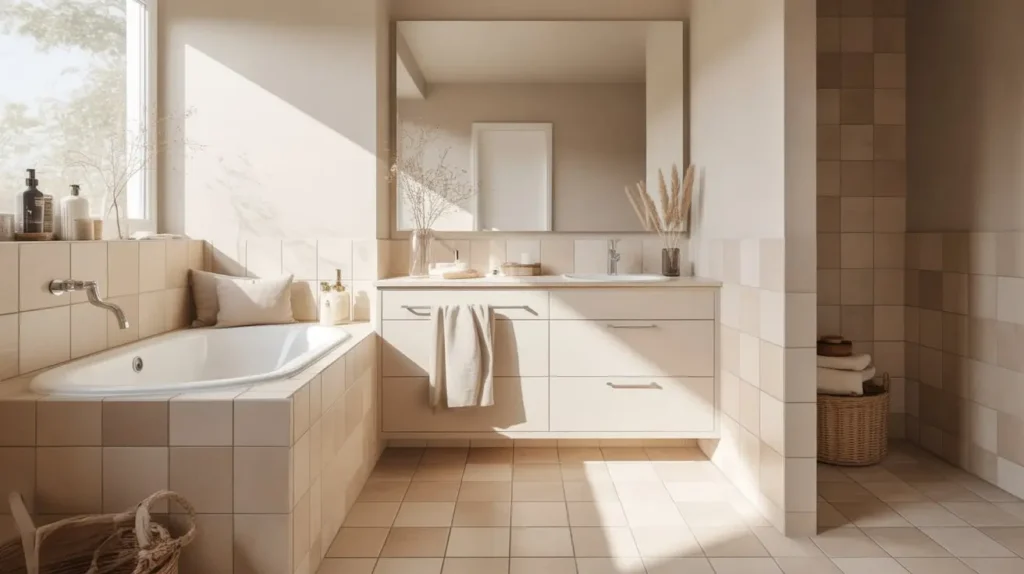
3. Neutral Beige Tile Bathroom Floors
Before you scroll past this one, let’s clear the air. Beige is not boring. Bad beige is boring. We’re not talking about the sad, builder-grade beige from 1999 that looked like a forgotten band-aid. We’re talking about the warm, sophisticated, earthy beiges that feel like a cozy cashmere sweater for your bathroom.
Why It Works in a Small Bathroom
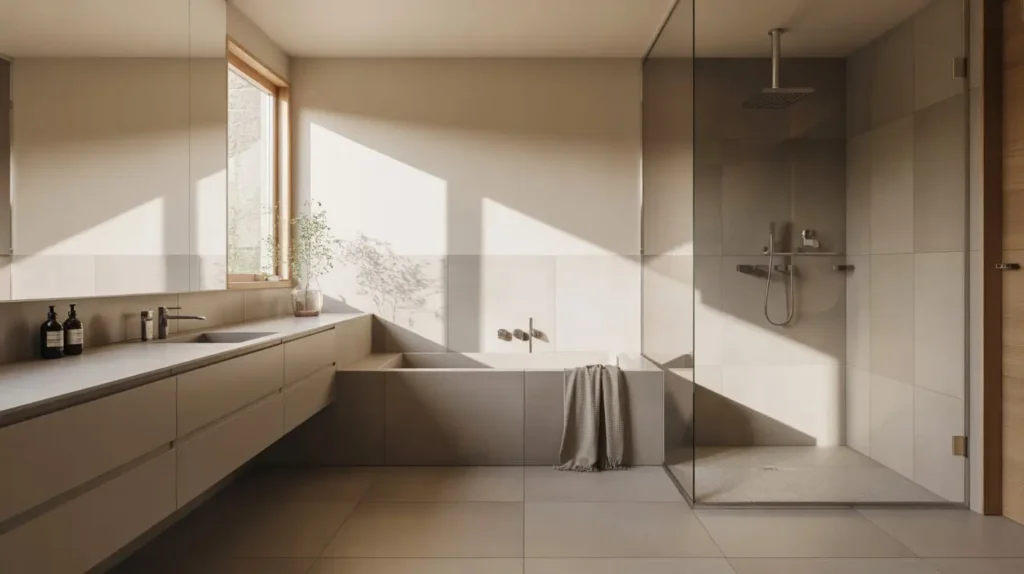
The power of a good neutral is continuity. A warm, light beige floor can create a seamless, calming canvas that makes the entire room feel more spacious and serene. It doesn’t scream for attention, allowing other elements, like a beautiful vanity or stylish lighting, to shine.
This is especially effective if you paint the walls a similar shade. The floor and walls blend together, blurring the edges of the room and making it feel boundless. It’s a classic optical illusion, and it works every time.
Styling Tips & Tricks
- Layer the Textures: The secret to a stunning neutral bathroom is texture. Since the color palette is simple, you need to add interest in other ways. Pair a smooth beige tile floor with a wood-grain vanity, a woven laundry basket, linen towels, and a potted plant.
- Play with Shape: A neutral beige tile doesn’t have to be a standard 12×12 square. Consider a large-format rectangle, a sleek hexagon, or even a picket shape to add subtle geometric interest.
- Warm Up Your Lighting: Make sure your bathroom lighting is in the warm white range (2700K-3000K). Cool, blue-toned light can make even the most beautiful beige look sterile and unwelcoming.
A Word of Caution
Choosing the right undertone is crucial. A beige with a weird pink or sickly yellow undertone can ruin the whole vibe. Always, and I mean always, get tile samples and look at them in your bathroom’s actual light throughout the day before committing.
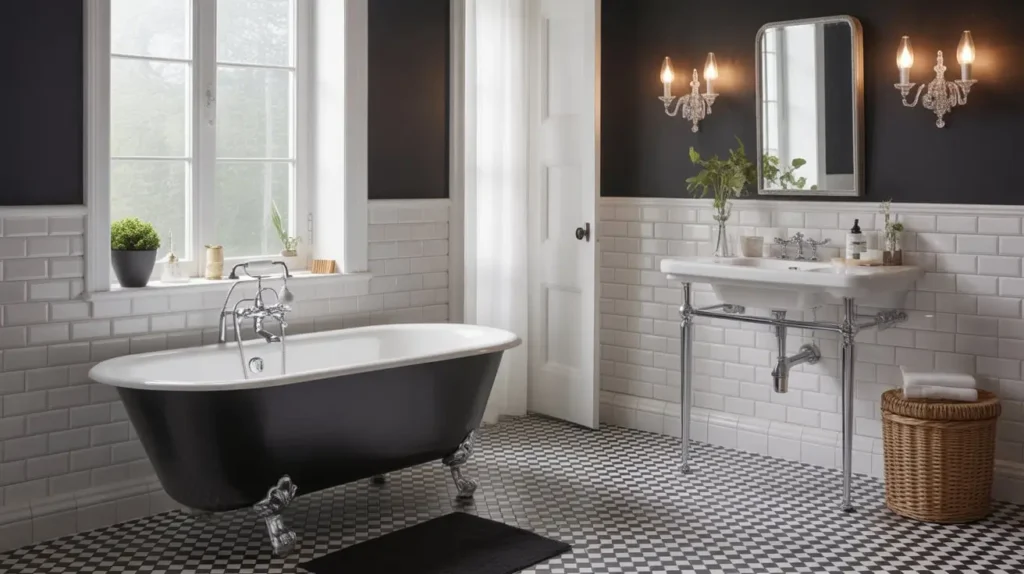
4. Black and White Checkered Bathroom Tile
Is there anything more classic than a black and white checkerboard floor? It’s chic, it’s graphic, and it’s been stylish for literally centuries. It brings a dose of Parisian bistro or old-school Hollywood glamour, and it’s surprisingly effective in a small space.
Why It Works in a Small Bathroom
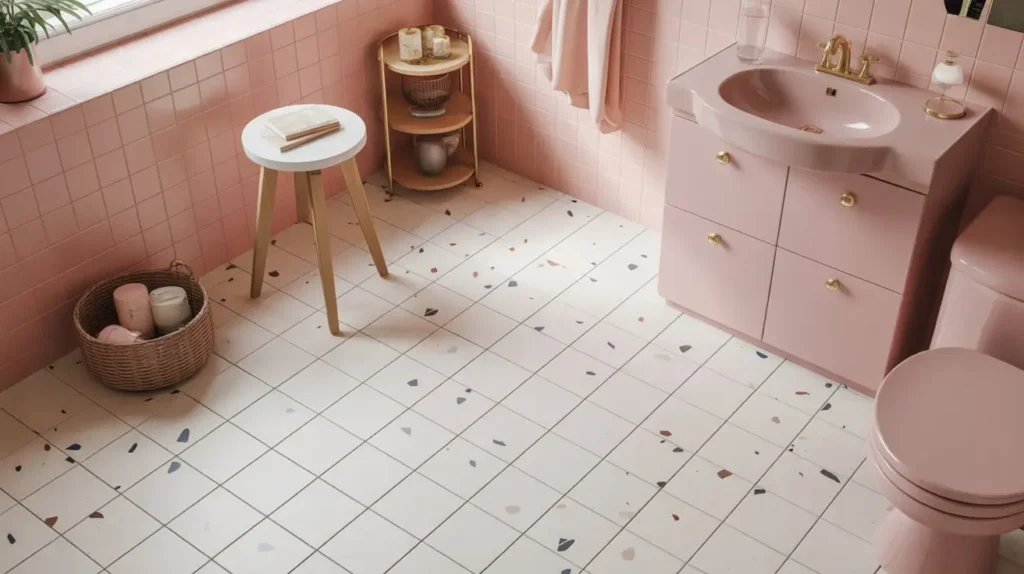
The magic of the checkerboard floor lies in its diagonal lines. When you lay the tiles in a diamond pattern (or diagonally to the walls), it tricks the eye. The long diagonal lines draw your gaze from corner to corner, making the floor plan appear longer and wider than it actually is.
This bold pattern creates a strong graphic statement, anchoring the room and giving it a sense of purpose and style. It says, “I may be small, but I am mighty.”
Styling Tips & Tricks
- Scale is Key: In a very small bathroom, you don’t want giant 12×12 checks, as you might only fit a few, which can look awkward. Smaller tiles, like 6×6 or 8×8 inches, often work better to create a more balanced and intentional pattern.
- Embrace the Vintage Vibe: Lean into the classic feel with a pedestal sink, vintage-style fixtures in chrome or brass, and a subway tile wainscot on the walls.
- Or Go Super Modern: Alternatively, contrast the classic floor with ultra-modern elements. A floating vanity, a frameless glass shower door, and matte black fixtures create a stunning, high-contrast look.
A Word of Caution
This is a bold look. It’s not for the faint of heart. If you’re someone who changes their mind about decor frequently, a permanent, graphic floor might feel limiting. You have to really love it. Also, white tiles and white grout show everything. So, be prepared to be on a first-name basis with your mop.
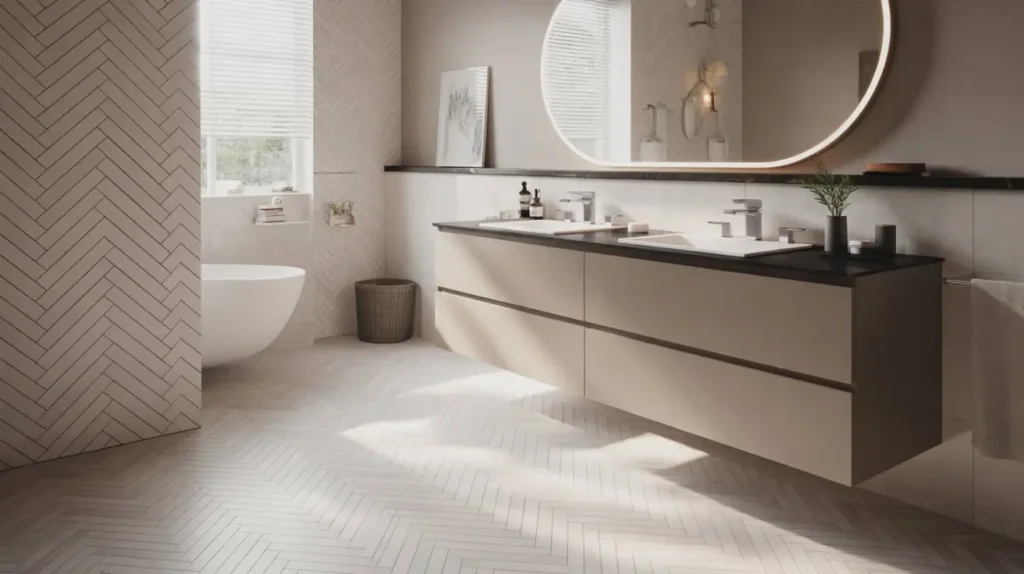
5. Herringbone Tile Bathroom Floor Ideas
The herringbone pattern is the sophisticated older sibling of the standard subway tile layout. It’s a dynamic, elegant pattern that adds a sense of movement and direction to a floor, which is exactly what a static, boxy little bathroom needs.
Why It Works in a Small Bathroom
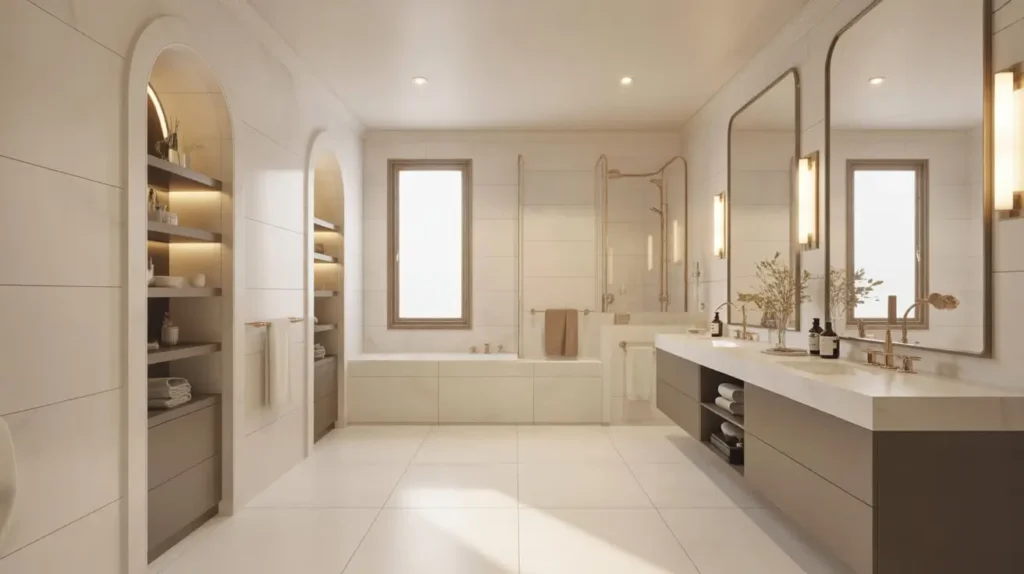
The zig-zag “V” shape of the herringbone pattern creates strong directional lines. This visual movement directs the eye across the length or width of the room, effectively elongating it. If your bathroom is narrow, laying the “arrows” of the pattern to point down the longest wall will make the room feel much deeper.
It adds a layer of custom, high-end texture to the floor without relying on a busy color or print. It’s a subtle way to say, “An adult with excellent taste designed this room.”
Styling Tips & Tricks
- Consider Tile Size: You can create a herringbone pattern with almost any rectangular tile. For a small bathroom, a smaller-scale tile (like a 3×6 or 4×12) often creates a more intricate and pleasing pattern. A very large tile might look clunky.
- Grout Matters: A contrasting grout color will make the herringbone pattern pop and become a major design feature. A matching grout color will give you a more subtle, textural effect. There’s no wrong answer—it just depends on the look you’re going for.
- Keep It Grounded: Because the floor has so much movement, it’s a good idea to keep the rest of the room relatively calm. Solid colors on the walls and simple, clean-lined fixtures will prevent a visual overload.
A Word of Caution
Installing a herringbone pattern is significantly more difficult and time-consuming than a standard running bond or grid layout. It involves more cuts and precise measurements. This means labor costs will be higher. It’s not a beginner DIY project unless you have the patience of a saint and a deep love for trigonometry.
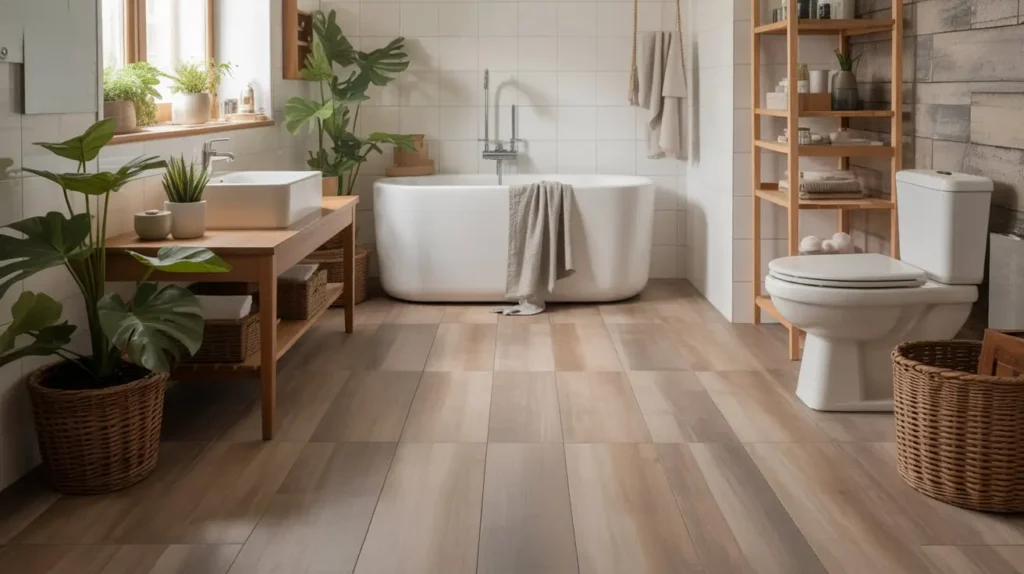
6. Wood-Look Porcelain Bathroom Tiles
We all love the warmth and organic beauty of a hardwood floor, but let’s be real—wood and water are mortal enemies. A bathroom is basically a splash zone. Enter wood-look porcelain tile, the superhero of bathroom flooring. It gives you the aesthetic of wood with the bulletproof durability of porcelain.
Why It Works in a Small Bathroom
The long, linear shape of the “planks” does wonders for a small space. Just like with the herringbone pattern, these lines create a sense of direction. Laying the planks parallel to the longest wall will visually stretch the room, making it feel longer and less boxy.
It also creates a seamless flow. If you have hardwood or LVP in the hallway outside your bathroom, using a wood-look tile inside creates a beautiful, uninterrupted transition that makes the whole area feel more cohesive and expansive.
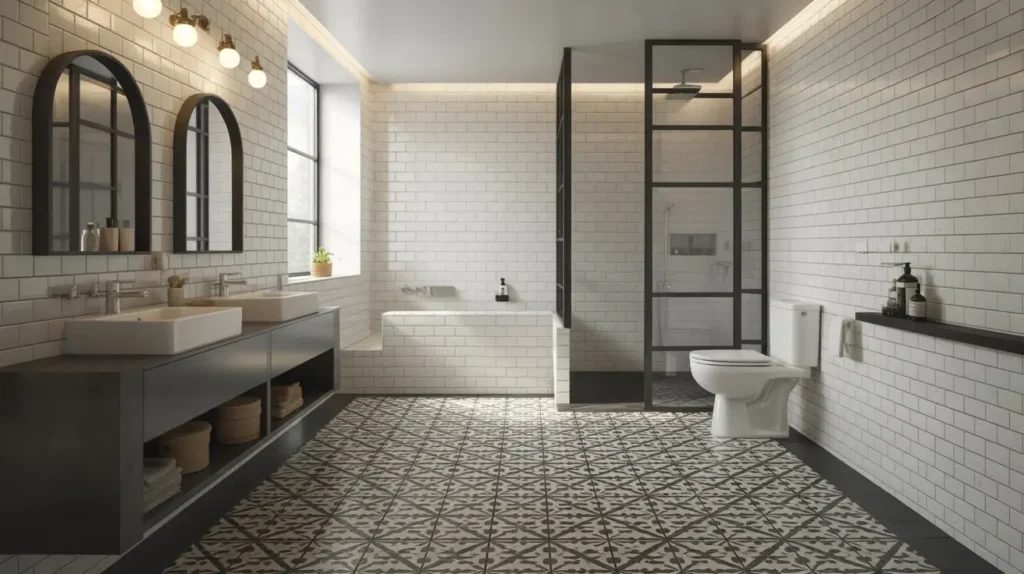
Styling Tips & Tricks
- Get a High-Quality Tile: Early versions of wood-look tile could look a bit fake. Today’s technology is amazing. Look for high-definition porcelain with varied grain patterns and textures to ensure a realistic look. Get samples!
- Choose the Right “Wood”: From a light, beachy oak to a rich, dark walnut, the options are endless. For a small bathroom, a lighter “wood” finish will generally feel more airy and open.
- Use Thin Grout Lines: To enhance the illusion of real wood, use the thinnest grout spacers your installer recommends and choose a grout color that closely matches the darkest tone in the tile’s grain. This will make the grout virtually disappear.
A Word of Caution
While it looks like wood, it doesn’t feel like wood. It will be cold underfoot, just like any other tile. This is easily solved with a cozy bath mat or, if you’re feeling fancy, installing radiant floor heating underneath. Imagine stepping out of the shower onto a warm “wood” floor. Pure bliss.
7. Small Bathroom Floor Tile Makeover
This one is less about a specific type of tile and more about a strategy. Sometimes, in a really tiny bathroom (I’m looking at you, powder rooms), leaning into the smallness with a charming, small-scale tile can be the right move. Think classic penny tiles, tiny hex tiles, or even small squares.
Why It Works in a Small Bathroom
It sounds counterintuitive, I know. But when the tile is very small and the grout color is chosen carefully, the floor can read as a single, textured surface rather than a grid of tiny individual tiles. This creates a quaint, vintage charm that feels intentional and cozy, not cramped.
This approach is perfect for adding a ton of personality to a powder room, where guests will see it and go, “Wow, how cute!” It’s about making the floor a deliberate, charming feature.
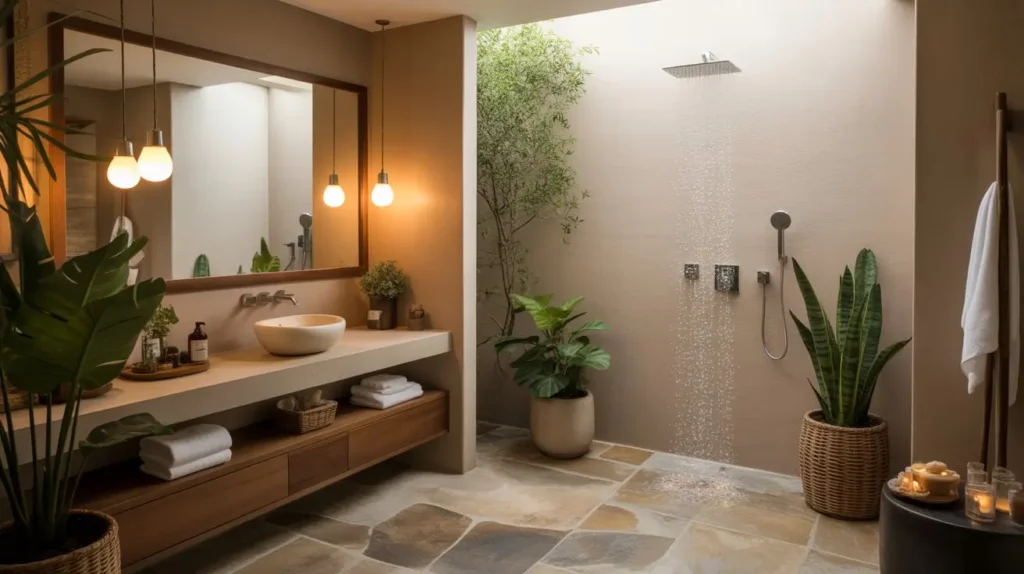
Styling Tips & Tricks
- Grout is Everything: This is the most important part. To avoid a dizzying, grid-like effect, you must use a grout that is very close in color to the tile. A white penny tile with white grout, or a black hex tile with charcoal grout, will create that beautiful, unified texture.
- Spell it Out: A super fun and custom idea with penny tiles is to use a contrasting color to spell out a word (“HELLO”) or create a simple design. It’s a whimsical touch that makes the space uniquely yours.
- Balance with Simplicity: Since the floor is texturally “busy,” keep the walls and fixtures simple. A pedestal sink is a great choice here as it shows off more of that gorgeous floor.
A Word of Caution
Grout, my old nemesis, we meet again. Small tiles mean an ocean of grout lines. Sealing the grout is non-negotiable to prevent it from becoming a dingy, stained mess. IMO, it’s worth the effort for the charming result, but you have to go in with your eyes open.
8. Minimalist Grey Tile Bathroom Design
Grey is the ultimate chameleon of interior design. It can be warm or cool, industrial or soft, modern or traditional. In a small bathroom, a simple grey tile floor is a sophisticated and versatile foundation that will never go out of style.
Why It Works in a Small Bathroom
Similar to beige, a light-to-mid-tone grey floor provides a calm, neutral backdrop that enhances the feeling of space. It’s clean, unobtrusive, and lets you play with color and texture elsewhere. A monochromatic palette of different shades of grey can look incredibly chic and serene.
Using a large-format grey tile with matching grey grout creates that coveted seamless look, making the floor feel like a single, solid slab of stone. This visual simplicity is incredibly calming and expansive in a small room.
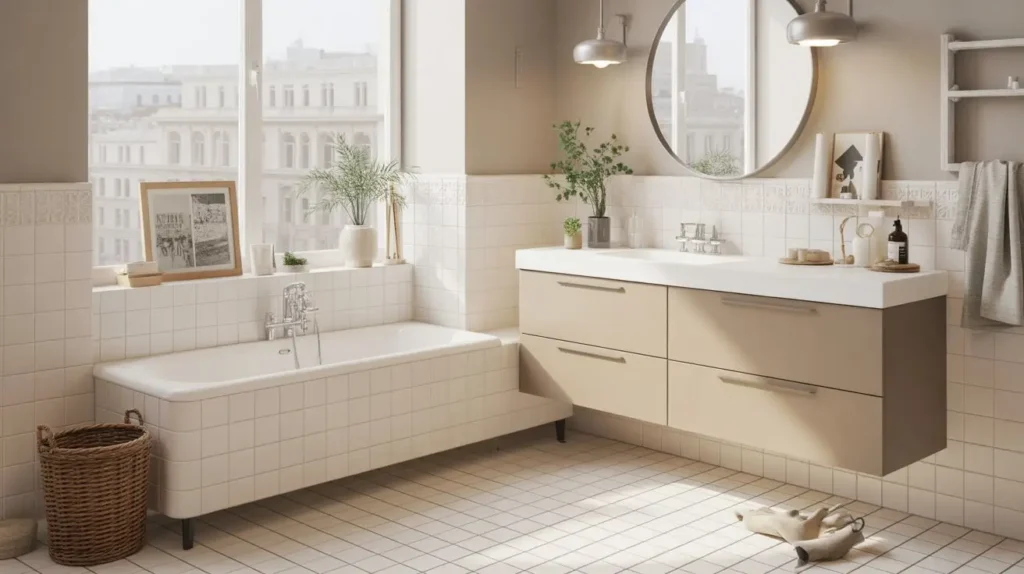
Styling Tips & Tricks
- Warm it Up: Grey can sometimes feel a bit cold. Counteract this by bringing in natural materials. A teak shower stool, a light wood vanity, or even just some fluffy white towels and a green plant can make all the difference.
- Play with Finish: A matte grey floor tile has a very contemporary, almost industrial feel. A grey tile with a slight sheen will reflect a bit more light. A concrete-look porcelain tile is another fantastic option for a modern, minimalist aesthetic.
- Add a Pop of Color: The beauty of a grey floor is that it pairs with literally any color. Want a navy blue vanity? Go for it. Bright yellow towels? Perfect. The grey floor grounds the space and allows you to introduce bold accents without fear.
A Word of Caution
There are a million shades of grey. A cool, blue-toned grey will feel very different from a warm, brownish-grey (often called “greige”). Once again, get samples and see how they look in your space. The wrong grey undertone can clash with your wall color or vanity and throw the whole look off.
9. Vintage Terrazzo Bathroom Floor Style
If you want a floor with personality, history, and a playful spirit, look no further than terrazzo. This composite material, made of chips of marble, quartz, granite, or glass set in cement, was a mid-century modern staple and is having a massive, well-deserved comeback.
Why It Works in a Small Bathroom
Real terrazzo is poured seamlessly, but terrazzo-look porcelain tiles are the more practical choice for most homes. The magic of terrazzo is that its multi-tonal, speckled pattern is brilliant at hiding things. A stray hair? A bit of dust? You’ll barely notice it. It’s a low-maintenance dream.
The pattern is “busy” but in a good way. The random, organic nature of the chips creates a visual texture that is interesting without being overwhelming. It adds a layer of depth and fun, turning the floor into a piece of art.
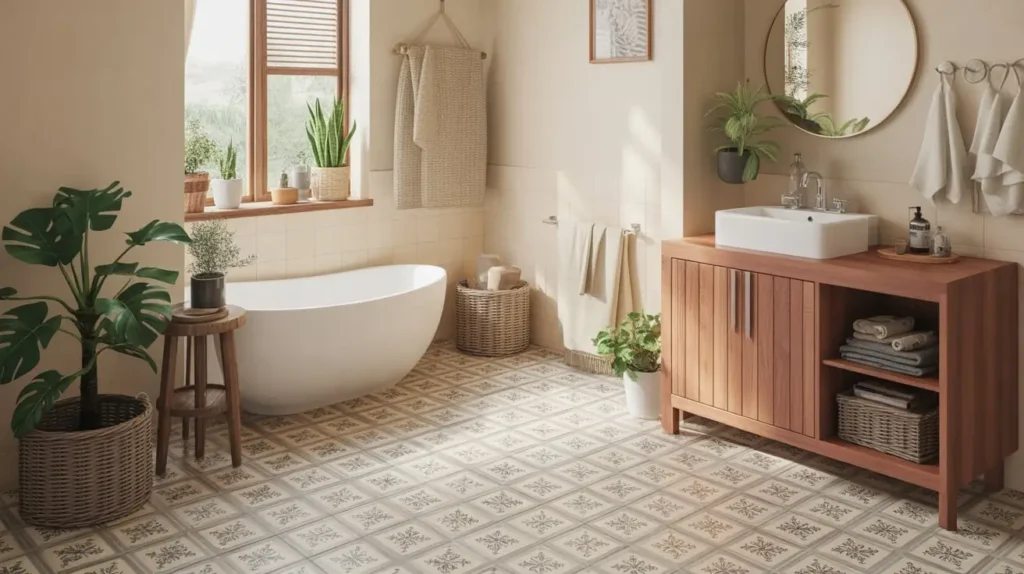
Styling Tips & Tricks
- Pull Colors from the Chips: The beauty of terrazzo is its built-in color palette. Pick one of the colors from the chips—be it a blush pink, a forest green, or a simple grey—and use it for your wall color or your towels. This creates a cohesive, professionally designed look.
- Go Modern or Retro: Terrazzo works beautifully with both mid-century modern-inspired designs (think walnut wood and simple lines) and super contemporary looks (think matte black fixtures and a floating vanity).
- Large Format is Best: Just like with marble, opting for large-format terrazzo-look porcelain tiles will minimize grout lines and make the pattern feel more authentic and expansive.
A Word of Caution
Authentic, poured-in-place terrazzo is extremely expensive and requires specialized installers. For 99% of us, terrazzo-look porcelain is the way to go. The quality is phenomenal these days, and it gives you the exact same look for a fraction of the cost and hassle. No one but you and your installer will know the difference.
Also Read: 15 Modern Mexican Home Decor Ideas for a Warm, Stylish Glow
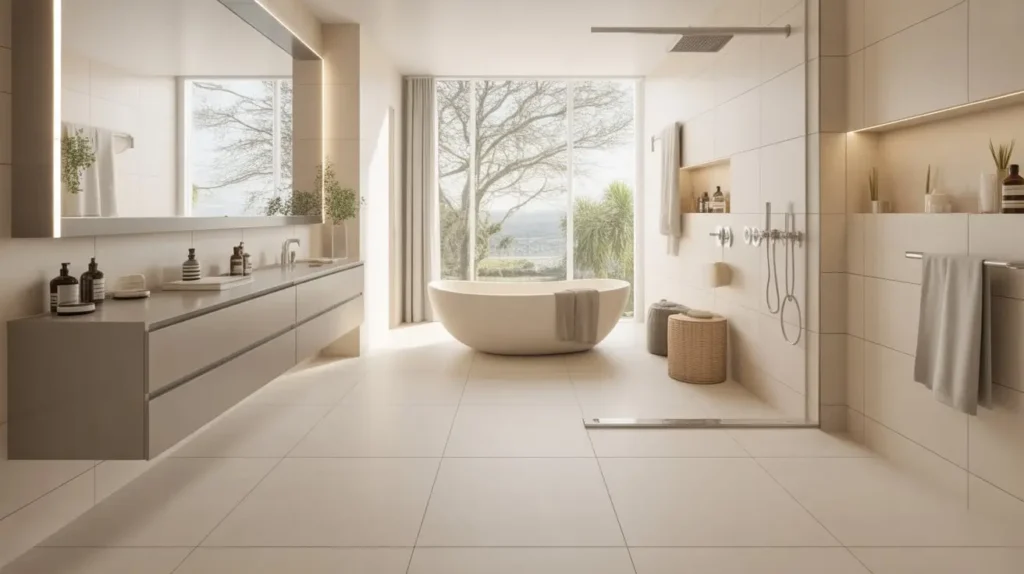
10. Large Format Tile Bathroom Floors
I’ve mentioned this a few times, but it’s so important it deserves its own section. If you remember only one rule for tiling a small bathroom, let it be this: fewer grout lines make a room look bigger. And the easiest way to achieve that is with large format tiles.
Why It Works in a Small Bathroom
It’s all a visual trick. Our eyes are drawn to lines. A floor covered in small tiles has a busy grid of grout lines that chops the floor up into tiny segments, emphasizing the smallness of the room. A floor with just a few large tiles (think 24×24 inches or even 12×24 inches) has minimal grout lines.
This creates an unbroken, clean visual plane that feels calm and expansive. It makes the floor look like a single, solid surface, which tricks our brains into perceiving the room as larger than it is. It’s the single most effective strategy for small bathroom flooring.
Styling Tips & Tricks
- Rectangular vs. Square: Both work well. A large square tile (like 24×24) creates a simple, clean grid. A large rectangular tile (like 12×24) can be laid in a staggered brick pattern or a straight stack bond, and can be used to visually stretch the room.
- Match the Grout: To maximize the effect, use a grout color that is as close as possible to the color of the tile. The goal is to make the grout lines disappear.
- Carry it Up the Wall: This is a pro move. Using the same large format tile on the floor and on the shower walls creates ultimate continuity. It erases the visual boundaries in the room, making it feel incredibly spacious and cohesive.
A Word of Caution
Large format tiles require a perfectly flat, level subfloor. Any imperfections or dips in the subfloor can cause these large, rigid tiles to crack over time. Make sure your installer does proper subfloor preparation. This is not a place to cut corners.
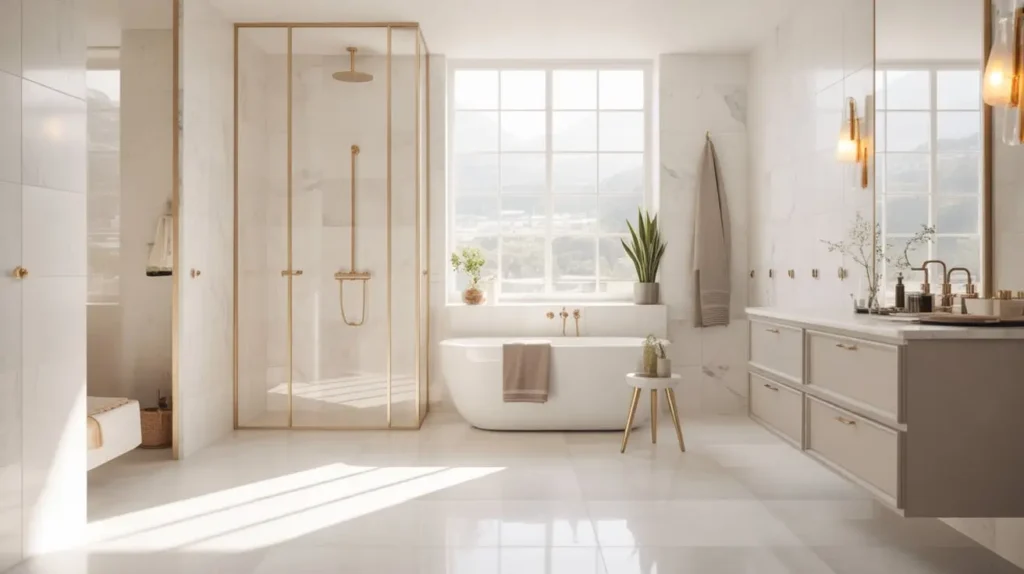
11. Bold Geometric Floor Tile Patterns
For those who believe life is too short for boring floors, a bold geometric tile is the answer. This is about making a statement. It’s for the person who wants their small powder room to be a jewel box of design.
why It Works in a Small Bathroom
This trend works for a similar reason as the patterned mosaic: it creates a powerful focal point. In a small space, a bold floor can be the main event. It grabs all the attention, and no one even notices the room’s compact dimensions. They’re too busy admiring your killer floor.
Geometric patterns with strong, repeating lines—like cubes, triangles, or bold starbursts—can also create a sense of movement and depth. They are a declaration of confidence and style.
Styling Tips & Tricks
- This is the Only Star: You cannot have a bold floor and a bold wallpaper and a statement vanity. The floor is the star of the show. Everything else must be a supporting actor. Plain walls, a simple mirror, and clean-lined fixtures are a must.
- Stick to a Simple Color Palette: The pattern is already bold, so the color palette should be controlled. Black and white is a no-brainer. A navy and white, or a grey and white, also works beautifully.
- Best for Powder Rooms: This look is high-impact and can be a bit much for a primary bathroom you use every day. It truly shines in a small powder room or guest bath where you can afford to be a bit more dramatic.
A Word of Caution
Trends come and go. A very bold, of-the-moment geometric pattern might feel dated in ten years. This is a risk you take with any bold design choice. My advice? If you absolutely love it and it makes you happy every time you see it, then go for it. A home should be a reflection of you, not a slave to resale value. 🙂
12. Spa-Inspired Natural Stone Tile
Who wouldn’t want their bathroom to feel like a serene spa retreat? Natural stone tiles like travertine, slate, or limestone can instantly transport you to a place of calm and relaxation. Their earthy textures and organic variations bring a piece of the outdoors in.
Why It Works in a Small Bathroom
The beauty of natural stone is its subtle, organic variation. No two tiles are exactly alike. This natural texture adds depth and interest to the floor without the busyness of a printed pattern. It creates a rich, tactile surface that feels luxurious and grounded.
Choosing a light-colored stone like a creamy travertine or a soft grey limestone will also help to reflect light, while the natural texture prevents it from feeling sterile.
Styling Tips & Tricks
- Embrace the Imperfection: The veins, color variations, and slight imperfections are what make natural stone beautiful. Don’t try to find perfectly uniform tiles. The variety is the whole point.
- Layer Natural Elements: To complete the spa vibe, pair the stone floor with other natural materials. A bamboo bath mat, a wooden stool, woven baskets for storage, and lots of green plants are perfect companions.
- Consider a Pebble Floor for the Shower: To really lean into the spa look, consider using a flat-cut pebble tile for the shower floor. It feels amazing underfoot and creates a beautiful, seamless transition to the drain.
A Word of Caution
Like their cousin marble, most natural stone tiles are porous and require sealing to protect them from water and stains. Slate is generally more dense and forgiving than travertine or limestone. They can also be more expensive than their porcelain look-alikes. However, there’s nothing quite like the feel and look of the real thing.
13. Budget-Friendly Ceramic Tile Ideas
Let’s get practical for a moment. A full bathroom renovation can be expensive, and flooring is a significant chunk of that budget. The good news is you absolutely do not have to spend a fortune to get a stylish, durable, and space-enhancing floor. Enter the humble, hardworking ceramic tile.
Why It Works in a Small Bathroom
Ceramic tile is the workhorse of the tile world. It’s durable, water-resistant, and incredibly affordable. But “affordable” doesn’t have to mean “ugly.” The design options for ceramic tiles have exploded in recent years. You can find ceramic tiles that mimic the look of more expensive materials, as well as tiles in a huge array of colors, shapes, and sizes.
For a small bathroom, you can find a simple, large-format ceramic tile in a light color for a rock-bottom price. This allows you to achieve that space-expanding, seamless look without breaking the bank.
Styling Tips & Tricks
- Focus on Layout: Since the tile itself might be simple, make the layout interesting. A standard 12×24 rectangular tile can be laid in a classic staggered brick pattern, a modern stacked grid, or even a herringbone pattern if you’re feeling ambitious.
- Invest in Good Grout: When you’re saving money on the tile, you can afford to be a bit more particular about the grout. Using a high-quality, stain-resistant grout in a color that matches the tile will elevate the whole look.
- Let Other Elements Shine: Using a budget-friendly floor tile frees up more of your budget for a splurge elsewhere. Maybe you can now afford that vanity you’ve been eyeing, or that designer light fixture.
A Word of Caution
When shopping for ceramic tiles, pay attention to the PEI rating, which indicates the tile’s hardness and durability. For a bathroom floor, you want a tile with a PEI rating of at least 3. Also, check the slip resistance (often called the Coefficient of Friction). You want a tile that provides good grip when wet.
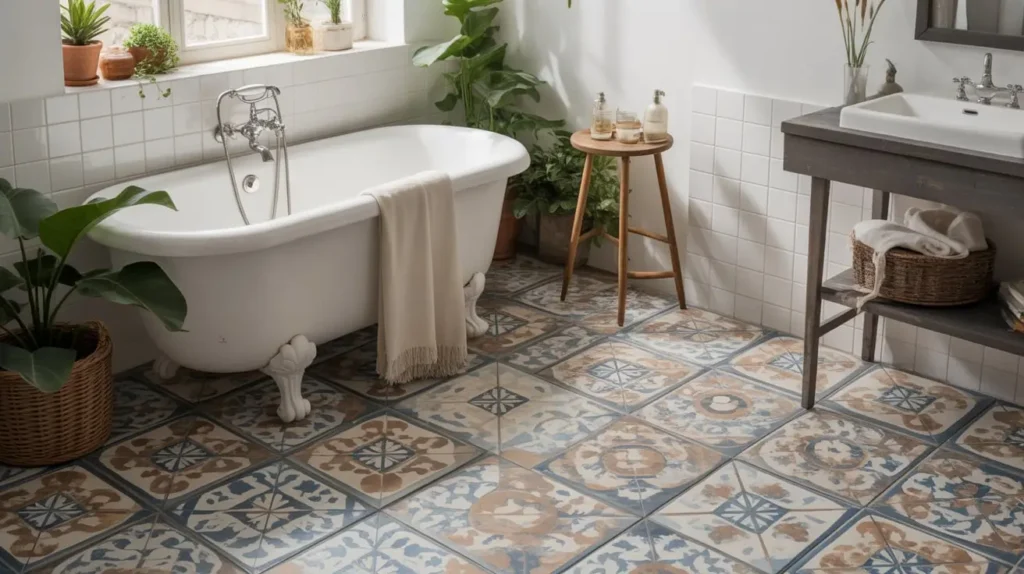
14. Boho Chic Bathroom Floor Tile Looks
The bohemian style is all about being free-spirited, eclectic, and warm. It embraces patterns, textures, and a connection to nature. For a small bathroom, a boho-inspired floor can inject a huge amount of warmth and personality, making it feel like a cozy, curated oasis.
Why It Works in a Small Bathroom
Boho floors are all about pattern and warmth. Think terracotta tiles, with their earthy red-orange hues, or encaustic-style cement or porcelain tiles with intricate, global-inspired patterns. These floors bring so much character to the table that the room’s size becomes irrelevant.
The warm tones and handmade feel of these tiles make a space feel inviting and lived-in, not stark or small. It’s a style that feels personal and collected over time.
Styling Tips & Tricks
- Mix, Don’t Match: The boho look is the opposite of minimalist. Feel free to mix your patterned floor with a Persian-style runner, macrame wall hangings, and tons of plants.
- Embrace Warm Woods: A rustic or reclaimed wood vanity is the perfect partner for a terracotta or patterned encaustic tile floor.
- Terracotta Tiles: The classic square terracotta tile, or “saltillo” tile, brings an immediate sense of warmth and history. Laying them in a diamond pattern can help to visually widen the space.
A Word of Caution
Real encaustic cement tiles are gorgeous but, like natural stone, they are porous and require sealing. They can also develop a “patina” over time, which some people love and others… not so much. If you want the look without the maintenance, there are countless beautiful and durable encaustic-look porcelain tiles on the market.
15. Luxurious Matte Finish Tile Floors
For a long time, polished or glossy tiles were the standard. But in recent years, matte finish tiles have exploded in popularity, and for good reason. They offer a soft, sophisticated, and thoroughly modern look that is both beautiful and practical.
Why It Works in a Small Bathroom
A matte finish floor has a soft, velvety texture that absorbs light rather than reflecting it. While this might sound like a bad thing for a small space, it actually creates a very calm, consistent, and uniform surface. It feels very grounded and serene.
The biggest practical benefit? Matte tiles are far less slippery when wet than their glossy counterparts. They also do a much better job of hiding water spots, footprints, and smudges, meaning they look cleaner for longer. Less cleaning? Yes, please.
Styling Tips & Tricks
- Create Contrast with Gloss: To keep a room with a matte floor from feeling too “flat,” introduce some shine elsewhere. A glossy subway tile on the shower walls, polished chrome fixtures, or a shiny lacquered vanity will create a beautiful textural contrast.
- Choose a Light Color: To maximize the feeling of space, opt for a matte tile in a light shade like white, off-white, or a very pale grey. A matte white hexagon floor, for example, is a stunningly modern and chic choice.
- Pair with Minimalist Design: The understated nature of a matte floor pairs perfectly with minimalist and Scandinavian design. Think clean lines, natural materials, and a clutter-free environment.
A Word of Caution
While they hide water spots well, heavily textured matte tiles can sometimes hold onto dirt a bit more than smooth, glossy tiles. It’s a trade-off. Generally, a simple wipe-down is all they need, but it’s something to be aware of.
So, What’s the Verdict?
Phew! We made it. See? Your small bathroom isn’t a design dead-end; it’s a canvas waiting for a masterpiece. From the timeless elegance of marble to the playful spirit of terrazzo, the right floor tile is your secret weapon to making that small space feel expansive, stylish, and uniquely you.
Don’t be afraid to go big with large-format tiles to create a seamless look, or to go bold with a pattern that turns your floor into a work of art. The most important rule is that there are no hard and fast rules. The best choice is the one that makes you smile every time you walk into the room.
So, which trend is calling your name? Go get some samples, lay them on your floor, and start dreaming. Your small-but-mighty bathroom is about to become your favorite room in the house. You’ve got this.