

15 Cozy Small Entryway Decor Ideas for Warm Welcomes
You know that awkward little space right when you walk through your front door? Yeah, that cramped corner that seems to collect shoes, mail, and random jackets like some kind of chaos magnet? I feel you.
My entryway used to be a disaster zone—basically a glorified dumping ground that made me cringe every single time I walked in. But here’s the thing: your entryway is literally the first impression of your home, and even the tiniest space can pack a serious style punch.
I’ve spent way too much time (and money, let’s be real) experimenting with small entryway setups, and I’m pumped to share what actually works. Whether you’re dealing with a narrow hallway, a tiny apartment entrance, or just an awkward corner, these 15 cozy decor ideas will transform your space from “meh” to “wow, come on in!” Let’s get into it.
Floating Shelf Entryway Setup
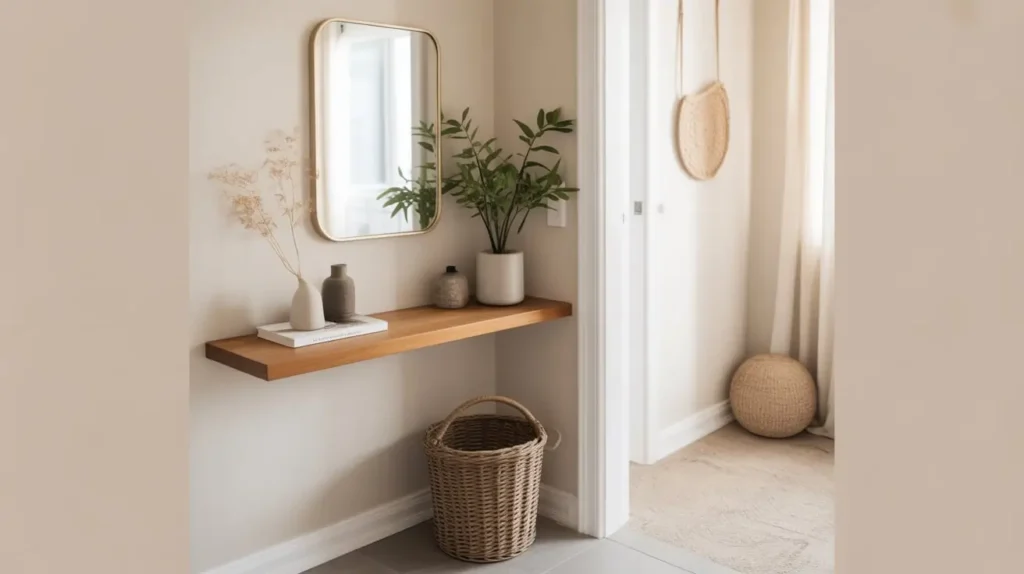
Floating shelves are my absolute go-to for small entryways, and honestly, I don’t know why more people don’t use them. They give you storage and display space without eating up precious floor real estate.
I installed three staggered floating shelves in my entryway last year, and it completely changed the game. You can toss your keys in a cute dish on the top shelf, display a small plant or photo frame on the middle one, and use the bottom for a basket with dog leashes or umbrellas. The vertical storage approach is clutch when you’re working with limited square footage.
Here’s what makes floating shelves brilliant for entryways:
- No bulky furniture blocking the pathway
- Customizable height and arrangement
- Creates visual interest on boring walls
- Easy installation (even for DIY newbies)
- Affordable compared to console tables
The key is keeping them styled but not cluttered. I rotate seasonal decor on mine—pumpkins in fall, eucalyptus in winter, you get the idea. Pro tip: stick to odd numbers when styling (three items, five items) because it looks more natural and less staged.
Mirror Wall Illusion Decor

Want to know the oldest trick in the interior design book? Mirrors make small spaces feel twice as large. I’m not even exaggerating—a well-placed mirror in a cramped entryway creates the illusion of depth and reflects light like nobody’s business.
I hung an oversized arched mirror in my entryway, and guests literally always comment on how “spacious” it feels. Plot twist: it’s maybe four feet wide. The mirror does all the heavy lifting by bouncing natural light around and creating the perception of more space.
You’ve got options here:
- Large statement mirror leaning against the wall (super trendy right now)
- Multiple smaller mirrors arranged in a gallery style
- Full-length mirror for last-minute outfit checks (honestly so practical)
- Sunburst or geometric mirrors for visual drama
Quick heads-up: position your mirror to reflect something attractive, not your cluttered coat closet or a blank wall. Mine reflects the window from my living room, which doubles the natural light situation. Game changer.
Slim Bench with Hidden Storage
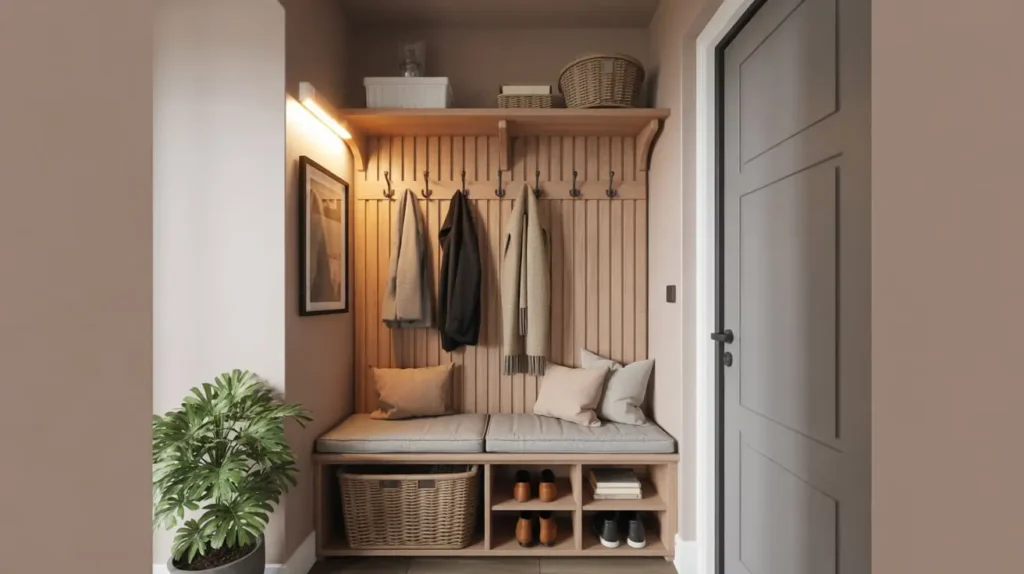
Okay, can we talk about how genius storage benches are? You get seating for putting on shoes AND hidden storage for all the random stuff that gravitates toward entryways. It’s like furniture multitasking at its finest.
I picked up a slim bench with a lift-up seat from IKEA (around 15 inches deep), and it fits perfectly in my narrow entryway without creating a traffic jam. Inside, I stash reusable shopping bags, shoe cleaning supplies, and seasonal accessories I’m not currently using. Out of sight, out of mind—but still accessible when I need it.
When shopping for a slim bench, consider:
- Depth of 12-18 inches (anything deeper crowds small spaces)
- Cushioned top for comfort
- Neutral upholstery that hides dirt (learned this the hard way with white fabric)
- Sturdy construction if you plan to actually sit on it
Style the bench with a cozy throw pillow and maybe a small basket on top for a curated look. It becomes both functional and decorative, which is exactly what small spaces need.
Also Read: 15 Cozy Entryway Decor Looks for a Welcoming Home
Vertical Coat Hook Wall
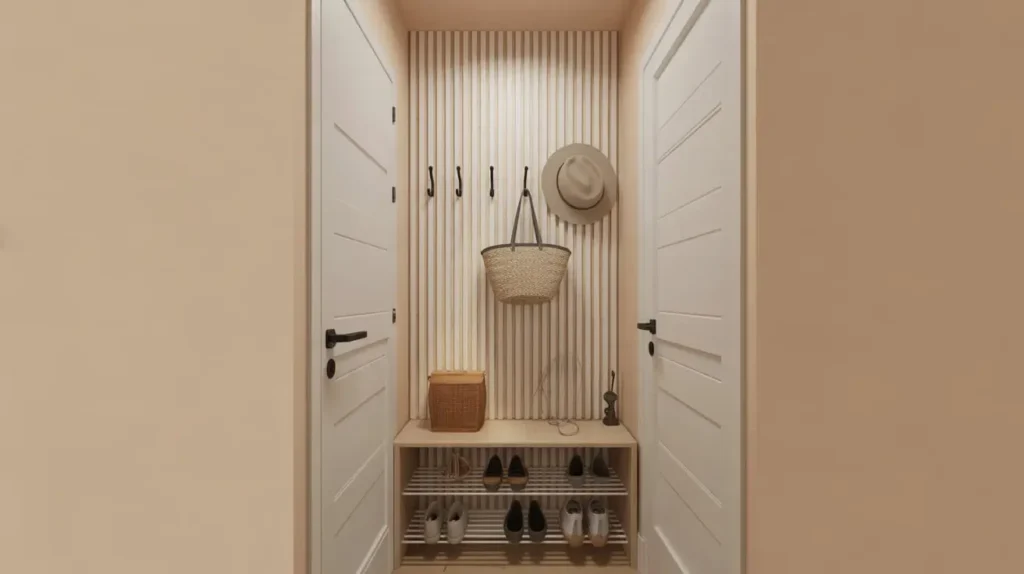
Here’s a question: why do we default to clunky coat racks when walls are RIGHT THERE? Vertical hook walls are insanely practical and add a design element that makes your entryway feel intentional.
I installed a row of matte black hooks at varying heights on my entryway wall, and it’s honestly one of my favorite upgrades. High hooks for adult coats, medium hooks for bags, and lower hooks for my kids’ backpacks. Everything has a designated spot, which means less nagging about stuff on the floor. 🙂
Different hook styles create different vibes:
- Modern metal hooks (sleek and minimalist)
- Vintage brass hooks (adds warmth and character)
- Wooden peg hooks (perfect for Scandi or farmhouse style)
- Decorative ceramic knobs (quirky and colorful)
FYI, the spacing matters. I placed mine about 4-6 inches apart to prevent coat overcrowding. Nothing looks worse than ten jackets fighting for space on three hooks. Plan for the actual number of people in your household, not some aspirational minimal lifestyle we saw on Pinterest.
Narrow Console Table Styling
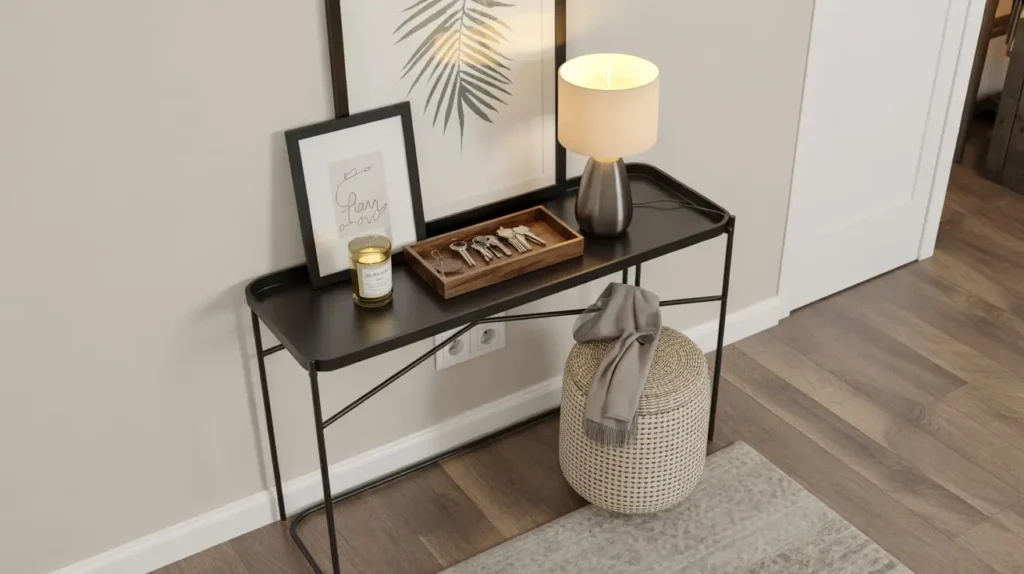
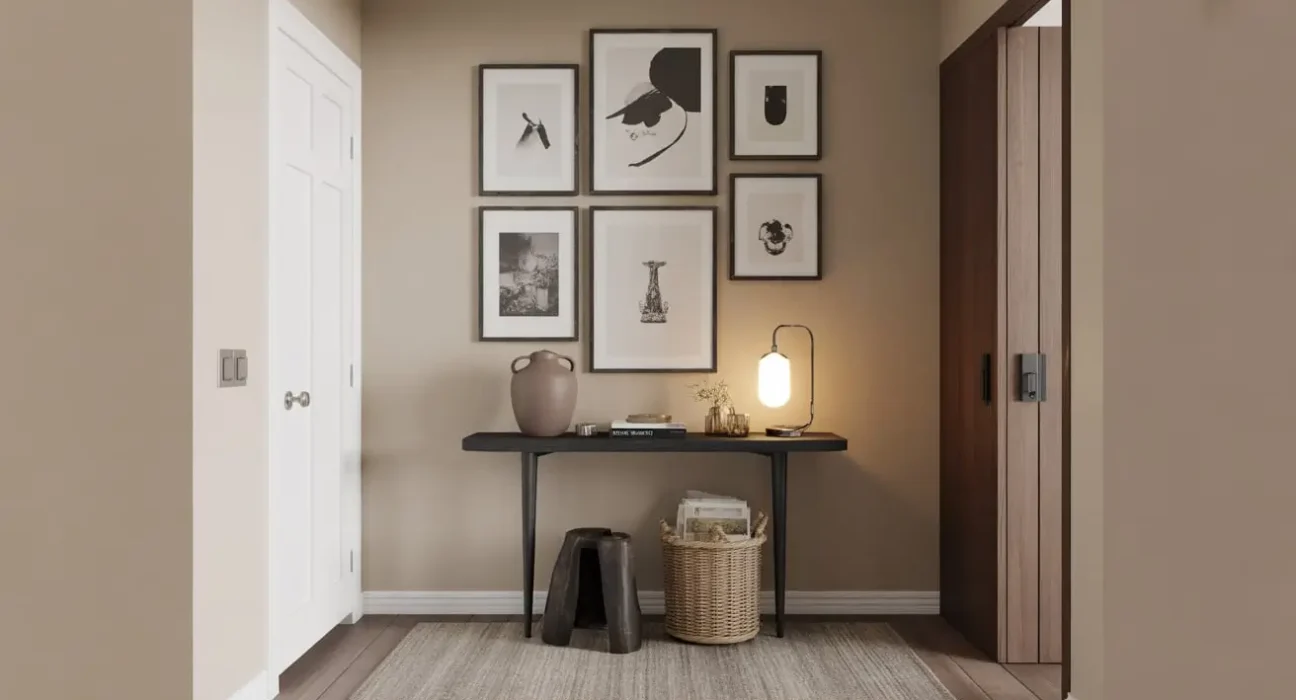
A narrow console table is basically the MVP of small entryway furniture. I’m talking those super slim tables (8-12 inches deep) that create a landing zone without hogging the walkway.
I styled mine with the rule of three: a table lamp on one side, a small tray for keys and sunglasses in the middle, and a vase with fresh flowers on the other side. It looks pulled-together but doesn’t require a design degree to maintain.
Essential console table styling elements:
- Tray or bowl for corralling small items (prevents visual clutter)
- Lighting source like a table lamp (creates ambiance)
- Vertical element like a vase or candlestick (adds height)
- Something personal like a photo or artwork (makes it feel like home)
Pro move: use the space underneath for a basket, small stool, or decorative crate. Maximize every inch! My console table has a woven basket underneath where I throw shoes that would otherwise pile up by the door.
Basket Storage Under Bench
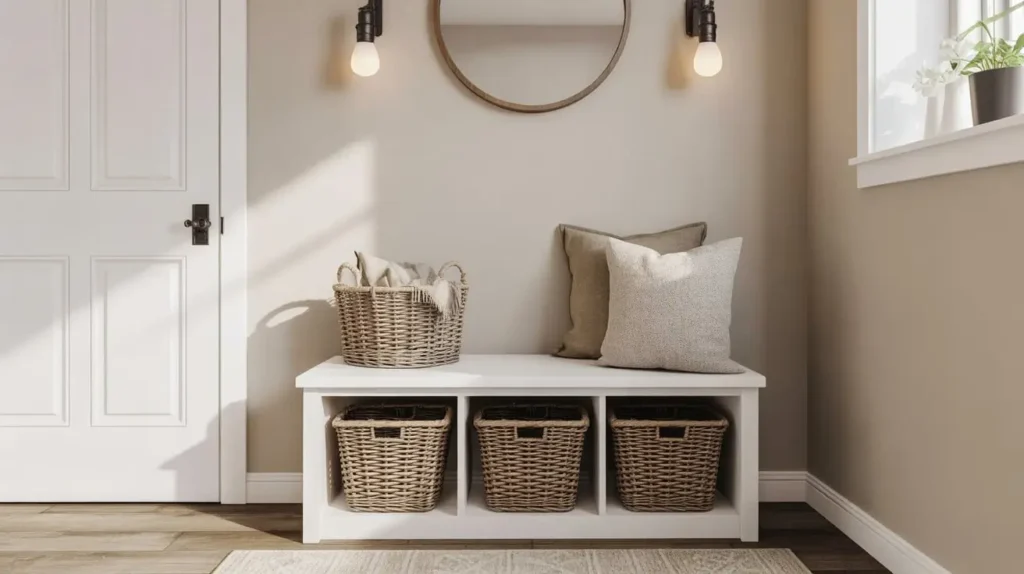
Speaking of baskets—let’s give them their own moment because they deserve it. Baskets are the unsung heroes of entryway organization, especially when tucked under benches or consoles.
I keep three woven baskets under my entryway bench: one for shoes, one for dog walking supplies, and one for sports equipment that’s always coming and going. They look intentional and cohesive while hiding the chaos. Form meets function, baby.
Basket storage tips:
- Choose baskets with handles (easier to pull out and access)
- Match materials for a cohesive look (all seagrass, all wire, etc.)
- Label them if you’re organizing for multiple people (trust me on this)
- Use fabric liners for delicate items
The beauty of baskets is they work with literally any decor style. Boho? Woven seagrass. Farmhouse? Wire mesh. Modern? Sleek felt bins. You can’t really go wrong here.
Minimalist Entryway with Neutral Tones
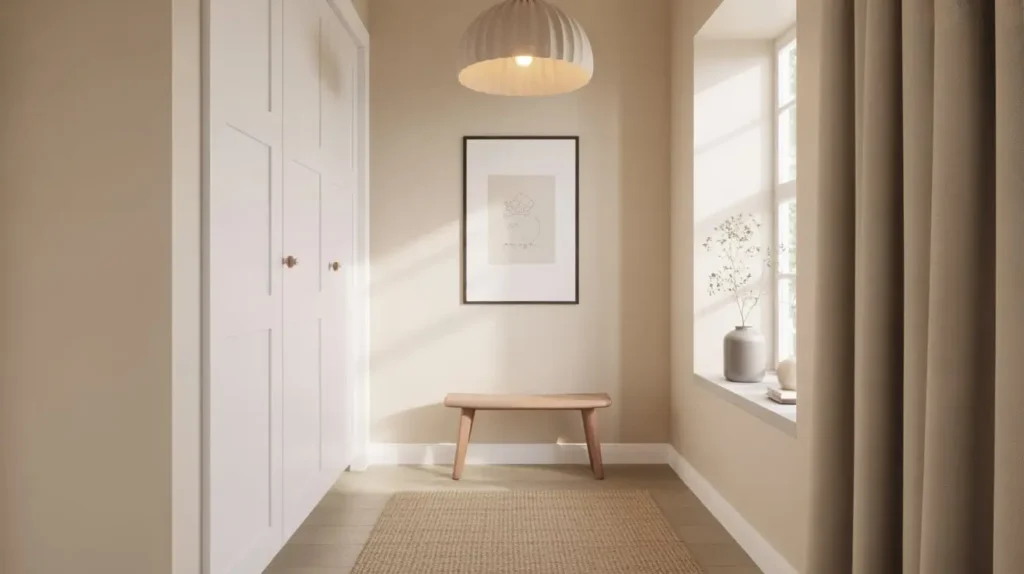
Minimalism gets a bad rap for being cold or boring, but a minimalist entryway with warm neutral tones? Chef’s kiss. It’s calming, it’s sophisticated, and it makes even the smallest space feel intentional.
I went through a minimalist phase (okay, I’m still in it) and redesigned my entryway with a cream, beige, and warm gray palette. The result feels like a spa entrance rather than the chaotic mess it used to be. Sometimes less really is more—who knew?
Key elements for a minimalist neutral entryway:
- Limit your color palette to 2-3 shades
- Choose furniture with clean lines (no ornate details)
- Display only essential or meaningful items
- Use natural materials like wood, linen, and stone
- Maintain breathing room—don’t fill every inch
The trick is making it feel warm, not sterile. I added texture through a chunky knit throw on my bench and a jute rug to keep things cozy. Minimalism doesn’t mean you live in a museum—it just means you’re intentional about what you include.
Boho Small Entryway Vibes
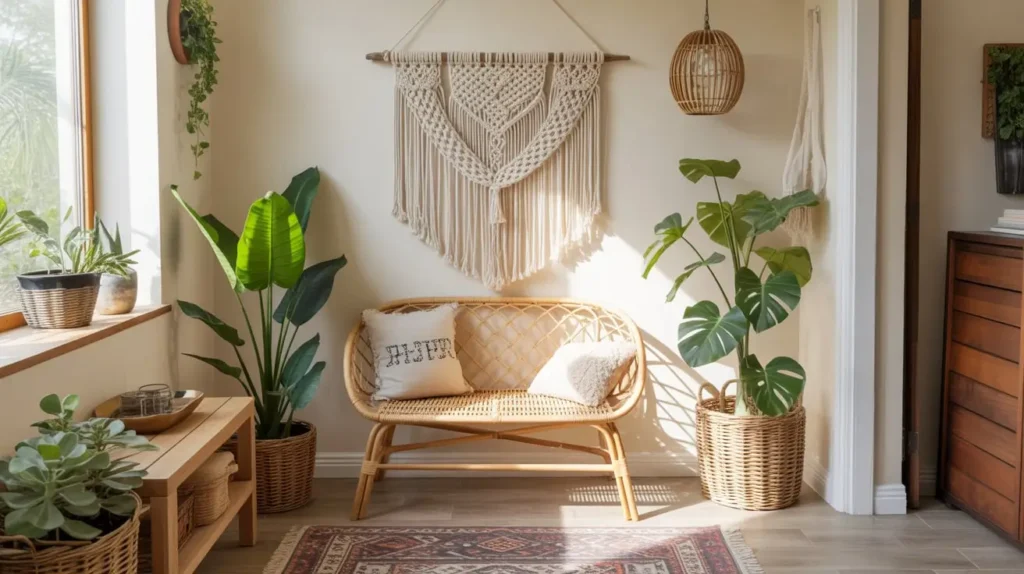
On the complete opposite end of the spectrum, we’ve got boho entryways, and honestly? They’re so fun. If minimalism isn’t your thing (and I totally get it), embrace the eclectic, layered, lived-in look.
My friend has a tiny boho entryway that’s basically a maximalist’s dream in miniature. Macramé wall hanging, patterned rug, plants everywhere, vintage mirror—it’s a vibe. The key is controlled chaos: lots of elements, but they all work together through repeated colors and textures.
Boho entryway essentials:
- Macramé or woven wall hangings
- Patterned textiles like vintage rugs
- Lots of greenery and natural elements
- Warm metals like brass and copper
- Global-inspired accents and textiles
Layer, layer, layer. Boho style thrives on mixing patterns, textures, and eras. Just make sure you’re still maintaining function—you need somewhere to put your keys, even if it’s a hand-painted ceramic bowl from a flea market.
Scandinavian-Inspired Entryway

Scandi design is basically the sweet spot between minimalism and warmth, and it works beautifully in small entryways. Think clean lines, natural materials, and that signature hygge coziness we all secretly want.
I incorporated Scandi elements into my space with light wood furniture, white walls, and pops of black for contrast. It feels fresh and airy but still welcoming. The functionality-first approach means everything has a purpose, which is perfect when you’re working with limited space.
Scandinavian entryway elements:
- Light wood tones (birch, ash, pine)
- White or light gray walls
- Black accents for contrast
- Simple, functional furniture
- Cozy textiles like sheepskin or wool
- Minimal but impactful decor
Add a sheepskin throw on your bench or a simple line-drawing print on the wall. Scandi style doesn’t require a ton of stuff—it’s about quality over quantity and creating a calm, organized entry point to your home.
Farmhouse Charm Small Entryway
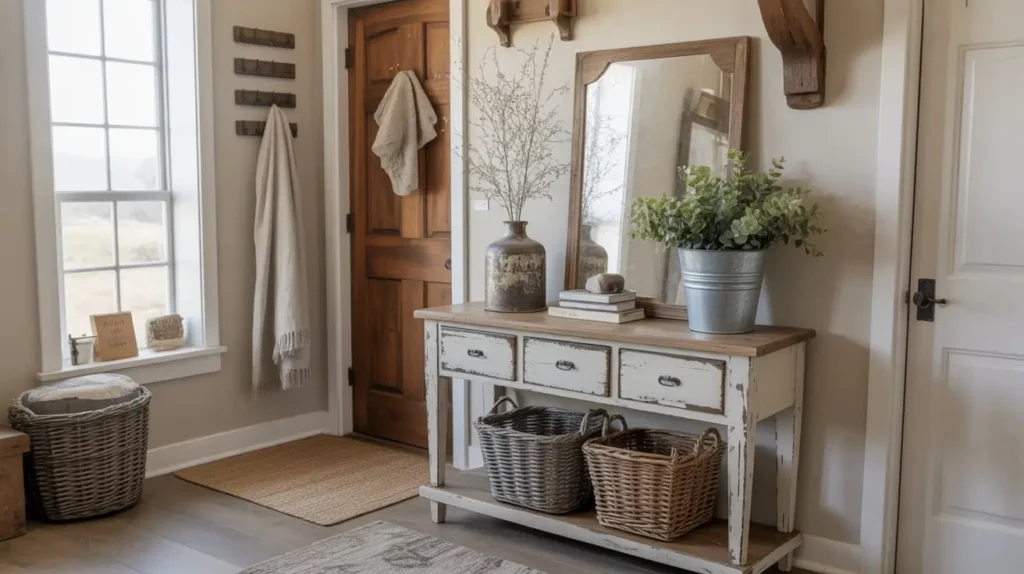
Farmhouse decor has been having a moment for, what, a decade now? And honestly, it works really well in entryways because it’s inherently practical and welcoming. I’m here for it.
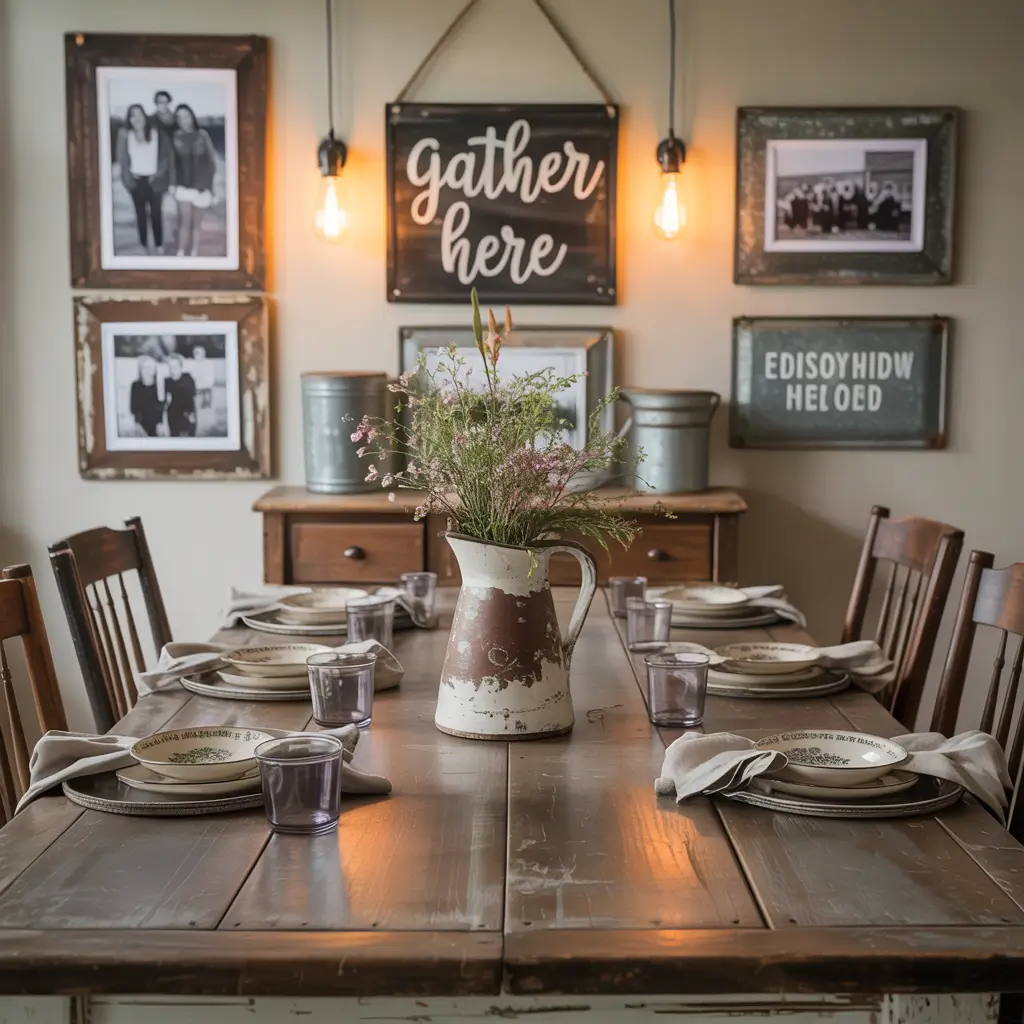
The farmhouse look is all about rustic materials, vintage finds, and functional decor. Think weathered wood, metal accents, and that “grandma’s house but make it trendy” aesthetic. My entryway has a vintage wooden crate on the floor for boots and a galvanized metal bucket for umbrellas—practical and cute.
Farmhouse entryway staples:
- Shiplap or beadboard walls (if you own your place)
- Vintage hooks or coat racks
- Wooden benches or stools
- Galvanized metal accents
- Neutral color palette with black accents
- “Home” or “Welcome” signs (use sparingly to avoid cliché)
Word of warning: farmhouse can veer into cutesy territory fast. Keep it grounded with genuine vintage pieces and avoid overdoing the mass-produced “farmhouse” decor. Authenticity is what makes this style charming.
Modern Black and White Entryway
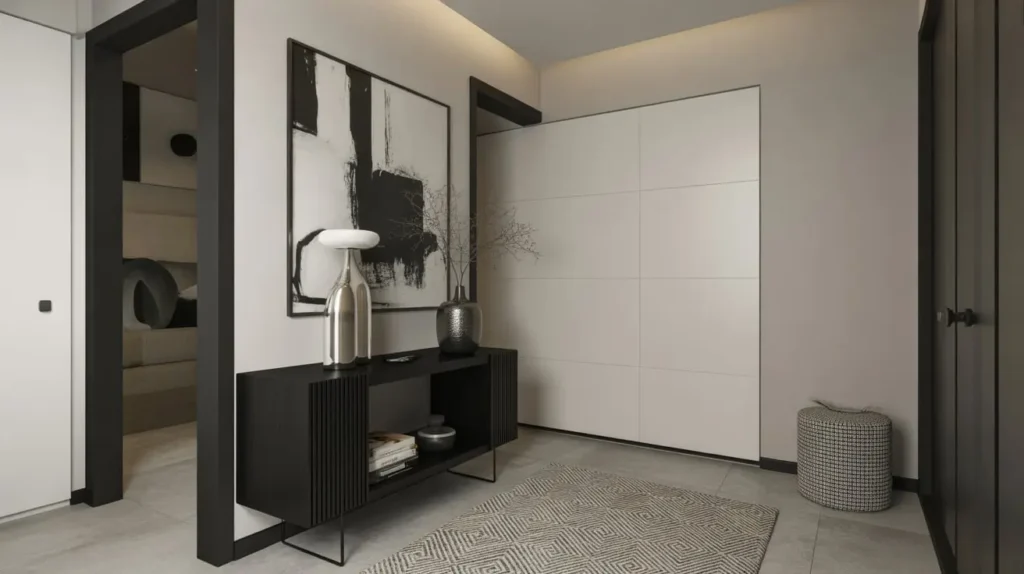
Sometimes you just want drama, you know? A modern black and white entryway is bold, graphic, and makes a serious statement without requiring much square footage.
I’ve seen this done incredibly well in tiny apartments—black accent wall, white floating shelf, geometric black and white rug. It’s striking and memorable. The high contrast creates visual impact that makes the space feel designed and intentional.
How to nail the black and white entryway:
- Start with a feature wall in black (paint or peel-and-stick wallpaper)
- Add white or light wood furniture for contrast
- Incorporate geometric patterns (striped rug, hexagonal mirror)
- Use metallic accents (chrome, silver, or brushed nickel)
- Keep it balanced—not too much of either color
This style photographs beautifully (hello, Instagram-worthy entryway), but it also lives well in real life. Just be prepared to wipe down that black surface more often—it shows dust like crazy. :/
Cozy Entryway with Layered Rugs
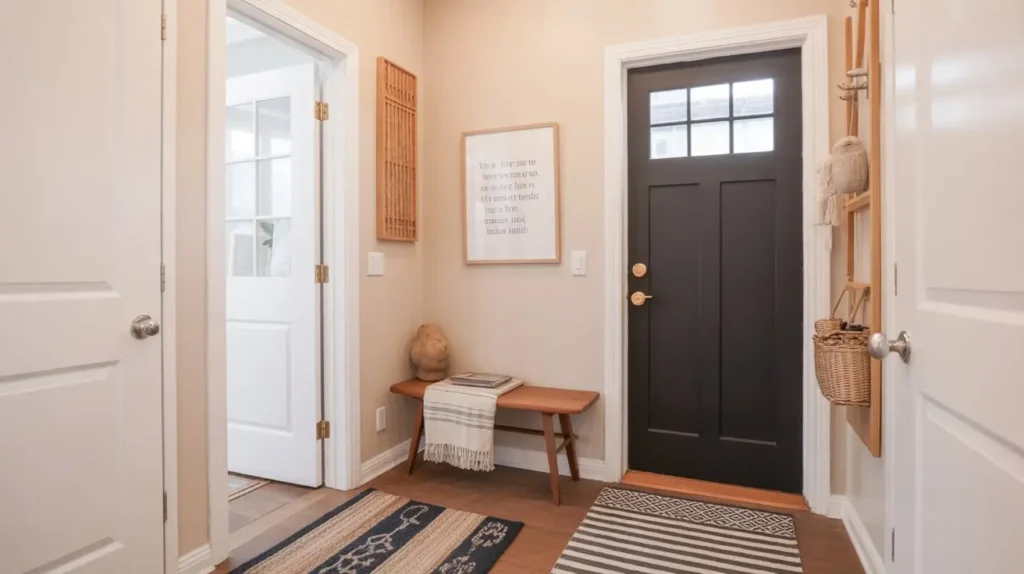
Layered rugs are having a serious moment in interior design, and they’re perfect for adding coziness and visual interest to small entryways. I’ll be honest—I was skeptical at first, but now I’m a total convert.
I layered a large jute rug with a smaller patterned Persian-style rug on top, and it instantly made my entryway feel more expensive and curated. The texture combination (natural fiber + plush pile) adds dimension that a single rug just can’t achieve.
Rug layering tips:
- Start with a larger, neutral base rug (jute, sisal, or flatweave)
- Add a smaller, patterned rug on top (Persian, Moroccan, etc.)
- Make sure the top rug is centered and proportional
- Choose complementary colors that tie your space together
- Use rug pads to prevent slipping
This works especially well if you’re renting and stuck with ugly flooring. The layered rugs cover more surface area and create a defined entry zone. Plus, it’s just really cozy to step on when you walk in the door.
Also Read: 15 Stunning Black Countertops Kitchen Ideas for Stylish Modern Spaces
Greenery-Filled Entryway Nook
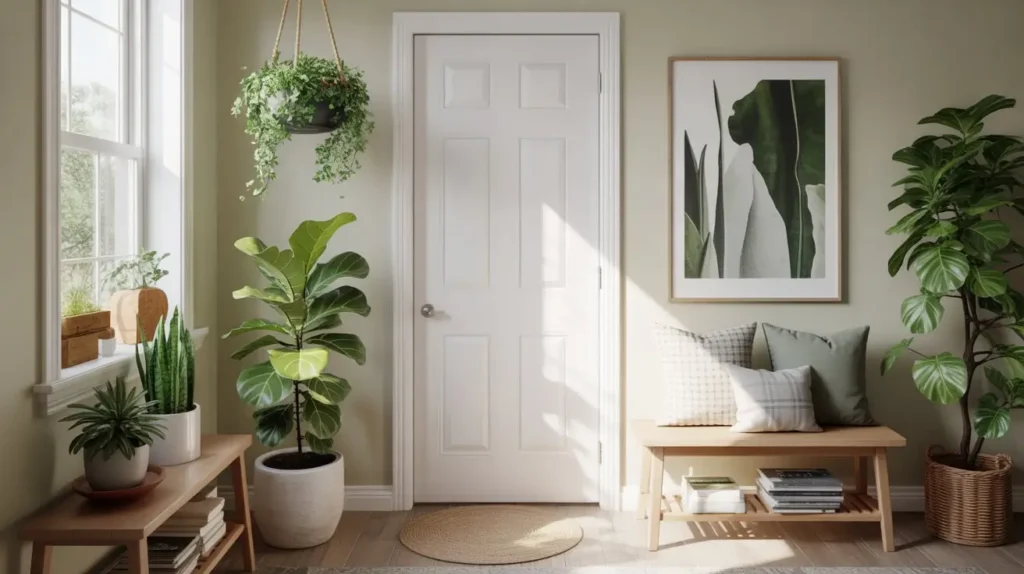
Plants make everything better—this is just a fact. A greenery-filled entryway immediately feels more welcoming and alive, even if you’re working with a tiny nook.
I’m slightly obsessed with filling every available surface with plants (my partner would say “obsessed” is an understatement), and my entryway is no exception. I’ve got a tall snake plant in the corner, a pothos on the floating shelf, and a small succulent arrangement on the console table. It’s like walking into a mini jungle, and I love it.
Best plants for entryways:
- Snake plants (low light tolerant, hard to kill)
- Pothos (thrives in various conditions, trails beautifully)
- ZZ plants (handles neglect like a champ)
- Succulents (compact and cute)
- Monstera or fiddle leaf fig (if you have space and light)
If your entryway lacks natural light, stick with low-light tolerant plants or invest in a grow light. I have a small LED grow bulb in my entryway lamp, and my plants are thriving. Also, IMO, fake plants are totally fine if you’re not a plant person—just get quality ones that actually look real.
Renter-Friendly Peel-and-Stick Wall Decor
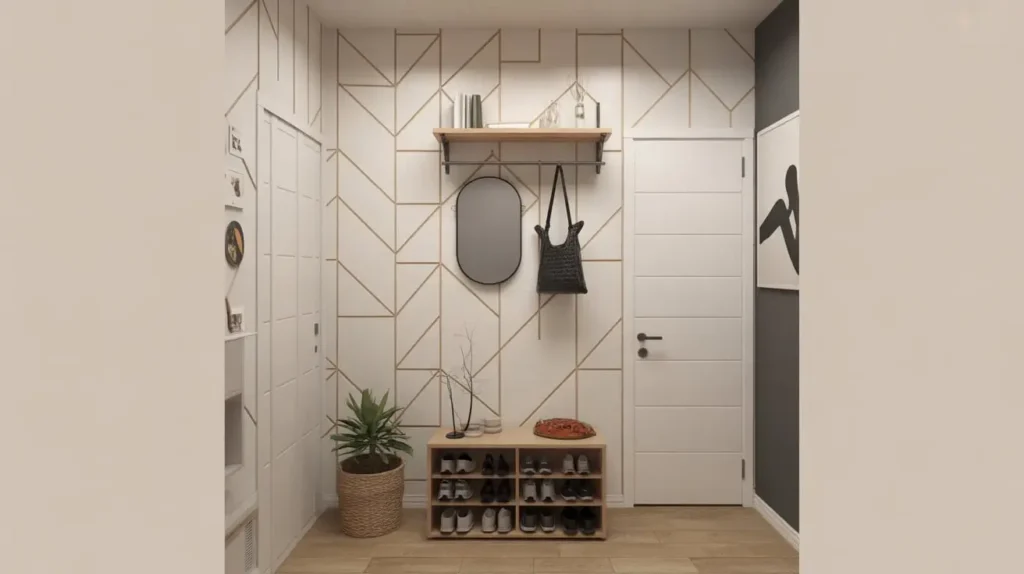
Renters, this one’s for you. Just because you can’t paint or permanently alter your space doesn’t mean you’re stuck with boring builder-grade walls. Peel-and-stick wallpaper and decals are absolute game-changers.
I lived in rentals for years and used removable wallpaper in every single one. My favorite was a subtle geometric pattern in my entryway that added visual interest without overwhelming the small space. It took maybe an hour to install and peeled off cleanly when I moved—no damage, no drama.
Renter-friendly entryway options:
- Removable wallpaper (endless pattern options)
- Peel-and-stick tile (creates a faux backsplash look)
- Adhesive hooks and shelves (damage-free hanging)
- Removable wall decals (easier than wallpaper, less commitment)
- Command strips for hanging artwork
Read reviews before buying peel-and-stick products because quality varies wildly. Some stick beautifully and remove cleanly; others are nightmares. I learned this the hard way with a cheap peel-and-stick option that left residue everywhere. Stick with reputable brands, and you’ll be golden.
Artistic Gallery Wall Entryway
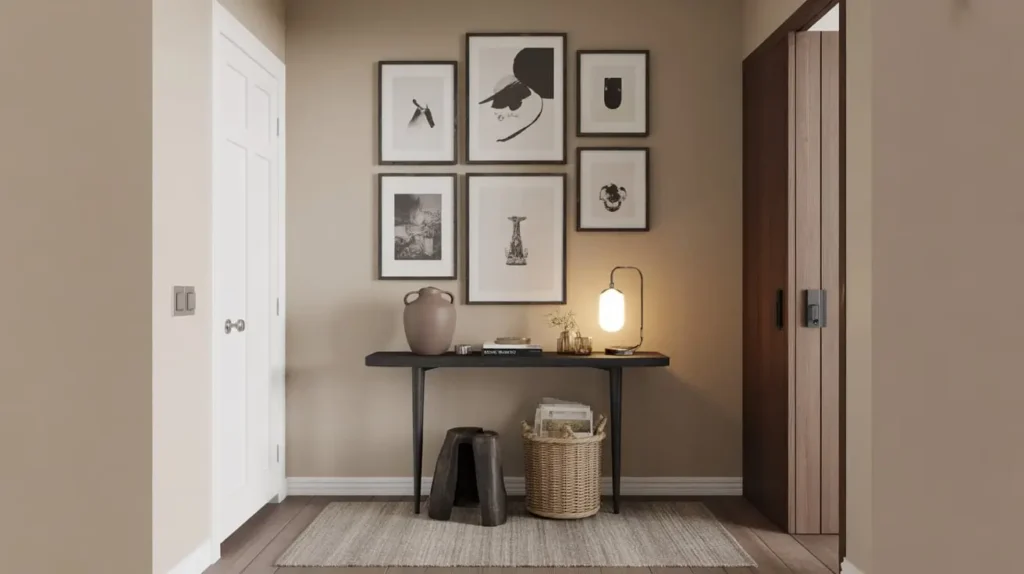
Gallery walls aren’t just for living rooms—they’re fantastic in entryways, especially small ones. A well-curated gallery wall adds personality and creates a focal point that draws the eye up, making the space feel larger.
I created a gallery wall in my entryway using a mix of family photos, art prints, and a vintage mirror. The eclectic mix tells a story and makes guests feel like they’re getting a glimpse into my life right from the entrance. It’s personal and welcoming.
Gallery wall guidelines:
- Plan your layout before hammering nails (use painter’s tape or paper templates)
- Mix frame sizes and orientations (creates visual interest)
- Maintain consistent spacing (2-3 inches between frames)
- Choose a unifying element (frame color, mat color, or theme)
- Include varied content (photos, prints, objects, mirrors)
Start with a central anchor piece and build around it. You don’t need a ton of wall space—even a vertical gallery wall in a narrow entryway looks amazing. And honestly? It’s totally okay if it’s not perfectly symmetrical. Some of the best gallery walls have that organic, collected-over-time feel.
Wrapping It Up
Look, I get it—small entryways can feel like a decorating challenge that’s barely worth the effort. But here’s the truth: this little space sets the tone for your entire home. When you walk through that door after a long day, don’t you want to feel welcomed by a space that’s organized, beautiful, and distinctly yours?
Whether you go full minimalist with neutral tones, embrace the eclectic boho vibe, or layer on that farmhouse charm, the key is making intentional choices that serve both function and style. Your entryway should work as hard as it looks good—storage for the chaos, beauty for the soul.