

15 Elegant Small Living and Dining Room Combo Ideas for Homes
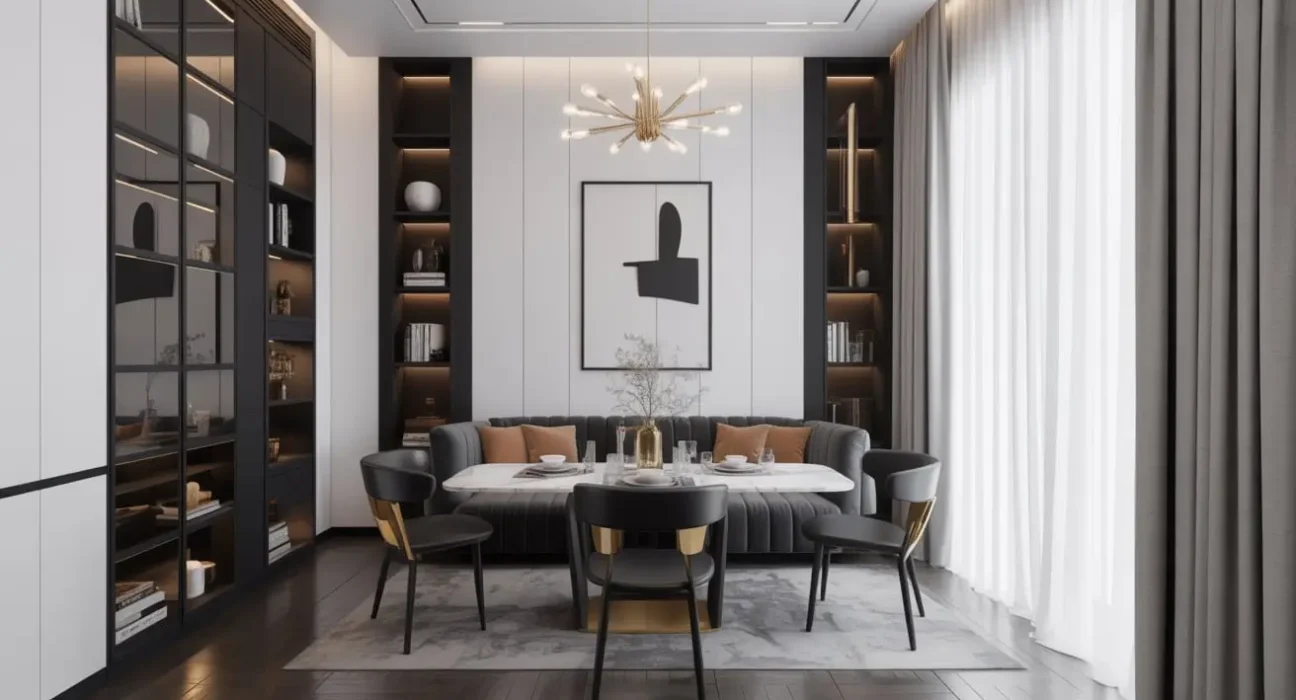
Look, I get it. You’re staring at your cramped living space wondering how on earth you’re supposed to fit both a living room AND a dining area without it looking like a furniture store threw up in your apartment. Been there, done that, got the bruised shins from bumping into too many coffee tables.
Here’s the thing: small doesn’t mean sacrificing style or functionality. I’ve spent years figuring out how to make combo spaces work without feeling like I’m eating dinner on my couch (okay, sometimes I still do that, but at least now it’s by choice). Whether you’re working with a tiny apartment, a studio, or just an awkwardly shaped room, these 15 ideas will help you create a space that actually feels intentional instead of “I gave up and shoved everything against the wall.”
Let’s jump right into the good stuff.
1. Minimalist Open-Concept Combo
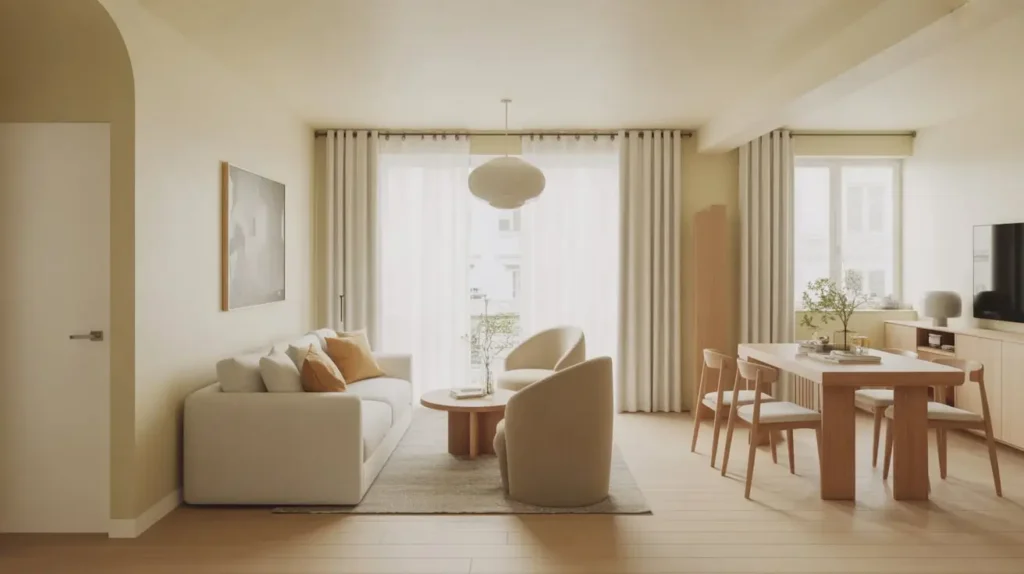
You know what’s funny? People think minimalism means boring white boxes with two pieces of furniture. Wrong. A minimalist approach to your living-dining combo actually gives you MORE breathing room, not less personality.
I love this style because it strips away the clutter that makes small spaces feel suffocating. You pick a few key pieces—a sleek sofa, a simple dining table, maybe a statement light fixture—and let them shine. The secret sauce here is negative space. Yeah, I’m talking about leaving areas intentionally empty.
Here’s what works:
- Choose furniture with clean lines and no unnecessary embellishments
- Stick to a neutral color palette (think whites, grays, beiges)
- Use multi-functional pieces like a console table that doubles as a desk
- Keep surfaces clear—seriously, resist the urge to fill every flat space
The beauty of this approach is that your eye travels smoothly from the living area to the dining space without hitting visual roadblocks. I once helped my sister transform her 400-square-foot apartment using this method, and people literally couldn’t believe it was the same place. The trick? We removed about 40% of her stuff. She wasn’t thrilled initially, but now she swears by it.
2. Scandinavian Neutral Space
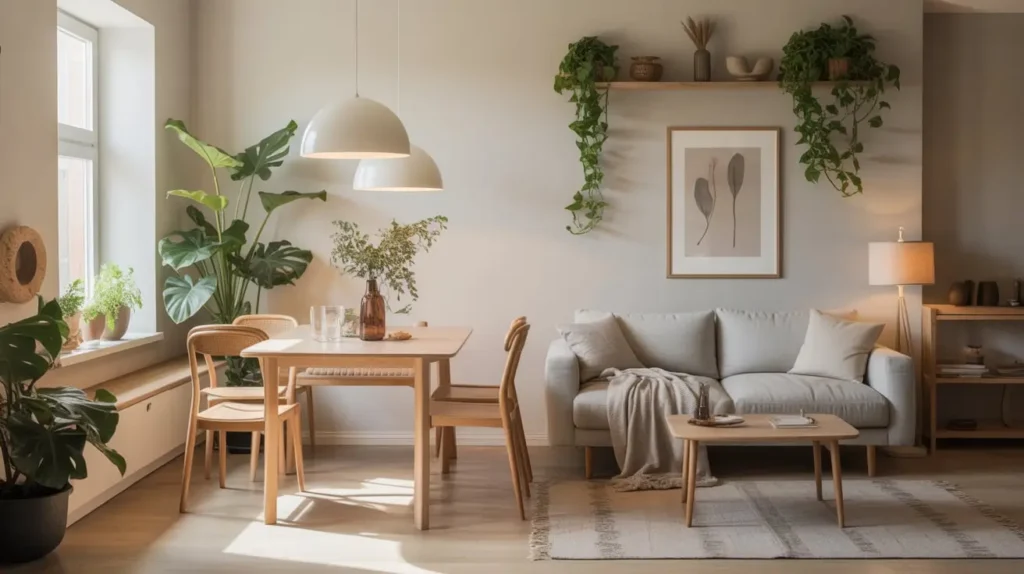
Scandinavian design basically perfected the art of making small spaces feel cozy yet spacious. How do they do it? Light woods, white walls, and textures for days. This isn’t rocket science, but it works like magic.
I’m obsessed with how Scandi style balances warmth and minimalism. You get the clean aesthetic without the cold, sterile vibe that sometimes comes with modern design. The Scandinavians live in dark, cold climates, so they’ve mastered creating inviting indoor spaces—and you can steal all their tricks.
Key elements to nail this look:
- Light wood furniture (birch, ash, or pine work great)
- White or cream walls to maximize light reflection
- Add warmth with textured throws, wool rugs, and linen curtains
- Incorporate greenery—plants are non-negotiable in Scandi design
- Choose simple pendant lights with black or brass accents
The dining table should be wood (obviously) with simple chairs—maybe white or light gray. Your sofa can be neutral but pile on those textured cushions. I added a sheepskin throw to my reading chair, and suddenly my whole space felt more “hygge.” FYI, that’s the Danish concept of coziness, and it’s basically the entire vibe you’re going for here.
3. Compact Modern Layout
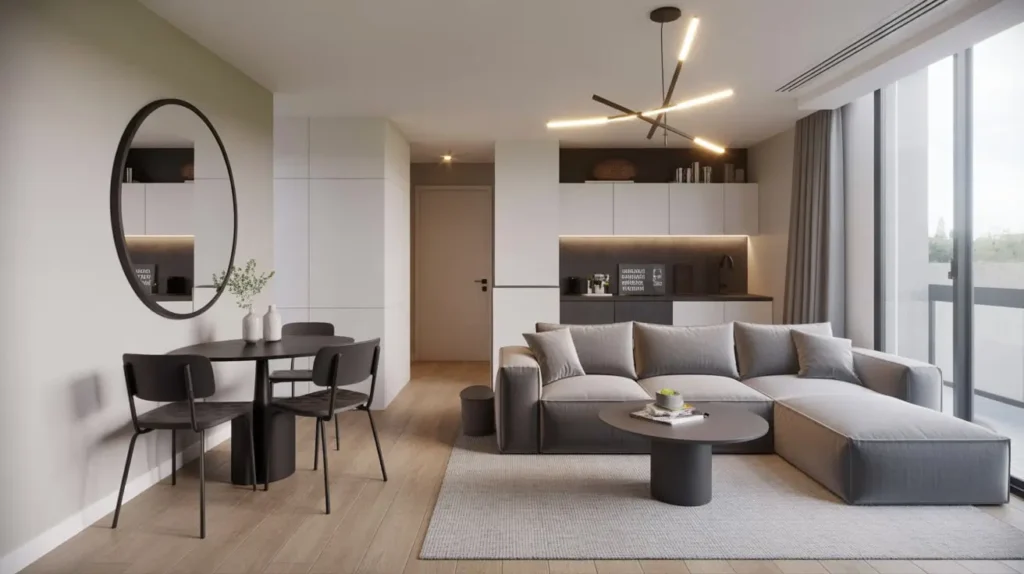
Modern design loves efficiency, which makes it perfect for combo spaces. This approach prioritizes function without sacrificing aesthetics—basically, everything needs to earn its place in your room.
What I appreciate most about modern layouts is the emphasis on flow. You’re not randomly placing furniture; you’re creating zones that make sense. Your sofa might face the TV but also create a natural boundary between living and dining areas. Smart, right?
Here’s how to execute this:
- Use furniture placement to define separate zones
- Choose pieces with geometric shapes and smooth surfaces
- Incorporate built-in storage wherever possible
- Stick to a limited color palette (2-3 colors max)
- Add metallic accents—chrome, stainless steel, or brushed nickel
The dining table in a modern setup should be streamlined—think glass top with metal legs or a glossy white finish. Your living area can feature a low-profile sofa and a sleek media console. I recently switched to a wall-mounted TV unit, and the floor space I gained back was honestly life-changing. No more awkward furniture tetris every time I vacuum.
4. Boho Chic Living-Dining Blend
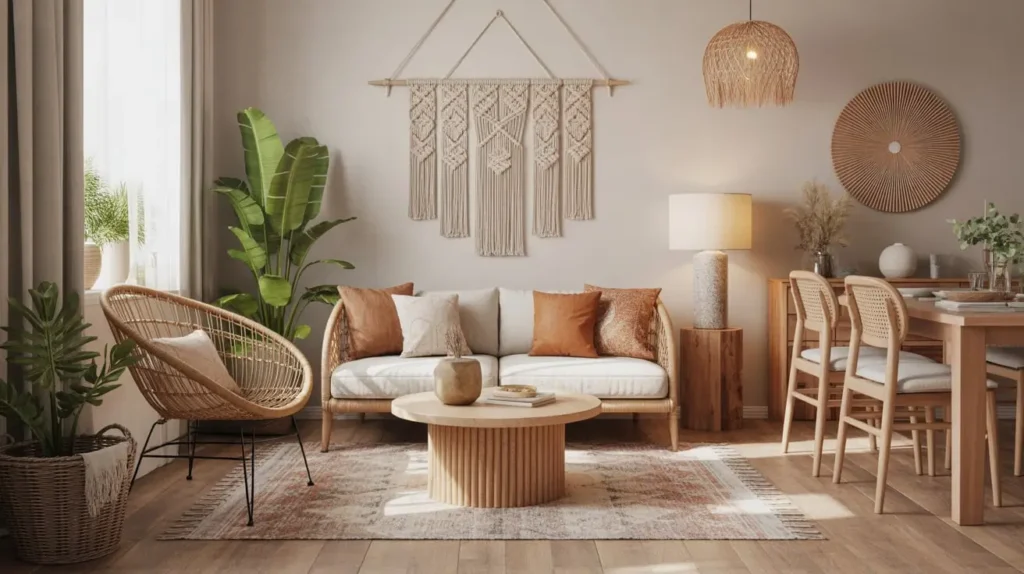
Okay, hear me out. I know boho has been EVERYWHERE for the past few years, but there’s a reason—it’s actually perfect for small combo spaces. The eclectic nature of bohemian style means you can mix and match furniture without everything looking like a coordinated set.
Boho thrives on layering, which sounds counterintuitive for small spaces, but it works. You layer textures, patterns, and colors to create depth and interest. The result? A space that feels collected over time rather than bought in one IKEA trip.
Essential boho elements:
- Mix wood tones—don’t stress about matching
- Layer rugs, cushions, and throws in various patterns
- Incorporate plants everywhere (hanging, potted, trailing)
- Add macramé, rattan, or wicker pieces
- Use warm, earthy colors with pops of jewel tones
Your dining table can be rustic wood (imperfections are a plus), paired with mismatched chairs—yes, I said mismatched. For the living area, a low sofa piled with cushions in different patterns creates that relaxed boho vibe. I hung a macramé wall hanging above my dining table, and suddenly the whole space felt more intentional. Who knew some knotted rope could do that?
5. Rustic Farmhouse Combo
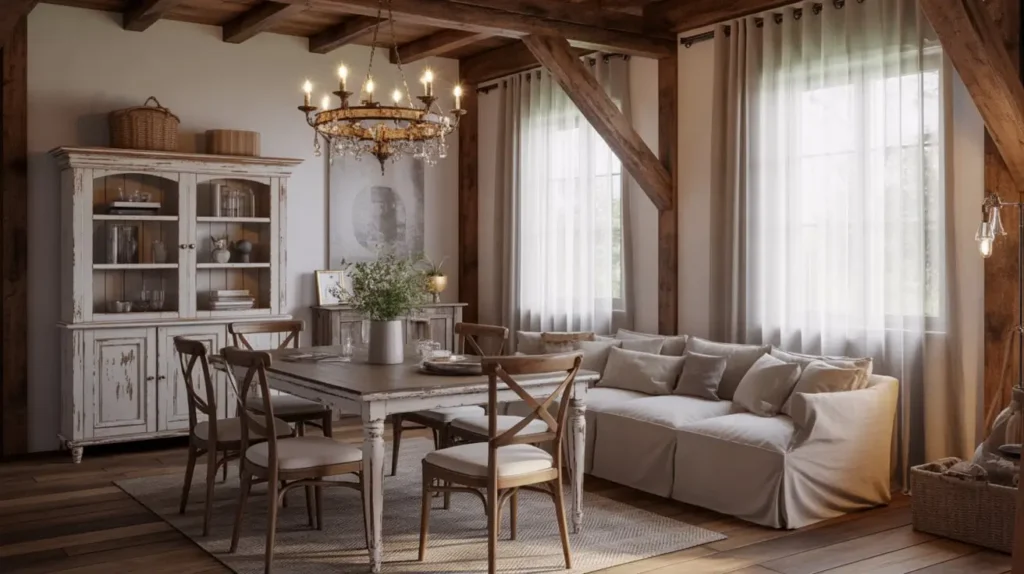
Nothing says “come sit and stay awhile” like farmhouse style. This approach brings warmth and character to small spaces through reclaimed wood, vintage finds, and that lived-in feel everyone’s craving.
I’ll be honest—farmhouse can go wrong fast if you’re not careful. Too much, and you’re living in a Cracker Barrel. But done right? Your small combo space feels like a charming cottage retreat. The trick is balancing rustic elements with cleaner, more modern pieces.
Farmhouse must-haves:
- Reclaimed wood dining table (or at least something that looks reclaimed)
- Shiplap or beadboard accent wall if you’re feeling ambitious
- Vintage or vintage-style lighting—Edison bulbs are your friend
- Neutral color scheme with whites, creams, and natural wood tones
- Open shelving in the dining area for displaying dishes
Your living area should feel cozy with a comfortable sofa (maybe in a neutral linen), and you can add farmhouse charm through accessories like galvanized metal accents or vintage signs. I found an old ladder at a flea market and use it as a blanket holder—functional AND it fits the aesthetic. Win-win.
Also Read: 15 Creative Small Space Living Room Ideas for Modern Homes
6. Mid-Century Small Space Design
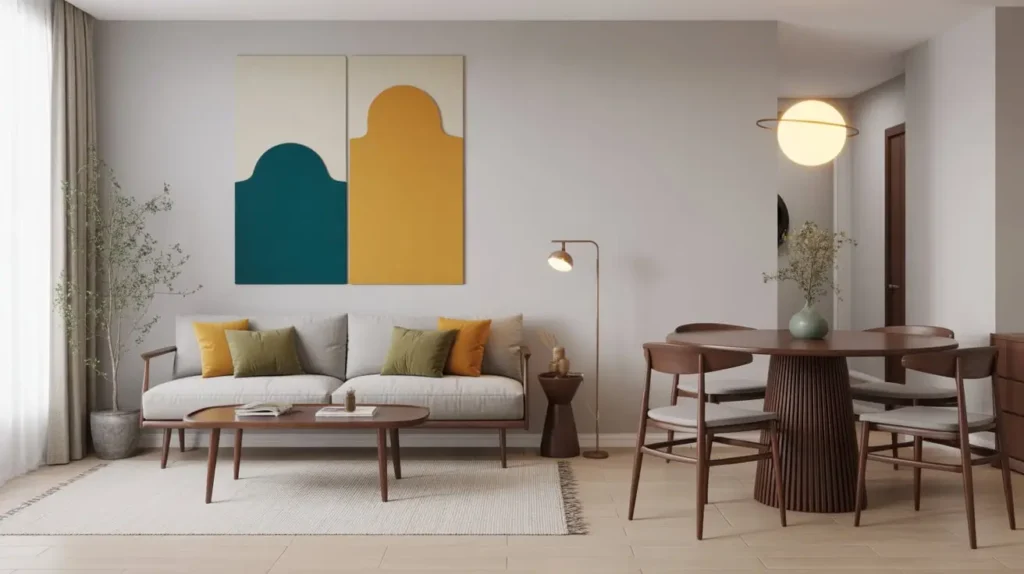
Mid-century modern was literally designed for efficiency and smaller post-war homes, so it’s basically built for your combo space challenge. Those sleek lines and tapered legs create visual lightness that makes rooms feel bigger.
What makes mid-century work so well is the elevated furniture. When you can see underneath your sofa and dining chairs, the room automatically feels more spacious. It’s like a magic trick, but it’s just smart design. 🙂
Here’s what defines this style:
- Furniture with tapered wooden legs—this is non-negotiable
- Mix of organic and geometric shapes
- Bold accent colors (mustard yellow, burnt orange, teal)
- Statement lighting—think Sputnik chandeliers or arc floor lamps
- Mix of materials: wood, metal, glass, and molded plastic
Your dining set should have those characteristic angled legs, and a tulip-style table works great for tight spaces. The living area needs a low-profile sofa—maybe with those iconic button tufts. I inherited my grandmother’s mid-century credenza, and I use it as a TV stand. Not only does it provide storage, but it also gives the whole room an authentic vintage vibe that new furniture just can’t replicate.
7. Cozy Corner Dining Setup
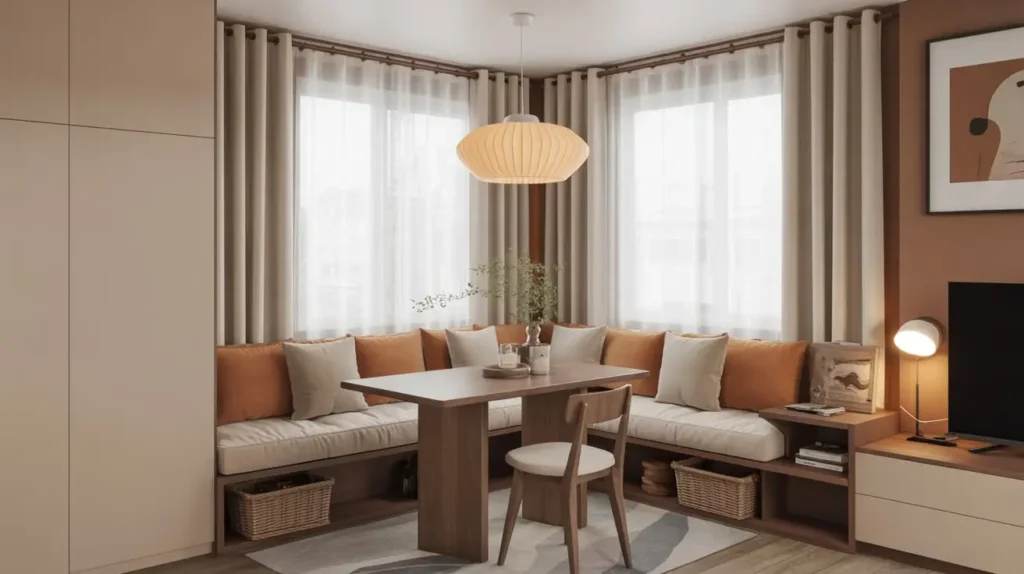
Ever thought about tucking your dining area into a corner? It sounds limiting, but it’s actually genius for maximizing your living space. A corner dining setup frees up the center of your room for living area furniture and creates a naturally defined zone.
I resisted this layout for way too long because I thought corner dining was just for breakfast nooks. Turns out, it works for regular dining too, and it makes your space feel intentional rather than cramped. The key is making that corner feel special, not like an afterthought.
Make your corner dining area work:
- Use a round or square table that fits snugly in the corner
- Add a banquette or built-in bench along the walls for seating
- Hang artwork or a mirror above the dining area to draw the eye
- Use a pendant light to define the space
- Include corner shelving for both storage and decoration
Your living area gets the prime real estate in the middle of the room, which means your sofa and coffee table become the focal points. I added cushions and throws to my dining bench to make it feel more inviting, and now guests actually want to sit there instead of gravitating to the couch. Plus, the bench provides hidden storage—because who doesn’t need more storage?
8. Industrial Loft-Inspired Combo
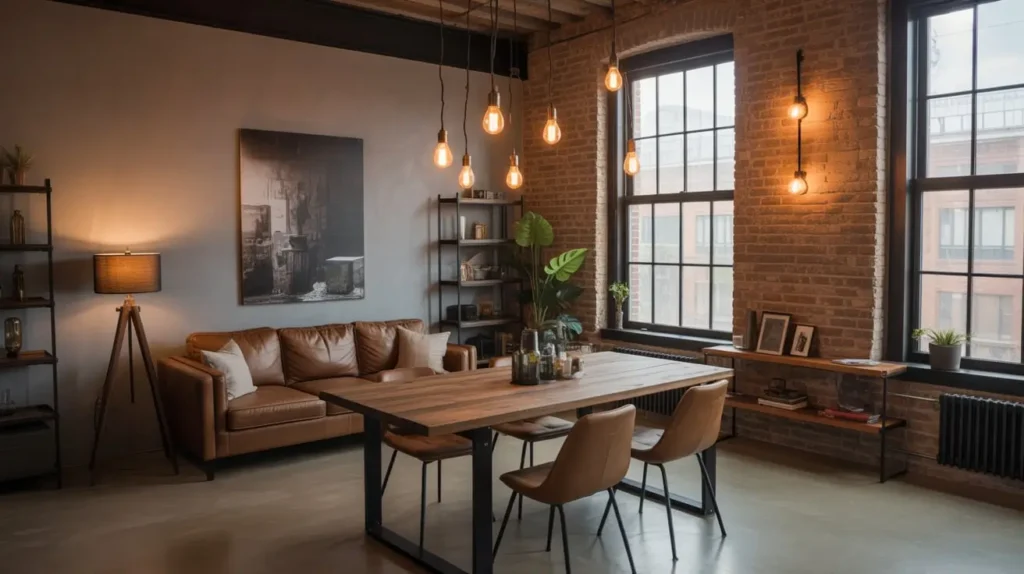
Want your small space to feel like a trendy urban loft? Industrial style brings that raw, edgy aesthetic without requiring actual exposed brick or ductwork (though if you have them, definitely show them off).
Industrial design embraces imperfection and celebrates materials usually hidden—metal, concrete, exposed wood. In a small combo space, this translates to furniture that feels substantial but doesn’t overwhelm. The trick is balancing the hard industrial elements with softer textures so you don’t feel like you’re living in a warehouse.
Industrial essentials:
- Metal and wood furniture combinations
- Exposed bulb lighting or metal cage pendants
- Concrete or faux concrete accents (coffee table, dining table base)
- Leather or distressed fabric upholstery
- Black metal shelving units for open storage
Your dining table should feature heavy wood with metal legs or hardware. For the living area, a leather sofa (or faux leather if you’re budget-conscious) anchors the space. I added black metal wall shelves between my living and dining areas, and they not only provide storage but also reinforce that industrial vibe. IMO, industrial is one of the easiest styles to DIY—most of the aesthetic comes from materials and finishes you can find at hardware stores.
9. Japandi Calm Living-Dining Space
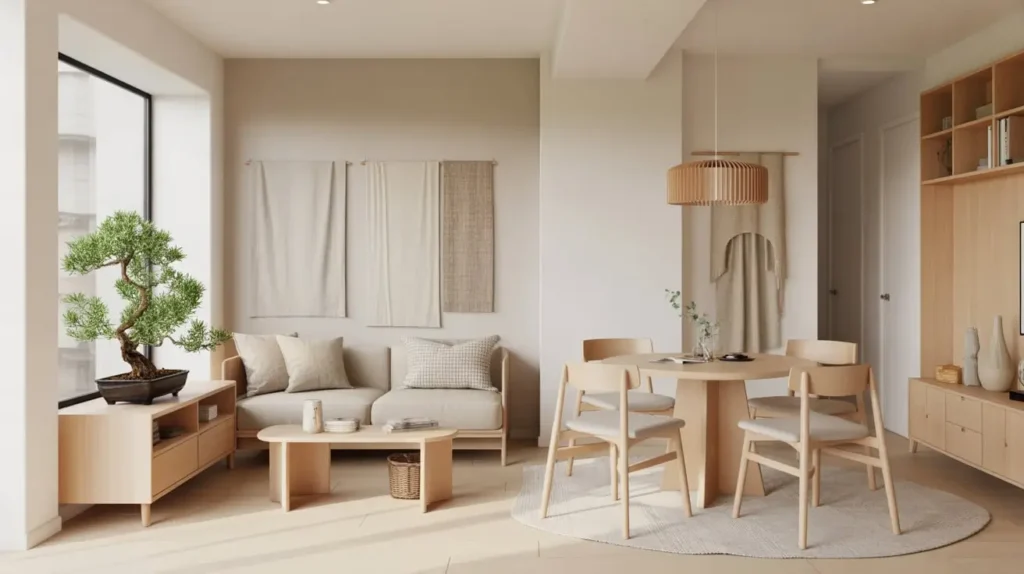
Japandi combines Japanese minimalism with Scandinavian functionality, and the result is basically zen perfection for small spaces. This hybrid style emphasizes simplicity, natural materials, and intentional design—every piece has a purpose.
What I love about Japandi is how it forces you to be thoughtful about what you bring into your space. It’s minimalist but warm, simple but interesting. You’re creating a calm retreat rather than a showroom, which honestly feels really good when you’re dealing with limited square footage.
Japandi principles:
- Natural wood furniture in light and medium tones
- Neutral color palette with muted greens, soft grays, and warm whites
- Clean lines with subtle curves (less rigid than pure Scandinavian)
- Handcrafted or artisanal pieces that show natural imperfections
- Minimal decoration—every item should be functional or meaningful
Your dining table should be simple wood with elegant proportions, paired with minimal chairs. The living area needs a low-profile sofa, probably in linen or cotton in a neutral shade. I replaced my cluttered coffee table with a simple wooden platform, and just that one change made my entire space feel calmer. Less really is more with this style—resist the urge to fill every space.
10. Color-Zoned Small Room Plan
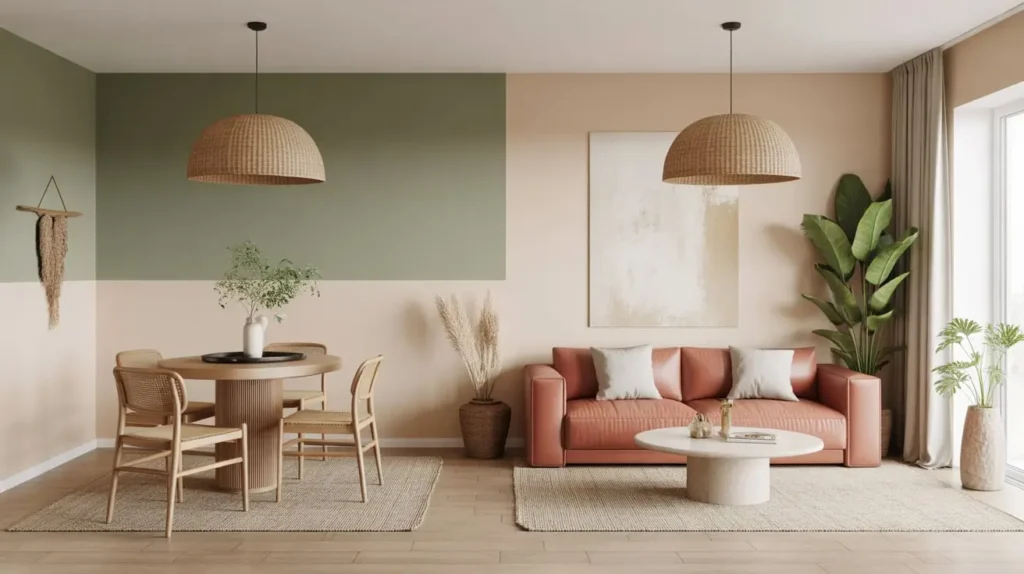
Can’t structurally separate your living and dining areas? Use color to create visual zones. This approach defines distinct spaces without adding walls or bulky furniture dividers—and it’s way more fun than you’d think.
The beauty of color zoning is that you control exactly how dramatic or subtle the separation feels. You can go bold with contrasting colors or keep it sophisticated with tonal variations. Either way, your brain registers the different zones immediately, which makes the combo space feel more organized.
How to color-zone effectively:
- Paint an accent wall behind your dining table in a different color
- Use contrasting rug colors for living and dining areas
- Choose different but complementary color schemes for each zone
- Repeat accent colors throughout both areas to maintain cohesion
- Use wallpaper in one zone and paint in the other
I went with a moody dark blue wall behind my dining area while keeping the living space walls white, and suddenly my studio apartment felt like it had two actual rooms. The dining table and chairs echo the blue in their upholstery, while the living area has blue cushions. It’s all connected but distinctly separate. The best part? Paint is cheap and totally changeable if you get bored.
Also Read: 15 Trendy Very Small Living Room Ideas for 2025 Homes
11. Dual-Purpose Furniture Layout
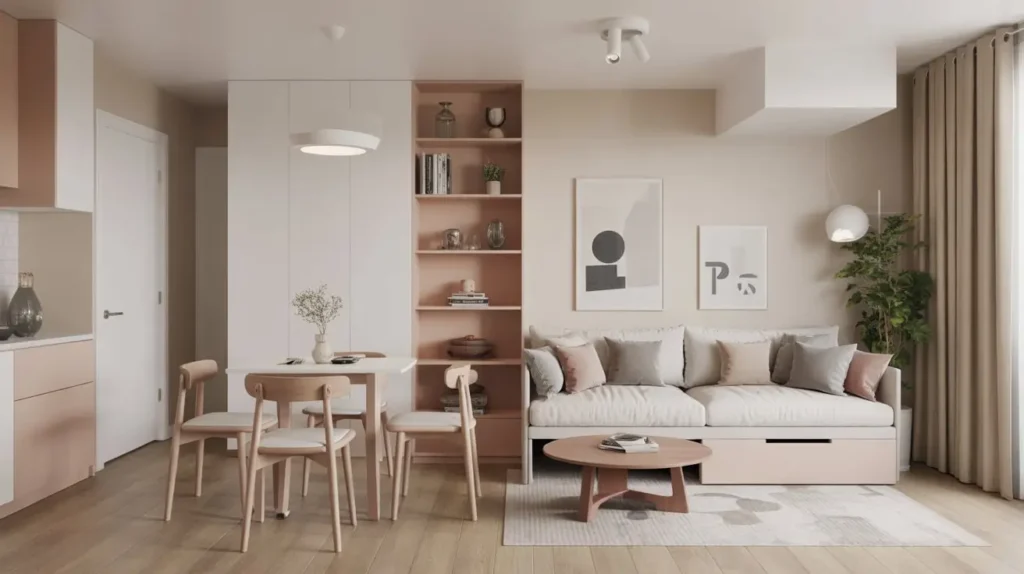
Let’s talk about furniture that works double duty—because in a small combo space, every piece needs to pull its weight. I’m talking dining tables that extend, ottomans that store stuff, and sofas that become beds.
This approach isn’t about sacrificing style for function; it’s about choosing pieces that are smart AND good-looking. Modern designers have gotten really creative with multi-functional furniture, so you’re not stuck with those clunky convertible pieces from the ’90s anymore.
Multi-functional furniture winners:
- Extendable dining tables that downsize for everyday and expand for guests
- Ottomans with storage that serve as extra seating
- Console tables that fold out into dining tables
- Nesting tables that separate when you need more surface area
- Sofa beds or daybeds that accommodate overnight guests
I recently invested in a dining table that folds down to a slim console when I’m not using it, and it literally changed my life. When it’s just me, I have tons of floor space. When friends come over, I pull it out to full size. My living room ottoman has storage inside for all my throw blankets, which means I’m not constantly tripping over them. Smart furniture isn’t cheap, but when it solves multiple problems? Totally worth it.
12. Light and Airy Coastal Combo
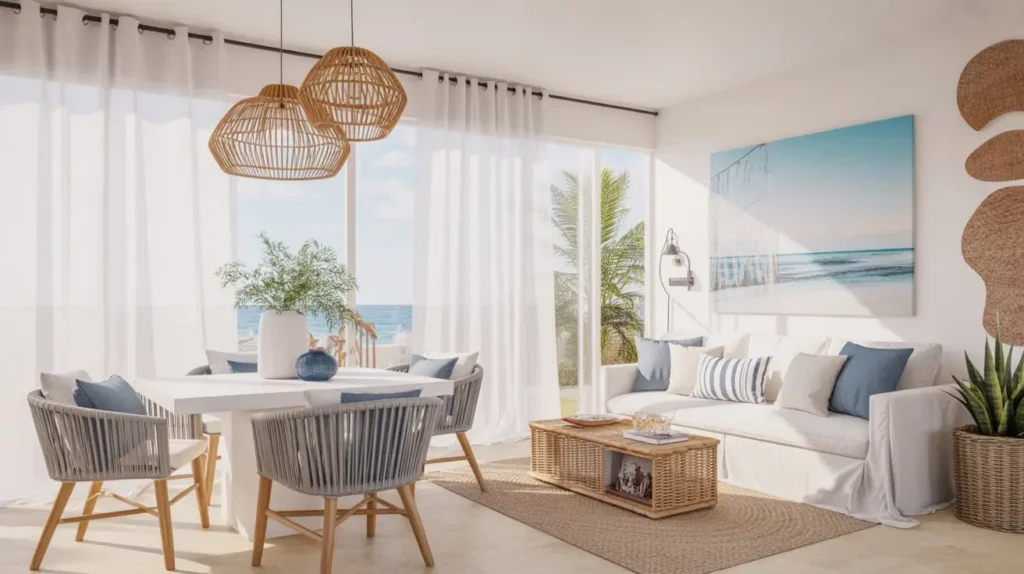
Coastal style isn’t just for beach houses—it’s actually perfect for making small spaces feel breezy and open. The light colors and natural textures create an expansive feel even when your square footage says otherwise.
Before you roll your eyes thinking I’m suggesting you cover everything in seashells and nautical stripes, hold up. Modern coastal design is way more sophisticated. We’re talking soft blues, sandy neutrals, and natural materials that evoke the beach without screaming “tourist trap gift shop.”
Coastal elements that work:
- White or cream as your base color
- Soft blues, sea greens, and sandy beige accents
- Natural fiber rugs (jute, sisal, seagrass)
- Light wood furniture, preferably weathered or whitewashed
- Linen or cotton fabrics in light colors
- Subtle nautical touches—a rope mirror, driftwood decor
Your dining area can feature a whitewashed wood table with simple white or natural fiber chairs. The living area should feel relaxed with a slipcovered sofa in white or light gray. I added blue and white striped cushions to my sofa (yes, stripes, but tasteful ones), and combined with my jute rug, the whole space feels like a coastal retreat. The vibe is less “beach themed” and more “I casually live by the ocean and have impeccable taste.”
13. Elegant Monochrome Setup
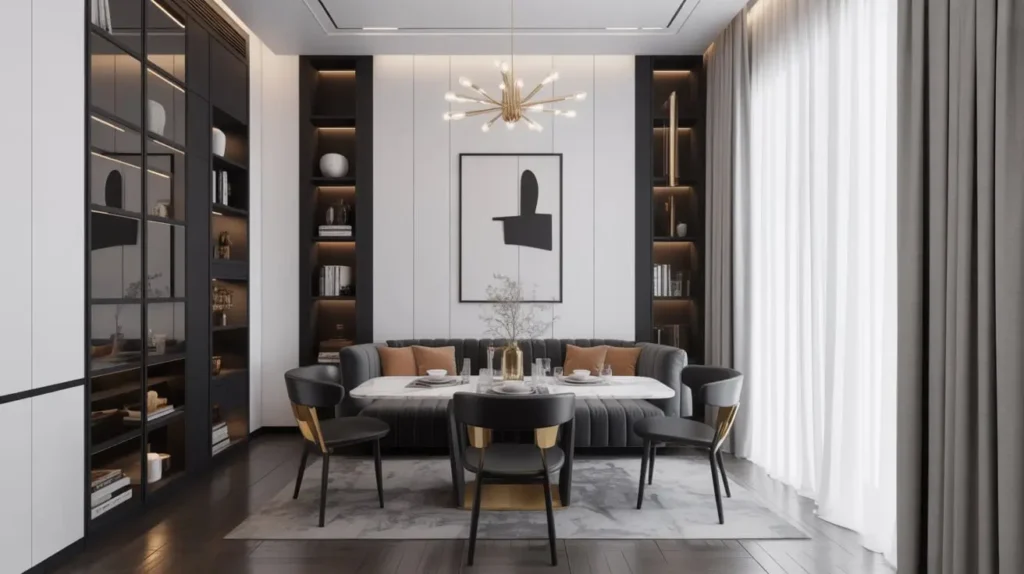
Monochrome doesn’t mean boring—it means sophisticated and cohesive. When you work within one color family, you eliminate visual clutter and create a seamless flow between your living and dining areas.
I was skeptical about monochrome at first because I thought it would feel flat, but the secret is working with different shades, textures, and materials within your chosen color. A monochrome room has depth and interest; it just achieves it differently than a room full of contrasting colors.
Monochrome success strategies:
- Choose one main color (black and white, all grays, various blues, etc.)
- Use at least 5-7 different shades within that color family
- Mix textures obsessively—velvet, linen, leather, wood, metal
- Add dimension through patterns (geometric, organic, textured)
- Include metallic accents that complement your color (brass, chrome, copper)
An all-gray scheme works beautifully: charcoal dining chairs, medium gray walls, light gray sofa, and various gray accessories. Add warmth with different materials—a velvet cushion here, a nubby throw there. I committed to a blue monochrome scheme in my space, ranging from navy to powder blue, and the cohesiveness actually makes the room feel bigger. Your eye isn’t jumping around trying to process different colors, so the space reads as one unified area. Plus, shopping becomes easier when you have a defined color palette. :/ (Okay, that’s a lie—I still buy too much stuff.)
14. Vintage-Inspired Compact Space
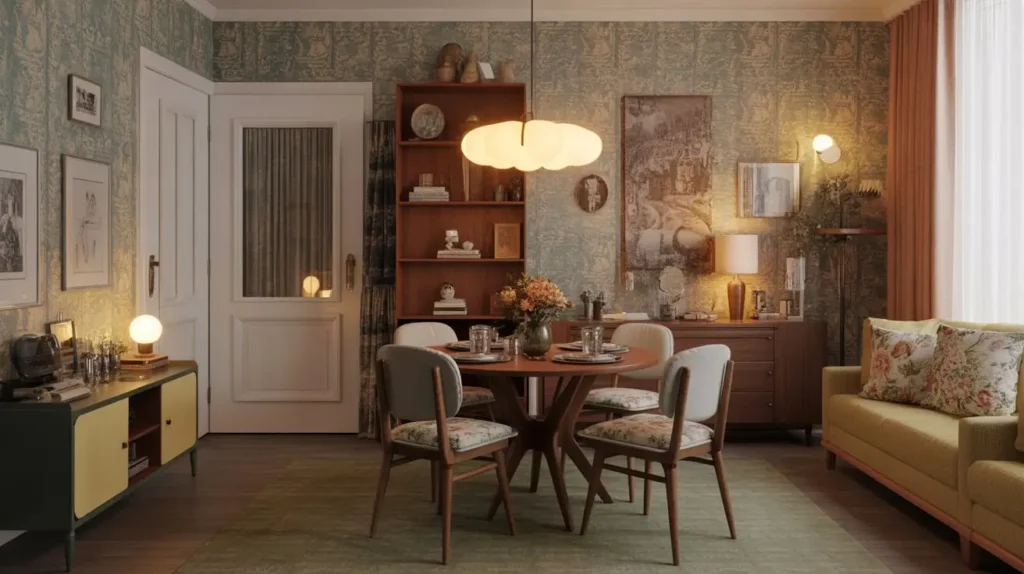
Vintage style brings character and charm that new furniture just can’t match, and it’s perfect for making small combo spaces feel collected and curated rather than cookie-cutter. Plus, shopping secondhand is better for your wallet AND the planet.
The key to vintage style in a small space is editing ruthlessly. You want pieces with personality, but you don’t want your home to look like an antique shop exploded. Choose a few statement vintage pieces and build around them with simpler, more contemporary items.
Vintage decorating guidelines:
- Mix eras—don’t feel pressured to stick to one decade
- Choose vintage dining chairs (easier to find than full tables)
- Add a vintage rug to anchor the space
- Use vintage lighting fixtures as statement pieces
- Include vintage accessories and art rather than all furniture
My dining area features vintage wooden chairs I found at an estate sale—no two match perfectly, but they’re all from the same era and finish. I paired them with a simple modern table so the chairs stand out. The living area has a vintage coffee table and some retro artwork, but the sofa is new. This mix of old and new keeps the space from feeling like a time capsule. The best part? Vintage furniture was built to last, so those old pieces are often sturdier than modern particleboard stuff.
15. Smart Studio Apartment Combo
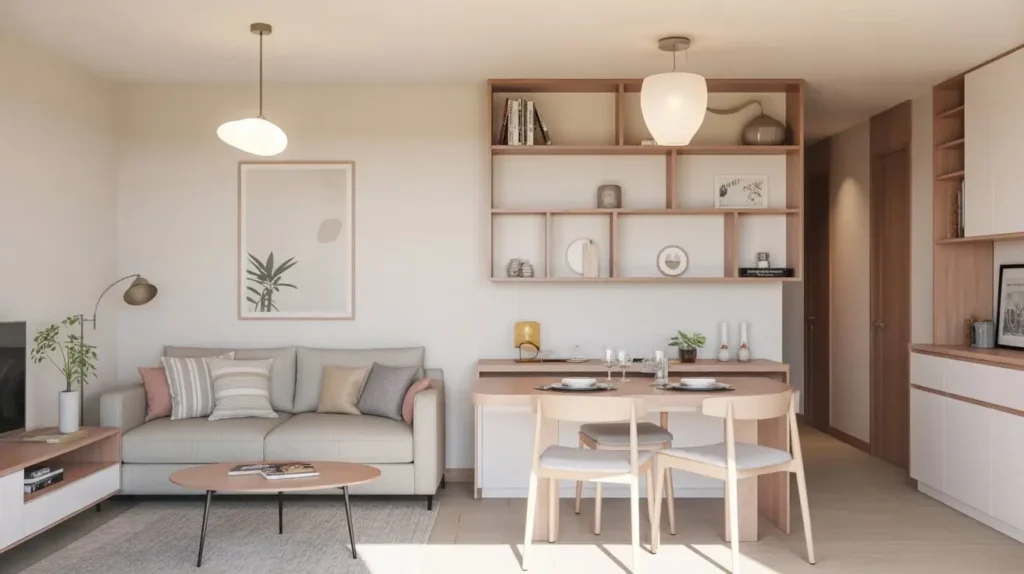
Studio apartment living requires next-level space planning, and a smart layout makes the difference between “cozy” and “claustrophobic.” The goal is creating distinct zones within one continuous space—and yes, it’s totally doable.
I’ve lived in studios, and I’ve visited friends in studios that felt spacious and others that felt like they were slowly closing in. The difference? Thoughtful furniture placement and strategic zoning. You need to define areas without chopping up the space with walls or heavy dividers.
Studio-smart strategies:
- Use furniture placement to create natural boundaries
- Position your sofa as a room divider (not against a wall)
- Choose a small-scale dining table that doesn’t dominate
- Incorporate vertical storage to maximize floor space
- Use rugs to define zones—one for living, one for dining
- Keep sight lines open; avoid blocking windows
Place your sofa facing away from the dining area, creating a natural division between living and eating zones. Your dining table can fit against a wall or in a corner, keeping the center of the room open. I use a bookshelf as a low-profile divider between my sleeping area and living space—it provides storage and separation without making the studio feel smaller. The number one mistake people make in studios? Pushing all furniture against the walls. Don’t do it. Float your furniture to create zones, and your studio will feel like an actual apartment instead of one big room with stuff around the edges.
Final Thoughts
Look, designing a small living and dining combo isn’t about making compromises—it’s about making smart choices. Every space has potential; you just need to find the right approach that fits your lifestyle and aesthetic preferences.
I’ve tried most of these styles in various apartments over the years, and here’s what I’ve learned: the “right” design is the one that makes you actually want to be in your space. Maybe you’re drawn to the calm simplicity of Japandi, or maybe you need the cozy warmth of farmhouse style. Both work in small spaces when executed thoughtfully.
The beauty of combo spaces is that they force you to be intentional. You can’t just buy furniture on a whim because there’s literally nowhere to put it. This limitation actually creates better design—who knew? Each piece has to earn its place, which means your space ends up feeling curated rather than cluttered.
Start with the style that speaks to you, invest in quality multi-functional pieces when possible, and don’t be afraid to mix elements from different approaches. Your living-dining combo should reflect how you actually live, not what some design magazine says you should do. And remember: you can change your mind. Paint is cheap, furniture can be sold, and that’s the fun of it.