

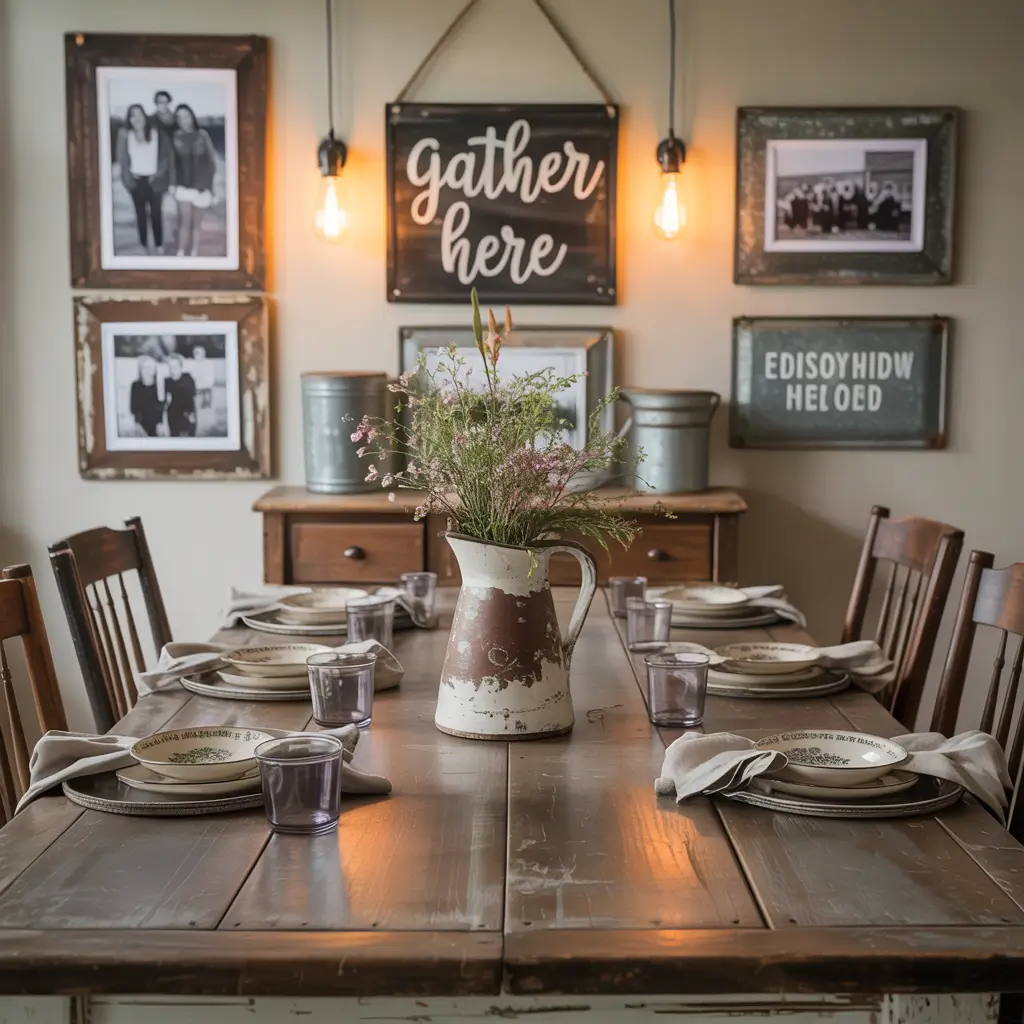
15 Beautiful Minimalist Living Room Ideas for Serene Vibes

You know that feeling when you walk into a room and just… exhale? That’s what a well-executed minimalist living room does to you. I’m not talking about those sterile, “did anyone actually live here?” spaces that look like nobody’s allowed to sit on the furniture. I’m talking about intentional simplicity that actually makes you want to curl up with a book and never leave.
Let me tell you, I used to think minimalism meant boring. White walls, zero personality, maybe a sad plant in the corner. Boy, was I wrong. After living through my own cluttered nightmare (picture magazines everywhere, random decorative objects I bought “just because,” and way too many throw pillows), I finally got it. Less really can be more when you do it right.
So grab your coffee, and let’s chat about 15 minimalist living room ideas that’ll help you create that serene vibe without making your space look like a waiting room. Trust me, your stressed-out brain will thank you.
Scandinavian Minimalist Living Room

Okay, can we just appreciate how the Scandinavians absolutely nailed the minimalist living room concept? These folks deal with long, dark winters, so they know a thing or two about creating cozy spaces that don’t feel cluttered.
The Scandinavian approach focuses on three main elements: light, functionality, and natural materials. Think clean white walls that bounce light around the room, simple furniture with sleek lines, and maybe a gorgeous sheepskin throw draped over your sofa. Nothing screams “I have my life together” quite like a Scandi living room 🙂
Here’s what makes this style work:
- Neutral color palette: Whites, grays, and soft beiges dominate
- Natural wood accents: Light woods like birch, pine, or ash
- Minimal decor: Only display items that genuinely make you happy
- Textiles for warmth: Chunky knit blankets, linen cushions, wool rugs
The beauty of Scandinavian minimalism? You don’t sacrifice comfort for aesthetics. I’ve noticed that every piece serves a purpose, but nothing feels cold or unwelcoming. Your coffee table might be a simple wooden design, but it’s perfectly functional. Your sofa probably has clean lines, but it’s deep enough to actually relax in.
Pro tip: Add a single statement piece, like a modern floor lamp or an abstract art print, to keep things interesting without overwhelming the space.
Japandi Style Living Room

Ever wonder what happens when Japanese minimalism meets Scandinavian coziness? You get Japandi, and honestly, it’s become one of my favorite design trends. This fusion style takes the best of both worlds and creates something genuinely special.
Japanese design brings that zen philosophy—everything has its place, every object matters. Scandinavian design adds warmth and livability. Together? Chef’s kiss. The result feels both meditative and inviting, which is exactly what your living room should be.
What defines a Japandi living room:
- Low-profile furniture: Think platform sofas and low coffee tables
- Natural textures: Rattan, bamboo, linen, and cotton
- Muted earth tones: Grays, beiges, soft greens, and warm browns
- Clean lines with organic shapes: Balance between geometric and natural forms
- Wabi-sabi elements: Embrace imperfection—that handmade ceramic vase with slight irregularities? Perfect.
I love how Japandi doesn’t feel stark. You might have a sleek, minimalist sofa, but you’ll pair it with a textured jute rug and some handcrafted ceramic pieces. The mix of modern and traditional, refined and rustic creates this incredibly balanced atmosphere.
FYI, this style works amazingly well if you’re trying to create a meditation or yoga corner in your living room. The whole vibe just encourages you to slow down and breathe.
Monochrome Minimalist Space

Let’s talk black, white, and every shade of gray in between. Monochrome minimalism isn’t boring—it’s actually super sophisticated when you nail it. I’ll admit, I was skeptical at first. Wouldn’t everything just blend together? Nope. Contrast becomes your best friend here.
A monochrome living room forces you to think about texture, shape, and proportion instead of relying on color to create interest. That’s where the magic happens. Suddenly, you notice how light plays across different surfaces, how materials interact, and how negative space actually enhances your furniture rather than making the room feel empty.
Key elements for monochrome success:
- Play with different shades: Don’t just use pure black and white—incorporate charcoal, slate, cream, and ivory
- Texture is everything: Mix matte and glossy, rough and smooth, soft and hard
- Strategic pops of pattern: A geometric rug or striped cushions add visual interest
- Lighting matters: Layer your lighting to create depth and dimension
What I really dig about this approach? It photographs beautifully (hello, Instagram-worthy living room), but more importantly, it never goes out of style. Color trends come and go, but black and white remain timeless.
The trick is avoiding the “soulless hotel lobby” look. Add some personality through unique furniture shapes, interesting artwork, or a killer architectural element like exposed beams or a statement fireplace.
Warm Neutral Minimalist Decor
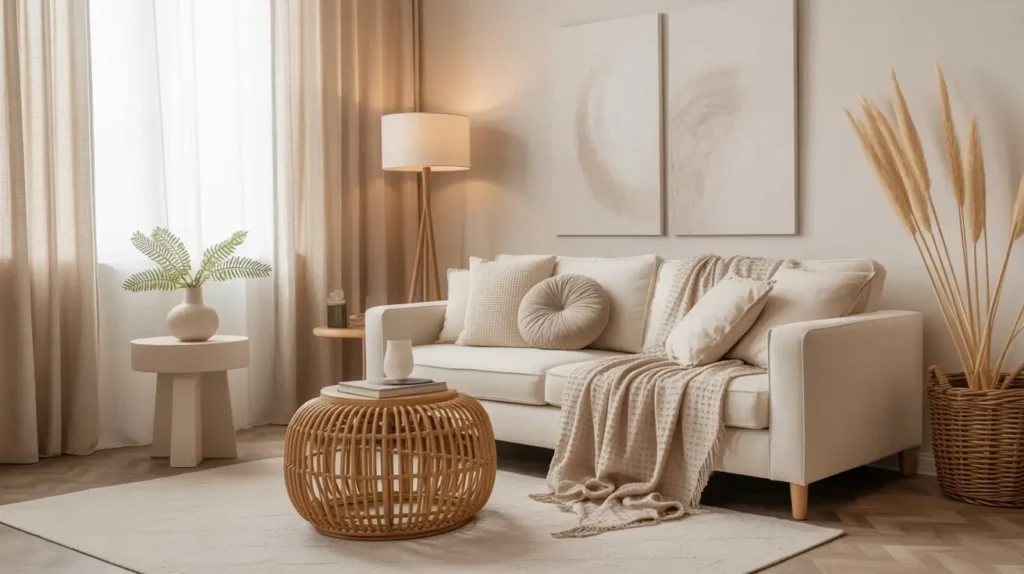
Alright, confession time: I used to think all minimalist spaces had to be cool-toned and slightly clinical. Then I discovered warm neutral minimalism, and suddenly everything made sense. This approach proves you can have a pared-down space that still feels like a warm hug.
Warm neutrals—think camel, terracotta, cream, warm gray, and sandy beige—create an inviting atmosphere while maintaining that clean, uncluttered aesthetic. It’s minimalism for people who actually want their homes to feel lived-in, you know?
Creating warmth with neutrals:
- Layer different tones: Use various shades of beige, tan, and cream to add depth
- Bring in natural materials: Leather, wood, stone, and clay all have warm undertones
- Soft, cozy textiles: Wool throws, linen curtains, cotton cushions in warm hues
- Warm lighting: Choose bulbs with warm color temperatures (2700K-3000K)
I’ve found that warm neutral spaces feel especially comforting during evening hours. There’s something about lamplight hitting a camel-colored sofa or terracotta vase that just feels right. IMO, this is the most livable version of minimalism.
Also, warm neutrals are incredibly forgiving. They hide minor imperfections better than stark white, and they create a cohesive look even when you mix different styles and eras of furniture.
Also Read: 15 Inspiring Luxury Living Room Ideas for Dream Interiors
Minimalist Living Room with Natural Wood
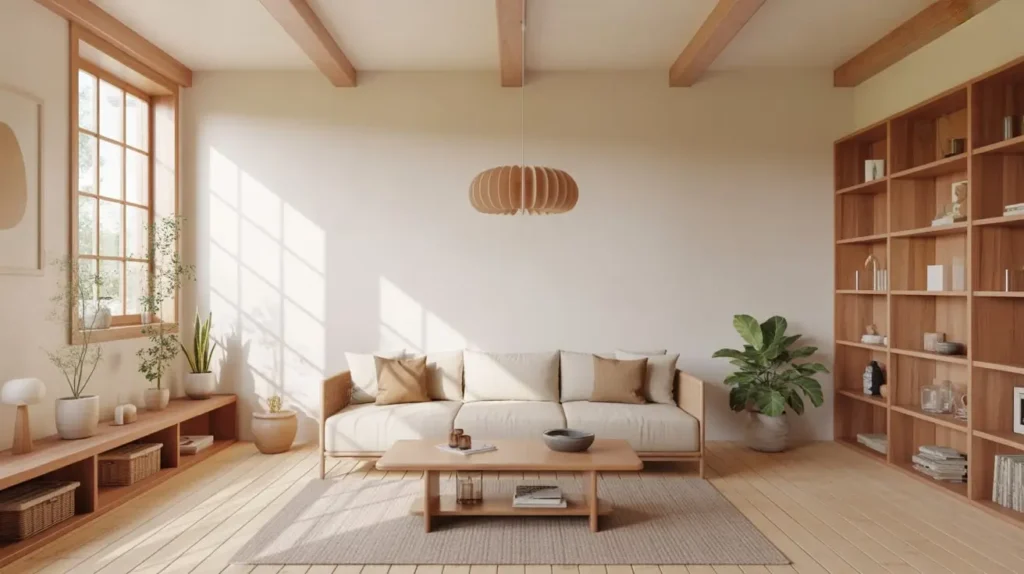
Can we just appreciate wood for a second? There’s something inherently calming about natural wood in a minimalist space. It’s warm, it’s organic, and it instantly makes a room feel grounded and real.
I’m talking about making wood the star of your living room—not just an accent. Maybe your entire living room wall features beautiful wood paneling, or you’ve got a stunning live-edge coffee table as your centerpiece. When you commit to natural wood, you’re bringing the outdoors in without all the maintenance of actual plants (though we’ll get to those later).
Ways to incorporate natural wood:
- Statement furniture: A solid wood coffee table, bookshelf, or media console
- Architectural elements: Exposed beams, wood ceiling, or accent walls
- Flooring: Wide-plank hardwood or engineered wood in natural finishes
- Subtle accents: Wooden picture frames, bowls, or sculptural pieces
The beautiful thing about wood? No two pieces are exactly alike. That unique grain pattern, those natural variations in color—they add character without adding clutter. Your minimalist space feels personal and one-of-a-kind without needing a bunch of decorative objects.
Just remember to keep the wood tones consistent. Mixing too many different wood colors can make even a minimalist room feel chaotic. Stick with similar tones—all warm woods or all cool woods—for a cohesive look.
Black and White Modern Minimalism

This is minimalism turned up to eleven. Black and white modern minimalism doesn’t mess around—it’s bold, it’s dramatic, and it makes a serious statement. If monochrome minimalism is a whisper, this is more like a confident declaration.
What separates this from general monochrome? The modern edge. We’re talking sleek, contemporary furniture, sharp lines, and a more deliberate use of pure black and pure white (rather than softer grays). It’s got attitude.
Creating a black and white modern space:
- High contrast: Don’t be afraid of stark contrasts between black and white elements
- Modern furniture pieces: Think modular sofas, acrylic chairs, or sculptural designs
- Clean, uninterrupted surfaces: Minimize visual clutter on surfaces
- Strategic black accents: Black window frames, light fixtures, or a black accent wall
- White as your base: Use white walls and larger furniture pieces as your foundation
I won’t lie—this style requires commitment and maintenance. White sofas show everything (ask me how I know :/), and black surfaces show dust like nobody’s business. But when you keep it clean, the effect is absolutely stunning.
The key here is balance. Too much black makes a room feel cave-like; too much white can feel sterile. Aim for roughly 60% white, 30% black, and 10% gray or metallic accents for the sweet spot.
Minimalist Boho Living Room
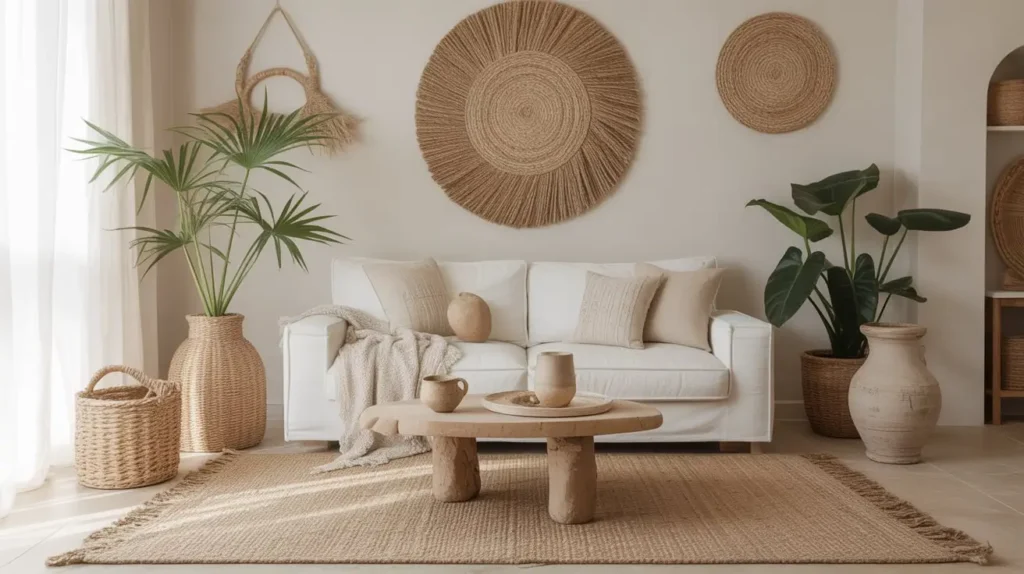
Wait, minimalism and boho in the same sentence? Hear me out. Minimalist boho (or “boho-lite” as I like to call it) takes the free-spirited, relaxed vibe of bohemian design and pairs it down to the essentials. You get personality without the chaos.
Traditional boho can feel overwhelming with all the patterns, colors, and layers. Minimalist boho keeps that organic, earthy feel but with serious restraint. It’s like boho went to a decluttering retreat and came back refreshed.
Essential elements:
- Natural materials: Rattan, jute, macramé, and woven textiles
- Earthy color palette: Stick to 3-4 earth tones max
- Plants (yes, we’re getting to the green stuff): A few well-placed plants instead of a jungle
- Handcrafted items: One or two artisanal pieces that tell a story
- Layered textiles: A vintage rug, some textured cushions, but not seventeen pillows
What I love about this approach? You get to express your personality and bring in some global-inspired pieces without your living room looking like a flea market exploded. That beautiful Moroccan rug you love? Absolutely. But pair it with simple, clean-lined furniture to let it shine.
The trick is curating instead of collecting. Every bohemian piece you include should be intentional and meaningful, not just there because it looks vaguely boho.
Minimalist Living Room with Statement Lighting
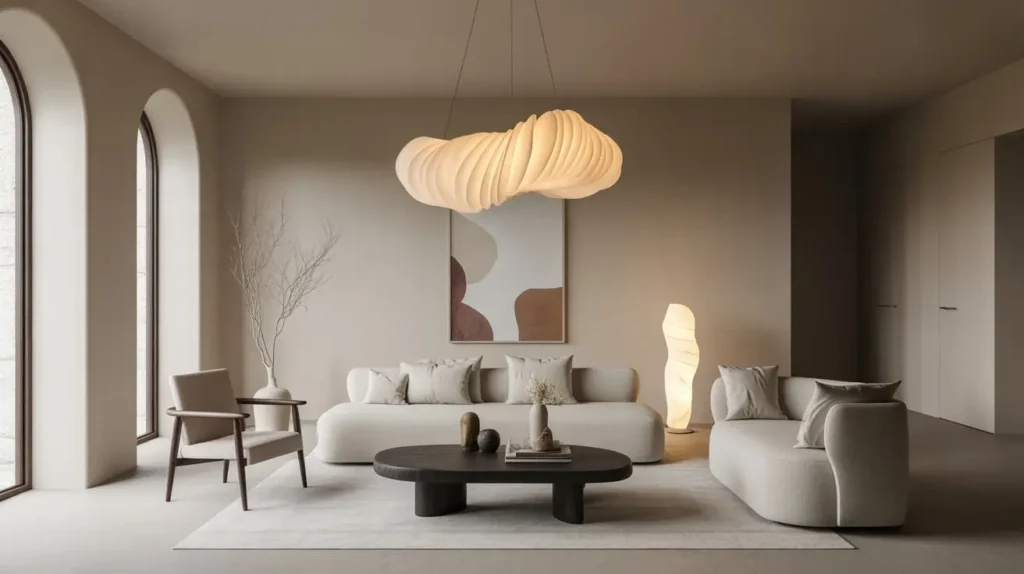
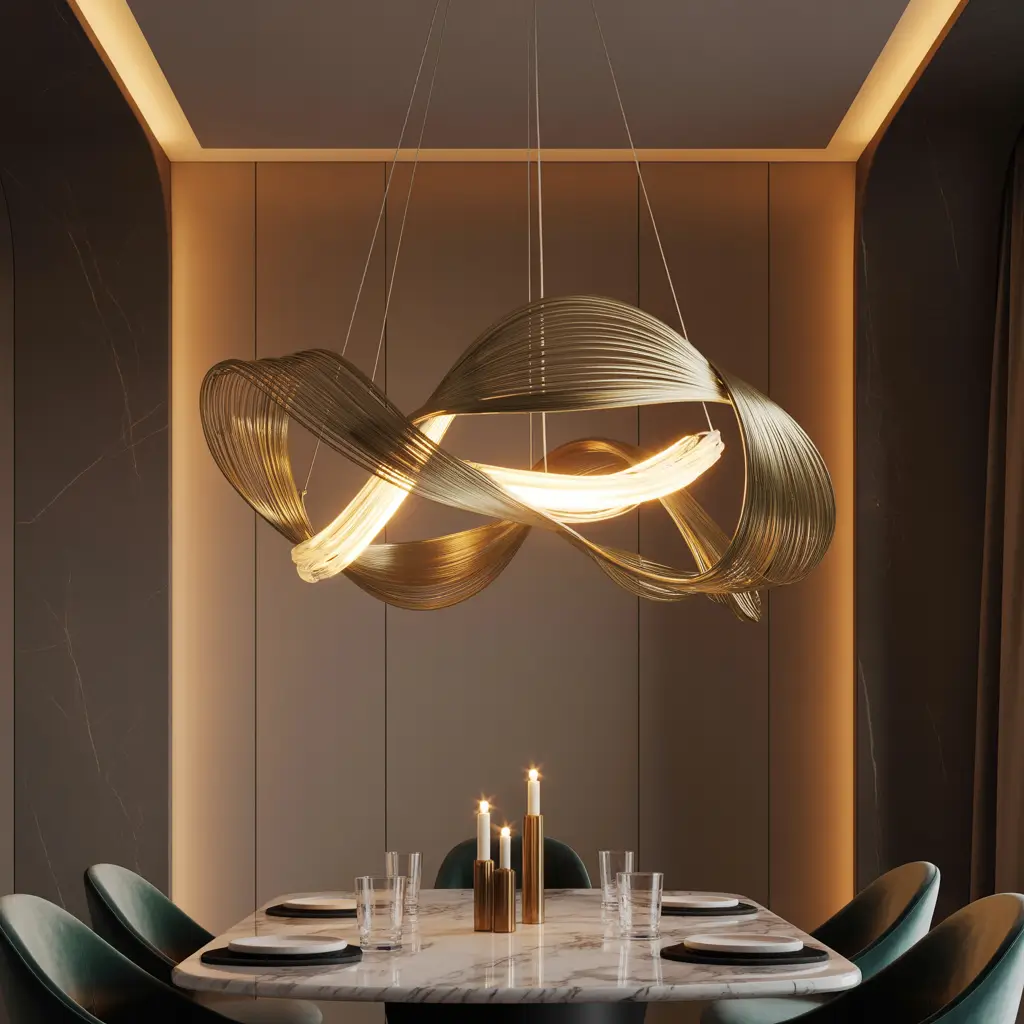
Here’s something I wish someone had told me earlier: lighting can BE your decor. In a minimalist living room, where you’re keeping furniture and accessories to a minimum, a killer light fixture becomes both functional and artistic.
Think about it—why clutter your space with a bunch of decorative objects when one stunning light fixture can serve as your statement piece? We’re talking sculptural pendant lights, dramatic floor lamps, or even a show-stopping chandelier that completely transforms the room.
Making lighting work as art:
- Go big or go home: Don’t be timid with scale—a large fixture can anchor the entire room
- Sculptural designs: Choose fixtures with interesting shapes or materials
- Multiple light sources: Layer ambient, task, and accent lighting
- Dimmer switches: Control the mood and intensity (this is non-negotiable)
- Hidden lighting: LED strips under shelving or behind the TV for ambient glow
I’ve seen living rooms completely transformed by a single incredible pendant light. Suddenly, you don’t need wall art or a dozen decorative objects—the lighting does the heavy lifting. Plus, when you switch it on in the evening, the whole atmosphere changes.
Remember, lighting affects how we perceive space and color. In a minimalist room, proper lighting ensures your space feels warm and inviting rather than cold and empty.
Minimalist Small Apartment Living Room

Small space, big impact—that’s the goal here. Living in a small apartment taught me that minimalism isn’t just an aesthetic choice; it’s a survival strategy. When you’ve got limited square footage, every single item needs to earn its place.
The beautiful irony? Small living rooms almost force you into minimalism, and the result can be incredibly stylish. You can’t accumulate clutter when you literally have nowhere to put it. The challenge is making your small space feel serene rather than cramped.
Maximizing small spaces:
- Multi-functional furniture: Ottomans with storage, sofa beds, nesting tables
- Vertical storage: Think tall, narrow shelving units instead of wide, bulky ones
- Light colors: Whites and light neutrals make spaces feel larger
- Mirrors: Strategically placed to reflect light and create depth
- Furniture with legs: Pieces that sit on legs (rather than the floor) create visual space underneath
- Scale appropriately: Choose smaller-scale furniture that fits the room proportions
What really works in small minimalist living rooms? Restraint. I know that gorgeous oversized sectional is tempting, but a smaller, well-proportioned sofa leaves breathing room and makes the space feel bigger. Same goes for your coffee table, accent chairs, and every other piece.
Also, embrace negative space. Empty floor space isn’t wasted space—it’s what makes a small room feel livable instead of stuffed.
Also Read: 15 Stunning Black and White Living Room Decor Ideas You’ll Love
Cozy Minimalist Living Room with Textures
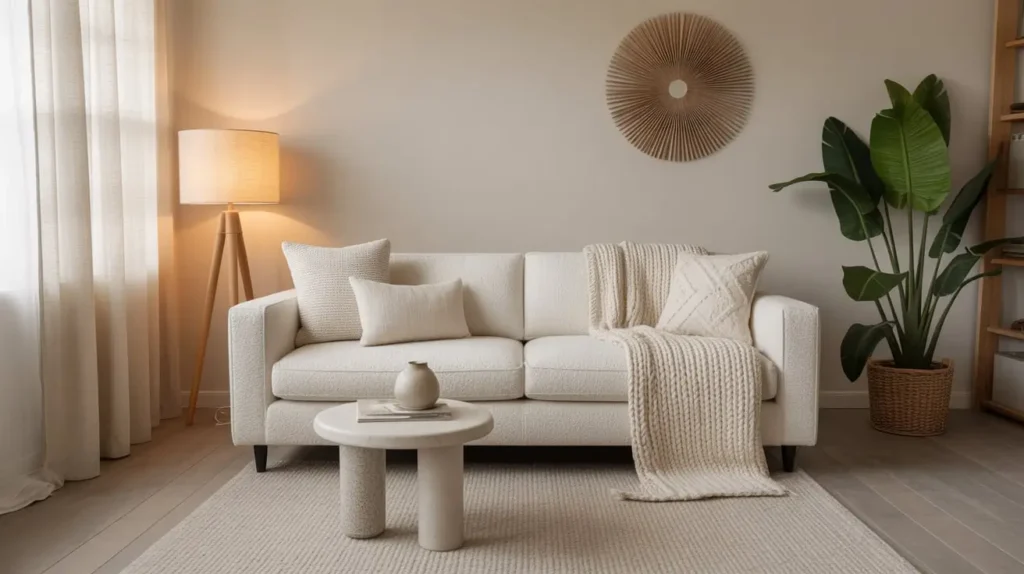
Let’s tackle the biggest minimalism myth: that it has to feel cold. Nope. Texture-rich minimalism proves you can have a pared-down space that’s still incredibly inviting and cozy. The secret? You’re not adding more stuff; you’re just being more intentional about the surfaces and materials you choose.
Texture creates visual interest and physical comfort without requiring additional objects. A chunky knit throw, a nubby linen sofa, a shaggy rug—these elements add depth and warmth while maintaining clean lines and simplicity.
Creating coziness through texture:
- Mix materials: Combine smooth (leather, glass) with rough (wood, stone) and soft (textiles)
- Layer textiles: Different fabric weights and weaves on your sofa and chairs
- Natural fibers: Wool, linen, cotton, jute, and sisal all have beautiful texture
- Tactile surfaces: Consider a textured wall finish, brick, or stone
- Plush elements: A high-pile rug or velvet cushions add luxury
I learned this the hard way after creating a minimalist living room that looked great in photos but felt about as welcoming as a dentist’s waiting room. Adding texture completely changed the game. My smooth leather sofa got a chunky knit blanket, my glass coffee table sat on a textured jute rug, and suddenly the room felt like somewhere I actually wanted to spend time.
The best part? Texture is free of clutter. A textured wall or a nubby linen sofa doesn’t add visual chaos—it adds interest and warmth.
Minimalist Living Room with Hidden Storage

You want to know the real secret to maintaining a minimalist living room? Hidden storage, my friend. All that stuff has to go somewhere, right? The key is making it disappear so your space stays visually clean.
I used to think minimalists just didn’t own things. Then I realized they’re just really good at hiding them. Smart storage solutions mean you can have all the functionality you need without the visual clutter. Your living room looks serene and uncluttered, but everything you need is actually right there.
Hidden storage solutions that work:
- Ottoman/coffee table storage: Double-duty furniture that looks innocent but holds tons
- Built-in cabinets: Custom storage that blends into walls
- Media console with closed storage: Hide electronics, games, remotes, all the ugly stuff
- Under-sofa storage: Many modern sofas include this feature
- Floating shelves with hidden compartments: Sneaky and stylish
- Storage benches: Seating plus storage—what’s not to love?
The biggest game-changer for me? A media console with doors. I could finally hide my cable box, gaming console, random chargers, and all those cords that make minimalists weep. Suddenly, my TV wall looked intentional instead of like an electronics store exploded.
Remember, the goal isn’t to get rid of everything you own—it’s to create systems where things have homes, and those homes aren’t on display 24/7.
Minimalist Living Room with Large Windows
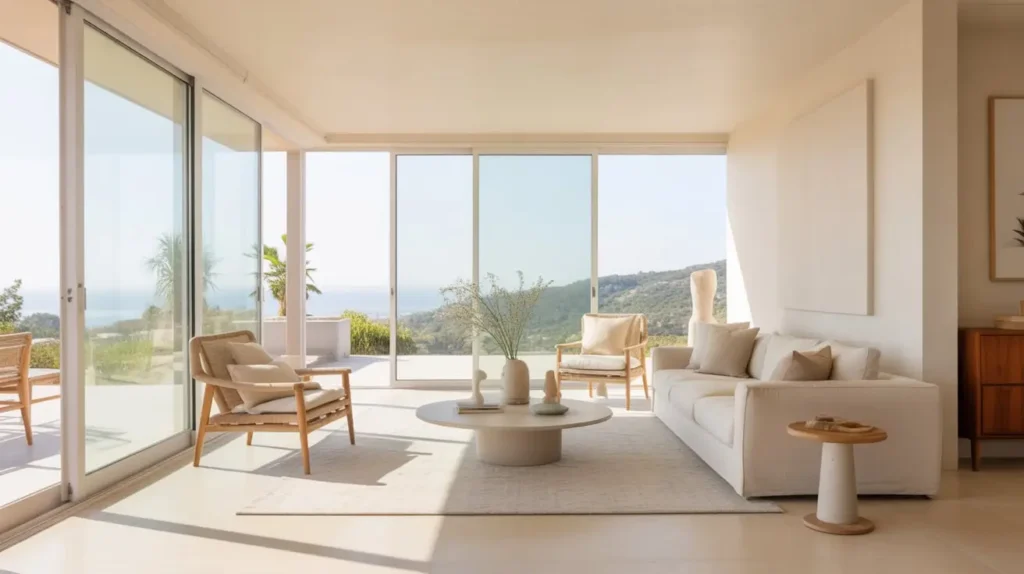
Natural light is literally the best thing you can add to a minimalist living room. And if you’re lucky enough to have large windows? Absolutely make them the star of your space. Why compete with a stunning view or beautiful natural light when you can design around it?
Large windows already create a sense of openness and connection to the outdoors. Minimalist design enhances this by keeping the space around the windows clean and unobstructed. You’re basically framing nature as your artwork.
Making the most of large windows:
- Minimal window treatments: Sheer curtains, simple roller shades, or skip them entirely if privacy allows
- Low furniture profiles: Keep sightlines to the windows unobstructed
- Arrange furniture to face the view: Let that natural light and scenery be your focal point
- Keep window areas clear: Don’t block windows with tall furniture or clutter
- Reflective surfaces: Mirrors and light-colored walls bounce natural light around
I’ve visited minimalist living rooms where the windows basically ARE the design. The furniture is simple and understated, the color palette is neutral, and all attention goes to the view outside. It’s such a smart approach—let nature do the decorating.
Also, natural light makes everything look better. Your plants grow better, your space feels bigger, and your mood improves. That’s a win-win-win situation if you ask me.
Minimalist Art-Inspired Living Room
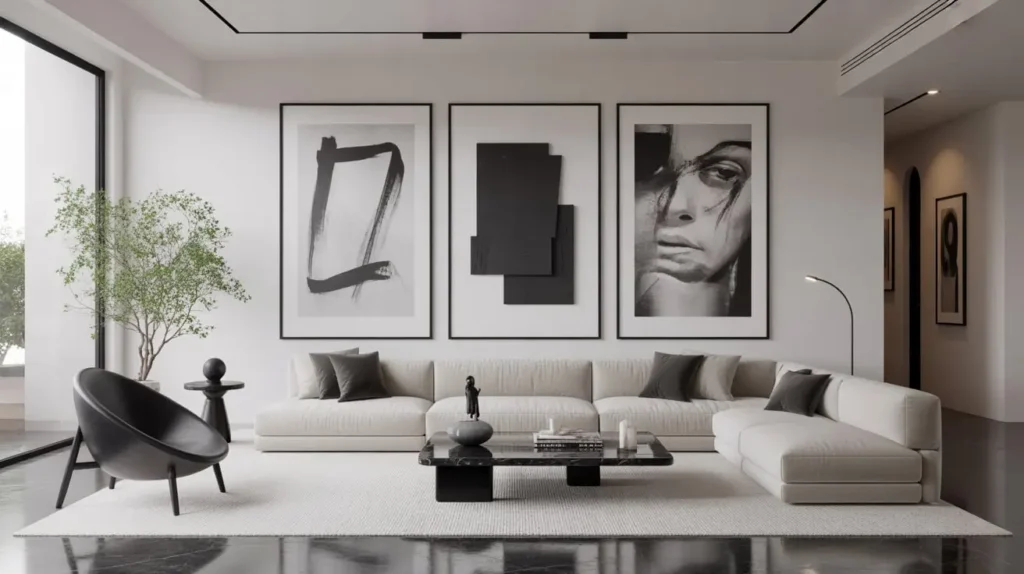
Who says minimalism can’t include art? A minimalist art-inspired living room uses carefully selected artwork as the main design element. We’re talking quality over quantity—one or two stunning pieces instead of a gallery wall explosion.
The art becomes your personality in the room. Everything else stays simple and serves as a backdrop for your artistic choices. It’s perfect for people who love art but don’t want their living room to feel like a museum.
Creating an art-focused minimalist space:
- Statement piece: One large-scale artwork that commands attention
- Simple frames: Keep framing minimal so focus stays on the art
- Neutral background: Let walls and furniture recede so art pops
- Proper lighting: Track lighting or picture lights to highlight artwork
- Complementary colors: Pull one or two colors from the art into your accessories
- Negative space: Leave empty wall space around art to give it breathing room
I love this approach because your art collection can evolve over time. You’re not locked into a specific color scheme or theme. Swap out your artwork, and suddenly your whole living room feels refreshed without buying a single new piece of furniture.
Just remember: in a minimalist room, people actually look at your art. So choose pieces you genuinely love, not just things that match your couch.
Minimalist Living Room with Touches of Greenery

Plants. We need to talk about plants. Even the most devoted minimalist benefits from strategic greenery. I’m not suggesting you turn your living room into a rainforest, but a few well-chosen plants add life, literally and figuratively, to a minimalist space.
Plants bring color, texture, and organic shapes into rooms that might otherwise feel too geometric and controlled. Plus, they purify air and improve your mood. Science backs this up—I’m not just being a plant person 🙂
Adding plants minimally:
- Choose statement plants: One large fiddle leaf fig beats ten small random plants
- Consistent planters: Stick to similar pots (all white ceramic, all terracotta, etc.)
- Strategic placement: Corner plant, coffee table plant, maybe one on a shelf
- Low-maintenance varieties: Snake plants, pothos, ZZ plants, monstera
- Consider scale: Plants should be proportional to your furniture and room size
What I’ve learned: fewer, bigger plants look more intentional than lots of little ones scattered everywhere. One gorgeous monstera in a beautiful planter makes a statement. Twelve random succulents in mismatched pots create visual clutter.
Also, don’t feel pressured to have plants if you kill everything green. A minimalist living room without plants is still beautiful. But if you can keep something alive, greenery adds warmth and personality without compromising the clean aesthetic.
Ultra Modern Minimalist Living Room
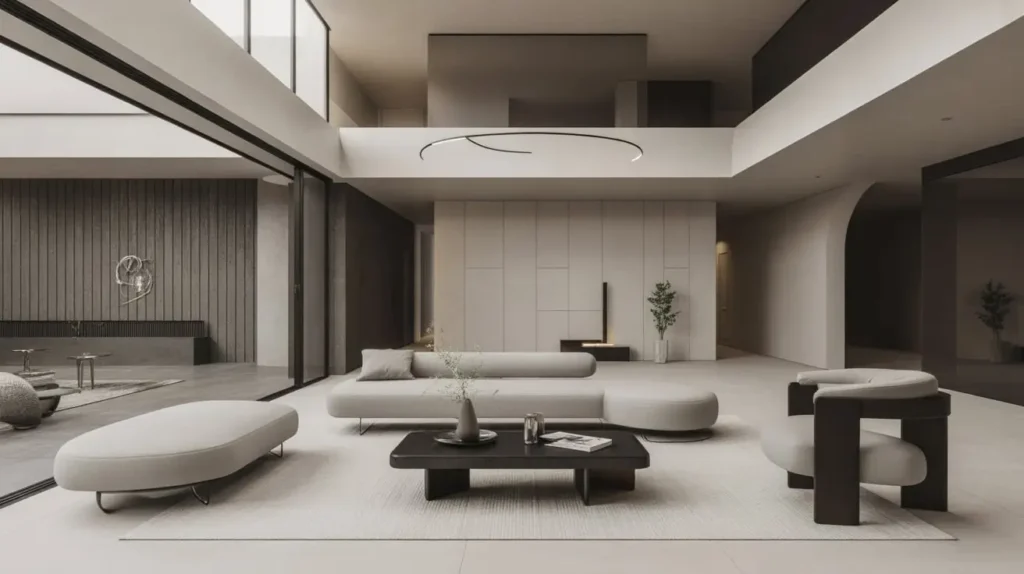
Let’s end with the most futuristic option: ultra modern minimalism. This is minimalism for people who appreciate cutting-edge design, innovative materials, and a slightly otherworldly aesthetic. Think sleek, streamlined, and seriously sophisticated.
Ultra modern minimalism embraces technology, unconventional materials, and furniture that looks like it belongs in a design museum. It’s not for everyone (you know your aunt who loves floral patterns won’t get it), but if you appreciate modern design, this style is absolutely stunning.
Ultra modern elements:
- Innovative materials: Acrylic, polished concrete, steel, glass, high-gloss finishes
- Geometric shapes: Sharp angles, curves, asymmetrical designs
- Smart home integration: Hidden tech, wireless charging built into furniture, automated lighting
- Monolithic furniture: Pieces that appear to be single, seamless forms
- Unexpected elements: A hanging chair, a sculptural fireplace, an unconventional seating arrangement
- Cool color palette: Whites, grays, blues, metallics
What I find fascinating about ultra modern minimalism? It feels simultaneously timeless and futuristic. These spaces often age beautifully because they’re not following trendy styles—they’re pushing boundaries.
The challenge? Making it feel livable. It’s easy for ultra modern spaces to feel like showrooms where you’re afraid to actually sit down. Balance the cutting-edge elements with comfort—maybe that sculptural sofa is actually super comfortable, or that glass coffee table is heated (yes, that’s a thing).
Wrapping This Up
So there you have it—15 different ways to embrace minimalism in your living room without sacrificing personality, warmth, or your sanity. The beautiful thing about minimalist design? It’s not about following strict rules or achieving some impossible Instagram-perfect space. It’s about creating a room that makes you feel calm and centered.
Whether you’re drawn to the warm woods of Scandinavian design, the zen vibes of Japandi, or the bold statement of black and white modern minimalism, there’s a minimalist approach that fits your style. You don’t have to commit to pure white walls and zero possessions. You just need to be intentional about what you bring into your space.
Start small. Maybe clear off your coffee table and see how that feels. Or try the “one in, one out” rule for a month. Experiment with different textures, play with lighting, and find what works for your life and space. Because here’s the thing: the best minimalist living room is the one you actually want to live in.