

15 Elegant French Farmhouse Kitchen Ideas for Timeless Appeal
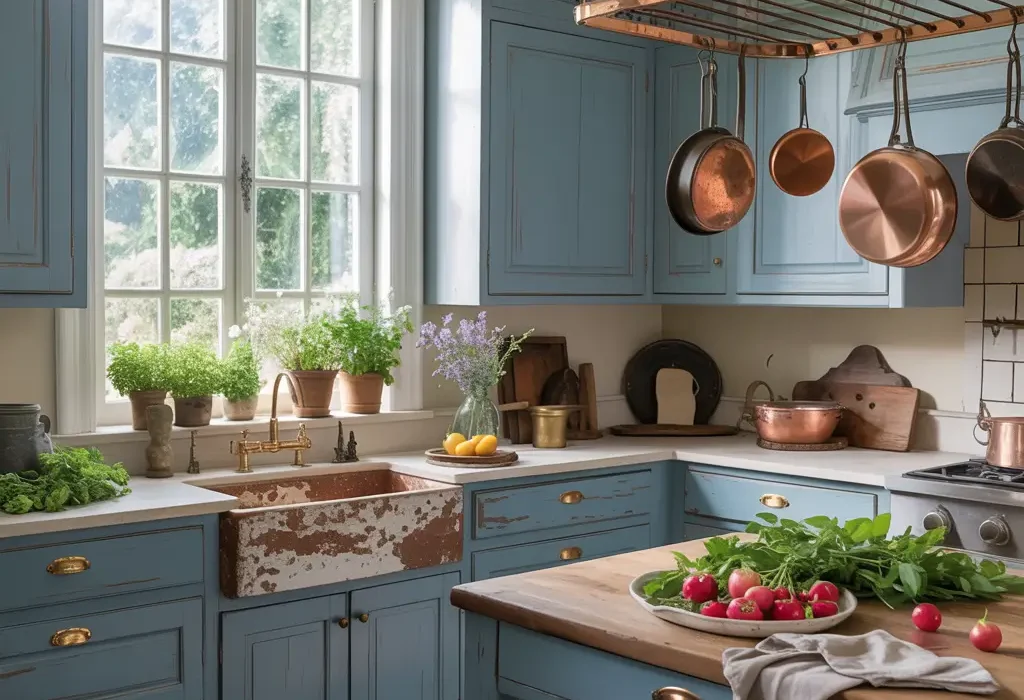
Look, I’m just going to say it—there’s something about French farmhouse kitchens that makes every other kitchen style look like it’s trying too hard. You know that effortlessly chic vibe French women supposedly have? Yeah, their kitchens have it too. And the best part? You don’t need to live in a 300-year-old cottage in Provence to pull it off.
I’ve been obsessed with French farmhouse design for years, and honestly, it never gets old. The mix of rustic charm, elegant touches, and that lived-in warmth just works. So grab your coffee (or wine, I won’t judge), and let’s chat about 15 ideas that’ll transform your kitchen into a French countryside dream.
Rustic French Stone Backsplash
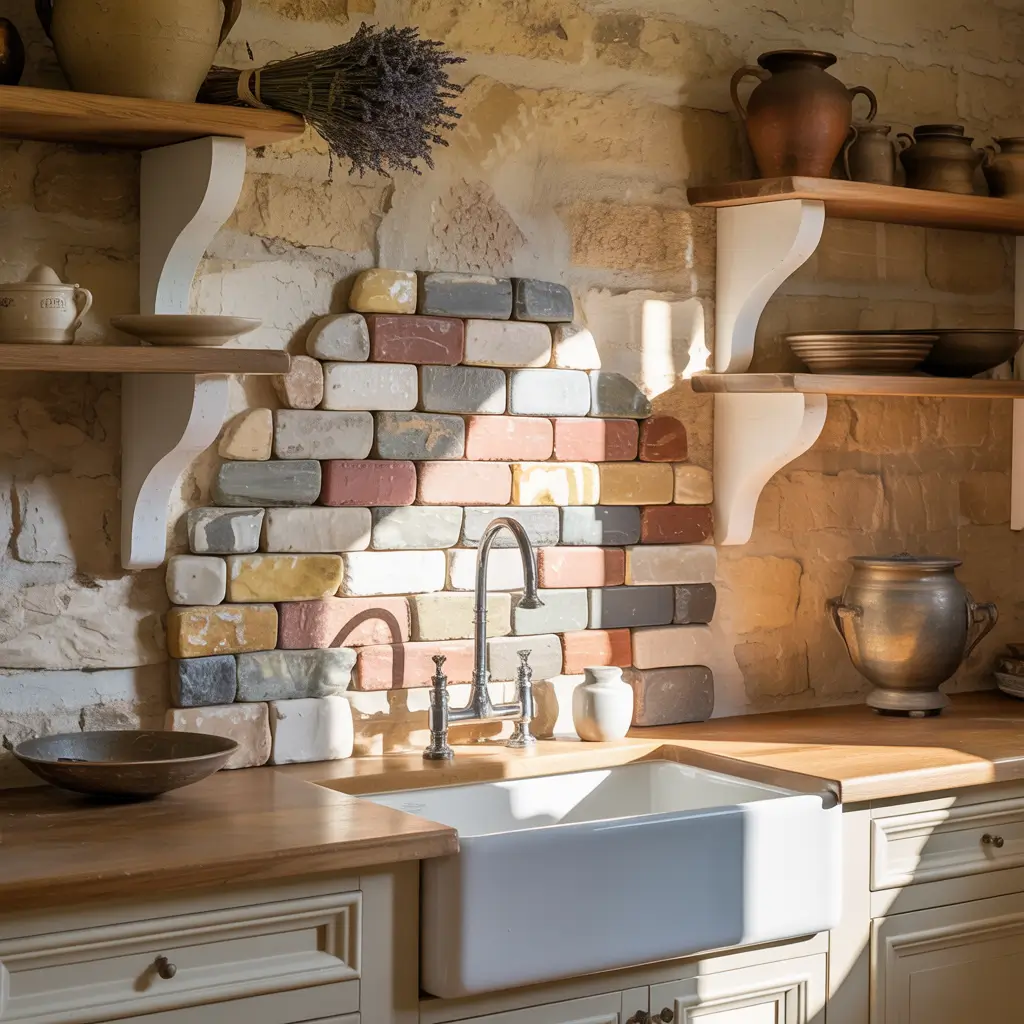
Ever walked into a kitchen and immediately felt transported to a French villa? That’s what a rustic stone backsplash does. I’m talking about those gorgeous limestone or travertine tiles with irregular edges and weathered textures that scream authenticity.
The beauty of stone is that it tells a story. Unlike those perfect subway tiles everyone and their mother installed in 2015, natural stone has character. Each tile looks slightly different, with natural variations in color and texture that you just can’t replicate with manufactured materials.
Here’s what makes it work:
- Natural limestone in soft beiges and creams creates warmth
- Tumbled travertine adds that perfectly imperfect texture
- Reclaimed stone brings genuine vintage appeal
- Varying tile sizes create a more authentic, old-world look
I installed a limestone backsplash in my own kitchen three years ago, and guests still comment on it. The installation cost a bit more than ceramic, sure, but the impact? Totally worth it. Plus, stone develops this beautiful patina over time that just gets better with age—kind of like a good cheese, actually 🙂
Distressed Cream Cabinet Elegance
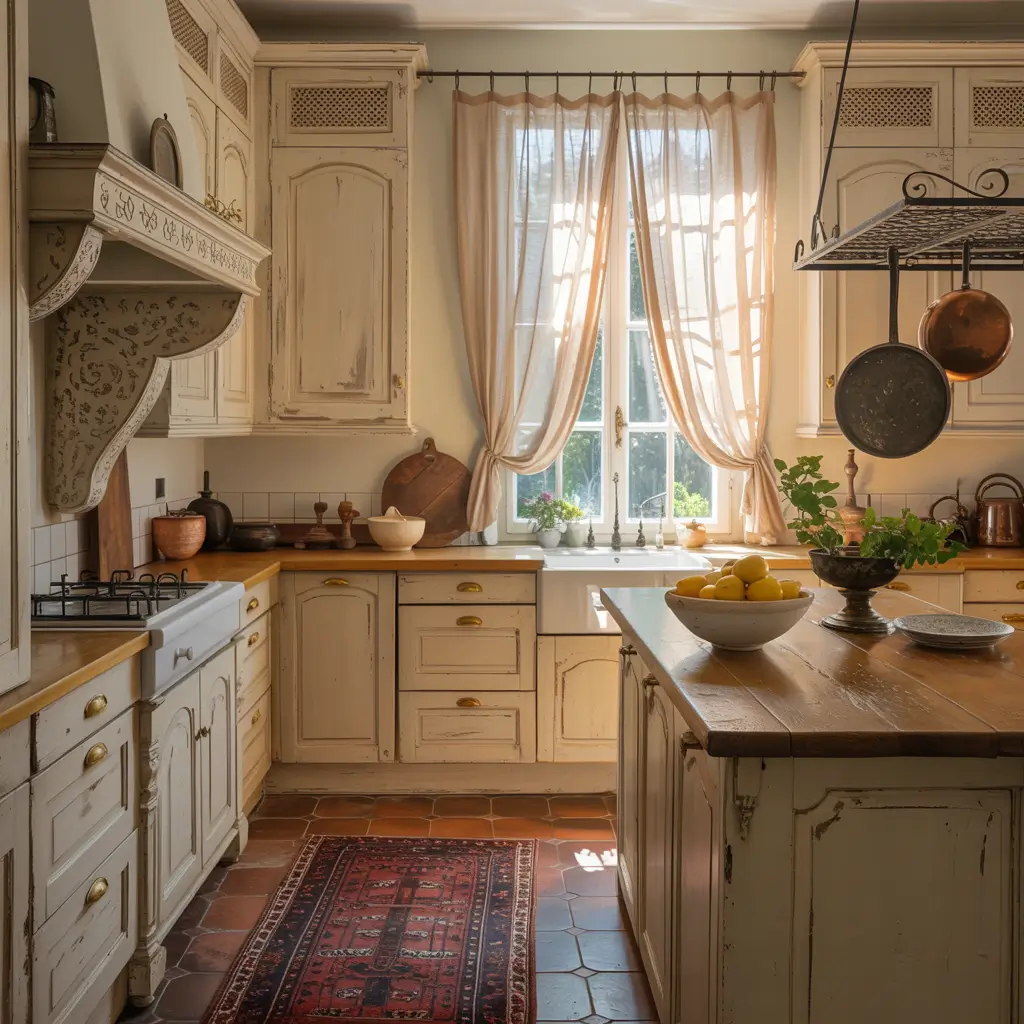
Nothing says French farmhouse quite like distressed cream cabinets. But here’s the thing—this isn’t about making your cabinets look beaten up or shabby. It’s about creating that soft, lived-in elegance that French country homes do so well.
The cream color palette is crucial here. We’re not talking stark white (too sterile) or beige (too boring). Think clotted cream, ivory, or that perfect off-white you see in old French pottery.
The distressing technique adds layers of interest. Light sanding along edges, subtle wear marks on corners, and gentle aging creates depth without looking like you attacked your cabinets with sandpaper during a DIY rage session. FYI, if you’re doing this yourself, less is definitely more.
When done right, distressed cream cabinets become the perfect neutral backdrop that lets other elements shine while still commanding attention. They pair beautifully with nearly every other French farmhouse element, making them incredibly versatile.
Vintage Brass Hardware Charm
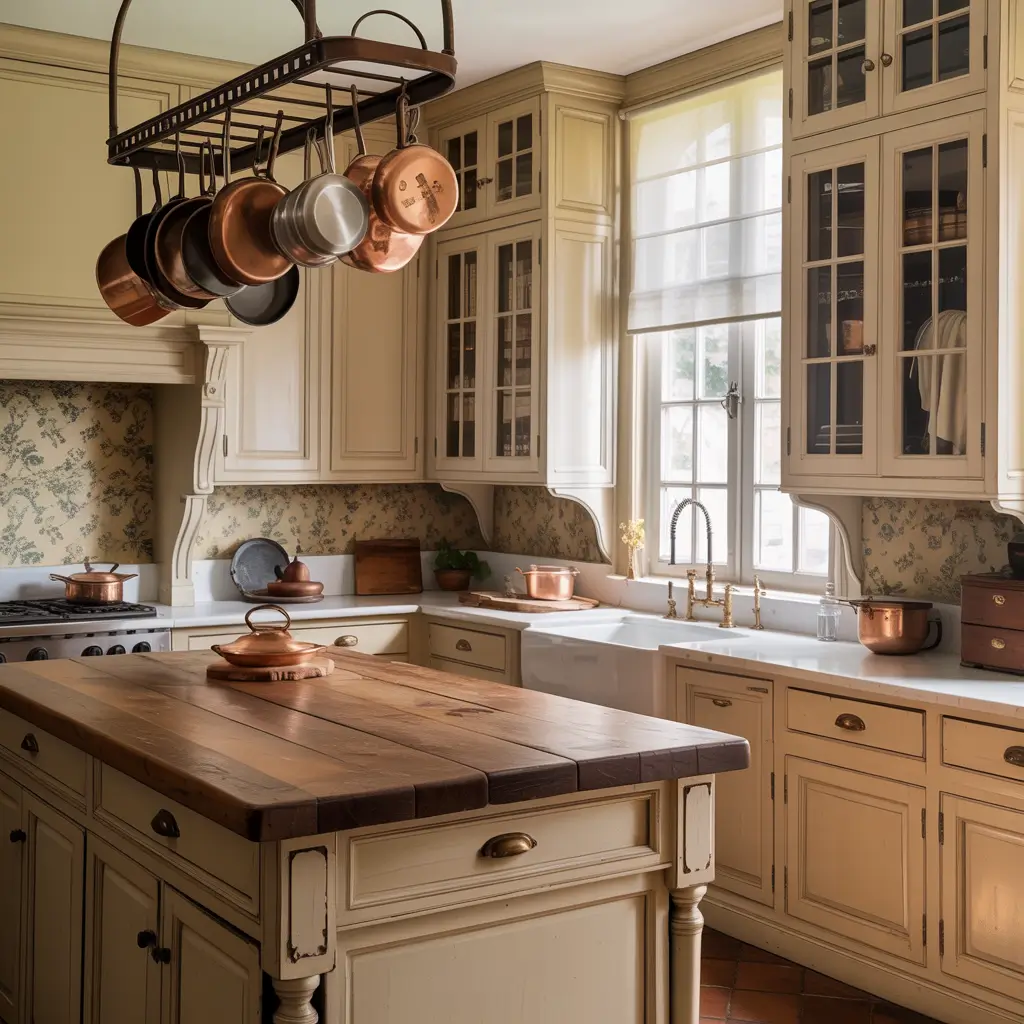
Can we talk about how hardware is basically jewelry for your kitchen? And vintage brass hardware is like wearing your grandmother’s heirloom pieces—classic, meaningful, and impossibly chic.
I’m not talking about that shiny, builder-grade brass from the 80s that looks like cheap gold spray paint. I mean the real deal—aged brass with a soft patina, cup pulls with ornate detailing, and lever handles that feel substantial in your hand.
Here’s what to look for:
- Unlacquered brass that develops natural patina over time
- Bin pulls for that authentic European look
- Ornate backplates that add architectural interest
- Mixed metals (yes, you can pair brass with other finishes!)
The thing about brass is that it gets better looking as it ages. While chrome stays the same and nickel can look dated, brass develops this rich, warm finish that adds instant character. I hunted down antique brass pulls from a salvage yard for my kitchen drawers, and they cost less than new ones from a big box store. Score!
French Curved-Leg Kitchen Island
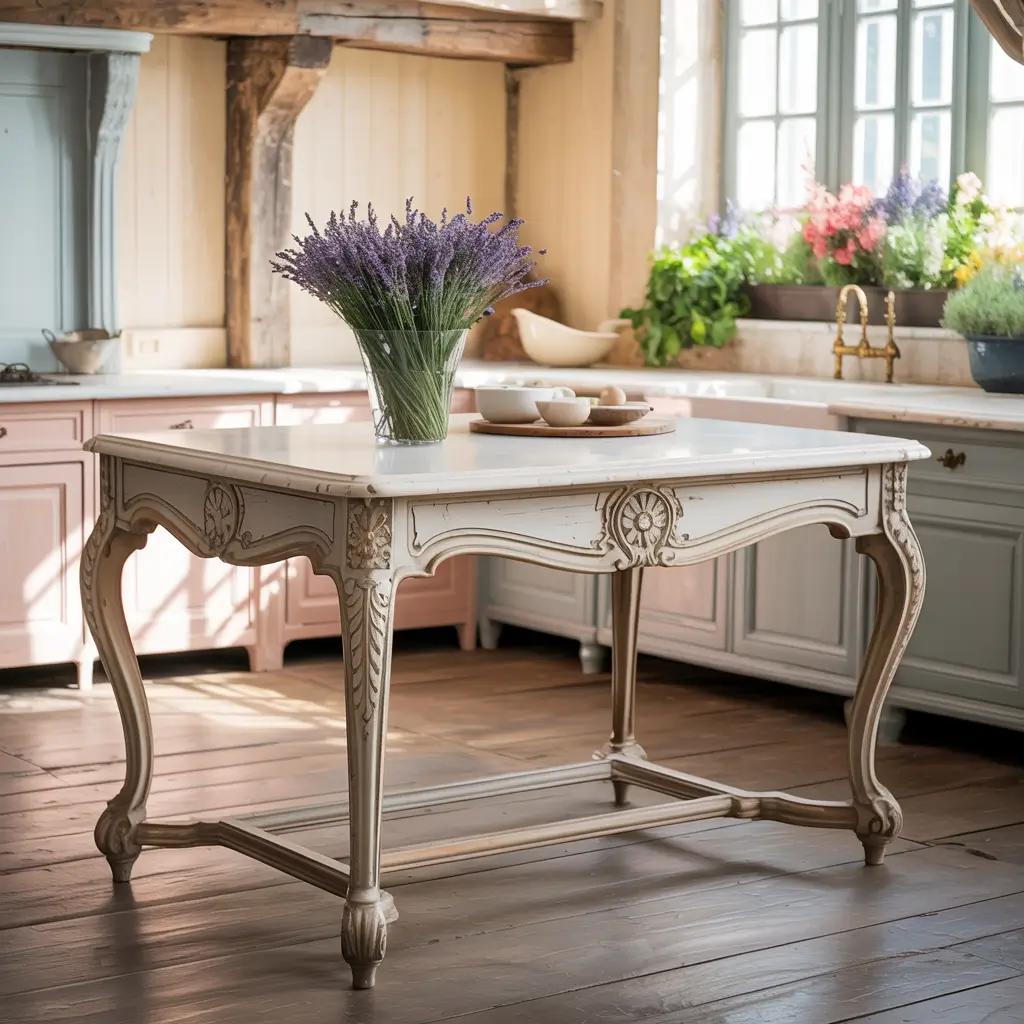
Want to know the fastest way to make your kitchen island look like an afterthought? Stick with a basic rectangular box. Now, want to make it look like a treasured French antique? Add curved legs and watch the magic happen.
A French-style kitchen island with curved, tapered legs transforms the whole space. It’s the difference between functional furniture and a statement piece that could have been pulled from a Parisian apartment.
Think about classic French furniture silhouettes—those elegant cabriole legs, the gentle curves, the refined proportions. When you apply this design language to a kitchen island, you create something that’s both practical and beautiful.
Consider these design elements:
- Tapered legs that narrow toward the floor
- Carved details or subtle fluting for texture
- Contrasting island color to make it feel like furniture, not cabinetry
- Overhang for seating that invites gathering and conversation
I’ve seen people transform basic islands with the addition of decorative legs, and the before-and-after is always dramatic. It’s like giving your island a personality transplant.
Also Read: 15 Stunning Italian Farmhouse Kitchen Ideas with Rustic Vibes
Weathered Wood Beam Accents
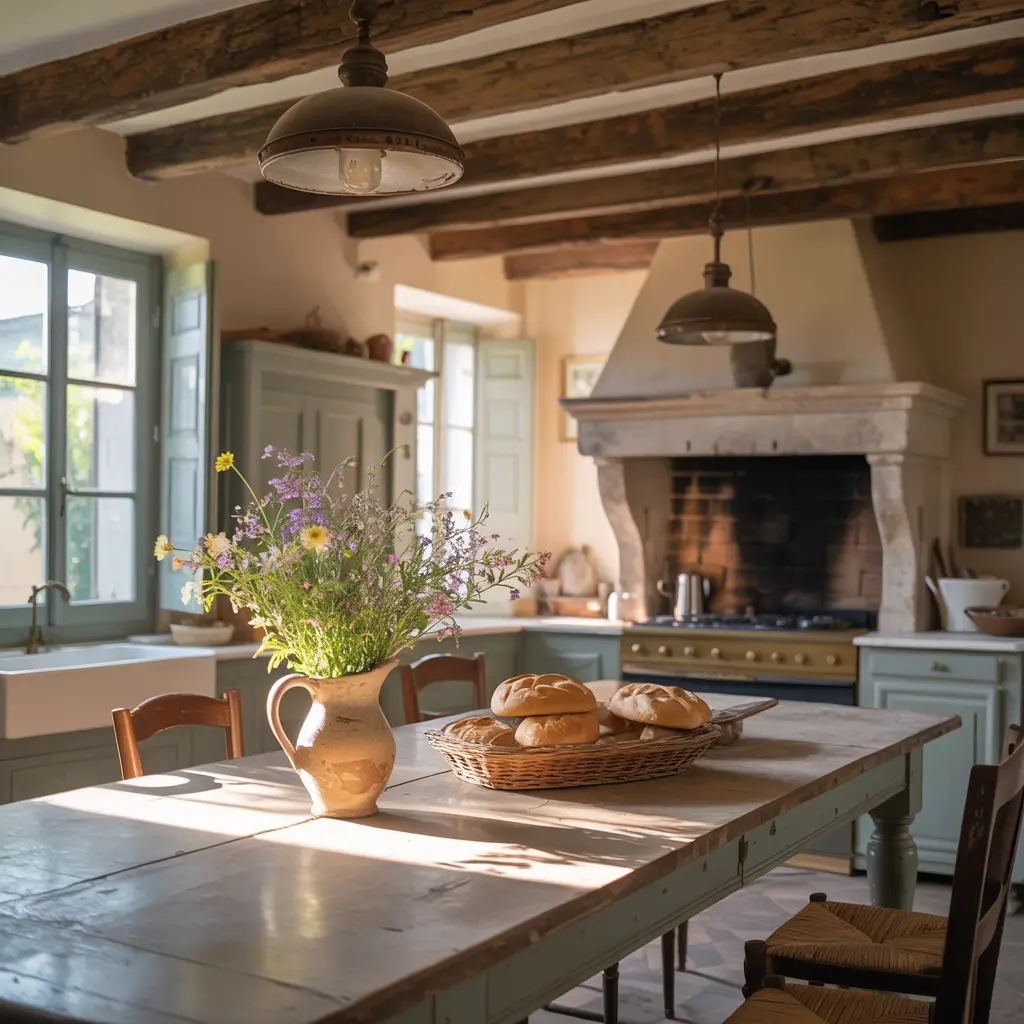
Here’s where we add some serious architectural drama: weathered wood beams. Nothing—and I mean nothing—adds rustic charm and visual impact quite like exposed ceiling beams.
Real reclaimed beams are the gold standard. These beauties come with decades (or centuries!) of history, complete with saw marks, nail holes, and that gorgeous gray-brown patina that you can’t fake. But let’s be real—authentic reclaimed beams can cost more than your appliances.
The good news? You have options. Faux beams have come a long way, and quality ones look incredibly convincing, especially when installed properly. The key is choosing beams with realistic texture and dimension.
Installation tips that matter:
- Proportion is everything—beams should relate to your ceiling height and room size
- Spacing matters—too close looks cluttered, too far apart loses impact
- Direction counts—running beams perpendicular to windows often looks best
- Finish wisely—weathered gray or warm honey tones both work beautifully
Even if your kitchen has standard 8-foot ceilings, strategically placed beams can add character without making the space feel shorter. I’ve seen it work in both large kitchens and surprisingly compact ones.
Provence-Inspired Pastel Touches
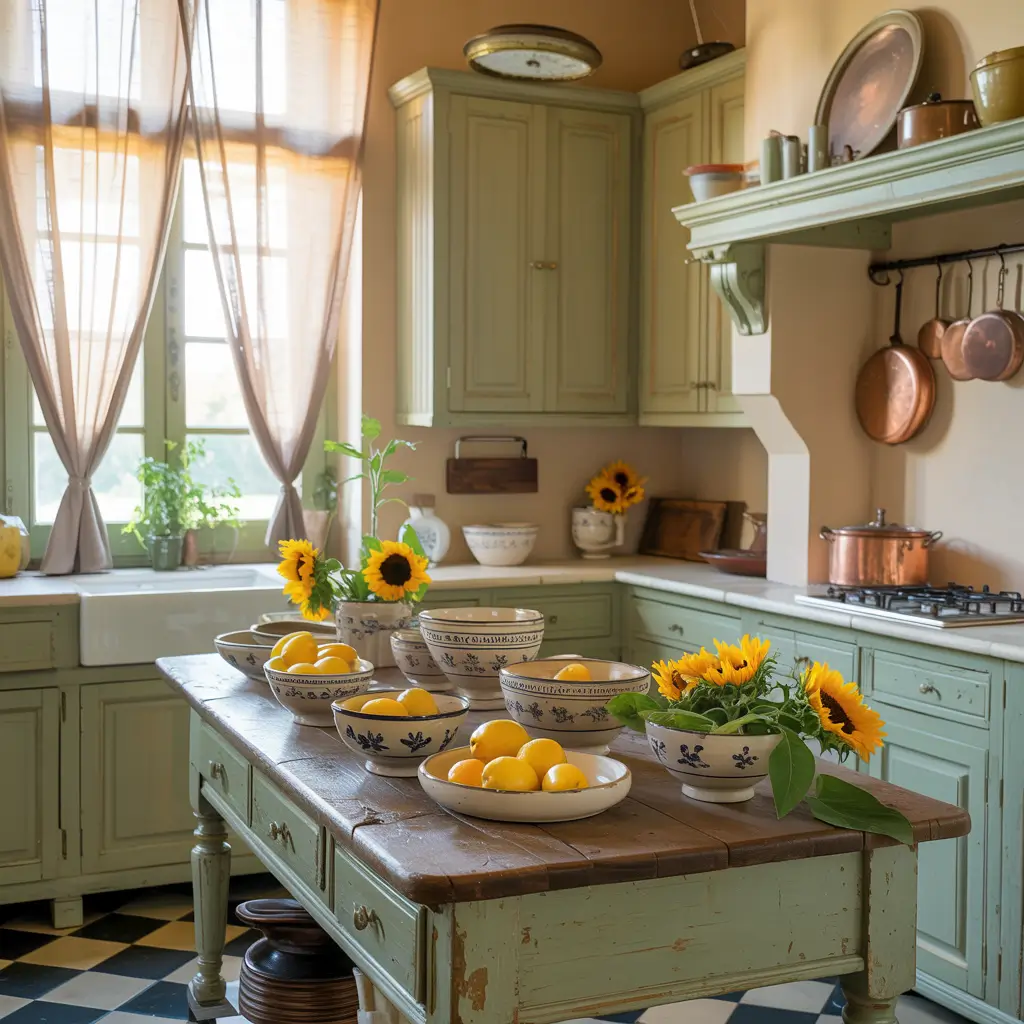
Time to add some color, but we’re keeping it soft and sophisticated. Provence-inspired pastels bring that sun-washed French countryside feeling without going full-on rainbow explosion.
Think about the gentle colors you see in Provençal villages—faded lavenders, dusty roses, soft sage greens, and pale sunny yellows. These aren’t the bright, saturated pastels you see in Easter baskets. They’re muted, almost as if the Mediterranean sun has gently bleached them over decades.
The trick is using these colors as accents rather than main events. A few open shelves painted in soft lavender, a backsplash with pale blue tiles scattered throughout, or even just a collection of pastel ceramics on display.
Ways to incorporate Provençal pastels:
- Accent cabinets in a soft sage or dusty blue
- Vintage pottery displayed on open shelving
- Fresh lavender in simple containers (adds fragrance too!)
- Linens and textiles in faded florals and stripes
- Painted furniture pieces like a vintage hutch or bar cart
The beauty of this approach is flexibility. You can change your pastel accents seasonally or whenever you get bored, without committing to a full kitchen renovation. IMO, that’s pretty smart design.
Aged Marble Countertop Style
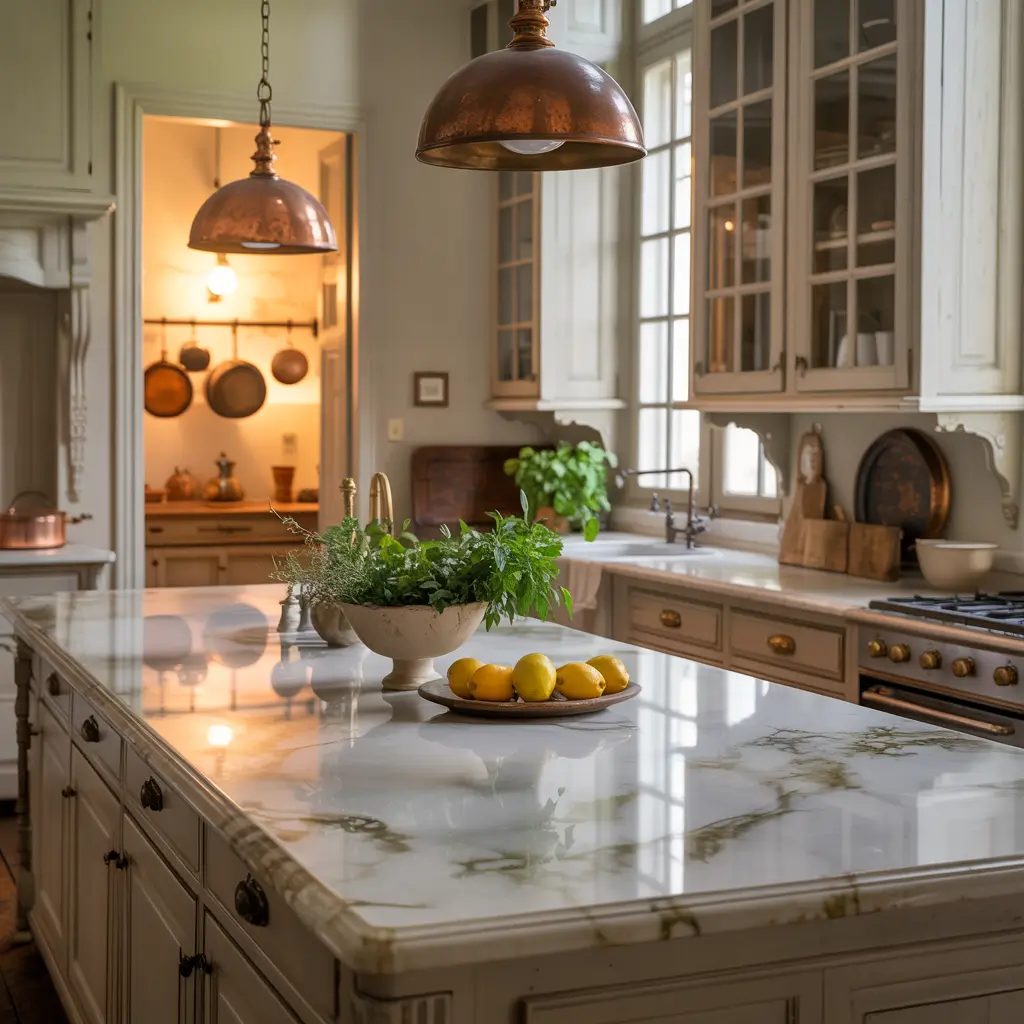
Let me tell you something about aged marble countertops—they’re either going to stress you out or set you free. If you’re the type who panics over every water ring and wine spill, maybe skip this section. But if you appreciate the beauty of natural aging and authentic patina, stay with me.
Marble, especially aged or honed marble, has this incredible depth and character. Unlike granite (which can look a bit suburban-builder to me, honestly), marble has movement, variation, and a soft elegance that perfectly suits French farmhouse style.
Yes, marble etches. Yes, it stains. And you know what? That’s part of its charm. In French farmhouses, these “imperfections” are badges of honor—evidence of meals cooked, wine poured, and life lived.
Consider these marble options:
- Honed Carrara for that soft, matte finish
- Calacatta for dramatic veining (pricier but stunning)
- Limestone as a marble alternative with similar appeal
- Reclaimed marble for instant aged character
I chose honed Carrara for my prep area specifically because I wanted that authentic, lived-in look. Three years in, it has some etching and a few stains, and I genuinely love it more now than when it was installed. It has stories to tell.
Arched French Glass Cabinetry
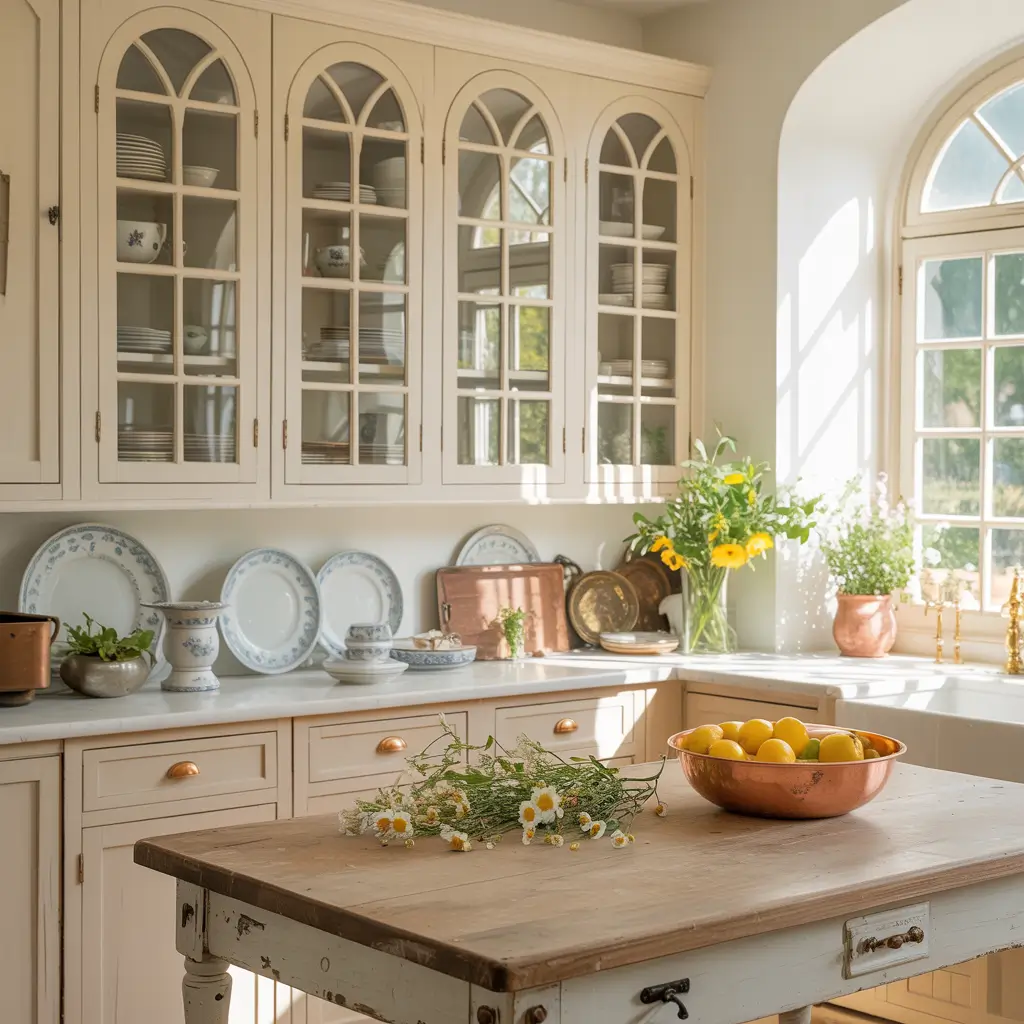
Want to add architectural interest and display-worthy storage? Arched glass cabinet doors are your answer. There’s something about that gentle arch—not too dramatic, just a soft curve at the top—that screams French elegance.
These cabinets serve double duty. Practically, they let you display your pretty dishes and glassware (because what’s the point of owning beautiful things if they’re hidden behind solid doors?). Aesthetically, they add vertical lines and visual interest that draw the eye upward.
The arch detail is what separates basic glass cabinets from French-inspired ones. That subtle curve references classic French architecture—think of doorways and windows you see in old French buildings.
Here’s how to make them work:
- Choose quality glass—seeded or wavy glass adds vintage character
- Style thoughtfully—what’s inside is on display, so curate carefully
- Mix with solid cabinets—all glass can feel too open and cluttered
- Add interior lighting for extra drama in the evenings
I installed two arched glass cabinets flanking my range, and they’ve become focal points. I keep my vintage French pottery and everyday white dishes inside, and the display changes with my mood. It’s like having a mini gallery in my kitchen.
Farmhouse Apron Sink with Brass Tap

If the kitchen is the heart of the home (how’s that for a cliché?), then the farmhouse apron sink is its soul. These deep, front-exposed sinks are practical workhorses wrapped in vintage charm.
The apron-front design isn’t just about looks, though it definitely brings serious style. The exposed front eliminates the cabinet face, letting you stand closer to the sink. This might sound minor, but when you’re washing dishes or prepping vegetables, it makes a real difference for your back and posture.
Pair that sink with a brass tap, and you’ve got yourself a focal point worthy of magazine spreads. The warm glow of brass against white porcelain or cream fireclay is chef’s kiss perfection.
Material and finish options:
- Fireclay for that authentic farmhouse feel (my personal favorite)
- Porcelain-coated cast iron for durability and classic look
- Unlacquered brass faucets that age beautifully
- Bridge-style taps for authentic vintage vibes
- Wall-mounted faucets if you really want to commit to the look
The investment here is real—quality farmhouse sinks and brass faucets aren’t cheap. But this is one of those splurges that you interact with daily and never regret. I saved money in other areas to afford my fireclay sink and brass faucet, and years later, they still make me happy every single day.
Also Read: 15 Elegant White Farmhouse Kitchen Ideas with Modern Touches
Antique Pot Rack Display
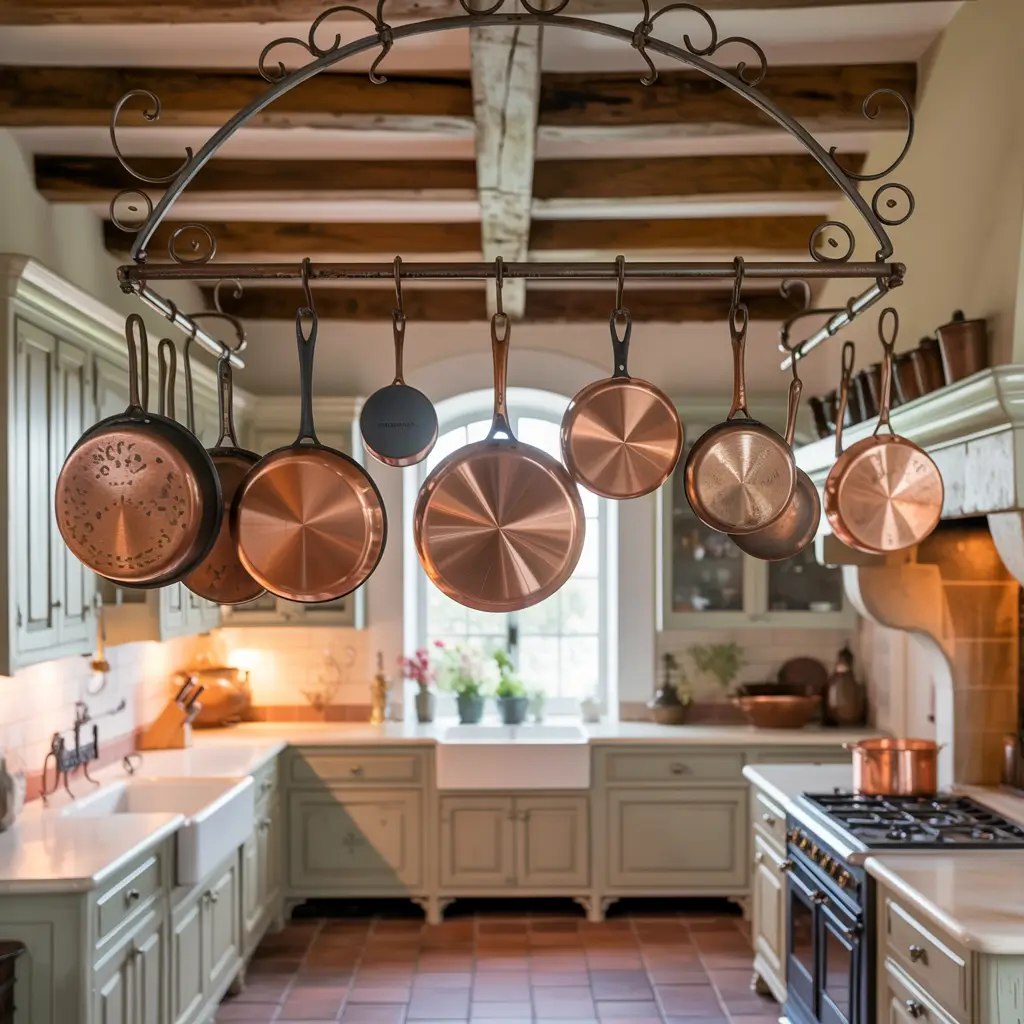
Let’s talk about turning necessity into beauty. Antique pot racks transform your cookware from clutter to decor while solving the age-old problem of pot and pan storage.
Hanging your pots serves multiple purposes. It frees up cabinet space, keeps frequently used items within easy reach, and—when done thoughtfully—creates visual interest and warmth. The key word here is “thoughtfully.” A pot rack loaded with mismatched, ugly cookware defeats the purpose.
The French farmhouse approach means choosing racks with character. Think wrought iron with scrollwork, aged brass with patina, or even repurposed vintage pieces like old ladder rungs or antique shelf brackets.
What to consider:
- Ceiling height matters—you need adequate clearance below
- Weight capacity—cast iron is heavy, so ensure proper support
- Strategic placement—over islands or peninsulas works best
- Curated display—show off copper, cast iron, and other pretty pieces
- Functional access—you should actually be able to reach and use these pots
I found an antique wrought iron pot rack at an estate sale for a fraction of what reproduction versions cost. It hangs over my island, holding my copper pots and cast iron skillets, and I get compliments on it constantly. Plus, not tripping over pots while digging through cabinets? Priceless.
French Country Blue Cabinet Accents
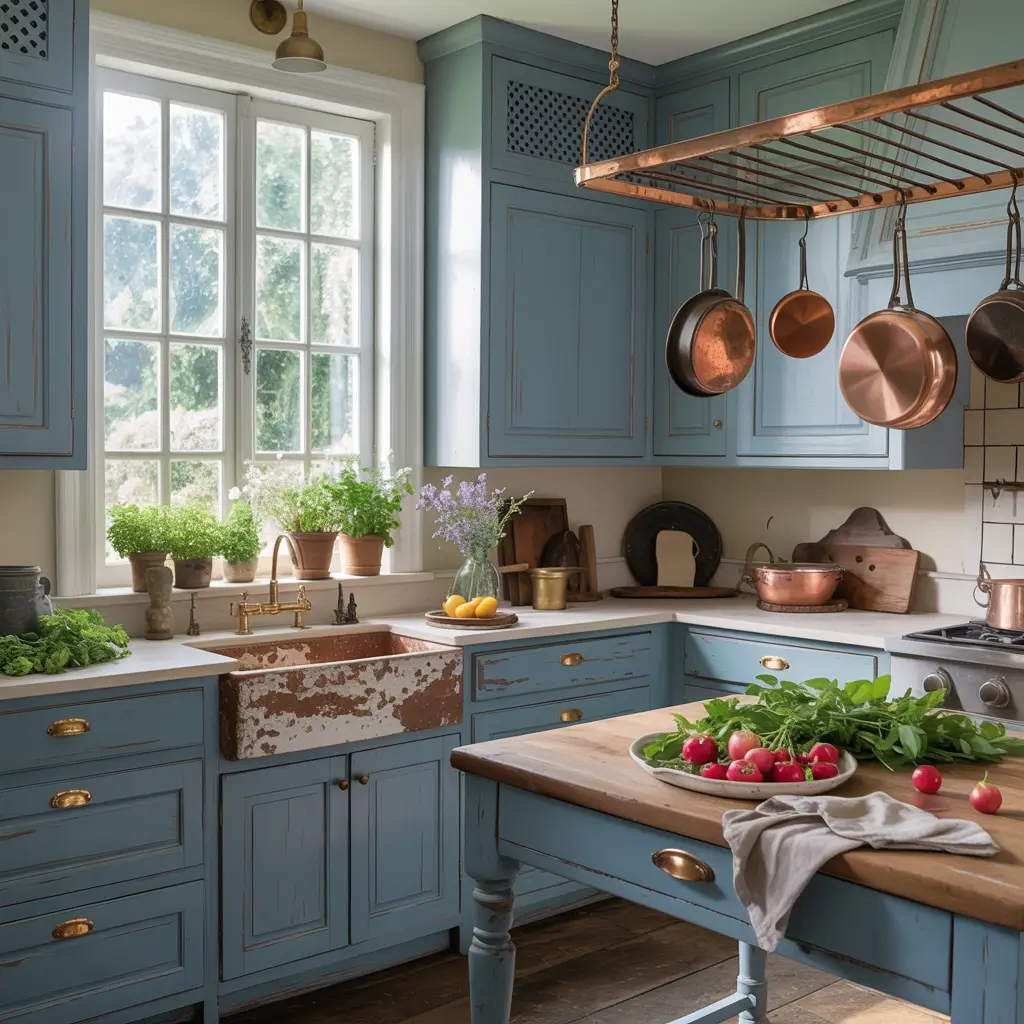
Ready to add some color without going overboard? French country blue cabinets bring that perfect pop of color while maintaining the space’s elegant, timeless feel.
We’re talking about specific blues here—not navy, not bright cobalt, but those soft, dusty blues you see in the French countryside. Think faded denim, weathered shutters, and vintage French enamelware. These blues have gray undertones that keep them sophisticated rather than juvenile.
The smart approach is using blue as an accent rather than overwhelming the entire kitchen. A blue island in a cream kitchen, blue lower cabinets with cream uppers, or even just a few blue accent cabinets creates interest without commitment.
Blue cabinet strategies:
- Island as accent—most popular approach and easiest to change later
- Lower cabinets only—grounds the space with color below, light above
- Hutch or pantry—perfect for testing the color in a smaller dose
- Complementary hardware—brass or aged bronze both look gorgeous with French blue
The gorgeous thing about French country blue is its versatility. It pairs beautifully with warm woods, cream tones, white marble, brass hardware, and natural textures. It’s basically the Switzerland of kitchen colors—gets along with everyone.
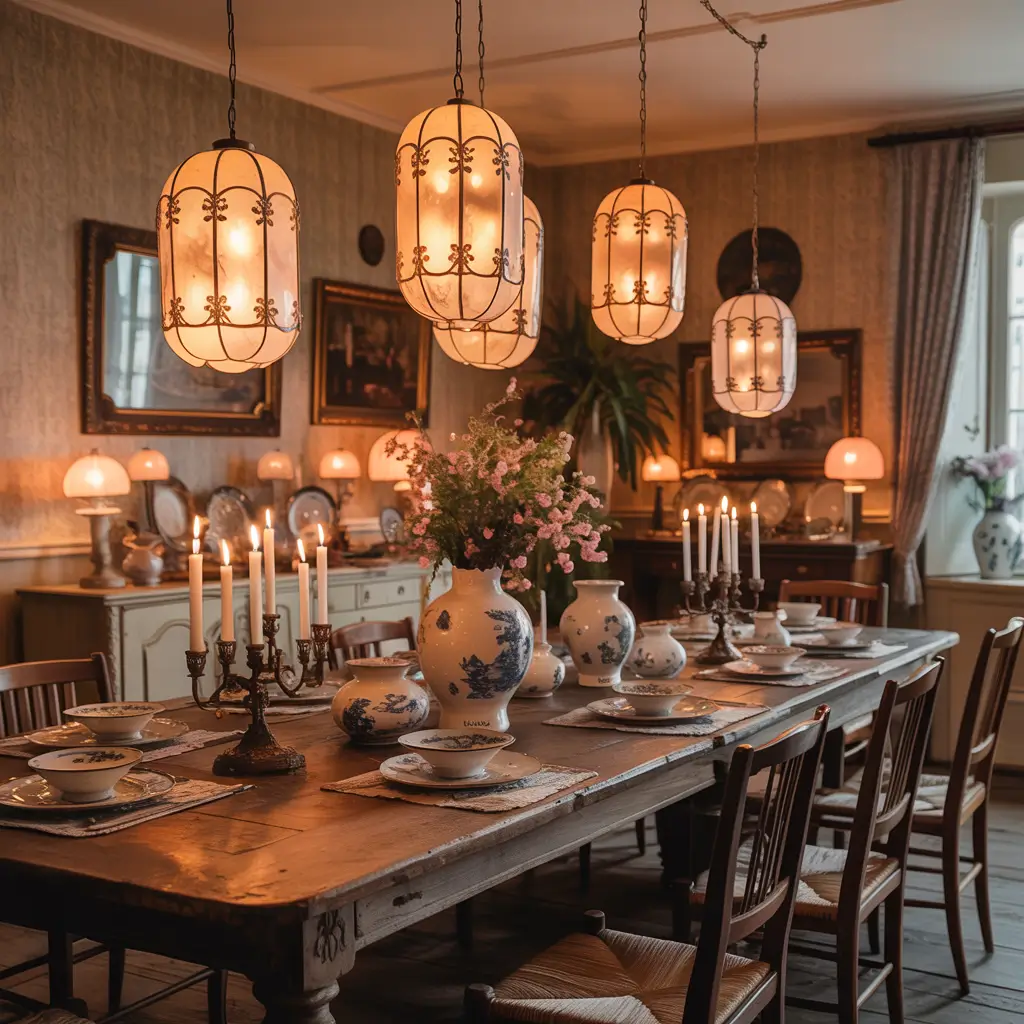
Classic Bistro Lighting Setup
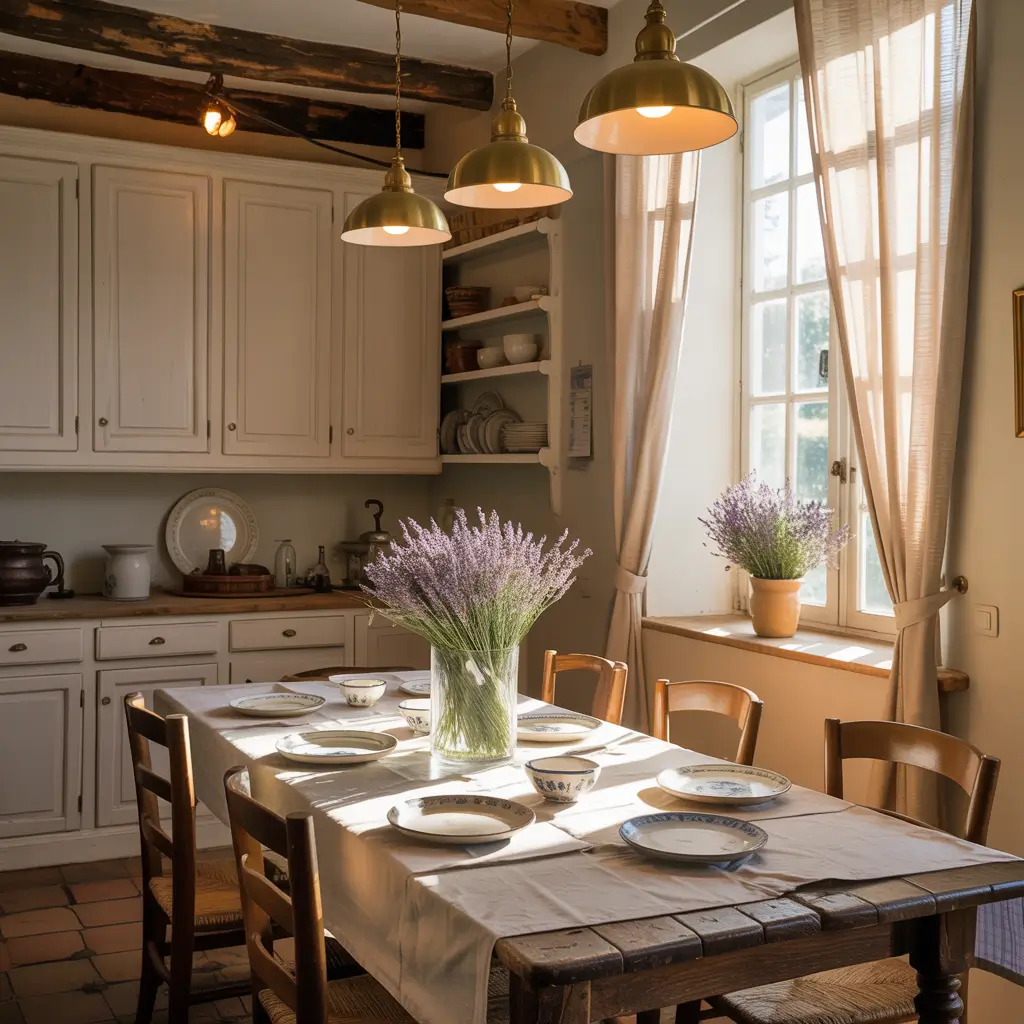
Lighting can make or break a kitchen’s ambiance, and classic bistro lighting absolutely nails the French farmhouse vibe. You know those charming pendant lights you see in Parisian cafés? Yeah, those belong in your kitchen too.
Bistro-style lighting typically features industrial-meets-vintage designs—think glass globes, aged metal shades, or those iconic French schoolhouse pendants. The aesthetic is casual sophistication, which is really the whole French farmhouse thing in a nutshell.
The beauty of this lighting style is that it provides excellent task lighting while adding serious character. Unlike boring recessed can lights (yawn), pendant lights create pools of warm light and become sculptural elements in the space.
Lighting ideas that work:
- Matching pendants over an island—classic for a reason
- Mixed vintage finds—more collected, less matchy-matchy
- Oversized single pendant—makes a statement over a smaller island
- Sconces flanking windows or range—adds ambient lighting and symmetry
- Rustic chandeliers—perfect over dining areas within the kitchen
I hung three vintage-style glass globe pendants over my island, and the warm glow they cast in the evenings transforms the entire space. They’re also dimmable, which is clutch for setting the mood for dinner parties versus bright task lighting for cooking.
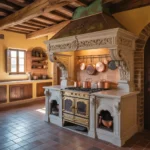
Ornate French Range Hood Design
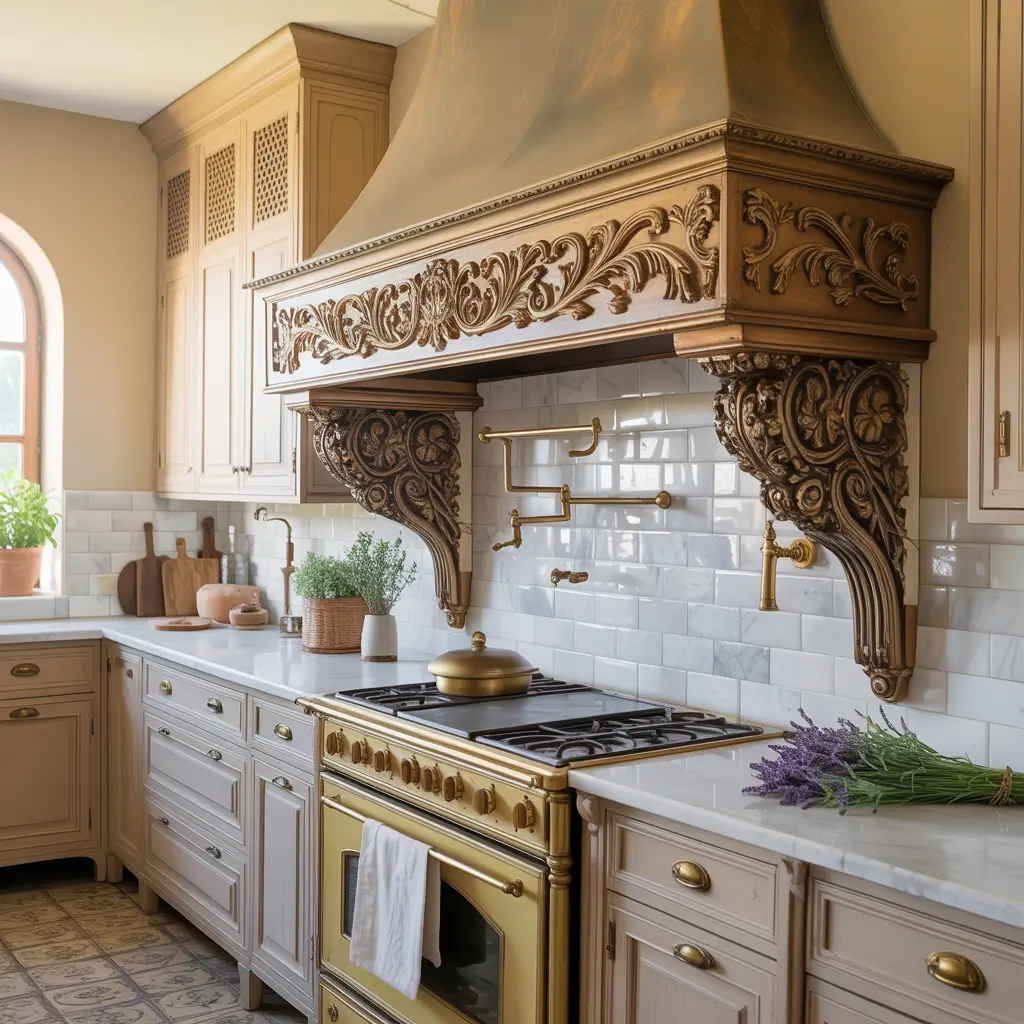
Your range hood doesn’t have to be that boring stainless steel box that screams “contractor-grade appliance.” An ornate French range hood can become the stunning focal point your kitchen deserves.
Traditional French range hoods often feature plaster or stone construction with architectural details like corbels, arches, and decorative molding. These aren’t subtle—they’re designed to be noticed, celebrating the cooking area as the kitchen’s centerpiece.
The material choices are crucial here. While stainless steel is practical, it doesn’t exactly scream French countryside. Plaster, stone, wood, or even copper create more authentic appeal.
Design elements to consider:
- Corbel supports—those decorative brackets add architectural weight
- Arched openings—echoes other arched elements in French design
- Textured finishes—lime wash plaster or aged stone look stunning
- Proportional scale—should be substantial enough to make a statement
- Integrated shelving or niches—display pretty pieces or cookbooks
You can build a custom hood surround over a standard insert, which is often more affordable than fully custom fabrication. I’ve seen DIYers create gorgeous plaster hoods using basic framing and joint compound, though I’ll admit that level of DIY is beyond my skill set :/
Cottage-Style Open Shelving Mix
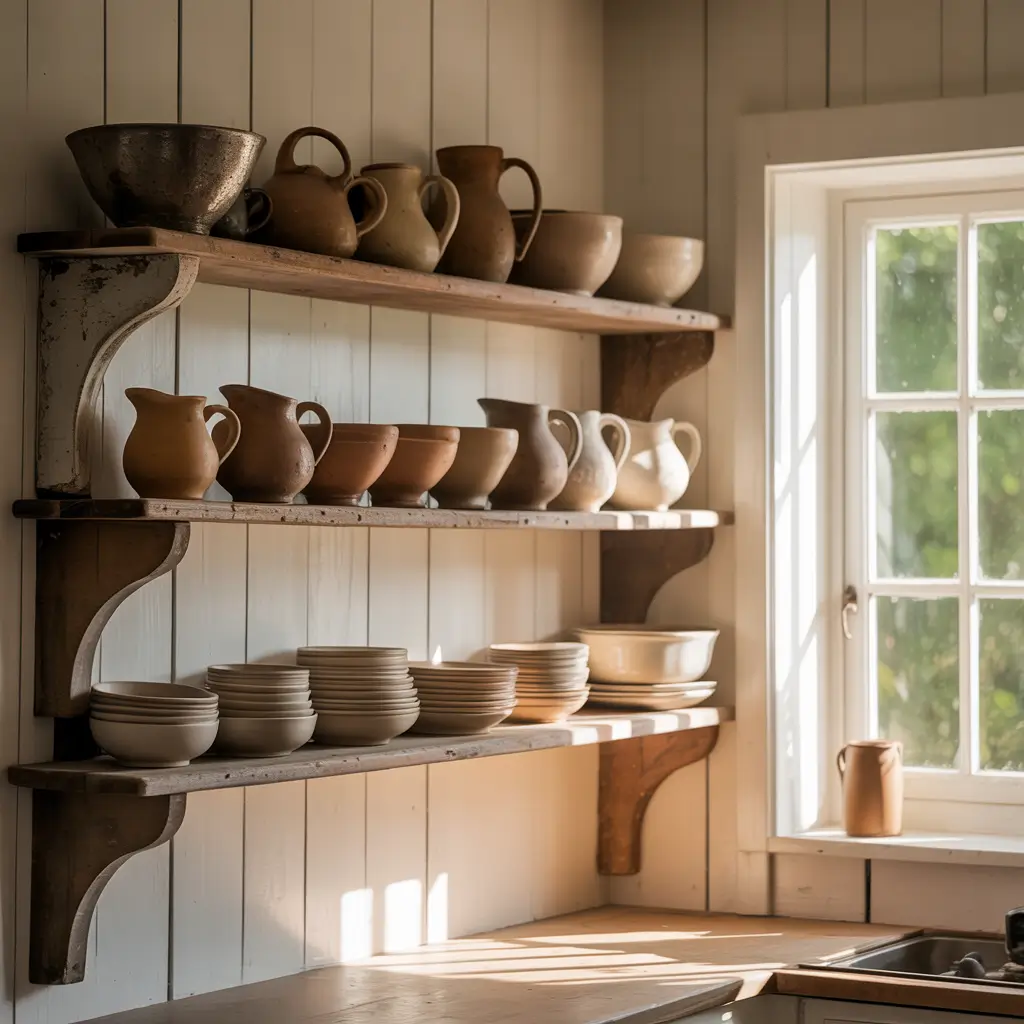
Here’s where we get a little controversial: open shelving. Some people love it, some hate it, and I’m firmly in the “it depends on execution” camp. Done right in a French farmhouse kitchen? Absolutely gorgeous.
The cottage-style approach means mixing open shelving with closed cabinets rather than going all-in on exposed storage. This gives you the display opportunities and visual lightness of open shelves without the pressure of keeping everything perfect.
Shelving material and style matter enormously. Chunky reclaimed wood shelves on iron brackets scream French farmhouse. Wire shelving or cheap melamine? Not so much.
Making open shelving work:
- Limit to 2-3 sections—more becomes overwhelming
- Flank windows or range—creates symmetry and purpose
- Substantial brackets—wrought iron or aged brass look authentic
- Curated displays—everyday white dishes, vintage finds, pretty glassware
- Accept the dust—open shelves require more maintenance, period
I installed two sets of open shelves flanking my window, and I love the collected, unfitted look they create. Yes, I dust them regularly, and yes, I’m constantly editing what goes on them. But the character they add makes the extra effort worthwhile for me.
Woven French Basket Décor Styling
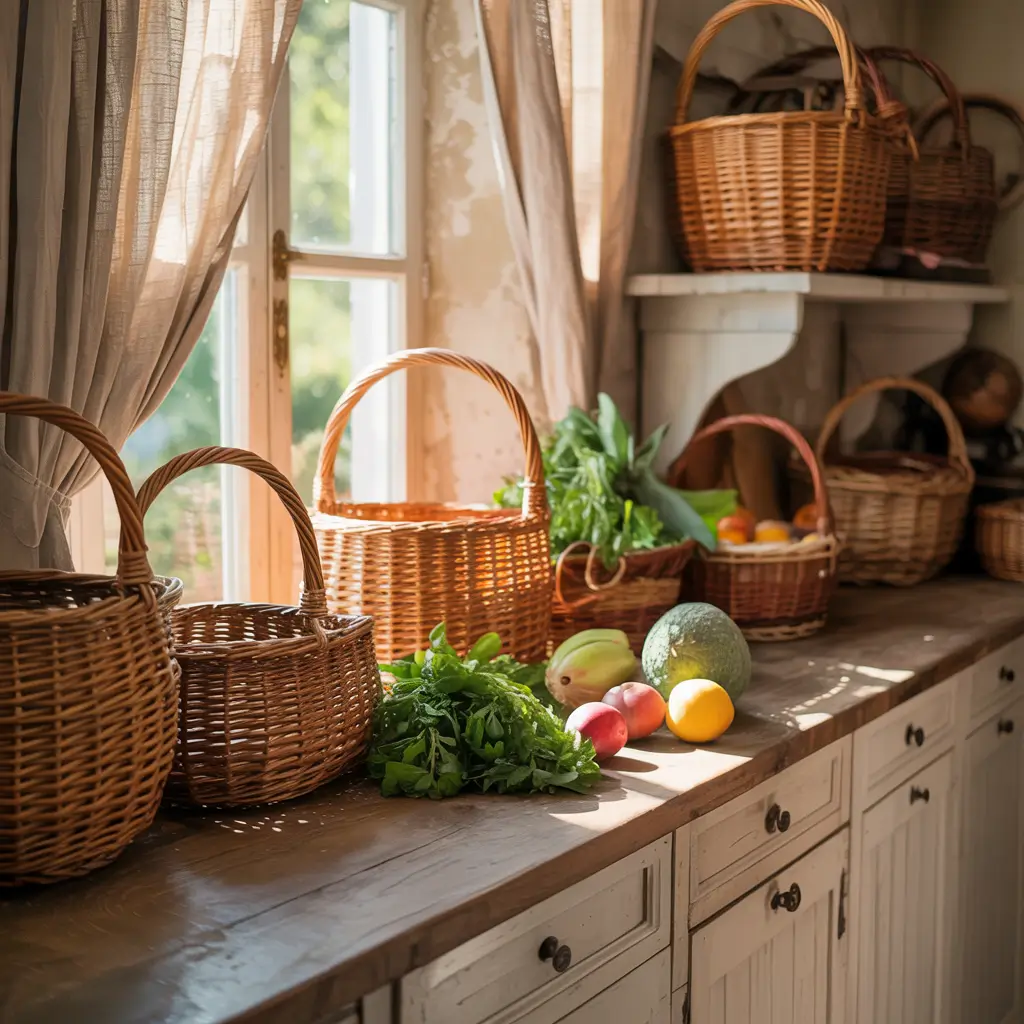
Last but definitely not least, let’s talk about the finishing touch that pulls everything together: woven French baskets. These aren’t just functional storage—they’re texture, warmth, and authenticity all wrapped up in natural materials.
French markets are famous for those classic woven baskets—wide-mouthed, sturdy, and beautifully crafted. Incorporating similar baskets throughout your kitchen adds layers of texture while solving storage challenges.
The beauty of baskets is their versatility. They corral clutter, add visual warmth, bring in natural textures, and reference French market culture all at once. Plus, they’re relatively affordable ways to add French farmhouse style.
How to use French baskets effectively:
- Counter storage—corral fruits, vegetables, or bread
- Open shelving—organize items while adding texture
- Under island seating—stash cookbooks or linens
- Wall-mounted displays—create functional art
- Pantry organization—prettier than plastic bins
I have a collection of French market baskets in various sizes throughout my kitchen. Large ones hold onions and potatoes on my counter, medium ones organize items on open shelves, and a massive one sits under my console table holding cookbooks. They’re hardworking and beautiful—my favorite combination.
Bringing It All Together
Look, creating a French farmhouse kitchen isn’t about following a rigid formula or buying everything from one catalog. It’s about thoughtfully layering elements that speak to you—mixing old and new, rustic and refined, practical and beautiful.
The ideas I’ve shared aren’t a checklist where you need all 15 to succeed. Maybe you love the idea of distressed cream cabinets and aged marble but aren’t ready for open shelving. Perfect—choose what resonates with you and skip the rest.
What makes French farmhouse style so enduringly appealing is its warmth and livability. These kitchens aren’t museum pieces or showrooms. They’re spaces meant for cooking, gathering, living, and yes—making messes. The aged finishes, natural materials, and collected feel all embrace imperfection as part of the charm.
Whether you’re planning a full kitchen renovation or just looking to refresh your current space with French farmhouse touches, start with what excites you most. Maybe it’s finally getting that farmhouse sink you’ve been dreaming about, or simply adding some vintage brass hardware and calling it a win.
The timeless appeal of French farmhouse design means these aren’t trendy choices you’ll regret in five years. Stone, marble, brass, wood, cream tones—these materials and colors have looked beautiful for centuries and will continue looking beautiful long after the latest design trends fade away.
So go ahead—embrace those weathered finishes, display your pretty things, and create a kitchen with soul and character. Your space should tell your story while nodding to the timeless elegance of French countryside living. And if it happens to make you feel like you’re cooking in a Provence cottage rather than a suburban house? Well, that’s just a bonus.