

15 Creative Rustic Farmhouse Kitchen Island Ideas for Perfect Layouts

Look, I get it—you’re scrolling through Pinterest at 2 AM again, aren’t you? That rustic farmhouse kitchen island obsession is real, and honestly, I’m right there with you. There’s something about chunky wood, vintage charm, and practical storage that makes my heart do a little happy dance. But here’s the thing: not all farmhouse islands are created equal, and some layouts work way better than others depending on your space and how you actually use your kitchen.
I’ve spent way too much time researching (okay, obsessing over) these beauties, and I want to share what I’ve learned. Whether you’re working with a sprawling country kitchen or trying to squeeze some farmhouse magic into a smaller space, these 15 creative ideas will help you nail that perfect rustic vibe without sacrificing functionality. Ready to find your dream island? Let’s chat about what actually works.
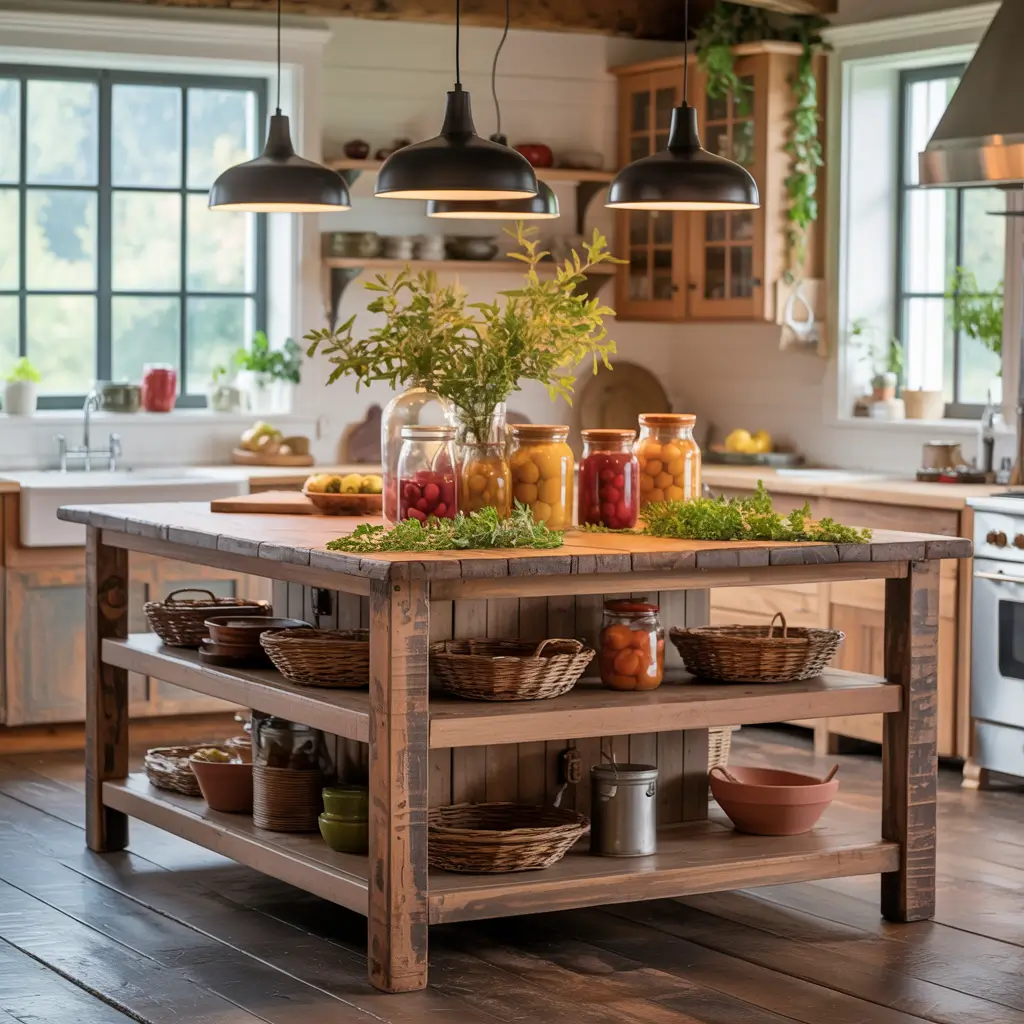
Reclaimed Wood Kitchen Island with Open Shelving
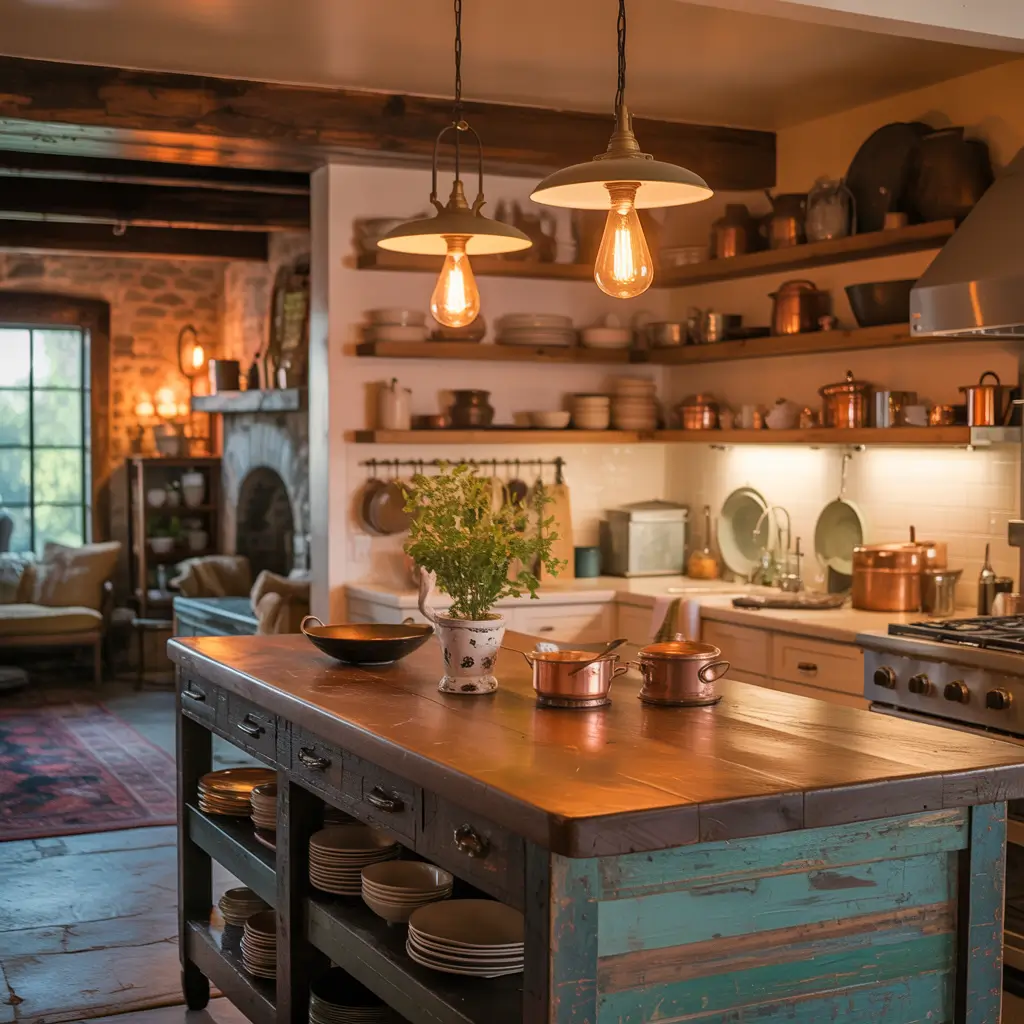
Okay, can we talk about reclaimed wood for a second? This stuff is the absolute MVP of rustic farmhouse design. I’m talking about those gorgeous weathered planks with actual history—barn doors, old fences, salvaged floor joists. The character and patina you get from reclaimed wood is literally impossible to fake, and trust me, I’ve seen people try.
Here’s what makes this design shine: you combine that stunning reclaimed wood with open shelving underneath. No fancy cabinet doors, no hidden compartments—just honest-to-goodness shelves where you can display your prettiest cookware, baskets, or collection of vintage crocks. The openness keeps things feeling airy and accessible, which is exactly what you want in a farmhouse kitchen.
I personally love using reclaimed wood with visible nail holes, saw marks, and varying wood tones. Mix some lighter and darker boards together, and you get this incredible organic pattern that becomes the focal point of your entire kitchen. Plus, every scratch and dent just adds to the charm instead of making you panic about resale value.
Pro tip: Make sure you seal that reclaimed wood properly. Yeah, it looks amazing all rustic and raw, but kitchen spills are real, and you don’t want your gorgeous island turning into a science experiment after one spaghetti sauce incident.
Farmhouse Kitchen Island with Butcher Block Top
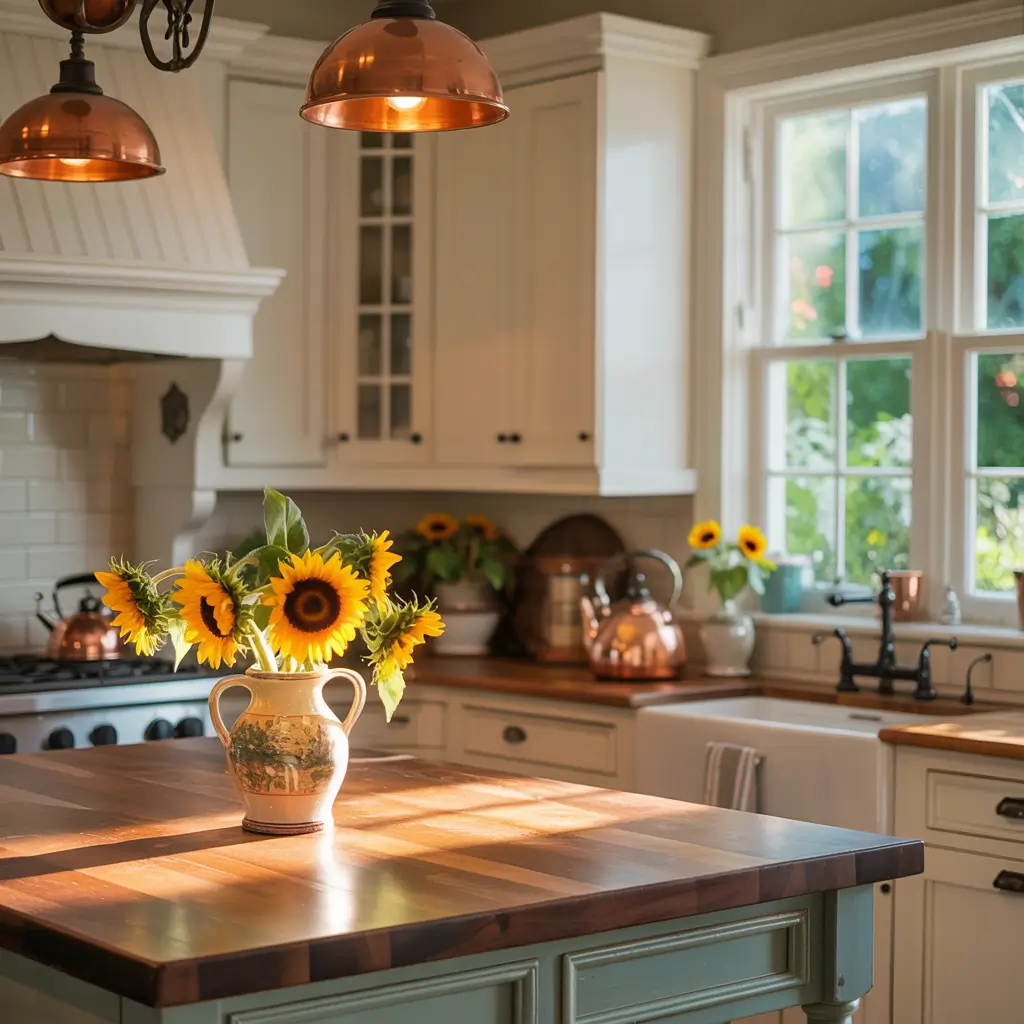
Listen, butcher block countertops are having a serious moment, and I’m here for it. There’s something incredibly practical and beautiful about a thick slab of hardwood where you can chop, prep, and actually use your island like the workhorse it’s meant to be. No more babying your countertops or using seventeen cutting boards 🙂
Butcher block brings warmth that you just can’t get from granite or quartz. Maple, walnut, cherry—each wood species brings its own vibe, but they all deliver that touchable, lived-in quality that screams farmhouse. I especially love how butcher block ages. Those knife marks? They tell your kitchen’s story.
Here’s what nobody tells you though: maintenance matters. You’ll need to oil your butcher block regularly (I use food-grade mineral oil about once a month), and you can’t just leave standing water on it. But honestly? That little bit of upkeep is totally worth it for the aesthetic payoff.
Pair your butcher block top with a painted base—classic white, sage green, or even a moody navy—and you’ve got yourself a two-tone dream that balances rustic charm with modern sensibility. The contrast between the warm wood top and painted base creates visual interest without overwhelming your space.
Two-Tone Rustic Kitchen Island Design
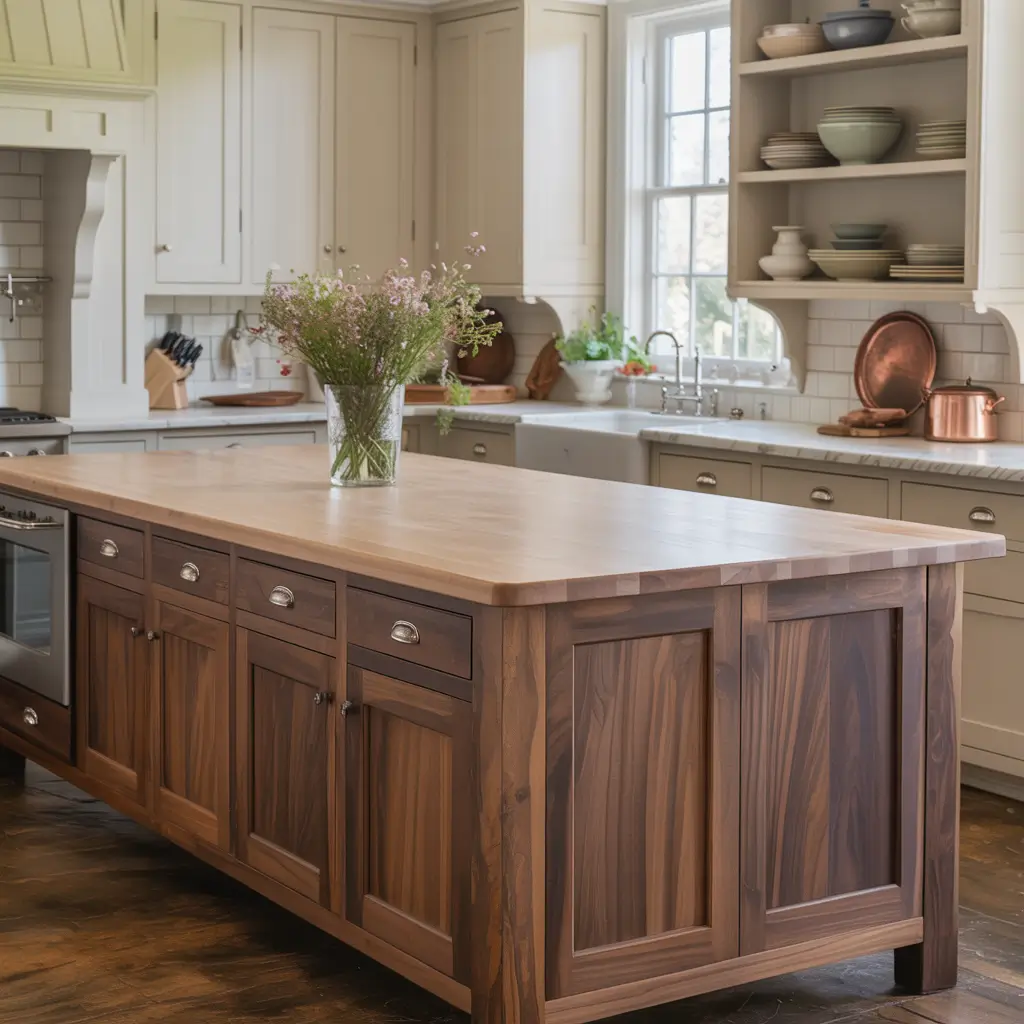
Speaking of two-tone designs, this trend isn’t going anywhere, and thank goodness for that. A two-tone kitchen island lets you have your cake and eat it too—you get the rustic warmth of natural wood combined with the clean, fresh look of painted cabinetry.
The classic combo? Natural wood on top with a crisp white or cream base. This works because the painted base grounds the island and makes it feel intentional rather than like you just plopped a random piece of furniture in your kitchen. The wood top keeps things warm and approachable.
But here’s where you can get creative: try flipping the script. I’ve seen gorgeous islands with painted tops and natural wood bases, or even ones that use two different wood tones—like a darker walnut base with a lighter oak top. The key is making sure there’s enough contrast that the two tones don’t just muddle together.
My favorite application? Using a distressed painted finish on the base with a smooth, oiled wood top. The textural difference between rough and smooth amplifies that rustic farmhouse vibe while keeping things sophisticated. You’re basically telling your kitchen, “Yeah, I’m casual, but I’ve got style.”
Kitchen Island with Built-In Wine Rack
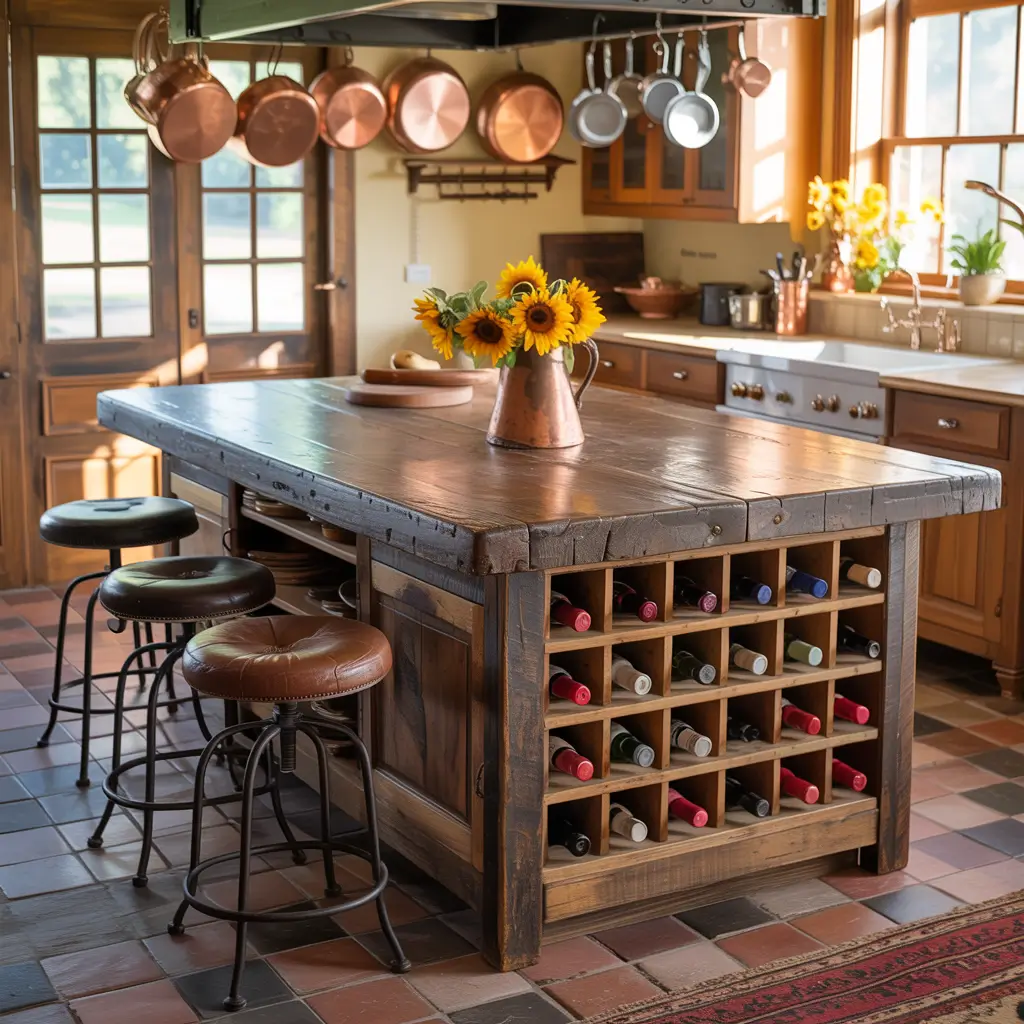
Now we’re talking! Because honestly, what’s a farmhouse kitchen without a place to store your wine collection? (And by “collection” I mean the three bottles you rotate through every week—no judgment here.)
A built-in wine rack transforms your island from purely functional to entertaining-ready. I’m not talking about those dinky little wine cubbies either. Think substantial X-pattern wine storage that can hold a dozen bottles or more, positioned right where you need them when you’re cooking or hosting.
The rustic farmhouse aesthetic works perfectly with wine storage because you can make it a design feature. Use chunky wood to create the X-patterns, or go with wrought iron wine holders mounted to reclaimed wood. Either way, you’re adding architectural interest to your island while solving a real storage problem.
Here’s my take: position your wine rack on the end of your island rather than underneath the main counter. This keeps bottles easily accessible without interfering with your knee space or storage drawers. Plus, it becomes a conversation piece when people walk into your kitchen. “Oh, this old thing? Yeah, I just keep my wine casually displayed in my custom island.” Cool factor: activated.
Also Read: 15 Inspiring Modern Farmhouse Kitchen Ideas for Every Space
Vintage Farmhouse Island with Sliding Barn Doors
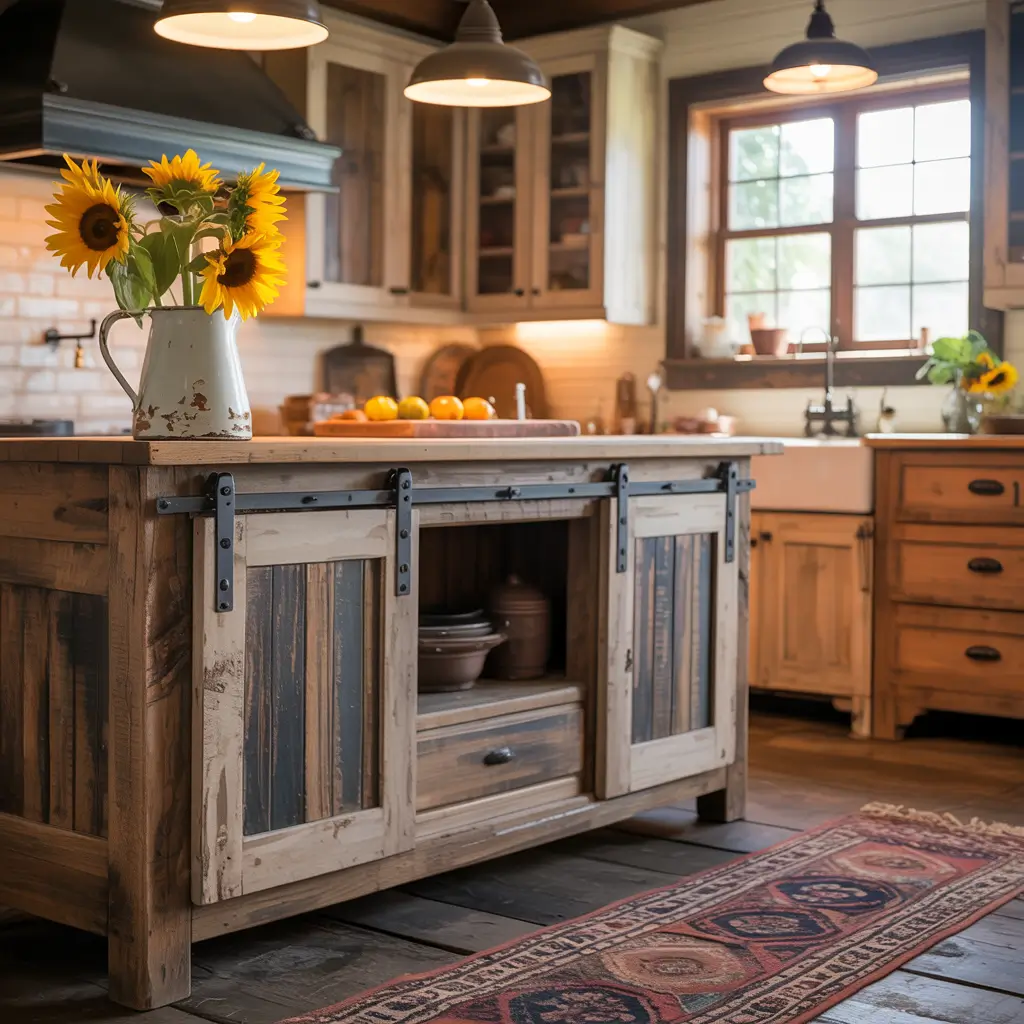
Sliding barn doors aren’t just for closets and pantries anymore, friends. When you mount miniature barn doors on your kitchen island, you get storage that’s both functional and ridiculously charming. I mean, who doesn’t love tiny hardware and sliding mechanisms?
The beauty of barn door cabinets is the hardware. Those black metal rails, the rustic wheels, the chunky handles—it all adds to that authentic farmhouse feeling. You can find barn door hardware kits pretty easily now (thank you, DIY renaissance), and installation isn’t as scary as you’d think.
I particularly love this design for hiding less-pretty kitchen necessities. Trash bins, recycling, awkwardly shaped appliances—all that stuff slides away behind charming barn doors that look intentional instead of apologetic. Your kitchen looks pulled together even when you’re in the middle of cooking chaos.
One thing to consider: barn doors slide, which means they don’t take up swing-out space like traditional cabinet doors. This makes them perfect for tighter kitchen layouts where every inch matters. FYI, this is also great if you’ve got kids or pets who love leaving cabinet doors open for you to walk into.
Rustic Kitchen Island with Seating Nook
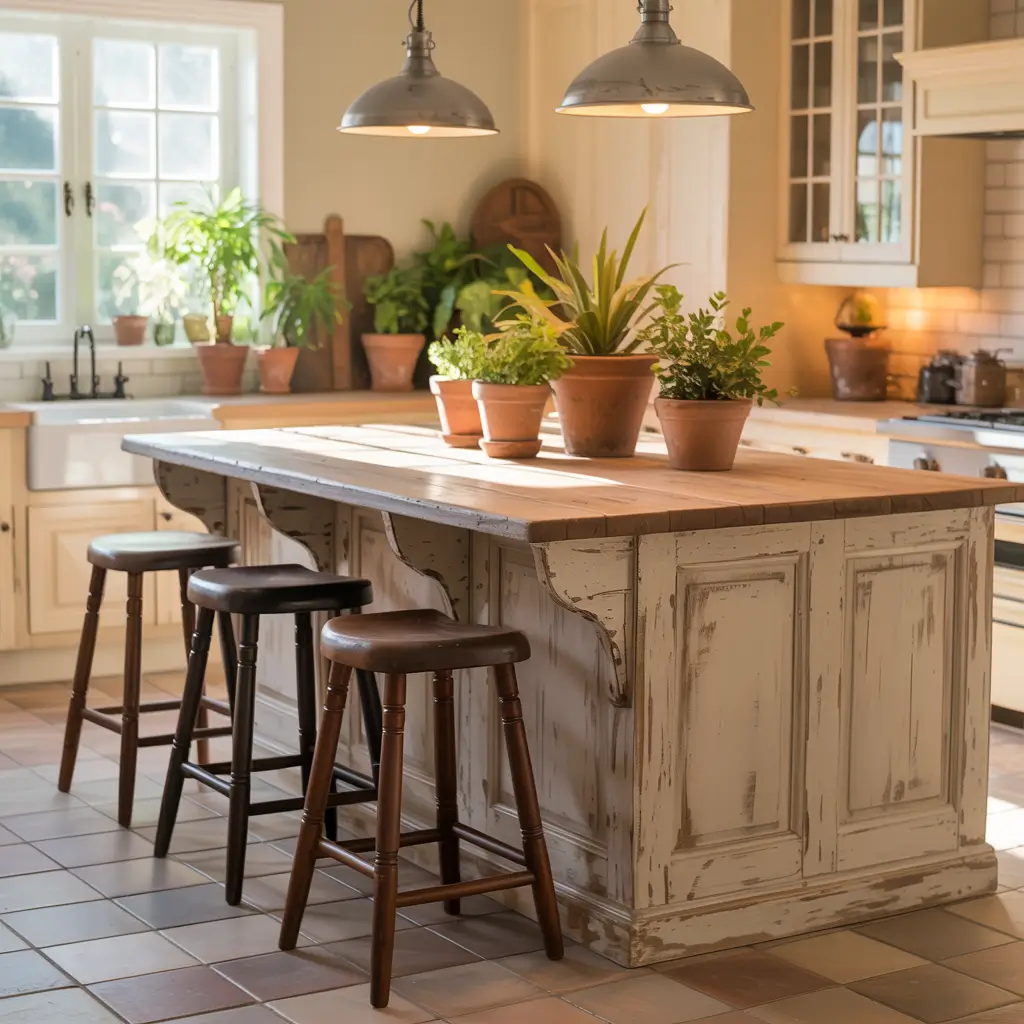
Let’s be real—your kitchen island should do more than just sit there looking pretty. A seating nook transforms your island into the heart of your home, where people actually gather, chat, and sneak bites while you’re cooking.
For rustic farmhouse style, I love extending one side of the island to create an overhang that accommodates bar stools or counter-height chairs. The trick is making sure you’ve got enough overhang (at least 12-15 inches) so people can actually sit comfortably without jamming their knees.
Choose seating that complements your rustic vibe—think wooden stools with metal frames, upholstered seats in natural linen, or even vintage tractor seats if you’re feeling extra farmhouse-y. The seating you pick can either blend in with your island or create a complementary contrast.
I’ve noticed that islands with built-in seating get used way more than islands without. People naturally gravitate toward somewhere to sit, and having that casual dining spot means weeknight dinners, homework sessions, and coffee dates all happen right there. Your island becomes multifunctional in the best possible way.
Stone Countertop Farmhouse Kitchen Island

Okay, so hear me out on this one. I know we’ve been talking a lot about wood, but stone countertops on a rustic farmhouse island can be absolutely stunning when you do it right. I’m talking about natural stone with character—soapstone, honed marble, or even concrete with a weathered finish.
The key is choosing stone that doesn’t look too polished or modern. High-gloss granite? Probably not the vibe. But a honed marble with gray veining or a chunky slab of soapstone? Now you’re speaking my language. These materials bring an earthy, organic quality that complements rustic wood beautifully.
I especially love pairing a stone countertop with a painted or weathered wood base. The combination of materials creates layers of texture and interest. Plus, stone gives you a super durable prep surface that can handle hot pots, rolling dough, and all your messiest cooking adventures without flinching.
The cool factor of soapstone deserves its own mention. This stuff develops a natural patina over time, darkening and aging in a way that actually makes it more beautiful. It’s like the stone version of reclaimed wood—it gets better with use, which is exactly the farmhouse philosophy.
Farmhouse Kitchen Island with Exposed Beams
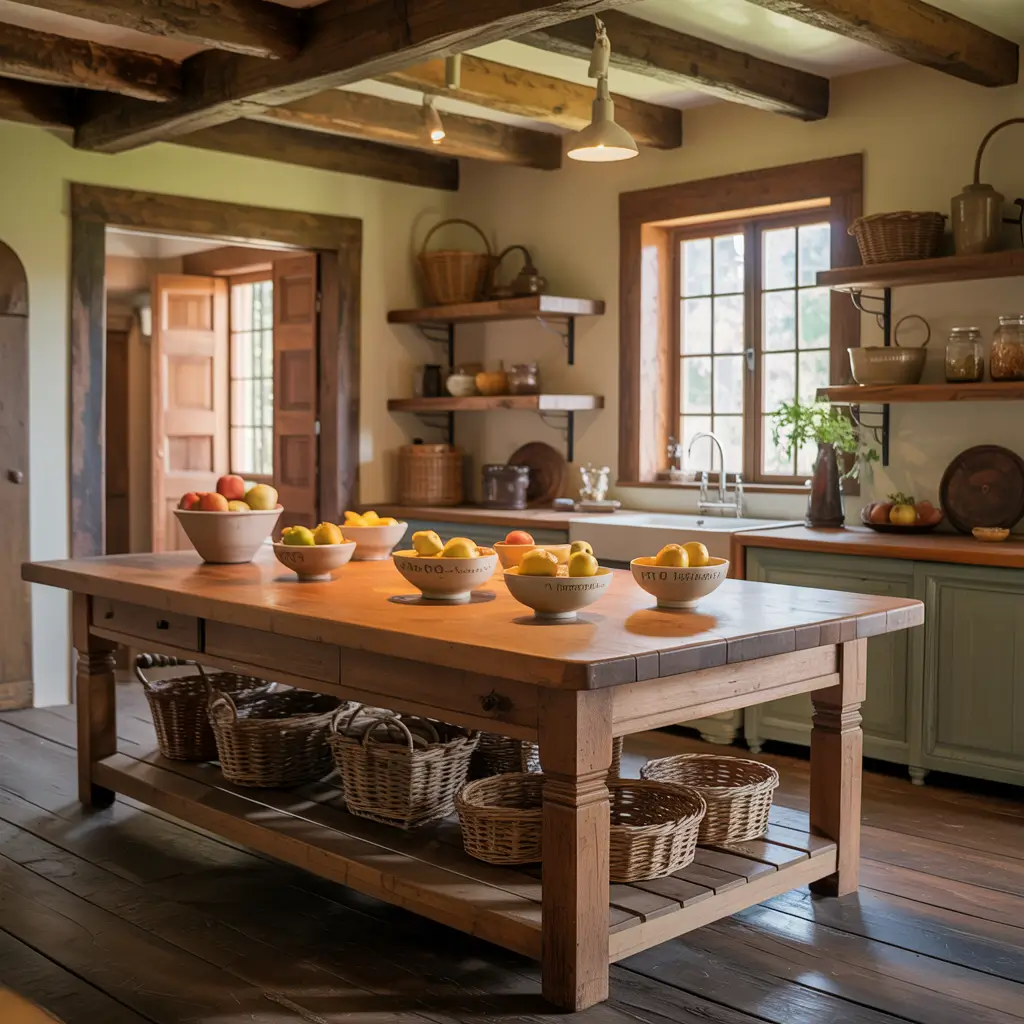
Want to know a secret? Adding exposed beams to your kitchen island makes it look like you hired an expensive designer, but it’s actually a pretty straightforward DIY project. Exposed beams add architectural weight to your island, making it feel substantial and intentional rather than like an afterthought.
I’m talking about those chunky wood beams that form the corners or supports of your island structure. You can use reclaimed beams (hello, more character!), rough-hewn timbers, or even new lumber that you distress yourself. The beams should feel slightly oversized—that’s what gives you that authentic farmhouse look.
These structural elements don’t just look good—they actually reinforce your island if you’re building one from scratch. You’re adding genuine support while creating visual interest. It’s form meeting function in the best possible way.
My favorite approach? Use darker stained beams to contrast with a lighter painted base, or go full rustic with unstained beams showing off their natural wood grain. Either way, those exposed supports become a defining feature that sets your island apart from basic box designs.
Mobile Rustic Kitchen Island on Casters
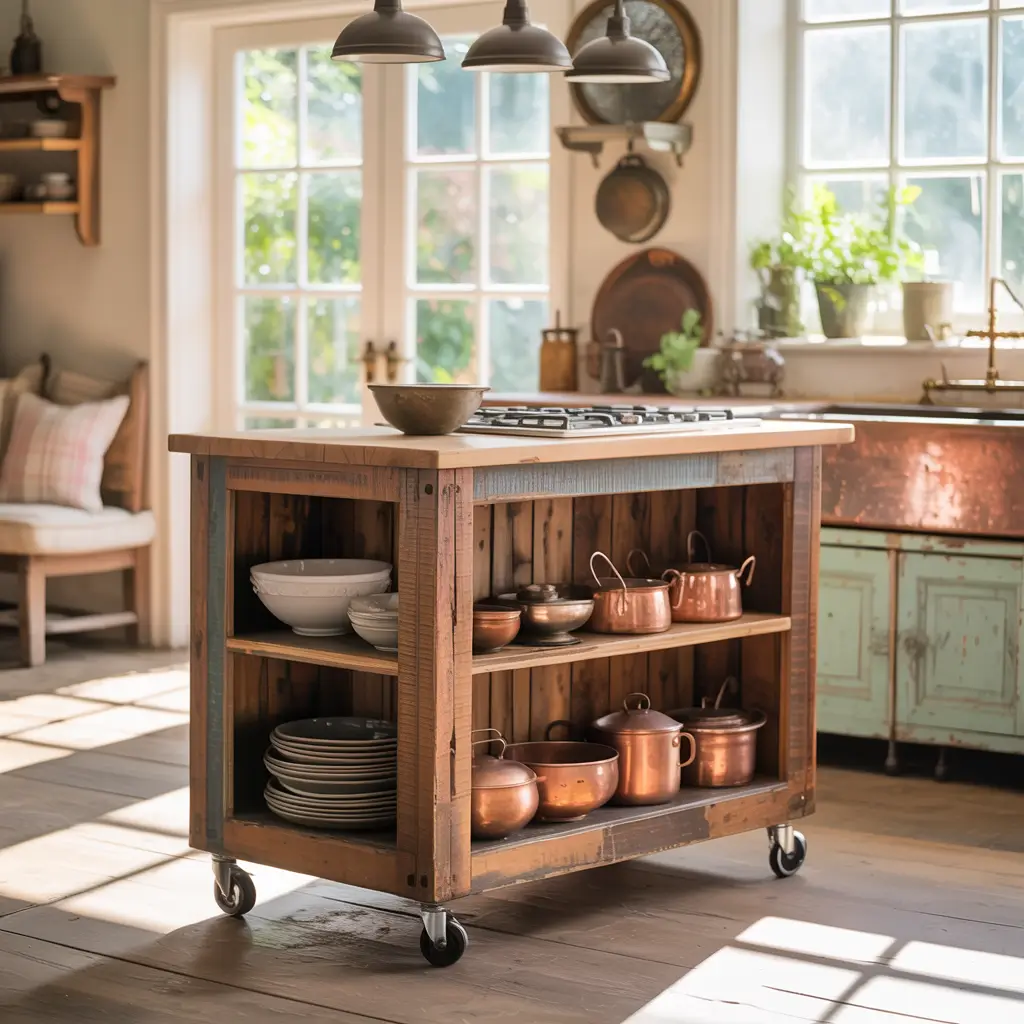
Let’s talk flexibility, because not every kitchen can accommodate a permanent island. A mobile island on casters gives you all the farmhouse charm and functionality without committing to a fixed footprint. Plus, you can roll it around based on what you’re doing—meal prep here, serving buffet-style there, extra counter space for holiday cooking right over there.
Casters might seem like a small detail, but choosing the right ones matters. I love heavy-duty industrial casters with visible metal—they add to the rustic aesthetic while being functional. Make sure at least two of them lock so your island doesn’t roll away mid-chop. That would be awkward :/
The beauty of a mobile island is you can reposition it as your needs change. Need more floor space for that dance party in your kitchen? (No? Just me?) Roll the island against the wall. Having a big dinner party? Move it to the center for maximum prep space. Your kitchen layout stays flexible.
Design-wise, mobile islands often run smaller than permanent ones, which means you can load them up with character without overwhelming your space. Think distressed wood, open shelving, vintage hardware—all the farmhouse hits in a compact, movable package.
Farmhouse Island with Hidden Storage Drawers

Here’s the truth: no matter how beautiful your island looks, it’s kind of useless if it doesn’t solve storage problems. Hidden storage drawers are where function meets farmhouse style, giving you tons of organizational space without cluttering up the aesthetic.
I’m obsessed with deep drawers that use quality slides (please, please invest in good hardware here). Soft-close is worth every penny when you’re dealing with heavy pots and pans. Nothing says “I made a mistake” like drawer slides that jam or collapse under weight.
The “hidden” part comes from designing your drawer fronts to blend seamlessly with your island’s style. Use reclaimed wood drawer fronts that match your island, or go with painted fronts that coordinate with your base. Simple cup pulls or iron handles keep things authentically farmhouse.
Inside those drawers? Organize to your heart’s content. I use drawer dividers for utensils, deep drawers for pots and pans, and medium drawers for all those random kitchen gadgets we swear we’ll use. Good storage makes your island earn its keep instead of just taking up valuable floor space.
Also Read: 15 Elegant Farmhouse Kitchen Cabinets Ideas and Chic Styles
Wooden Kitchen Island with Iron Accents
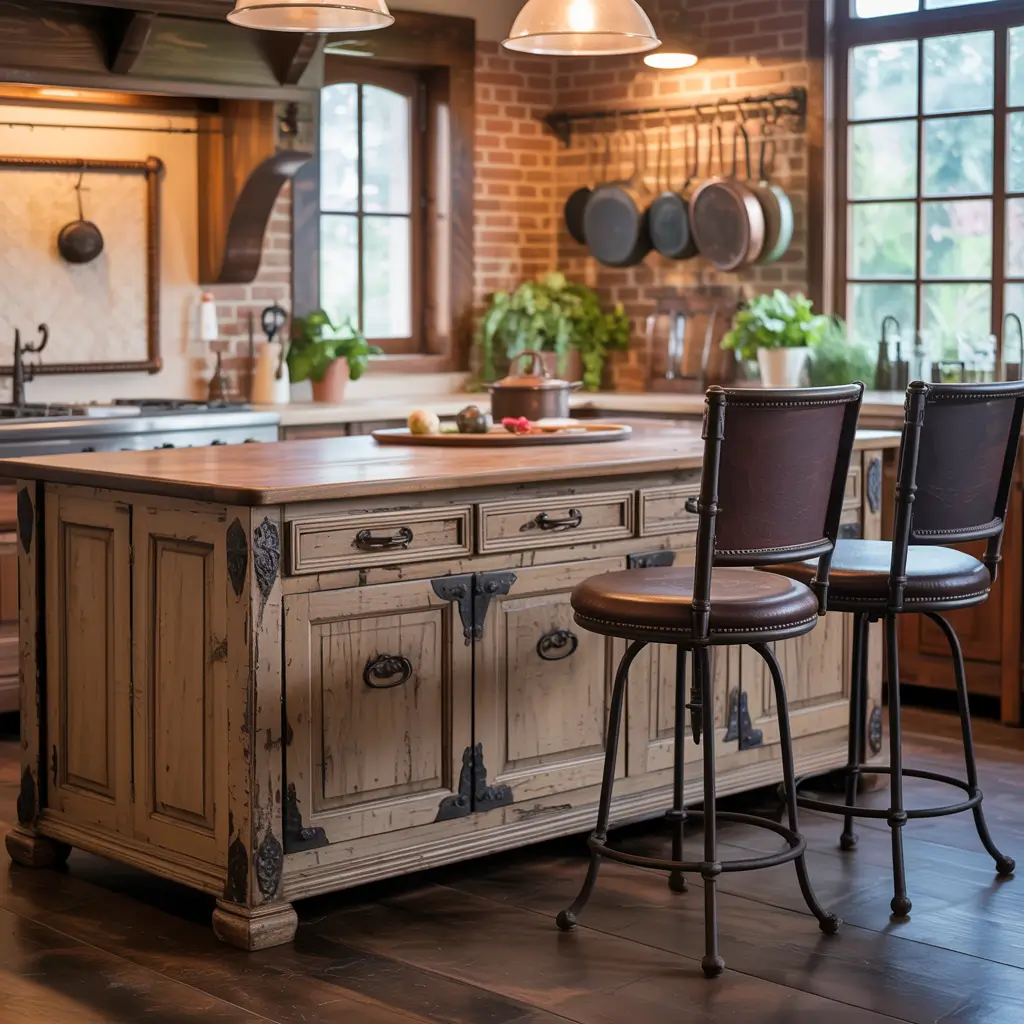
Nothing says rustic farmhouse quite like the combination of warm wood and industrial iron. Iron accents elevate a simple wooden island into something that looks curated and intentional. We’re talking about iron brackets, corner braces, towel bars, and hardware that adds visual punch.
The contrast between wood and metal creates the perfect rustic-industrial hybrid that’s super popular right now (and honestly, probably always will be). I especially love using wrought iron or black metal because it doesn’t compete with the wood—it complements it.
You can go subtle with just iron drawer pulls and corner brackets, or go bold with substantial iron supports, shelf brackets, and decorative strapping. I’ve seen islands that look like someone deconstructed an old factory cart and turned it into a kitchen centerpiece, and honestly? Goals.
Here’s a practical bonus: iron accents are usually pretty affordable, and they’re one of the easiest ways to customize a basic island. Even if you buy a ready-made island, swapping out the hardware and adding some decorative iron elements can completely transform the look. DIY makeover for the win.
Rustic Kitchen Island with Farmhouse Apron Sink
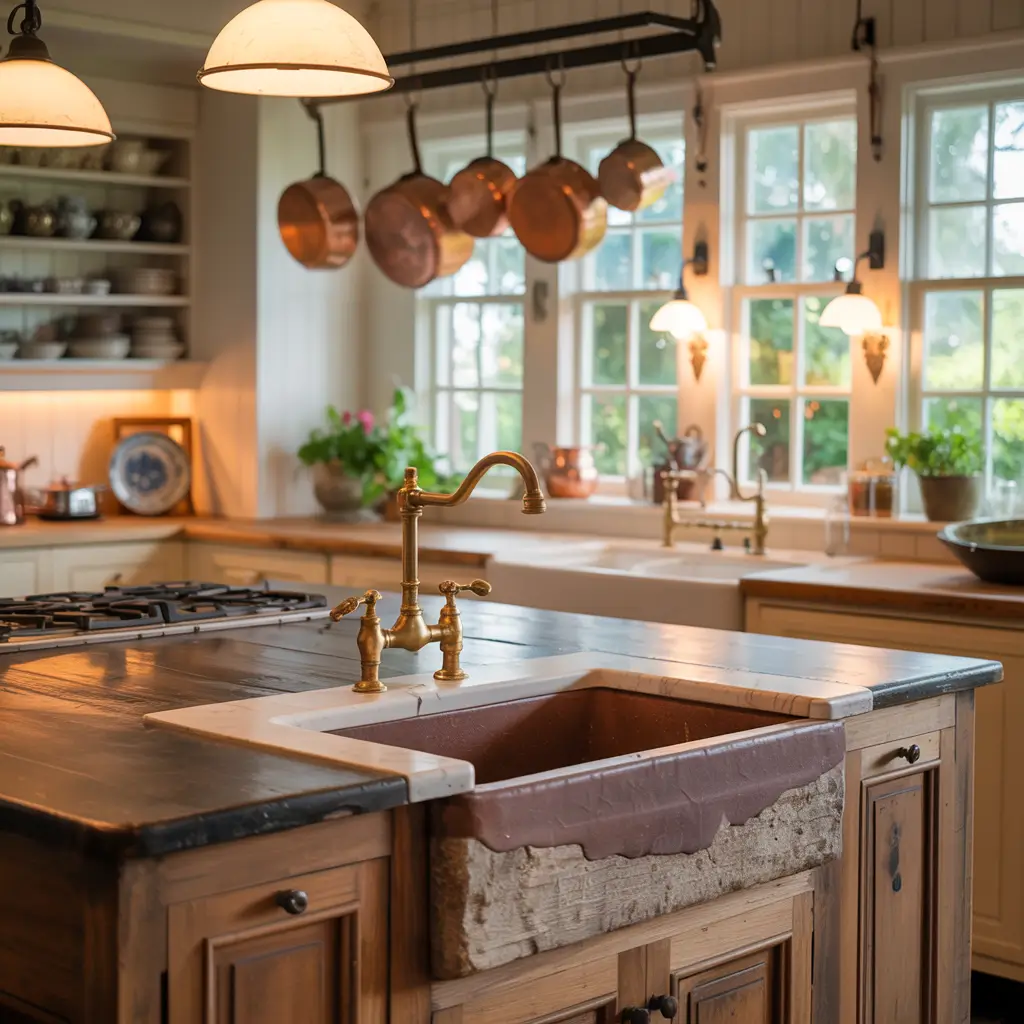
Okay, this one might be my personal favorite, and yes, I’m biased because I dream about farmhouse sinks constantly. Building an apron-front sink into your kitchen island is bold, brilliant, and incredibly functional—especially if you’re working with a larger space.
An island sink creates a separate work zone from your main counter sink. You can use it for food prep, washing vegetables, or as a second cleanup station when you’re entertaining. Plus, there’s something so satisfying about facing your kitchen (and whoever’s keeping you company) while you work instead of staring at a wall.
The farmhouse apron style fits this setup perfectly because it’s meant to be seen from the front. That beautiful exposed front panel becomes a focal point of your island. Choose a classic white fireclay sink for timeless appeal, or go with a statement color or material that complements your rustic design.
IMO, the biggest challenge here is plumbing. You’ll need to run water lines and drainage to your island, which means either building around existing plumbing or doing some floor work. It’s not a simple weekend project, but if you’re doing a renovation anyway, seriously consider it. The functionality and visual impact are worth the effort.
Minimalist Rustic Kitchen Island Design
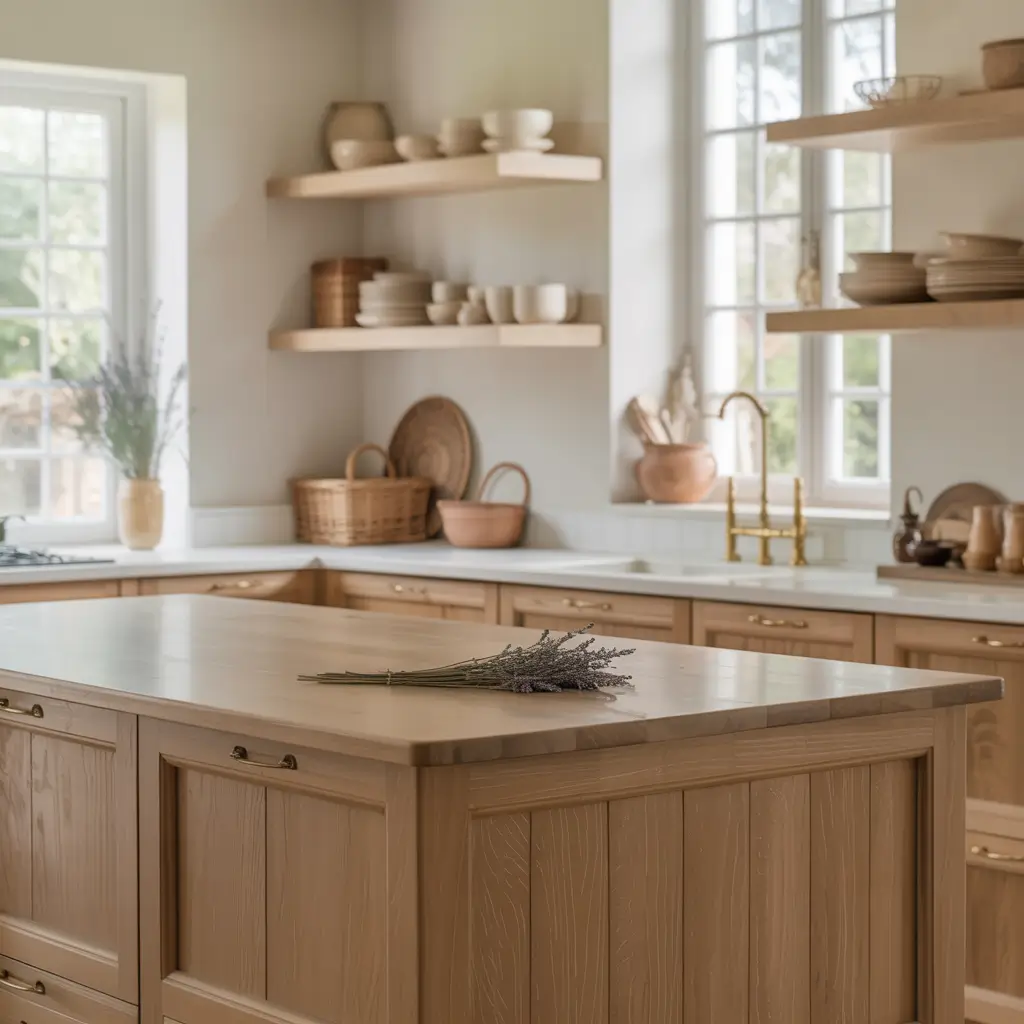
Wait, minimalist and rustic in the same sentence? Absolutely. Clean-lined rustic design is where farmhouse style grows up and gets sophisticated. You keep the warmth and natural materials but strip away the clutter and excessive ornamentation.
Think simple rectangular forms, clean wood grain without a lot of distressing, and minimal hardware. Maybe just a single shelf underneath for visual breathing room instead of packed storage. The beauty comes from the quality of materials and the simplicity of the design rather than decorative elements.
I love this approach for smaller kitchens or modern farmhouse styles. You get that rustic warmth without the space feeling crowded or overly busy. A simple wooden island with straight lines and natural finish can anchor your kitchen without demanding all the attention.
The minimalist rustic vibe works especially well when you let the wood be the star. Choose a beautiful species like walnut or white oak with prominent grain, keep the form simple, and let the natural beauty shine through. Sometimes less really is more, you know?
Distressed Wood Farmhouse Island with Open Cabinets

Distressed finishes are basically farmhouse royalty, and combining them with open cabinets creates this perfectly imperfect aesthetic that I can’t get enough of. Deliberately worn paint, exposed wood layers, and visible age marks tell a story even if you bought the island last Tuesday.
Open cabinets (as opposed to shelves) give you the structure of enclosed storage with the accessibility and visual appeal of open shelving. You can see what’s inside, grab what you need quickly, but things still feel somewhat contained. It’s the best of both worlds.
I particularly love islands where the distressed finish reveals multiple paint layers—maybe a chippy white finish showing glimpses of sage green or barn red underneath. This creates depth and visual interest that plain painted finishes just can’t match. You can buy pre-distressed pieces or DIY this look with some paint, sandpaper, and patience.
Styling matters here. Open cabinets mean whatever you store becomes part of your décor. Use matching baskets, display pretty dishes, or arrange cookbooks by color. Your storage becomes part of the design instead of something you hide away.
Multi-Level Rustic Kitchen Island for Cooking & Dining
Last but definitely not least, let’s talk about multi-level islands because they solve so many layout problems at once. A multi-level island creates distinct zones—typically a lower surface for food prep and cooking, plus a raised bar-height surface for dining and entertaining.
The beauty of this design is how it naturally separates messy cooking chaos from clean dining space. You can pile prep work and cutting boards on the lower level while the upper level stays pristine for serving or casual dining. It also creates a subtle visual barrier that hides kitchen mess from guests sitting at the bar.
For rustic farmhouse style, I love using the same wood throughout but varying the finish or treatment. Maybe the lower prep surface gets a durable sealed butcher block while the upper dining level gets a painted finish. Or use matching reclaimed wood but differentiate with different hardware or decorative elements.
The practical perks are real: different work heights actually make cooking more comfortable depending on what you’re doing. Rolling dough? Lower is better. Chopping vegetables? Higher might work better for your back. You’re creating an ergonomic kitchen while adding major style points.
Wrapping This Up
So there you have it—15 rustic farmhouse kitchen island ideas that actually work in real kitchens, not just Pinterest fantasies. Whether you’re all in on reclaimed wood and vintage charm or prefer a cleaner minimalist rustic vibe, there’s an approach here that’ll fit your space and style.
The best part about farmhouse islands? They’re forgiving. A few scratches, some wear and tear, a little imperfection—it all just adds to the charm. You’re creating a kitchen that feels lived-in and loved from day one, which is exactly how homes should feel.
Pick the elements that speak to you, mix and match ideas, and create an island that works for how you actually use your kitchen. Because at the end of the day, the perfect kitchen island is the one you can’t imagine your kitchen without.