

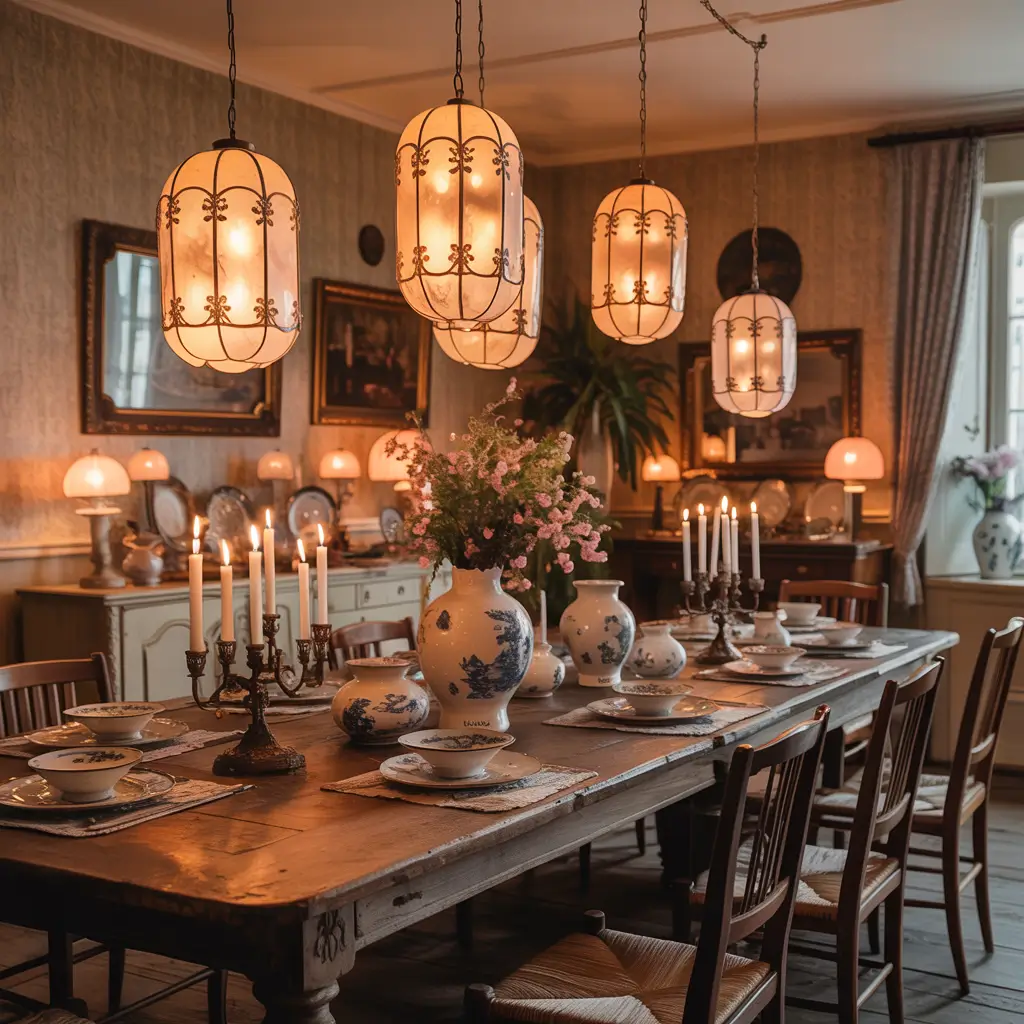
15 Cozy Japandi Dining Room Ideas with Scandinavian Style
So you’re crushing on Japandi design? I don’t blame you. This gorgeous fusion of Japanese minimalism and Scandinavian coziness creates dining rooms that basically beg you to linger over your morning coffee (or evening wine, no judgment here). The thing is, Japandi isn’t just another trendy aesthetic—it’s a lifestyle choice that celebrates simplicity, functionality, and that elusive feeling of hygge meets Zen.
I’ve been obsessing over this design style for months now, and honestly, my dining room has never felt more inviting. You know that feeling when you walk into a space and immediately exhale? That’s what we’re going for. Whether you’re starting from scratch or just tweaking your current setup, these 15 ideas will transform your dining area into a peaceful haven that somehow manages to be both minimal and ridiculously cozy.
Ready to create a dining room that makes your guests ask, “Wait, did you hire an interior designer?” Let’s get into it.
Minimalist Wooden Dining Set
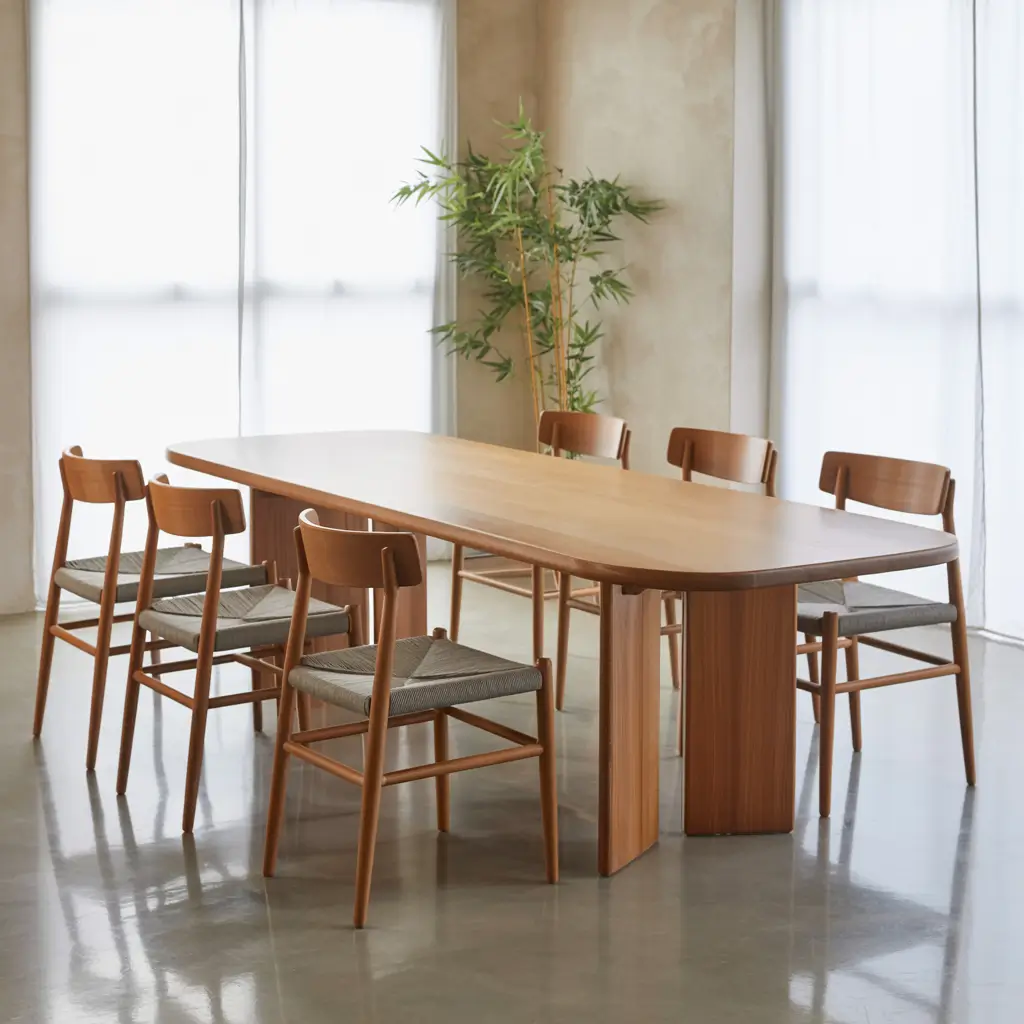
Look, I’ll say it straight—your dining table sets the entire vibe. A minimalist wooden dining set is basically the foundation of any Japandi dining room, and I’m talking about clean lines, natural wood grain, and zero unnecessary embellishments.
I went with a light oak table that has tapered legs (super Scandi), and honestly? Best decision ever. The beauty of these tables lies in their simplicity. You don’t need intricate carvings or heavy detailing. The wood speaks for itself, showing off those natural imperfections and knots that make each piece unique.
Here’s what to look for:
- Light to medium wood tones (think oak, ash, or beech)
- Simple, functional design without ornate details
- Sturdy construction that’ll last decades
- A finish that highlights the natural grain
The chairs should match this energy—simple, functional, comfortable. I prefer chairs with clean lines and maybe a slight curve for back support. Nothing too bulky or ornate. Your dining set should whisper elegance, not scream for attention.
Neutral Tone Dining Room Palette
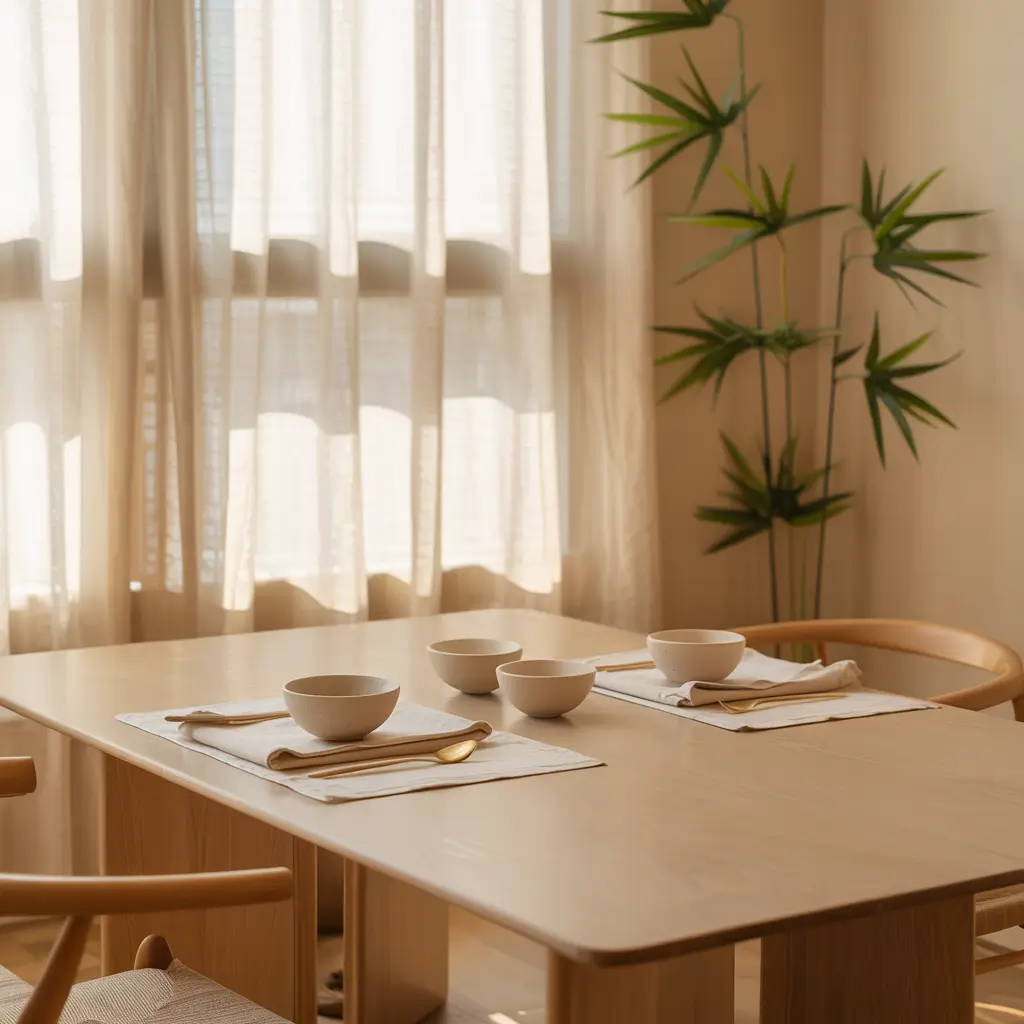
Ever walked into a room and felt instantly stressed because there’s just too much visual noise? Yeah, Japandi design says “absolutely not” to that chaos.
Your color palette should lean heavily into neutrals—we’re talking whites, beiges, grays, and those beautiful earthy tones that make you feel grounded. I painted my dining room walls in this gorgeous warm white (not stark white, because that feels more clinical than cozy), and the difference was night and day.
The trick here is layering different shades of neutrals to create depth without overwhelming the space. You can mix cool grays with warm beiges, add some taupe accents, or introduce soft mushroom tones. The goal? Creating a soothing backdrop that lets your natural materials and carefully chosen pieces shine.
Think about incorporating:
- Warm whites for walls
- Soft grays for accent pieces
- Beige and taupe for textiles
- Natural wood tones (which count as neutrals, FYI)
This palette creates a calming atmosphere that makes every meal feel like a meditation session. Plus, neutral tones photograph amazingly well, which is totally irrelevant but also kinda nice 🙂
Scandinavian-Inspired Lighting Fixtures
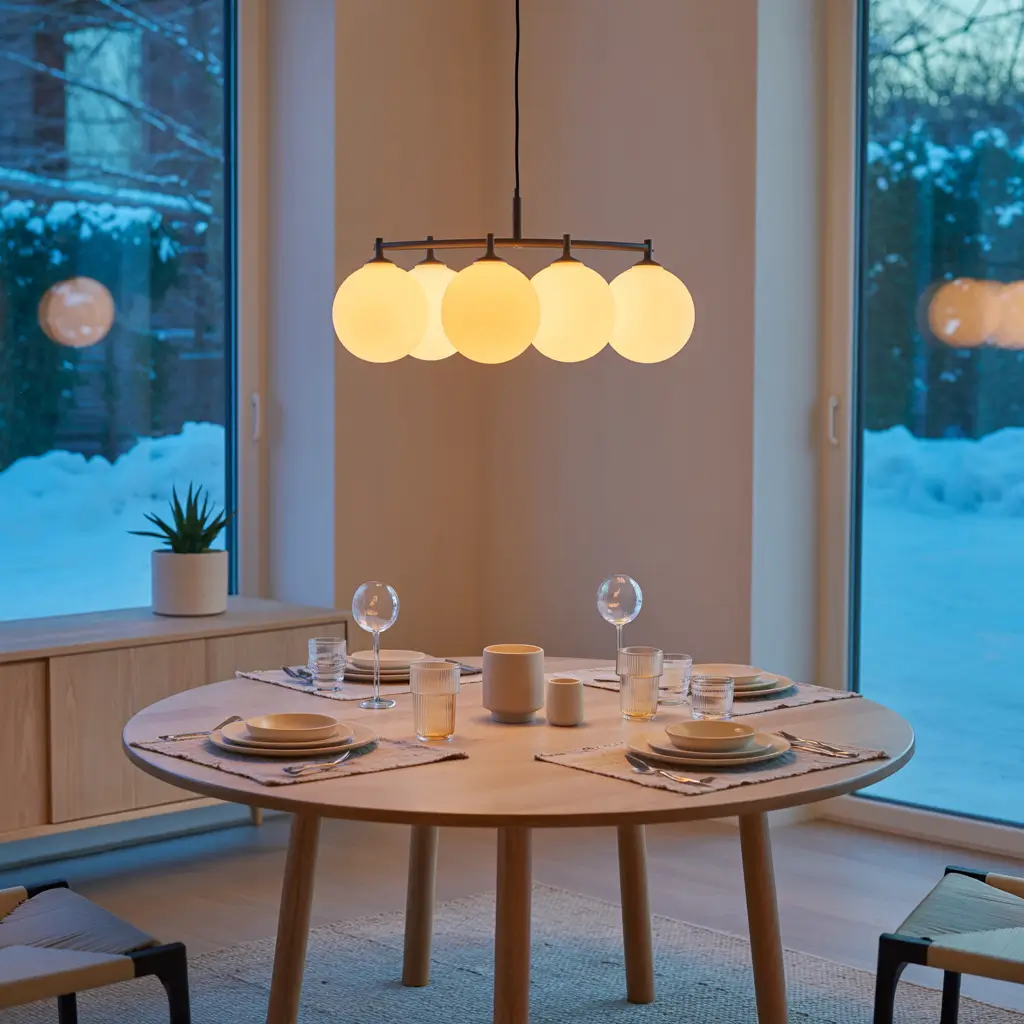
Lighting can make or break your Japandi dining room—trust me on this. I learned this the hard way when I initially installed this super modern chandelier that looked gorgeous in the store but completely clashed with my calm, minimalist vibe at home.
Scandinavian lighting fixtures are your best friend here. Look for pendant lights with clean lines, paper lanterns (hello, Japanese influence), or those beautiful sculptural pieces that double as art. I’m currently obsessed with a three-bulb pendant light with black metal and wooden accents that hangs perfectly above my dining table.
The key is choosing fixtures that provide warm, ambient lighting rather than harsh, bright light. You want your dining room to glow, not feel like an interrogation room. Dimmer switches are also clutch—they let you adjust the mood depending on whether you’re hosting a dinner party or eating cereal straight from the box at midnight.
Popular Japandi lighting options include:
- Paper pendant lamps (Akari-style lanterns are gorgeous)
- Wooden and metal combination fixtures
- Woven rattan shades
- Minimalist track lighting for flexibility
Low-Profile Japanese Style Chairs
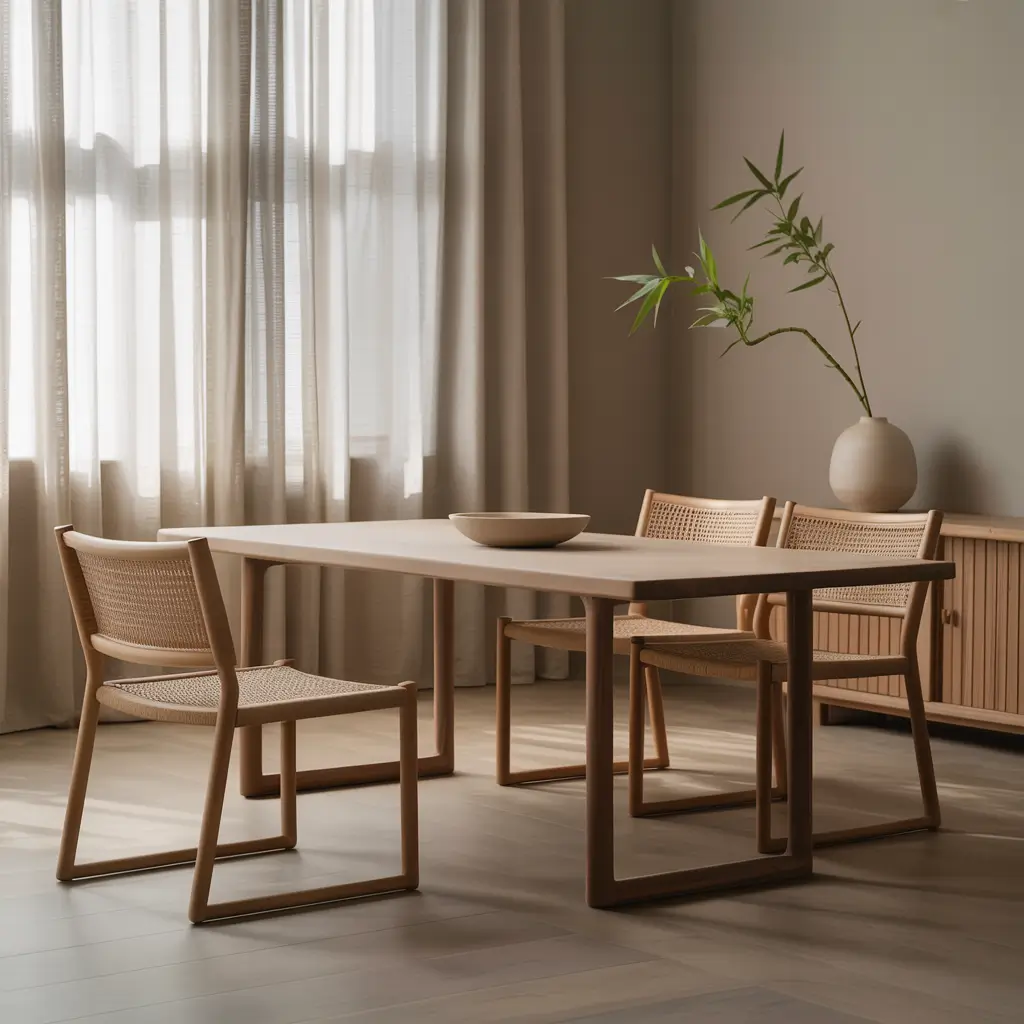
Here’s where the Japanese influence really shines. Low-profile chairs bring that grounded, zen feeling that makes dining feel more intentional and mindful.
I’m not suggesting you sit cross-legged on the floor (unless that’s your thing), but chairs that sit slightly lower than traditional Western dining chairs create this intimate, cozy atmosphere. Plus, they look incredibly sleek and don’t visually clutter your space.
Look for chairs with clean lines, natural materials, and maybe some subtle curves for comfort. Wooden frames are classic, but you can also find beautiful options with fabric seats in neutral tones. Some people mix and match—wooden chairs on the sides and a low-profile bench on one side. That bench thing? Total game-changer for casual family meals.
The beauty of low-profile seating is how it encourages you to slow down and be present. You’re not just scarfing down food; you’re experiencing a meal. Sounds dramatic, but honestly, it makes a difference.
Also Read: 15 Elegant Formal Dining Room Ideas for Timeless Design
Cozy Textured Rug Under Dining Table
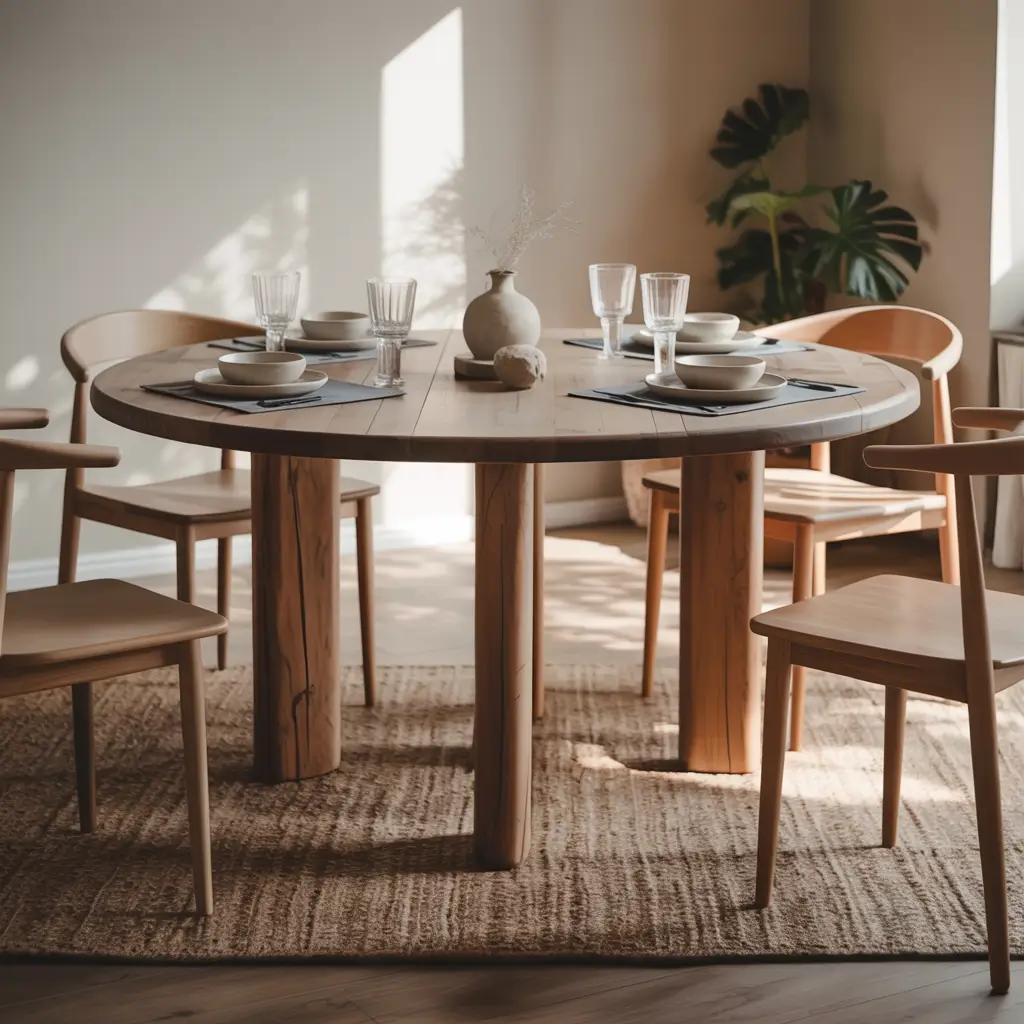
Nothing says “cold and uninviting” quite like a dining table sitting on bare hardwood floors. IMO, a textured rug is non-negotiable for achieving that cozy Japandi vibe.
I went with a natural jute rug with a subtle geometric pattern, and it completely transformed the space. The texture adds warmth underfoot while maintaining that natural, organic aesthetic that Japandi design celebrates. Plus, it defines your dining zone, which is especially helpful in open-plan spaces.
Rug shopping tips:
- Choose natural materials (jute, wool, cotton, sisal)
- Stick to neutral colors with subtle patterns
- Make sure it’s large enough (all chair legs should fit on it, even when pulled out)
- Consider layering a smaller, softer rug on top for extra coziness
The right rug pulls everything together visually while adding that tactile element that makes your dining room feel lived-in and welcoming. Just make sure you pick something easy to clean—because let’s be real, dining rooms see their fair share of spills.
Natural Bamboo and Woven Accents
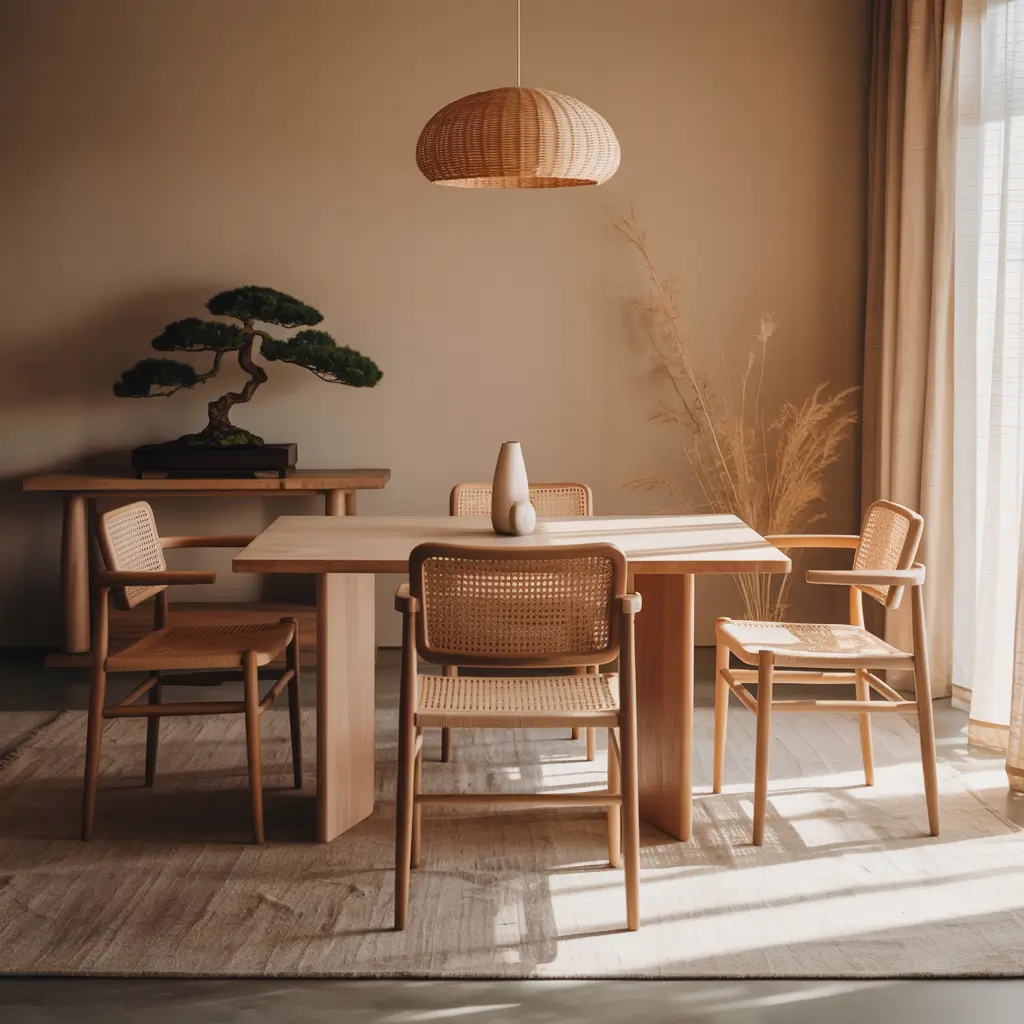
Want to know a secret? Bamboo and woven accents are like the accessories that elevate an outfit from “nice” to “okay, WHO are you wearing?”
I’ve sprinkled bamboo elements throughout my dining room—bamboo placemats, a woven serving tray, even a beautiful bamboo wall hanging. These natural textures add visual interest without disrupting the minimalist vibe. Plus, bamboo is sustainable and eco-friendly, which aligns perfectly with Japandi principles.
Woven accents bring that handcrafted, artisanal quality that prevents your space from feeling too sterile or cold. Think wicker baskets for storing napkins, rattan chargers under your plates, or even woven pendant lamp shades (if you didn’t go the paper lantern route).
The key is not going overboard. You’re adding texture and warmth, not creating a tiki bar. Choose a few key pieces that speak to you and let them shine. Quality over quantity, always.
Indoor Plants for Calm Ambiance
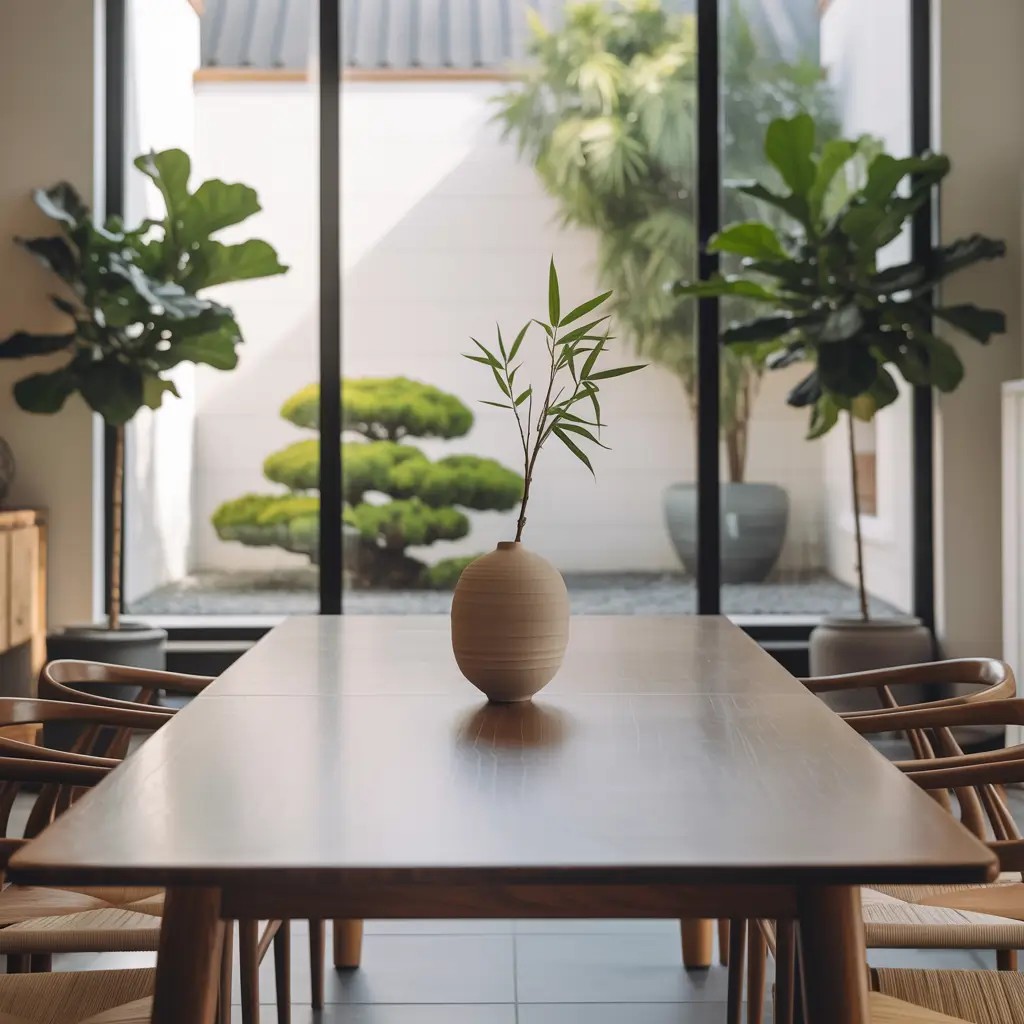
Listen, I killed my first three dining room plants before I figured this out. But once I got the hang of it? Complete transformation.
Indoor plants bring life, literally, into your Japandi dining room. They purify the air, add pops of natural green (the only color you really need besides neutrals), and create this incredibly calming atmosphere. Ever wonder why restaurants put plants everywhere? Because they make spaces feel alive and inviting.
Easy plants for dining rooms:
- Snake plants (nearly indestructible)
- Pothos (forgiving and gorgeous)
- Peace lilies (beautiful and air-purifying)
- Monstera (if you’ve got the space and light)
I keep a large snake plant in one corner and smaller potted plants on my floating shelves. The greenery breaks up all those neutral tones without overwhelming the minimalist aesthetic. Plus, caring for plants adds this nice ritual to your routine—watering them becomes this meditative practice.
Just remember: choose plants that match your light conditions and commitment level. No shame in starting with low-maintenance varieties. Dead plants definitely don’t contribute to the zen vibe we’re building here :/
Wall-Mounted Minimalist Shelving
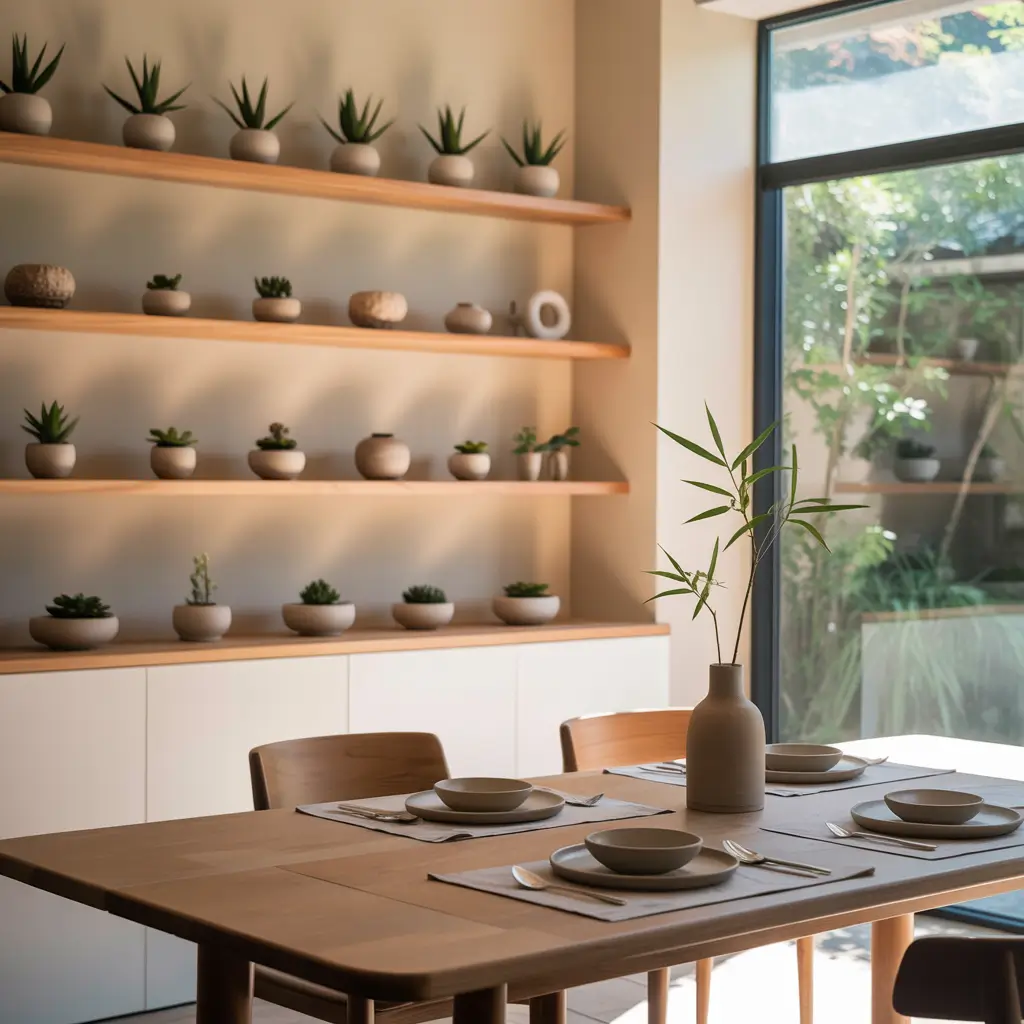
Floating shelves are the unsung heroes of Japandi design. They provide functional storage while maintaining those clean lines and open spaces that make the style so appealing.
I installed three simple wooden floating shelves on one wall, and they’ve become both practical storage and display space. The key is curating what you put on them—this isn’t the place for clutter or random tchotchkes. Think carefully chosen ceramics, a small plant, maybe a beautiful bowl or two.
Styling your minimalist shelves:
- Leave plenty of negative space (empty space is intentional, not lazy)
- Group items in odd numbers (three or five pieces look more natural)
- Vary heights and shapes for visual interest
- Stick to your neutral palette with maybe one accent piece
The wall-mounted aspect keeps floor space clear, which maintains that airy, uncluttered feeling. Plus, you can easily rearrange items seasonally without committing to permanent decor. I change mine up every few months, and it keeps the space feeling fresh without requiring a full redesign.
Zen-Inspired Centerpiece Decor
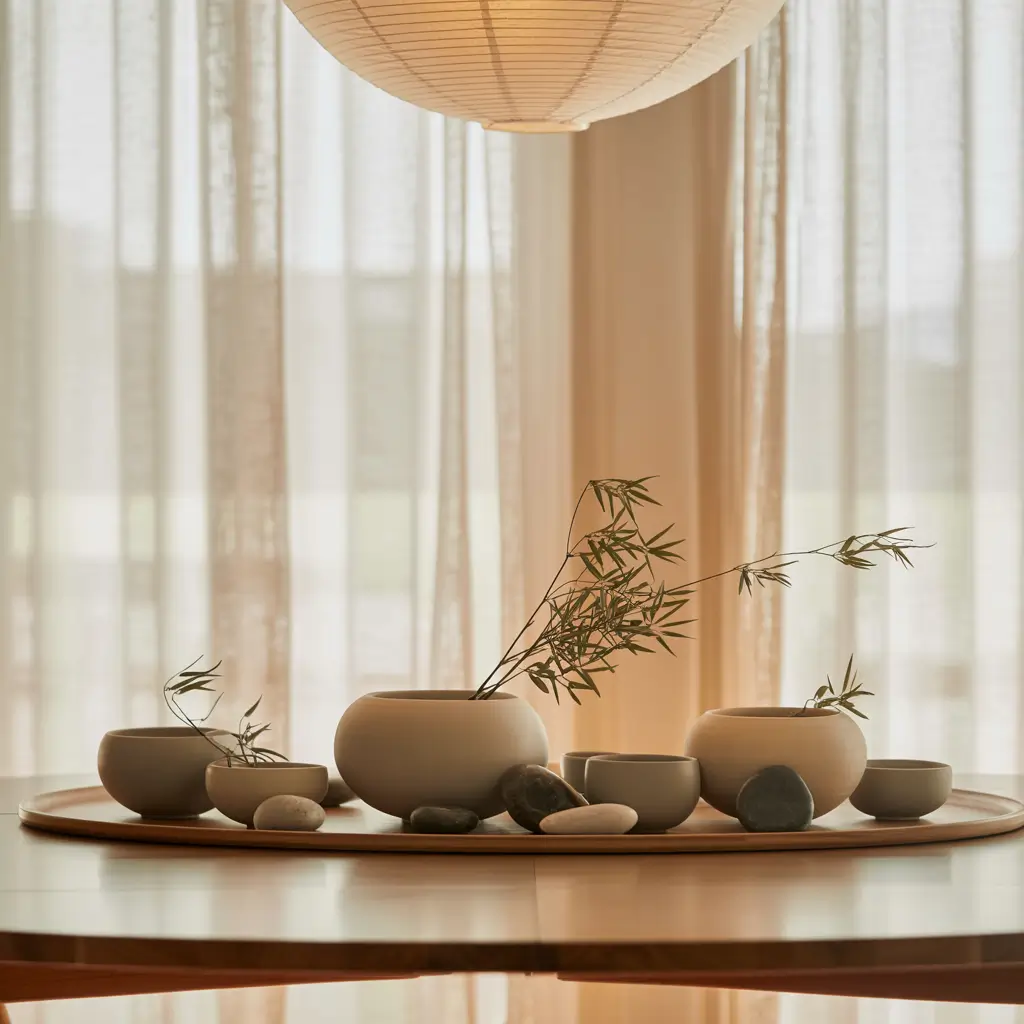
Your dining table centerpiece shouldn’t scream for attention—it should whisper sophistication while remaining functional. Zen-inspired centerpieces embrace simplicity and natural beauty.
I rotate through a few favorite centerpiece options depending on my mood. Sometimes it’s a simple wooden tray with a small succulent and a candle. Other times, it’s a beautiful ceramic bowl filled with river stones. The point is keeping it minimal and meaningful.
Centerpiece ideas that work:
- A low ceramic vase with a single branch or stem
- Wooden tray with candles and natural elements
- Simple stone or ceramic bowl (empty or with minimal filling)
- Small bonsai tree (if you’re feeling ambitious)
The centerpiece should enhance your dining experience, not obstruct it. Nobody wants to peer around a massive floral arrangement to make eye contact during dinner. Keep it low, keep it simple, keep it natural. And honestly? Sometimes no centerpiece at all is the perfect choice. That bare wooden table can be stunning on its own.
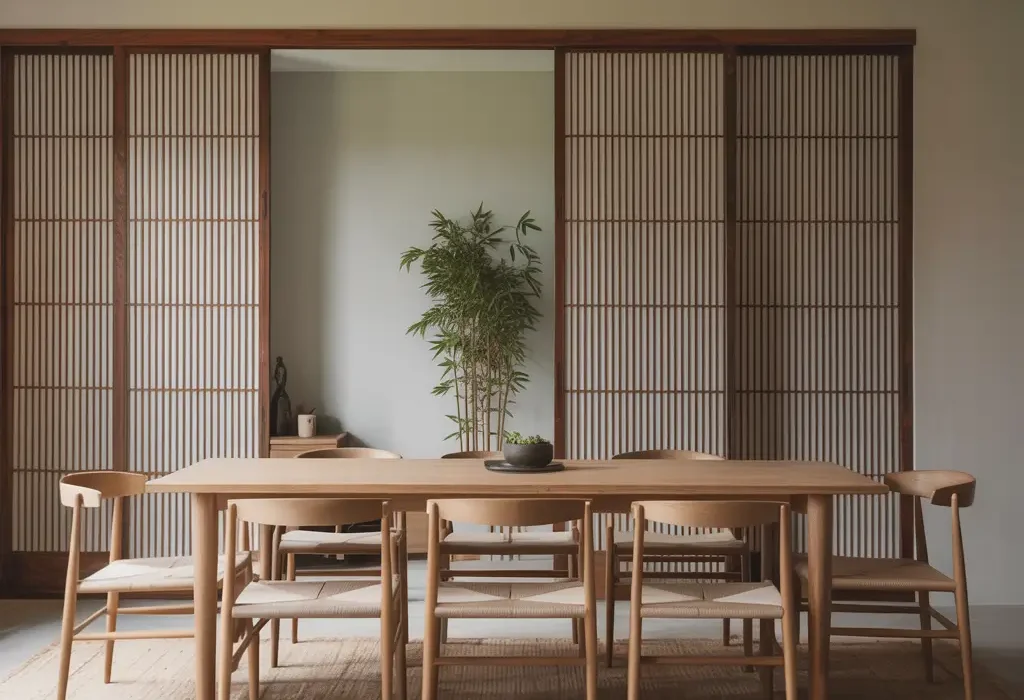
Sliding Shoji Screens as Room Divider
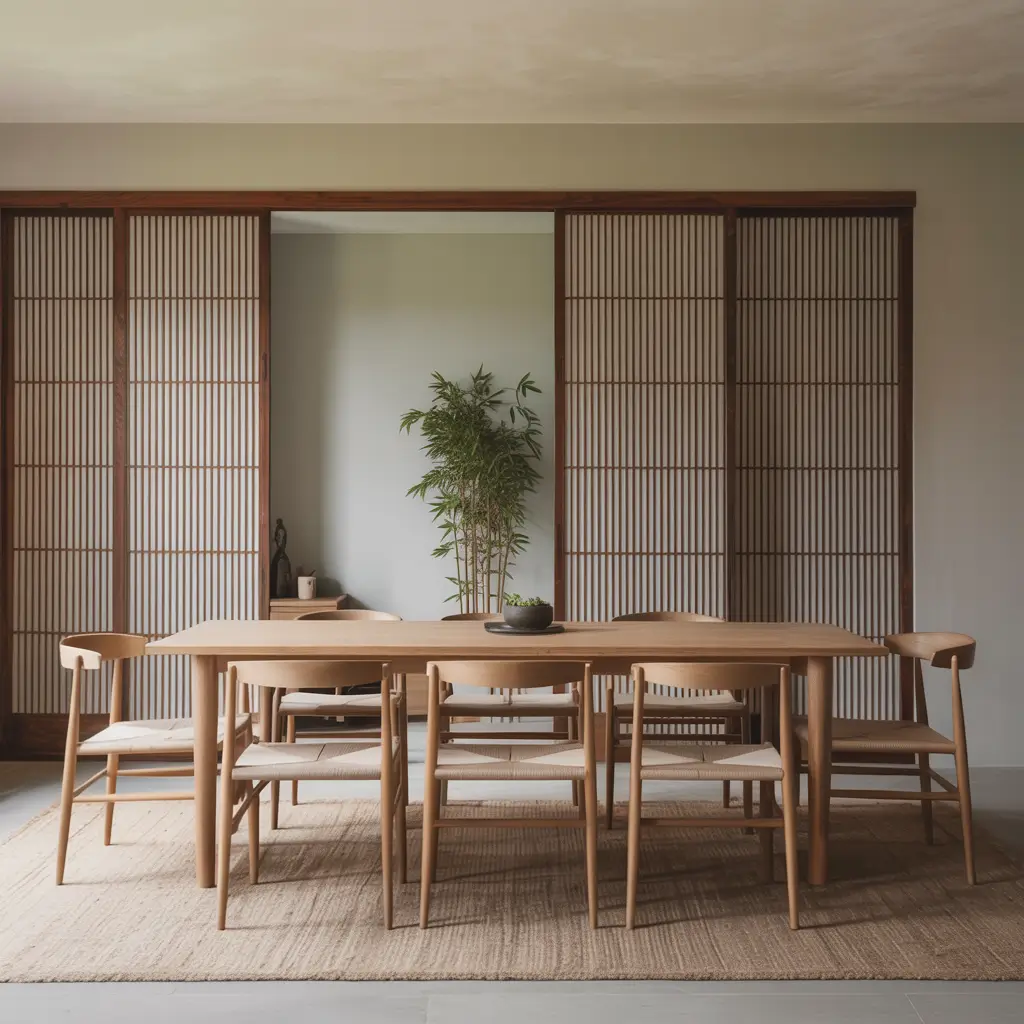
Okay, this one’s a bit more involved, but hear me out—sliding shoji screens are absolutely gorgeous and incredibly functional.
If your dining room flows into another space (living room, kitchen, home office), shoji screens let you divide the area without building permanent walls. I installed a three-panel sliding screen between my dining area and living space, and the flexibility is amazing. Open them for large gatherings, close them when you want defined zones.
The translucent paper panels (or modern fabric alternatives) filter light beautifully while maintaining privacy. They embody that perfect blend of Japanese craftsmanship and Scandinavian functionality. Plus, they’re a genuine conversation starter—guests always ask about them.
Benefits of shoji screens:
- Flexible space division
- Beautiful filtered lighting
- Authentic Japanese design element
- Relatively easy to install
- Can be custom-made or purchased ready-made
Even if you don’t use them as functional dividers, a single shoji panel leaning against a wall creates stunning visual interest and reinforces that Japandi aesthetic. Just something about that geometric pattern and natural wood frame hits differently.
Monochrome Tableware Display
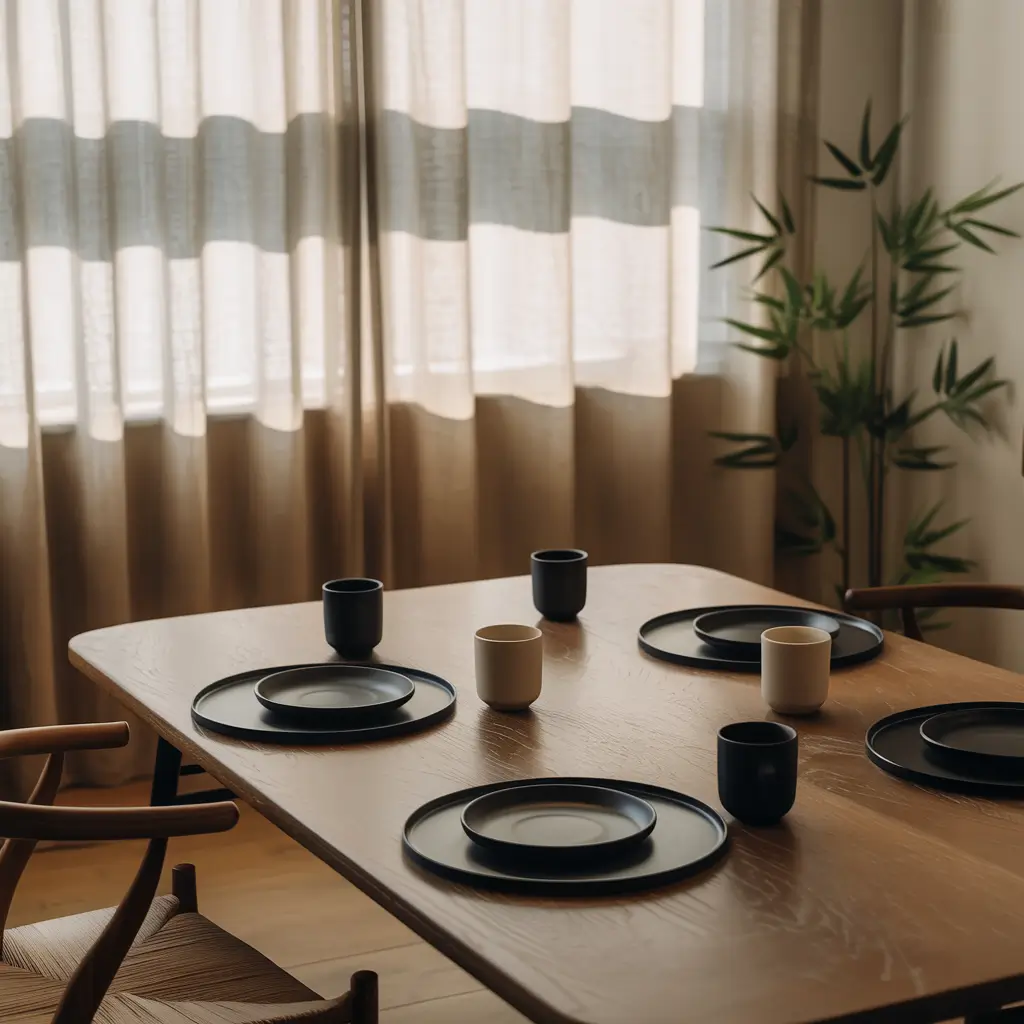
Your dishes deserve better than being hidden in a cabinet. A monochrome tableware display turns functional items into art while staying true to minimalist principles.
I use open shelving and a glass-front cabinet to display my collection of white, cream, and gray ceramics. The monochrome palette creates visual cohesion, and seeing everything displayed makes me actually use my nice dishes instead of saving them for “special occasions” that never come.
Creating your display:
- Stick to one color family (whites, grays, or beiges)
- Mix different shapes and textures
- Include various pieces (plates, bowls, cups, serving dishes)
- Arrange with intention, leaving breathing room
The beautiful thing about displaying tableware is how it serves dual purposes—decoration and function. You’re not buying stuff just to look at; you use these pieces daily. That’s very Japandi—beauty in everyday objects, finding joy in simple rituals like setting the table.
Plus, having your tableware visible encourages you to keep your collection curated. You become more intentional about what you own, which naturally prevents clutter. I’ve actually started enjoying setting the table because choosing pieces from my display feels creative rather than routine.
Open Space Layout with Minimal Clutter
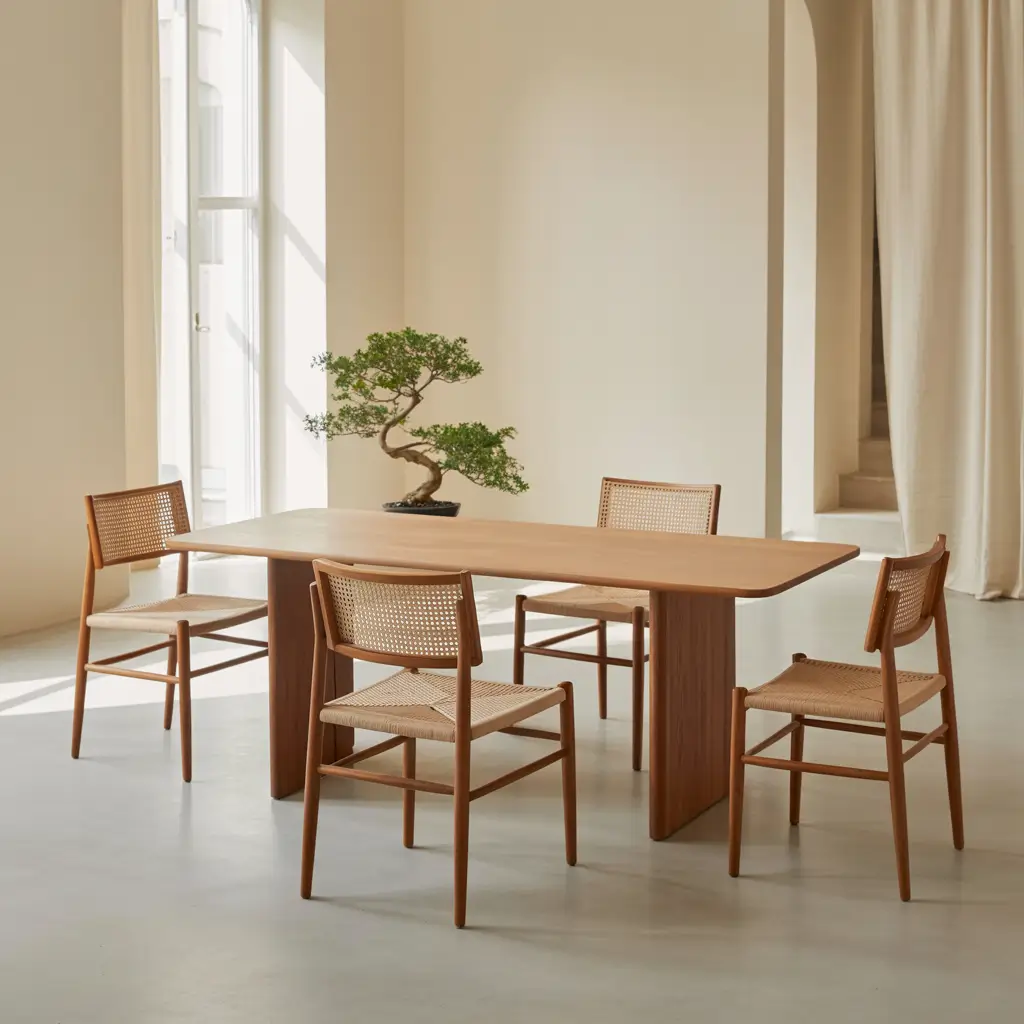
Real talk: You can have the most beautiful furniture and perfect color palette, but if your dining room is cluttered with random stuff, the Japandi vibe dies instantly.
Open space isn’t wasted space—it’s intentional breathing room that makes your dining area feel calm and inviting. I learned this by literally removing about 40% of what I initially had in my dining room. Fewer items, better quality, more impact.
The Scandinavian concept of lagom (not too much, not too little, just right) combined with Japanese minimalism creates this philosophy of “enough.” You don’t need ten decorative items when three perfect ones do the job better.
Achieving minimal clutter:
- Adopt a “one in, one out” rule for dining room items
- Store serving pieces and extras elsewhere, not on display
- Keep surfaces mostly clear
- Create designated storage for items you use regularly
- Resist the urge to fill every corner
This doesn’t mean your dining room should feel empty or cold. Strategic placement of meaningful items creates visual interest without chaos. Every piece should earn its place in the room. If it doesn’t serve a function or bring you genuine joy, it’s just clutter taking up precious space.
Also Read: 15 Creative Green Dining Room Ideas with Trendy Vibes
Muted Pastel Accent Wall
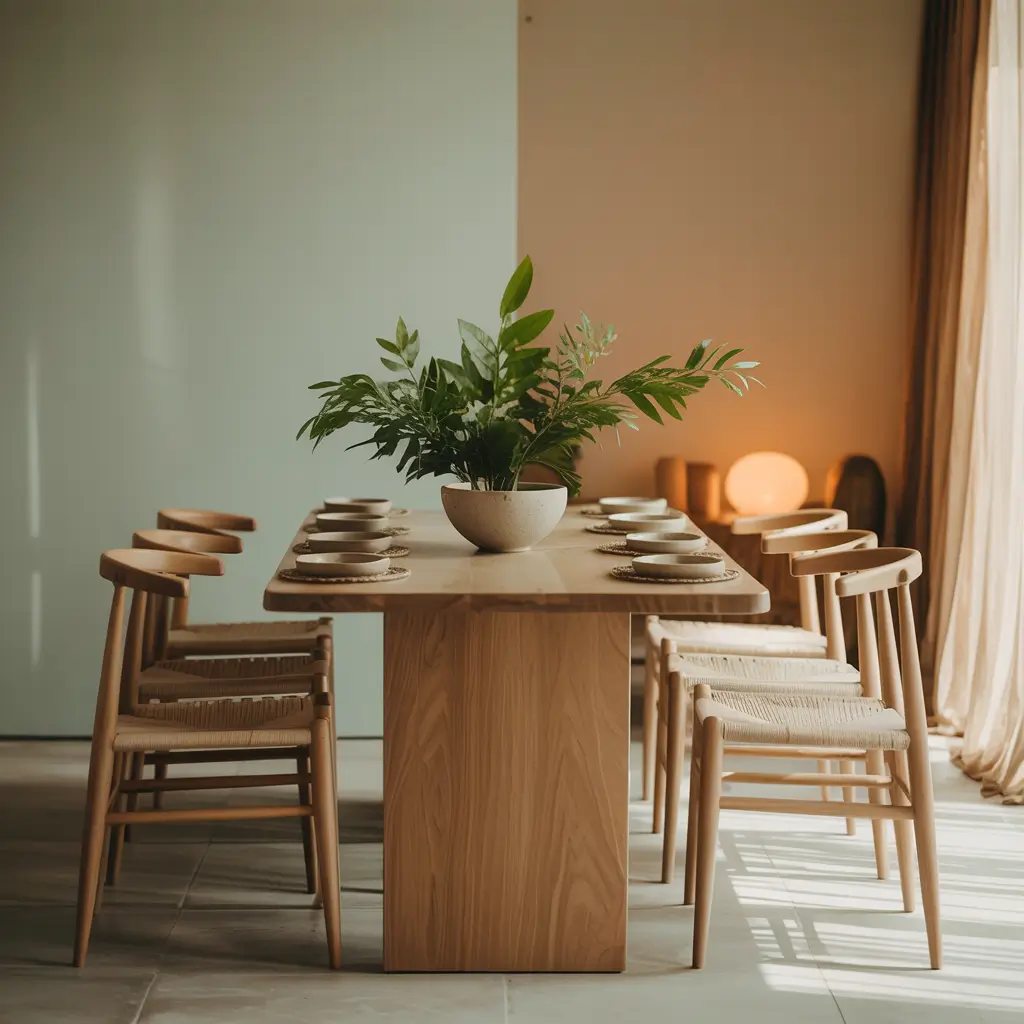
Now, before you panic about adding color—we’re talking muted pastels here. Think barely-there blush, soft sage, or pale dusty blue. These subtle colors add warmth and personality without disrupting your neutral palette.
I painted one accent wall in my dining room the softest blush pink, and people literally don’t notice it’s pink until I point it out. It just reads as warm and inviting. The key is choosing colors that are so subtle they almost blend with your neutrals but add just enough warmth to prevent the space from feeling cold.
Best muted pastel options:
- Blush pink with gray undertones
- Soft sage green
- Dusty blue
- Pale terracotta
- Warm greige (gray-beige hybrid)
The accent wall should be the wall that naturally draws focus—typically the one your dining table faces or where you’ve placed shelving or art. This creates a focal point without overwhelming the space. And honestly? If you get tired of it, you can always repaint back to neutral without much hassle.
Test paint samples in your space at different times of day. Lighting dramatically affects how colors appear. What looks perfect at noon might feel off at dinner time. Take your time with this decision—the right muted pastel feels like it was always meant to be there.
Sustainable Eco-Friendly Furniture
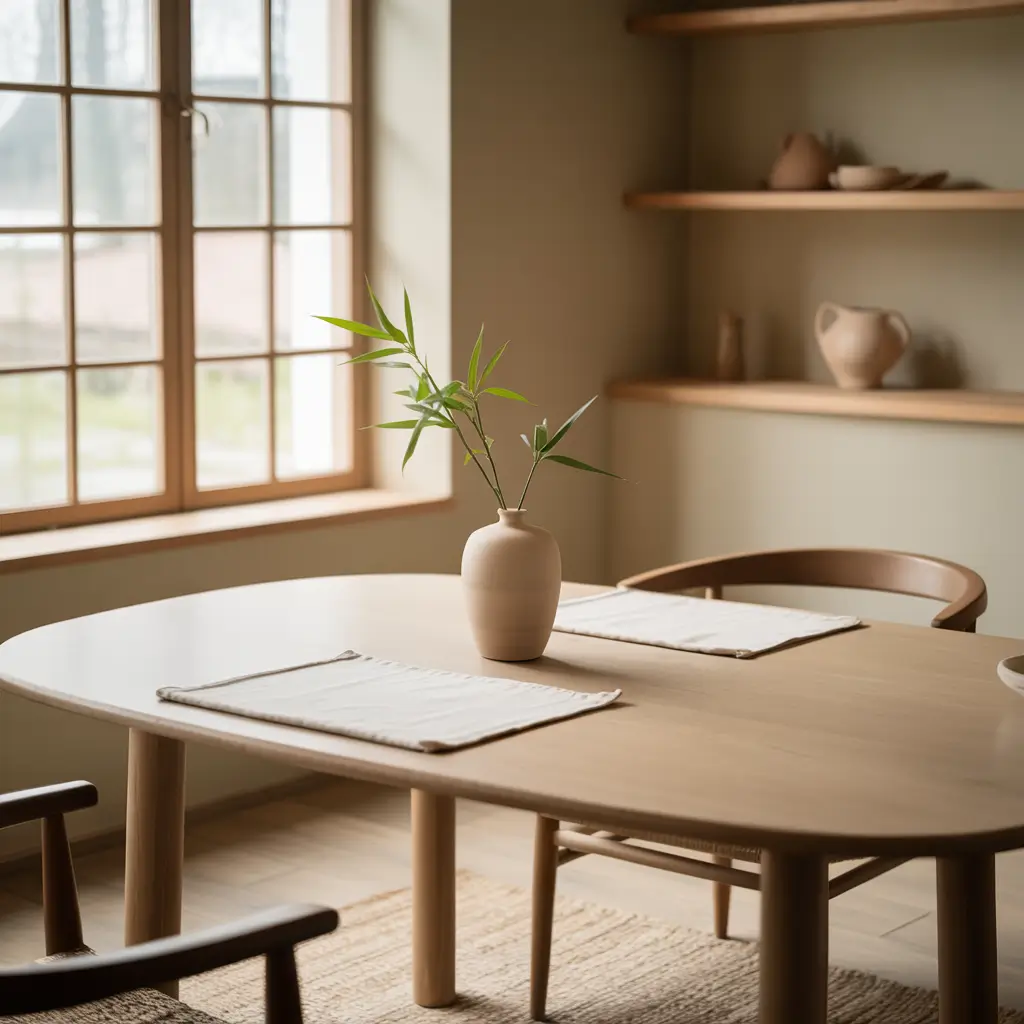
Japandi design isn’t just about aesthetics—it’s deeply rooted in sustainability and respect for natural resources. Choosing eco-friendly furniture aligns perfectly with this philosophy.
I prioritized sustainable furniture when designing my dining room, and it actually made decision-making easier. When you filter for eco-friendly options, you eliminate a ton of fast-furniture junk and focus on quality pieces built to last. Plus, you feel good about your choices, which might sound cheesy but genuinely matters.
Look for these features:
- FSC-certified wood from responsibly managed forests
- Natural, non-toxic finishes
- Solid wood construction (not particle board)
- Local artisans or ethical manufacturers
- Vintage or secondhand pieces (the ultimate sustainability)
Yes, sustainable furniture often costs more upfront. But here’s the thing—you’re buying pieces that’ll last decades, not years. That oak dining table? Your grandkids will probably fight over it someday. That’s the Japandi approach: invest in quality, timeless pieces rather than trendy items you’ll replace constantly.
I found some of my favorite pieces at vintage shops and estate sales. That old credenza I refinished? Cost a fraction of new furniture and has more character than anything from a big-box store. Plus, the hunt for perfect vintage pieces becomes this fun treasure hunt rather than a boring shopping trip.
Soft Linen Curtains and Drapes
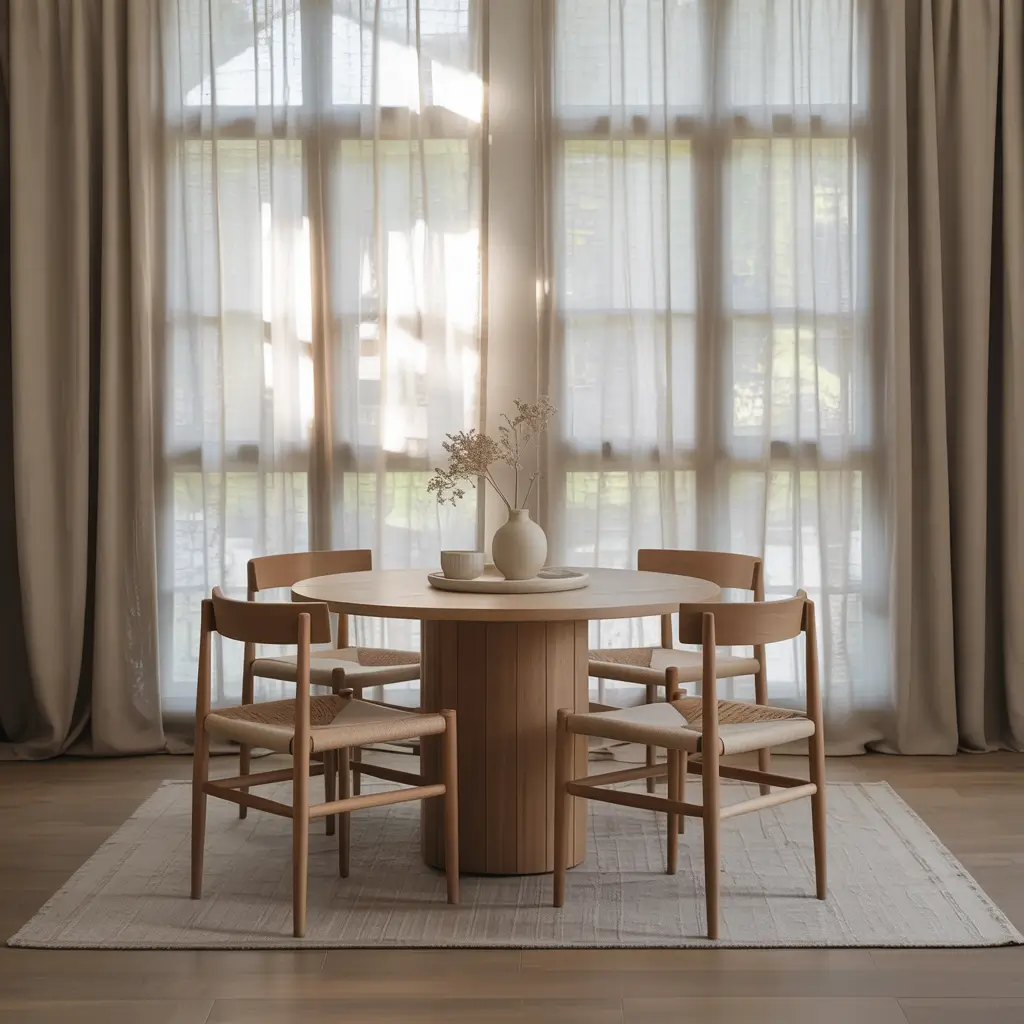
Window treatments in Japandi spaces should be soft, natural, and functional—which basically describes linen perfectly.
I replaced my heavy, dark curtains with floor-length linen drapes in a warm oatmeal color, and the transformation was incredible. Linen has this beautiful, slightly rumpled texture that looks effortlessly elegant. It filters light gorgeously while maintaining privacy, creating this soft, glowing atmosphere in my dining room.
Why linen works for Japandi:
- Natural, sustainable fabric
- Beautiful drape and texture
- Filters light without blocking it completely
- Neutral colors that blend seamlessly
- Gets softer with each wash
The key is choosing simple hanging mechanisms—nothing ornate or flashy. I went with basic wooden rings on a simple wooden rod. The curtains themselves are the star, not the hardware. When open, they frame your windows beautifully. When closed, they create this cozy, protected feeling that’s perfect for intimate dinners.
Don’t stress about wrinkles in linen—they’re part of the charm. That lived-in, relaxed texture prevents your dining room from feeling too precious or styled. It looks expensive and intentional while remaining totally approachable. Plus, linen is durable and only gets better with age, which fits perfectly with the Japandi philosophy of longevity and natural aging.
Conclusion
Creating a Japandi dining room isn’t about following rigid rules or buying specific products. It’s about embracing a mindset that values simplicity, quality, and intentionality. Each element should serve a purpose, bring you joy, or ideally both.
The beauty of this design style lies in its flexibility. You can lean more heavily into the Japanese minimalism or emphasize the Scandinavian coziness—whatever feels right for your space and lifestyle. I’ve tweaked my dining room about a dozen times since starting this journey, and that’s completely normal. Living with your space helps you understand what works and what doesn’t.
Start with one or two ideas that resonate most with you. Maybe it’s that minimalist wooden dining set you’ve been eyeing, or perhaps adding some plants feels like the right first step. Build slowly, choose thoughtfully, and remember that empty space is just as important as filled space.