

15 Cozy Bedroom Ideas for Small Rooms to Maximize Space & Style
Let’s face it—most of us don’t have a bedroom that could double as a runway. Instead, we’re often squeezing a bed, a dresser, and maybe a tiny nightstand into a space that feels more like a closet than a relaxing retreat. It can be frustrating, overwhelming, and sometimes downright stressful trying to make everything fit.
I’ve spent years living in small apartments and tiny bedrooms, experimenting with layouts, storage hacks, and clever decorating tricks. And let me tell you—tiny doesn’t have to mean cramped or boring. With the right ideas, you can turn your small bedroom into a cozy, stylish, and super functional space that works for you every single day.
If you’ve ever felt stuck, overwhelmed, or unsure how to make your small bedroom feel bigger and more inviting, this guide is for you. From clever storage solutions to smart furniture choices and decorating tips, these Bedroom Ideas for Small Rooms will help you maximize space, stay organized, and create a space that you actually love coming home to.
1. Choose Multi-Functional Furniture
When I first moved into my tiny apartment, I had a bed that barely left any floor space for anything else. That’s when I discovered beds with built-in drawers and desks that fold up into the wall. Suddenly, I could store clothes, books, and even some of my favorite décor without sacrificing space.
Multi-functional furniture works because it combines storage and usability in one piece, freeing up valuable square footage. You can apply this by looking for beds with under-bed drawers, foldable desks, or ottomans with hidden storage compartments.
Key Tips:
- Opt for beds with under-bed storage drawers
- Use foldable or wall-mounted desks
- Choose multi-purpose ottomans for extra storage
2. Create a Cozy Reading Corner
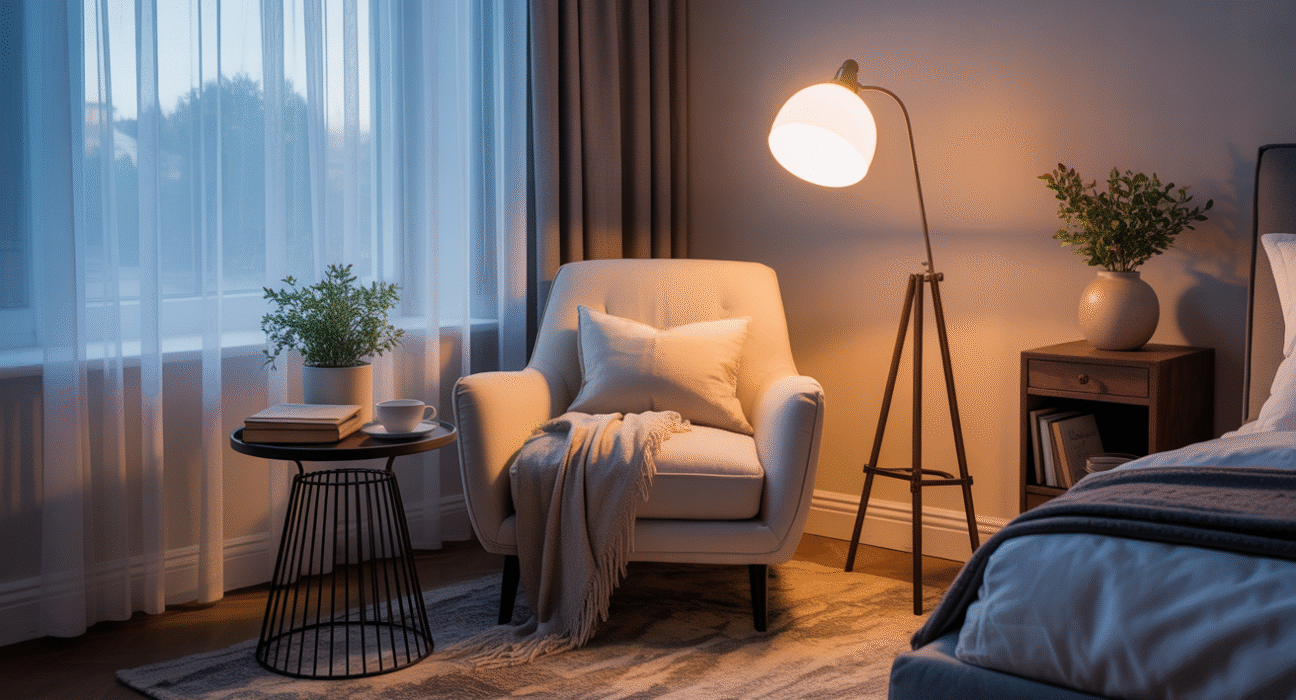
I used to think my small bedroom was too cramped for a reading space. Then, I squeezed a compact armchair into a corner, added a floor lamp, and suddenly I had a cozy nook just for me. It became my favorite spot to unwind after work.
A reading corner works because it defines a small area as a separate zone for relaxation. You can apply this idea by using a corner, window seat, or small chair with soft cushions and a lamp.
Key Tips:
- Use a compact chair or cushioned stool
- Add a small side table for books or coffee
- Include soft blankets and pillows for coziness
Also Read: 15 Romantic Small Bedroom Ideas for Couples
3. Install Floating Shelves
Living in a studio apartment taught me the power of vertical space. Floating shelves above the bed or desk gave me extra storage without cluttering the floor. I could display books, photos, and decorative items without compromising walking space.
Floating shelves work because they maximize vertical storage while keeping the floor open, making the room feel larger. Apply this by installing shelves above dressers, desks, or even along walls without windows.
Key Tips:
- Keep shelves minimal to avoid visual clutter
- Use storage boxes or baskets for organization
- Mix decor and functional items for style
4. Use Light Colors
My first tiny bedroom had dark walls, and it always felt like a cave. When I switched to soft pastels and creams, the space instantly felt airy and bright. Even adding a few colorful pillows made it feel cheerful and inviting.
Light colors work because they reflect more light and make small rooms appear bigger. You can use paint, bedding, and furniture in soft shades while keeping bold accents minimal.
Key Tips:
- Stick to neutral tones for walls and big furniture
- Add subtle pops of color with accessories
- Use mirrors to enhance brightness and space
5. Install a Wall-Mounted Desk
Trying to fit a desk in my tiny bedroom was a nightmare until I found a foldable wall-mounted option. It gave me a workspace without taking up extra floor space, and I could fold it up when not in use.
Wall-mounted desks work because they free up floor space while still offering functionality. Apply this by choosing a slim, foldable design that suits your style and storage needs.
Key Tips:
- Select foldable or slim wall-mounted desks
- Pair with a compact, lightweight chair
- Keep desk surfaces minimal for a clean look
6. Add a Large Mirror
I once stayed in a tiny bedroom that felt suffocating until I added a floor-length mirror. It made the room look twice as big and added a stylish focal point. Even small mirrors can reflect light and open up space.
Mirrors work because they create the illusion of depth and amplify natural light. You can use full-length mirrors, mirrored furniture, or mirrored closet doors to make small rooms feel bigger.
Key Tips:
- Place mirrors opposite windows for more light
- Use mirrored furniture to reflect space
- Avoid overcrowding walls with too many mirrors
7. Go Minimalist with the Bed
When our bedroom was overcrowded with furniture, I realized a simple platform bed made the room feel larger and cleaner. No bulky headboards, no excessive side tables—just enough for comfort.
Minimalist beds work because they reduce visual clutter and open up floor space. Apply this by choosing low-profile frames, simple headboards, and bedding in soft tones.
Key Tips:
- Stick to clean lines and neutral colors
- Avoid oversized headboards
- Keep bedding simple and light
8. Hang Curtains Higher
Initially, my small bedroom felt short and boxy. Moving the curtain rod a few inches above the window instantly made the ceiling feel taller. Using sheer curtains let light in while keeping it airy.
High-hung curtains work because they draw the eye upward, creating the illusion of height. Apply this by hanging curtains just above the window frame and using lightweight fabrics.
Key Tips:
- Use sheer fabrics to maximize light
- Extend rods slightly beyond the window width
- Keep curtains floor-length for elegance
9. Use a Slim Wardrobe
Our first wardrobe was bulky and blocked half the room. Switching to a tall, narrow wardrobe saved floor space and allowed better organization. Vertical storage is essential in small bedrooms.
Slim wardrobes work because they maximize storage without taking up too much floor area. Apply this by selecting tall cabinets, using organizers inside, and keeping seasonal items elsewhere.
Key Tips:
- Use slim, tall wardrobes for vertical storage
- Include dividers and boxes for organization
- Choose sliding doors to save space
10. Floating Nightstands
I used to trip over my bulky bedside table in our tiny room. Installing floating nightstands freed up floor space and kept essentials within reach. Even a small shelf can serve the purpose.
Floating nightstands work because they maintain functionality while keeping the room open. Apply this by mounting small shelves or minimalist tables next to the bed.
Key Tips:
- Keep surfaces clear to avoid clutter
- Add wall-mounted lamps to save space
- Choose simple, sleek designs
11. Layered Lighting
Our tiny bedroom felt dim and dull until I added a ceiling light, bedside lamps, and a small floor lamp. The different layers created warmth, depth, and flexibility.
Layered lighting works because it allows you to adjust brightness and ambiance, making the room feel bigger and cozier. Apply this by combining ambient, task, and accent lights.
Key Tips:
- Use warm LED bulbs for comfort
- Incorporate multiple light sources
- Add dimmers to control mood
12. Maximize Closet Space
Our closet used to be a cluttered mess until I added shelves, hanging organizers, and boxes. Everything suddenly had a place, and the room felt less chaotic.
Maximizing closet space works because it frees the rest of the bedroom and keeps items accessible. Apply this by adding vertical organizers, bins, hooks, and double hanging rods.
Key Tips:
- Label bins for easy access
- Use slim hangers for more clothes
- Rotate seasonal items to reduce clutter
13. Foldable or Stackable Furniture
I struggled with extra chairs and side tables until I switched to foldable and stackable options. They could be tucked away when not needed, opening up the room instantly.
Foldable furniture works because it allows flexibility without sacrificing style. Apply this by choosing stackable stools, collapsible tables, or foldable chairs.
Key Tips:
- Keep frequently used furniture accessible
- Fold away items when not in use
- Use lightweight materials for mobility
Also Read: 15 Brilliant Loft Bed Ideas for Small Rooms | Space-Saving Magic
14. Create a Feature Wall
Our tiny bedroom felt dull until I painted one wall a soft accent color and added a few floating shelves. It instantly became the focal point and added personality.
Feature walls work because they draw attention, add style, and make the space feel intentional. Apply this with paint, wallpaper, or a gallery wall above the bed.
Key Tips:
- Limit feature walls to one per room
- Use light or muted tones for small rooms
- Add minimal decor for balance
15. Keep Decor Simple and Personal
Our tiny bedroom used to be cluttered with random trinkets. Simplifying to just a few meaningful items—photos, plants, and books—made the space calm and inviting.
Simple decor works because it reduces visual clutter while reflecting your personality. Apply this by curating accessories, keeping surfaces clear, and focusing on essentials.
Key Tips:
- Limit decor to 3–5 personal items
- Stick to neutral tones with pops of color
- Rotate accessories seasonally
Conclusion
Living in a small bedroom doesn’t have to feel cramped or stressful. With these Bedroom Ideas for Small Rooms, you now have practical solutions to maximize space, stay organized, and create a cozy, stylish retreat. From clever storage hacks to smart furniture layouts, each idea is designed to make your room both functional and beautiful.
Remember, even the tiniest bedroom can feel spacious and inviting with the right design choices. Try a few of these tips, experiment with layouts, and watch your small space transform into a room you actually love coming home to.
Don’t stop here—there are plenty more ways to elevate your home and make the most of every corner. Keep exploring, and visit us again for more creative ideas, inspiration, and practical tips to make your living space perfect for your lifestyle.