

15 Cozy Blue Bedroom Decor Designs for Relaxing Vibes
You know that feeling when you walk into a room and instantly feel… calm? That’s what blue does to a bedroom. I spent years sleeping in beige rooms (yawn), and the moment I painted my bedroom blue, something shifted. Better sleep, better mood, and honestly, I actually wanted to spend time in there instead of treating it like a glorified closet with a bed.
Blue is the color of oceans, skies, and that perfect pair of jeans you refuse to throw away. It works magic in bedrooms because it lowers your heart rate and tells your brain to chill out. Whether you’re team navy, obsessed with pastels, or ready to experiment with moody indigo, I’ve got 15 blue bedroom designs that’ll transform your space into a relaxation sanctuary. Let’s get started!
1. Serene Coastal Blue Bedroom
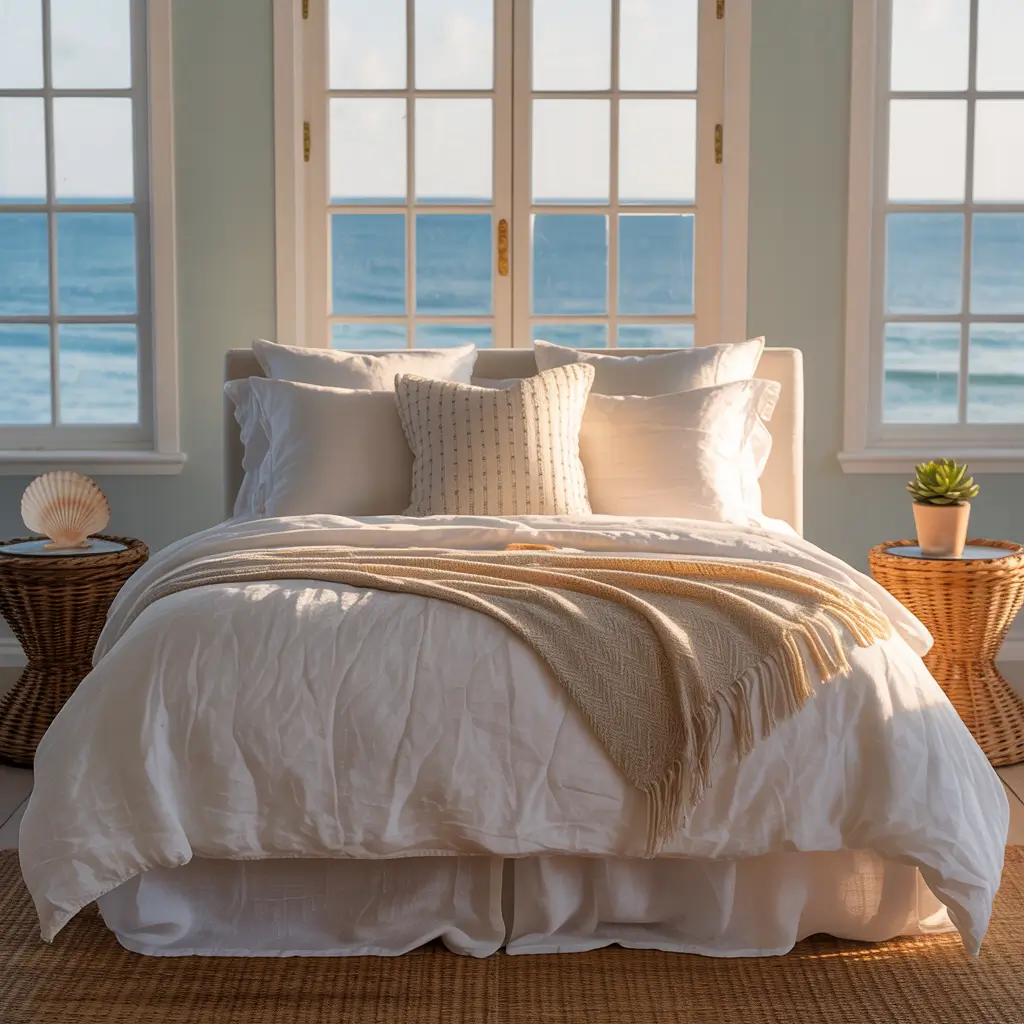
Picture this: you’re waking up to soft waves, salty air, and endless ocean views. Can’t afford that beachfront property? Me neither. But we can fake it beautifully with a coastal blue bedroom.
I designed my guest room with this vibe, and guests literally don’t want to leave (which gets awkward after day three, but that’s another story). Coastal blue sits somewhere between turquoise and soft aqua—it’s refreshing without being aggressive. Think of it as the color equivalent of a beach vacation without the sunburn.
How to Nail the Coastal Look
Start with your walls in a soft, weathered blue. I recommend shades like “Ocean Breeze” or “Sea Salt”—anything that makes you think of shallow Caribbean waters. Pair this with crispy white bedding because contrast is your best friend here.
Here’s what works:
- White or whitewashed furniture (bonus points if it looks slightly distressed)
- Natural textures like jute rugs, woven baskets, and linen curtains
- Driftwood accents or any wood with that sun-bleached look
- Nautical touches but keep them subtle (one rope mirror, not seventeen anchor pillows)
- Sandy neutrals in throw pillows and blankets
The secret sauce? Layer different shades of blue. I threw in some deeper navy pillows with my aqua walls, and suddenly the room had depth instead of looking flat. Add some seashells in a glass jar (free if you actually go to the beach), and boom—instant vacation vibes.
2. Modern Navy Accent Walls
Ever wondered why navy blue feels so sophisticated? It’s like the tuxedo of colors—classic, versatile, and makes everything around it look better.
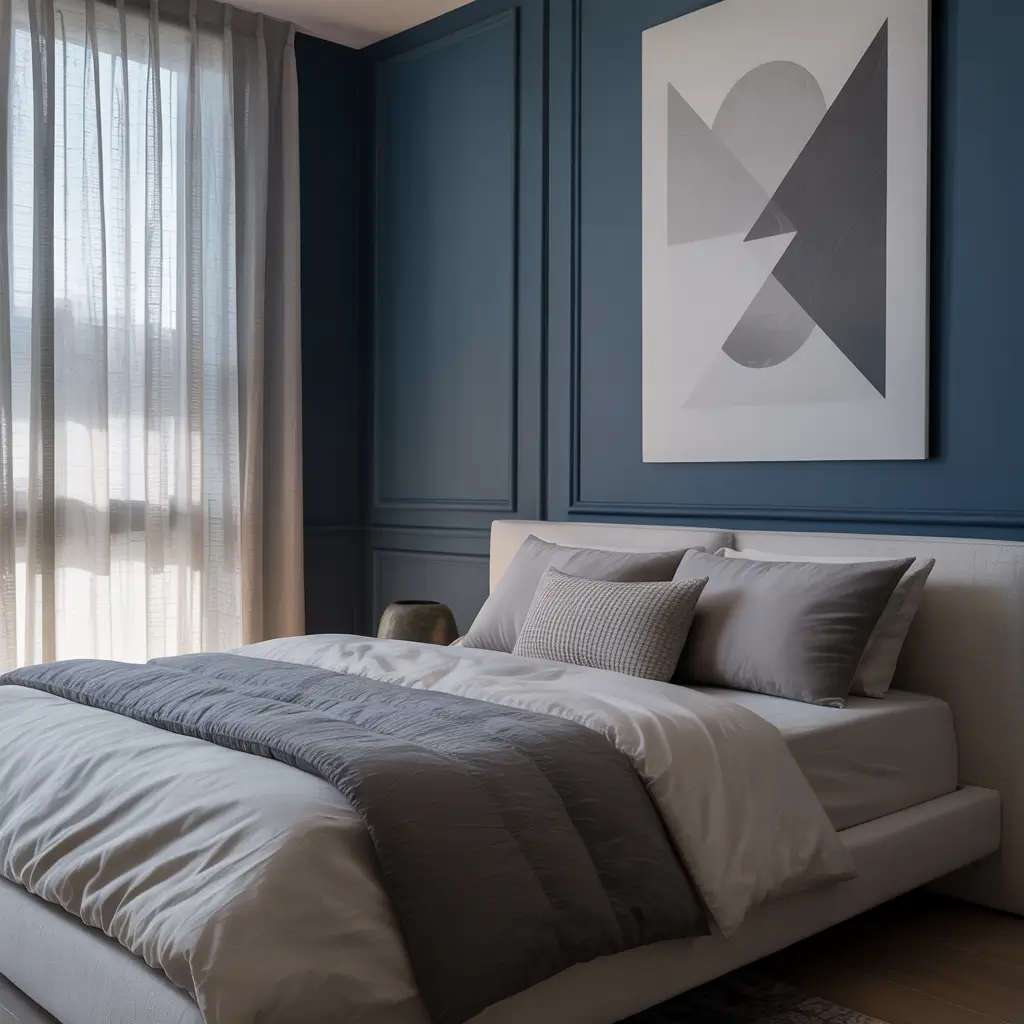
I was terrified to paint an entire wall navy in my bedroom. What if it felt like a cave? What if I hated it? Spoiler alert: a navy accent wall became the best decorating decision I’ve made. It adds drama without the commitment of painting every wall, and it creates an instant focal point.
Making Navy Work Without the Darkness
Pick the wall behind your bed as your accent wall. This frames your headboard beautifully and creates a hotel-room vibe (the fancy kind, not the questionable roadside motel). The key to preventing that dungeon feeling? Balance it with lighter elements.
Your navy wall needs:
- Crisp white or cream bedding to pop against the dark background
- Metallic accents like brass lamps or gold-framed mirrors
- Lighter walls on the remaining three sides (soft gray or white works perfectly)
- Good lighting because dark walls eat light like I eat chips (unstoppable)
- Minimal clutter since navy shows everything
FYI, navy pairs ridiculously well with blush pink, emerald green, or burnt orange. I added some terracotta throw pillows to mine, and the warmth completely balanced the cool navy. Don’t be afraid to experiment with unexpected color combos!
3. Sky Blue Minimalist Retreat
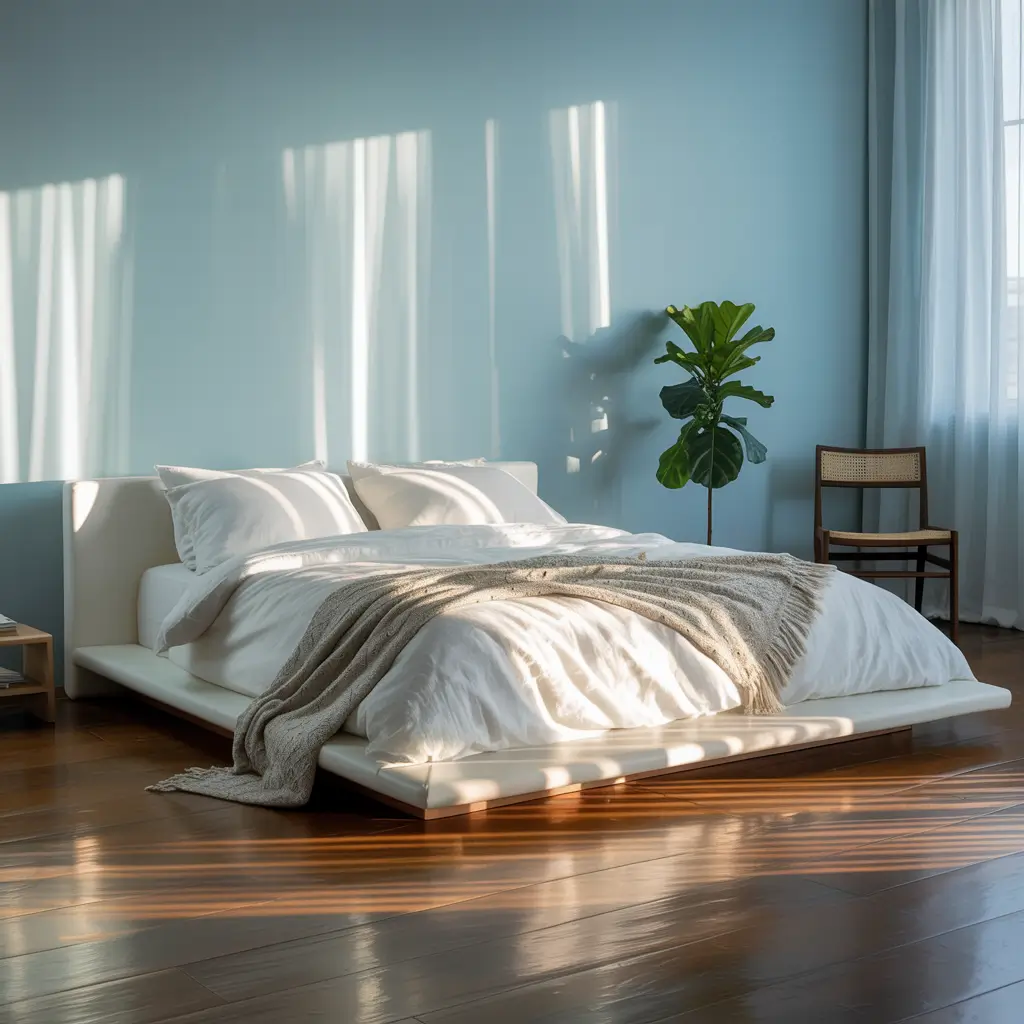
Minimalism gets a bad rap for being cold or sterile, but add sky blue to the mix? You get calm without the clinical vibe.
Sky blue is that perfect, gentle shade you see on a clear spring morning. It’s happy without being juvenile, relaxing without being boring. I painted my home office this color (before converting it to a bedroom when I downsized), and I swear my stress levels dropped immediately.
Creating Your Minimalist Haven
Minimalism means intentional, not empty. Every piece in your room should serve a purpose or make you genuinely happy. Start with sky blue walls—go for a matte finish to keep things soft and modern.
Keep these principles in mind:
- Quality over quantity with furniture (one amazing bed frame beats five mediocre pieces)
- Clean lines in all your furniture choices
- Limited color palette (sky blue, white, maybe one wood tone)
- Hidden storage because clutter kills the vibe
- Negative space that lets your room breathe
I furnished my minimalist blue bedroom with a low-profile platform bed, one nightstand, and a single piece of abstract art. That’s it. Sounds sparse, right? But the spaciousness makes the room feel twice its actual size, and I sleep better without visual noise everywhere.
The beauty of sky blue in a minimalist space? It provides color interest without overwhelming your senses. You don’t need pattern or texture overload when you’ve got a serene blue wrapping around you.
4. Royal Blue Luxe Bedroom
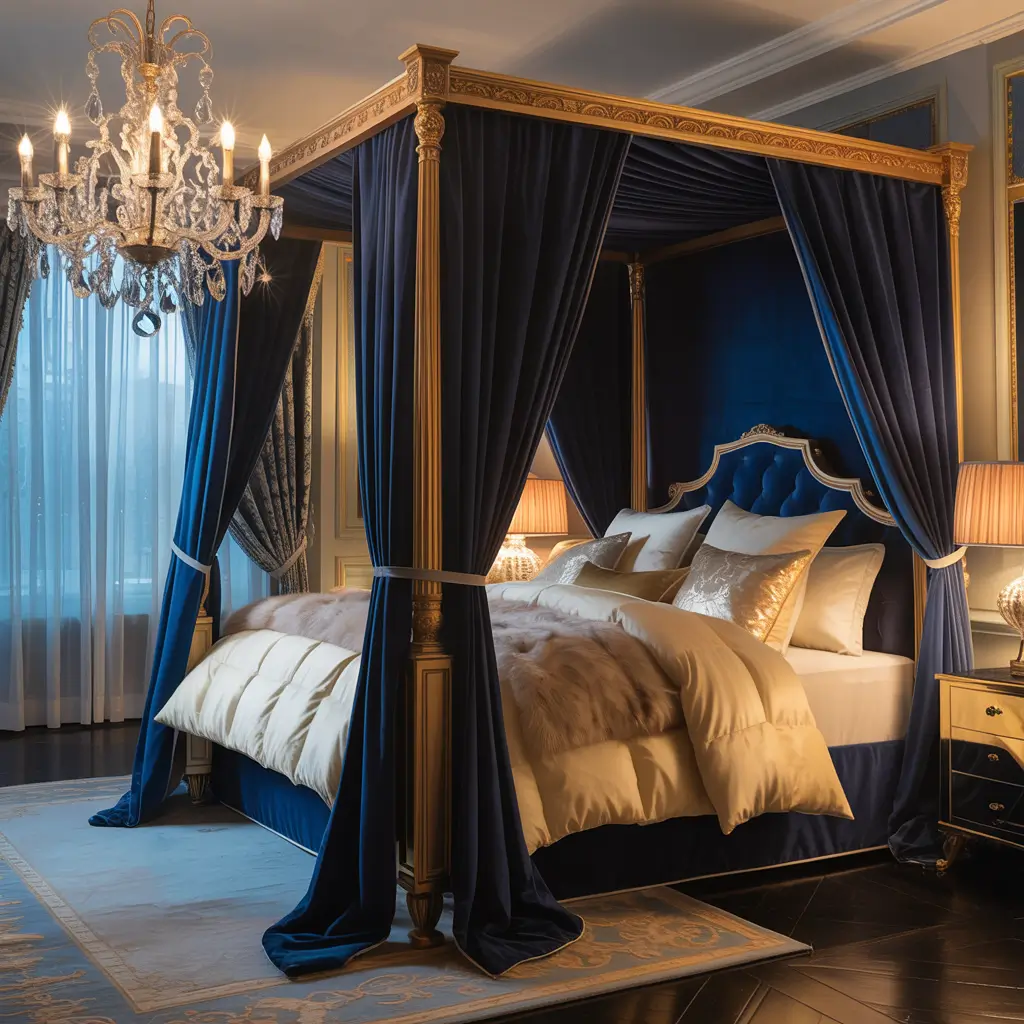
Want to feel like royalty without the whole “running a country” responsibility? Royal blue is calling your name.
This is not a timid color. Royal blue makes a statement, demands attention, and transforms any bedroom into a glamorous retreat. I helped my sister design her master bedroom in royal blue, and her boring cookie-cutter builder-grade room now looks like it belongs in a boutique hotel.
Going Luxe Without Going Broke
Royal blue works best when you treat it like the luxury color it is. You can’t slap royal blue on the walls and call it done—it needs supporting players to really shine.
Here’s your luxury lineup:
- Velvet everything (headboard, throw pillows, maybe a bench)
- Metallic accents in gold or brass (silver works too but feels less opulent)
- Rich textures like silk, satin, or high-thread-count cotton
- Statement lighting (think chandelier or dramatic pendant lights)
- Plush rugs that feel amazing underfoot
IMO, the best approach is royal blue bedding against white or cream walls. This lets you enjoy the richness without feeling enclosed. Layer different textures in the same royal blue family—a velvet headboard, silk pillowcases, and a chunky knit throw all in similar shades create depth.
And here’s a trick: add mirrored furniture. A mirrored nightstand reflects light and makes the royal blue feel even more jewel-like. Just don’t check yourself out in it when you wake up—trust me on this one 🙂
Also Read: 15 Charming Farmhouse Bedroom Decor Ideas You’ll Love
5. Soft Pastel Blue Haven
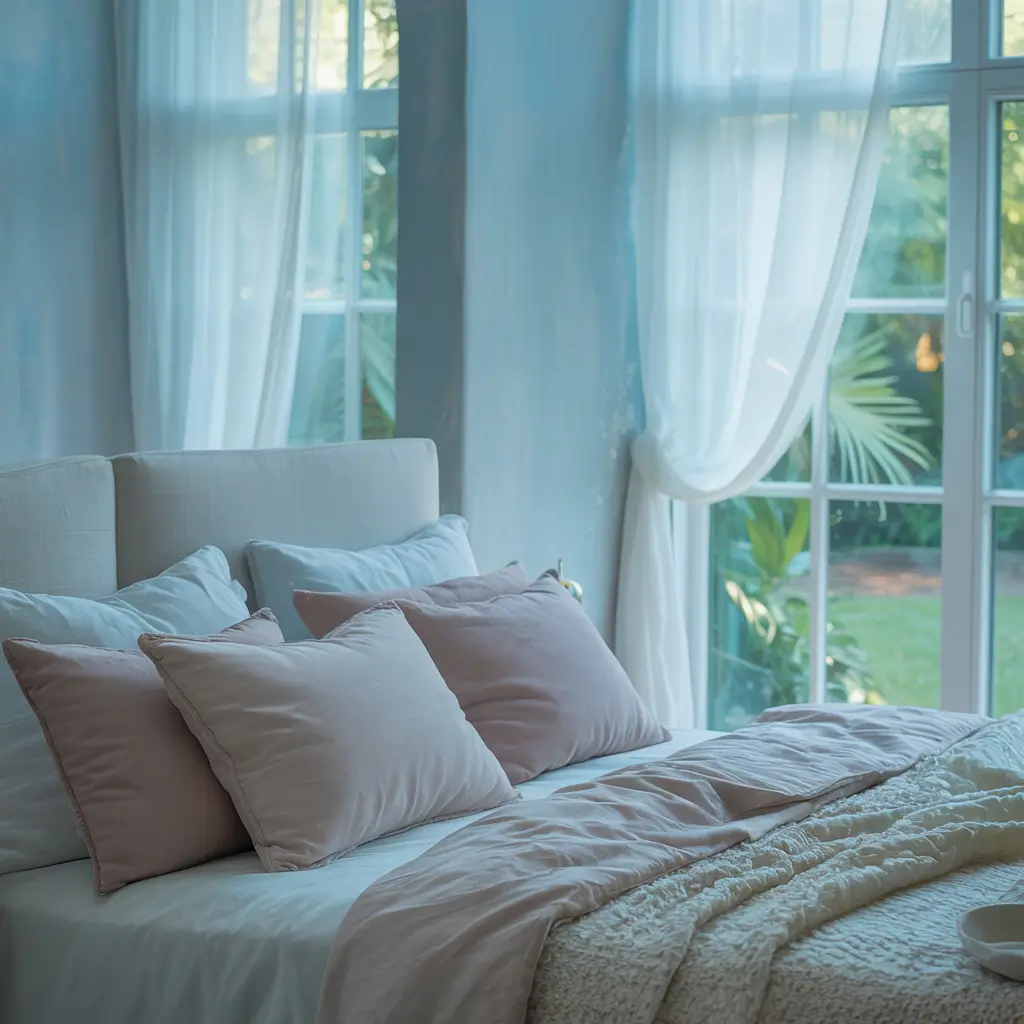
Pastel blue is the decorating equivalent of a warm hug. It’s gentle, welcoming, and works in literally any bedroom style.
I painted my daughter’s room in the softest pastel blue (she picked it out herself at age five and somehow nailed it), and even now at thirteen, she still loves it. That’s the power of pastel blue—it grows with you.
Creating Calm with Pastels
Pastel blue sits in that sweet spot between colorful and neutral. It adds personality without committing to anything too bold. You’ll find yourself changing up your decor constantly because pastel blue plays nice with everything.
Make it work with:
- White or cream furniture for a dreamy, soft look
- Natural wood tones that warm up the cool blue
- Layered textiles in different shades of blue and white
- Greenery because plants against pastel blue look incredible
- Soft, diffused lighting (harsh lights ruin the gentle vibe)
What I love about pastel blue? You can go romantic with ruffles and florals, or keep it modern with clean lines and geometric patterns. I’ve done both in different rooms, and the pastel blue adapted perfectly each time.
Want to prevent it from feeling too baby-ish? Add some mature elements like a sophisticated chandelier, abstract art, or modern furniture. The contrast between the sweet color and grown-up pieces creates an interesting tension.
6. Boho Blue Bedroom Vibes
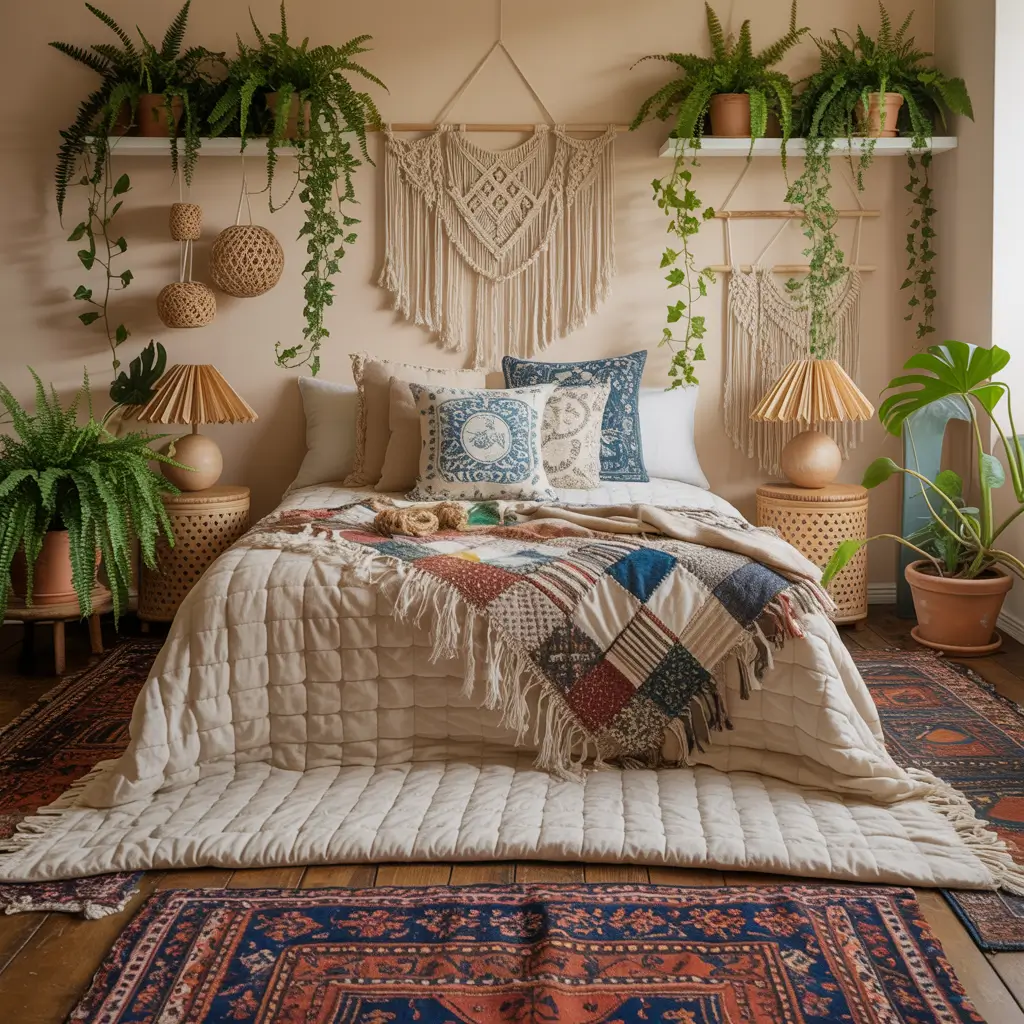
Boho style is basically permission to mix everything you love without following traditional design rules. Add blue to the equation, and you’ve got relaxed, collected-over-time vibes.
Boho blue bedrooms feel like you’ve traveled the world and brought back treasures from every stop. I went full boho in my bedroom after a trip to Morocco, and coming home to this space makes me happy every single day.
Building Your Boho Paradise
The secret to boho style? Layering. You layer patterns, textures, colors, and styles until somehow it all works together beautifully. Start with a medium blue on your walls—something with a little gray or green in it works well.
Your boho essentials:
- Macramé everything (wall hangings, plant hangers, even headboards)
- Global textiles like Moroccan rugs, Indian block prints, or Mexican blankets
- Mixed patterns that share a color family
- Lots of pillows in different sizes, shapes, and textures
- Natural elements like rattan, bamboo, and loads of plants
- Vintage finds from thrift stores or antique shops
I layered a Turkish rug over my hardwood floors, hung a massive macramé wall hanging behind my bed, and piled approximately seventeen pillows on my bed (my partner complains nightly, but they look amazing). The blue walls tie everything together without competing with the busy patterns.
The beauty of boho? You can’t really mess it up. If you love it, throw it in the mix. That vintage blue glass bottle? Perfect. Those ethnic print pillows? Add them. The style embraces imperfection and personality over matchy-matchy perfection.
7. Blue and White Scandinavian Style
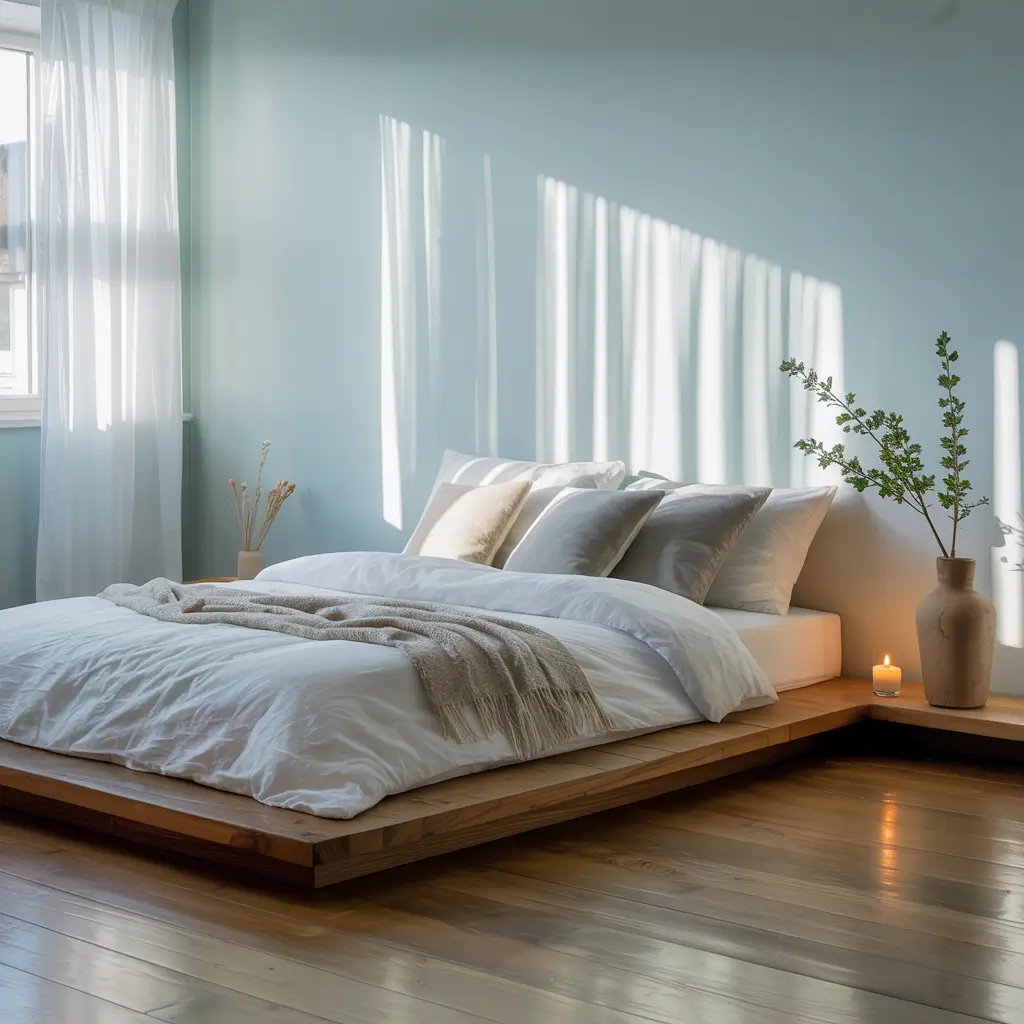
Scandinavian design teaches us that simple doesn’t mean boring. When you pair crisp white with soft blues, you get that effortless Nordic cool.
I’m obsessed with Scandinavian bedrooms because they master the art of cozy minimalism. It’s warm but uncluttered, simple but interesting, minimal but definitely not cold. After visiting Copenhagen, I came home and Scandi-fied my bedroom immediately.
Achieving Scandinavian Simplicity
Start with white walls—this is non-negotiable for authentic Scandi style. You’ll bring in blue through textiles, accessories, and artwork. The result feels airy, bright, and incredibly peaceful.
Scandinavian blueprint:
- White walls and ceiling to maximize light (crucial for those dark Nordic winters)
- Light wood furniture in natural finishes like birch or pine
- Blue textiles in geometric patterns or simple stripes
- Minimal accessories but make them count
- Cozy layers like sheepskin rugs and chunky knit blankets
- Functional design where everything serves a purpose
I added a dusty blue duvet cover to my all-white bedding, hung a simple blue and white print above my bed, and threw a blue striped blanket at the foot. The room feels serene but lived-in, minimal but comfortable.
Lighting matters here—go for warm, soft lighting instead of harsh overhead lights. I use table lamps with warm bulbs, and it transforms the space from stark to cozy. The Danes call this “hygge,” and it’s basically the art of creating warmth and coziness. Your blue and white bedroom should feel like a hug, not a showroom.
8. Deep Indigo Cozy Corner
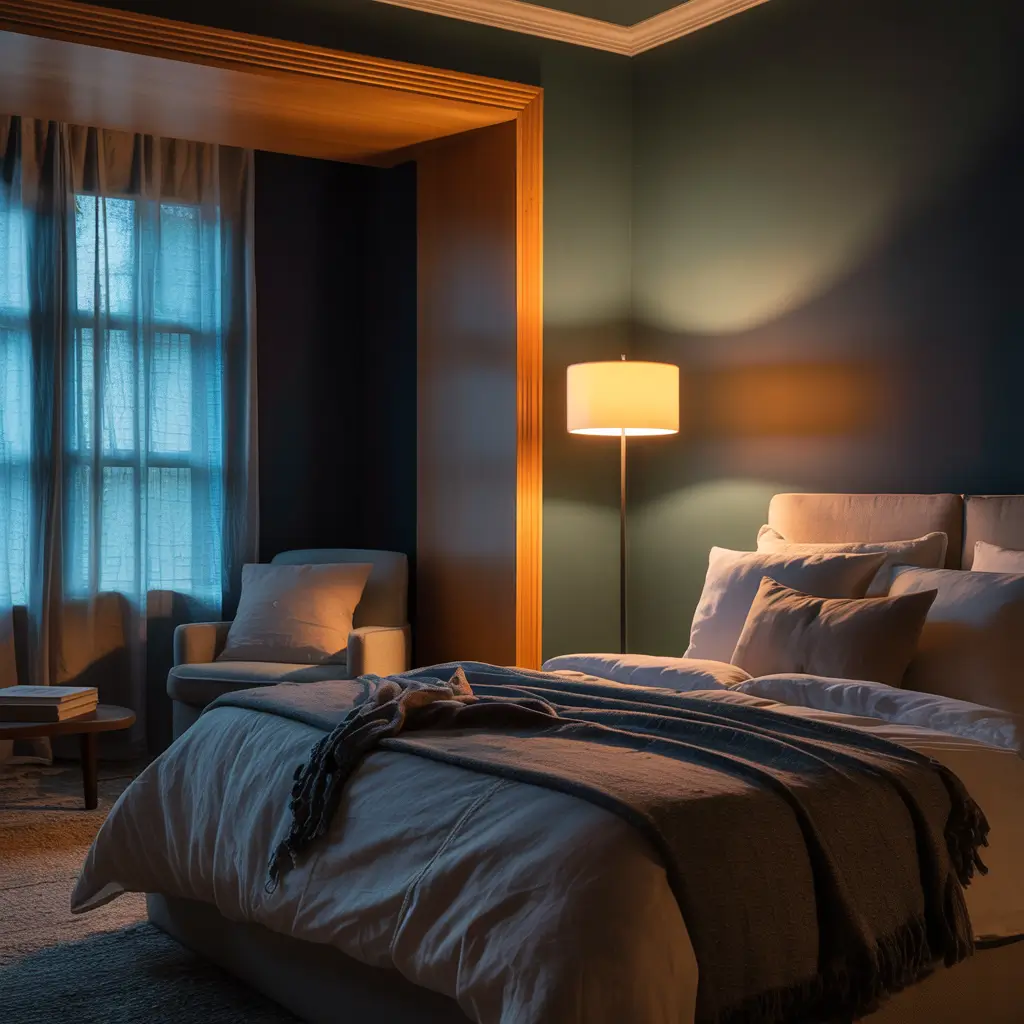
Indigo sits somewhere between blue and purple, and it creates the coziest, most womb-like bedrooms imaginable.
Deep indigo transforms a bedroom into a cocoon—perfect if you love that enclosed, protected feeling when you sleep. I painted my bedroom indigo during a particularly stressful year, and that room became my sanctuary. Something about the deep, saturated color made the outside world disappear.
Embracing the Darkness
People panic about dark rooms, but hear me out: dark bedrooms are incredible for sleep. They’re dramatic, sophisticated, and create a completely different atmosphere than light, airy spaces. Indigo does this without going full black.
Make indigo work:
- Commit to the darkness on all walls (half-measures look weird with colors this deep)
- Layer lighting with multiple sources at different levels
- Add warm metals like copper or gold to prevent it feeling cold
- Use rich textures that catch light differently (velvet, silk, high-gloss finishes)
- Keep the ceiling light or continue the indigo up for full cocoon vibes
- Add warmth with wood tones and warm-toned textiles
I paired my indigo walls with white bedding (the contrast is stunning), brass fixtures, and warm wood furniture. During the day with natural light, the room feels bold and dramatic. At night with lamps on, it feels like sleeping in a jewel box.
Pro tip: indigo shows imperfections, so prep your walls well before painting. I learned this the hard way and had to do a second coat after spackling every tiny nail hole. Worth it though—the depth of color is unmatched.
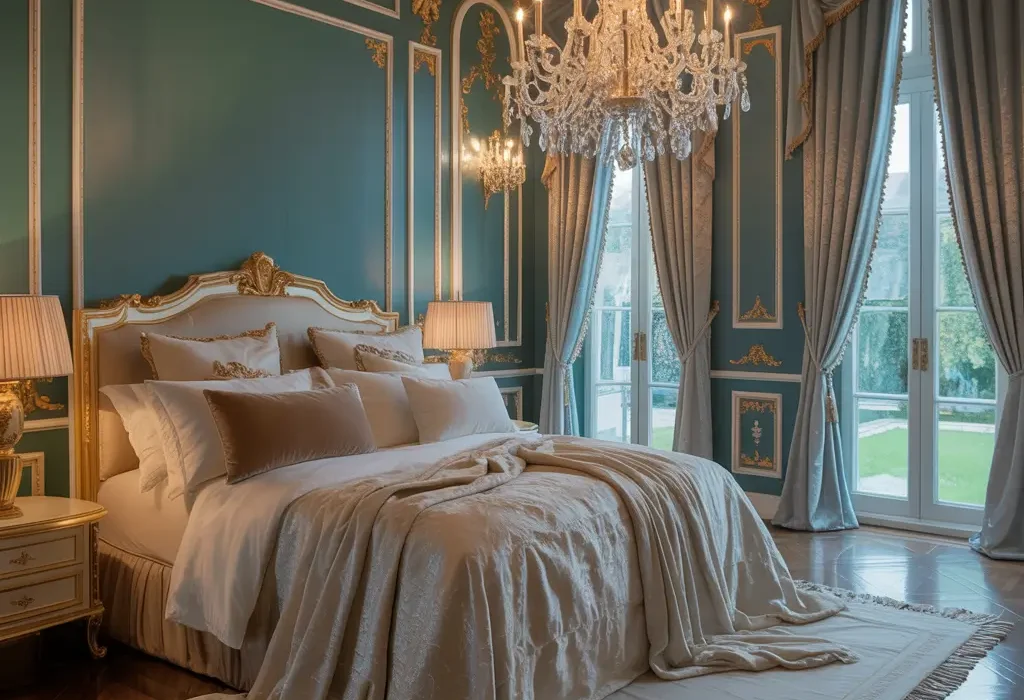
9. Teal and Gold Elegant Bedroom
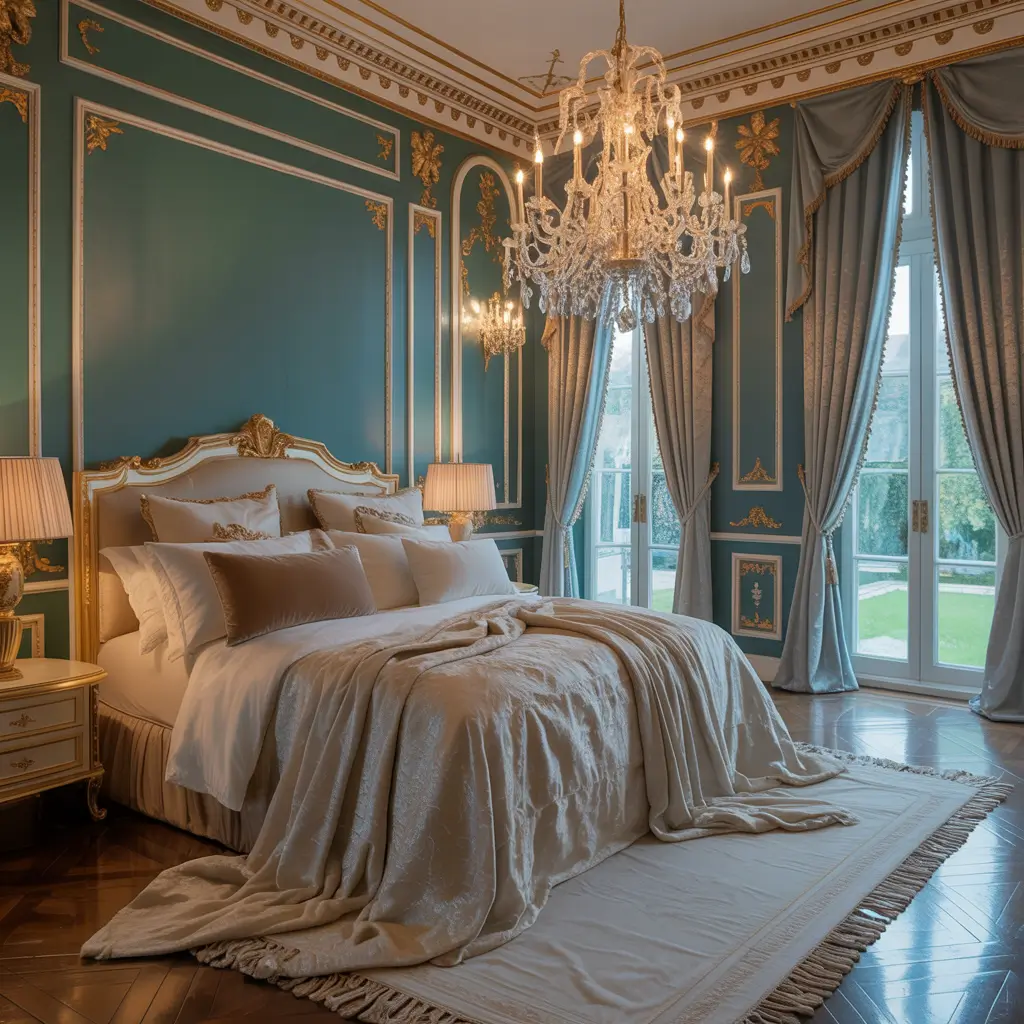
Teal is blue’s sophisticated cousin who studied abroad and came back with excellent taste. Pair it with gold, and you’ve got instant elegance.
This color combination feels expensive even when it’s not. I decorated my master bedroom in teal and gold after getting bored with safe, neutral everything. Best decision ever—I finally have a bedroom with personality.
Creating Teal and Gold Magic
Teal works as either your main color or an accent. I went with teal walls and brought in gold through accessories, but you could easily do the reverse with neutral walls and teal bedding with gold accents.
Your elegant formula:
- Choose your teal carefully (some lean green, others lean blue—pick what feels right)
- Gold accents in light fixtures, frames, drawer pulls, or mirrors
- Luxe fabrics like velvet, silk, or high-quality cotton
- Geometric patterns that feel modern and sophisticated
- Statement pieces like an upholstered headboard or bold artwork
- Balance so the gold enhances without overwhelming
I added gold through my nightstand lamps, a large gold-framed mirror, and gold throw pillows with geometric patterns. The teal walls make the gold pop like crazy. The whole room feels pulled together and intentional without being stuffy or formal.
Want to know the best part? Teal and gold photograph amazingly well. Every time I post my bedroom on social media, people ask for paint colors and sourcing info. It’s a combination that reads as “I know what I’m doing” even if you’re totally winging it (which I definitely was).
10. Vintage Blue Shabby Chic
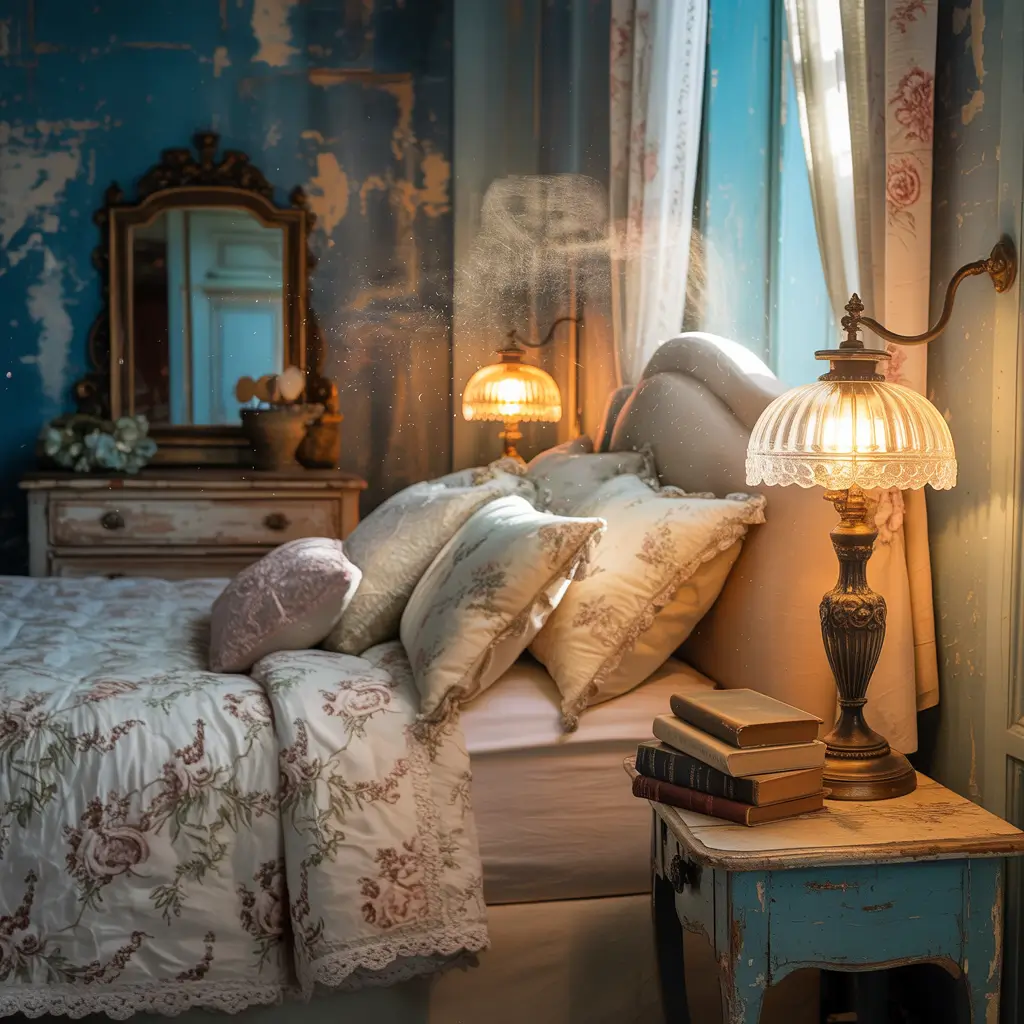
Shabby chic gets a lot of hate for being too fussy or outdated, but done right with vintage blues? It’s charming and romantic without the dated feel.
Vintage blue—think faded denim, weathered shutters, or old Wedgwood china—brings instant character. I renovated a room in my old farmhouse using this style, and it felt like stepping back in time in the best way possible.
Achieving Vintage Charm
Shabby chic embraces imperfection. Chipped paint? Perfect. Mismatched furniture? Ideal. Everything looking too new? Sand it down. This style celebrates age and history, real or created.
Your vintage blueprint:
- Distressed furniture in white or cream with blue accents
- Vintage blue accessories like old bottles, china, or frames
- Soft fabrics with floral or toile patterns
- Painted furniture that shows wear and age
- Romantic details like crystal drawer pulls or vintage mirrors
- Collected-over-time feel instead of matchy-matchy sets
I scored an old dresser at a yard sale, painted it vintage blue, then lightly sanded the edges to reveal the wood underneath. It looks like a treasured piece passed down through generations (instead of something I paid $30 for last month). I paired it with white walls, soft floral bedding, and vintage blue accessories.
The key is balance—too much distressing looks forced, not enough looks incomplete. I aim for pieces that could believably be vintage without going overboard. And please, resist the urge to fill every surface with doilies and tchotchkes. Even shabby chic needs breathing room.
Also Read: 15 Elegant Bedroom Decor Ideas for Women and Relaxing Corners
11. Moody Blue Dramatic Bedroom
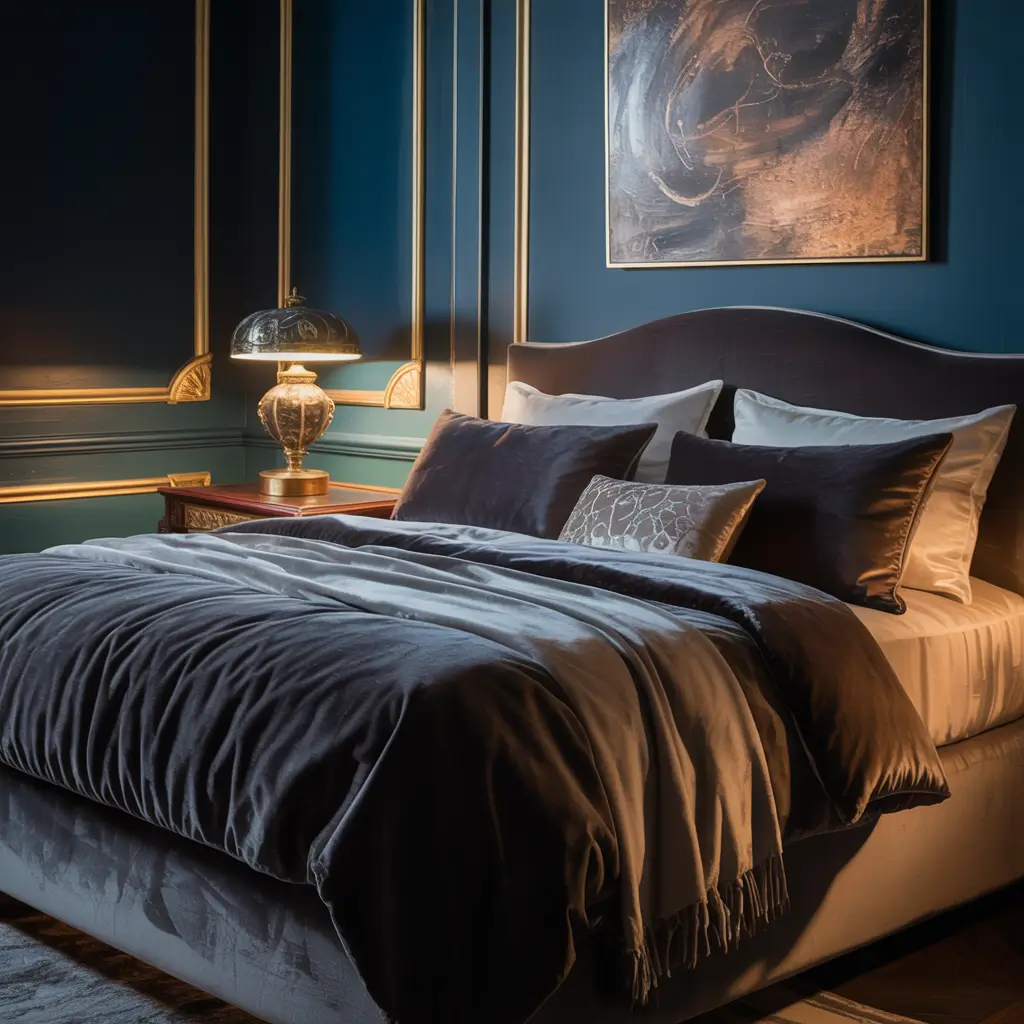
Sometimes you want drama. You want impact. You want people to walk into your bedroom and go “Whoa.” Moody blue delivers all of this.
Moody blues are those deep, saturated, almost-but-not-quite-black blues that create serious atmosphere. I designed a bedroom using this approach for a client who wanted something bold, and it completely transformed the space from forgettable to unforgettable.
Going Dark and Dramatic
Moody blue bedrooms aren’t for everyone, and that’s okay. They require confidence and commitment. You can’t go halfway with this style—either embrace the darkness or pick a lighter shade.
Drama requires:
- Deep, saturated blue on walls (think midnight, prussian, or dark navy)
- Layered lighting because natural light alone won’t cut it
- Contrasting elements to prevent everything blending together
- Interesting textures that create depth and visual interest
- Bold artwork or mirrors that pop against the dark walls
- Confident attitude because moody rooms need owners who love them
I used a dark blue that’s almost black, paired it with charcoal gray bedding, and added pops of brass and deep burgundy. The room feels like a luxury hotel—sophisticated, enveloping, and completely different from every beige bedroom ever.
Here’s the thing about dark rooms: they hide mess better (not encouraging messiness, just stating facts), they feel cozy year-round, and they make dramatic statements. The downside? You absolutely need good lighting, and they can make small rooms feel smaller. My client’s room was decent-sized, so the darkness worked. In a tiny room, I’d reconsider.
12. Blue Ombre Wall Inspiration
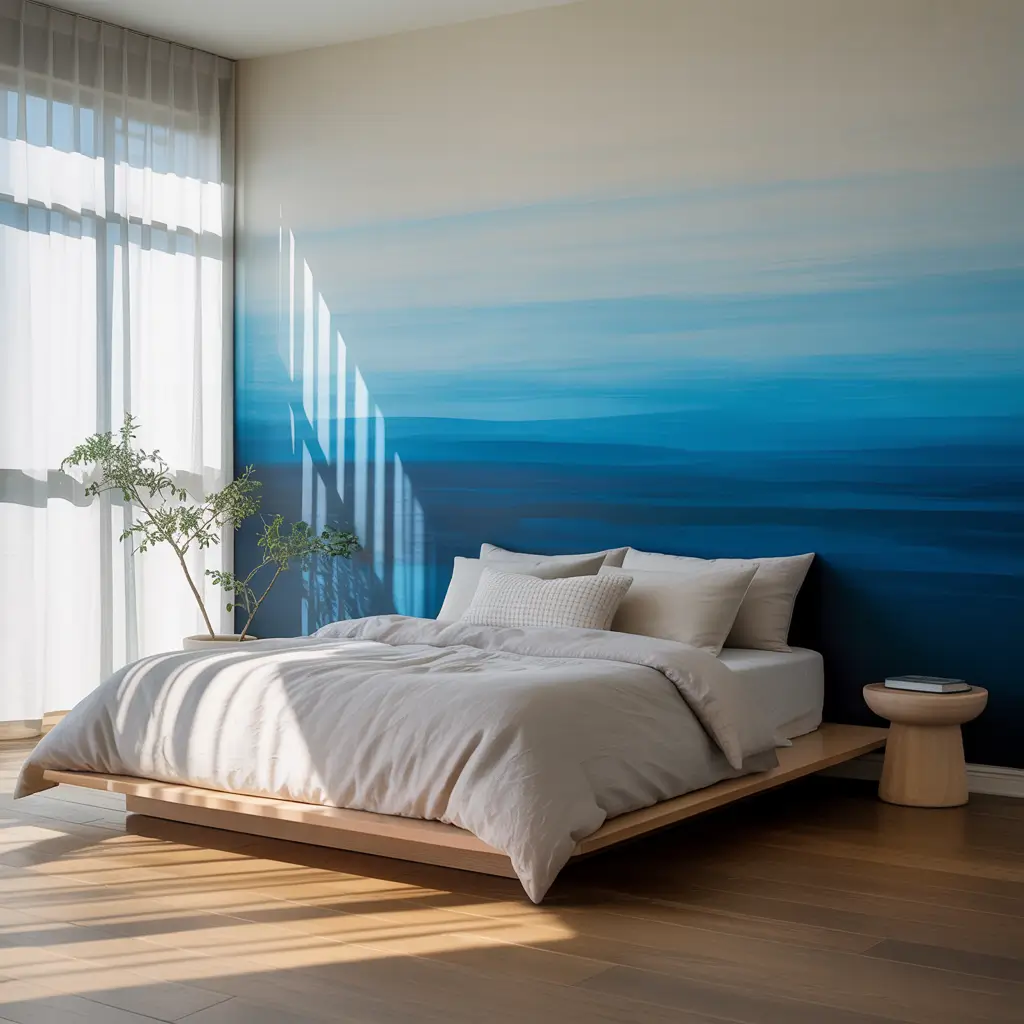
Ombre walls are like sunset gradients for your bedroom—they add movement, interest, and artistic flair without overwhelming patterns.
A blue ombre wall transitions from light to dark (or vice versa), creating a subtle focal point that’s way more interesting than a solid color but easier than wallpaper. I attempted this in my bedroom and honestly? It took three tries to get right, but the final result looks custom and artistic.
Creating Your Ombre Effect
Fair warning: ombre walls require patience, multiple paint colors, and a willingness to blend. This isn’t a quick Saturday afternoon project—I spent an entire weekend on mine.
Your ombre game plan:
- Choose 3-4 shades of blue from the same color family (lightest to darkest)
- Decide direction (light at top transitioning to dark at bottom is most popular)
- Mark sections for each color with painter’s tape
- Blend where colors meet using a dry brush or sponge
- Work in sections and don’t let paint dry before blending
- Seal properly once you’re happy with the gradient
I went from pale sky blue at the ceiling to deep navy at the floor. The light-to-dark transition makes the ceiling feel higher and creates natural visual flow. Against this backdrop, I kept furniture and bedding simple—the wall provides enough interest without competing elements.
Is it more work than slapping up one color? Absolutely. But every time I walk into that room, I feel proud of creating something unique. No one else has an ombre wall exactly like mine, and that personalization matters.
13. Nautical Blue Bedroom Decor
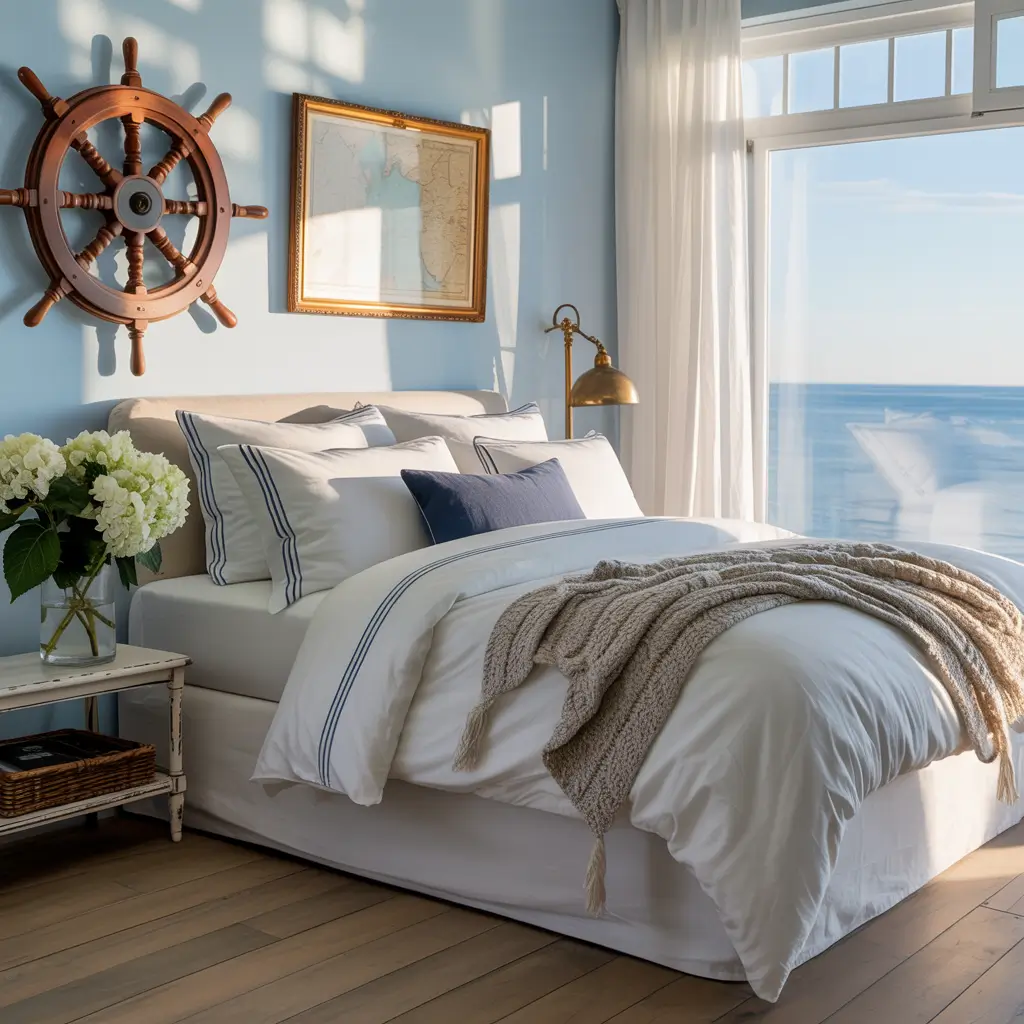
Nautical bedrooms walk a fine line between charming coastal vibes and tacky theme-room territory. Done right, they’re fresh and breezy. Done wrong, you’re sleeping in a seafood restaurant.
The key to sophisticated nautical style? Restraint. You don’t need anchor wallpaper, ship wheel decor, and rope lighting everywhere. I designed a nautical bedroom that feels grown-up by using the color palette and vibe without the literal interpretations.
Keeping It Classy on the High Seas
Think about what makes nautical style appealing: the crisp navy and white contrast, the natural materials, the clean lines. Focus on those elements instead of novelty decor.
Your nautical navigation:
- Classic navy and white palette as your foundation
- Red accents sparingly (it’s traditional but can overwhelm)
- Stripes in bedding, rugs, or pillows (horizontal for authentic maritime feel)
- Natural rope as curtain tiebacks or in frames, not as random coils on shelves
- Brass or silver fixtures that reference ship hardware
- Subtle nods like a vintage map or telescope instead of obvious anchors
I used navy walls with white trim, crisp white bedding with navy striped pillows, and natural jute rugs. My “nautical” elements are subtle: a brass telescope on the dresser, a vintage coastal map in a simple frame, and rope drawer pulls I swapped onto my nightstand. The room feels coastal and clean without screaming “I’M NAUTICAL” at everyone who enters.
The difference between good and bad nautical? Suggestion versus statement. Suggest the theme through colors and materials; don’t state it with obvious symbols everywhere.
14. Blue Bedroom with Natural Wood Accents
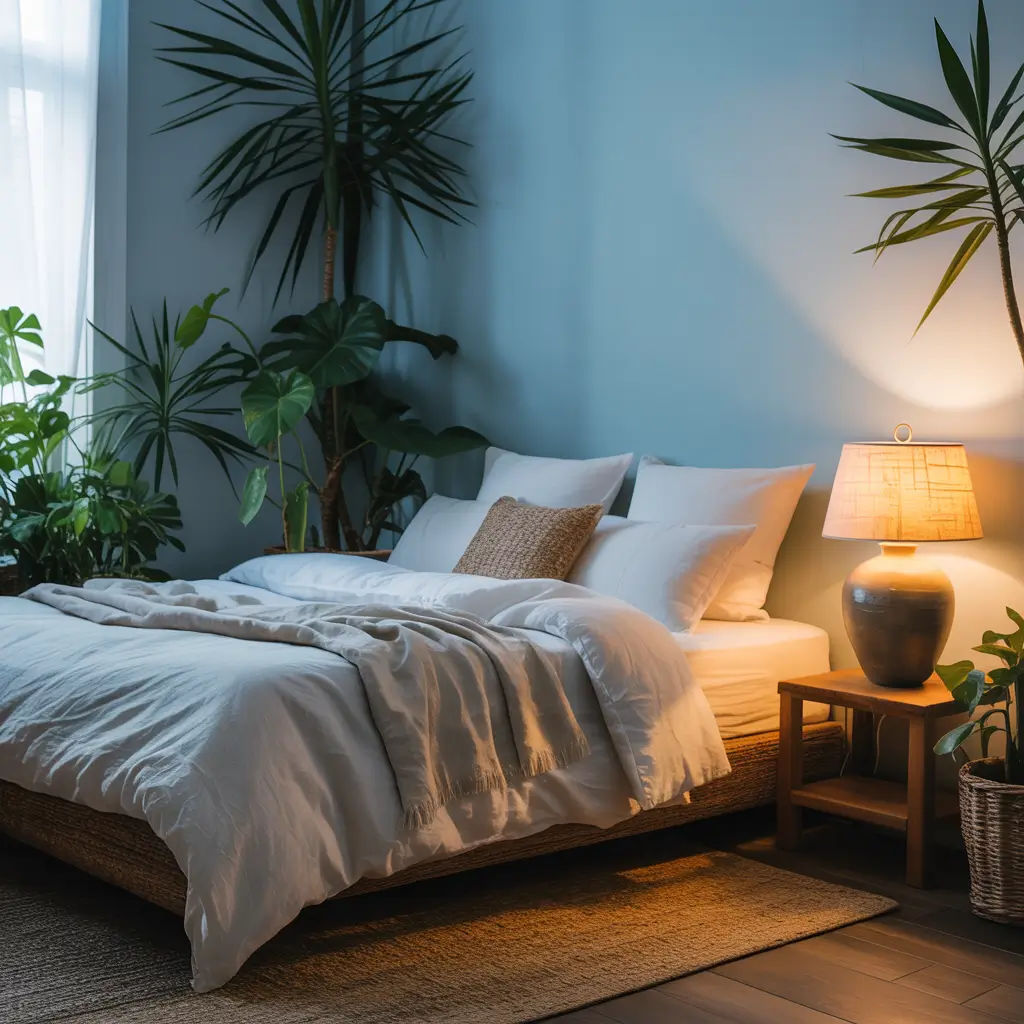
Blue and wood are best friends in the decorating world. The cool blue paired with warm wood creates perfect balance—neither too cold nor too busy.
Natural wood grounds blue bedrooms and prevents them from feeling sterile or too color-heavy. I’ve used this combination in multiple rooms because it’s basically foolproof. The natural variation in wood grain adds organic interest that solid colors can’t achieve.
Mixing Blue and Wood Successfully
Any shade of blue works with wood, but the wood tone matters. Light woods feel Scandinavian and airy, medium woods feel traditional and warm, dark woods feel sophisticated and grounding.
Your blue and wood strategy:
- Pick your blue first, then choose wood tones that complement
- Vary the wood (all matching wood looks furniture-store staged)
- Show the grain instead of painted wood for authentic natural feel
- Balance proportions so neither blue nor wood dominates completely
- Add texture through woven baskets, wooden frames, or bamboo blinds
- Keep other colors minimal to let blue and wood shine
I painted my walls a medium blue and brought in a mix of wood tones: light oak floors, medium walnut nightstands, and a darker wood headboard. The variety keeps things interesting while the blue ties everything together. I added woven baskets for storage, wooden frames for artwork, and bamboo roman shades on the windows.
The beauty of this combination? It works year-round. The blue keeps it fresh in summer, the wood warms it up in winter. It’s like the little black dress of bedroom design—classic, adaptable, and always works.
15. DIY Blue Bedroom Makeover
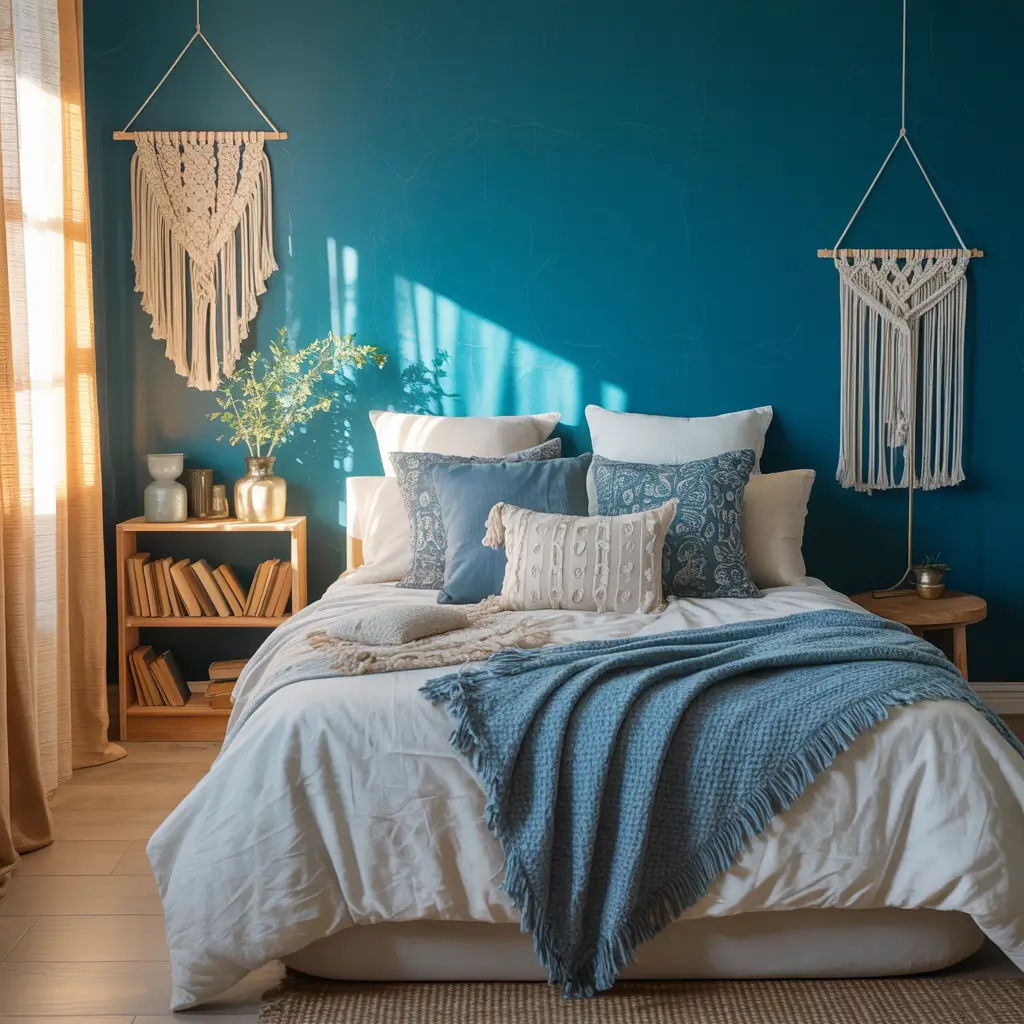
You don’t need a massive budget or professional help to create a stunning blue bedroom. DIY makeovers let you personalize your space exactly how you want while saving serious cash.
I’ve DIY’d multiple bedrooms, and honestly, the satisfaction of doing it yourself beats any professionally designed room (and I say this as someone who hires help for electrical work because I value my life). You learn what you like, you make mistakes and fix them, and you end up with something uniquely yours.
Your DIY Blue Bedroom Blueprint
Start with a plan. I know that sounds boring, but randomly buying blue stuff without a vision leads to chaos. Trust me—I have a garage full of “I’ll use this somewhere” purchases to prove it.
DIY success steps:
- Choose your blue shade and get samples (paint them on the wall and live with them for a few days)
- Set a realistic budget and stick to it (mostly—we all have impulse buys)
- Shop secondhand for furniture you can paint or refinish
- Start with paint for the biggest impact per dollar
- DIY your headboard using plywood and fabric or paint
- Refresh existing pieces with new hardware, paint, or fabric
- Make your own art using paint, fabric, or printables
- Rearrange what you have before buying new stuff
My last DIY bedroom makeover cost under $500, and I completely transformed the space. I painted the walls a gorgeous dusty blue ($40 in paint), made a headboard from plywood and fabric ($75), painted my old nightstands navy ($20 in paint), made abstract art using canvas and leftover paint ($30 for canvases), bought new bedding on sale ($150), and added some thrifted accessories ($50). The remaining budget went to new lamps.
The best part about DIY? You can change it. Don’t like that shade of blue after living with it? Repaint. Want to try a new style? Rearrange and swap accessories. You’re not locked into expensive designer choices—you’re free to experiment and evolve your space as you change.
Final Thoughts: Finding Your Perfect Blue
Here’s what I’ve learned from designing countless blue bedrooms (mine and others’): the “right” blue is whatever makes you feel relaxed, happy, and comfortable. Design rules are guidelines, not laws. If you love deep navy but everyone says it’ll make your room too dark? Try it anyway. If pastel blue speaks to you even though it’s “too sweet”? Paint those walls.
Your bedroom should be your sanctuary—the one space that’s entirely yours and exactly how you want it. Blue offers so many possibilities, from energizing teals to calming sky blues to dramatic indigos. You literally can’t run out of options.
I’ve had rooms in almost every shade of blue, and each one brought something different to my life. The coastal blue guest room makes visitors feel like they’re on vacation. The moody indigo master bedroom helps me sleep like a rock. The pastel blue nursery grows with my daughter through every stage.
Start somewhere. Pick a blue that makes you smile. Paint a sample on your wall. Add some blue bedding. Hang blue art. You don’t need to transform your entire bedroom overnight (unless you want to—who am I to stop you?). Small changes lead to bigger transformations, and before you know it, you’ll have created a space that truly feels like home.