


15 Trendy Farmhouse Sink Kitchen Ideas and Cozy Corners
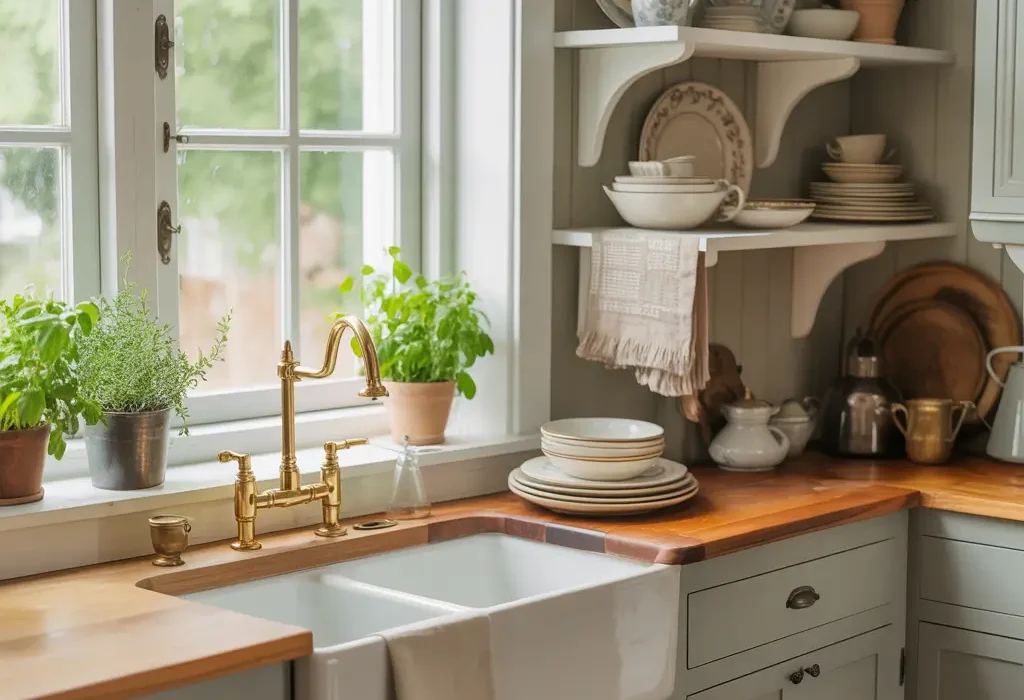
You know that feeling when you walk into a kitchen and something just clicks? Yeah, that’s usually the farmhouse sink doing its magic. I’ll be honest—I used to think these deep, apron-front beauties were just for country cottages and Pinterest boards, but boy, was I wrong. After redesigning my own kitchen last year and installing one of these bad boys, I’ve become that person who won’t shut up about farmhouse sinks at dinner parties. Oops. 🙂
Look, whether you’re planning a full kitchen renovation or just daydreaming about what could be, farmhouse sinks bring this incredible blend of practicality and charm that’s hard to beat. They’re deep enough to hide a mountain of dishes (we’ve all been there), sturdy enough to last decades, and honestly? They just make everything look better. So grab your coffee, get comfy, and let’s talk about 15 ways you can work this timeless centerpiece into your kitchen—no matter your style.
Classic White Farmhouse Sink Layouts
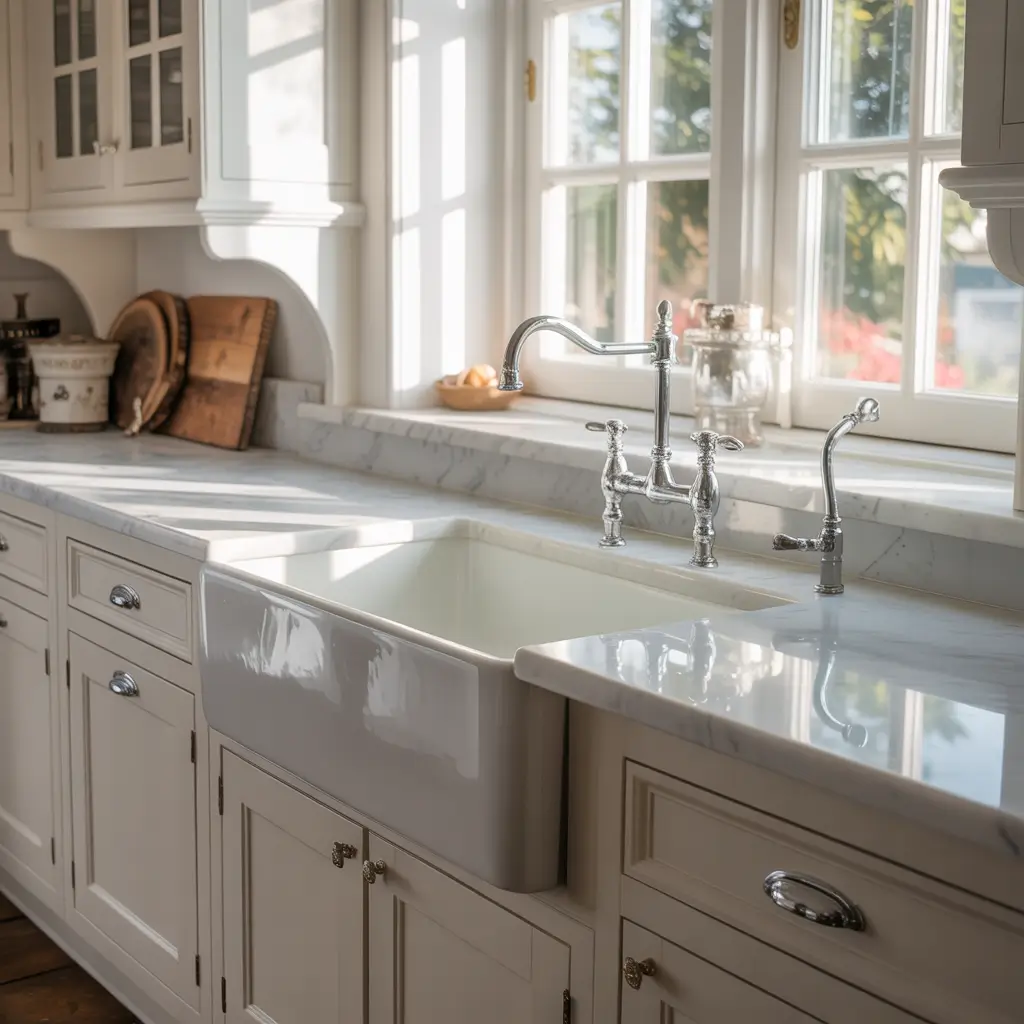
Let’s start with the OG—the classic white farmhouse sink. This is the one everyone pictures when they hear “farmhouse sink,” and there’s a reason it’s stood the test of time.
White fireclay or porcelain sinks give you that clean, crisp look that works with literally everything. I mean, have you ever seen a white farmhouse sink that looked out of place? Me neither. The beauty here is in the simplicity—you get a blank canvas that lets other design elements shine while still being the star of the show.
The trick with classic white layouts is keeping everything balanced. Pair your white sink with white subway tiles for that timeless kitchen look, or contrast it with darker countertops to make it pop. I went with white quartz counters and a white sink in my space, and the seamless flow makes the kitchen feel twice as big.
Here’s what works best with classic white farmhouse sinks:
- Stainless steel faucets for a traditional look
- Chrome hardware on cabinets to tie everything together
- Light-colored backsplashes that don’t compete for attention
- Natural wood accents to warm up the space
Pro tip? White sinks are surprisingly forgiving when it comes to stains and scratches, especially the high-quality fireclay ones. Just don’t go dropping cast iron skillets in there like I did. Lesson learned.
Rustic Wood Cabinets with Farmhouse Sink
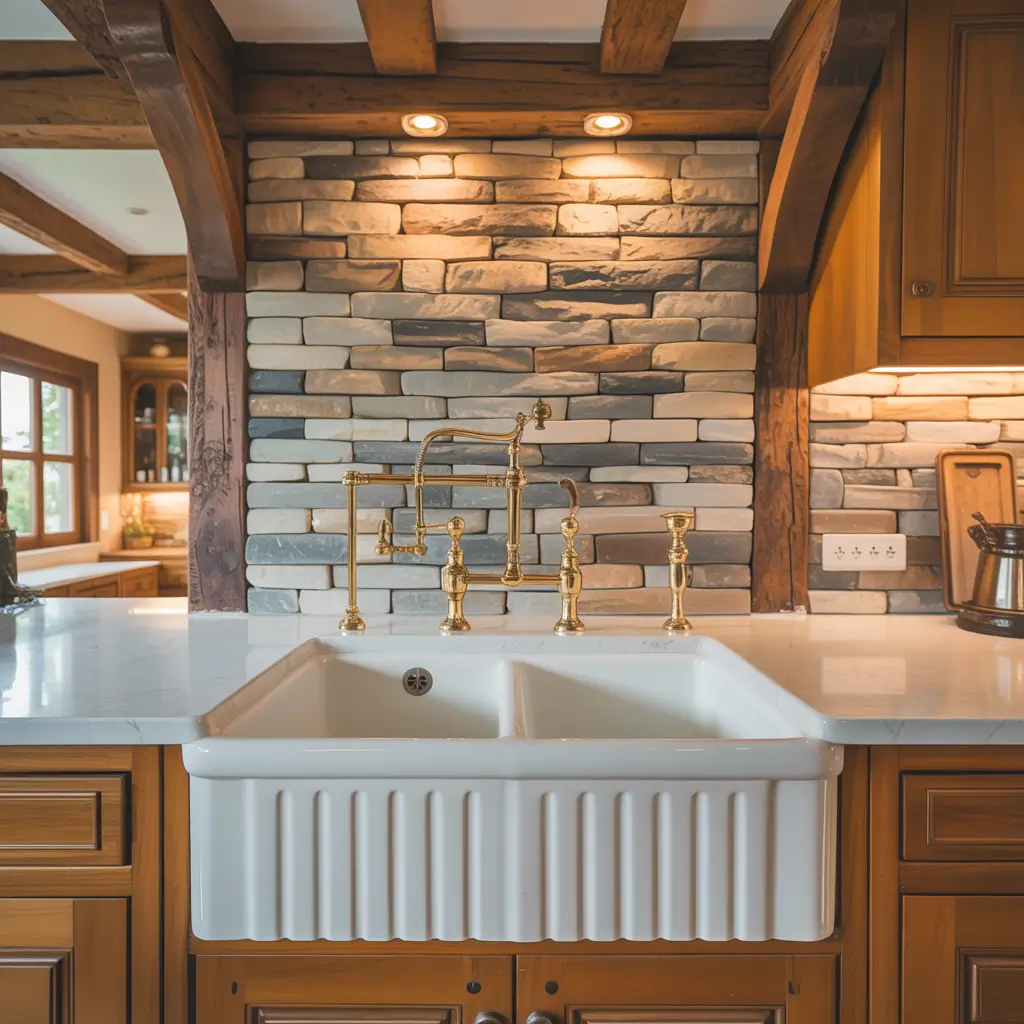
Want to know what makes me weak in the knees? A gorgeous farmhouse sink nestled into rich, rustic wood cabinets. We’re talking reclaimed wood, weathered finishes, or even those beautiful knotty pine cabinets your grandmother probably had.
This combination screams cozy cabin vibes mixed with modern functionality. The warmth of natural wood plays off the cool, clean lines of the sink in a way that just works. I’ve seen this setup in mountain homes, beach cottages, and even sleek city apartments—it’s that versatile.
When you’re working with wood cabinets, think about the finish and tone. Darker stains create drama and make white sinks stand out like jewelry. Lighter, natural wood tones give you that Scandinavian-meets-farmhouse vibe that’s super hot right now (IMO).
Consider these combos:
- Dark walnut cabinets with a white fireclay sink
- Light oak or maple with a cream-colored sink
- Distressed gray-washed wood with any sink color
- Cedar or reclaimed barn wood for maximum rustic points
The wood grain adds texture and character that you just can’t get from painted cabinets. Plus, every ding and scratch tells a story—which is perfect if you’re like me and tend to bang into things while cooking.
Modern Minimalist Farmhouse Sink Designs
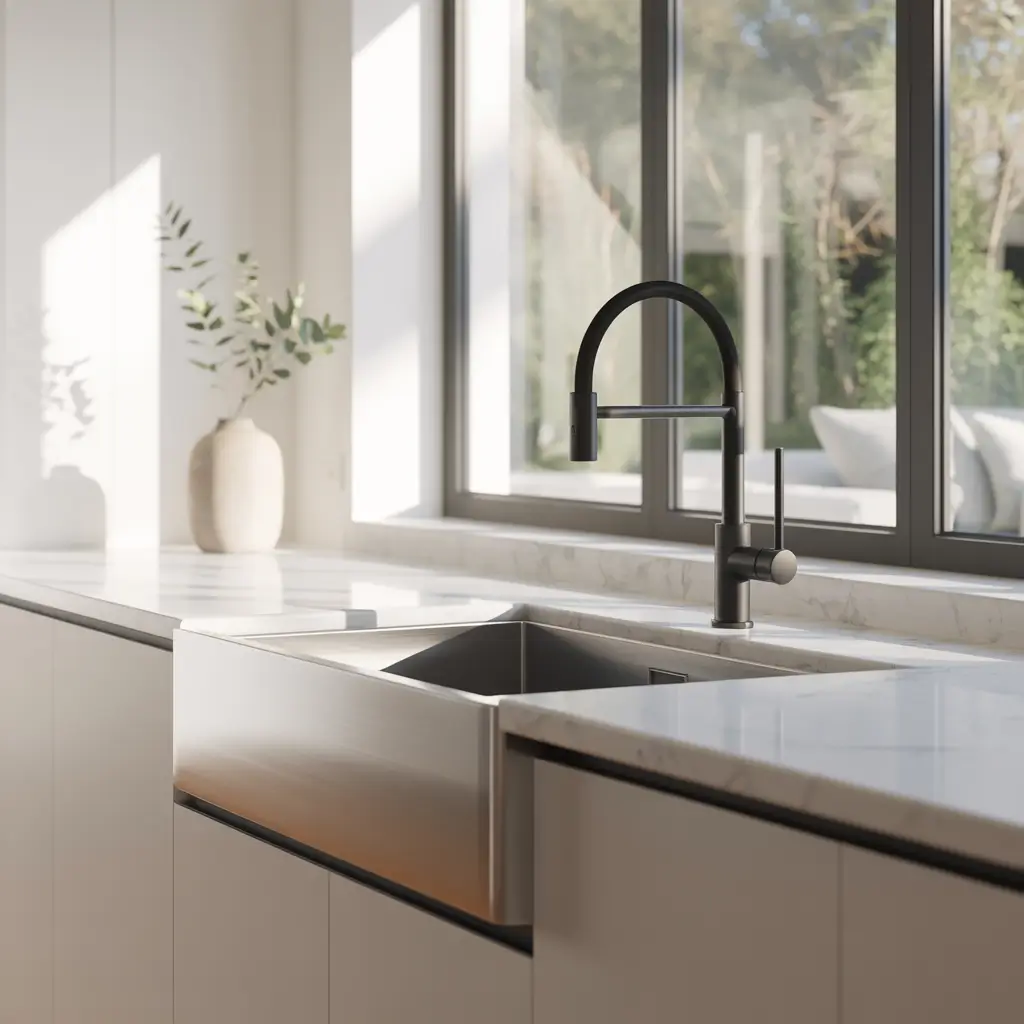
Here’s where things get interesting. Ever wondered if farmhouse sinks could work in a sleek, minimalist kitchen? Absolutely they can, and it’s stunning.
Modern minimalist designs strip away the fuss and let the sink’s architectural lines do the talking. You’re looking at clean edges, integrated drainboards maybe, and a focus on function over frills. This isn’t your grandma’s farmhouse sink—this is the sophisticated city cousin.
I visited a friend’s ultra-modern loft last month, and she’d installed a stainless steel farmhouse sink with zero ornamentation. Just clean, straight lines and brushed metal. Against her handleless white cabinets and concrete countertops? Chef’s kiss. The contrast between the traditional sink style and contemporary everything else created this perfect tension.
Key elements for minimalist farmhouse sink kitchens:
- Handleless or push-to-open cabinets
- Monochromatic color schemes (think all white, all gray, or all black)
- Streamlined faucets with geometric shapes
- Hidden storage to maintain clean surfaces
- Minimal or no window treatments
The beauty of this approach is that the sink becomes a functional art piece. No clutter, no extra stuff—just pure, purposeful design.
Double Bowl Farmhouse Sink Inspiration
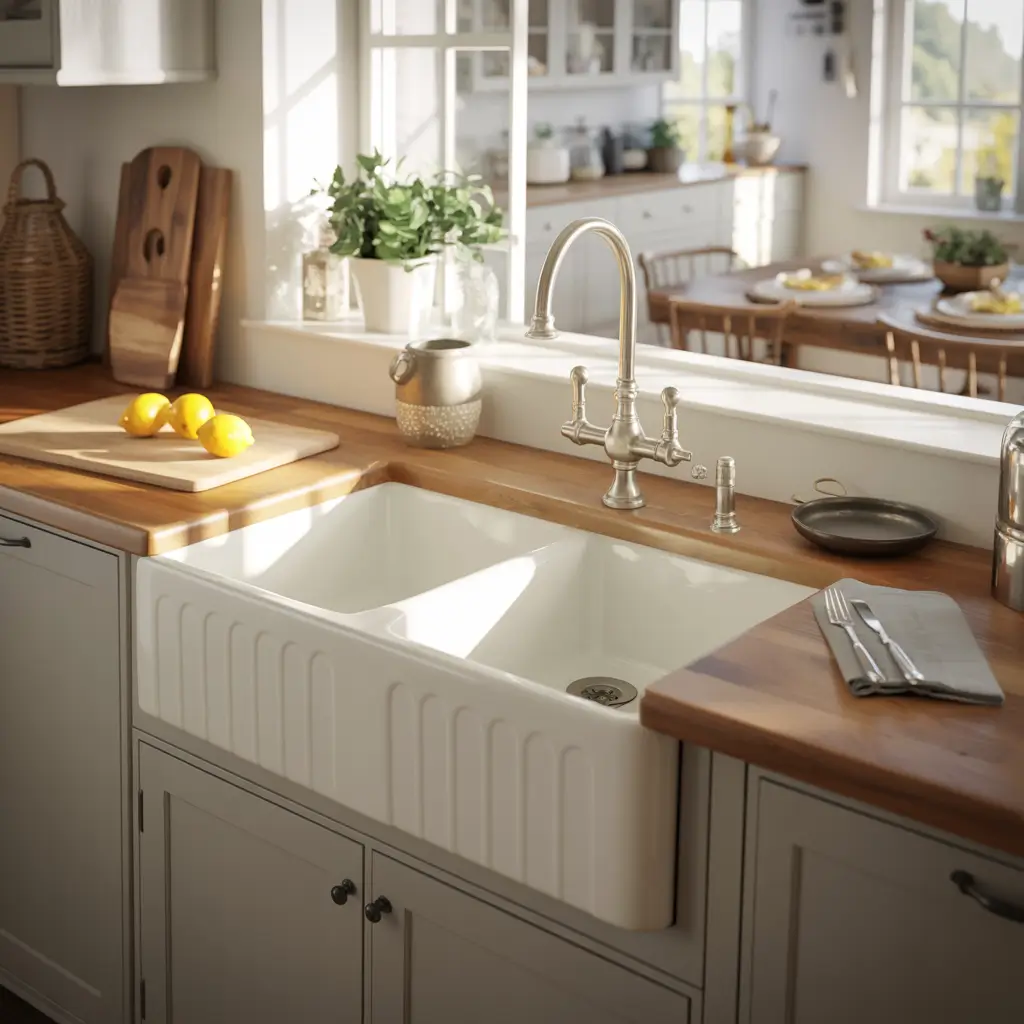
Let me tell you about the time I hosted Thanksgiving at my old place with a single-bowl sink. Never. Again. That’s when I became a double bowl farmhouse sink evangelist.
Having two bowls changes the entire game. You can soak that roasting pan in one side while washing vegetables in the other. One side for dirty dishes, one for clean. The possibilities are endless, and your efficiency basically doubles.
The configurations vary, too. You can get equal-sized bowls (my personal favorite) or go with a 60/40 split if you need one larger basin. Some people swear by the unequal split, saying they use the smaller side for a garbage disposal and the larger for everything else.
Double bowl advantages:
- Separate clean and dirty zones
- Multi-tasking made easy
- One side can hold a drying rack
- Better for homes without dishwashers
- Ideal for serious cooks
The only downside? If you regularly wash massive stock pots or baking sheets, the divider can get in the way. But honestly? I’d take the convenience of two bowls over occasional awkward pot-washing any day.
Also Read: 15 Charming Farmhouse Kitchen Backsplash Ideas You’ll Love
Small Kitchen Farmhouse Sink Solutions

Think your kitchen’s too small for a farmhouse sink? Think again, friend.
Small-space farmhouse sinks typically range from 24 to 30 inches wide (compared to the standard 33-36 inches), and they pack all the charm into a compact package. I helped my sister install a 27-inch version in her tiny galley kitchen, and it completely transformed the space without overwhelming it.
The key is proportion. A too-large sink in a small kitchen looks like you’re trying too hard. But a properly sized farmhouse sink? It becomes the focal point that actually makes the space feel more intentional and designed.
Small kitchen farmhouse sink tips:
- Stick to 24-30 inch widths
- Choose lighter colors to keep things airy
- Single bowl works better than double in tight spaces
- Wall-mounted faucets save counter space
- Skip the bulky dish rack—get an over-the-sink cutting board instead
FYI, small doesn’t mean shallow. You still get that generous depth that makes farmhouse sinks so practical. I can fit my largest mixing bowls in my sister’s compact sink with room to spare.
Marble Countertops with Farmhouse Sink
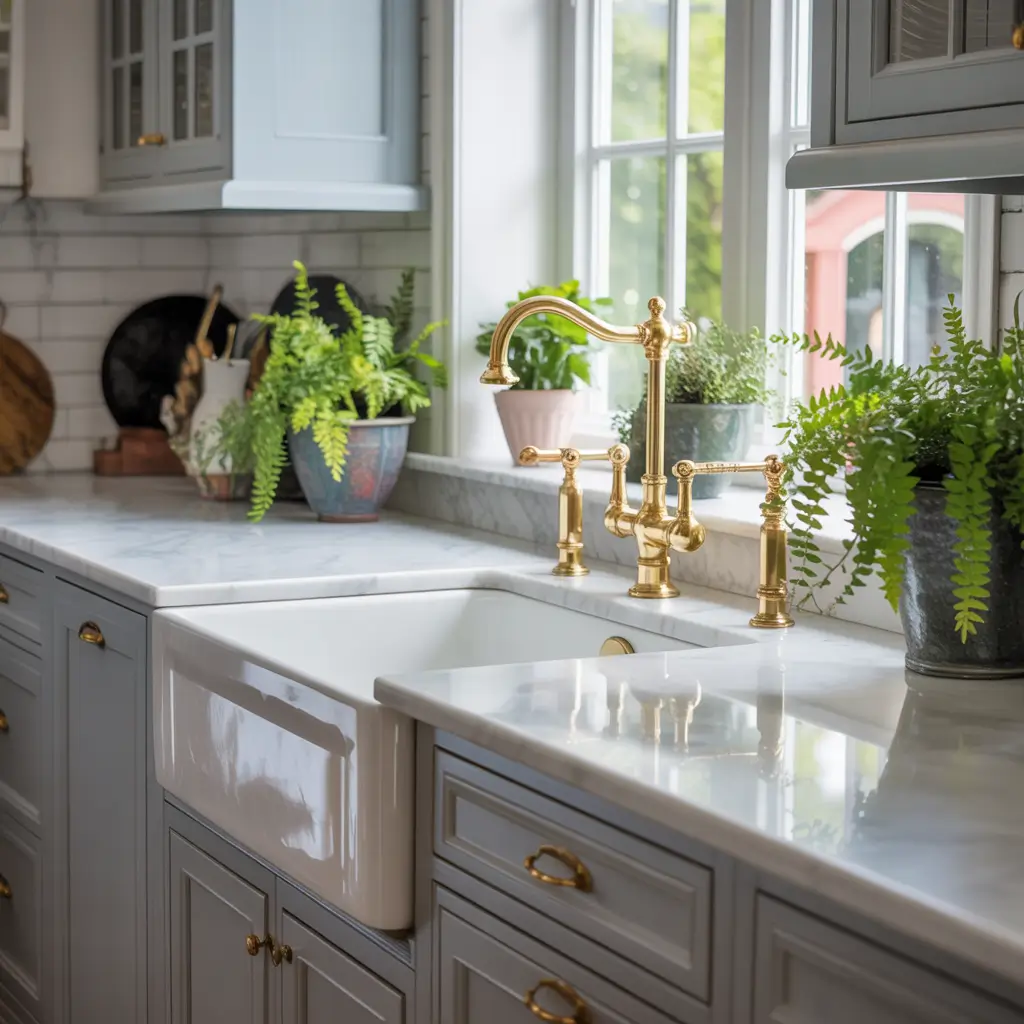
Okay, let’s talk luxury. Marble countertops paired with a farmhouse sink—this is the combination that launched a thousand kitchen remodels.
The veining in marble creates this organic movement that contrasts beautifully with the solid, grounded presence of a farmhouse sink. Whether you go with classic Carrara, dramatic Calacatta, or something more unusual, marble brings elegance that’s tough to match.
I’ll be real with you though—marble requires maintenance. It stains, it etches, it needs sealing. But if you’re someone who sees those imperfections as patina (like me), then you’ll love how marble ages. Each coffee ring and lemon juice stain tells your kitchen’s story.
Best marble and farmhouse sink pairings:
- White marble with white fireclay sink for monochromatic elegance
- Gray marble with stainless steel sink for modern sophistication
- Butcher block island with marble perimeter—farmhouse sink in either
- Honed marble (not polished) for a more casual, lived-in look
The combo works because both elements have this timeless quality. They’ve been around for centuries and they’re not going anywhere. That’s the kind of investment that makes sense.
Black Farmhouse Sink Accents
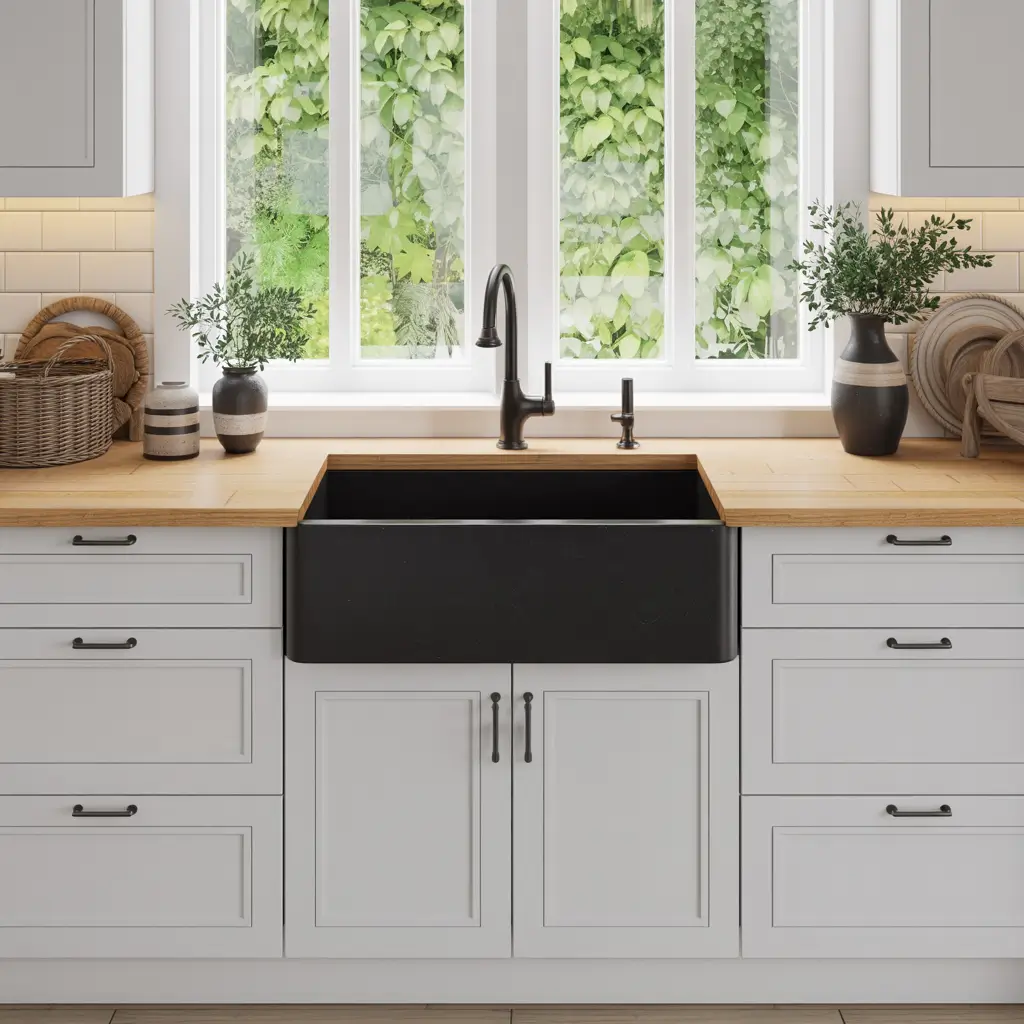
Ready to go bold? Black farmhouse sinks are having a serious moment, and I’m here for it.
I was skeptical at first—wouldn’t black show water spots and soap scum? Turns out, matte black finishes (especially in granite composite materials) hide everyday mess way better than shiny stainless steel. Plus, the dramatic contrast against lighter cabinets? Absolutely stunning.
Black sinks work as accent pieces in otherwise neutral kitchens, or they can anchor an entire dark-and-moody color scheme. I saw one in a kitchen with charcoal cabinets, black hardware, and white marble counters that literally stopped me in my tracks. The black sink tied everything together while still maintaining that farmhouse charm.
Ways to style black farmhouse sinks:
- Contrast with all-white cabinets and counters
- Match with black cabinet hardware and light fixtures
- Pair with brass or gold faucets for luxury vibes
- Use as anchor in industrial-style kitchens
- Combine with wood tones for modern rustic looks
One warning—black sinks in hard water areas can show mineral deposits. Keep some vinegar spray handy, and you’ll be fine. Small price to pay for that kind of visual impact.
Vintage Farmhouse Sink Styles
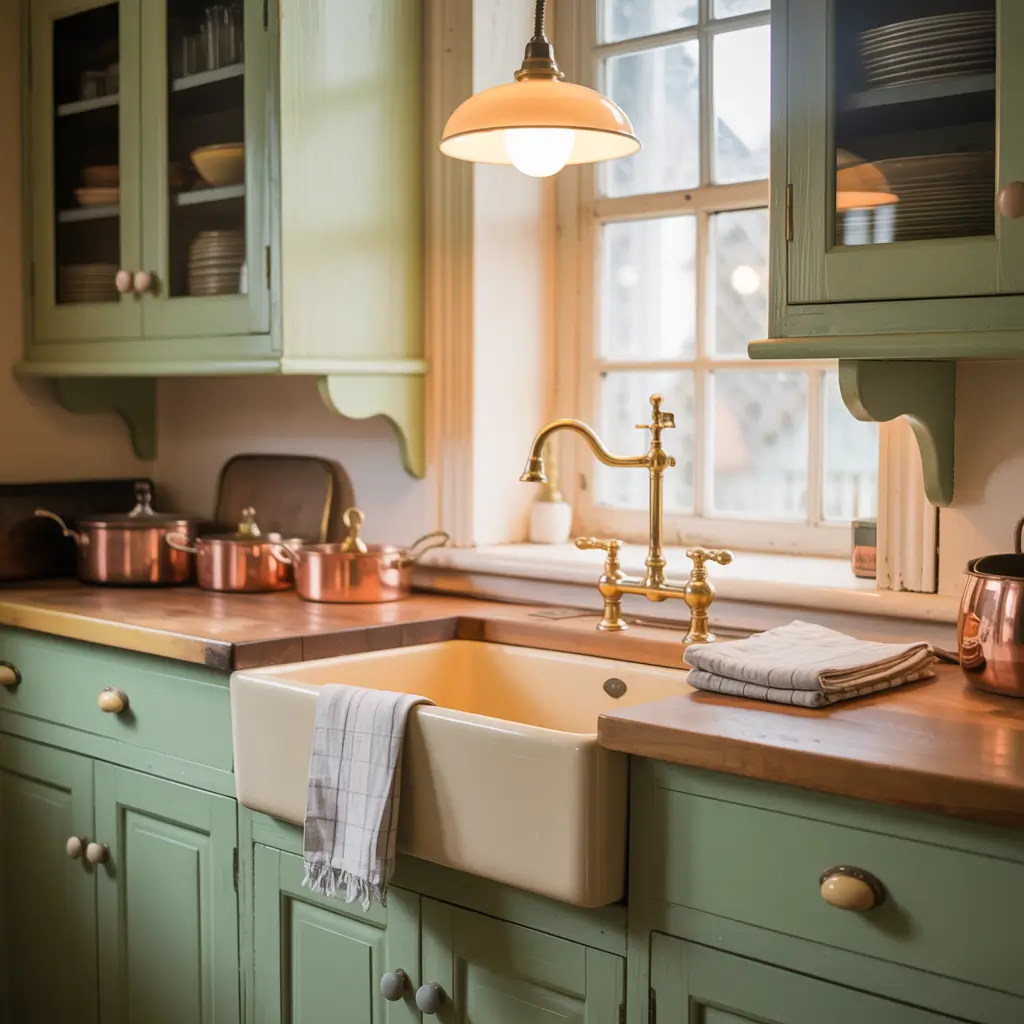
Sometimes new just doesn’t cut it. Vintage farmhouse sinks—whether genuine antiques or reproduction pieces—bring character you simply can’t fake.
I’m talking about those slightly yellowed porcelain beauties with wear patterns that show decades of use. The ones with integrated drainboards, rounded corners, and that satisfying weight that tells you they’ll outlive us all. You can find these treasures at architectural salvage yards, estate sales, or from companies that specialize in authentic reproductions.
The patina on a vintage sink tells a story. Those hairline cracks, the slight discoloration, the smoothed edges—they’re features, not flaws. When I installed a 1940s cast iron sink I found at an estate sale, my kitchen instantly gained 80 years of history.
Vintage sink considerations:
- Check for cracks and chips that might leak
- Ensure plumbing hookups will work with modern fixtures
- Budget for professional refinishing if needed
- Embrace imperfections as character
- Verify weight—these things are HEAVY
Reproduction vintage sinks give you the look without the gamble. Companies now make brand-new sinks with vintage styling, complete with drainboards and period-appropriate details. You get the aesthetic plus modern reliability. Win-win.
Open Shelving Around Farmhouse Sink
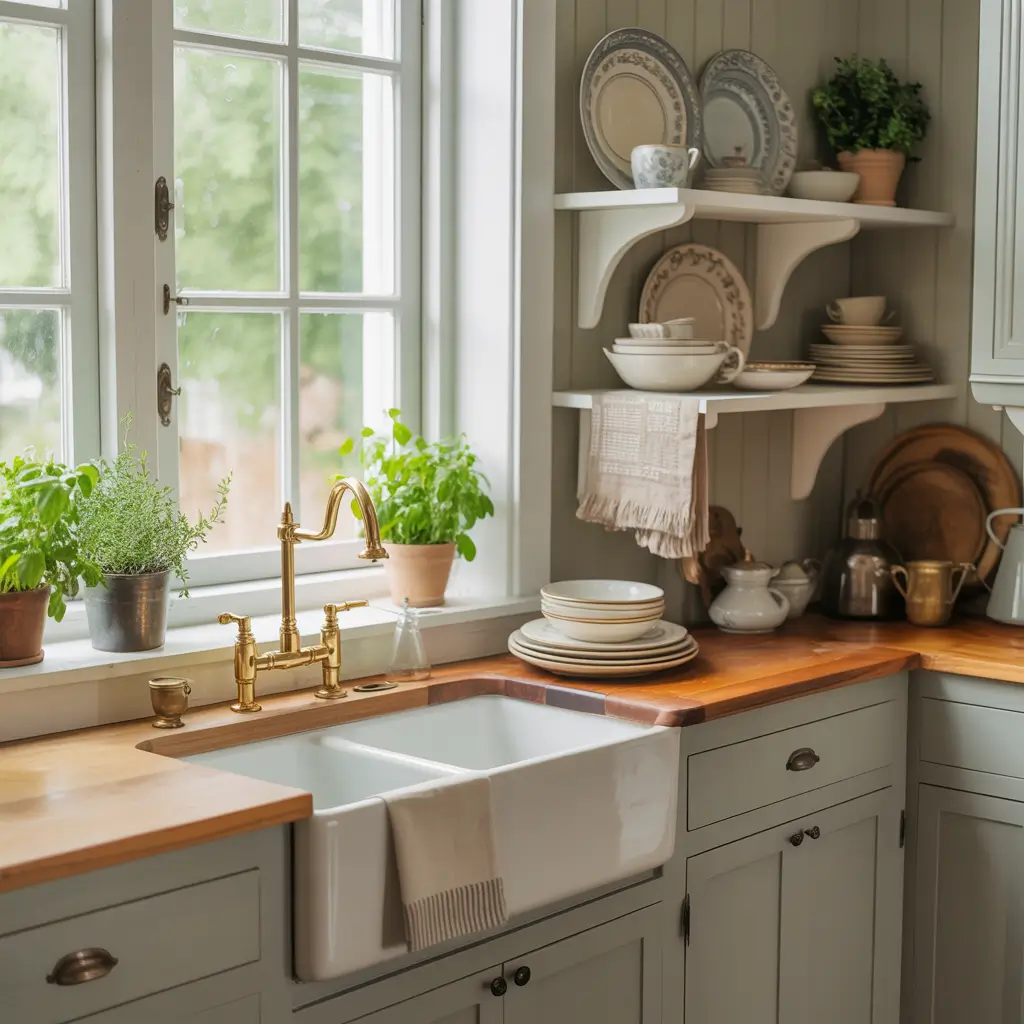
Want to make your farmhouse sink the absolute star of the show? Ditch the upper cabinets and go with open shelving.
This trend initially scared me—where would I hide my mismatched mugs and random kitchen stuff? But here’s the thing: open shelving forces you to be intentional about what you display, and that intentionality creates beauty. Your farmhouse sink becomes part of a larger visual story.
The practical side? You can reach everything easily, the space feels bigger, and you can show off your pretty dishes instead of hiding them. The downside? Dust happens, and everything’s on display (hence the intentionality thing I mentioned).
Open shelving styling tips:
- Keep frequently used items at eye level
- Color coordinate for visual calm
- Mix practical and decorative pieces
- Use baskets for corralling small items
- Leave some empty space—not every inch needs filling
I converted one side of my sink area to open shelves, keeping closed cabinets on the other side for the ugly stuff. Best of both worlds, and my vintage ironstone collection finally gets the attention it deserves.
Also Read: 15 Elegant French Farmhouse Kitchen Ideas for Timeless Appeal
Farmhouse Sink with Copper Fixtures
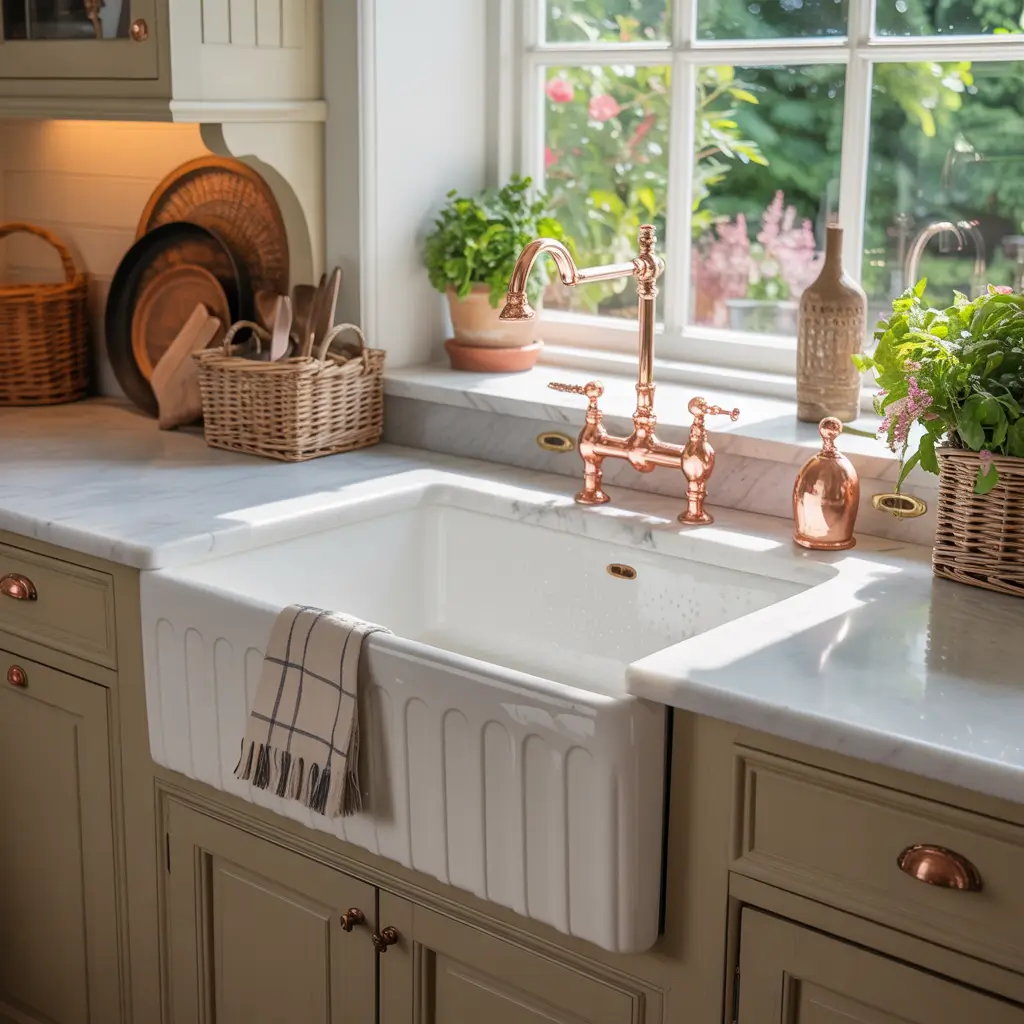
Let’s talk about warmth, shall we? Copper fixtures paired with a farmhouse sink create this incredible warmth that’s impossible to achieve with standard chrome or stainless steel.
Copper faucets develop a living patina over time—they literally change and evolve with your kitchen. Some people polish them to keep that shiny penny look, while others (like me) let them age naturally into deeper, richer tones. Each water spot and fingerprint contributes to the patina, turning your faucet into a living piece of art.
The combination works because farmhouse sinks already have that handcrafted, artisanal vibe. Adding copper fixtures amplifies it. You’re making a statement that says, “I appreciate quality and I’m not afraid of a little personality.”
Copper fixture pairing ideas:
- White sink with unlacquered copper that ages naturally
- Cream or almond sink with polished copper for warmth
- Dark cabinets with copper as the metallic accent throughout
- Match copper sink with copper faucet for maximum commitment
- Mix copper faucet with brass or bronze cabinet hardware
Quick heads up—copper requires different care than other finishes. No harsh chemicals, just gentle soap and water. But honestly? The patina development is the whole point. Embrace it. :/
Neutral Tone Kitchens with Farmhouse Sink
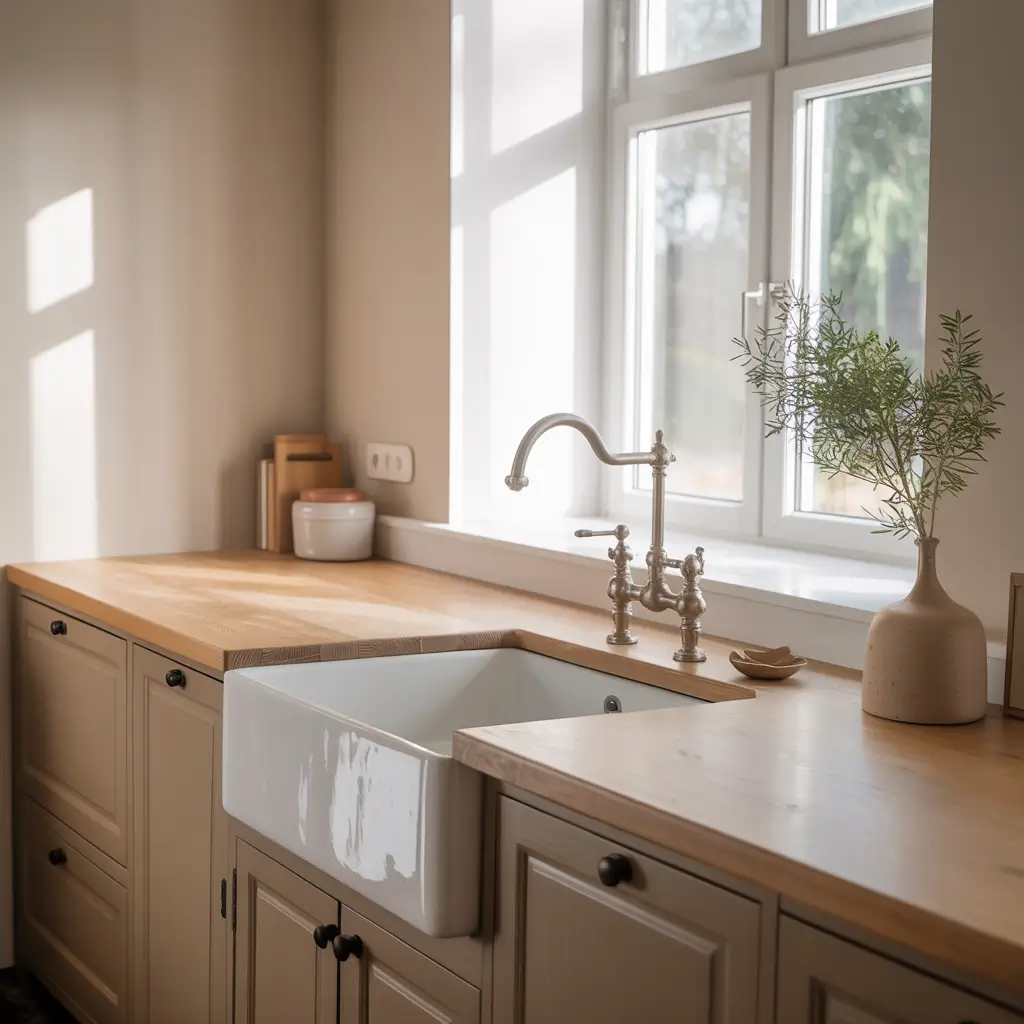
If you’re not into bold statements, neutral tone kitchens with farmhouse sinks might be your sweet spot. We’re talking whites, creams, beiges, soft grays—the colors that never go out of style.
Neutrals let the farmhouse sink’s shape and texture do the talking. You’re not competing with bright colors or bold patterns; you’re creating a serene, cohesive space where every element supports the others. This is the approach that’s basically foolproof.
I love neutral kitchens because they’re so adaptable. Want to change your kitchen’s vibe? Swap out some accessories and you’re done. The neutral foundation—including that beautiful farmhouse sink—stays constant while everything else can evolve.
Building a neutral palette:
- Layer different shades of the same color family
- Add texture through materials (wood, stone, linen)
- Use the farmhouse sink as your anchor point
- Introduce warmth with brass or wood tones
- Let natural light be part of your color scheme
The trick is avoiding boring. Neutral doesn’t mean bland—it means intentional. Different textures, varied finishes, and thoughtful material choices keep neutral kitchens interesting without being overwhelming.
Farmhouse Sink Under Window Designs
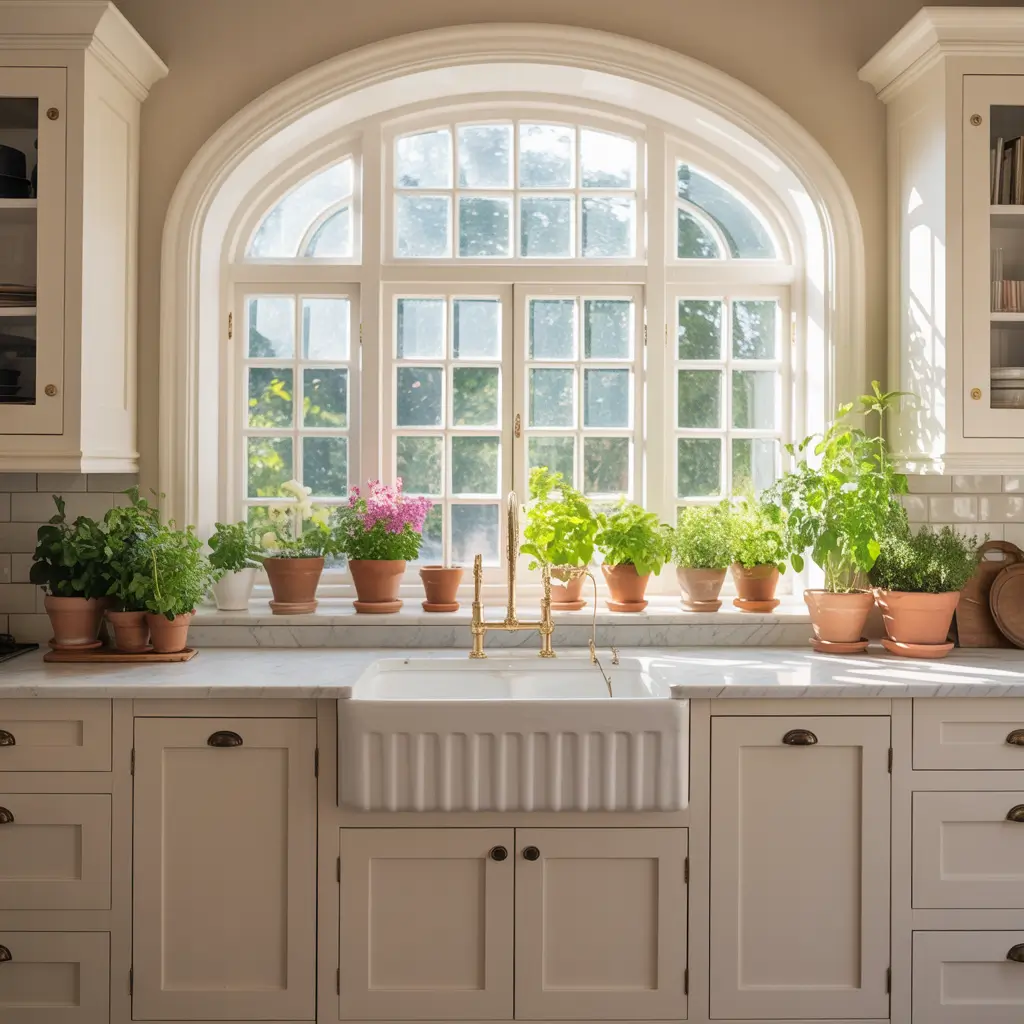
Is there anything more iconic than a farmhouse sink positioned under a kitchen window? I don’t think so.
This classic placement makes total sense functionally—natural light for washing dishes, views to daydream over while your hands are in soapy water, and ventilation when you need it. But it’s also just aesthetically perfect. The window frames the sink, creating a focal point that draws the eye.
I specifically designed my kitchen layout to get my sink under the window, even though it meant reworking the plumbing. Worth it. Washing dishes while watching birds at the feeder? That’s the kind of simple pleasure that makes daily chores actually enjoyable.
Window over sink considerations:
- Window sill height—make sure there’s clearance for faucets
- Window style—casement windows open outward (no faucet interference)
- Natural light can highlight water spots (keep that squeegee handy)
- Privacy considerations if your window faces neighbors
- Potential for plants and herbs on the window sill
Curtain choices matter here too. Café curtains give you privacy while maintaining light. Roman shades offer clean lines. Or go bold and skip treatments entirely if privacy isn’t an issue. The window-sink combo is your kitchen’s money shot—style it accordingly.
Bold Color Cabinets with Farmhouse Sink
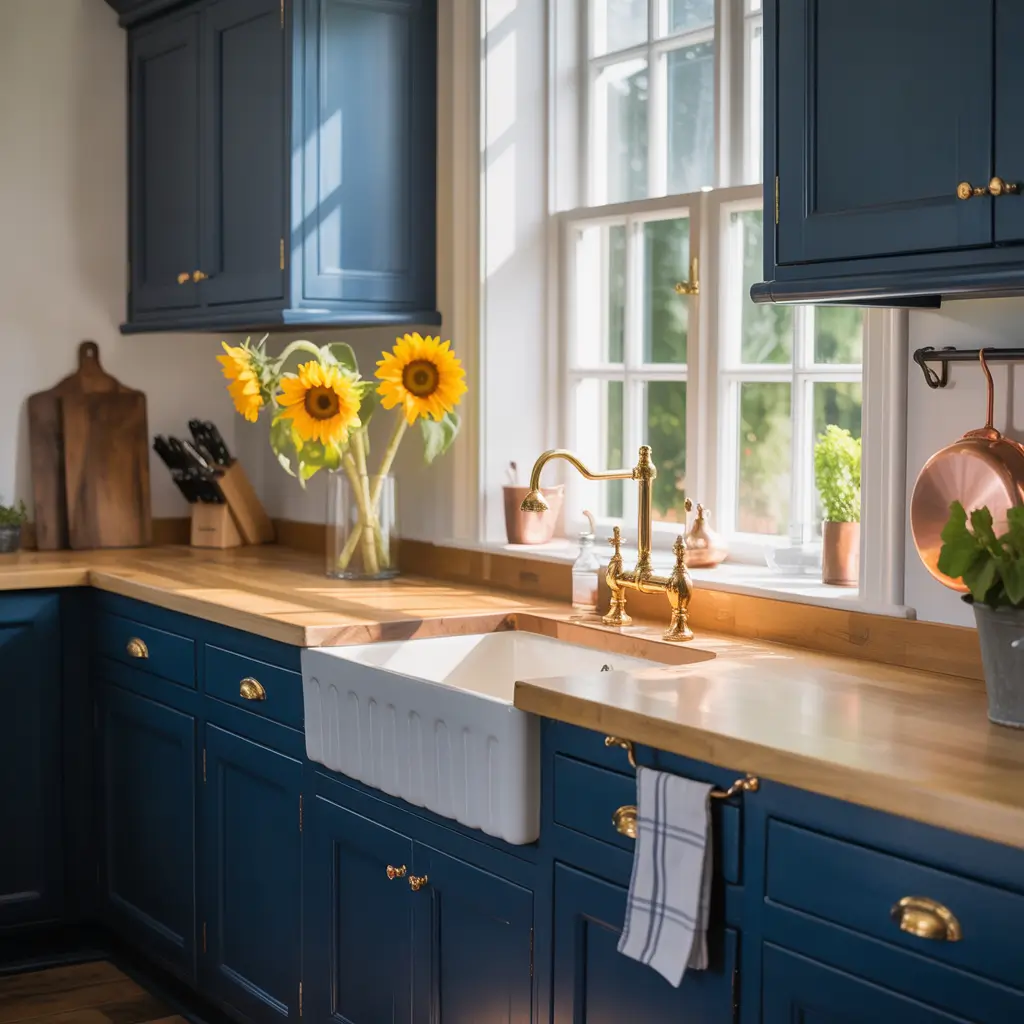
Ready to stop playing it safe? Bold colored cabinets transform farmhouse sinks from traditional to contemporary in one paint job.
I’m talking deep navy blues, forest greens, charcoal grays, even black. These rich, saturated colors create drama and sophistication while the classic farmhouse sink keeps things grounded. The juxtaposition is chef’s kiss.
My friend went with a deep teal on her lowers and white uppers, with a white farmhouse sink as the hero. Walking into that kitchen feels like stepping into a high-end design magazine, but it’s still totally functional and welcoming. The bold color choice works because the farmhouse sink provides a familiar, classic anchor.
Bold cabinet color ideas:
- Navy blue cabinets with white or brass accents
- Forest or sage green for earthy sophistication
- Charcoal or black for modern drama
- Deep burgundy or wine for unexpected warmth
- Two-tone cabinets with bold lowers, neutral uppers
The farmhouse sink can match your bold choice (like a navy blue sink with navy cabinets) or provide contrast (white sink with navy cabinets). Both approaches work—it just depends on how committed you are to the bold look.
Farmhouse Sink with Mixed Materials
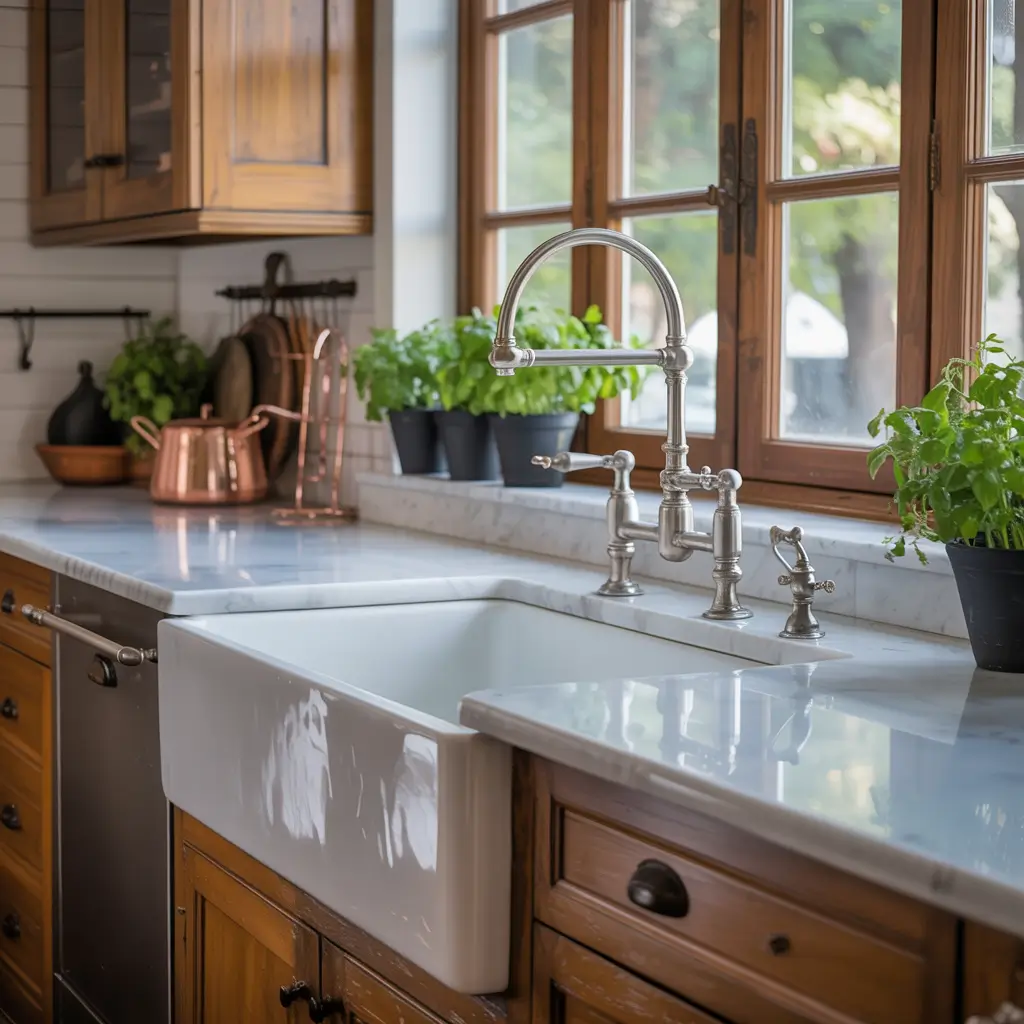
Why commit to just one aesthetic when you can have them all? Mixed material kitchens with farmhouse sinks are where creativity really shines.
Picture this: wood cabinets on the lowers, open metal shelving on top, concrete countertops, subway tile backsplash, and a copper farmhouse sink. Sounds chaotic? In the right hands, it’s absolutely magical. The key is finding a common thread—usually a color palette or style direction—that ties everything together.
I’ve experimented with mixing materials in my own space. Wood cutting boards next to marble counters. Stainless appliances with a fireclay sink. Metal bar stools at a wooden island. Each material brings its own texture and character, creating depth and interest you can’t achieve with a single material.
Mixed material combinations that work:
- Wood, metal, and stone in balanced proportions
- Warm materials (wood, copper) with cool (marble, stainless)
- Matte and glossy finishes for texture variation
- Natural materials (wood, stone) with industrial (metal, concrete)
- Traditional sink with contemporary materials (or vice versa)
The farmhouse sink actually makes mixed material kitchens easier to pull off because it serves as a familiar anchor. No matter how eclectic your material choices get, that classic sink shape keeps everything from feeling too chaotic.
Eco-Friendly Farmhouse Sink Ideas

Let’s wrap up with something close to my heart—sustainable, eco-friendly farmhouse sink options. Because loving your kitchen and loving the planet aren’t mutually exclusive.
Eco-friendly starts with material choices. Fireclay sinks are made from natural clay and minerals, fired at high temperatures to create a durable, long-lasting product. No plastics, no harmful chemicals, just earth and fire. Reclaimed or refinished vintage sinks give new life to existing materials. Even some stainless steel sinks now use recycled content.
But sustainability goes beyond the sink itself. It’s about choosing fixtures that conserve water, using non-toxic sealants and adhesives during installation, and selecting a sink that’ll last decades instead of years. That durability factor is huge—buying once instead of replacing every few years is the ultimate eco-friendly move.
Sustainable farmhouse sink choices:
- Fireclay or porcelain from responsible manufacturers
- Recycled content stainless steel options
- Refinished vintage sinks (ultimate recycling)
- Local manufacturers to reduce shipping impact
- Water-efficient faucets and aerators
I found a fireclay sink from a company that uses solar power in their manufacturing process. Cost a bit more upfront, but knowing my kitchen upgrade isn’t trashing the planet? Totally worth it. Plus, it’ll outlast me, my kids, and probably their kids too.
Conclusion
So there you have it—15 ways to work farmhouse sink magic into your kitchen, whether you’re all about classic white elegance or ready to experiment with bold colors and mixed materials. The beauty of farmhouse sinks is their versatility. They work in tiny apartments and sprawling country homes. They complement traditional styles and contemporary spaces. They’re workhorses that happen to be gorgeous.
Here’s my final thought: your kitchen should make you happy every single day. If a deep, beautiful farmhouse sink sparks joy when you’re doing the mundane task of washing dishes, that’s reason enough to make it happen. Life’s too short for boring kitchens.