

15 Inspiring Grey Tile Bathroom Looks for Every Style
You know that feeling when you walk into a bathroom and think, “Wow, this just works“? Yeah, that’s the magic grey tiles bring to the table. I’ve spent way too many hours scrolling through bathroom inspo pics (don’t judge me), and I keep coming back to grey tiles.
They’re the chameleon of bathroom design—sophisticated without screaming for attention, versatile enough to play nice with practically any style, and honestly? They hide water spots like nobody’s business.
Let me walk you through fifteen grey tile bathroom looks that’ll make you want to renovate immediately. Whether you’re into sleek modern vibes or cozy spa-like retreats, I’ve got you covered. Grab your coffee, and let’s chat about why grey tiles might just be the best decision you’ll make for your bathroom.
Modern Grey Tile Bathroom with Gold Accents
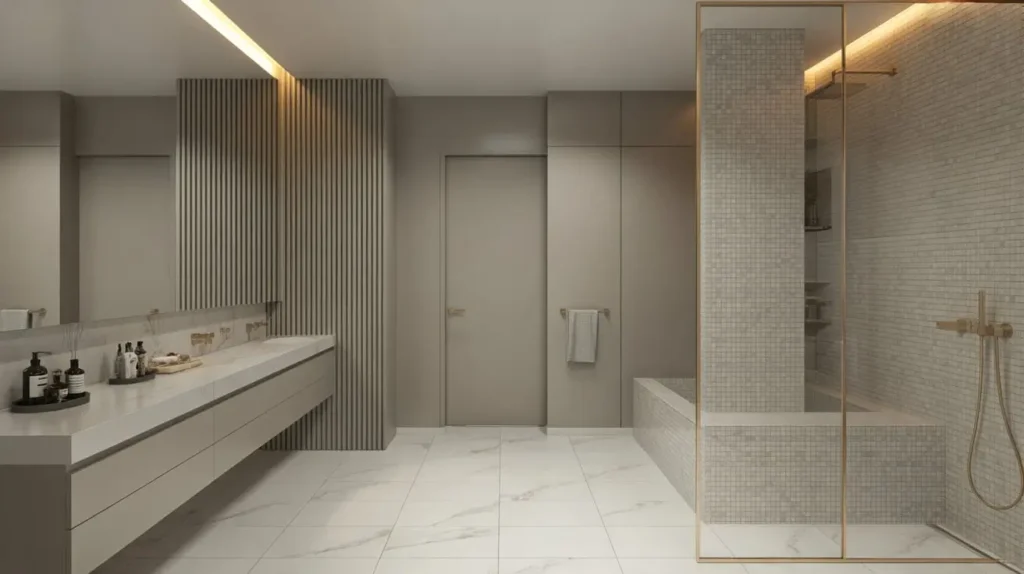
Okay, can we talk about how ridiculously chic grey and gold looks together? It’s like the bathroom equivalent of a little black dress with statement jewelry. I recently visited a friend’s newly renovated bathroom with this combo, and I literally stood there admiring it like some kind of design weirdo.
Large-format grey tiles work best for this look—think 24×24 inches or even bigger. You want that sleek, contemporary feel with minimal grout lines. Pair them with brushed gold or brass fixtures, and suddenly your bathroom looks like it belongs in a boutique hotel.
Here’s what makes this combination absolutely sing:
- Faucets and showerheads in warm gold tones create stunning contrast against cool grey
- Gold-framed mirrors add that touch of glamour without going overboard
- Matching gold towel bars and toilet paper holders tie the whole look together
- Grey tiles in a matte finish let the gold accents pop even more
The trick? Don’t go overboard with the gold. You want touches of luxury, not a Vegas casino vibe. Three to five gold elements are your sweet spot. IMO, this style works phenomenally well for master bathrooms where you want that “treat yourself” energy every single morning.
Grey Marble Tile Bathroom Elegance
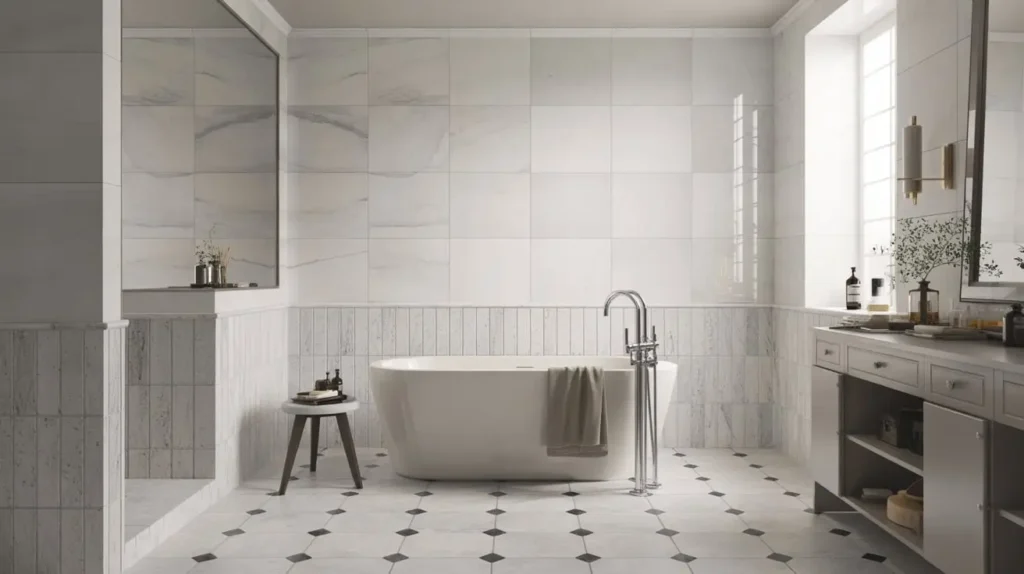
Ever wonder why high-end hotels always seem to use marble? Because marble screams luxury without saying a word. Grey marble tiles give you that timeless elegance that literally never goes out of style.
I’m talking about those gorgeous Carrara-style grey marble tiles with their characteristic veining. You know the ones—they look like nature painted delicate brush strokes across each tile. The beauty here lies in the natural variation; no two tiles look exactly alike.
You’ve got options when it comes to marble aesthetics:
- Polished grey marble reflects light beautifully and makes small bathrooms feel larger
- Honed marble offers a softer, more matte appearance for a understated elegance
- Marble-look porcelain tiles give you the aesthetic without the maintenance headaches (game-changer, honestly)
I’ll be real with you—genuine marble requires some upkeep. You need to seal it regularly, and acidic cleaners are its enemy. But those marble-look porcelain alternatives? They’ve come so far that I genuinely can’t tell the difference from three feet away. You get the elegance without constantly worrying about etching and staining.
Pair your grey marble with chrome fixtures and white cabinetry, and you’ve created a bathroom that’ll look current twenty years from now. That’s what I call a solid investment.
Minimalist Grey Tile Walk-In Shower
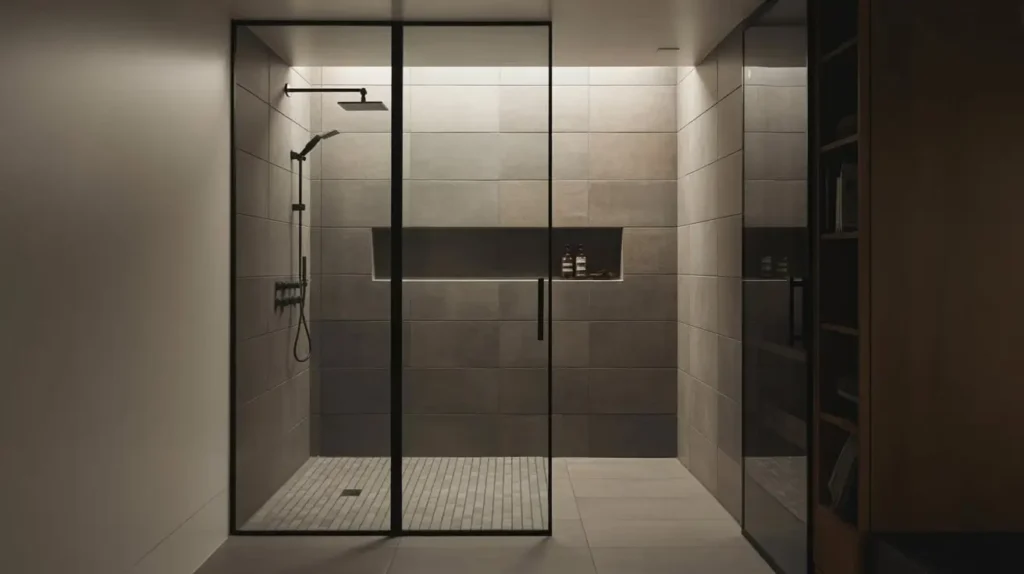
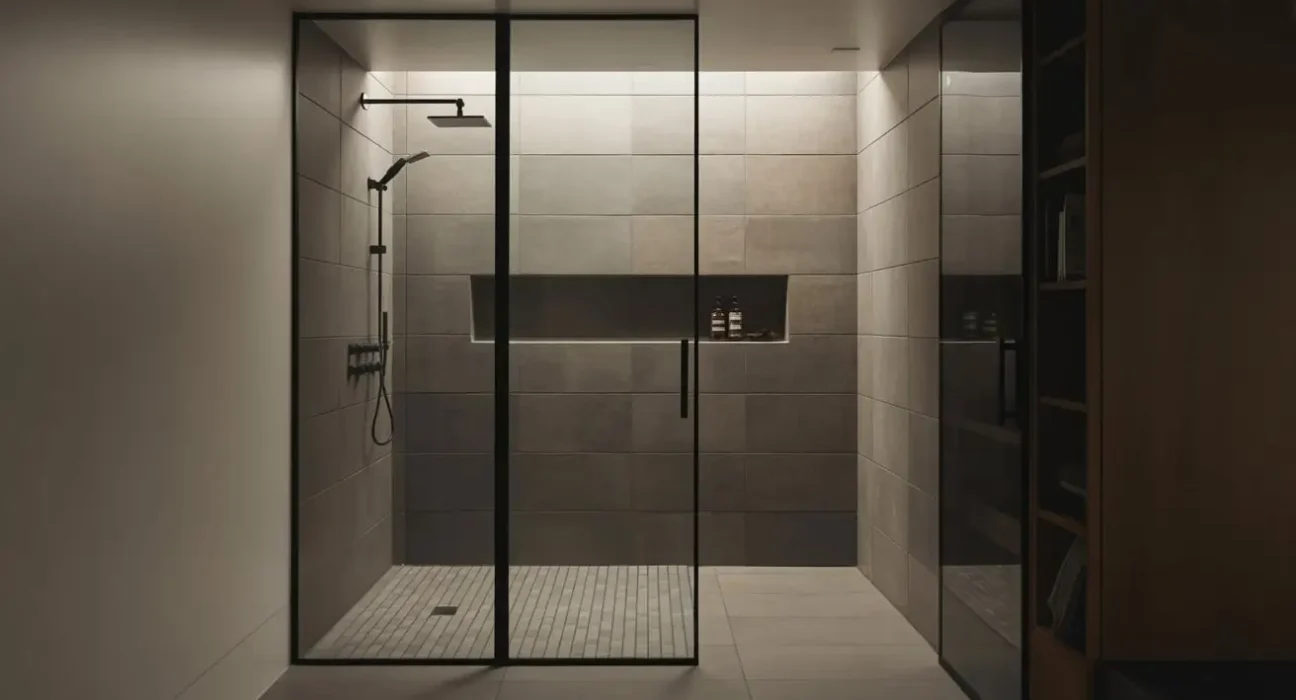
Minimalism isn’t about having less—it’s about making room for more of what matters. A minimalist grey tile walk-in shower embodies this philosophy perfectly. Clean lines, zero clutter, just pure functional beauty.
Picture this: floor-to-ceiling grey tiles in a uniform color, a frameless glass enclosure, and maybe a built-in niche for your shower essentials. That’s it. No unnecessary decorative elements, no visual noise.
Key elements that make this work:
- Large format tiles (12×24 or bigger) minimize grout lines for that seamless look
- A linear drain instead of a traditional center drain keeps the floor beautifully uninterrupted
- Recessed shelving built right into the tiled wall maintains the clean aesthetic
- A single rainfall showerhead provides all the function you need without complications
The color choice matters here. Medium grey tiles work better than super dark or super light options for this style. Why? They don’t show water spots as obviously, and they create that calm, zen atmosphere you’re after.
I love how this design makes your morning shower feel like a meditation session. No visual distractions, just you and the water. Plus, cleaning becomes ridiculously easy when you don’t have a million nooks and crannies collecting soap scum. 🙂
Also Read: 15 Timeless Zellige Tile Bathroom Designs You’ll Love
Grey and White Tile Bathroom Combo
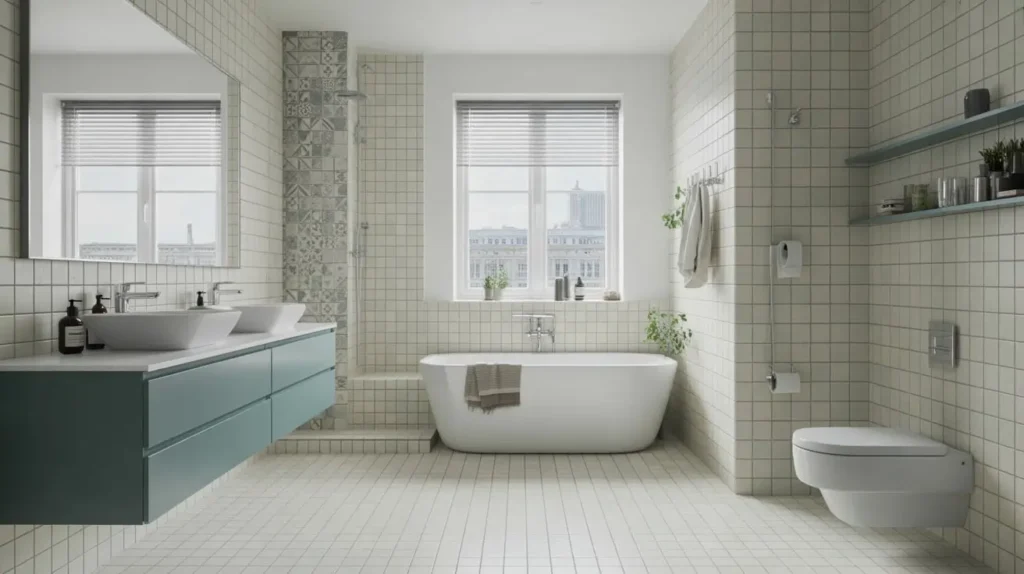
Classic never gets old, and the grey and white tile combination proves it. This duo works together like peanut butter and jelly—familiar, comforting, and somehow always satisfying.
You can play with this combination in countless ways. I’ve seen people use white subway tiles on the walls with grey hexagon tiles on the floor, and honestly? Chef’s kiss. The contrast creates visual interest without overwhelming the space.
Here are some winning combinations I’ve personally swooned over:
- Grey tiles in the shower with white tiles everywhere else defines the wet zone beautifully
- Checkerboard grey and white floor tiles add playful vintage charm
- White wall tiles with a grey tile accent strip at waist height creates a subtle detail
- Grey lower walls with white upper walls grounds the space nicely
The beauty of this pairing lies in its flexibility. Feeling more traditional? Go with classic patterns. Want something contemporary? Choose larger formats and geometric layouts. This combination adapts to your style preferences like a design chameleon.
Plus, white brightens while grey adds sophistication. Together, they create a balanced space that feels neither too stark nor too heavy. It’s the Goldilocks of bathroom design—just right.
Small Bathroom with Light Grey Tiles
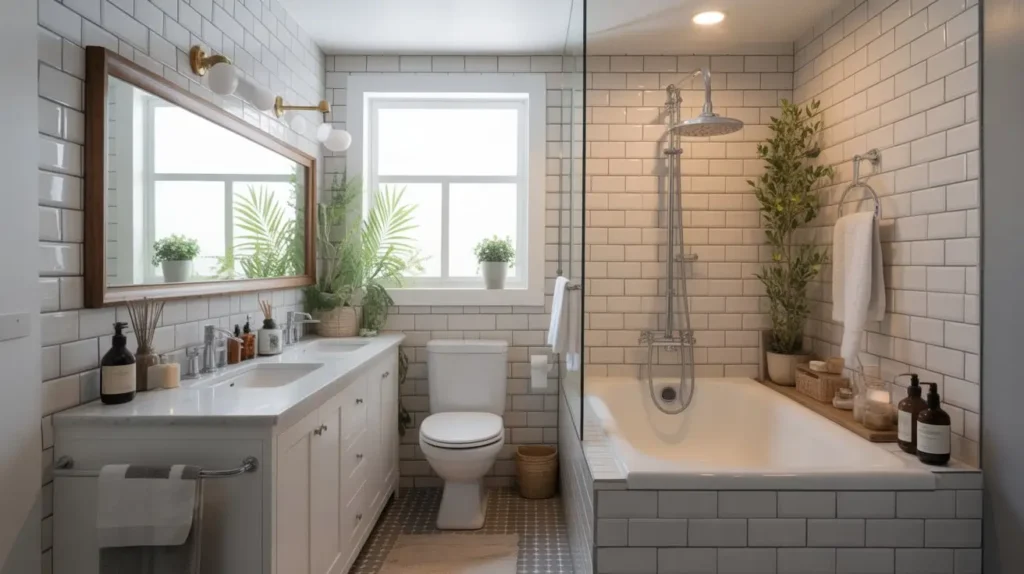
Small bathrooms present unique challenges, but light grey tiles handle them like absolute champions. I live in an older home with a tiny bathroom (seriously, it’s basically a closet with plumbing), and switching to light grey tiles made it feel twice as large.
Light grey reflects more light than darker shades without the sterile hospital vibe that pure white sometimes creates. It’s that perfect middle ground that adds character while maximizing the perception of space.
Smart strategies for small bathrooms:
- Run tiles vertically to make ceilings appear higher
- Use the same light grey tile on walls and floors to eliminate visual breaks that chop up the space
- Choose glossy or semi-gloss finishes to bounce light around
- Keep grout color close to the tile color to maintain visual continuity
FYI, the size of your tiles matters here too. Some people think small bathrooms need small tiles, but that’s actually backwards. Larger tiles mean fewer grout lines, which means less visual interruption. I went with 12×24 tiles in my small bathroom, and the difference was dramatic.
Pair your light grey tiles with good lighting—and I mean really good lighting. Add a large mirror, and suddenly your shoebox bathroom feels almost spacious. Almost. Let’s not get carried away here.
Dark Grey Tile Bathroom for a Moody Look
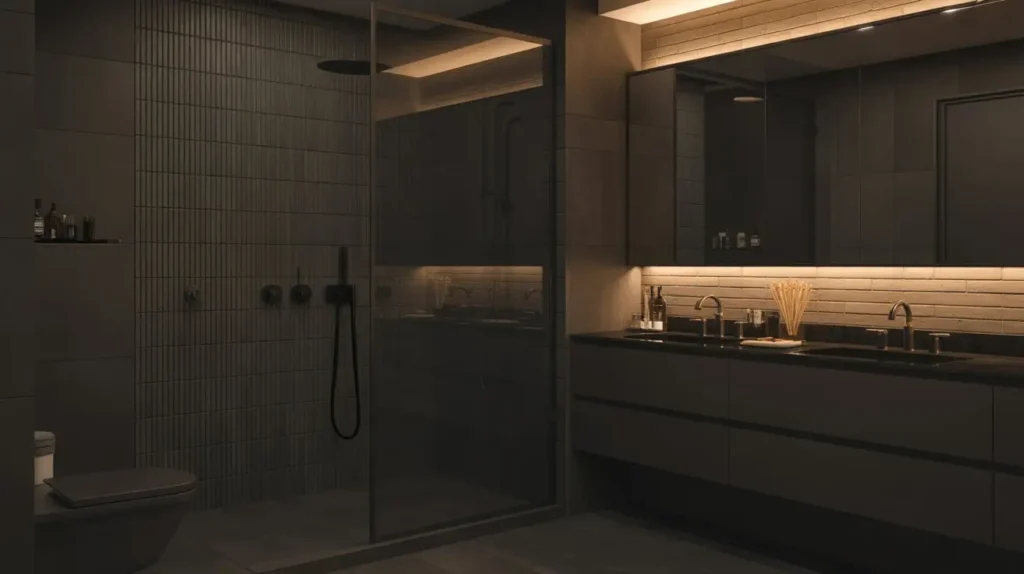
Not everyone wants bright and airy. Sometimes you want drama, atmosphere, that moody sophistication that makes you feel like you’re in a luxury spa after hours. Enter: dark grey tiles.
I’m talking about those deep charcoal greys that create cocoon-like spaces. These bathrooms don’t apologize for being bold. They embrace shadows and mood lighting, and honestly? They’re sexy as hell.
Making dark grey work requires some strategy:
- Excellent lighting is non-negotiable—install multiple light sources at different levels
- Incorporate metallic accents (copper or brass work beautifully) to add warmth
- Use matte finishes for a sophisticated, contemporary feel
- Add texture through different tile sizes or patterns to prevent flatness
Here’s the thing about dark bathrooms—they need confident commitment. Wishy-washy doesn’t work here. You go dark, or you don’t. Halfway attempts end up looking dingy rather than dramatic.
I visited a restaurant bathroom last month that used dark grey tiles floor-to-ceiling with strategic spotlighting and gold fixtures. The atmosphere felt intimate and luxurious, not cramped or cave-like. The secret? They dedicated serious attention to the lighting design.
Does this work for every bathroom? Nope. Small bathrooms with limited natural light might feel claustrophobic. But if you’ve got space and proper lighting? Dark grey tiles create an unforgettable impact.
Grey Subway Tile Bathroom Design
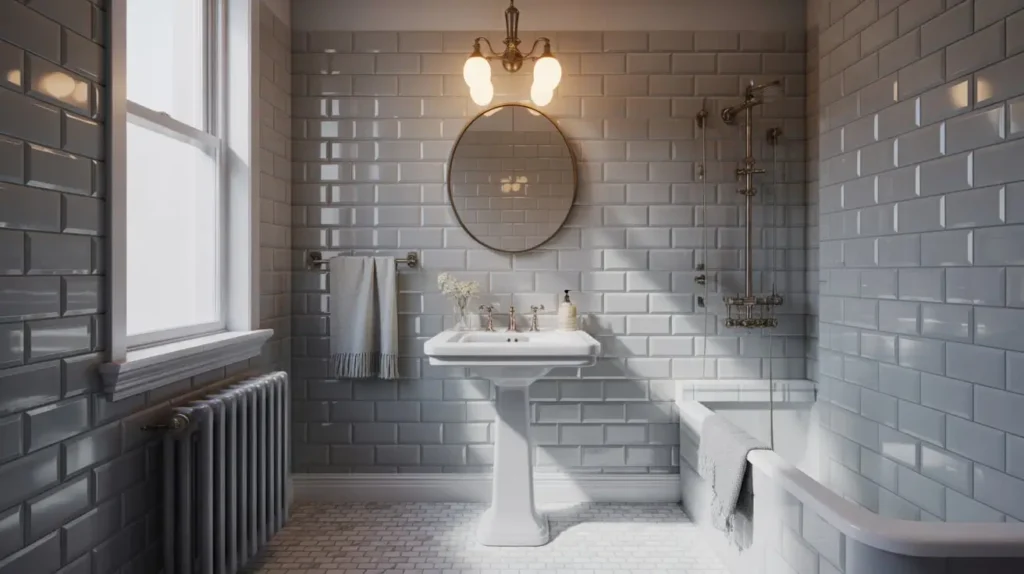
Ah, subway tiles. The reliable workhorse of bathroom design. You’ve seen them everywhere, and there’s a reason—grey subway tiles bring timeless appeal without the “basic” baggage that white subway tiles sometimes carry.
Traditional subway tiles measure 3×6 inches, arranged in that classic running bond pattern (each tile centered over the one below it). But you can absolutely play with different sizes and layouts to personalize the look.
Why grey subway tiles work so well:
- The familiar shape feels approachable and classic
- Grey adds contemporary sophistication to the traditional format
- They’re relatively inexpensive compared to specialty tiles
- Installation is straightforward, which saves on labor costs
Let me share a little secret: the grout color you choose dramatically changes the final look. Dark grey grout creates a grid pattern that emphasizes the tile layout. Light grey or white grout minimizes the pattern for a more subtle, cohesive appearance. I’ve seen the same tiles look completely different based solely on grout choice.
You can also experiment with layout patterns:
- Vertical stack bond creates a modern, less traditional vibe
- Herringbone pattern adds visual interest and movement
- Offset brick pattern (the classic) never goes out of style
Grey subway tiles work with literally any design style—farmhouse, modern, traditional, industrial. They’re like the white t-shirt of bathroom tiles. Basic? Maybe. But infinitely versatile and always stylish.
Spa-Inspired Grey Tile Bathroom Retreat
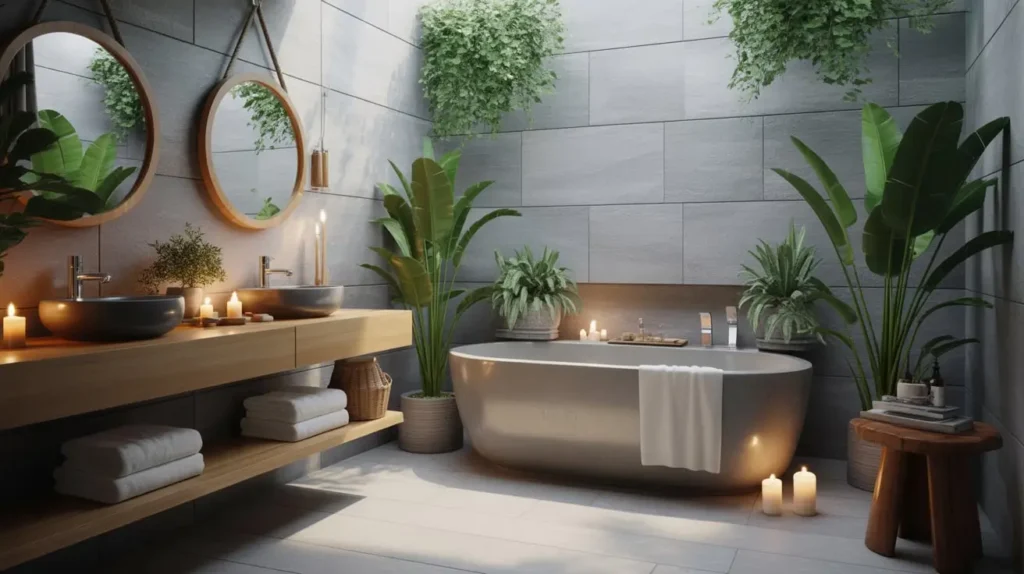
Who doesn’t want their home bathroom to feel like a luxury spa? Spa-inspired grey tile bathrooms create that serene, peaceful atmosphere that makes your morning routine feel like self-care rather than a rushed obligation.
I’m obsessed with this style because it prioritizes relaxation. You walk in and immediately feel your shoulders drop and your breathing slow. That’s the power of thoughtful design.
Essential elements for the spa vibe:
- Natural materials mixed with grey tiles—think wood, stone, bamboo
- Soft, neutral color palette with grey as the anchor
- Minimalist fixtures in matte finishes
- Plenty of plants (humidity-loving ones thrive in bathrooms)
- Texture variation through different tile finishes and natural materials
For the tile itself, I love textured grey tiles that mimic natural stone. They add tactile interest without introducing loud patterns. Pair them with warm-toned wood elements—maybe a teak shower bench or wooden bath mat—and you’ve nailed that organic spa aesthetic.
Lighting plays a crucial role here too. Harsh overhead lights kill the spa vibe faster than anything. Install dimmable lights and add some candles (LED ones if you’re worried about fire safety, no judgment). Create layers of light at different levels.
The goal? Every time you step into your bathroom, you should feel like you’re treating yourself to something special. Not every bathroom needs to scream “spa,” but if relaxation ranks high on your priority list, this style delivers.
Scandinavian Style Grey Tile Bathroom
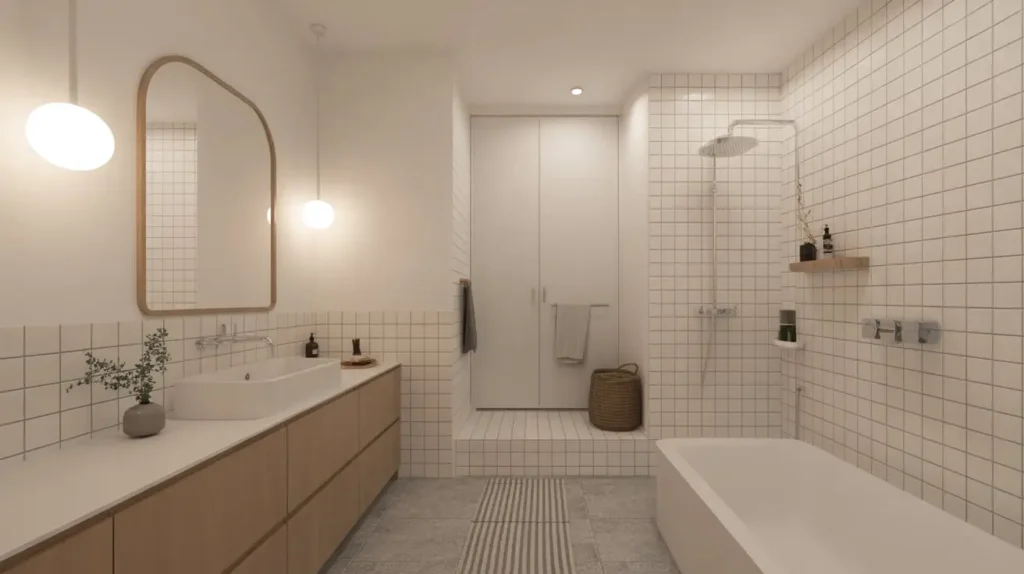
Scandinavian design has conquered the world, and for good reason. It combines functionality, simplicity, and beauty in a way that just works. A Scandinavian-style grey tile bathroom embodies these principles perfectly.
This style focuses on light, space, and natural elements. Think clean lines, minimal decoration, and a color palette that wouldn’t look out of place in a Nordic winter landscape.
Key characteristics of Scandi bathroom design:
- Light to medium grey tiles that keep the space bright
- White walls and fixtures paired with the grey tiles
- Natural wood accents for warmth (blonde woods work best)
- Black accents used sparingly for contrast
- Simple, functional fixtures without unnecessary ornamentation
I love how this style feels effortlessly pulled together. Nothing tries too hard. The beauty comes from quality materials and thoughtful placement rather than elaborate decoration.
Storage matters in Scandinavian design. You want everything tucked away neatly, maintaining those clean lines. Floating vanities work beautifully here—they provide storage while keeping sight lines open, which makes the bathroom feel more spacious.
Texture becomes important when you work with such a limited color palette. Mix matte grey floor tiles with glossy white wall tiles. Add a chunky knit bathmat or linen towels. These subtle variations prevent the space from feeling flat or boring.
The result? A bathroom that feels calm, organized, and completely stress-free. Exactly what you need when you’re stumbling around at 6 AM looking for your toothbrush. :/
Also Read: 15 Trendy Penny Tile Bathroom Floor Ideas for 2025 Homes
Grey Hexagon Tile Bathroom Floor
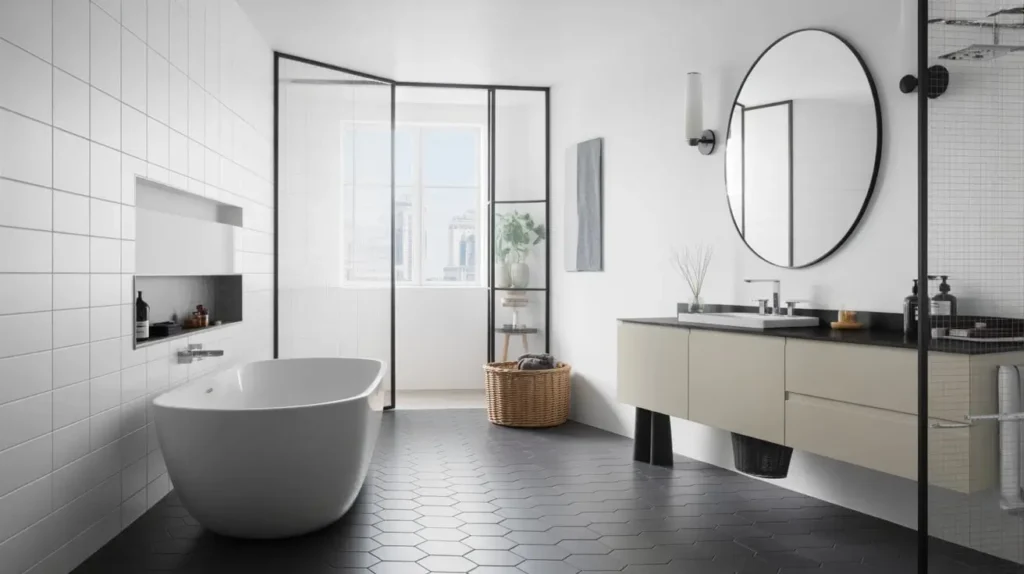
Geometric patterns add personality, and grey hexagon tiles bring just the right amount of visual interest without overwhelming a space. I’ll admit, I was skeptical about hexagons at first (they felt too trendy), but they’ve proven their staying power.
Hexagon tiles create a honeycomb pattern that draws the eye and adds movement to your floor. The shape feels both retro and contemporary, which gives you flexibility in how you style the rest of the bathroom.
Why hexagon tiles work so well:
- The geometric pattern adds interest to an otherwise simple color
- Multiple size options let you control the visual impact (1-inch for vintage vibes, 6-inch for modern looks)
- They create natural texture through the grout pattern
- The shape feels unique without being gimmicky
I’ve seen people use large grey hexagon tiles on the floor while keeping walls simple with white subway tiles. The floor becomes a statement element while the walls provide a calm backdrop. Smart approach, honestly.
You can also play with different shades of grey hexagons to create an ombre effect or random pattern. Some tile manufacturers offer hexagon tiles in three or four grey shades that you mix during installation. The result looks custom and artistic without requiring actual artistic skill.
One practical note: hexagon tiles mean more grout lines than large-format rectangular tiles. That means more cleaning maintenance. But if you seal your grout properly (and you absolutely should), it’s not a huge burden. The visual payoff makes it worth the extra five minutes of scrubbing.
Grey Tile Bathroom with Wooden Vanity
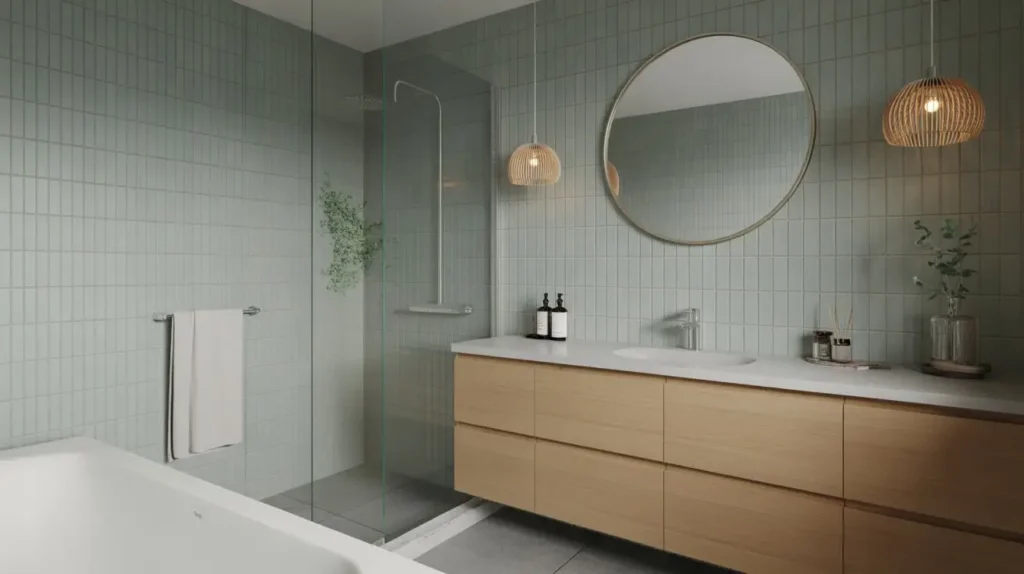
Want to know the secret to making grey tiles feel warm and inviting? Add wood. A wooden vanity paired with grey tiles creates beautiful contrast that balances the cool tones of the tile with the organic warmth of natural wood.
This combination works across multiple design styles—modern, rustic, transitional, Scandinavian. The grey provides a neutral backdrop while the wood brings personality and warmth.
Choosing the right wood tone matters:
- Light blonde or whitewashed wood keeps things bright and Scandi-inspired
- Medium walnut or oak adds classic warmth without going too dark
- Dark espresso or black-stained wood creates dramatic contrast (especially beautiful with light grey tiles)
- Reclaimed or distressed wood introduces rustic charm and character
I recently helped a friend choose a vanity for her grey-tiled bathroom. She couldn’t decide between a modern white vanity and a natural wood one. We went with the wood, and it completely transformed the space from “nice but sterile” to “wow, I want to spend time here.”
Floating wooden vanities work particularly well with grey tiles. They keep the floor visible, which maintains the visual flow of your tile work. Plus, they make cleaning the floor easier (trust me on this—bathroom floors get gross).
Add some wooden shelving, maybe a wooden-framed mirror, and you’ve created a cohesive look that feels intentional. The wood doesn’t need to match perfectly—in fact, slight variation adds character. Just keep the undertones consistent (all warm or all cool).
Grey Herringbone Tile Shower Wall

Nothing says “I paid attention to detail” quite like a herringbone pattern. When you use grey tiles in a herringbone layout for your shower wall, you elevate the entire bathroom from standard to spectacular.
Herringbone creates movement and visual interest through a zigzag pattern that catches the eye. It’s more dynamic than a straight stack or running bond pattern, but it doesn’t feel as busy as some other geometric layouts.
What makes herringbone special:
- The pattern adds sophistication without requiring expensive materials
- It works with rectangular tiles of various sizes (2×4, 3×6, 4×8, etc.)
- The diagonal lines create visual height, making your shower feel taller
- It’s a classic pattern that’s been used for centuries (meaning it won’t look dated in five years)
I won’t lie to you—herringbone installation costs more than standard layouts. The pattern requires more cuts and more time. But if you’ve got the budget, the impact justifies the investment. Your shower becomes an architectural feature rather than just a functional space.
Color-wise, medium grey tiles in herringbone hit that sweet spot. Too dark, and the pattern gets lost. Too light, and the grout lines might dominate. Medium grey lets you appreciate the pattern without it screaming for attention.
Pair your herringbone shower wall with simple floor tiles (large format or classic hexagons) to avoid pattern overload. You want the herringbone to be the star, not compete with equally bold flooring.
Concrete Look Grey Tile Bathroom
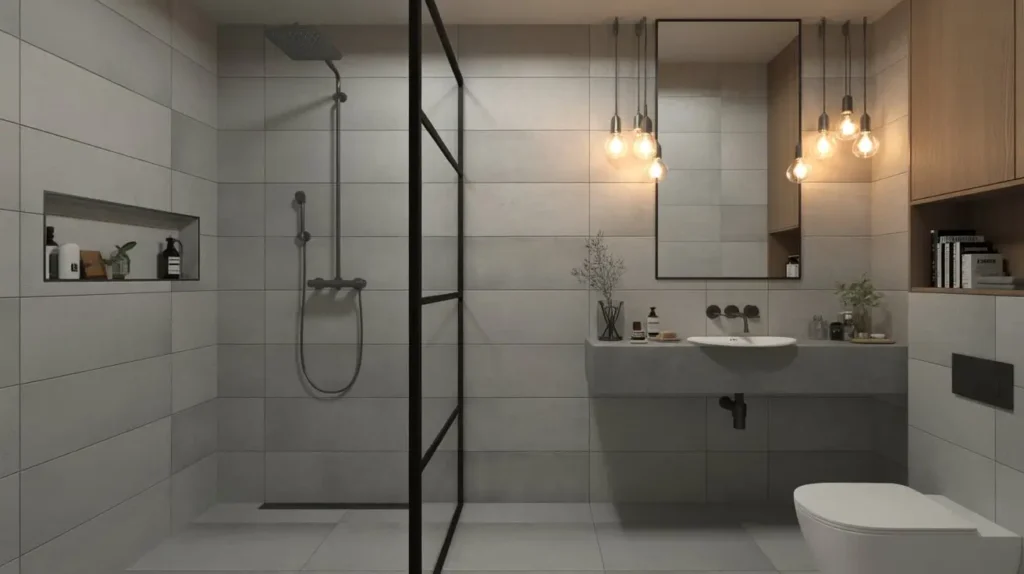
Industrial design has a certain raw, honest appeal that resonates with a lot of people (myself included). Concrete-look grey tiles give you that urban, industrial aesthetic without the actual concrete—which means better waterproofing, easier installation, and more consistent color.
These tiles mimic the appearance of polished concrete, complete with subtle color variations and that characteristic matte finish. You get the cool factor of industrial design with the practicality of porcelain or ceramic tiles.
Why concrete-look tiles work brilliantly:
- They create an urban, edgy atmosphere that feels contemporary
- The subtle variation in each tile looks natural and authentic
- Matte finishes hide water spots better than glossy tiles
- They pair beautifully with metal accents (black iron, stainless steel, copper)
I visited a loft apartment last year with a bathroom that used large-format concrete-look grey tiles on both walls and floors. The owner paired them with matte black fixtures and exposed bulb lighting. The whole vibe screamed “Brooklyn industrial,” and I was absolutely here for it.
The beauty of this style lies in its unpretentious nature. You’re not trying to impress anyone with fancy marble or ornate patterns. The aesthetic celebrates raw materials and honest design. It’s utilitarian but artistic.
For best results:
- Choose large format tiles (24×24 or bigger) to minimize grout lines
- Use matching grey grout to maintain the seamless concrete illusion
- Add warm lighting to prevent the space from feeling cold
- Incorporate natural elements like plants or wood to soften the industrial edge
Grey Tile Bathroom with Black Fixtures
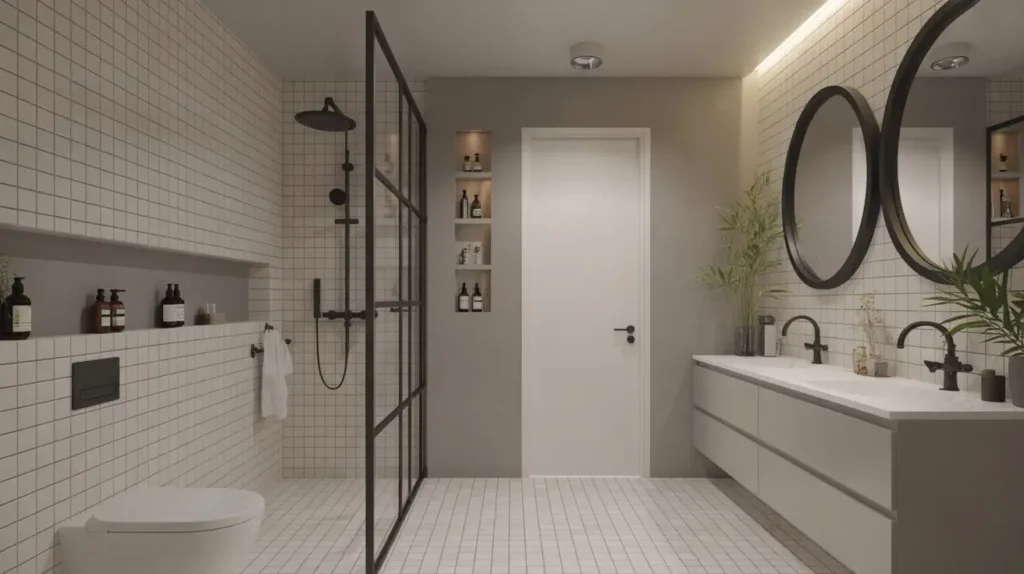
If you want bold contrast and modern sophistication, grey tiles with black fixtures delivers every single time. This combination creates striking visual impact while maintaining a cohesive, intentional color palette.
Matte black fixtures have exploded in popularity recently, and pairing them with grey tiles shows exactly why. The black stands out beautifully against the grey without creating harsh contrast (like black against white sometimes does).
Creating this look successfully:
- Go all-in on black fixtures—faucets, showerheads, towel bars, toilet paper holders, everything
- Choose matte black over glossy for a more sophisticated, contemporary feel
- Medium grey tiles provide the perfect backdrop (neither too light nor too dark)
- Keep other elements minimal to let the black fixtures be the statement
I recently renovated my powder room with this combination, and the number of compliments I’ve gotten is honestly ridiculous. People notice the black fixtures immediately—they create focal points throughout the space.
Here’s a pro tip: black fixtures show water spots and fingerprints more than chrome or brushed nickel. Keep a microfiber cloth handy and give them a quick wipe-down regularly. It takes thirty seconds but keeps them looking sharp.
This style works particularly well in modern and contemporary bathrooms, but I’ve also seen it pulled off beautifully in transitional spaces. The key? Confidence. Black fixtures make a statement, so own it.
Warm Grey Tile Bathroom with Soft Lighting
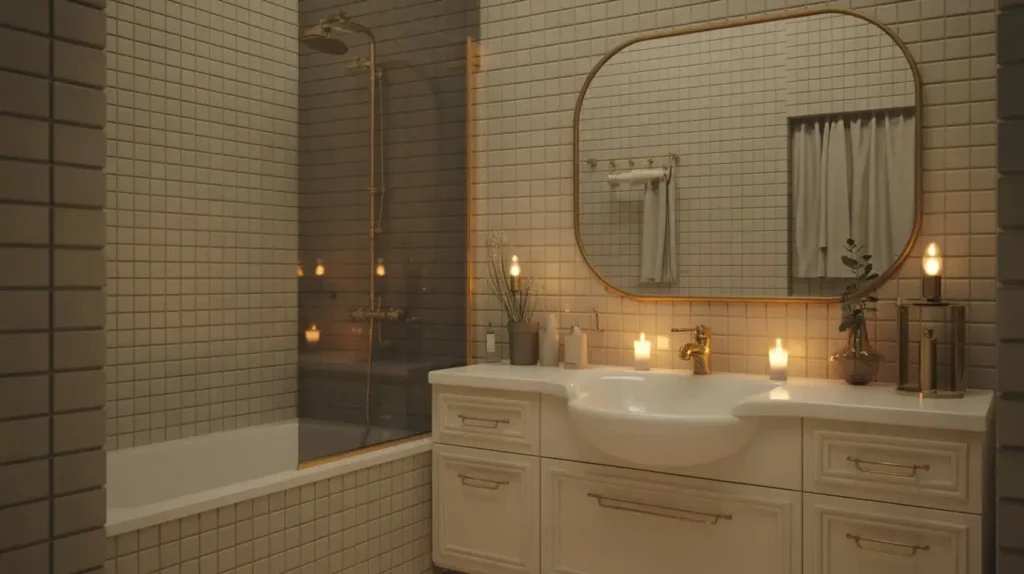
Not all greys are created equal. Warm grey tiles—those with beige or brown undertones—create entirely different atmospheres than cool greys with blue undertones. Pair warm greys with soft, layered lighting, and you’ve created a bathroom that feels cozy and inviting.
Cool greys can sometimes feel sterile or cold (perfect for modern minimalist vibes, but not everyone wants that). Warm greys, on the other hand, feel approachable and comfortable. They bridge the gap between grey’s sophistication and beige’s warmth.
Creating a warm grey bathroom:
- Choose tiles described as “greige,” “warm grey,” or “taupe grey”
- Use warm white bulbs (2700K-3000K) instead of cool daylight bulbs
- Install multiple light sources at different levels (overhead, vanity, accent)
- Add dimmer switches to control the mood
- Incorporate brass or gold fixtures to enhance the warmth
Lighting transforms warm grey tiles from “nice” to “absolutely stunning.” I cannot stress this enough. The right lighting brings out the warm undertones and creates that cozy, spa-like atmosphere everyone wants in their bathroom.
I’ve seen people install LED strip lighting behind mirrors or under floating vanities. This indirect lighting adds ambiance without harsh glare. Pair it with some candles (real or LED), and your bathroom becomes your personal sanctuary.
Think about lighting temperature too. Cool, blue-toned lights will work against your warm grey tiles, making them look muddy or inconsistent. Warm white lights enhance the tiles’ natural warmth and create a cohesive, welcoming space.
Bringing It All Together
So here’s the thing about grey tile bathrooms—they’re not just trendy, they’re timeless. Whether you go bold with dark charcoal and black fixtures or keep things light and Scandinavian, grey tiles give you a foundation that works with practically any style.
I’ve thrown a lot of options at you, and honestly? There’s no wrong choice here. Your bathroom should reflect your personal style and meet your practical needs. Want that moody, dramatic space? Go dark. Need a small bathroom to feel bigger? Light grey is your friend. Craving warmth? Choose greige tones and wooden accents.
The beauty of grey tiles lies in their versatility. They play well with others—gold, black, wood, white, marble, you name it. They adapt to your style preferences whether you’re team modern minimalist or team cozy spa retreat.
My advice? Save a bunch of inspiration photos that make you go “Yes, THAT.” Look for common threads—are you drawn to certain patterns? Particular shades of grey? Specific fixture finishes? Those patterns reveal your true style preferences, which makes decision-making so much easier.