

15 Elegant Herringbone Tile Bathroom Designs You’ll Love
So, you’ve fallen down the herringbone tile rabbit hole. Welcome. I’ve been living here for a while now, and let me tell you, the obsession is real.
One minute you’re casually browsing Pinterest for “bathroom ideas,” and the next, you’re awake at 2 AM, muttering about grout colors and debating the merits of marble versus porcelain. I’ve been there.
During my own home renovation journey—a saga that involved more dust and decision fatigue than I care to admit—the bathroom became my masterpiece.
And the star of that masterpiece? You guessed it. A glorious herringbone tile floor. It single-handedly transformed a sad, boring box into something straight out of a design magazine.
But here’s the thing: herringbone isn’t just one look. It’s a versatile pattern that can be classic, modern, rustic, or ridiculously glam.
To save you from the endless scrolling and the late-night tile-induced anxiety, I’ve put together a list of 15 herringbone tile bathroom designs that are, frankly, to die for. Let’s get into it.
1. Classic White Herringbone Tile Bathroom
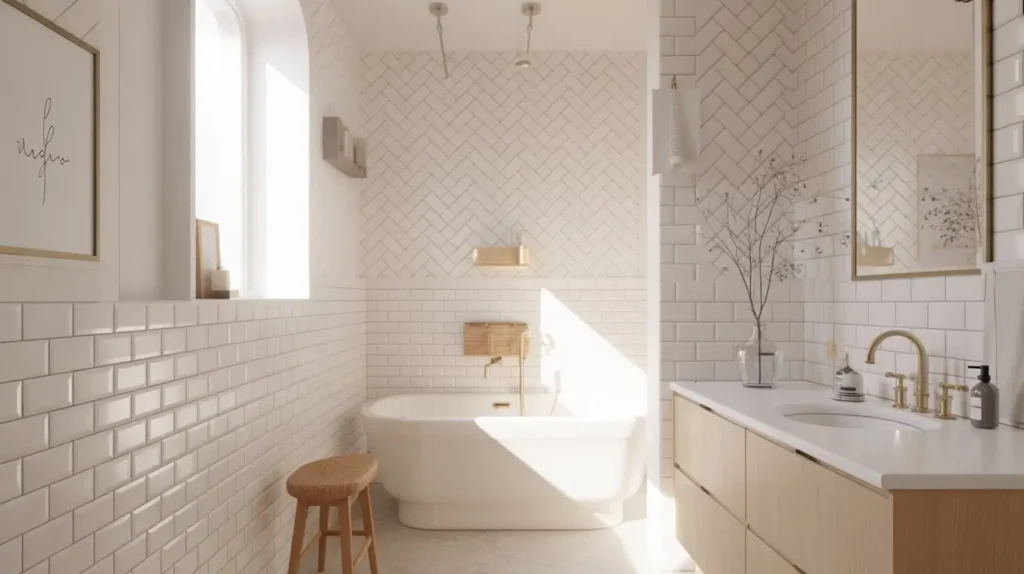
Let’s start with the OG, the little black dress of the tile world: the classic white herringbone. You simply cannot go wrong with this look. It’s timeless, it’s clean, and it works in literally any bathroom, from a sprawling master suite to a tiny powder room. It’s the safe choice that still feels incredibly chic.
The beauty of white herringbone is its subtlety. From a distance, it creates a gentle, textured effect. Up close, you get that gorgeous, dynamic V-shape pattern that adds movement and interest to the space. It’s a design that feels both peaceful and visually stimulating at the same time. How does it do that? Magic, probably.
The Grout Dilemma
The real game-changer with white tile is your grout choice. This is where you decide the entire personality of your bathroom.
- White or Light Grey Grout: This gives you a seamless, soft, and textural look. The pattern is there, but it doesn’t shout. It’s perfect for creating a serene, spa-like atmosphere where the tile blends into a cohesive whole.
- Dark Grey or Black Grout: Feeling a bit more dramatic? A contrasting dark grout makes each individual tile pop. This turns your floor or wall into a bold graphic statement. It’s a more modern, industrial take that highlights the zig-zag geometry of the pattern. I personally love this look for a floor, as it hides dirt a little better. Just being practical.
2. Modern Grey Herringbone Floor Design
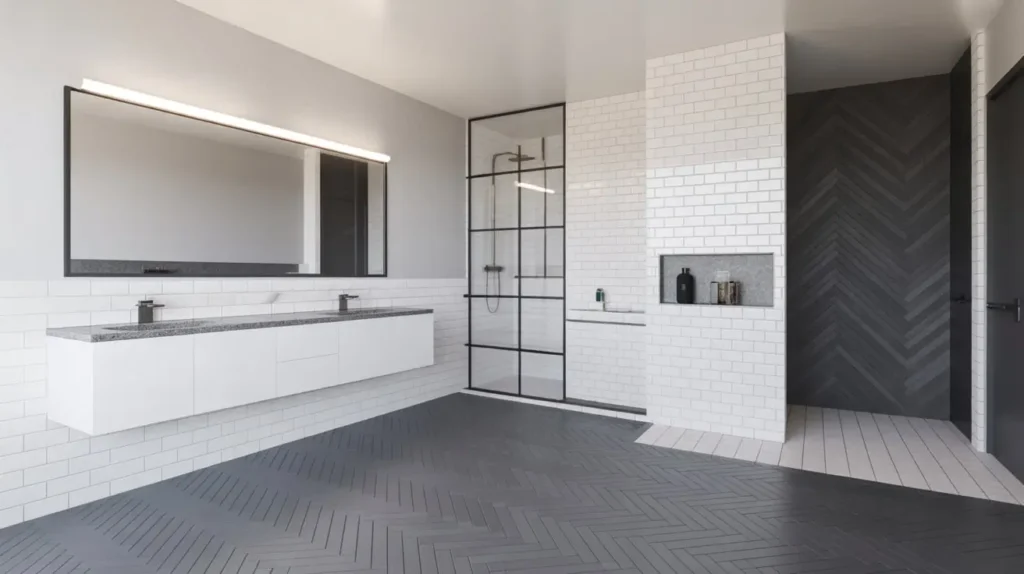
If white is the classic, grey is its cool, sophisticated cousin who studied abroad and came back with a minimalist wardrobe. A grey herringbone floor is the foundation for a sleek, modern bathroom. It’s less stark than black and has more depth than white, offering a perfect neutral backdrop that feels both calming and contemporary.
What I love about grey is the sheer range of shades. A light, silvery grey herringbone floor can make a small bathroom feel airy and open. On the other hand, a deep charcoal grey tile creates a moody, intimate, and luxurious vibe, especially when you use larger tiles.
Why It’s a Modern Favorite
Grey herringbone works so well in modern design because it’s understated. It provides texture and pattern without overwhelming the senses. It’s the perfect partner for other modern bathroom staples.
Think about it: a grey herringbone floor paired with a floating wood vanity, matte black fixtures, and a frameless glass shower. Doesn’t that just scream “I have my life together”? It’s clean, it’s sophisticated, and it’s effortlessly stylish. It’s a look that won’t feel dated in five years, which is a major win in my book.
3. Herringbone Shower Wall Inspiration
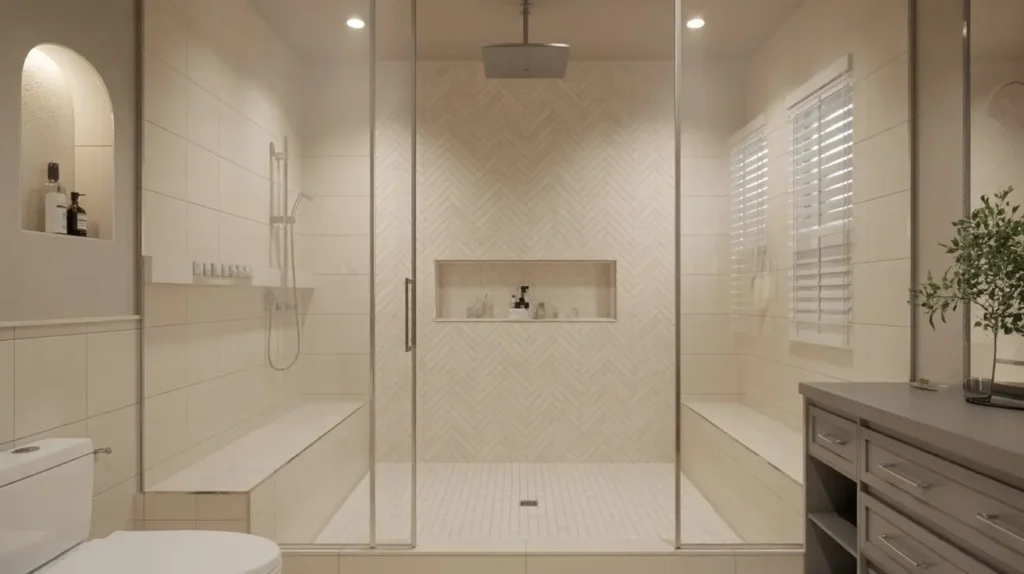
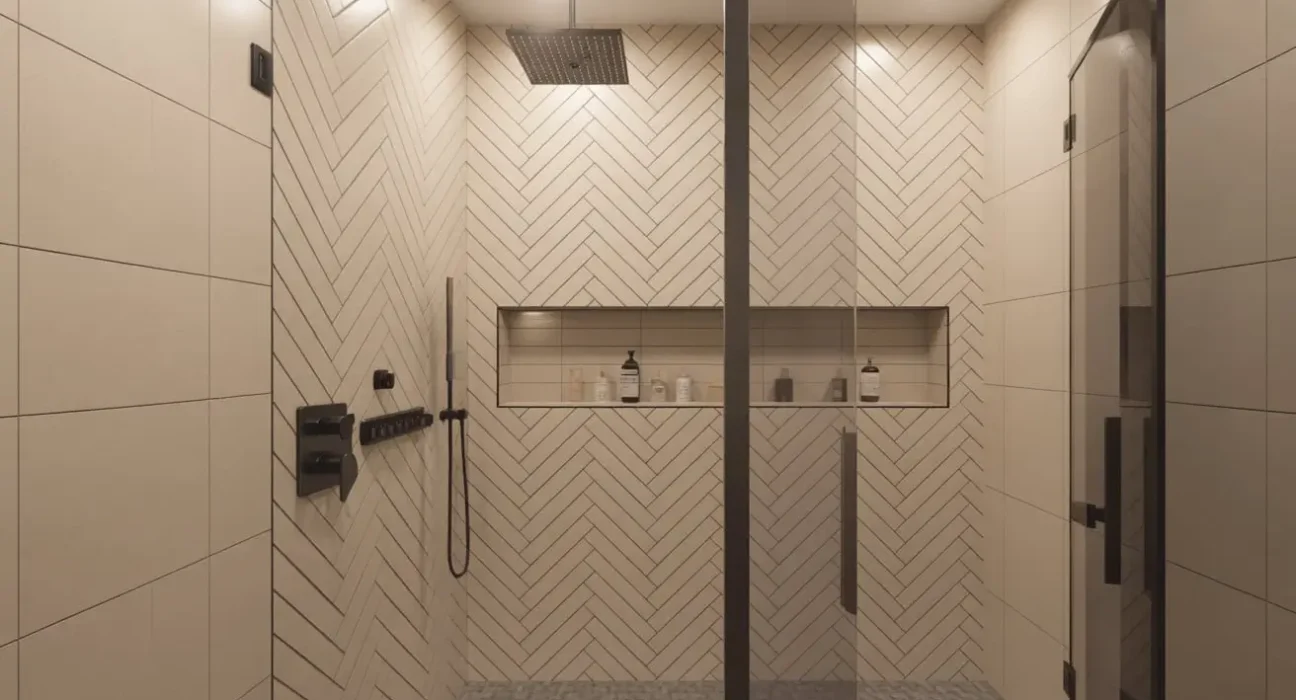
Why should floors have all the fun? Taking the herringbone pattern up onto the walls—specifically in the shower—is a power move. It transforms a purely functional area into a stunning focal point. Every time you step in for a shower, you’ll feel like you’re in a five-star hotel.
A full herringbone shower wall draws the eye upward, which can make a standard-height ceiling feel taller. It also adds a layer of texture that you just don’t get with large-format, plain tiles. It’s an instant upgrade that feels custom and high-end, even if you’re using affordable ceramic tiles.
Pro Tips for a Flawless Shower Wall
If you’re going this route, here are a few things I learned (some the hard way):
- Choose the Right Tile Finish: A glossy tile will reflect light and make the shower feel bright and spacious. A matte tile will give you a more subdued, modern, and earthy feel.
- Waterproofing is Everything: This is non-negotiable. Ensure your contractor uses a top-notch waterproofing system like Schluter-KERDI behind the tile. A beautiful herringbone wall is significantly less beautiful when it’s causing a mold problem in your wall cavity.
- Think About Cleaning: More grout lines mean more cleaning. It’s just a fact of life. Using a high-quality, stain-resistant grout and sealing it properly will save you a lot of future scrubbing.
Also Read: 15 Inspiring Grey Tile Bathroom Looks for Every Style
4. Marble Herringbone Bathroom Elegance
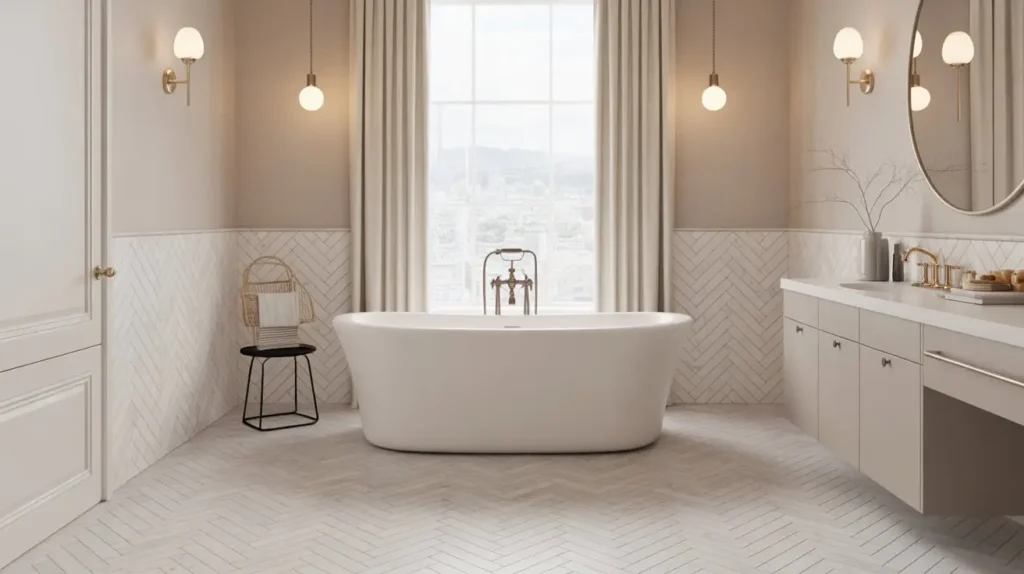
Alright, let’s talk luxury. If you want a bathroom that feels unapologetically opulent, marble herringbone is the answer. Whether it’s on the floor, in the shower, or as a full feature wall, the natural veining of marble combined with the classic herringbone pattern is pure, unadulterated elegance.
Each piece of real marble is unique, meaning your floor or wall will be a one-of-a-kind work of art. The subtle variations in color and veining create a depth and movement that manufactured tiles just can’t replicate. It’s the difference between a print and an original painting.
Real Marble vs. Porcelain Look-Alike
This is a big decision, so let’s break it down.
- Real Marble (e.g., Carrara, Calacatta):
- Pros: Unmatched beauty, natural variation, adds significant resale value to your home. It’s the real deal.
- Cons: It’s porous and requires sealing regularly to prevent staining and etching. It’s also softer than porcelain, so it can scratch. Oh, and it’s expensive. Like, really expensive.
- Marble-Look Porcelain:
- Pros: It’s incredibly durable, non-porous (no sealing needed!), water-resistant, and much more affordable. The printing technology has gotten so good that, from a few feet away, it’s tough to tell the difference.
- Cons: The pattern will eventually repeat. It doesn’t have that same cool, soft feel underfoot as real stone.
My take? If you have the budget and are prepared for the maintenance, nothing beats real marble. For my own project, I used a high-quality porcelain look-alike for the floor and saved a fortune without sacrificing 90% of the look. No regrets.
5. Small Bathroom with Herringbone Accent Wall
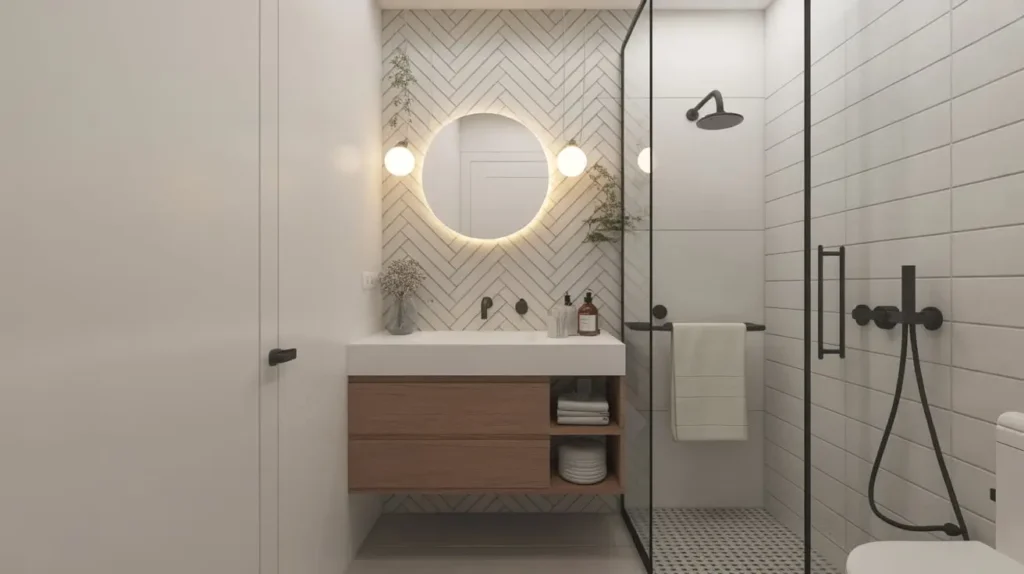
Have a small bathroom or powder room? Don’t you dare think you have to stick to boring design choices. In fact, a small space is the perfect laboratory for a bold move, and a herringbone accent wall is one of the best tricks in the book.
Instead of tiling the entire room, which can feel busy and overwhelming in a tight space, pick one wall to be your star. The wall behind the vanity and mirror is usually the best candidate. By covering it in a beautiful herringbone tile, you create an instant focal point that draws the eye and makes the whole room feel more intentional and designed. It’s like giving your tiny bathroom a statement necklace; it elevates everything.
This approach is also budget-friendly. You get the high-impact look of a designer tile without having to pay for the square footage to cover four walls. You can even splurge on a more expensive tile for that one wall since you won’t need as much of it.
6. Bold Black Herringbone Tile Ideas
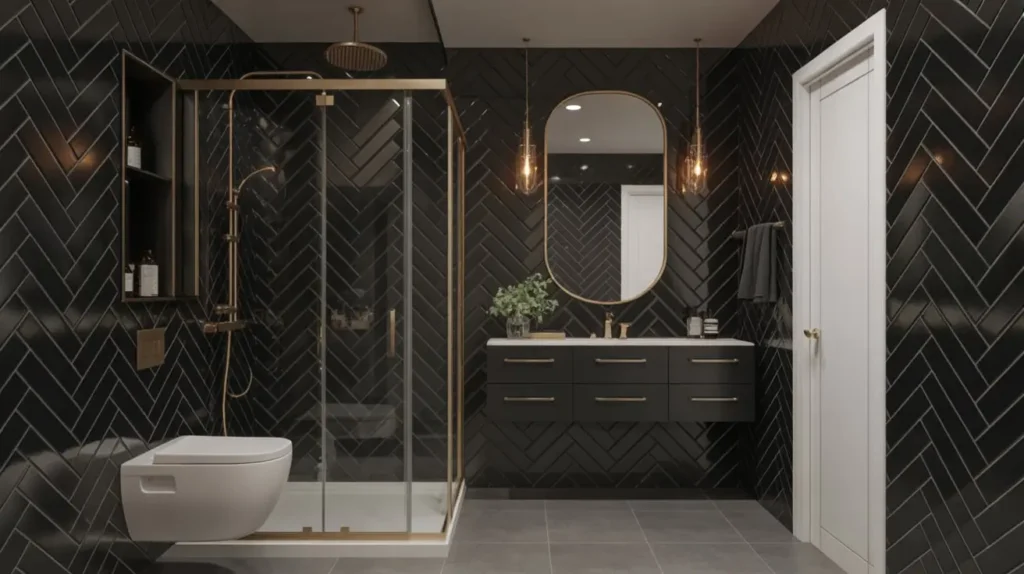
Ready to walk on the dark side? A black herringbone tile bathroom is not for the faint of heart. It’s dramatic, it’s moody, and it is absolutely show-stopping. A floor of matte black herringbone tile grounds the space with a powerful, sophisticated energy. A black herringbone shower wall? Pure, unadulterated drama.
This look is particularly effective in a bathroom with plenty of natural light to balance out the darkness. The light will play off the angles of the tile, highlighting the pattern and preventing the room from feeling like a cave.
A Word of Caution
As much as I love this look, you need to be strategic. In a small, windowless bathroom, an all-black tile scheme can feel claustrophobic. If you’re nervous, consider these options:
- Use black herringbone on the floor only, keeping the walls light and bright for contrast.
- Create a black herringbone accent wall behind a crisp white bathtub.
- Pair it with warm elements like wood and brass to keep it from feeling too cold or stark.
When done right, a black herringbone bathroom feels less like a room and more like an experience. It’s confident and chic.
7. Herringbone Tile with Gold Fixtures
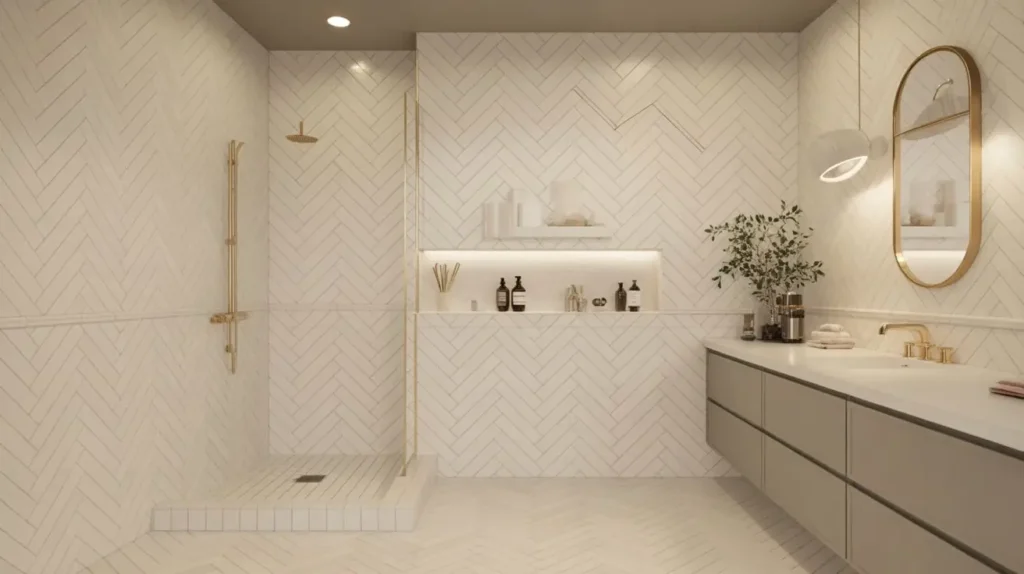
If you want to crank up the glam factor to 11, pair your herringbone tile with gold or brass fixtures. This combination is a match made in design heaven. The classic, geometric pattern of the herringbone plays beautifully against the warm, luxe shine of gold.
This pairing works with almost any color of herringbone tile:
- White Herringbone + Gold Fixtures: This is a classic, almost Parisian-chic look. It’s bright, elegant, and timeless.
- Black Herringbone + Gold Fixtures: This combo screams Art Deco glamour. The contrast is stunning, creating a look that is both moody and opulent.
- Blue or Green Herringbone + Gold Fixtures: This is a more eclectic, jewel-box approach. The rich color of the tile paired with the metallic pop of gold feels incredibly luxurious and custom.
I went with brushed gold fixtures in my own bathroom, and I have to say, it’s the element that gets the most compliments. It just adds that layer of warmth and sophistication. FYI, “brushed” or “satin” gold is a bit more forgiving with fingerprints and water spots than polished gold. You’re welcome.
8. Minimalist Herringbone Backsplash Design
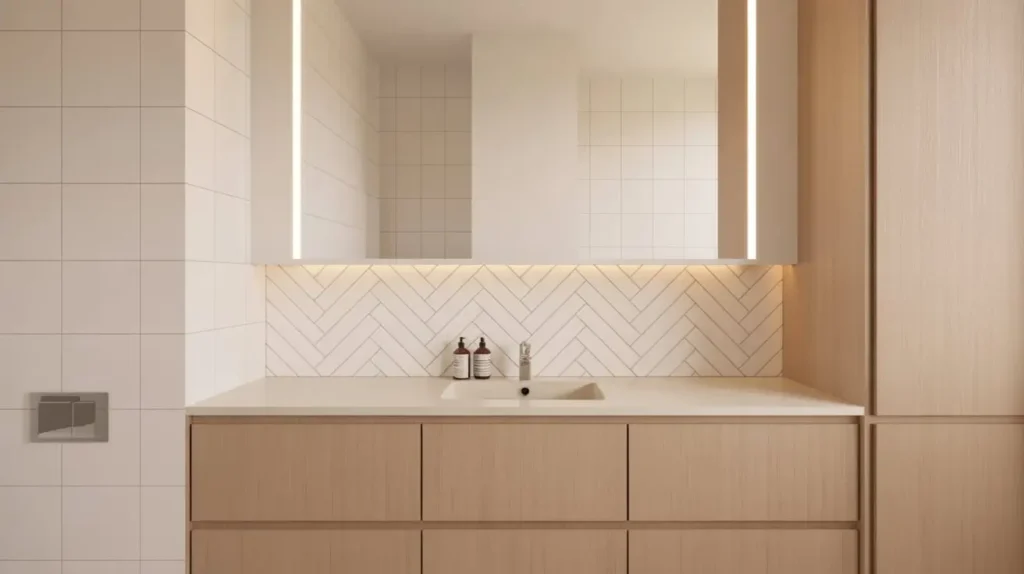
Not ready to commit to a full floor or wall? No problem. A herringbone backsplash behind the vanity is the perfect way to dip your toe into the trend. It’s a small area, so the labor costs are lower, and it adds a major dose of personality to an often-overlooked part of the bathroom.
This is your chance to play with color or material without breaking the bank. A zellige-style herringbone backsplash can add a rustic, handmade touch. A mini marble herringbone backsplash can add a tiny hit of luxury. You can use the same tile as your floor for a cohesive look or introduce something completely different to act as a point of contrast.
This small-scale application proves that you don’t need a massive renovation to make a big impact. It’s a focused, intentional design choice that elevates the entire vanity area.
9. Coastal Blue Herringbone Bathroom Style
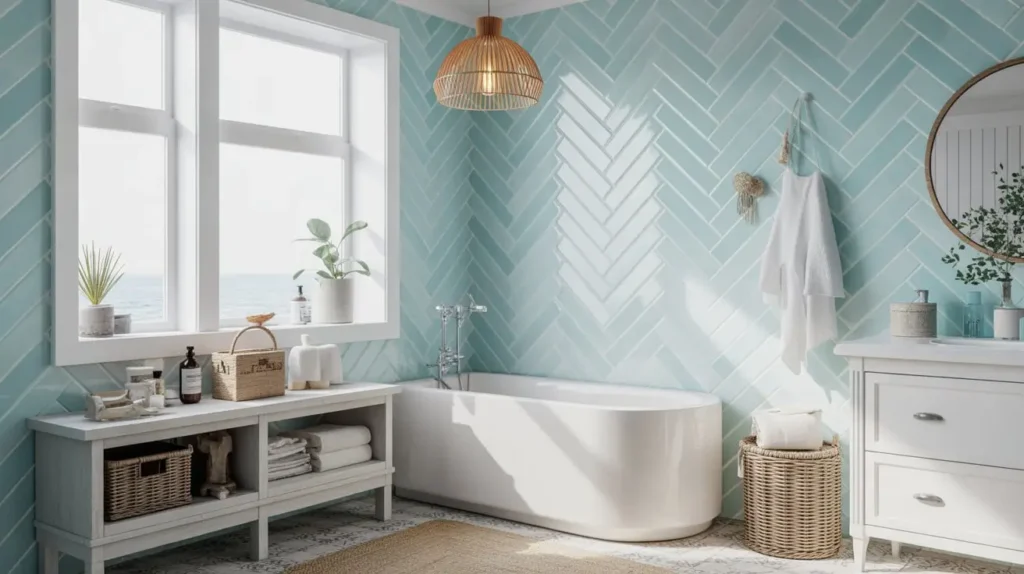
Who needs a beach house when your bathroom can feel like a seaside escape every single day? Using a blue herringbone tile is a fantastic way to nail that coastal, breezy aesthetic. The zig-zag of the pattern can even mimic the look of waves, which is a nice little thematic touch.
The shade of blue you choose will set the tone:
- Light Blue or Aqua: This creates a light, airy, and playful vibe. It feels like a sunny day at the beach. Pair it with crisp white and natural light wood tones for a classic coastal look.
- Navy or Deep Blue: A darker blue herringbone tile provides a more sophisticated, nautical feel. It’s classic and moody, like a stormy sea. Paired with white grout and brass fixtures, it’s absolutely stunning. IMO, this is a look that feels both trendy and completely timeless.
Whether you use it on the floor, as a shower wall, or as a backsplash, blue herringbone tile is a guaranteed way to make your bathroom feel like a permanent vacation.
10. Rustic Wood-Look Herringbone Tiles
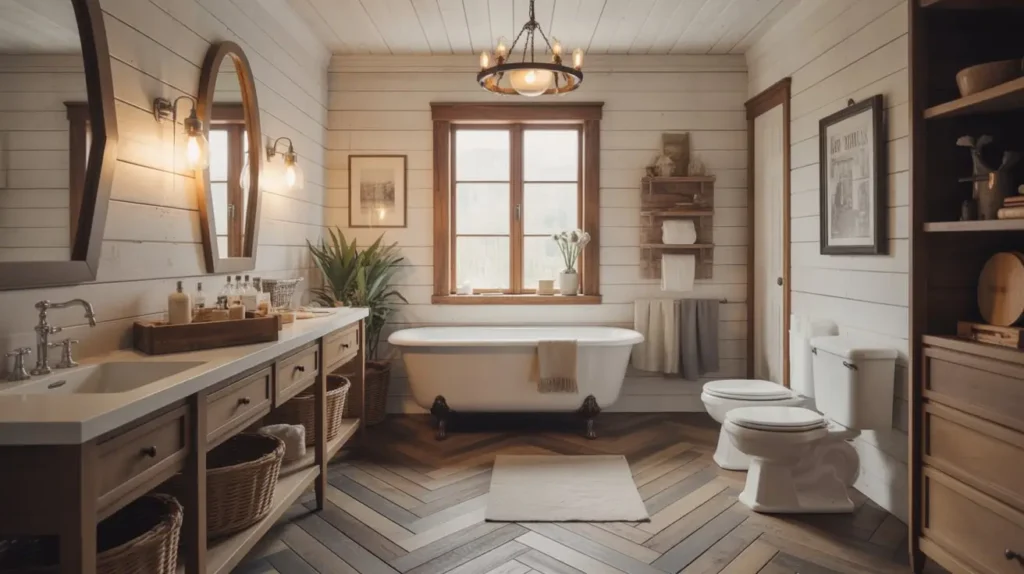
Love the warmth of wood and the pattern of herringbone? But you’re also aware that putting real hardwood in a bathroom is a decision you make right before you decide you love warped planks and potential mold? Say hello to wood-look porcelain tile.
This stuff is a miracle of modern manufacturing. It’s porcelain tile that is printed to look, with startling accuracy, like real wood. You get the grain, the color variation, and the warmth of wood, but with the durability and water-resistance of tile. It’s the best of both worlds.
Arranging these wood-look planks in a herringbone pattern on your bathroom floor creates a stunning, rustic-meets-classic look. It feels like a modern farmhouse or a cozy mountain cabin. It’s warmer and more inviting than stone tile, and it’s a brilliant way to bring a natural element into the bathroom without the maintenance nightmare of actual wood.
11. Vertical Herringbone Shower Pattern
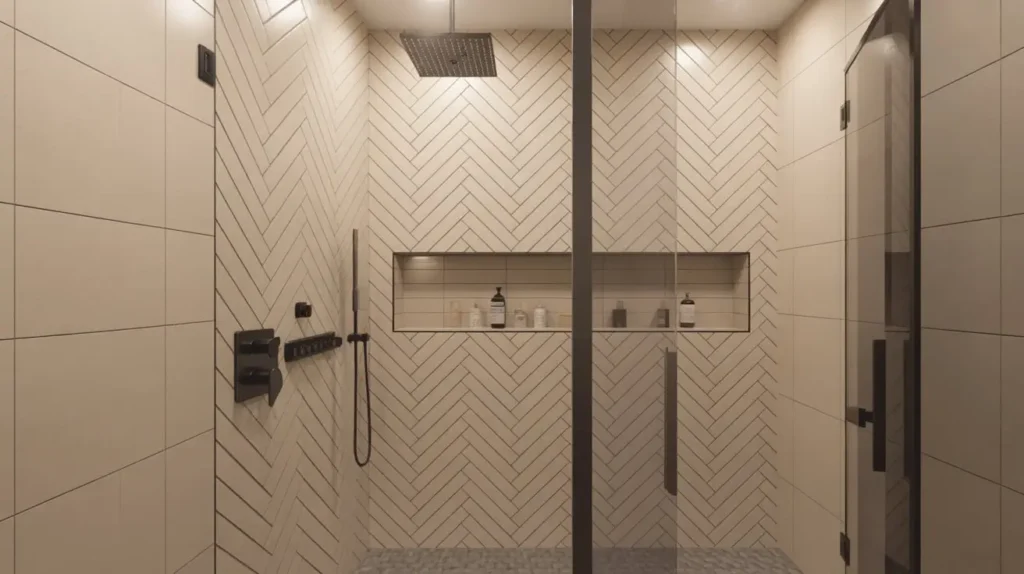
Think you know herringbone? Think again. By simply rotating the pattern 90 degrees, you get a whole new look: the vertical herringbone. Instead of the classic V-shapes pointing horizontally, the arrows point up and down.
So what’s the big deal? Well, it has a surprisingly different effect on the space. A vertical herringbone pattern draws the eye upward, making ceilings feel much higher than they actually are. It’s a fantastic optical illusion for bathrooms with lower ceilings. The pattern feels a bit more modern and energetic, like a series of arrows climbing the wall.
I’ve seen this done to stunning effect in a shower, where the vertical lines mimic the fall of water. It’s a subtle twist on a classic that makes the design feel fresh, dynamic, and completely custom. If you want a look that’s familiar but just a little bit different, this is it.
Also Read: 15 Timeless Zellige Tile Bathroom Designs You’ll Love
12. Herringbone Tile with Contrasting Grout

I touched on this with the classic white tile, but the power of contrasting grout deserves its own spotlight. Choosing a grout color that is significantly lighter or darker than your tile is a deliberate design choice that transforms the grout from a functional necessity into a core design element.
It’s all about emphasizing the pattern. A contrasting grout outlines each and every tile, putting the beautiful herringbone geometry on full display. It’s a bold, graphic look that works wonders for modern, industrial, or eclectic bathroom styles.
Killer Color Combos
- Black Tile with White Grout: The ultimate high-contrast look. It’s graphic, dramatic, and incredibly chic.
- Navy Tile with White Grout: A preppy, nautical classic that feels both fresh and sophisticated.
- White Tile with Black Grout: As mentioned, this is a timeless look that feels both vintage and modern at the same time.
- Grey Tile with White Grout: This is a softer contrast that still highlights the pattern without being quite as intense as black and white.
A word to the wise: if you go with contrasting grout, your tile installer’s work needs to be impeccable. Any imperfections in the spacing or alignment of the tiles will be immediately obvious. Hire a pro for this one.
13. Luxurious Spa-Like Herringbone Bathroom
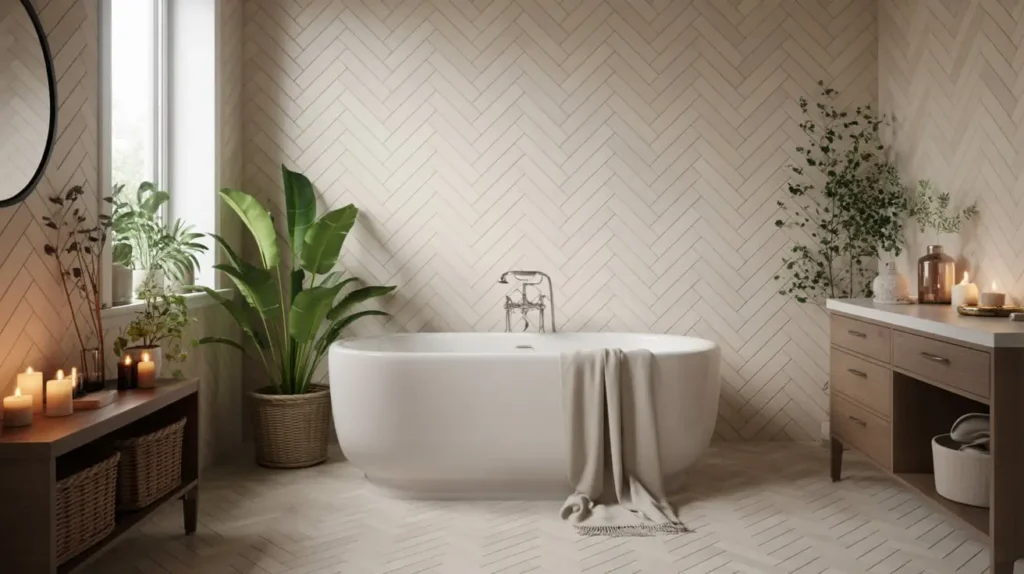
This isn’t just about a tile choice; it’s about creating an entire atmosphere. A spa-like bathroom is your personal sanctuary, a place to unwind and de-stress. The right herringbone tile can be the perfect foundation for this serene escape.
To achieve this, you’ll want to stick to a soft, neutral palette. Think about:
- A light grey or beige ceramic herringbone floor that feels warm underfoot.
- A Carrara-style marble herringbone shower wall for a touch of quiet luxury.
- A soft white, matte finish herringbone tile to create a subtle, textural backdrop.
The key is to combine your tile choice with other spa-like elements. Pair your herringbone with a deep soaking tub, a rainfall showerhead, natural wood accents (like a teak shower bench), piles of fluffy white towels, and plenty of plants. The combination of the gentle, repetitive pattern of the tile and these calming elements creates a cohesive, tranquil environment.
14. Scandinavian Neutral Herringbone Design
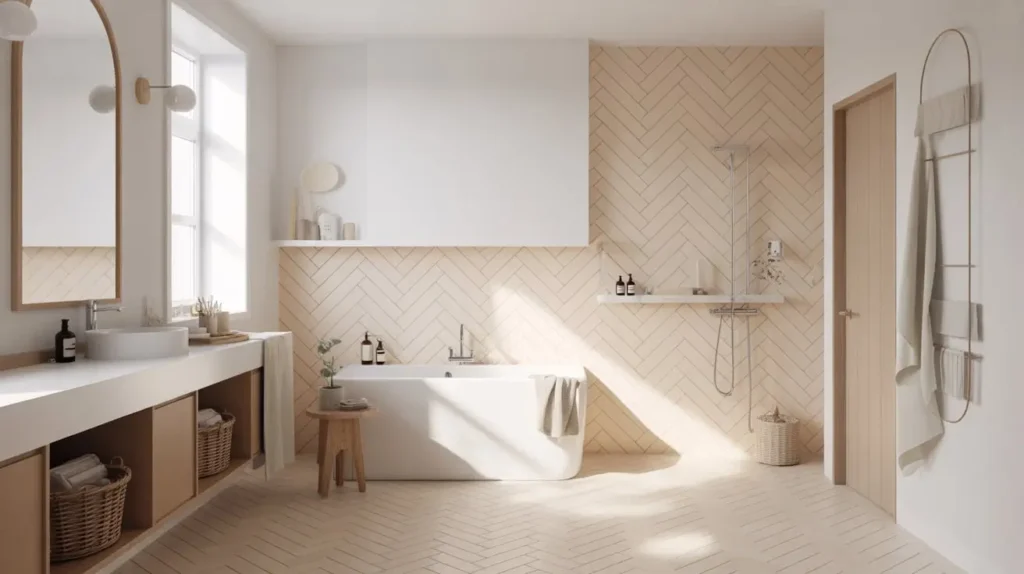
If you’re a fan of clean lines, functionality, and uncluttered spaces, the Scandinavian design philosophy is probably right up your alley. A Scandi bathroom is all about light, simplicity, and natural textures. And yes, herringbone fits in perfectly.
The Scandinavian approach to herringbone is all about understatement. You’d use a light-colored tile—typically white, off-white, or a very pale grey—to maximize the feeling of light and space. The finish would likely be matte to keep things soft and natural, rather than glossy and glam.
You’d then pair this subtle herringbone floor or wall with classic Scandi elements:
- Light wood vanities (think blonde wood like ash or birch).
- Minimalist black or chrome fixtures.
- Lots of white space and a distinct lack of clutter.
- Perhaps a single, well-placed green plant.
The herringbone pattern provides just enough visual interest and texture to keep the minimalist space from feeling boring. It adds a layer of warmth and craftsmanship to an otherwise simple room. Doesn’t that just sound peaceful? 🙂
15. Mixed Pattern Herringbone and Subway Tile Combo
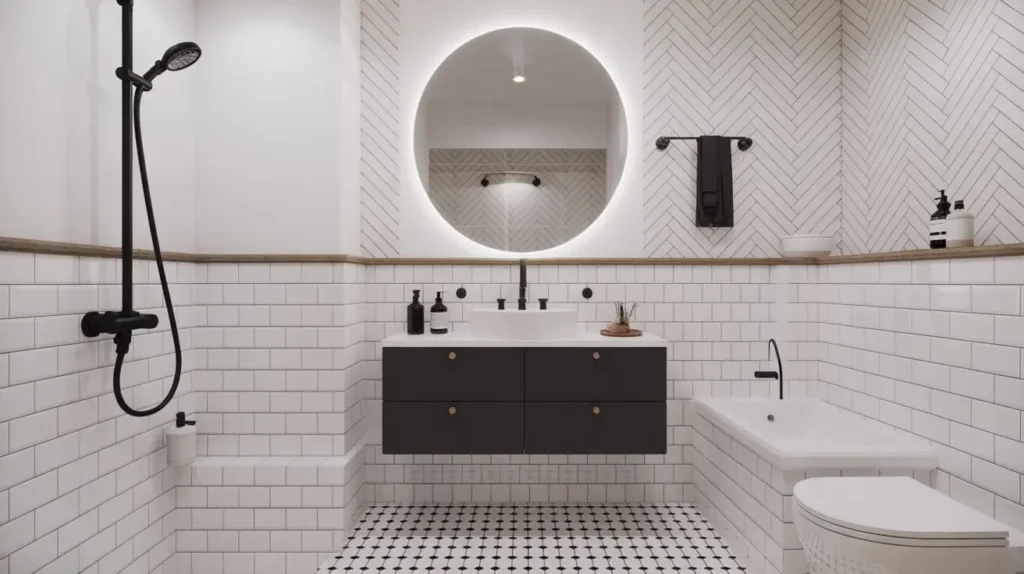
For the bold and the brave, we have our final design: mixing patterns. This is the advanced class, folks. Combining a herringbone pattern with another tile, like a classic subway tile or a large-format square, can create a stunningly unique and layered look.
But how do you do it without creating total visual chaos? There are a few tried-and-true methods:
- Zone It Out: Use herringbone on the floor and a different tile on the walls. This is the safest and most common approach. The herringbone floor acts as the “wow” feature, while a simpler wall tile provides a calm backdrop.
- The Tile “Rug”: Create a “rug” of herringbone tile in the center of the bathroom, framed by a border of larger, simpler tiles. This is a very custom, high-end look.
- Half and Half Wall: Use a simple tile like subway for the bottom half of the wall and a herringbone pattern for the top half (or vice versa), separated by a pencil liner.
The golden rule here is to maintain a consistent color palette. If you start mixing multiple patterns and multiple colors, the room can quickly become overwhelming. By keeping the colors the same or complementary (e.g., all white, or a white and grey combo), the different patterns feel like different textures within a unified space.
Your Bathroom, Your Masterpiece
There you have it—15 ways to use the glorious herringbone pattern to create a bathroom you’ll absolutely love. From the timeless appeal of classic white to the bold drama of a black and gold combo, it’s clear that this is one of the most versatile patterns in the design playbook.
My biggest piece of advice? Don’t be afraid to let your personality show. Your bathroom is one of the most personal spaces in your home. Choose the design that makes you happy every time you walk in the door.
Now go forth and tile! And maybe, just maybe, you’ll avoid that 2 AM panic session debating grout colors. You’ve got this.