

15 Stunning Italian Farmhouse Kitchen Ideas with Rustic Vibes
Picture this: you’re standing in a sun-drenched kitchen somewhere in the Tuscan countryside. The smell of fresh herbs mingles with the warmth of aged wood, and every surface tells a story that spans generations. That’s the magic of an Italian farmhouse kitchen—and honestly, who wouldn’t want to recreate that feeling right at home?
I’ve spent years obsessing over rustic Italian design (my Pinterest boards are borderline embarrassing at this point), and I can confidently say that nothing beats the charm of a well-executed farmhouse kitchen. Whether you’re planning a full renovation or just looking for inspiration to spruce up your cooking space, I’ve gathered 15 stunning Italian farmhouse kitchen ideas that will transport you straight to the rolling hills of Italy.
Ready to transform your kitchen into a rustic Italian sanctuary? Let’s get into it.
1. Rustic Tuscan Stone Counter Kitchen

There’s something incredibly grounding about natural stone countertops in a kitchen. And when we’re talking Italian farmhouse vibes, Tuscan stone takes the crown without question.
Think rough-hewn travertine or weathered limestone with those beautiful natural imperfections that mass-produced materials simply can’t replicate. These stones carry a warmth that granite or quartz often lacks, and they age beautifully over time—developing a patina that tells the story of countless meals prepared and memories made.
Why Stone Counters Work So Well
The beauty of Tuscan stone lies in its authenticity. Unlike polished surfaces that scream “modern kitchen,” natural stone whispers “Italian countryside.” Here’s what makes this choice stand out:
- Unique patterns: No two slabs look identical, giving your kitchen genuine character
- Heat resistance: Perfect for placing hot pots directly from the stove
- Timeless appeal: Stone never goes out of style, making it a solid investment
- Complementary versatility: Pairs beautifully with wood, iron, and ceramic elements
I personally lean toward lighter stone tones with visible veining—they brighten up the space while maintaining that rustic edge. Just keep in mind that natural stone requires sealing and a bit more maintenance than synthetic alternatives. Worth it? Absolutely.
2. Terracotta Tile Farmhouse Cooking Space
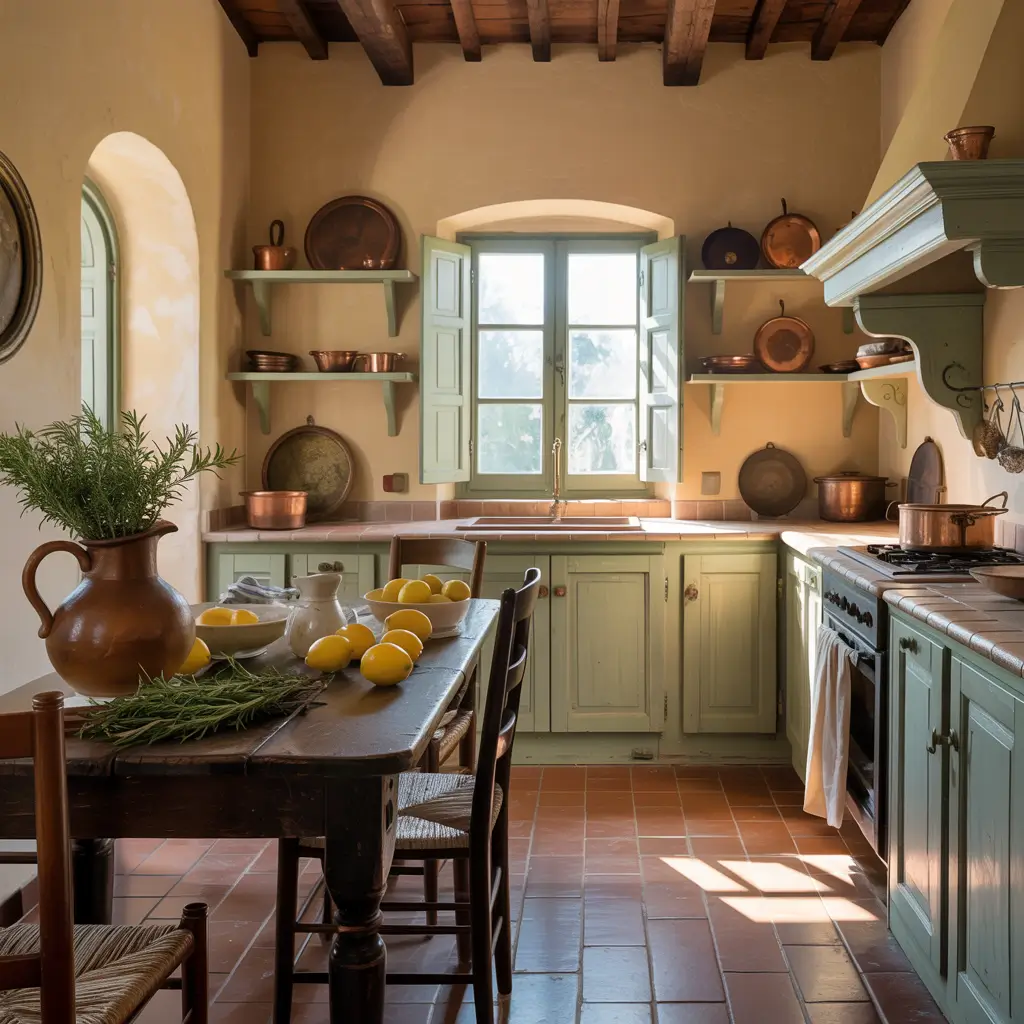
If Italian farmhouse kitchens had a signature material, terracotta tiles would be it. These clay beauties have graced Mediterranean homes for centuries, and their warm, earthy tones instantly create that coveted rustic atmosphere.
I remember walking into a friend’s newly renovated kitchen and being immediately struck by the terracotta flooring. It felt like stepping into a villa in Umbria, not a suburban home in Ohio. That’s the power of this timeless material.
Best Practices for Terracotta in Your Kitchen
Terracotta works brilliantly on floors, but you can also incorporate it into backsplashes and even countertop accents. Here’s what you should consider:
- Floor tiles: Opt for larger hexagonal or square tiles for an authentic look
- Backsplash options: Smaller terracotta tiles create stunning visual texture behind the stove
- Color variations: Embrace the natural color inconsistencies—they add depth and character
- Sealing is essential: Terracotta is porous, so proper sealing prevents staining and moisture damage
The warm orange and burnt sienna tones of terracotta pair exceptionally well with cream-colored walls, dark wood cabinetry, and copper accents. It’s basically the holy trinity of Italian farmhouse design.
3. Aged Wood Beam Italian Farmhouse Kitchen
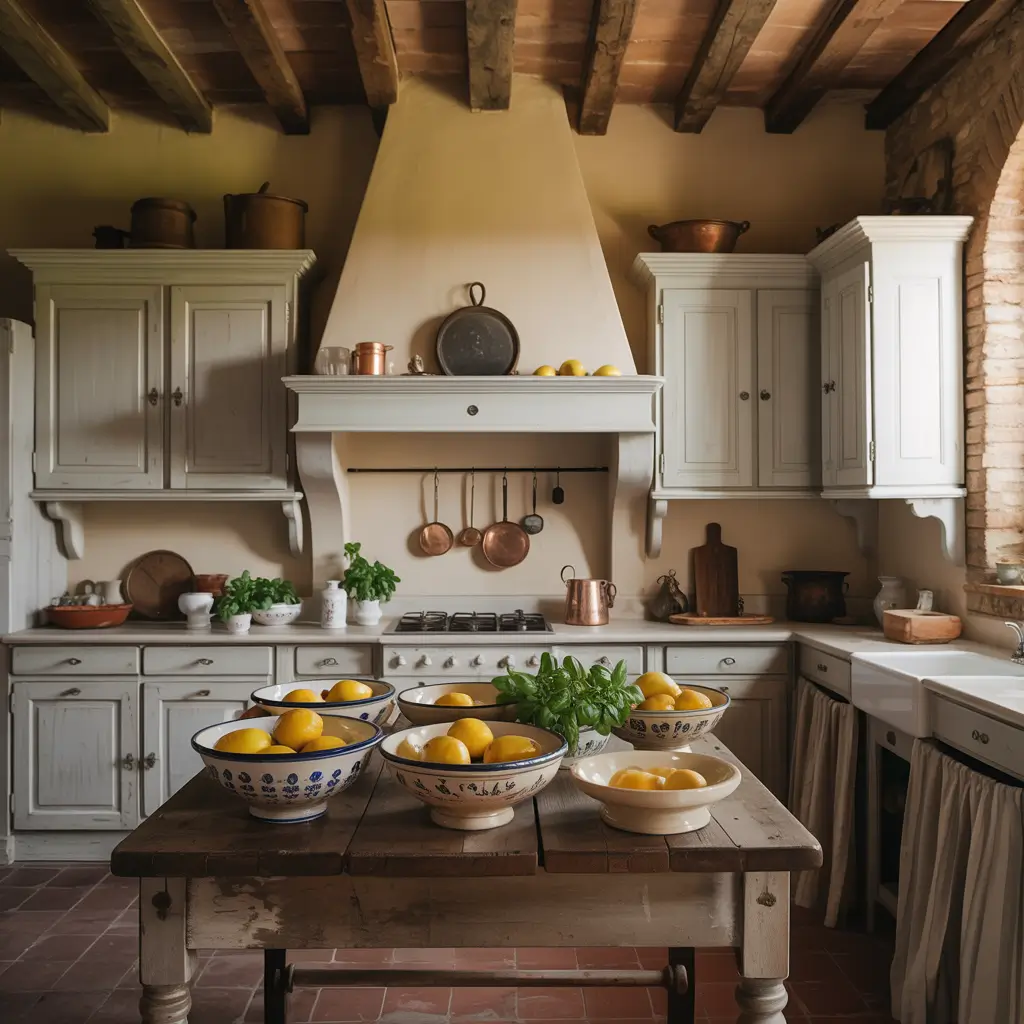
Nothing—and I mean nothing—captures the essence of a rustic Italian kitchen quite like exposed wood beams. These structural elements transform an ordinary ceiling into an architectural statement.
Ever wondered why wood beams feel so inherently cozy? It’s because they bring a sense of history and craftsmanship that modern construction often lacks. They remind us of a time when kitchens were the heart of the home, where families gathered and meals stretched for hours.
Sourcing and Styling Your Beams
You have options here, and budget plays a significant role in your decision:
- Reclaimed beams: Authentic antique wood with genuine patina (pricier but stunning)
- Faux beams: Lightweight alternatives that mimic real wood without the structural requirements
- Staining options: Darker stains create drama, while lighter washes feel more airy
IMO, the key to nailing this look is proportion. Oversized beams in a small kitchen can feel overwhelming, while thin beams in a spacious room might look underwhelming. Measure twice, commit once.
4. Mediterranean Arched Alcove Kitchen

Arched architectural elements scream Mediterranean elegance without trying too hard. Whether it’s an arched doorway, a curved alcove above the stove, or rounded window frames, these features soften the rigid lines of a typical kitchen.
I’ve always been slightly obsessed with arched niches—those small recessed areas perfect for displaying olive oil bottles, ceramic pieces, or fresh herbs. They’re functional and absolutely gorgeous.
Incorporating Arches Without Major Construction
Not everyone can knock down walls and create dramatic archways. Here are some accessible alternatives:
- Arched range hoods: Custom or semi-custom hoods with curved designs make a statement
- Decorative wall niches: Build shallow alcoves for display purposes
- Arched cabinet doors: Some cabinetry lines offer rounded top panels
- Freestanding arched mirrors or frames: Add visual interest without renovation
The Mediterranean influence extends beyond just shape. Pair your arched elements with textured plaster walls and iron hardware for maximum impact.
Also Read: 15 Elegant White Farmhouse Kitchen Ideas with Modern Touches
5. Italian Villa-Style Open Shelf Kitchen
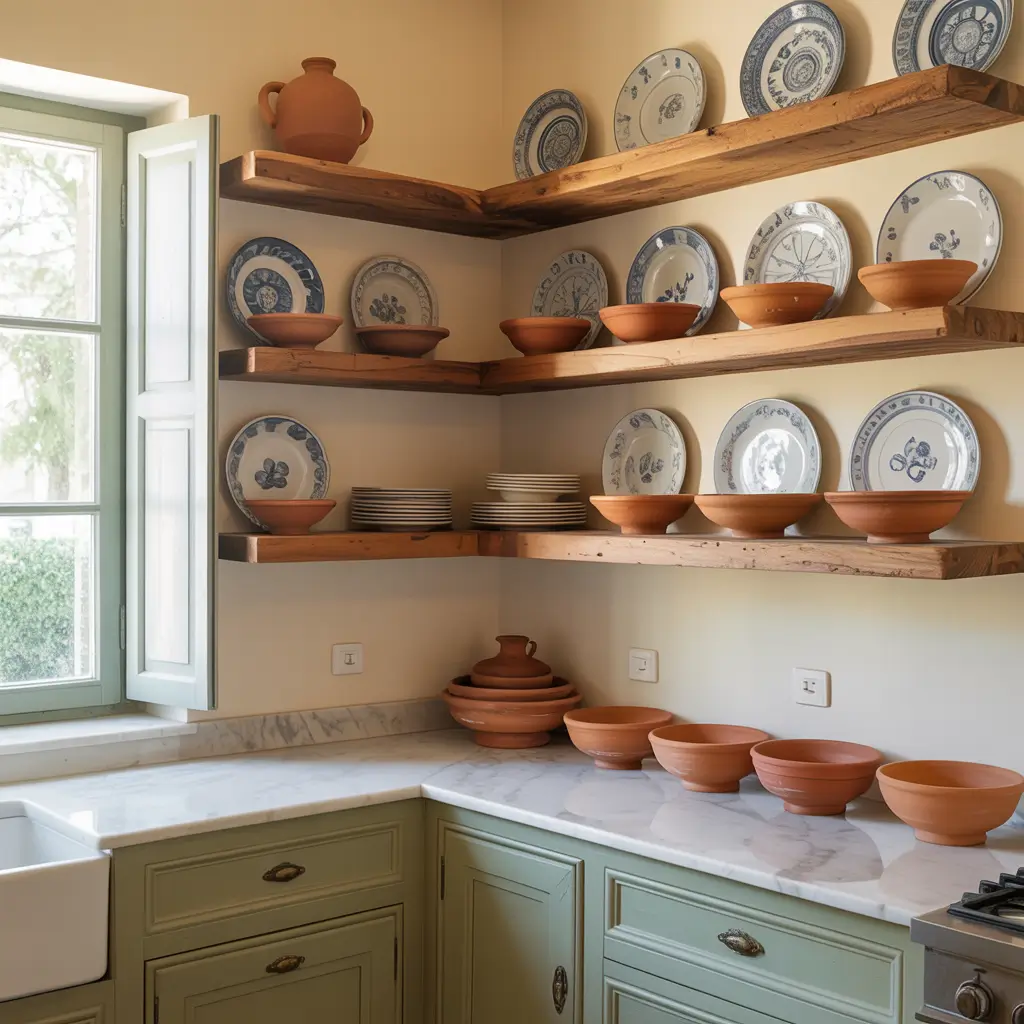
Here’s a hot take: open shelving isn’t just a trend—it’s a lifestyle choice rooted in European farmhouse tradition. Italian villas have displayed their ceramics, copper pots, and earthenware on open shelves for generations. Why hide beautiful things behind cabinet doors?
Open shelving forces you to be intentional about what you own (which isn’t a bad thing) while also making your kitchen feel larger and more inviting. Plus, grabbing your favorite mug becomes infinitely easier.
Making Open Shelves Work for You
Let’s be real—open shelving isn’t for everyone. It requires organization and regular dusting. But if you’re up for it, consider these tips:
- Mix materials: Combine floating wood shelves with iron brackets for rustic appeal
- Curate carefully: Display your prettiest pieces and store the ugly stuff elsewhere
- Create vignettes: Group items in odd numbers and vary heights for visual interest
- Layer it: Place cutting boards, ceramics, and greenery at different depths
The Italian villa aesthetic embraces imperfection and authenticity. Your shelves don’t need to look like a catalog—lived-in and loved is the goal.
6. Warm Cream and Olive Italian Farmhouse Kitchen
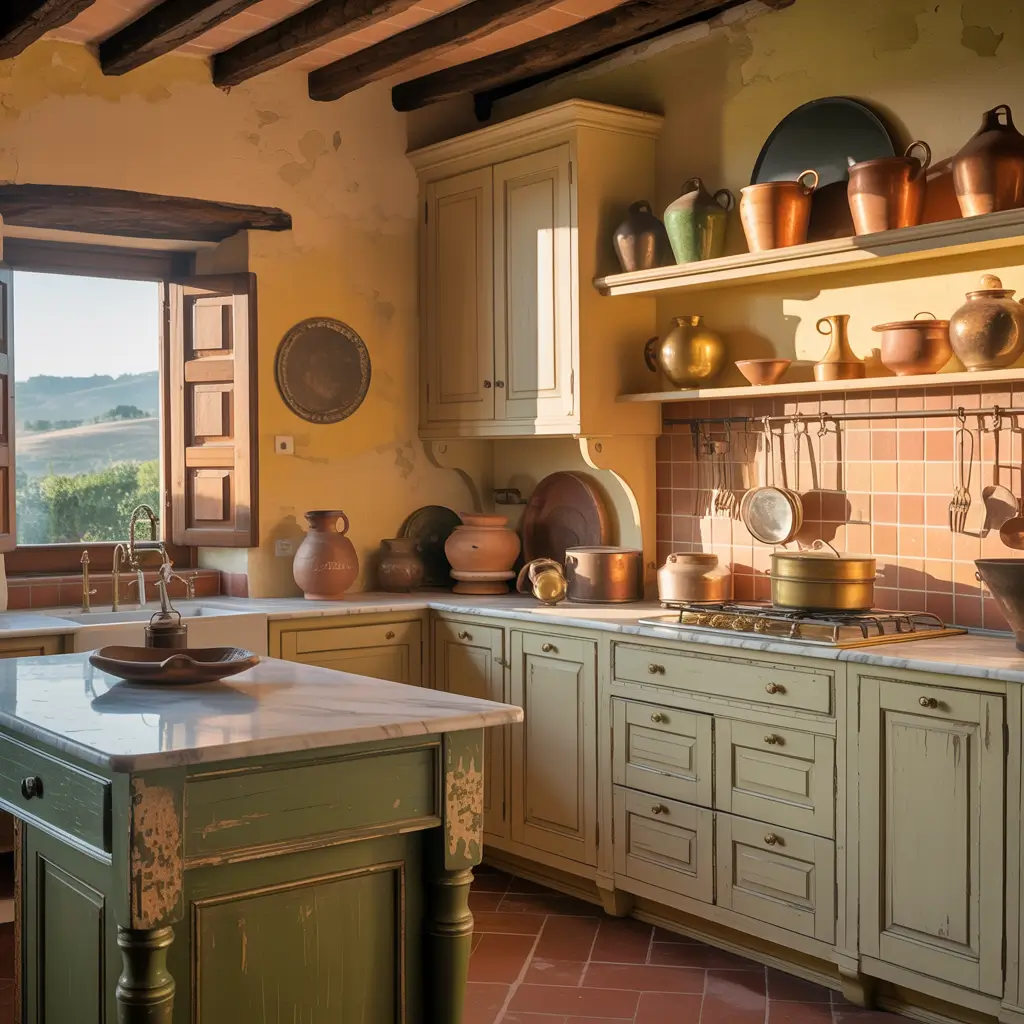
Color palette matters enormously in creating authentic Italian farmhouse vibes. The combination of warm cream tones with soft olive green is practically foolproof—it’s earthy, sophisticated, and undeniably Mediterranean.
This color scheme works because it mimics the natural landscape of the Italian countryside: rolling olive groves against cream-colored stone villas. It’s harmonious, calming, and surprisingly versatile.
Balancing Cream and Olive
The trick is getting the balance right. Here’s my recommended approach:
- Dominant cream: Use warm cream (not stark white) for walls, cabinetry, or large surfaces
- Accent olive: Introduce olive through an island, lower cabinets, or decorative elements
- Natural wood accents: Warm-toned wood bridges the two colors beautifully
- Brass or copper hardware: These metals complement the palette without competing
Avoid going too heavy on the olive—it can darken a space quickly. Think of it as your supporting actor, not the lead 🙂
7. Tuscan Copper Accent Farmhouse Kitchen
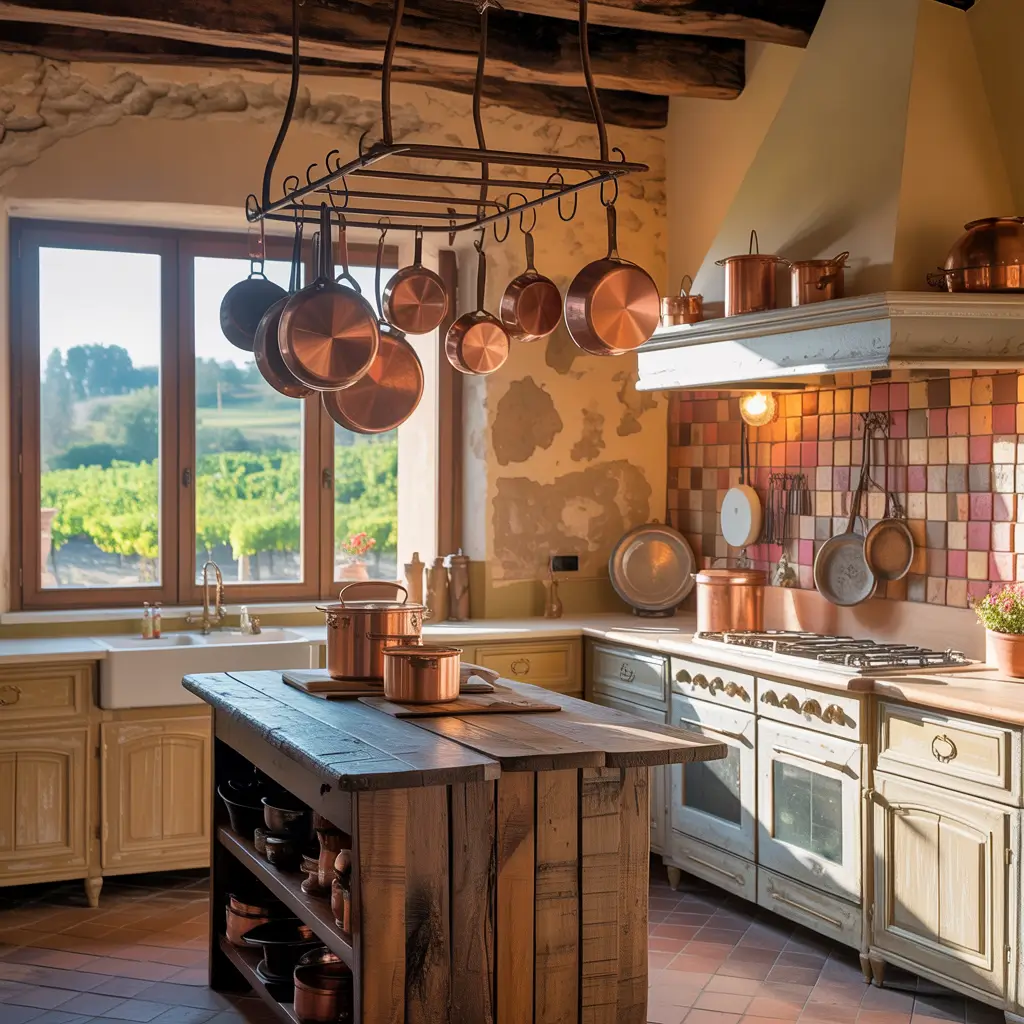
Copper is the unsung hero of Italian farmhouse kitchens. From hammered copper range hoods to antique pots hanging from ceiling racks, this warm metal adds instant Old World charm and a touch of understated luxury.
I once stayed at a farmhouse B&B in Tuscany where the kitchen featured a massive copper hood above an antique stove. The way it caught the afternoon light was genuinely mesmerizing—and it completely sold me on incorporating copper into my own kitchen.
Where to Add Copper Accents
You don’t need a full copper installation to make an impact. Strategic placement works wonders:
- Range hood: The ultimate statement piece for any rustic kitchen
- Pendant lighting: Copper fixtures above an island or dining area
- Cookware display: Hang copper pots on a wall-mounted rack
- Hardware and fixtures: Drawer pulls, faucets, and cabinet knobs
- Decorative items: Copper bowls, vases, or trays on countertops
The beauty of copper lies in its living finish—it develops a patina over time that deepens its character. Some people prefer the polished look, while others embrace the natural aging process. Both approaches are valid.
8. Rustic Plaster Wall Italian Kitchen
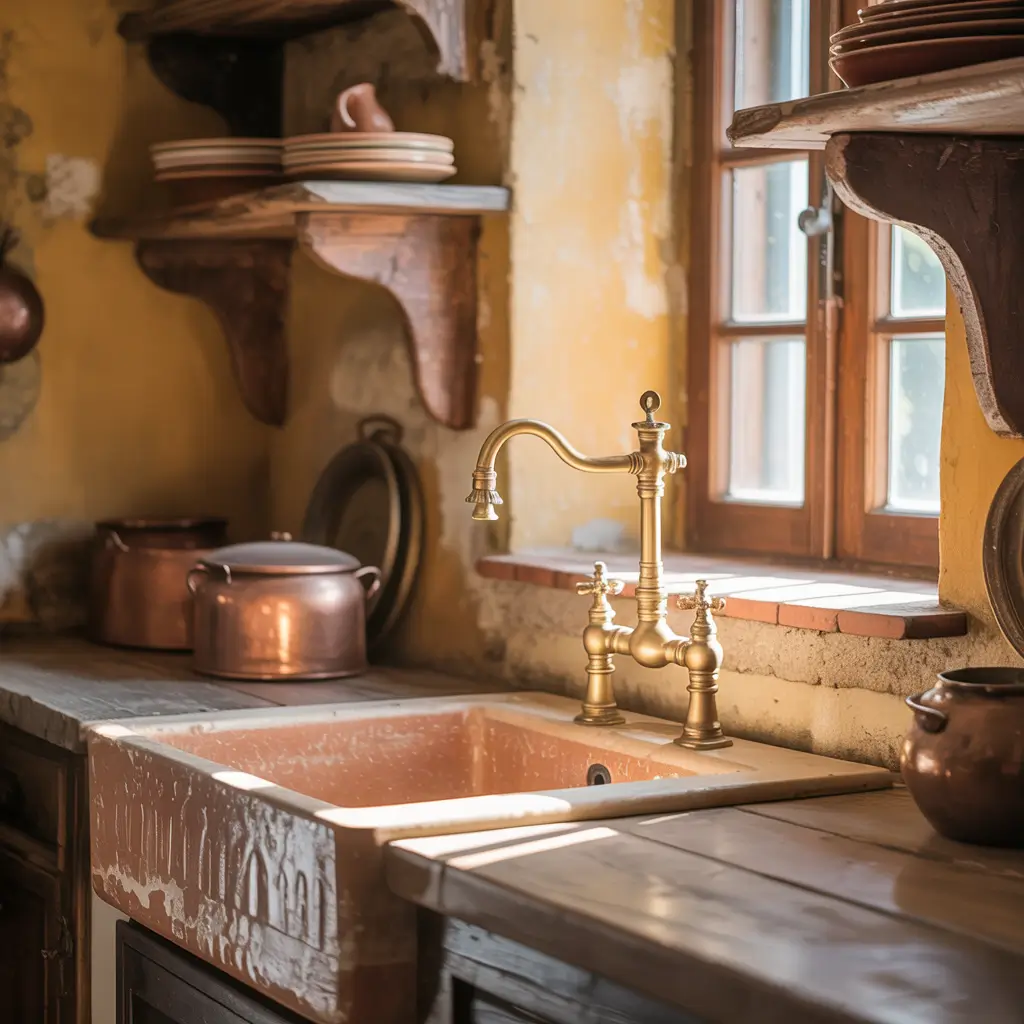
Textured plaster walls immediately transport any kitchen to the Italian countryside. Unlike flat painted drywall, plaster offers depth, dimension, and that imperfect beauty that defines rustic design.
Venetian plaster, lime wash, and other traditional techniques create surfaces that seem to glow from within. The subtle variations in texture catch light differently throughout the day, making your kitchen feel alive and dynamic.
Plaster Techniques to Consider
Different applications create vastly different effects:
- Venetian plaster: Smooth with a slight sheen, offering depth and movement
- Lime wash: Chalky, matte finish with beautiful natural variation
- Roman clay: Textured and earthy, perfect for achieving that aged look
- Tadelakt: Moroccan-influenced waterproof plaster ideal for backsplashes
FYI, these finishes typically require professional application for best results. They’re labor-intensive but absolutely worth the investment for achieving that authentic Italian farmhouse feel.
9. Vintage Italian Farmhouse Pantry Nook
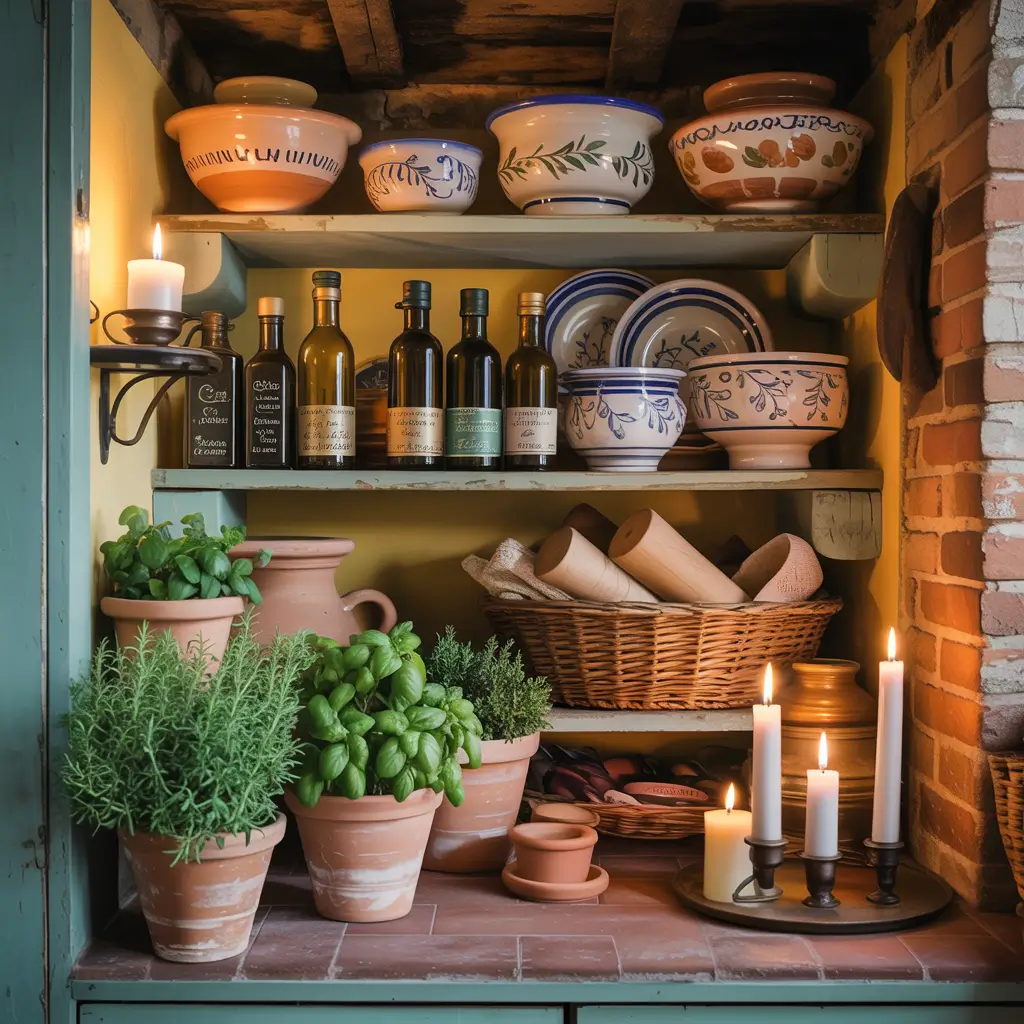
Every Italian farmhouse kitchen needs a dedicated pantry nook—a charming alcove filled with preserved goods, dried herbs, and all the essentials for creating rustic meals. This isn’t just storage; it’s a design element with serious aesthetic potential.
Think floor-to-ceiling open shelving, woven baskets, glass jars filled with pasta and legumes, and maybe a small marble shelf for cheese and bread. The pantry nook celebrates abundance and hospitality, core values of Italian culinary culture.
Creating Your Pantry Nook
Even smaller kitchens can incorporate a pantry-style corner. Here’s how:
- Repurpose a closet: Convert a nearby closet into an open pantry with shelving
- Build into an alcove: Utilize awkward spaces or recessed areas
- Freestanding furniture: An antique armoire or hutch works beautifully
- Glass-front cabinets: If you prefer closed storage, opt for glass doors to maintain visibility
Stock your pantry nook with beautiful containers: ceramic crocks, wicker baskets, vintage tins, and clear glass jars. The display becomes the decor.
Also Read: 15 Stunning Yellow Farmhouse Kitchen Ideas for Small Kitchens
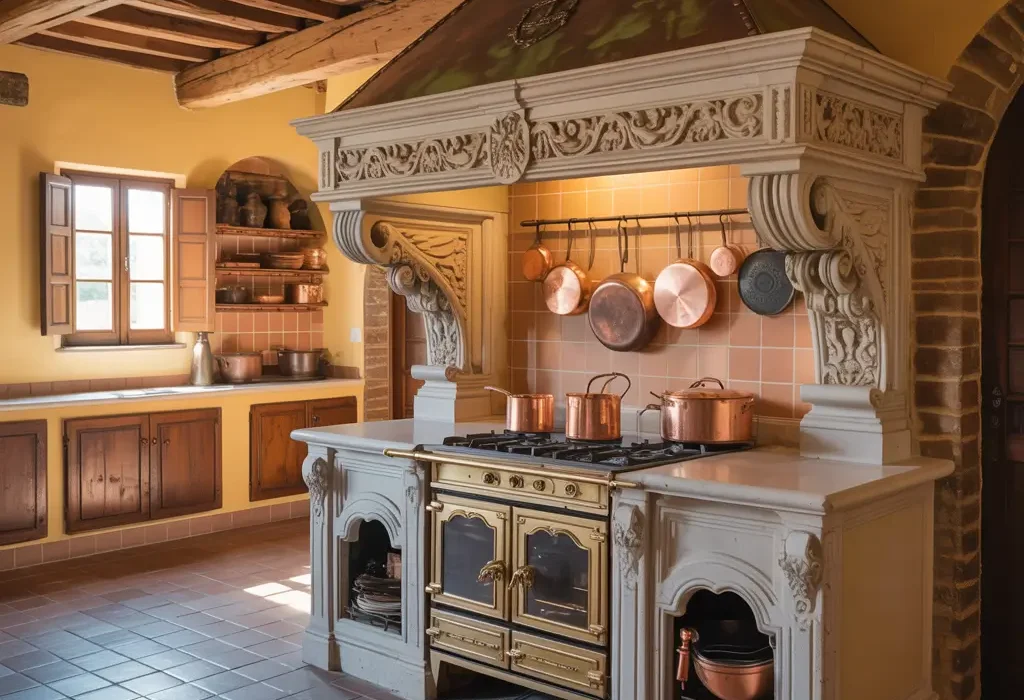
10. Old-World Farmhouse Stove Surround
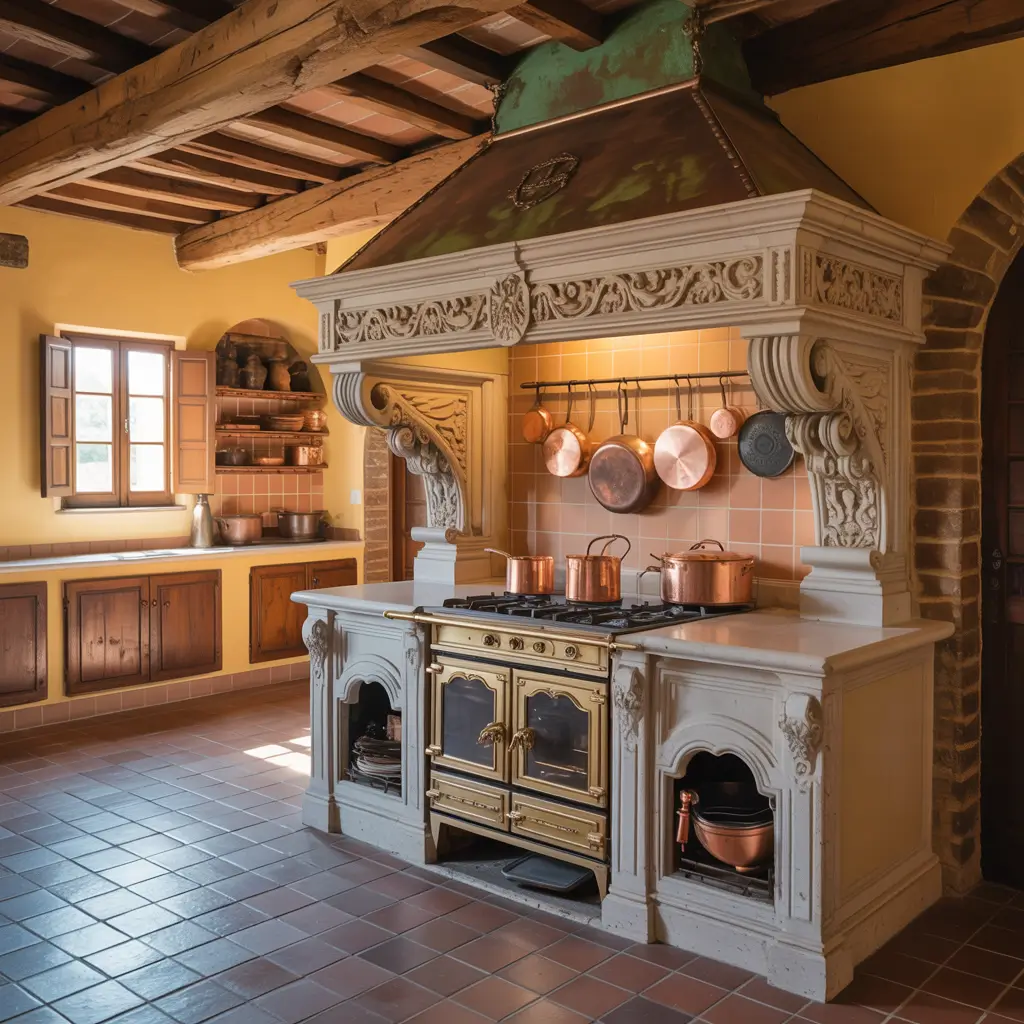
The stove is the heart of any kitchen, and in an Italian farmhouse design, the stove surround deserves special attention. This area should feel like an altar to good cooking—because in many ways, it is.
Traditional Italian kitchens often featured built-in cooking alcoves with decorative tile work, stone surrounds, and niches for storing essential oils and seasonings. Recreating this look adds instant Old World charm.
Elements of a Stunning Stove Surround
Consider these features when designing your focal point:
- Decorative hood: Whether arched, hammered metal, or tile-clad, the hood anchors the design
- Tile accent: A patterned tile medallion or border behind the range adds visual interest
- Built-in shelving: Small niches on either side for olive oil, salt cellars, or herbs
- Mantel detail: A stone or wood mantel above the stove creates architectural presence
- Pot filler: A functional addition that also enhances the professional feel
The stove surround should feel intentionally designed, not like an afterthought. This is where your rustic kitchen vision comes together.
11. Italian Terracotta and Marble Mix Kitchen
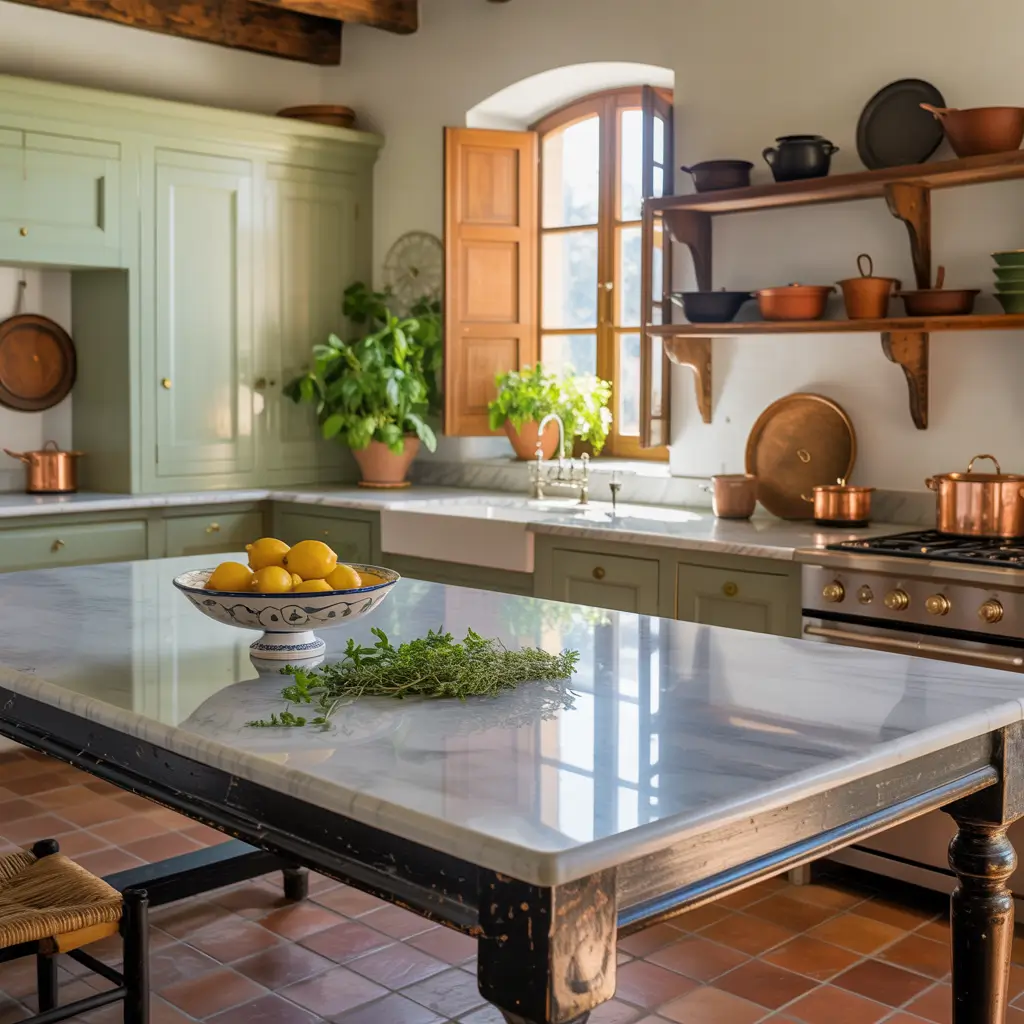
Why choose between materials when you can have both? The combination of terracotta and marble is quintessentially Italian, blending rustic warmth with refined elegance.
This pairing works because the materials contrast beautifully—the organic imperfection of terracotta against the smooth sophistication of marble. You’ll find this combination throughout Italy, from ancient churches to contemporary restaurants.
Balancing the Mix
The key is strategic placement:
- Terracotta flooring with marble counters: Classic combination with excellent visual balance
- Marble backsplash with terracotta accents: Creates depth and texture
- Marble-topped island with terracotta base: Distinguishes the island as a focal point
- Mixed tile patterns: Some manufacturers offer patterned tiles that incorporate both materials
Choose Carrara or honed marble over heavily polished varieties for better harmony with rustic elements. The slightly softer finish feels more appropriate for farmhouse aesthetics.
12. Earthy Tuscan Farmhouse Island Design
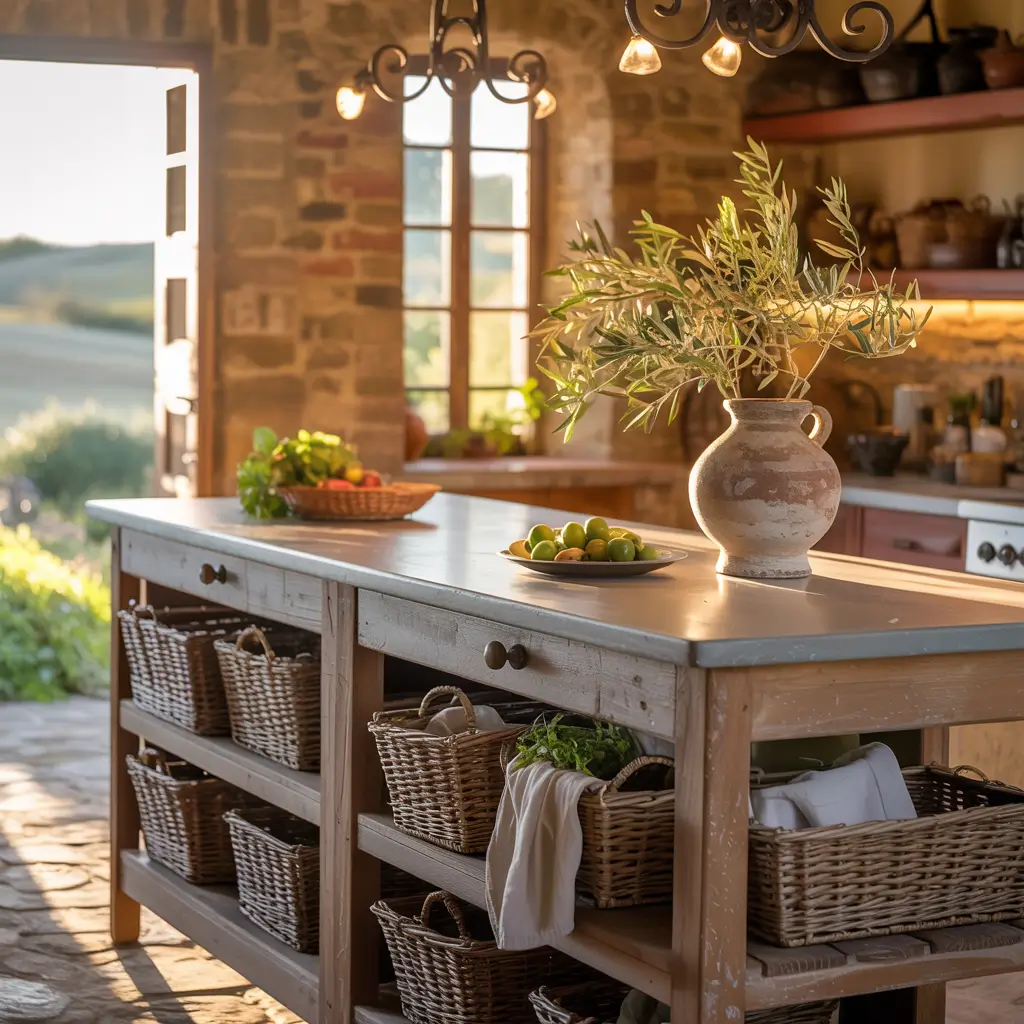
A well-designed kitchen island serves as the anchor of any farmhouse cooking space. In Italian-style kitchens, the island should feel like a piece of furniture—something with history and character, not a prefabricated unit.
The best farmhouse islands incorporate interesting materials, thoughtful proportions, and functional features that support serious cooking and casual gathering.
Island Design Elements to Consider
When planning your Tuscan-style island, think about these features:
- Reclaimed wood base: Adds instant age and authenticity
- Stone or butcher block top: Natural materials that improve with use
- Turned legs or corbels: Architectural details that elevate the design
- Open shelving below: Store cookbooks, baskets, or ceramic pieces
- Mixed finishes: Painted base with natural wood top creates visual interest
- Integrated seating: Counter stools invite lingering conversation
The island should feel like it could have been a freestanding farm table in another life—functional, beautiful, and welcoming.
13. Warm Walnut Cabinet Italian Kitchen
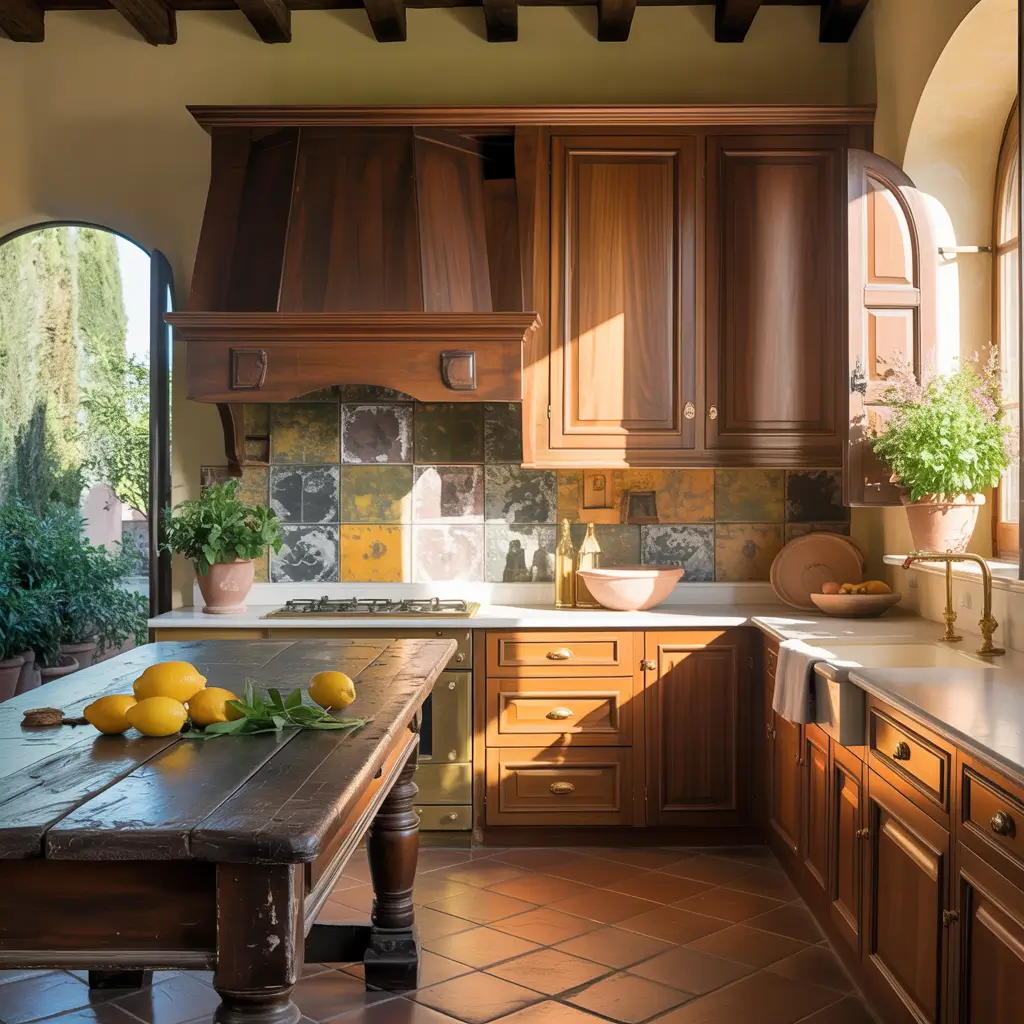
Cabinet choice makes or breaks a kitchen design, and for Italian farmhouse vibes, warm walnut hits the sweet spot between rustic and refined. This rich wood tone offers depth without the heaviness of darker species like ebony or espresso stains.
Walnut cabinetry pairs beautifully with cream-colored walls, natural stone, and brass or bronze hardware. It feels timeless rather than trendy—exactly what you want for a major investment like custom cabinets.
Walnut Cabinet Styling Tips
Make your walnut cabinets shine with these considerations:
- Natural finish: Skip heavy lacquers in favor of matte or satin finishes that let the wood grain show
- Simple profiles: Shaker-style or flat-panel doors suit farmhouse aesthetics
- Mixed with painted cabinets: Walnut island with painted perimeter cabinets creates visual variety
- Hardware selection: Antique brass, oil-rubbed bronze, or even iron hardware complements walnut beautifully
- Upper cabinet treatment: Consider open shelving or glass-front uppers to prevent the space from feeling closed in
The warmth of walnut creates an incredibly inviting atmosphere—perfect for kitchens designed around gathering and connection.
14. Farmhouse Brick Backsplash Italian Kitchen
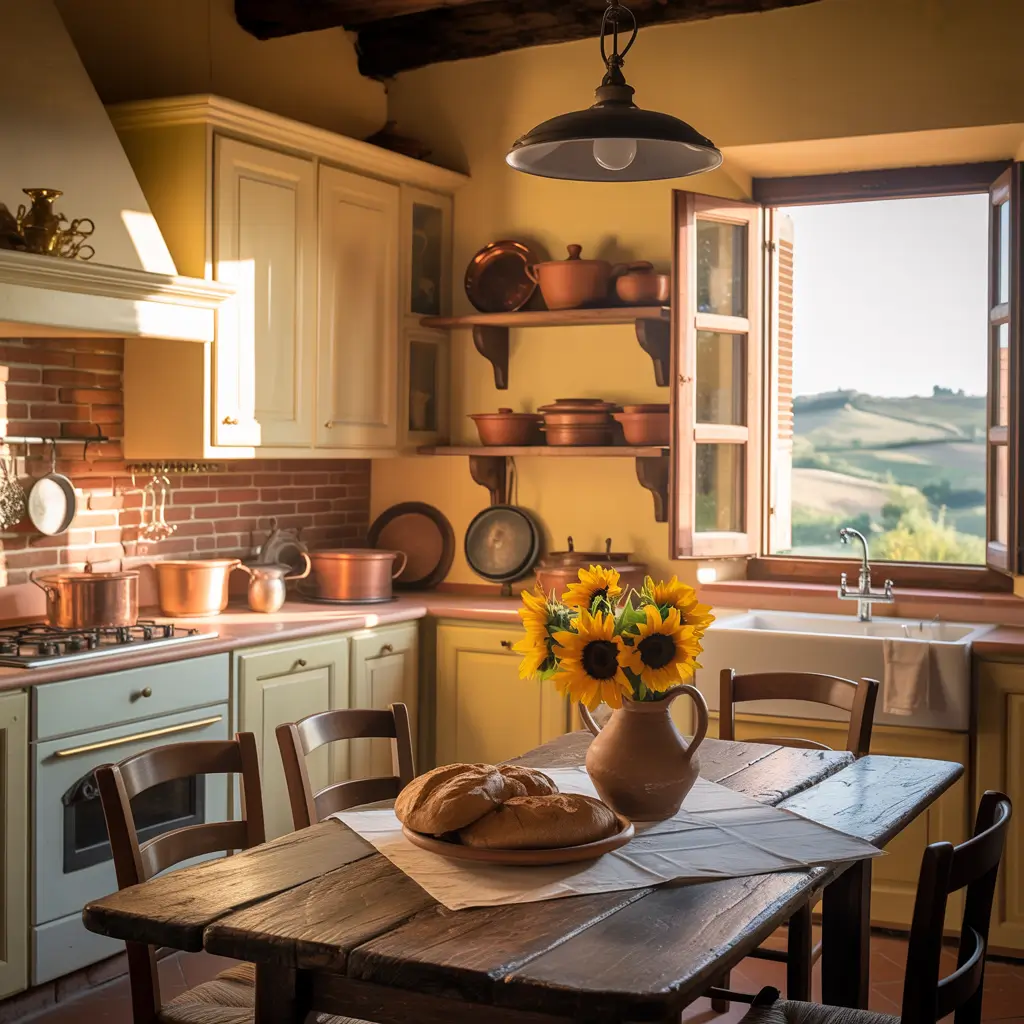
Exposed brick brings texture, history, and undeniable character to any kitchen. Whether it’s original brick uncovered during renovation or newly installed thin-cut brick veneer, this material instantly establishes rustic credentials.
The irregular surface and warm tones of brick create the perfect backdrop for Italian farmhouse cooking. It’s durable, heat-resistant, and only gets better with age—much like a good bottle of Chianti.
Working with Brick in Your Kitchen
Here are practical considerations for incorporating brick:
- Full wall or focal area: Determine whether brick covers the entire backsplash zone or just behind the range
- Whitewashed or natural: Whitewashed brick feels lighter and more casual, while natural brick adds warmth
- Sealing requirements: Brick needs proper sealing to prevent grease absorption and staining
- Grout color choice: Cream or gray grout blends naturally, while white grout creates more contrast
- Thin brick veneer options: Perfect for achieving the look without structural changes
Pair your brick backsplash with open shelving and copper accents for maximum farmhouse impact.
15. Italian Farmhouse Lantern-Lit Cooking Space
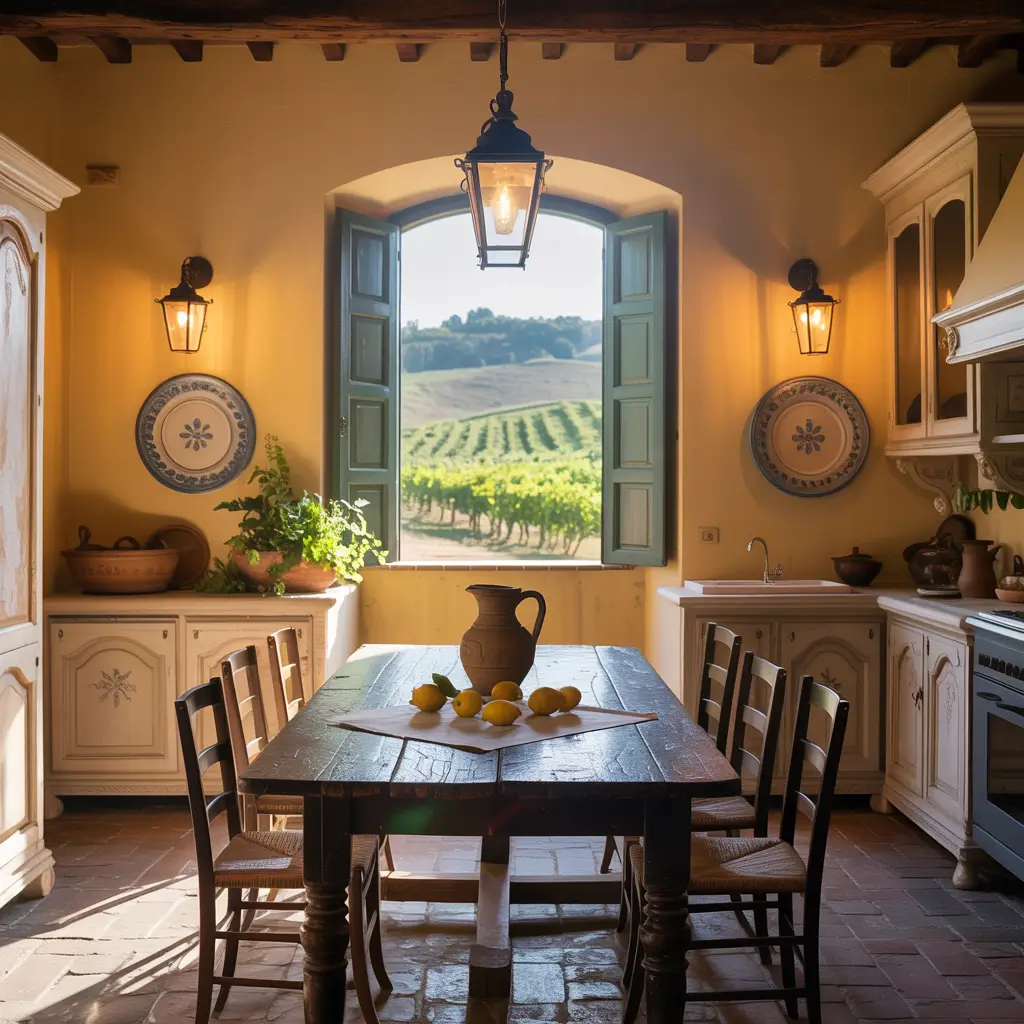
Lighting sets the mood for everything, and in an Italian farmhouse kitchen, lantern-style fixtures create atmospheric magic. These fixtures evoke candlelit dinners, ancient stone structures, and the romance of the Italian countryside.
Modern lantern lighting offers the best of both worlds: Old World aesthetics with contemporary functionality. Dimmable LED options inside wrought iron or aged brass frames give you flexibility without sacrificing style.
Lantern Lighting Ideas for Your Kitchen
Layer your lighting for both function and ambiance:
- Pendant lanterns over the island: Scale appropriately—larger lanterns make bigger statements
- Wall-mounted sconces: Flank windows or frame the range hood
- Chandelier-style lanterns: Perfect for kitchens with higher ceilings or eat-in areas
- Material choices: Wrought iron, aged brass, rusted metal, or even reclaimed lantern conversions
- Glass options: Clear glass maximizes light, while seeded or textured glass adds character
The goal is creating a kitchen that feels magical at night—a space where the soft glow of lantern light invites lingering conversations over wine and good food.
Bringing It All Together
Creating an Italian farmhouse kitchen isn’t about following a rigid formula—it’s about layering authentic materials, warm colors, and thoughtful details that speak to your personal style. Whether you incorporate all fifteen of these ideas or just a few, the key is coherence and intention.
The best Italian farmhouse kitchens feel collected over time, not designed in a single weekend shopping trip. Mix new and old. Embrace imperfection. Choose materials that age gracefully. And above all, create a space that invites gathering, cooking, and celebration.
Your kitchen should make you want to spend time there—whether you’re preparing a simple weeknight meal or hosting a feast for friends. That’s the true spirit of Italian farmhouse living: a celebration of food, family, and the beauty of everyday moments.