

15 Gorgeous Living Room Inspiration Ideas on a Budget
Look, I get it. You’ve been scrolling through Pinterest for the millionth time, drooling over those impossibly perfect living rooms, and then you check your bank account and reality slaps you right in the face. But here’s the thing—you don’t need to sell a kidney to create a stunning living room that makes your guests go “wow.”
I’ve spent years transforming living spaces on shoestring budgets, and honestly? Some of my favorite rooms came together with thrift store finds, DIY projects, and a whole lot of creative thinking. The secret isn’t about how much money you throw at a space; it’s about knowing where to invest and where to fake it ’til you make it.
So grab your coffee (or wine, no judgment here), and let’s walk through 15 absolutely gorgeous living room styles that won’t require you to eat ramen for the next six months. Trust me, your living room is about to get a serious glow-up.
Cozy Neutral Living Room Inspiration
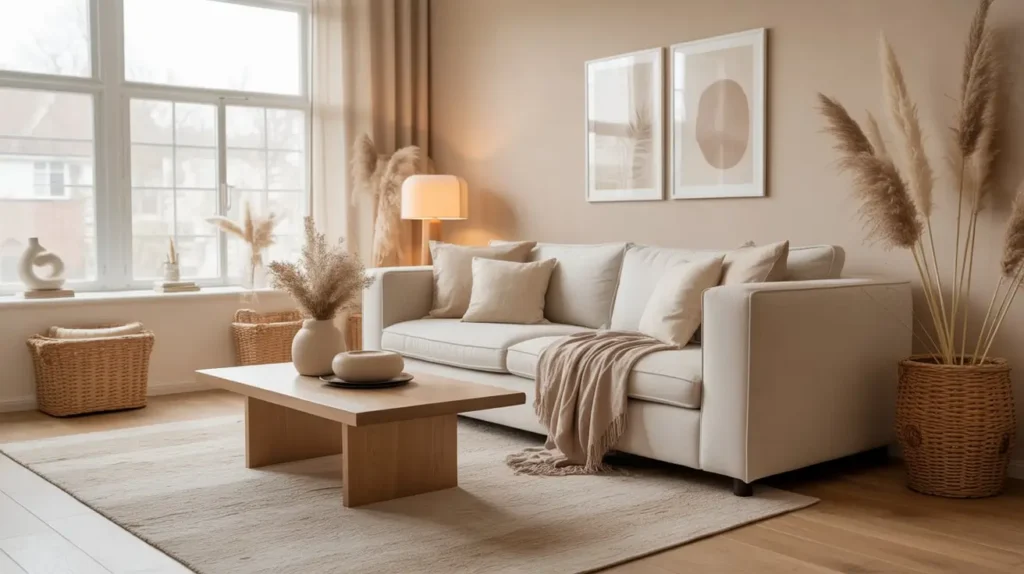
Neutrals are basically the little black dress of interior design—they never go out of style, and they make everything look expensive. I’m talking about those dreamy beiges, warm taupes, soft whites, and creamy ivories that make you want to curl up with a book and never leave.
The beauty of a neutral living room? You can build it gradually without everything clashing. Start with a neutral sofa (check Facebook Marketplace or Craigslist—seriously, people give away great stuff), then layer in different textures. This is where the magic happens, folks.
Here’s what makes neutral rooms pop without breaking the bank:
- Mix textures like your life depends on it: Chunky knit throws, linen pillows, jute rugs, velvet cushions
- Add warmth with wood tones: Thrifted wooden coffee tables, floating shelves from IKEA, bamboo baskets
- Layer your lighting: Table lamps from discount stores, string lights (yes, they work outside of dorm rooms), DIY paper lanterns
The trick is to avoid making your space look like a beige blob. Ever walked into a room that felt like sensory deprivation? Yeah, we’re not doing that. Instead, you want to create depth by using different shades of neutrals—think cream walls, taupe sofa, ivory curtains, and mushroom-colored accents.
I once transformed my friend’s living room using only thrift store finds and paint. We snagged a $50 sofa, covered it with a $30 slipcover from Amazon, and suddenly it looked like something from Pottery Barn. Add some $5 throw pillows from HomeGoods, and boom—instant coziness.
Modern Boho Living Room Vibes
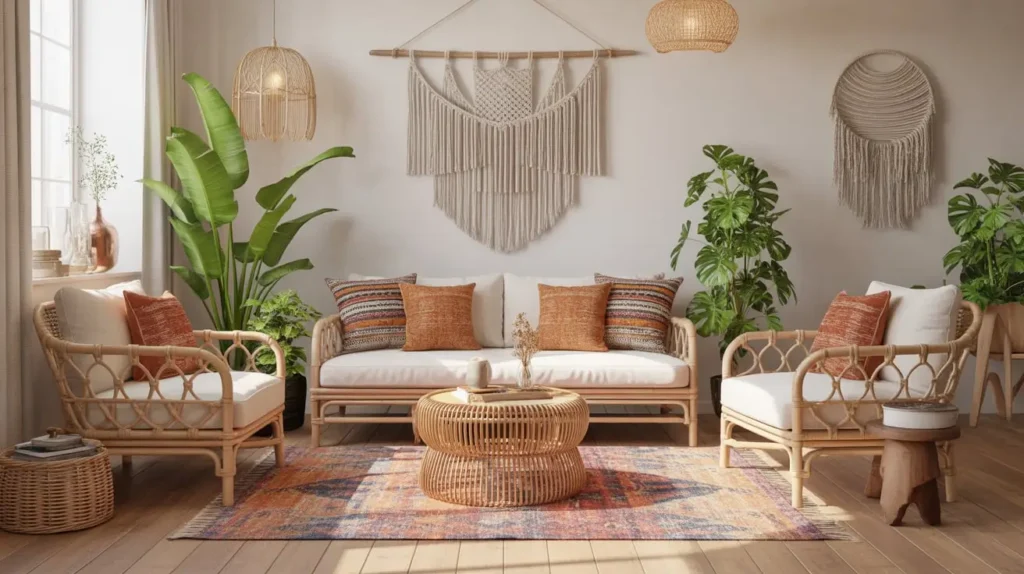
Ah, boho—the style that lets you be a hot mess and call it “eclectic.” But when you nail it? Chef’s kiss. Modern boho takes traditional bohemian elements and cleans them up just enough so your mom won’t ask if you need help organizing.
The boho budget secret is that it actually celebrates mismatched items. That random macramé wall hanging you made during quarantine? It belongs here. Those plants you keep impulse-buying? Perfect. The vintage rug you found at a garage sale? Absolutely.
Budget boho essentials:
- Macramé everything: Learn to DIY it on YouTube (it’s easier than it looks, promise)
- Plants, plants, and more plants: Propagate from friends’ plants or hit up your local nursery’s clearance section
- Rattan and wicker pieces: Check thrift stores—everyone’s grandma had these
- Floor cushions and poufs: Make them yourself with cheap fabric and old pillows as stuffing
- Layered textiles: Mix patterns without fear—stripes with florals with geometric prints
The color palette for modern boho leans toward earthy tones—terracotta, mustard yellow, sage green, and lots of natural wood. But here’s where you save money: you don’t need to buy everything new. Spray paint that old metal shelf in matte black. Dye those white curtains with cheap fabric dye. Get creative, people!
IMO, the best boho rooms look like they evolved over time, so don’t stress about getting everything perfect immediately. Add pieces as you find them, and embrace the imperfection. That’s literally the whole vibe.
Scandinavian Minimalist Living Room
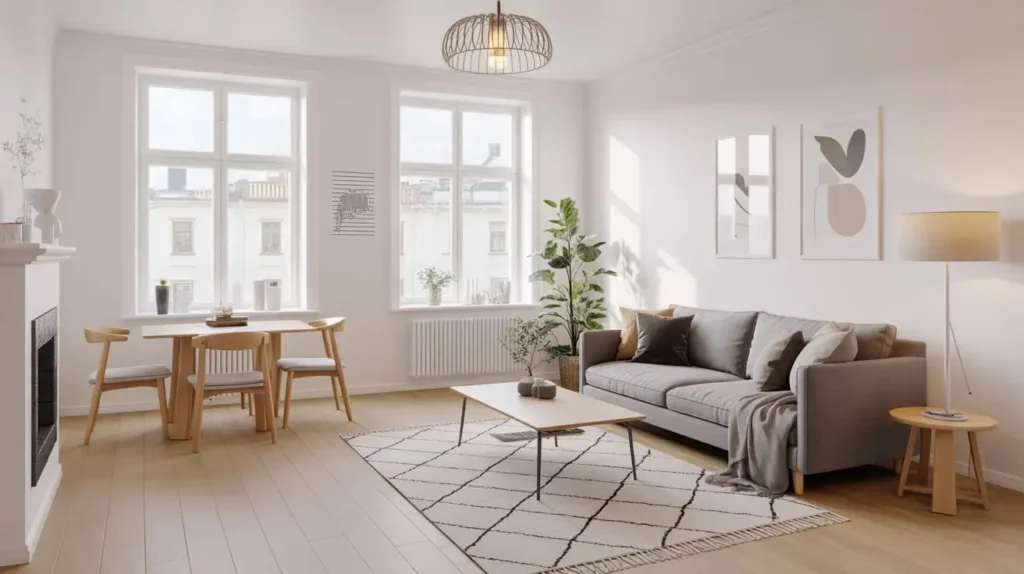
Scandi style is basically the art of making “less is more” look ridiculously good. Clean lines, functional furniture, and a color palette that makes you feel calm just looking at it—that’s the Scandinavian way.
Budget win: Minimalism means you need LESS stuff. Mind. Blown. You’re literally saving money by buying fewer things. But the things you do buy need to be functional and well-designed.
Your Scandinavian shopping list:
- White or light gray walls: Paint is cheap, and these colors make small spaces feel huge
- Simple, clean-lined furniture: IKEA is basically Scandinavian royalty for a reason
- Natural materials: Light wood (pine or birch), cotton, linen, wool
- Minimal decor: One statement plant, a simple art print, maybe a cozy throw
- Smart storage solutions: Baskets, hidden storage ottomans, wall-mounted shelves
The Scandi look loves natural light, so ditch those heavy curtains. Go for sheer white panels or nothing at all (if privacy allows). I spent $20 on simple white curtains from Target, and they completely transformed the room’s airiness.
Here’s a trick I learned: Scandi rooms rely heavily on good lighting because, hello, those Nordic winters are dark. You don’t need expensive designer lamps though. Look for simple, sculptural designs at budget stores. I found an amazing arc lamp at HomeGoods for $60 that looks like it cost ten times that.
Elegant Beige and Cream Living Room
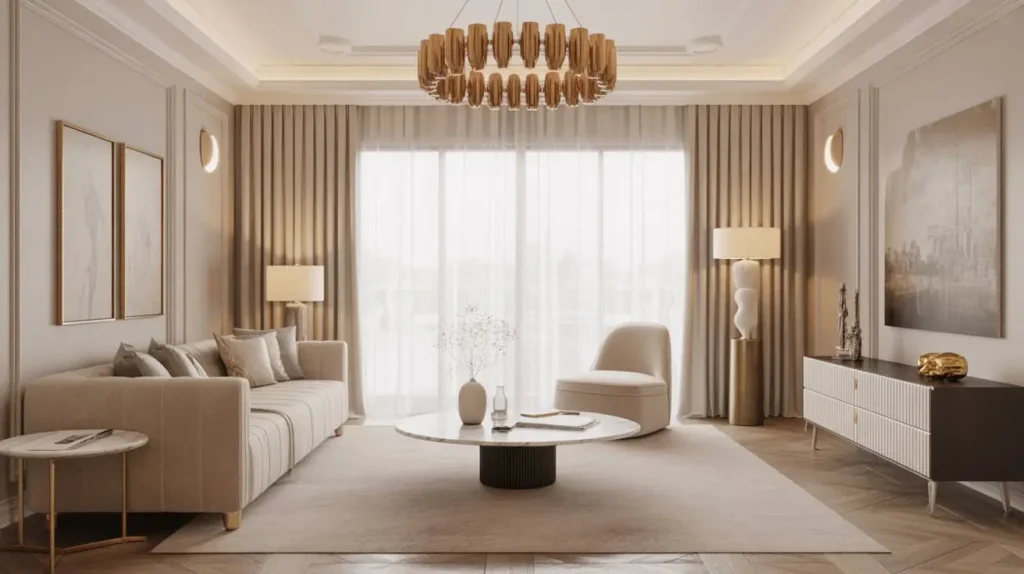
Some people say beige is boring. Those people lack imagination :/
When you layer beiges and creams properly, you create this sophisticated, timeless elegance that whispers “expensive taste” without screaming “expensive price tag.” We’re talking old-money vibes on a new-money budget.
The key to pulling off beige and cream is contrast and texture. Otherwise, yeah, it’ll look boring. Sorry, but it’s true. You need to play with different shades and materials to create visual interest.
How to make beige look bougie:
- Vary your shades: Pair warm beiges with cool creams, add some caramel and champagne tones
- Bring in metallics: Gold or brass accents elevate everything (spray paint is your friend)
- Layer luxe-looking textiles: Faux fur throws, velvet pillows, silk-look curtains (all fake, all budget-friendly)
- Add architectural interest: Crown molding is DIY-able, or try peel-and-stick options
- Invest in one statement piece: A beautiful mirror, an elegant light fixture, or a stunning coffee table
I’ll be honest—I was a beige skeptic until I helped my sister create her living room. We painted everything in different shades of cream and beige, added brass hardware to her thrifted furniture, and brought in tons of texture through pillows and throws. The result? Everyone thought she hired a designer.
The secret sauce? Good lighting. Beige rooms can look drab in bad lighting but absolutely glow in warm, layered light. Use Edison bulbs in your lamps for that warm, expensive-looking glow.
Moody Dark-Toned Living Room Aesthetic
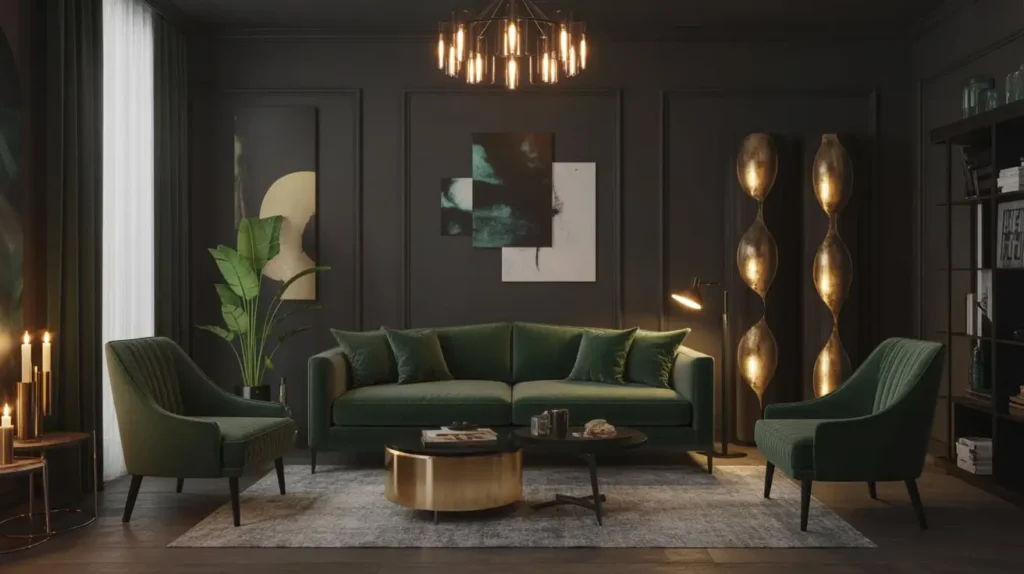
Ready to walk on the wild side? Dark walls aren’t just for goths and vampires anymore (though they’re welcome too). Moody, dark-toned living rooms are having a major moment, and honestly, they’re dramatic, cozy, and surprisingly budget-friendly.
Plot twist: Dark paint can actually hide imperfections better than light paint. That weird wall texture? Those small dings? Dark colors are forgiving. Plus, one gallon of paint is like $30-40, and suddenly your entire room looks intentional and designer-ish.
Creating your moody masterpiece:
- Choose your dark base: Charcoal, navy, deep green, or even black (be brave!)
- Layer in rich textures: Leather (or faux leather), velvet, thick wool
- Add warm lighting: This is crucial—dark rooms need multiple light sources
- Incorporate metallics: Gold, brass, or copper pops against dark walls
- Balance with lighter elements: Cream pillows, light wood furniture, white art
Ever wondered why restaurant interiors often use dark colors? Because they create intimacy and drama. You can achieve the same effect at home without the restaurant budget.
I painted an accent wall deep charcoal in my living room, and people legitimately thought I’d done a full renovation. The paint cost 35.IaddedsomebrasssconcesfromAmazon(35.IaddedsomebrasssconcesfromAmazon(40 for a pair), and suddenly the room had this moody, sophisticated vibe that made my previous beige walls look sad in comparison.
Pro tip: Don’t paint all four walls dark if your room is tiny or lacks natural light. One or two accent walls can give you the drama without making the space feel like a cave.
Also Read: 15 Beautiful Minimalist Living Room Ideas for Serene Vibes
Rustic Farmhouse Living Room Charm
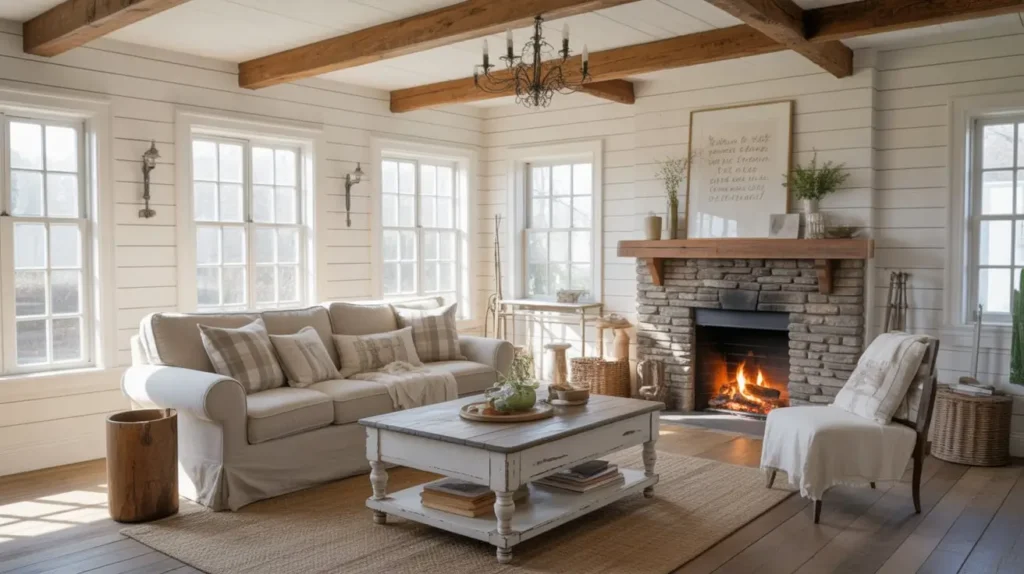
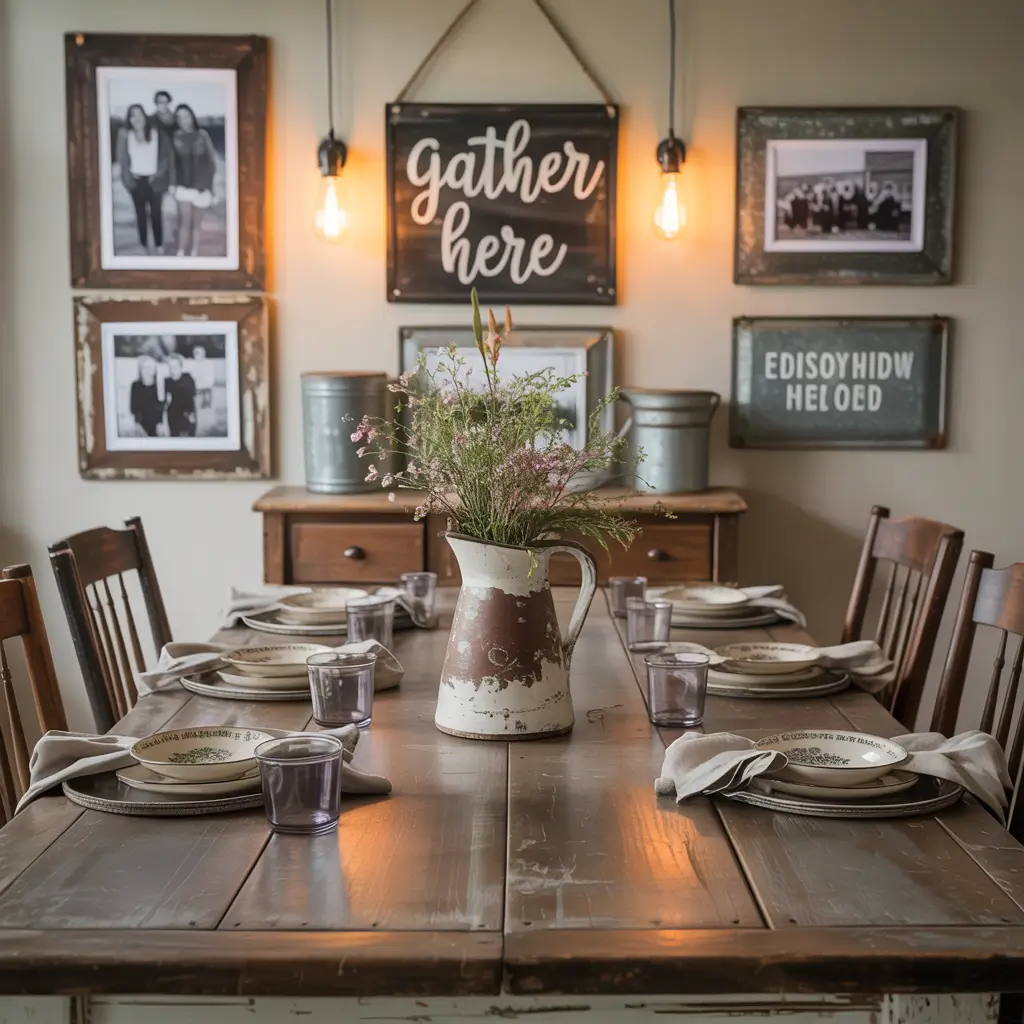
Farmhouse style refuses to die, and honestly? I’m not mad about it. There’s something comforting about shiplap, reclaimed wood, and that whole “I live in the countryside even though I’m in suburbia” aesthetic.
The beautiful thing about farmhouse style is that it literally celebrates old, worn, and distressed items. That table with scratches? Perfect. Those vintage finds that look like they’ve lived a life? Exactly what you need.
Budget farmhouse essentials:
- Shiplap or board-and-batten walls: DIY it with inexpensive pine boards or use peel-and-stick wallpaper
- Vintage or vintage-looking pieces: Scour estate sales, flea markets, and Facebook Marketplace
- Neutral color palette with pops of rustic color: Whites, creams, grays with touches of rustic red or blue
- Natural materials: Wood, metal, cotton, burlap, galvanized steel
- Cozy textiles: Plaid throws, linen pillows, chunky knit blankets
FYI, you can “farmhouse-ify” almost anything with the right treatment. I once took a modern IKEA coffee table, distressed it with sandpaper and dark wax, and suddenly it looked like a farmhouse antique. Cost? Maybe $10 in materials plus the table.
The farmhouse look loves functional decor. Vintage ladders as blanket holders, galvanized buckets for plants, old wooden crates as shelving—all of these serve a purpose while looking intentionally rustic. And the best part? They’re often cheaper than buying traditional furniture.
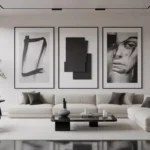
Contemporary Art-Inspired Living Room
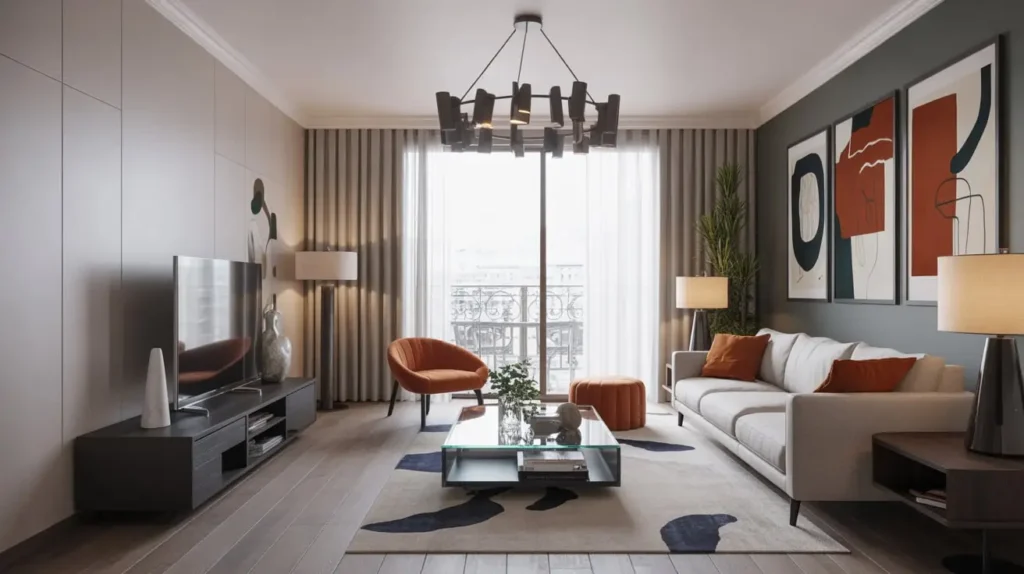
Who says you need thousands of dollars worth of gallery art to create an art-inspired living room? This style is all about letting art take center stage, creating a space that feels curated, creative, and culturally aware.
The budget hack here is simple: you’re focusing investment on art (or art-looking things) while keeping everything else minimal and understated. Your furniture becomes the gallery walls; your art becomes the star.
Creating your gallery vibe:
- Print your own art: Download high-resolution images from museum databases (many are free!) and print at FedEx or Staples
- Frame smartly: IKEA frames, thrifted frames painted to match, or DIY floating frames
- Keep furniture simple: Let the art shine by choosing neutral, modern furniture
- Create a gallery wall: Mix frame sizes and art styles for that eclectic curator look
- Add sculptural elements: Even budget-friendly abstract sculptures from HomeGoods or Target work
I created an entire gallery wall for under $100. How? I printed oversized black and white photography from free museum archives, used IKEA frames, and arranged them in a grid pattern. People assume they’re expensive originals, and I just smile mysteriously.
Contemporary art-inspired rooms work on any budget because “art” is subjective. That thrift store abstract painting? Art. Your kid’s actually-pretty-good watercolor? Art. That interesting textile you found? Also art. You’re the curator here.
Coastal Blue and White Living Room
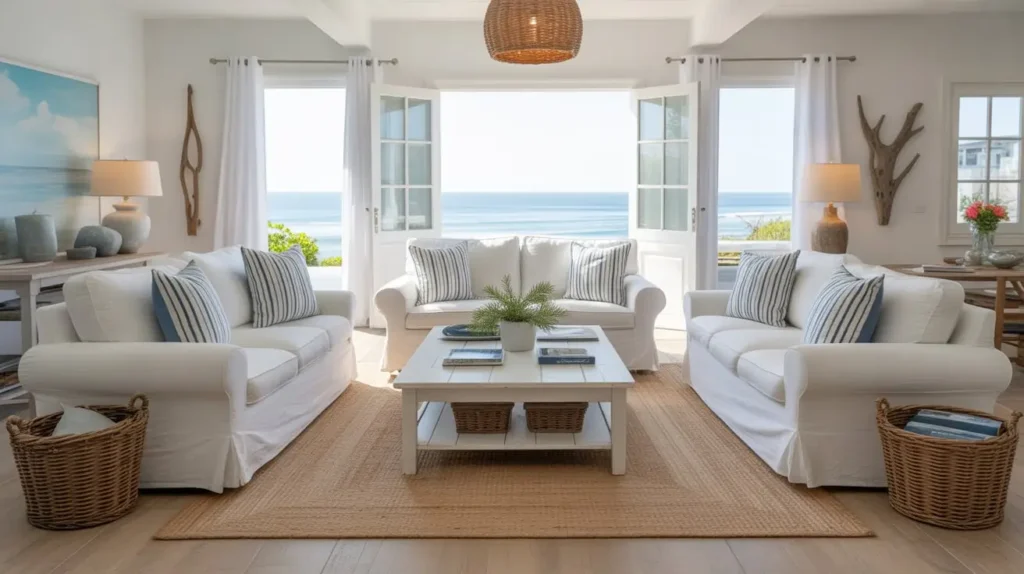
Close your eyes and imagine a beach house. Got it? Now open your eyes because we’re creating that vibe without the beachfront property price tag.
Coastal style is breezy, relaxed, and honestly perfect for people who want their living room to feel like a permanent vacation. The color palette does most of the heavy lifting here—blues and whites instantly evoke that seaside feeling even if you’re landlocked in the middle of nowhere.
Your coastal living room toolkit:
- Blue and white color scheme: Navy, sky blue, seafoam, aqua paired with crisp whites
- Natural textures: Jute rugs, seagrass baskets, driftwood accents, rope details
- Light and airy fabrics: White linen, cotton slipcovers, sheer curtains
- Beach-inspired decor: Shells, coral (faux is fine), glass bottles, nautical elements
- Weathered wood furniture: Or make new wood look weathered with paint techniques
The coastal look practically begs you to shop secondhand. Hit up those beach town thrift stores (if you can) or just look for anything vaguely nautical at your local spots. I found an amazing rope-wrapped mirror at Goodwill for $8 that would’ve cost $80+ new.
Want to instantly coastal-fy your space? Paint something blue. An accent wall in soft blue, a piece of furniture in navy, or even just blue throw pillows can shift the entire vibe. I painted an old bookshelf in a beautiful coastal blue, and it became the room’s focal point.
Japandi Calm Living Room Design
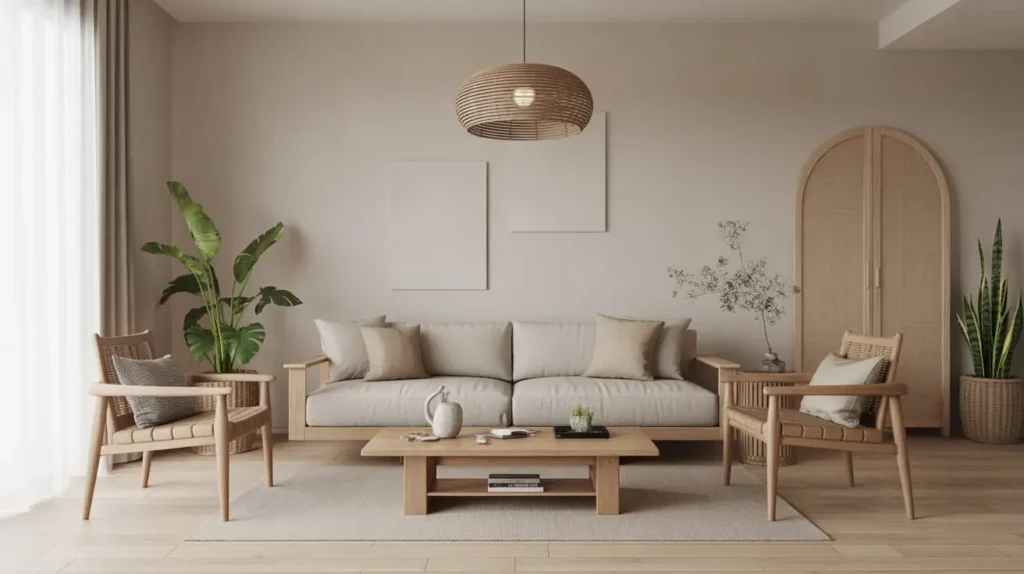
Japandi is what happens when Japanese minimalism and Scandinavian coziness have a baby, and that baby is absolutely perfect. This style combines the best of both worlds—the zen simplicity of Japanese design with the warm functionality of Scandinavian style.
Budget bonus: Both Japanese and Scandinavian design philosophies emphasize quality over quantity. You need less stuff, but what you have should be meaningful and well-made (or at least look that way).
Japandi fundamentals:
- Neutral color palette: Whites, beiges, grays, blacks, and soft greens
- Natural materials: Light woods, bamboo, rice paper, linen, cotton
- Low-profile furniture: Floor seating, low coffee tables, platform-style pieces
- Minimalist approach: Clear surfaces, hidden storage, intentional empty space
- Natural elements: Bonsai trees, bamboo, stones, simple ikebana-style arrangements
The Japandi vibe is all about creating calm through simplicity. Every item in the room should have a purpose. This actually makes decorating cheaper because you’re not filling every corner with stuff.
I transformed my meditation corner (yes, I’m that person) into a Japandi-inspired space for under $150. A low bamboo table from Amazon, a simple floor cushion, a small bonsai, and some floating shelves in light wood. The emptiness became the luxury, not the stuff.
Vintage Eclectic Living Room Mix

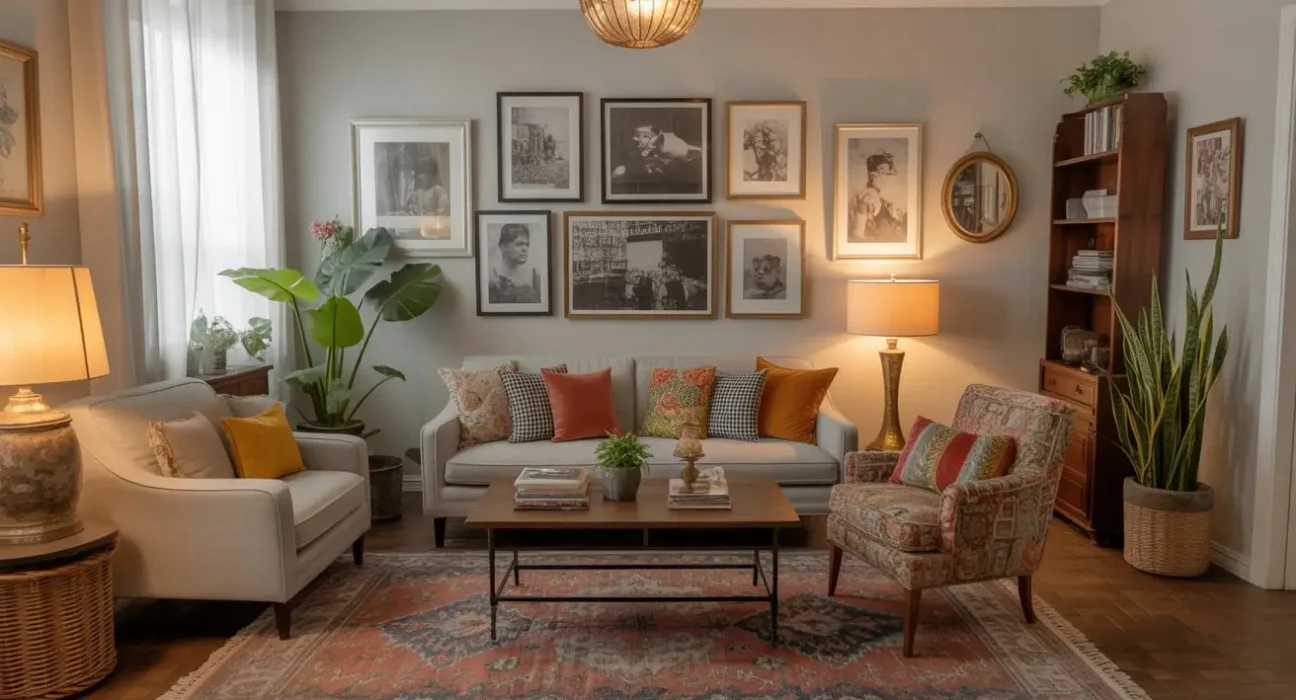
This is for my fellow maximalists who break into hives at the thought of minimalism. Vintage eclectic style celebrates collecting, mixing eras, combining patterns, and basically creating a space that tells a story—your story.
The budget magic of eclectic style? Everything’s supposed to be mismatched and collected over time. That secondhand chair? Meant to be there. That weird painting you found? Perfect. Nothing has to match, so nothing has to be expensive.
Eclectic mixing formula:
- Combine different eras: Mid-century modern with Victorian, Art Deco with contemporary
- Mix patterns fearlessly: Florals with stripes, geometric with paisley
- Layer colors: Don’t be afraid of rich, saturated hues alongside pastels
- Collect interesting pieces: Vintage finds, travel souvenirs, inherited items, flea market scores
- Display collections: Books, records, pottery, whatever you love
I spent years thinking you needed a “cohesive” room, and then I visited my friend’s apartment. She’d mixed her grandmother’s Victorian settee with a 1970s shag rug, modern art prints, and plants everywhere. It shouldn’t have worked, but it absolutely did. Her secret? She chose items she genuinely loved and found ways to make them talk to each other.
The eclectic approach actually saves money because you’re not rushing to buy a matching set. You find pieces gradually, and each addition should feel exciting, not obligatory.
Mid-Century Modern Living Room Style
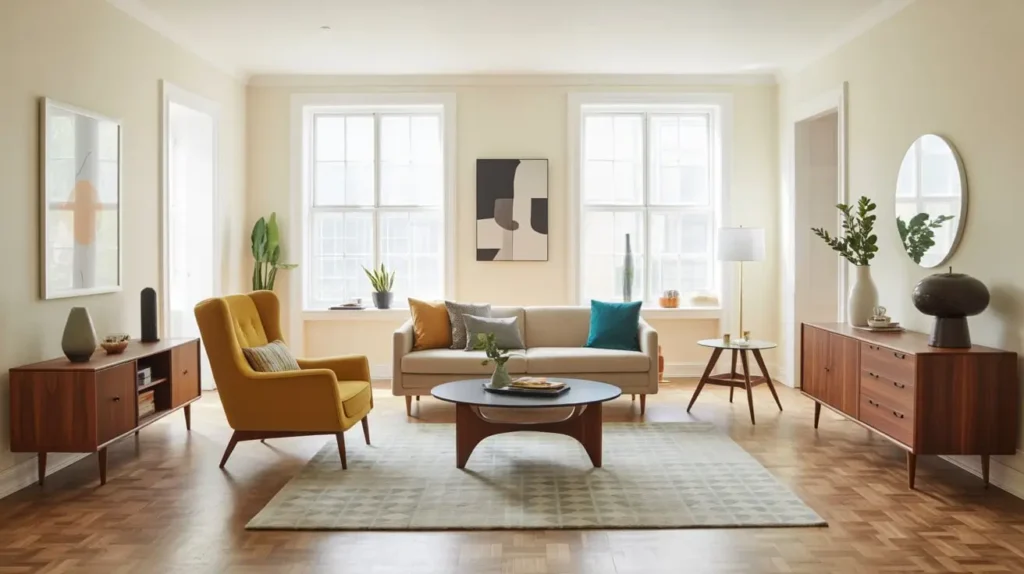
Mad Men made mid-century modern cool again (or maybe it never stopped being cool?). Those clean lines, tapered legs, organic curves, and functional beauty have serious staying power.
The weird thing about mid-century modern is that actual vintage pieces can be expensive OR dirt cheap, depending on where you shop and what you’re willing to refinish. Meanwhile, modern reproductions are everywhere and often affordable.
Mid-century must-haves:
- Tapered leg furniture: Sofas, chairs, coffee tables, media consoles
- Organic and geometric shapes: Both curves and angles, often in the same piece
- Warm wood tones: Walnut, teak, or walnut-stained alternatives
- Accent colors: Mustard yellow, burnt orange, avocado green, teal
- Iconic pieces (or lookalikes): Eames-style chairs, sunburst mirrors, tripod lamps
Want to know a secret? You can mid-century-mod almost any furniture with the right legs. I bought hairpin legs and tapered wooden legs in bulk online, then attached them to thrifted furniture and DIY pieces. A $20 side table suddenly looked like authentic 1960s design.
The mid-century color palette gives you permission to be bold. That mustard yellow throw pillow? Totally period-appropriate. Those orange curtains? Actually perfect. This style celebrates color in ways that other minimalist styles don’t.
Also Read : 15 Inspiring Luxury Living Room Ideas for Dream Interiors
Nature-Inspired Green Living Room
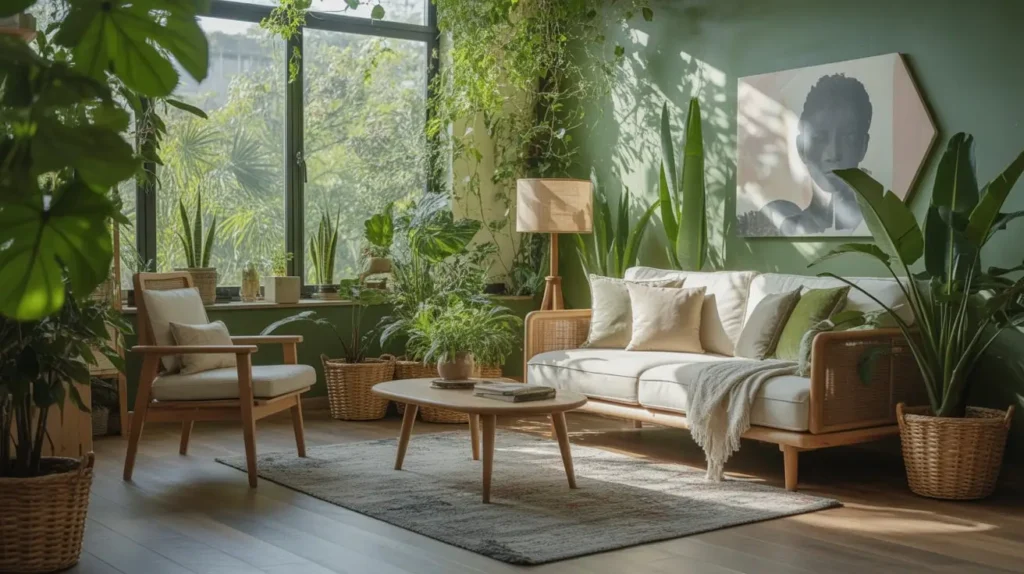
If cottagecore and indoor jungle vibes had a sophisticated older sibling, it would be the nature-inspired green living room. This trend brings the outdoors in through color, materials, and yes, lots of plants.
Green is having a serious moment right now, and I’m here for it. From sage to emerald to forest green, these colors create calming, refreshing spaces that feel connected to nature without actually requiring you to live in a forest.
Going green on a budget:
- Paint in green tones: Sage, olive, forest, or emerald—choose what speaks to you
- Bring in actual plants: Propagate from friends, buy from local nurseries, or start with pothos (impossible to kill)
- Use natural materials: Wood, stone, rattan, jute, clay
- Earth-toned accents: Browns, creams, terracotta, rust
- Botanical prints: DIY print your own or frame pressed leaves/flowers
I went crazy and painted an entire wall in this gorgeous sage green. The paint cost $32, and the transformation was instant. Suddenly my random assortment of plants looked intentional. I added some terracotta pots (dirt cheap at garden centers) and wooden shelving, and boom—nature sanctuary.
The best part about a green living room? Plants are the cheapest decor that also improve air quality. You can fill a room with greenery for way less than traditional decor, and it keeps growing and changing. Plus, if you learn to propagate, you basically have free decor forever.
Glam Gold Accent Living Room
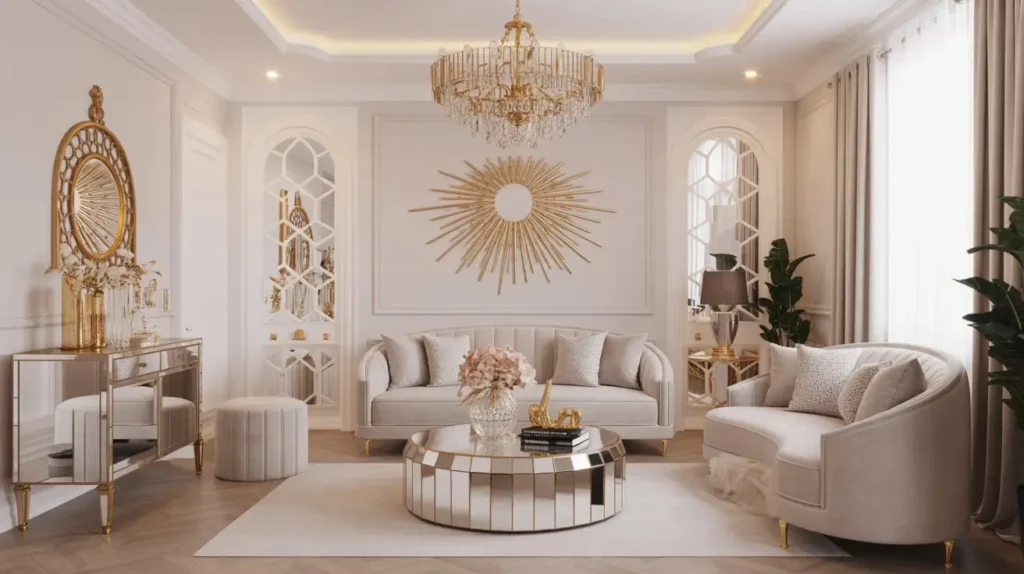
Okay, let’s get fancy. Or at least, let’s look fancy without spending fancy money. Glam style is all about luxury, sophistication, and a touch of “yes, I’m extra, and what about it?”
The trick with glam on a budget is knowing where to fake it. Strategic use of gold accents, plush textures, and jewel tones can create luxury vibes without the luxury price tag. You’re not buying real gold, people—you’re buying the gold spray paint and getting creative.
Budget glam essentials:
- Gold or brass accents: Spray paint is your best friend here
- Luxe textures: Velvet, faux fur, silk-look fabrics, mirrored surfaces
- Jewel tones: Emerald, sapphire, amethyst, ruby—go rich or go home
- Statement lighting: A chandelier or dramatic lamp becomes the focal point
- Mirrored or glass furniture: Reflects light and creates elegance
I transformed my entire living room’s vibe with one can of gold spray paint and a weekend. Gold picture frames, gold plant pots, gold drawer pulls, gold candle holders—suddenly everything looked coordinated and expensive. Total cost? Maybe $15 for the spray paint.
Glam style loves symmetry and drama. Pair your sofa pillows symmetrically, flank your TV with matching lamps, center that coffee table like your life depends on it. These choices cost nothing but make everything look intentional and designed.
Small Space Cozy Apartment Living Room
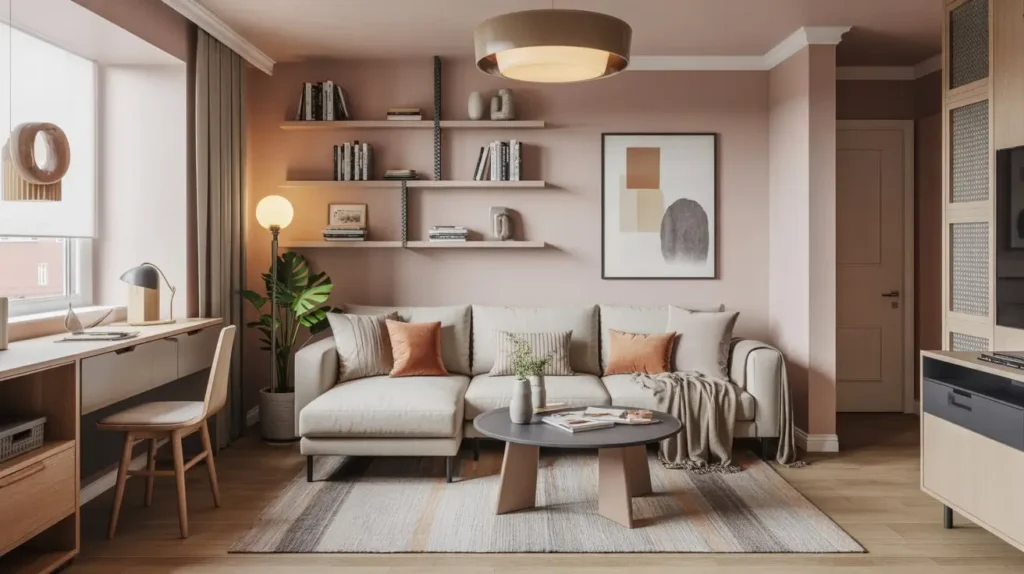
Living in a shoebox apartment? Join the club. Most of us aren’t working with sprawling spaces, which means we need to get creative with how we use every square inch.
Small space living actually forces you to be strategic, which often results in better design. You can’t fill a tiny living room with junk because there’s no room for junk. Everything needs to earn its place, which is basically the foundation of good design anyway.
Small space strategies:
- Multi-functional furniture: Ottomans with storage, sofa beds, nesting tables
- Vertical storage: Wall-mounted shelves, tall bookcases, hanging plants
- Light colors: Makes spaces feel larger and more open
- Mirrors: Strategically placed to reflect light and create depth
- Scale-appropriate furniture: Don’t try to fit a massive sectional in a tiny room
I lived in a 400-square-foot studio, and my “living room” was basically a corner. I used a loveseat instead of a full sofa, mounted my TV on the wall, and installed floating shelves for storage and display. Every piece of furniture served multiple purposes—the coffee table had storage, the ottoman was seating AND storage, the console table was also my desk.
The secret to small spaces? Embrace them. Stop trying to make your tiny apartment look bigger and instead make it cozy. Layer in soft lighting, add comfortable textiles, and create intimate seating arrangements. Small can be intentional, cozy, and absolutely gorgeous.
Black and White Chic Living Room
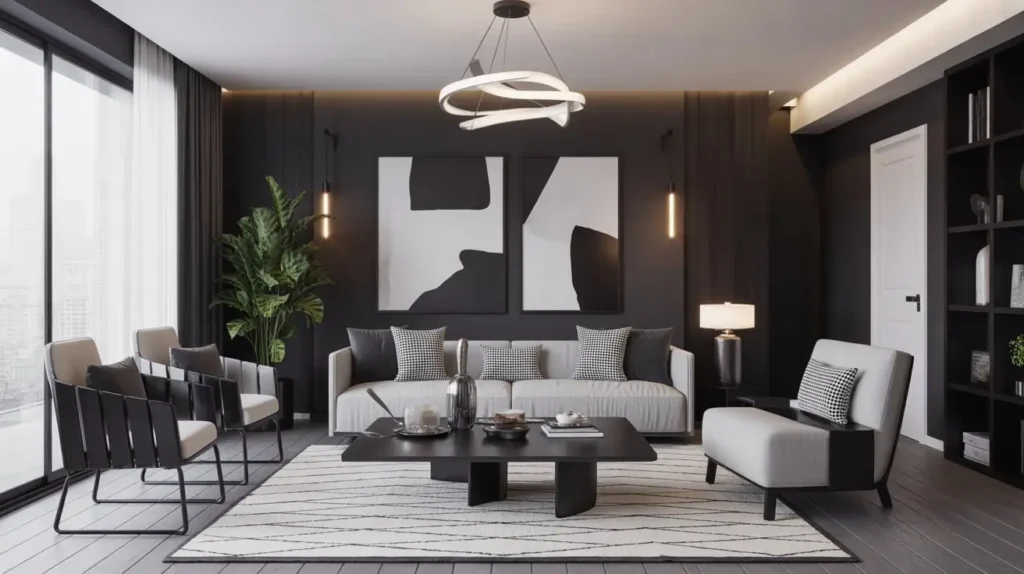
Bold, graphic, timeless—the black and white living room is for people who appreciate contrast and aren’t afraid to make a statement. This color scheme works in literally any style, from ultra-modern to vintage-inspired.
Black and white is foolproof for budget decorating because you’re working with just two colors. Everything automatically coordinates. That black frame? Works. That white vase? Perfect. You literally cannot clash.
Black and white basics:
- Choose your ratio: Mostly white with black accents, mostly black with white accents, or balanced 50/50
- Add patterns: Stripes, geometric prints, checks, abstract designs
- Layer textures: Since color isn’t doing the work, texture needs to
- Strategic pops: Maybe one accent color (if you must), or keep it strictly monochrome
- Graphic elements: Bold art, statement lighting, architectural interest
I created a black and white reading nook that became my favorite spot in the house. White walls, black floating shelves, a black and white geometric rug from IKEA ($30), and a white chair with black throw pillows. The stark contrast made everything feel crisp and intentional.
The beauty of black and white? You can change the entire mood with different accent colors over time. Add red for drama, yellow for energy, pink for softness, or green for calm—all while keeping your black and white base intact.
Final Thoughts
Look, creating a gorgeous living room on a budget isn’t about deprivation or settling for less. It’s about being strategic, creative, and knowing where to invest versus where to improvise. I’ve seen $10,000 living rooms that looked boring and $500 living rooms that looked like magazine spreads.
The difference? Intentionality, creativity, and understanding that style isn’t about money—it’s about choices.
Every single style I’ve shared can be achieved on a budget if you’re willing to hunt for deals, DIY when possible, and think outside the big-box furniture store. Thrift stores, Facebook Marketplace, estate sales, and creative paint projects have saved me literally thousands of dollars while helping me create spaces I genuinely love.
Start with what you have, add what you love, and don’t stress about achieving perfection immediately. Your living room should evolve with you, collecting pieces that tell your story and creating a space that feels like home—not like a showroom.
So which style spoke to you? Are you Team Moody Dark Walls or Team Coastal Breeze? Maybe you’re ready to mix five different styles and create something totally unique. Whatever you choose, remember that the best living rooms aren’t the most expensive ones—they’re the ones that make you actually want to live in them.