

15 Creative Mid Century Modern Dining Room Ideas for Cozy Spaces
Look, I get it. You love that sleek, retro vibe of mid-century modern design, but you also want your dining room to feel like an actual cozy space where people want to hang out—not some sterile museum exhibit. The good news? You can totally have both. I’ve been obsessing over mid-century modern design for years now, and I’ve learned that creating a warm, inviting dining room with that vintage aesthetic isn’t rocket science. You just need the right mix of iconic pieces, smart styling, and a little personality.
So grab your coffee (or wine, no judgment), and let me walk you through 15 creative mid-century modern dining room ideas that’ll transform your space from “meh” to “wow, can we eat here every night?”
Walnut Tapered-Leg Dining Set
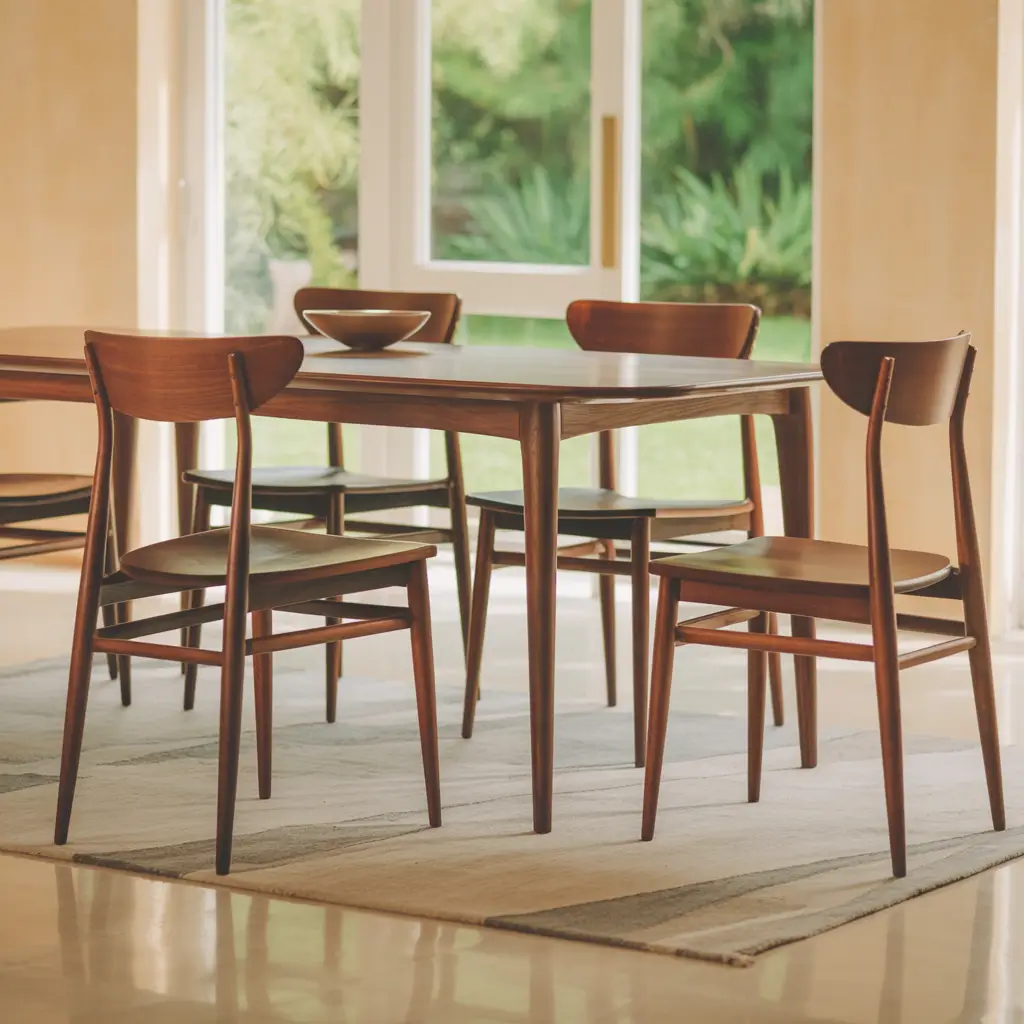
Let’s start with the backbone of any dining room—the table and chairs. A walnut tapered-leg dining set is basically the holy grail of mid-century modern furniture. Those angled legs? Chef’s kiss. They create this visual lightness that makes even smaller dining rooms feel more spacious.
I remember when I first swapped out my chunky farmhouse table for a walnut MCM set. The difference was insane. The tapered legs give you that authentic 1950s-60s aesthetic while the warm walnut tones add instant coziness. Plus, walnut ages beautifully—those natural grain patterns just get richer over time.
Here’s what makes these sets so perfect for cozy spaces:
- Visual lightness: Tapered legs don’t overwhelm the room like bulky table bases
- Warm wood tones: Walnut brings natural warmth that counteracts the “cold modern” stereotype
- Timeless versatility: Works with both vintage and contemporary decor
- Durable construction: Quality walnut pieces last decades (seriously, check estate sales)
Pro tip? Look for sets with matching chairs that have sculptural backs. The continuity creates a cohesive look without feeling matchy-matchy in that boring way.
Retro Globe Pendant Lighting
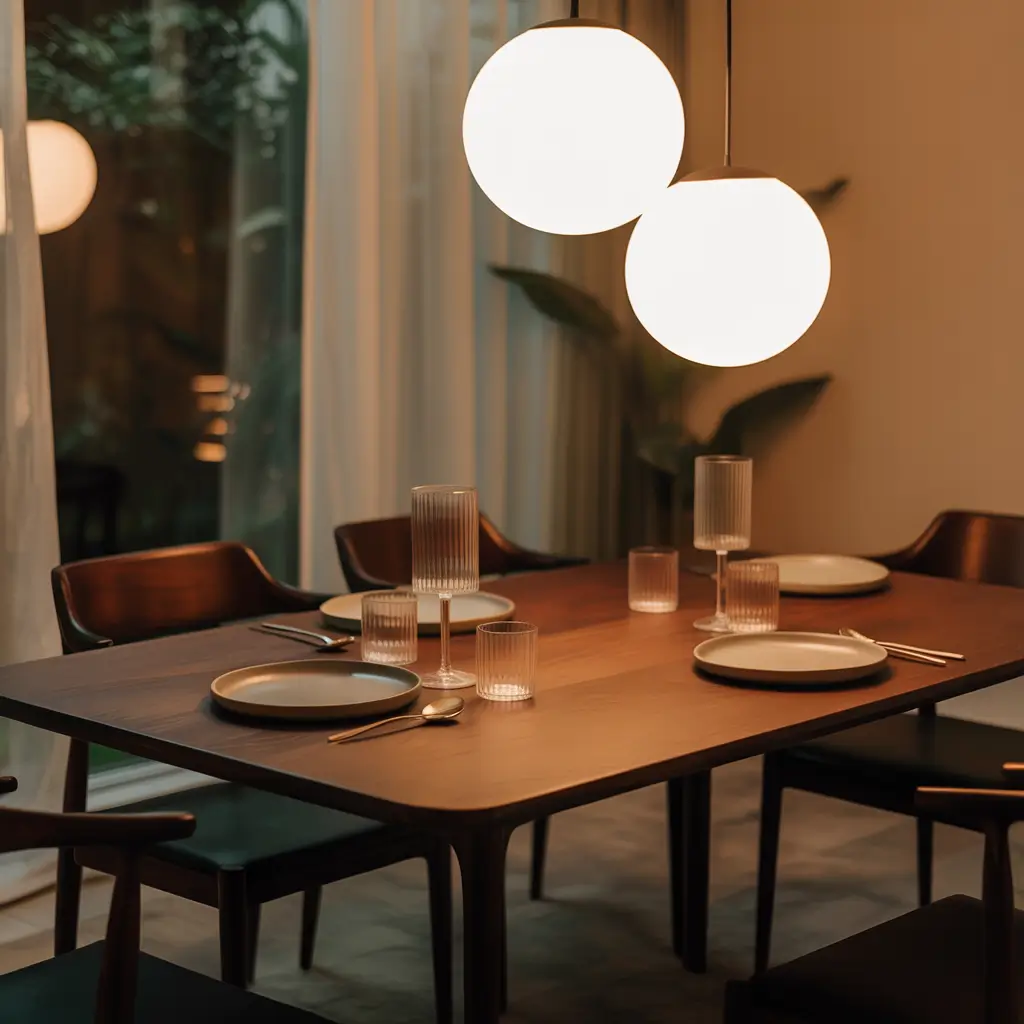
Ever walked into a room and immediately looked up because the lighting just grabbed your attention? That’s the power of retro globe pendant lighting. These spherical beauties were everywhere in the 1960s, and honestly, they never should’ve gone out of style.
I’m talking about those gorgeous milk glass globes, amber-tinted spheres, or even the more adventurous Sputnik-style designs. Hang one (or a cluster of three at varying heights—trust me on this) above your dining table, and you’ve instantly created a focal point that screams mid-century charm.
The best part? Globe pendants cast this soft, diffused light that makes every dinner feel like a special occasion. No harsh overhead fluorescents ruining the vibe here. The warm glow bouncing off the curved glass creates exactly the cozy ambiance you’re after.
FYI, sizing matters here. A single large globe works for smaller tables, but if you’ve got a longer dining table, you’ll want multiple pendants or an elongated design to balance the proportions.
Scandinavian Mid-Century Mix
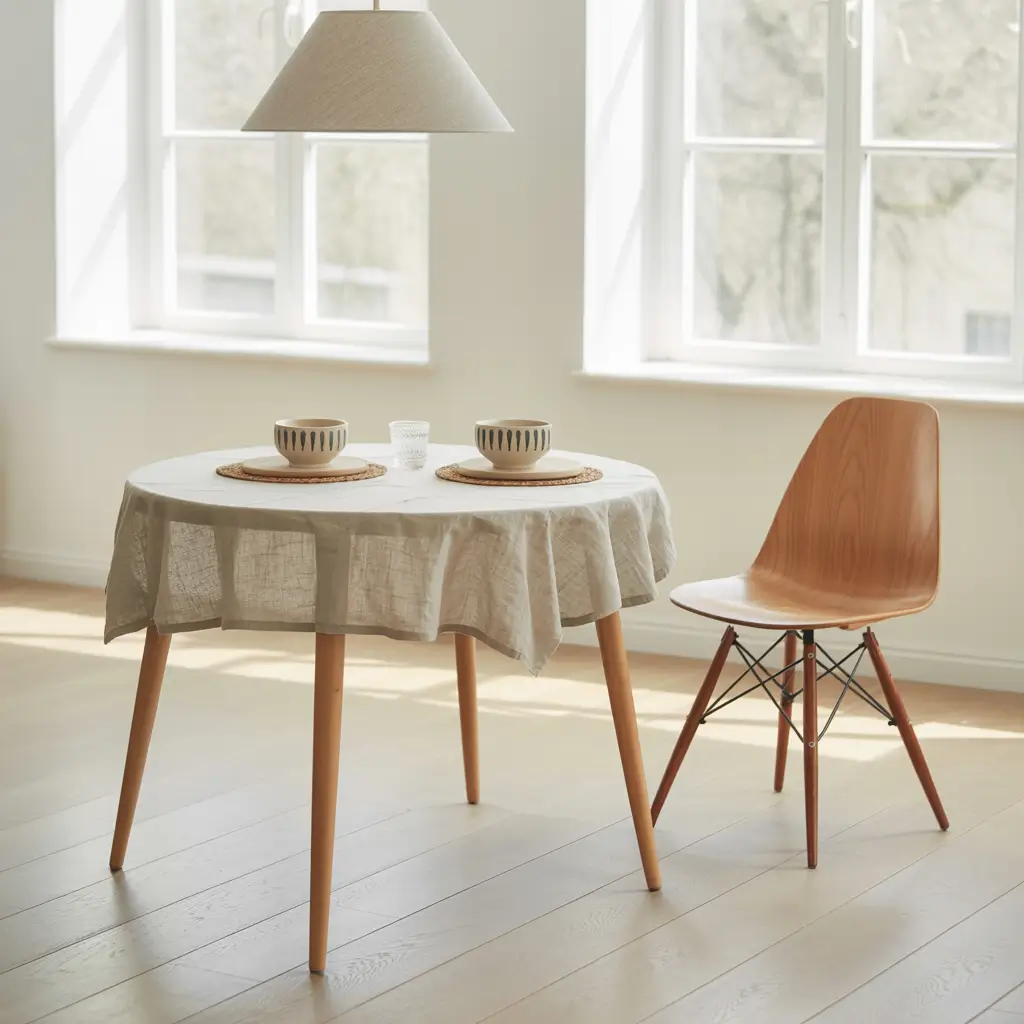
Here’s where things get interesting. Scandinavian design and American mid-century modern are like design cousins who share DNA but have different personalities. Mixing them? Absolute magic for creating cozy spaces.
Scandinavian MCM tends to be a bit lighter in color palette—think blonde woods, whites, and soft grays. American MCM leans toward those darker walnut tones and bolder colors. When you blend both approaches in your dining room, you get this perfect balance of warmth and airiness.
I started doing this in my own space by pairing a classic American walnut table with lighter Scandinavian-inspired chairs in a pale oak finish. The contrast is subtle but creates so much visual interest. Then I added some Danish modern accessories—a simple teak bowl here, a minimalist candlestick there.
The key elements of this mix include:
- Light and dark wood contrast: Prevents the space from feeling too heavy or too sterile
- Clean lines throughout: Both styles emphasize simplicity and function
- Neutral color foundations: Lets you add personality through accessories
- Natural materials: Wood, leather, wool, and linen keep things grounded and cozy
Olive Green Upholstered Chairs
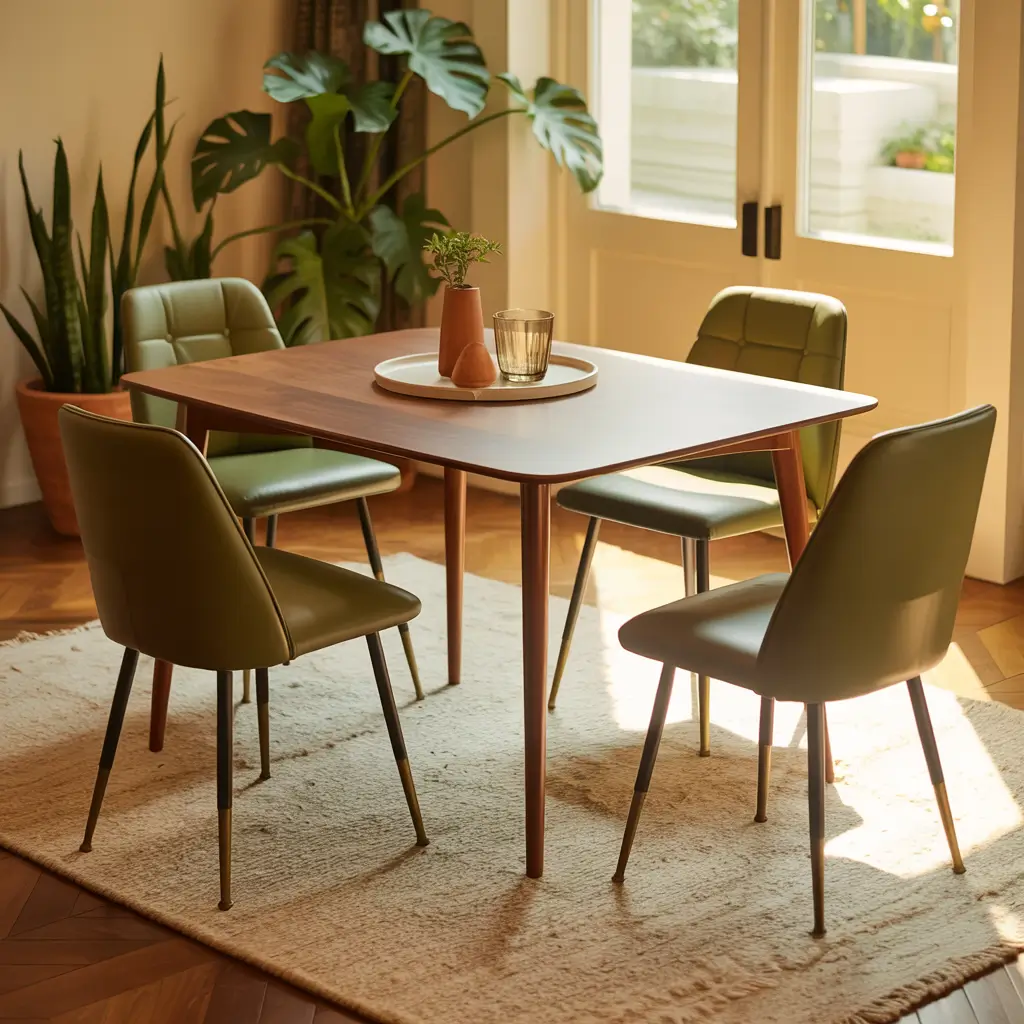
Can we talk about how olive green upholstered chairs are criminally underrated? This color is peak mid-century modern, and it brings this earthy, sophisticated vibe that instantly makes a dining room feel more intimate and collected.
Unlike boring beige (sorry, beige lovers), olive green has personality. It’s subdued enough to work as a neutral but interesting enough to stand on its own. I picked up a set of vintage olive green chairs at an estate sale last year, and people always comment on them. They’re conversation starters with actual comfort—because let’s be real, wooden chairs are gorgeous but not exactly marathon-dinner friendly.
The beauty of olive green in dining spaces:
- Unexpected warmth: Green tones create a cozy, nature-inspired feeling
- Vintage authenticity: This was THE color in mid-century interiors
- Versatile pairing: Works with warm woods, metals, and other earth tones
- Forgiving fabric: Doesn’t show wear as quickly as lighter upholstery
Mix these with a walnut or teak table, add some brass candleholders, and you’ve got yourself an Instagram-worthy setup. Not that we’re doing this for the ‘gram… but if it happens, it happens. 🙂
Also Read: 15 Amazing Farmhouse Kitchen Ideas and Elegant Wood Details
Sunburst Wall Art Accent

Nothing says “I understand mid-century design” quite like a sunburst wall art accent. These radiating designs were absolutely everywhere in the 1950s and 60s—clocks, mirrors, wall sculptures, you name it. And guess what? They still work beautifully today.
I hung a brass sunburst mirror in my dining room last spring, and it completely transformed the space. The radiating lines draw your eye and create movement on what was previously a boring blank wall. Plus, if you go with a mirror version, it reflects light and makes the room feel bigger—crucial for cozy spaces that might be on the smaller side.
You’ve got options here:
- Sunburst mirrors: My personal favorite for adding depth and light
- Metal wall sculptures: Pure art pieces that create dramatic shadows
- Sunburst clocks: Functional AND decorative (efficiency!)
- Wooden starburst designs: Warmer take on the classic metal versions
Position your sunburst piece on the wall behind or adjacent to your dining table. It creates this amazing visual anchor without taking up any floor space. Smart design for the win.
Minimalist Walnut Sideboard
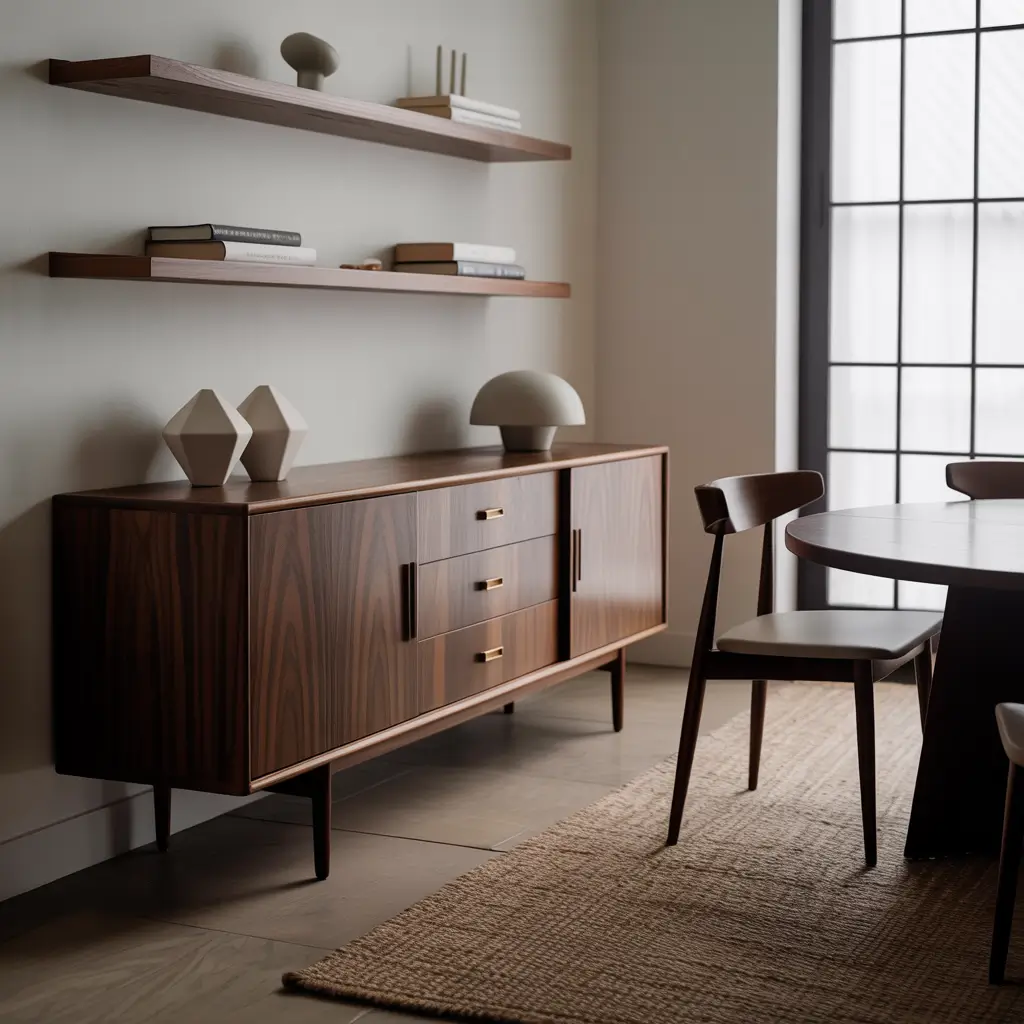
A minimalist walnut sideboard is like the Swiss Army knife of mid-century dining rooms. Storage? Check. Display space? Check. Serving surface for dinner parties? Double-check. This piece pulls serious weight while looking effortlessly cool.
The classic MCM sideboard features clean lines, tapered legs (seeing a pattern here?), and beautifully grained walnut wood. Many have sliding doors or simple handle-free fronts that maintain that sleek aesthetic. I use mine to hide all the random dining stuff that doesn’t need to be on display—placemats, extra napkins, that weird serving dish I never use but can’t get rid of.
What makes these sideboards perfect for cozy dining rooms:
- Hidden storage: Keeps clutter out of sight, maintaining that clean MCM look
- Low profile: Doesn’t overwhelm the room like tall cabinets
- Horizontal emphasis: Makes walls appear wider, spaces feel larger
- Display opportunities: Top surface for plants, art, or that cool vintage bar setup
Style the top with a mix of heights—maybe a table lamp, some books stacked horizontally, a ceramic bowl, and a small plant. This creates visual interest without looking cluttered. Balance is everything, folks.
Vintage Leather Dining Chairs
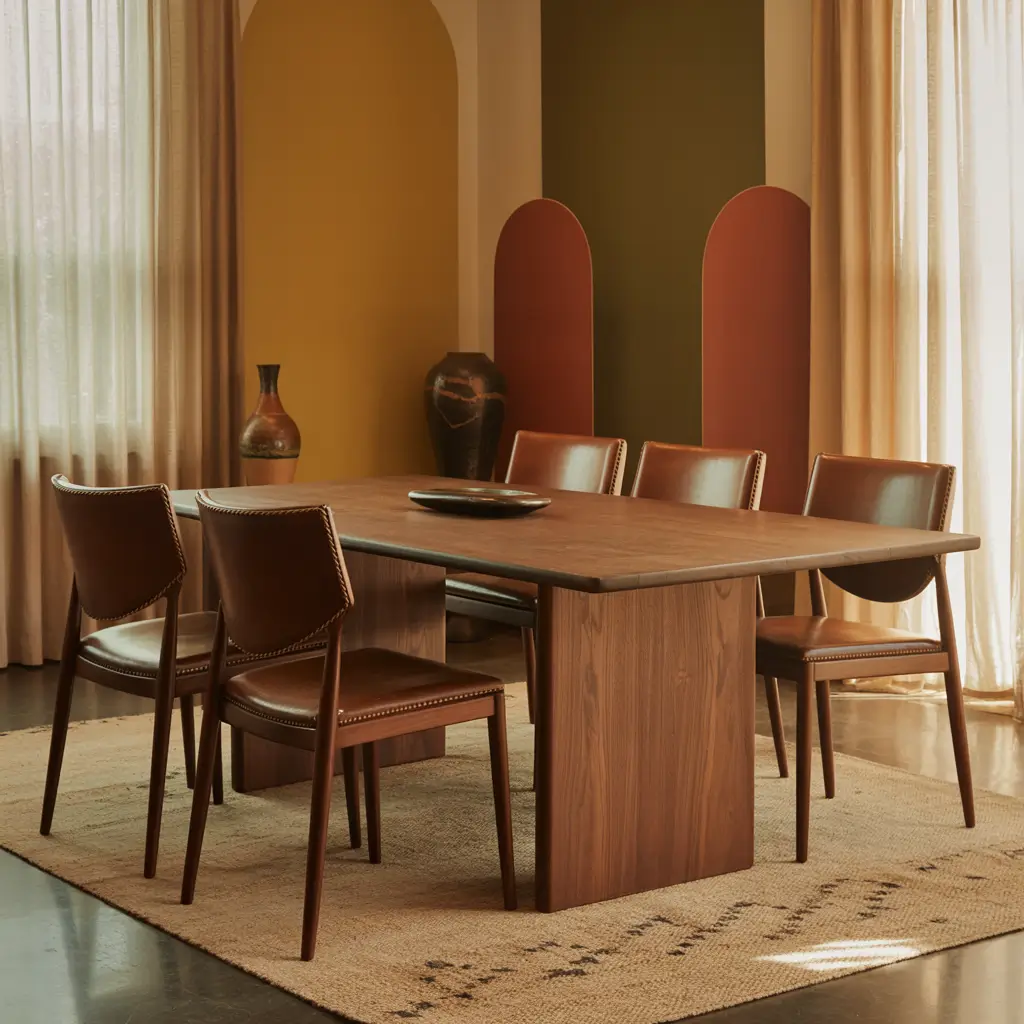
Let me tell you about vintage leather dining chairs. They age like fine wine—getting better and more characterful with time. That worn-in patina you see on genuine vintage leather? You can’t fake that, and it adds instant warmth and history to your dining space.
Mid-century designers loved leather because it married luxury with the era’s emphasis on natural materials. Whether you’re looking at Eames-style chairs, simple leather sling designs, or more upholstered options, leather brings this tactile richness that makes a dining room feel more inviting.
I picked up four vintage leather dining chairs in cognac brown about three years ago. They were already broken in, which meant they were comfortable from day one. The leather has this beautiful lived-in quality that actually makes the room feel cozier, not shabby. There’s a difference, and vintage leather knows it.
Key benefits of leather dining chairs:
- Durability: Quality leather lasts decades with minimal maintenance
- Easy cleaning: Spills wipe off way easier than fabric (game-changer)
- Rich texture: Adds visual and tactile warmth to the space
- Timeless appeal: Never goes out of style, especially in cognac or tobacco tones
Mix leather chairs with softer textiles elsewhere in the room—maybe a wool rug or linen curtains—to prevent the space from feeling too masculine or hard-edged.
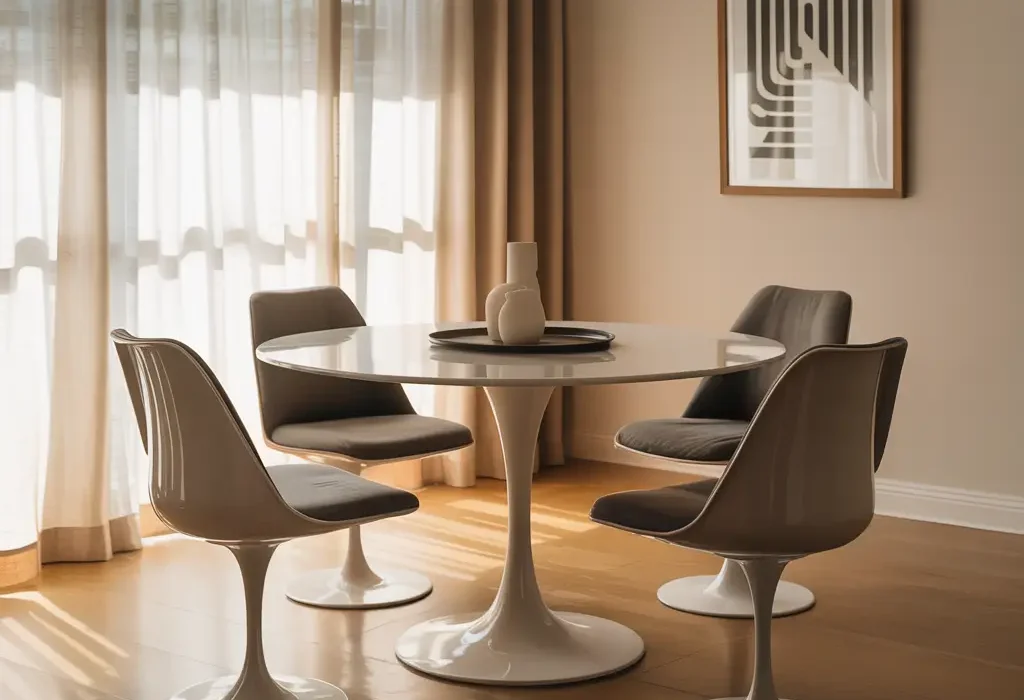
Round Pedestal Tulip Table

Eero Saarinen’s round pedestal tulip table is one of those designs that makes you wonder why anyone uses four-legged tables anymore. That single pedestal base? Genius. No more awkwardly straddling table legs during dinner. Everyone gets equal, comfortable seating.
The sculptural quality of a tulip table brings this organic, almost futuristic element to mid-century dining rooms. The smooth curves contrast beautifully with the angular lines of typical MCM furniture. I love how a white tulip table brightens up a space and creates this floating effect—seriously, it looks like it’s hovering.
Round tables also promote better conversation flow. Ever notice how rectangular tables can feel a bit formal and divided? Round tables bring everyone into the circle (literally). Perfect for creating that cozy, intimate dining experience.
Why tulip tables work so well:
- Space-saving design: No corner table legs means easier movement
- Sculptural beauty: The base is an art piece in itself
- Conversation-friendly: Round shape brings people together
- Versatile sizing: Available from tiny two-seaters to large family sizes
Pair a white tulip table with wooden chairs for warmth, or go full-on mod with matching tulip chairs. Both approaches work—it just depends on whether you want contrast or continuity.
Retro Color-Pop Dining Palette
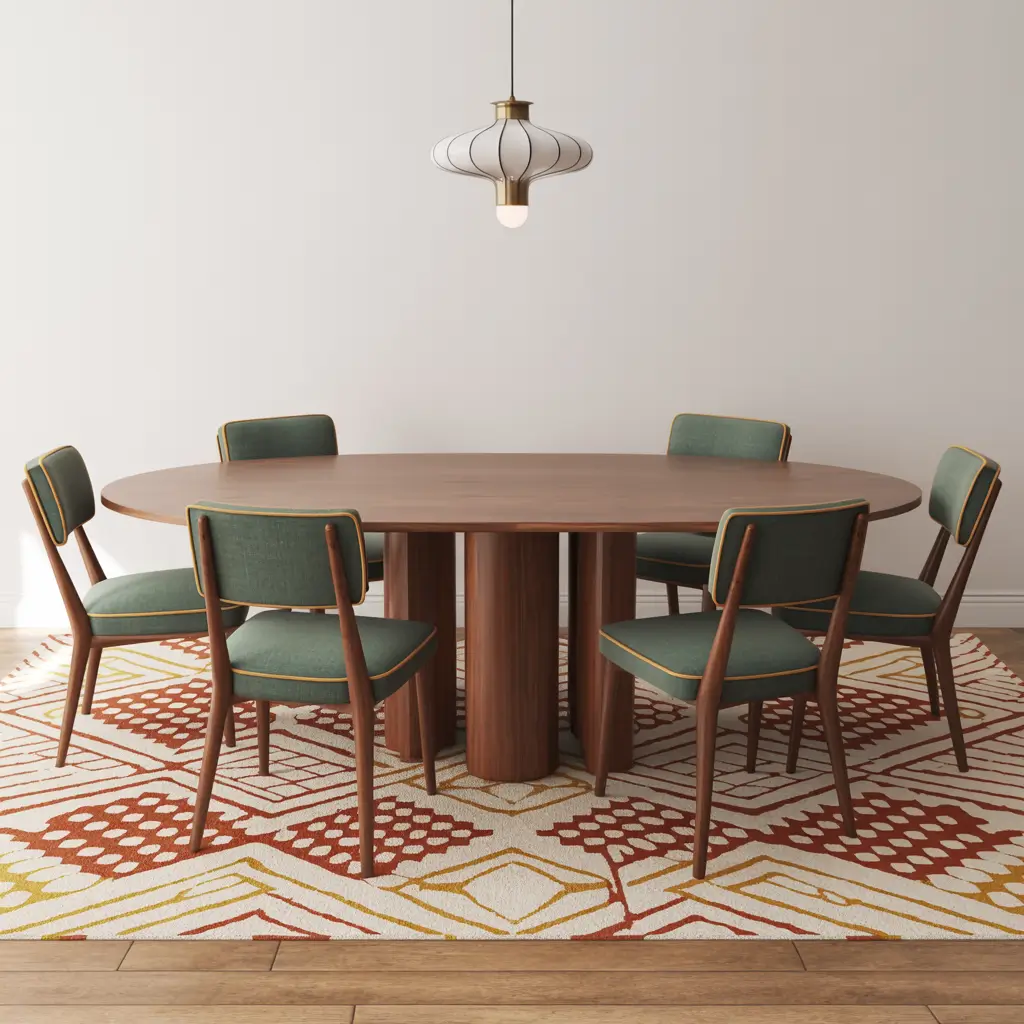
Alright, who said mid-century modern has to be all wood tones and neutrals? One of my favorite moves is adding a retro color-pop palette to dining rooms. We’re talking mustard yellow, burnt orange, avocado green, and that perfect shade of teal that was everywhere in 1962.
These colors bring so much personality and warmth to dining spaces. IMO, a room full of neutrals can feel sophisticated but also a bit… soulless? Adding those vintage-inspired pops of color immediately makes the space feel more lived-in and cozy.
You don’t need to go crazy here. Maybe it’s colorful chair cushions, a bold area rug, or even just your dinnerware and table accessories. I have this collection of vintage Fiestaware in various retro colors that I rotate seasonally. Same dining room, different vibe depending on whether I’m using orange or turquoise plates.
Ways to incorporate retro colors:
- Upholstered chair seats: Adds comfort AND color
- Table linens: Easy to swap out for different occasions
- Wall paint: One accent wall in burnt orange? Chef’s kiss
- Artwork and accessories: Low-commitment way to test colors
- Vintage dishware: Functional decor that serves double duty
The trick is choosing one or two main accent colors and repeating them throughout the space. This creates cohesion without overwhelming your eyes. Balance those bold pops with plenty of wood tones and neutrals.
Also Read: 15 Gorgeous Rustic Farmhouse Kitchen Ideas for Every Home
Classic Wishbone Chair Setup
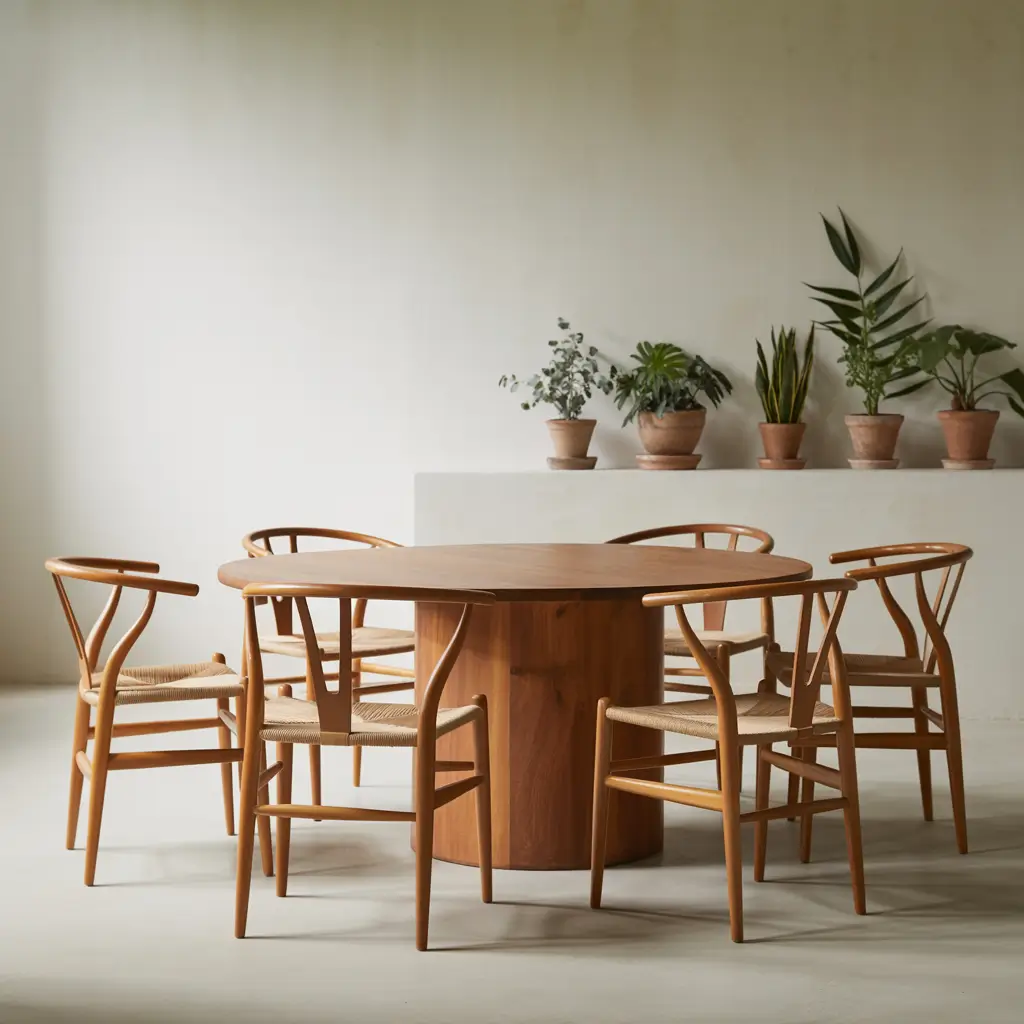
Hans Wegner’s wishbone chair (also called the Y-chair) is peak mid-century Scandinavian design. Those curved lines, that iconic Y-shaped back, the woven seat—everything about these chairs says “I have excellent taste but I’m not trying too hard.”
I debated for months before investing in wishbone chairs because they’re not cheap. But you know what? Worth it. The comfort level is surprising given how delicate they look, and they bring this organic warmth to dining spaces that few other chairs achieve. The woven paper cord seats have this tactile quality that makes the room feel more handcrafted and personal.
A full set of wishbone chairs around a simple wooden table creates this effortlessly elegant look. They work in both modern and vintage-leaning spaces, which makes them incredibly versatile. Plus, they come in various wood finishes, so you can match or contrast with your table.
What makes wishbone chairs special:
- Sculptural comfort: Beautiful to look at AND sit in
- Lightweight construction: Easy to move around despite solid wood build
- Handwoven seats: Each one has slight variations, adding character
- Timeless design: Still in production since 1950 for a reason
Mix different wood finishes for a more collected look, or keep them uniform for classic elegance. Either way, these chairs elevate a dining room instantly.
Atomic-Inspired Lighting Design
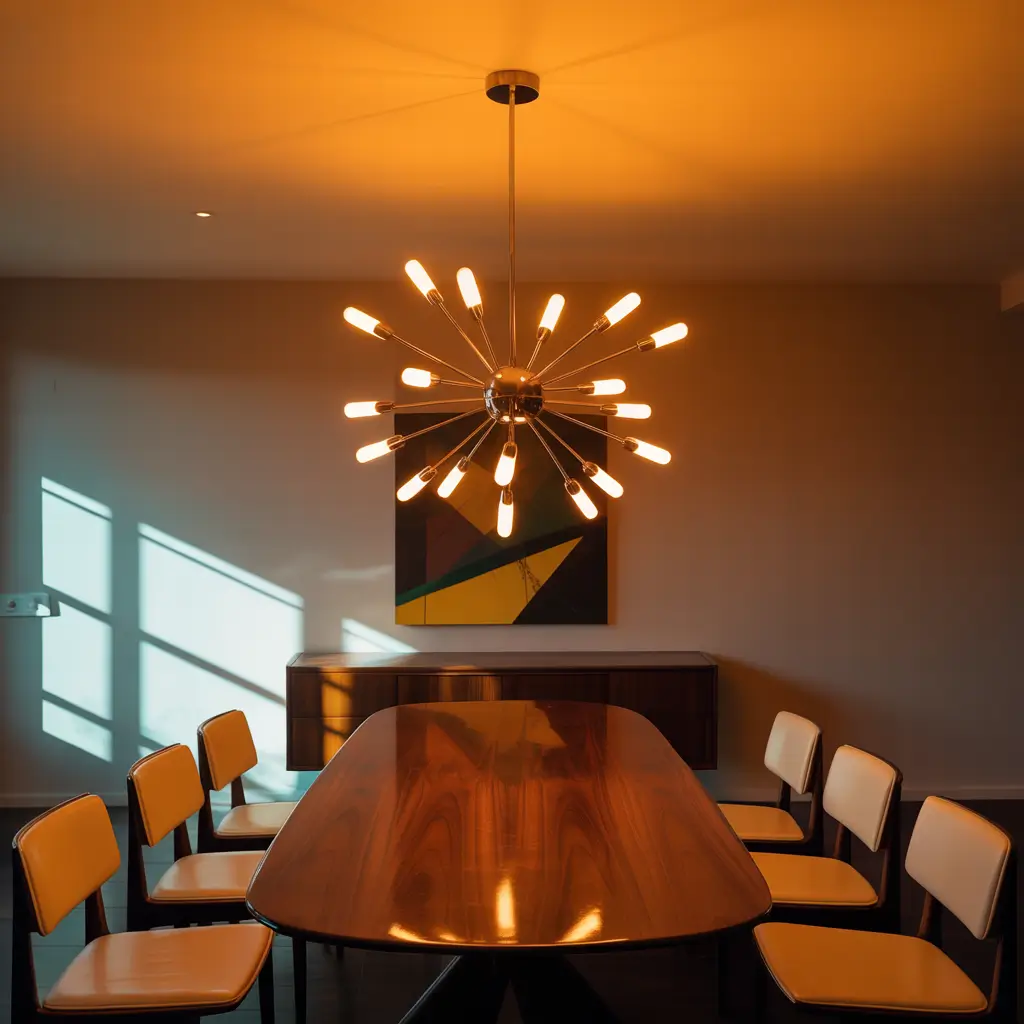
Atomic-inspired lighting takes that mid-century space-age optimism and turns it into functional art. We’re talking Sputnik chandeliers, starburst pendants, and multi-arm fixtures that look like they belong in a 1960s bachelor pad (in the best possible way).
The atomic era influenced mid-century design heavily, and lighting fixtures became these sculptural showpieces. I installed a brass Sputnik chandelier in my dining room two years ago, and it’s hands-down the most commented-on element in the space. The multiple arms radiating from a central sphere create this dramatic visual impact while the exposed bulbs cast light in all directions.
Is it a bit bold? Sure. But that’s exactly what makes cozy dining rooms interesting. You want some personality, some conversation starters. A boring overhead light fixture isn’t doing you any favors.
Atomic lighting options include:
- Sputnik chandeliers: Multi-arm designs radiating from center
- Starburst pendants: Geometric, angular versions of the atomic theme
- Triple globe clusters: Atomic meets globe pendant (best of both worlds)
- Molecule-inspired designs: Asymmetrical, organic interpretations
Balance is key with statement lighting. If your chandelier is doing the heavy lifting design-wise, keep other elements more subdued. Let the lighting be the star.
Mid-Century Neutral Wood Blend
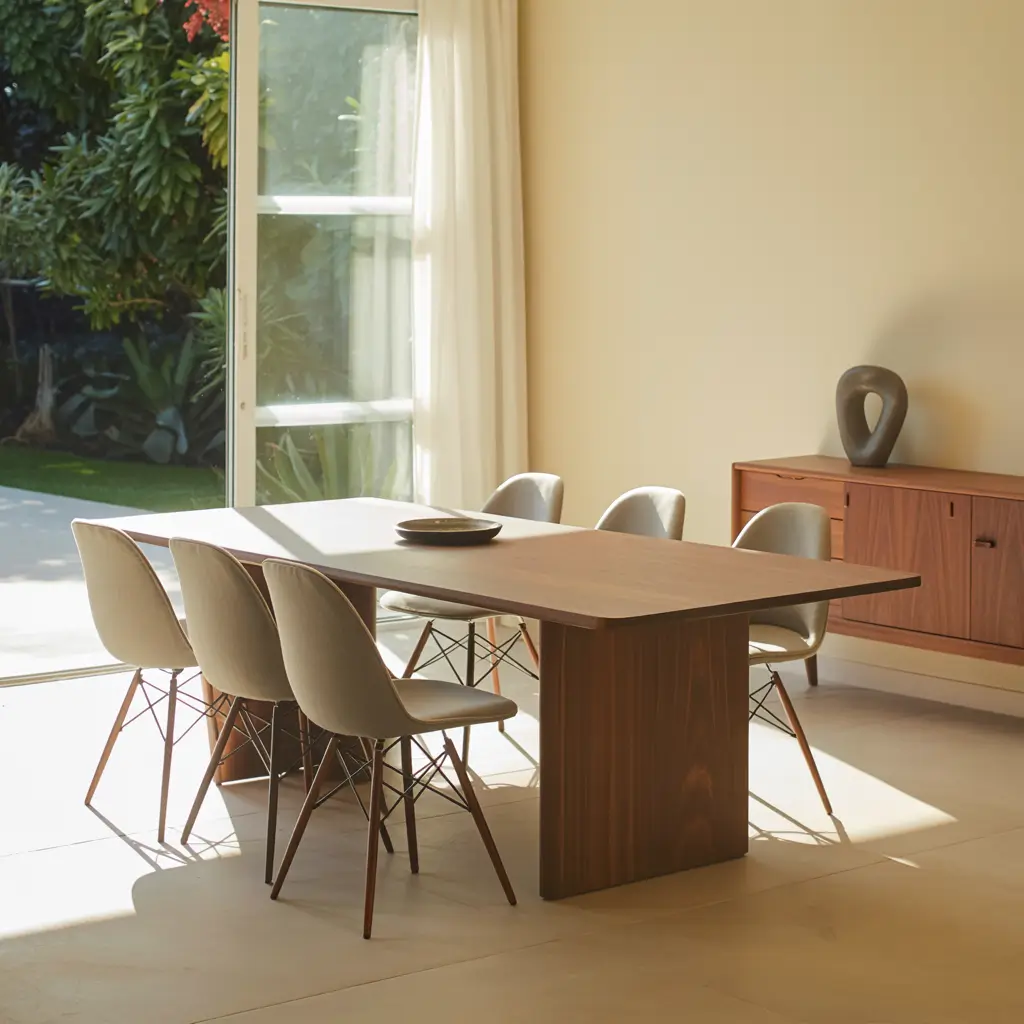
Here’s where we get a bit technical about wood finishes. A mid-century neutral wood blend means intentionally mixing different wood tones and species in your dining room. Sounds risky? It’s actually one of the smartest design moves you can make for creating depth and interest.
I used to think everything had to match—same wood finish, same era, same everything. Then I realized actual vintage mid-century homes mixed woods all the time. A teak table with walnut chairs and an oak sideboard? Totally normal and actually really beautiful when done thoughtfully.
The key is staying within the warm wood spectrum and ensuring your wood tones share similar undertones. Cool-toned ash with warm-toned walnut might clash, but walnut with teak and oak? That’s a harmonious blend that adds complexity without chaos.
How to successfully mix wood tones:
- Vary the intensity: Light, medium, and dark woods can coexist
- Maintain warm undertones: Keeps the space feeling cohesive
- Distribute evenly: Don’t cluster all dark woods on one side
- Add non-wood elements: Metals and textiles break up the wood and prevent overload
This approach creates a more collected, lived-in feel that’s inherently cozier than perfectly matched furniture sets. Your dining room should look like it evolved over time, not like you bought everything in one shopping trip.
Patterned Geometric Area Rug

A patterned geometric area rug is the secret weapon for anchoring your mid-century dining room while adding warmth and personality. Those clean geometric patterns—triangles, diamonds, hexagons, abstract shapes—are so quintessentially mid-century that they instantly set the tone.
Under-rug heating isn’t a thing, but somehow a good rug makes a dining room feel warmer. It’s probably psychological, but I don’t question it. The soft textile underfoot, the visual warmth of pattern and color—it all contributes to that cozy factor you’re after.
I made the mistake once of choosing a rug that was too small for my dining space. The chairs kept sliding off the edges, and it looked awkward. Learn from my error: your rug should be large enough that chairs remain on it even when pulled out. This is crucial for both aesthetics and function.
Geometric rug considerations:
- Size matters: Minimum 8×10 for most dining sets, larger for bigger tables
- Pattern scale: Larger patterns for bigger rooms, smaller for compact spaces
- Color coordination: Pull colors from other room elements
- Pile height: Low-pile rugs work better under dining chairs
- Material choice: Wool is durable and naturally stain-resistant
Look for vintage-inspired patterns in those retro color palettes—mustard, orange, teal, olive green. The rug can either complement your existing color scheme or introduce new accent colors. Both approaches work depending on your overall vision.
Warm Amber Glass Decor Accents

Nothing adds cozy ambiance quite like warm amber glass decor accents. This honey-colored glass was hugely popular in mid-century design, and for good reason—it casts the most beautiful warm glow when light passes through it.
I collect vintage amber glass pieces—vases, bowls, decorative bottles—and rotate them through my dining room styling. During evening dinners, when light from candles or low-hanging pendants hits that amber glass, it creates this magical warm atmosphere that makes everyone want to linger at the table longer.
The beauty of amber glass is its versatility. A single large amber vase makes a statement on your sideboard. A collection of smaller pieces grouped together creates visual impact through repetition. Even amber drinking glasses bring that warm glow right to your table setting.
Ways to incorporate amber glass:
- Pendant light shades: Filters overhead light into warm tones
- Decorative vases: Display alone or with simple greenery
- Drinking glasses: Functional AND atmospheric
- Decorative bowls: Catchalls that double as art pieces
- Candle holders: Amplifies candlelight’s warm glow
Mix amber glass with other warm materials—wood, brass, leather—for a cohesive cozy aesthetic. The glass adds a touch of elegance while the warm tones keep things inviting and comfortable.
Clean-Line Floating Shelves Styling
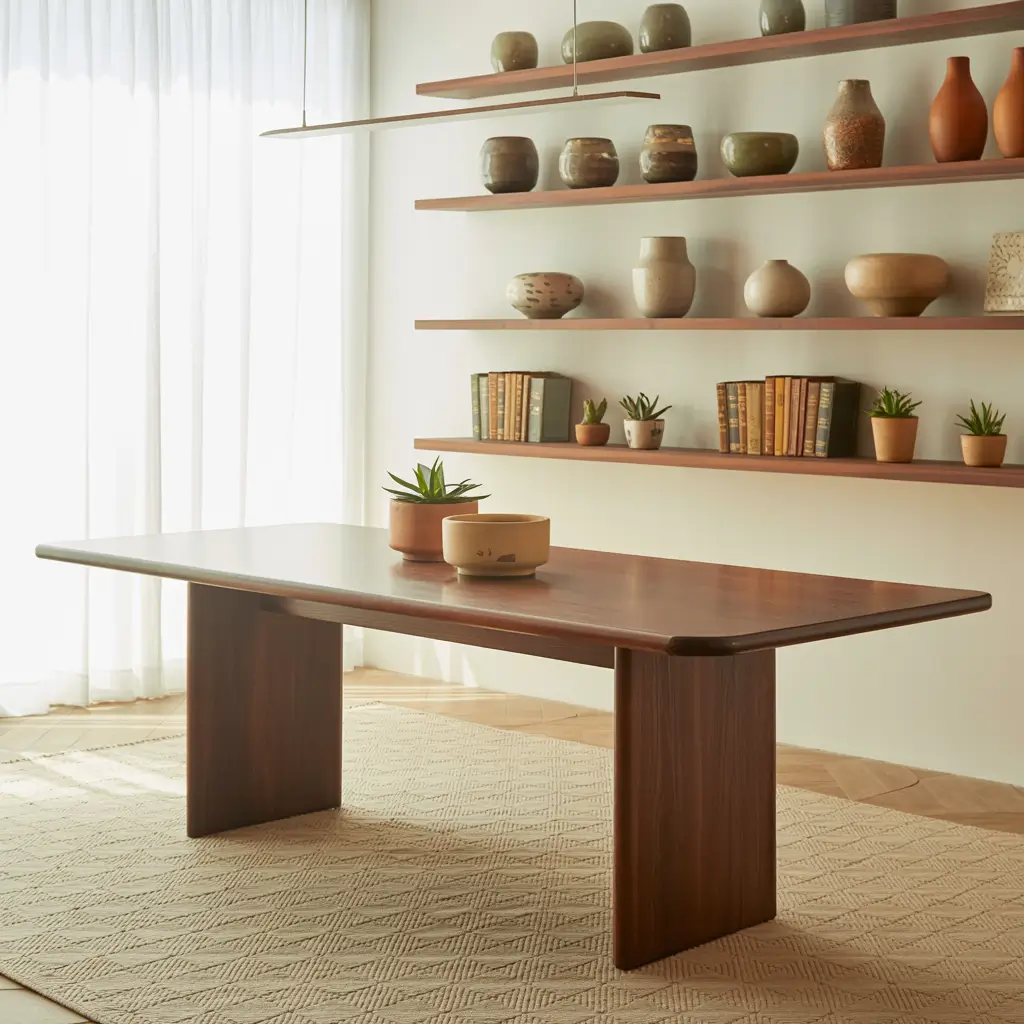
Let’s wrap this up with clean-line floating shelves styling. Floating shelves are perfect for mid-century dining rooms because they provide display and storage space without the visual weight of traditional cabinets. That sleek, minimalist look? Very on-brand for MCM design.
I installed two floating walnut shelves on the wall opposite my dining table, and they’ve become both functional storage and a constantly evolving display area. The key to styling floating shelves in a mid-century space is restraint (I know, I know, easier said than done). You want them to look curated, not cluttered.
The “floating” aspect means no visible brackets—just clean wood shelves that appear to hover on the wall. This maintains those clean lines mid-century design is known for while providing practical space for displaying your vintage glassware collection, plants, cookbooks, or decorative objects.
Floating shelf styling tips:
- Vary heights: Mix tall items with short ones for visual interest
- Group in odd numbers: Three items together looks more natural than four
- Leave breathing room: Don’t fill every inch of shelf space
- Layer items: Place some objects in front of others for depth
- Mix textures: Combine glass, ceramic, wood, and metal elements
- Include plants: Greenery always softens and warms a space
Start with larger anchor pieces, then fill in around them with smaller objects. Step back frequently to assess balance and adjust accordingly. The goal is effortless-looking styling that actually took some thought. :/
Pulling It All Together
So there you have it—15 creative ways to bring mid-century modern style to your dining room while keeping it cozy and inviting. The real secret? Don’t get too precious about “rules.” Mid-century design principles provide a fantastic framework, but your dining room should reflect your personality and how you actually live.
Mix the iconic pieces (like that walnut tapered-leg table or wishbone chairs) with personal touches (your grandmother’s vintage glassware, that quirky art piece you found at a flea market). The magic happens when you balance those clean, minimalist lines with warm materials, thoughtful lighting, and touches of personality.
Your dining room should be a space where people want to gather, where dinners turn into long conversations, where that second bottle of wine gets opened because nobody wants to leave yet. Mid-century modern design, done right, creates exactly that kind of welcoming atmosphere—sophisticated enough to feel special, comfortable enough to feel like home.