

15 Stylish Moody Dining Room Ideas for Timeless Elegance
You know that feeling when you walk into a room and it just hits different? That’s exactly what a moody dining room does. Forget those bright, sterile spaces that look like they belong in a catalog nobody asked for. We’re talking about dining rooms with character, depth, and enough drama to make your dinner parties unforgettable.
I’ll be honest—I used to think moody interiors were just “dark rooms” people settled for when they couldn’t afford good lighting. Boy, was I wrong. After transforming my own bland dining space into a sultry, intimate retreat, I became obsessed with the whole concept. There’s something magical about creating a space that feels both elegant and cozy, sophisticated yet inviting.
So grab your coffee (or wine, no judgment here), and let’s explore 15 moody dining room ideas that’ll make you want to redesign your space immediately. Trust me, your Instagram feed will thank you later.
Dark Emerald Elegance

Ever walked into a room and felt like you’ve stepped into a luxurious jewel box? That’s the magic of dark emerald green. This color screams sophistication without trying too hard, and honestly, it’s one of my favorites for dining spaces.
Picture this: walls painted in a rich, deep emerald that changes tone depending on the light. During the day, it’s moody and contemplative. At night with candlelight? Pure magic. I’ve seen this work wonders in both large and small dining rooms, and the secret is pairing it with the right accents.
Here’s what makes dark emerald elegance work:
- Brass or gold fixtures that catch the light and add warmth
- Marble tabletops (white or green-veined) for contrast
- Velvet dining chairs in complementary tones like navy or even more emerald
- Crystal chandeliers or modern pendant lights that reflect beautifully off those deep walls
The trick with emerald is balancing it so you don’t end up feeling like you’re eating dinner inside a cave. Add plenty of reflective surfaces—mirrors, glass, metallic accents—to bounce light around. I learned this the hard way when my first attempt felt more dungeon than dining room :/
Charcoal Minimalist Haven
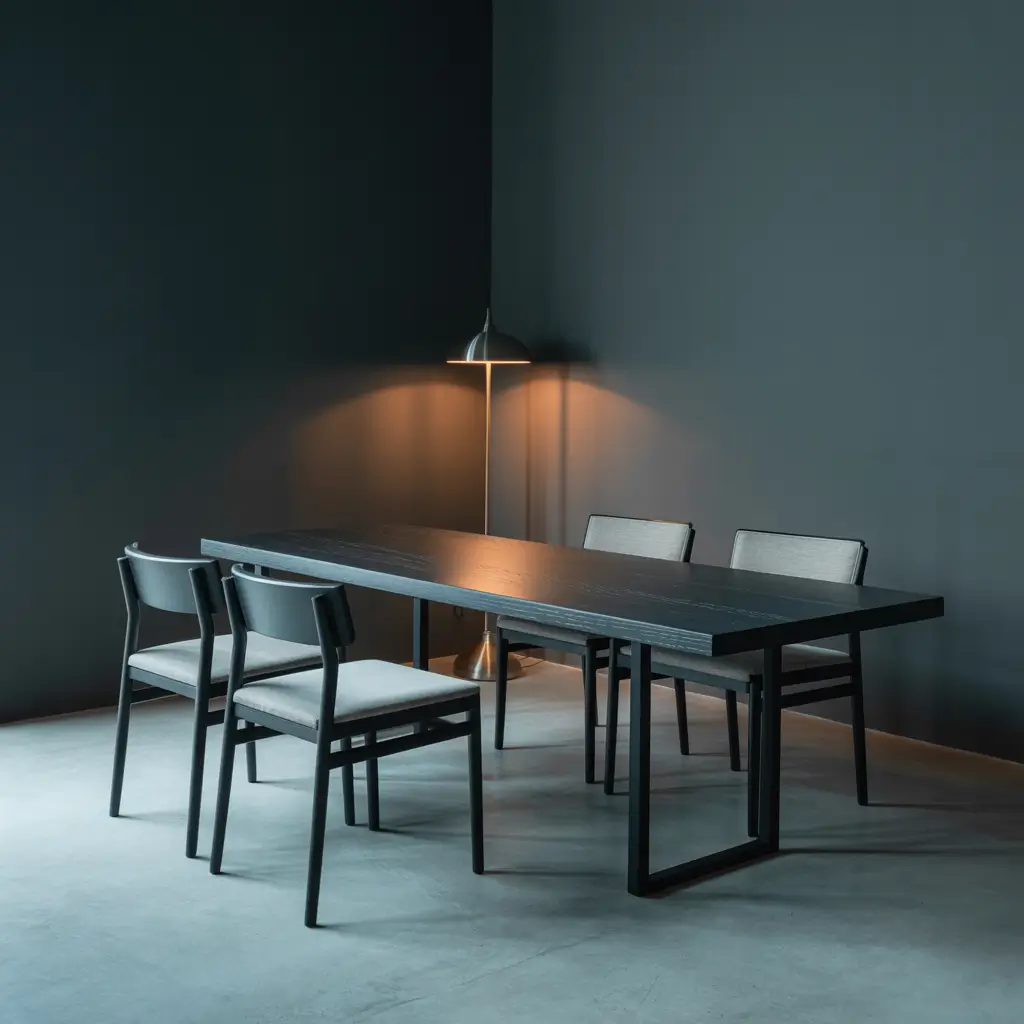
Who says moody has to mean cluttered? A charcoal minimalist dining room proves you can have drama and simplicity coexist peacefully. This approach works especially well for those of us who love the dark aesthetic but also enjoy breathing room.
Think sleek, clean lines with charcoal gray walls as your foundation. The beauty here is in the restraint. You’re not layering pattern on pattern or cramming in every trendy piece you find. Instead, you’re letting the color create the mood while the minimalist design keeps things sophisticated.
What you’ll need:
- Matte charcoal wall paint (avoid glossy finishes for true minimalist vibes)
- Simple, sculptural dining furniture in black, white, or natural wood
- One statement light fixture (keep it architectural, not fussy)
- Limited but impactful decor like a single large-scale artwork or a sculptural centerpiece
I love this style because it’s honestly pretty forgiving. You don’t need to worry about perfectly matching patterns or collecting tons of accessories. The charcoal does the heavy lifting while everything else just… exists harmoniously. Plus, cleaning is a breeze when you’re not dusting fifty decorative objects. FYI, this is perfect for busy people who still want style.
Deep Blue Dramatic Dining
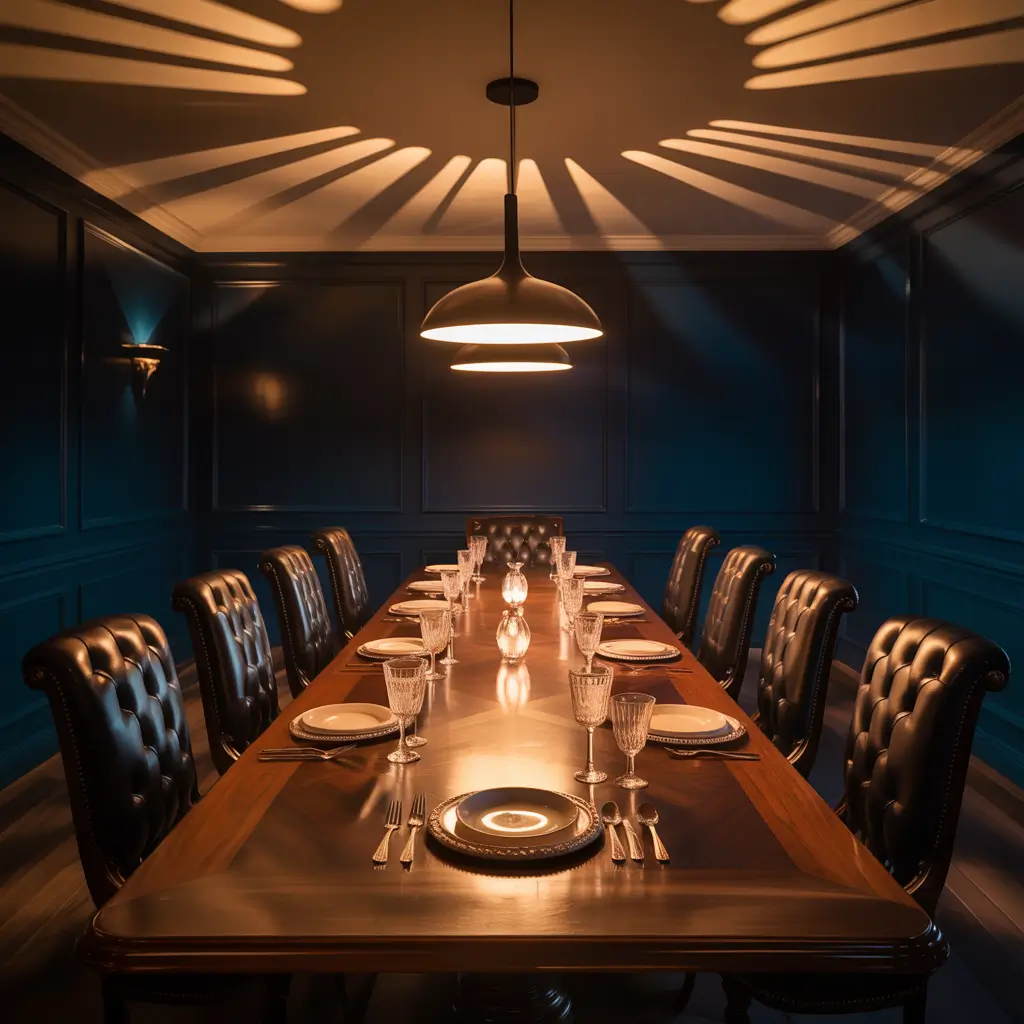
Nothing quite compares to the theatrical presence of deep navy or midnight blue in a dining room. It’s bold without being aggressive, and it creates this incredible backdrop that makes everything—your food, your guests, your table settings—look more vibrant.
I tried this in my friend’s dining room last year, and we went all out with a navy so deep it was almost black. The transformation was insane. Her boring builder-grade space suddenly felt like a boutique restaurant where you’d need a reservation three months in advance.
The key elements for deep blue drama:
- Rich navy walls (go darker than you think you should)
- White or cream trim for crisp contrast
- Silver or chrome hardware that pops against the blue
- Textured fabrics in complementary colors like burnt orange or mustard
- Layered lighting including dimmers for maximum mood control
Here’s something nobody tells you: deep blue actually makes spaces feel larger, not smaller. The walls visually recede, creating depth. It’s like a magic trick that makes your dining room feel more expansive and mysterious. Why doesn’t everyone do this?
Velvet Luxe Retreat
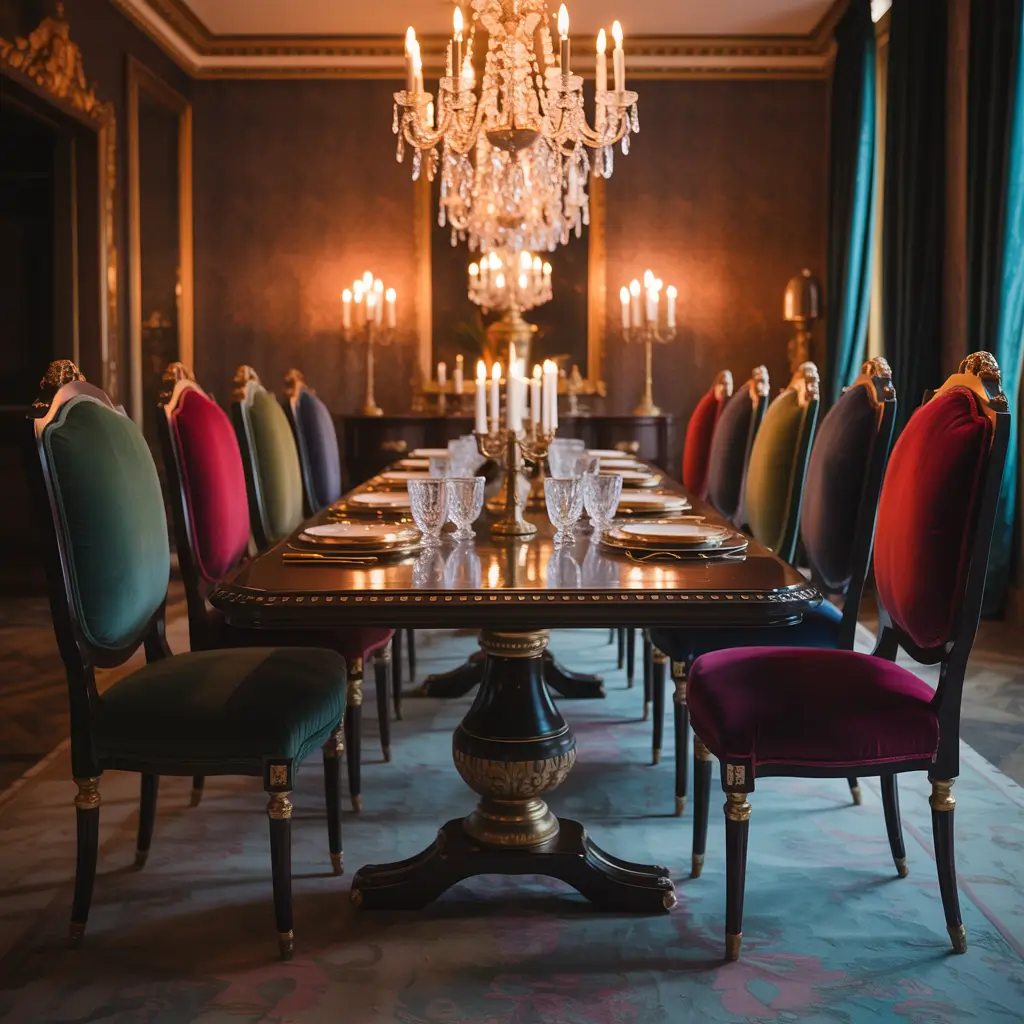
Okay, let’s talk texture. A velvet-focused moody dining room is basically the equivalent of wrapping yourself in the fanciest blanket while eating a gourmet meal. It’s indulgent, tactile, and ridiculously photogenic.
The star here isn’t just one color—it’s the velvet fabric itself. Whether you choose deep purple, forest green, or even black velvet, the material creates instant luxury. I splurged on velvet dining chairs two years ago, and they remain the best furniture decision I’ve ever made. Guests literally can’t stop touching them.
Create your velvet luxe retreat with:
- Velvet upholstered dining chairs (splurge here if nowhere else)
- Heavy velvet curtains in jewel tones to frame windows
- Dark walls in colors that complement your velvet choice
- Brass or gold accents because velvet and metallics are best friends
- Plush area rug to complete the luxurious feel underfoot
Pro tip: Don’t go velvet-crazy and cover every surface. Balance is key. Velvet chairs plus velvet curtains? Perfect. Add velvet wall panels and velvet tablecloth? You’ve gone too far, my friend. Keep it elegant, not Elvis’s Graceland.
Also Read: 15 Cozy Japandi Dining Room Ideas with Scandinavian Style
Gothic Modern Fusion
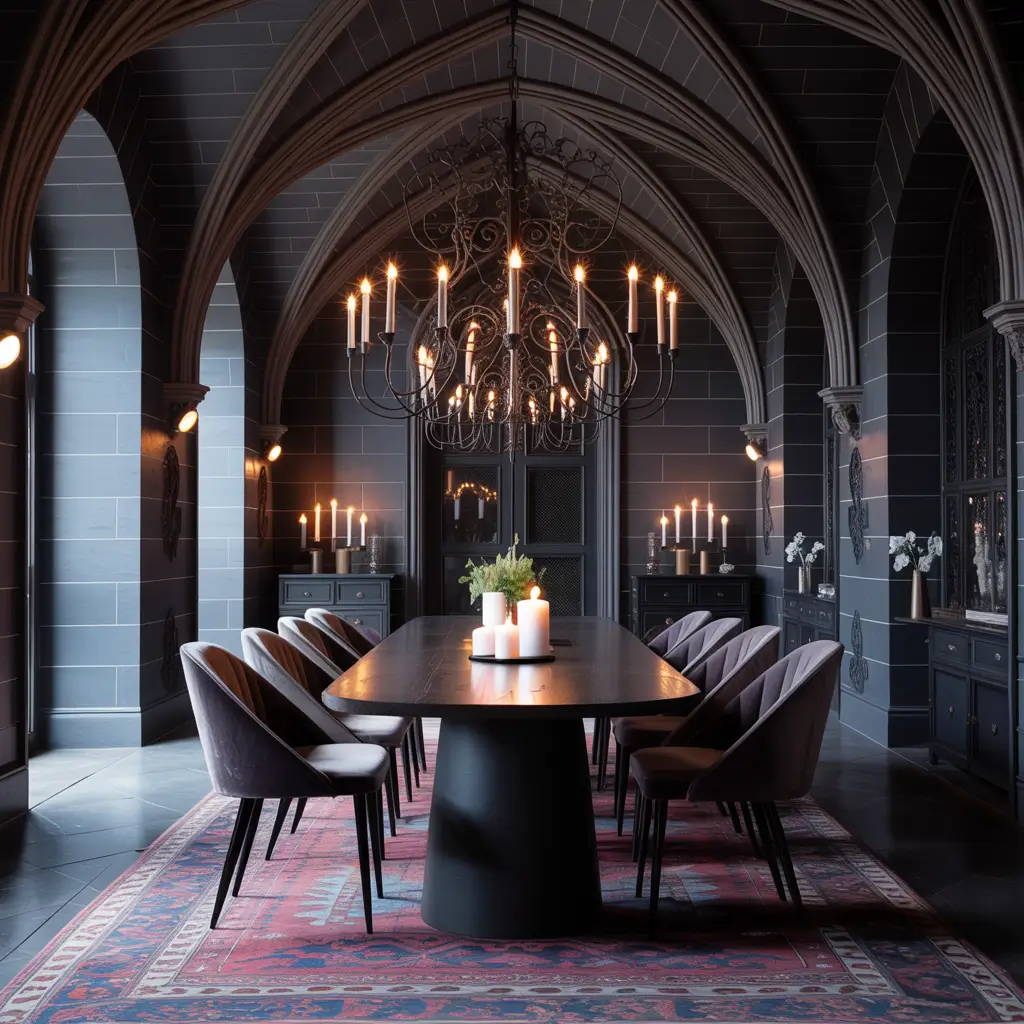
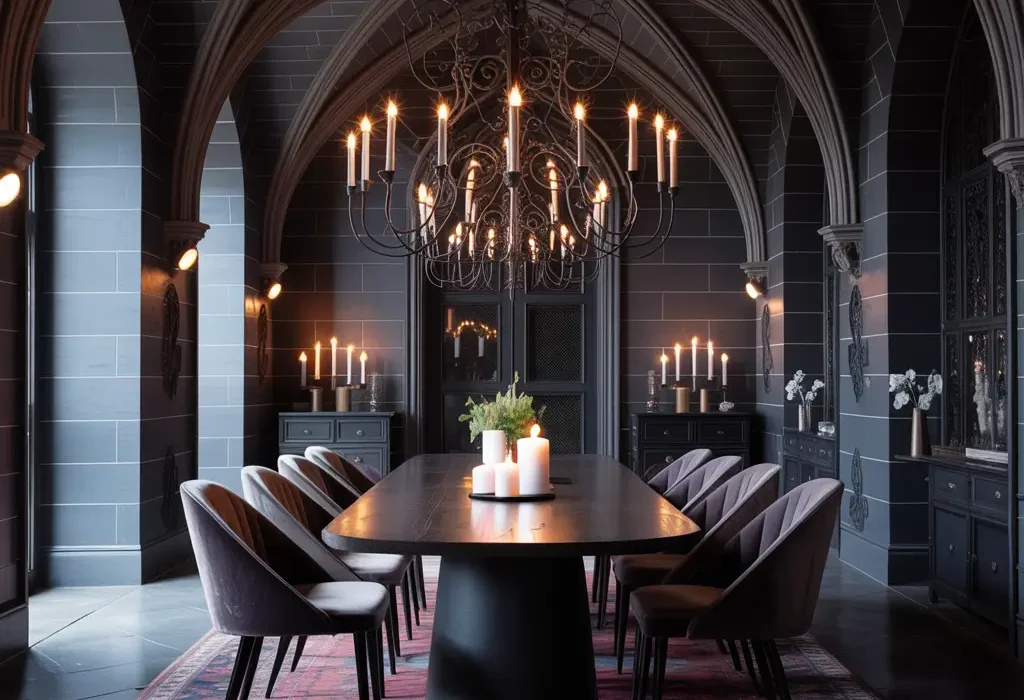
Now this is where things get interesting. Gothic modern fusion takes the drama of gothic architecture and design but strips away the dusty, cobweb-covered vibe. You get the moodiness and grandeur without feeling like you’re dining in a haunted mansion (unless that’s your thing—no judgment).
This style walks a fine line between historical reference and contemporary cool. Think pointed arches meets clean lines, ornate details meets minimalist restraint. It’s edgy without trying too hard, and honestly, it makes for incredible conversation at dinner parties.
Essential elements include:
- Arched windows or archway details (even faux ones work)
- Black or very dark gray color scheme
- Modern furniture with gothic-inspired details like high-backed chairs
- Wrought iron or matte black fixtures
- Dramatic artwork featuring architectural elements or abstract pieces
- Candlestick holders (the taller and more dramatic, the better)
I’ve seen people nail this look by mixing a modern glass dining table with ornate, high-backed velvet chairs. The contrast is chef’s kiss. The trick is committing to the drama while keeping things current. You want “sophisticated and mysterious,” not “I live in a theme park.”
Moody Forest Escape
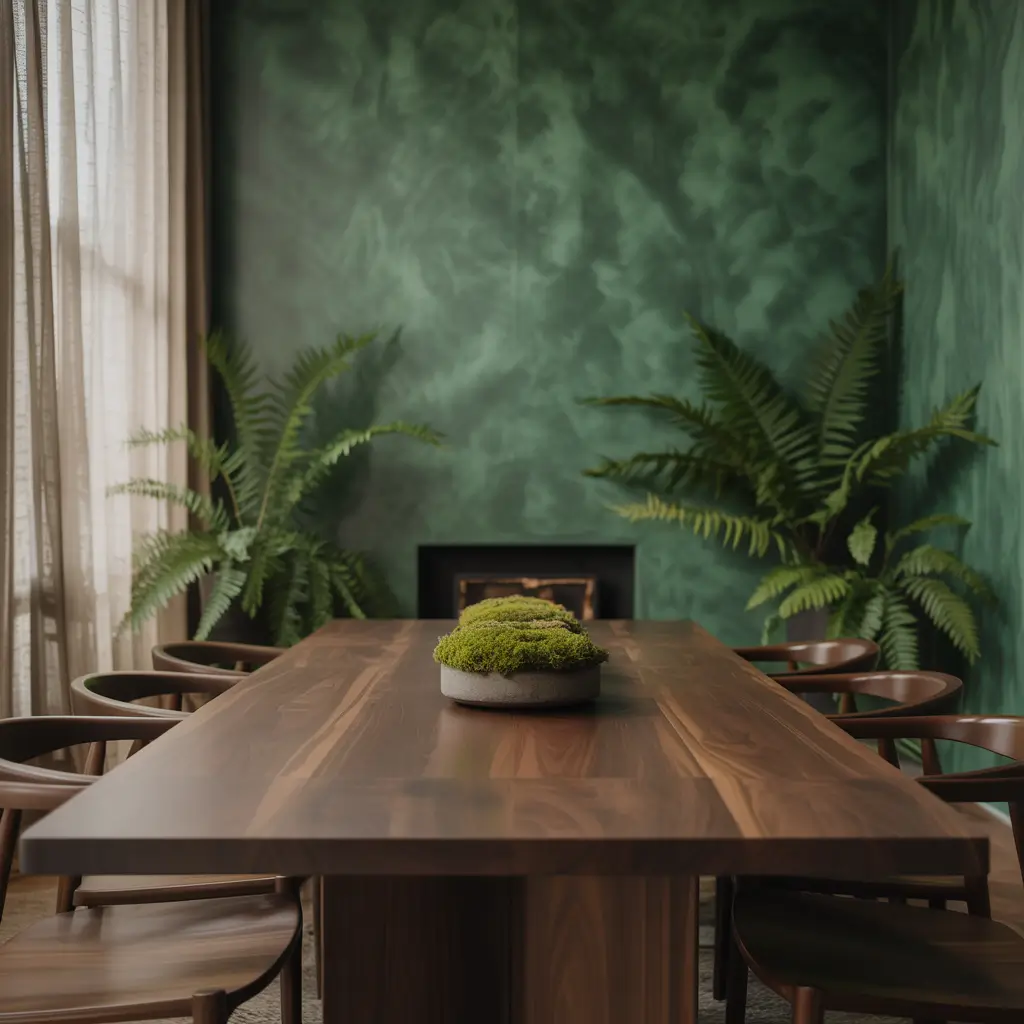
Imagine bringing the mysterious beauty of a twilight forest into your dining space. That’s what a moody forest escape delivers—all those deep greens, rich browns, and natural textures that make you feel connected to nature while staying cozy indoors.
This concept works brilliantly because it layers different shades of green and brown to create depth. You’re not slapping one forest-green paint on the walls and calling it done. You’re building a whole ecosystem of color and texture.
Build your forest escape with:
- Multiple shades of green from sage to hunter to nearly-black
- Natural wood elements (walnut, oak, or reclaimed wood)
- Botanical artwork or wallpaper featuring moody forest scenes
- Live plants in dark ceramic or concrete planters
- Earthy textiles in moss green, bark brown, or deep olive
- Organic shapes in furniture and decor
The vibe here is “upscale cabin in the woods” rather than “log cabin tourist trap.” I’m talking sophisticated nature lover, not taxidermy everywhere. The color palette keeps things moody while the natural elements prevent it from feeling heavy. Plus, you’ll have the best backdrop for those fall dinner parties.
Black & Brass Glam
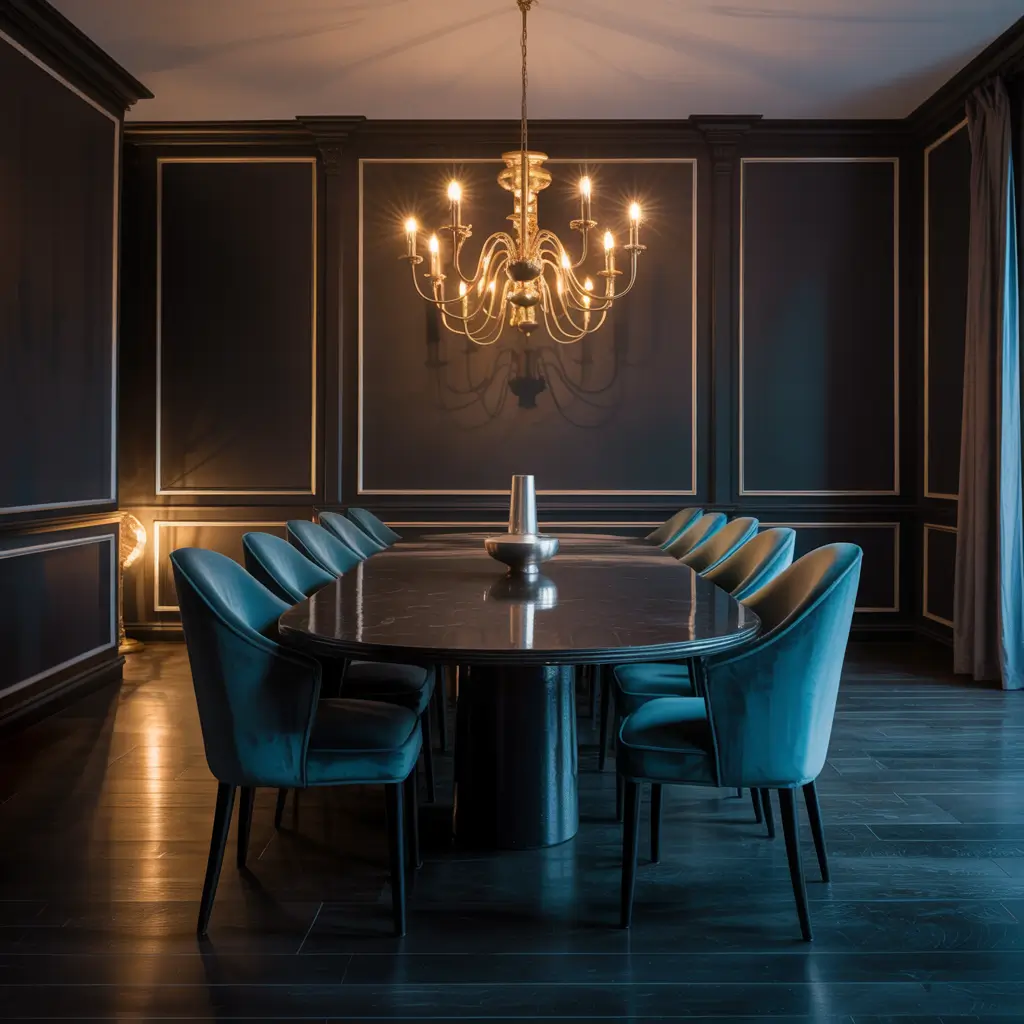
Want to feel like a million bucks every time you sit down to eat? Black and brass is the power couple of interior design, and they create the most glamorous moody dining rooms imaginable.
This combo is basically the little black dress of home design—timeless, sophisticated, and always appropriate. The black provides the moody foundation while the brass adds just enough warmth and shine to keep things from feeling too severe. I converted my dining room to this scheme three years ago, and I still get compliments.
Make it happen with:
- Matte black walls or wallpaper (seriously, commit to the darkness)
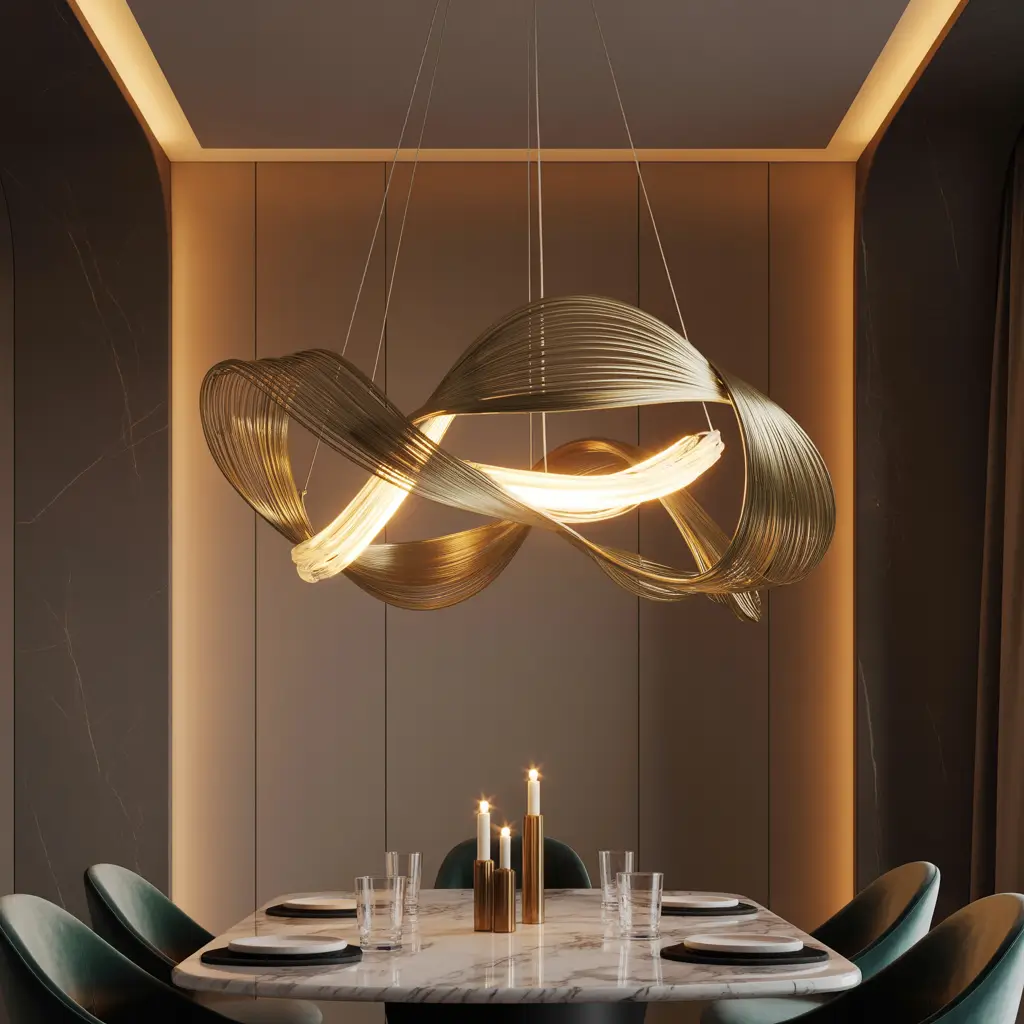
- Brass light fixtures like chandeliers or modern pendants
- Brass cabinet hardware, picture frames, and decorative objects
- Black dining furniture with clean, modern lines
- Mirrors with brass frames to amplify light
- White or cream accents for breathing room
Here’s the thing about black and brass: it photographs like a dream but also looks incredible in person. The brass catches candlelight and creates this warm glow against the black that’s honestly romantic without being cheesy. IMO, this is the safest bet if you want moody elegance but worry about going too dark.
Rich Burgundy Romance
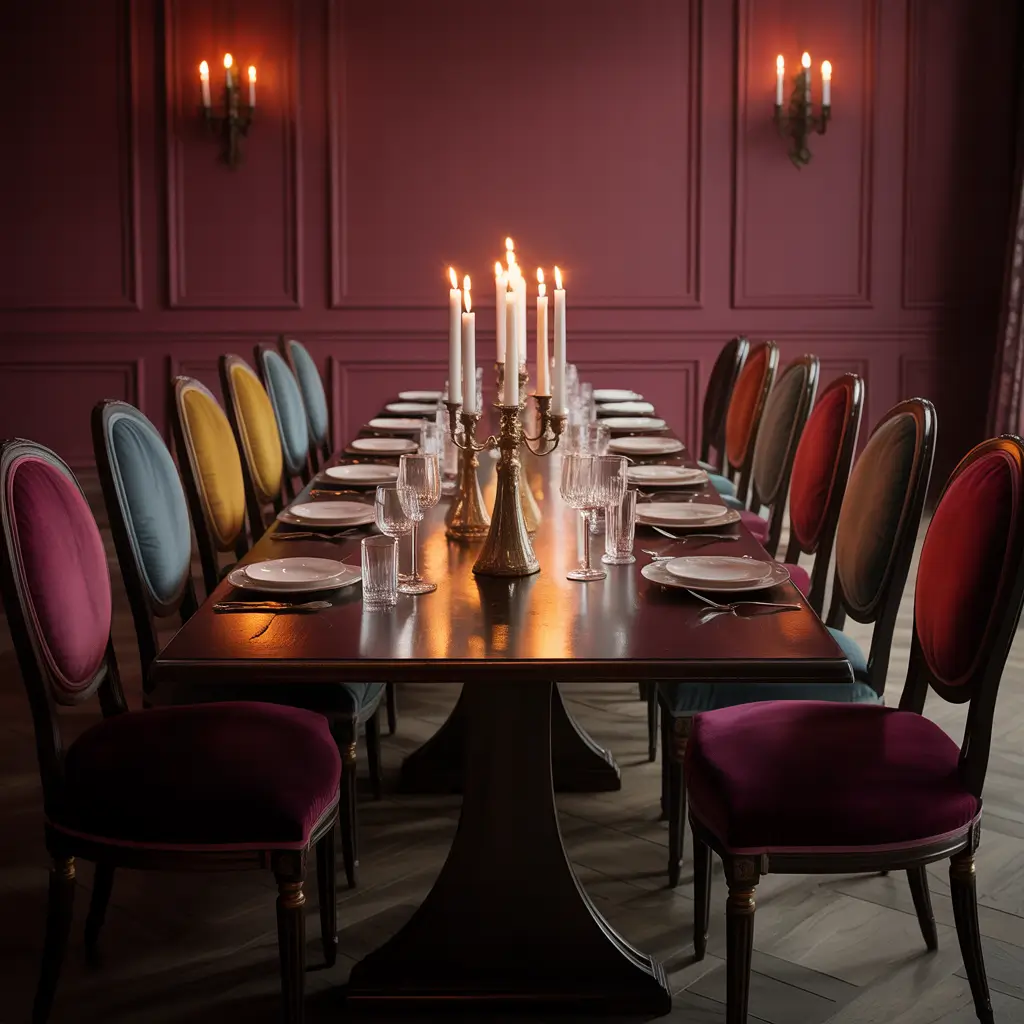
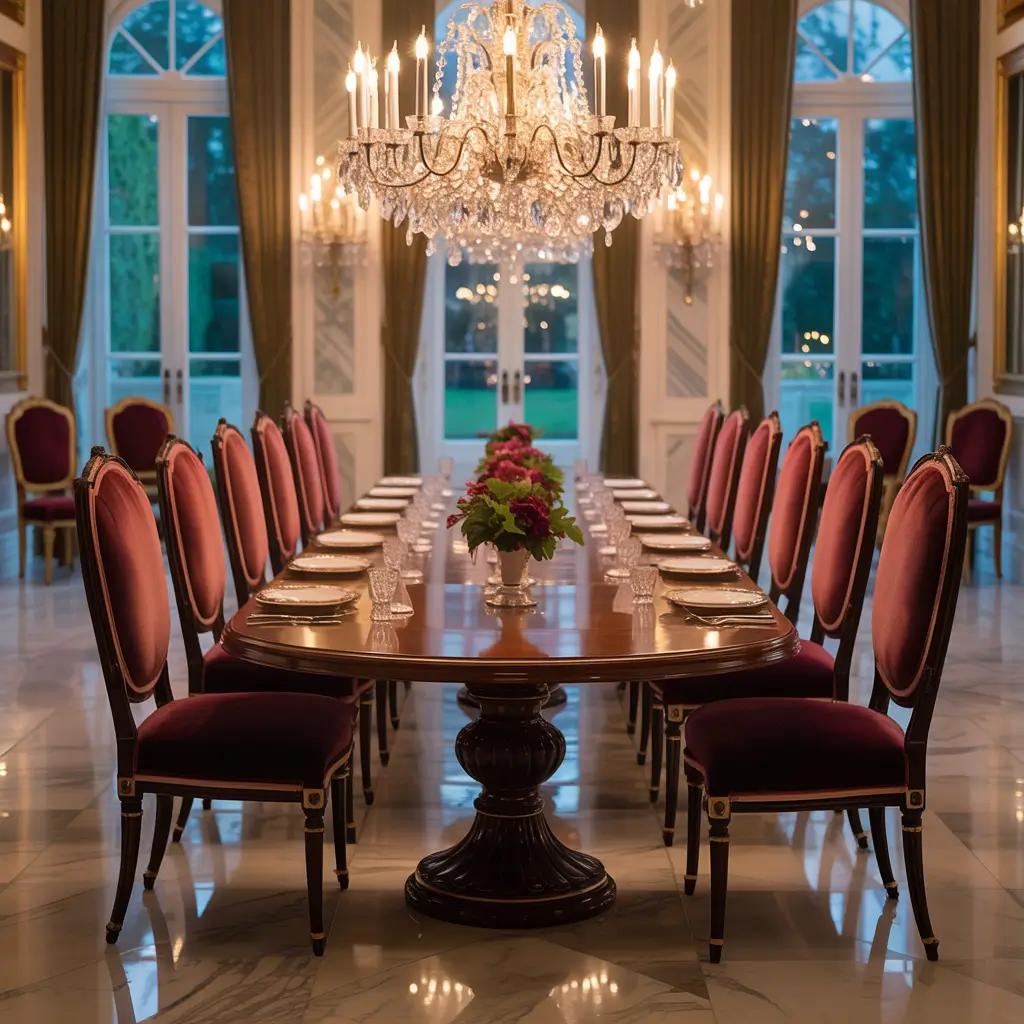
Listen, burgundy doesn’t get enough credit in the design world. This deep, wine-colored richness creates the most romantic, intimate dining spaces that make every meal feel like a special occasion.
I helped my sister paint her dining room in a luscious burgundy last fall, and she literally texts me photos of it at least once a month because she’s still obsessed. There’s something about this color that feels both cozy and luxurious, perfect for long dinners with good wine (which conveniently matches the walls).
Your burgundy romance needs:
- Deep burgundy or wine-colored walls (choose a shade with some depth, not flat red)
- Dark wood furniture in mahogany, cherry, or walnut
- Cream or ivory textiles to soften the intensity
- Gold or antique brass accents for that classic elegance
- Crystal glassware and decanters displayed prominently
- Soft, warm lighting (cool lighting will ruin this vibe completely)
The secret with burgundy is understanding that it works best with warm tones. Don’t bring in chrome or cool grays—they’ll clash. Stick with warm woods, golds, creams, and other warm colors. This isn’t the place for stark contrasts; it’s all about creating a cohesive, enveloping warmth.
Warm Cocoa Intimacy

Sometimes moody doesn’t mean jewel tones or dramatic blacks. Sometimes it means wrapping your dining room in warm, chocolatey browns that feel like the interior design equivalent of a hug.
This approach creates what I call “cozy sophisticated”—a space that’s refined enough for hosting but comfortable enough for Tuesday night takeout. The warm cocoa palette makes everyone look good in that lighting (trust me, your guests will notice), and it pairs beautifully with almost any accent color.
Create warm cocoa intimacy with:
- Multiple shades of brown from milk chocolate to dark cocoa
- Layered textures like leather, linen, and wood
- Warm metallics (copper and rose gold work beautifully here)
- Cream or tan accents to prevent it from feeling too heavy
- Natural fiber elements like jute, sisal, or rattan
- Warm-toned lighting (this is crucial—cool bulbs will ruin everything)
I love this style because it’s genuinely forgiving. Spilled wine? It basically disappears. Kids’ fingerprints? Can’t see them. It’s the practical person’s moody dining room while still delivering serious style points. You get all the atmosphere without the high maintenance 🙂
Also Read: 15 Elegant Formal Dining Room Ideas for Timeless Design
Moody Art Gallery Dining
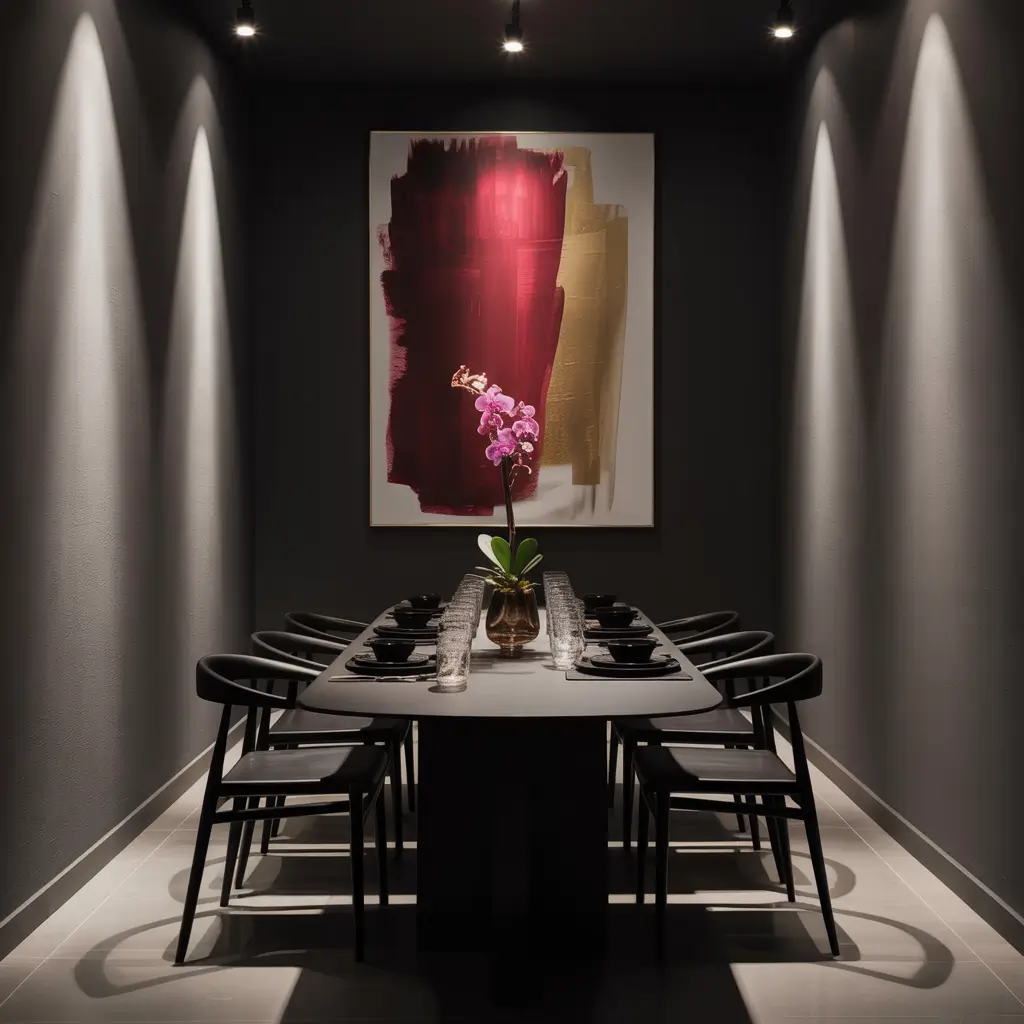
What if your dining room could double as a curated art gallery? This concept treats your dining space as a showcase for art while maintaining that moody, sophisticated atmosphere.
The walls become your canvas (pun intended), and you use them to display meaningful artwork that sets the tone. I visited a friend’s place where she did this, and I spent more time examining her walls than eating. It was like having dinner in a museum, except, you know, you could actually touch things and talk normally.
Build your art gallery dining room:
- Dark gray or charcoal walls (perfect neutral backdrop for art)
- Gallery-style lighting with picture lights or track lighting
- Curated art collection in various sizes and styles
- Simple, understated furniture that doesn’t compete with the art
- Minimal decorative objects (the art is the decoration)
- Strategic negative space on walls to let each piece breathe
The key here is curation over clutter. You’re not covering every inch of wall space. You’re carefully selecting pieces that work together while each getting its moment. Think less “my grandmother’s tchotchke shelf” and more “small contemporary gallery opening.”
Twilight Gray Sanctuary
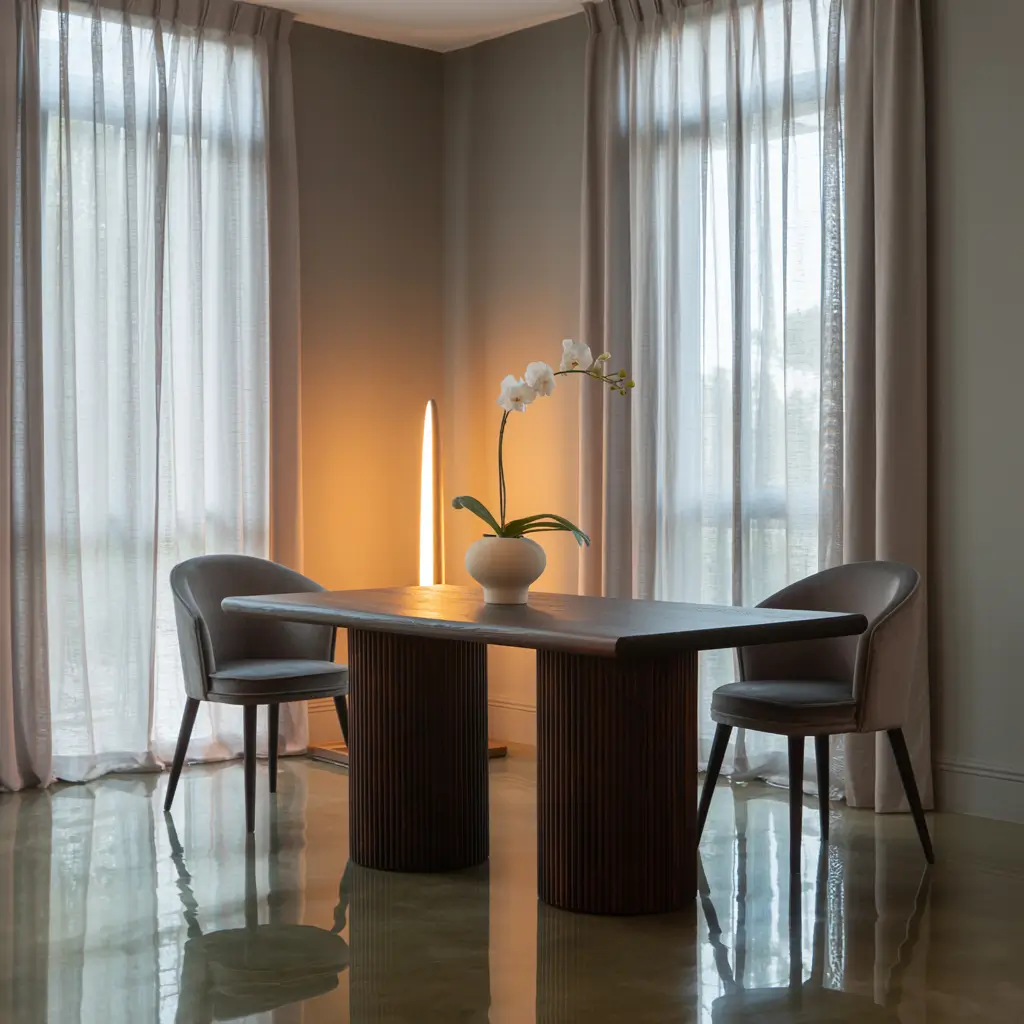
There’s something incredibly peaceful about gray in that perfect twilight zone—not too light, not too dark, just that sweet spot where moody meets calming. This creates a sanctuary vibe that’s rare in dining spaces but absolutely worth pursuing.
Twilight gray works because it’s neutral enough to pair with almost anything while being saturated enough to create atmosphere. I’ve seen this done with cool grays for a modern feel and warm grays for something cozier. Both work; it just depends on your overall vibe.
Your twilight sanctuary needs:
- Mid-to-dark gray walls (test samples in different lights first)
- Layered gray tones in various textures and finishes
- White or very light accents for contrast
- Natural materials like stone, concrete, or raw wood
- Soft textiles in complementary neutrals
- Statement lighting (this is where you can add color or shine)
Gray gets a bad rap for being boring, but that’s only when people use it wrong. The right gray, in the right shade, with the right accents, creates this sophisticated serenity that makes your dining room feel like an escape. Plus, it’s super versatile—you can completely change the room’s personality just by swapping accent colors.
Midnight Green Serenity

Okay, midnight green is having a moment, and I’m here for it. This color sits somewhere between deep teal and forest green, creating this mysterious, serene atmosphere that’s perfect for moody dining rooms.
What I love about midnight green is how it reads differently throughout the day. Morning light makes it feel fresh and energizing. Evening light makes it deep and contemplative. It’s like getting multiple rooms in one, which is kind of genius when you think about it.
Nail midnight green serenity with:
- Midnight green walls (choose a shade with both blue and green undertones)
- Natural wood furniture in medium to light tones for contrast
- White or cream ceiling to prevent the room from feeling too enclosed
- Copper or brass fixtures (they create beautiful warmth against this color)
- Botanical elements like plants or nature-inspired art
- Soft, diffused lighting rather than harsh overhead lights
I tested this color in my breakfast nook before committing to a full dining room, and the transformation was wild. The space went from forgettable to “Can I just sit here and read all day?” The serenity factor is real. You create a space that naturally lowers everyone’s stress level—pretty valuable for family dinners, right?
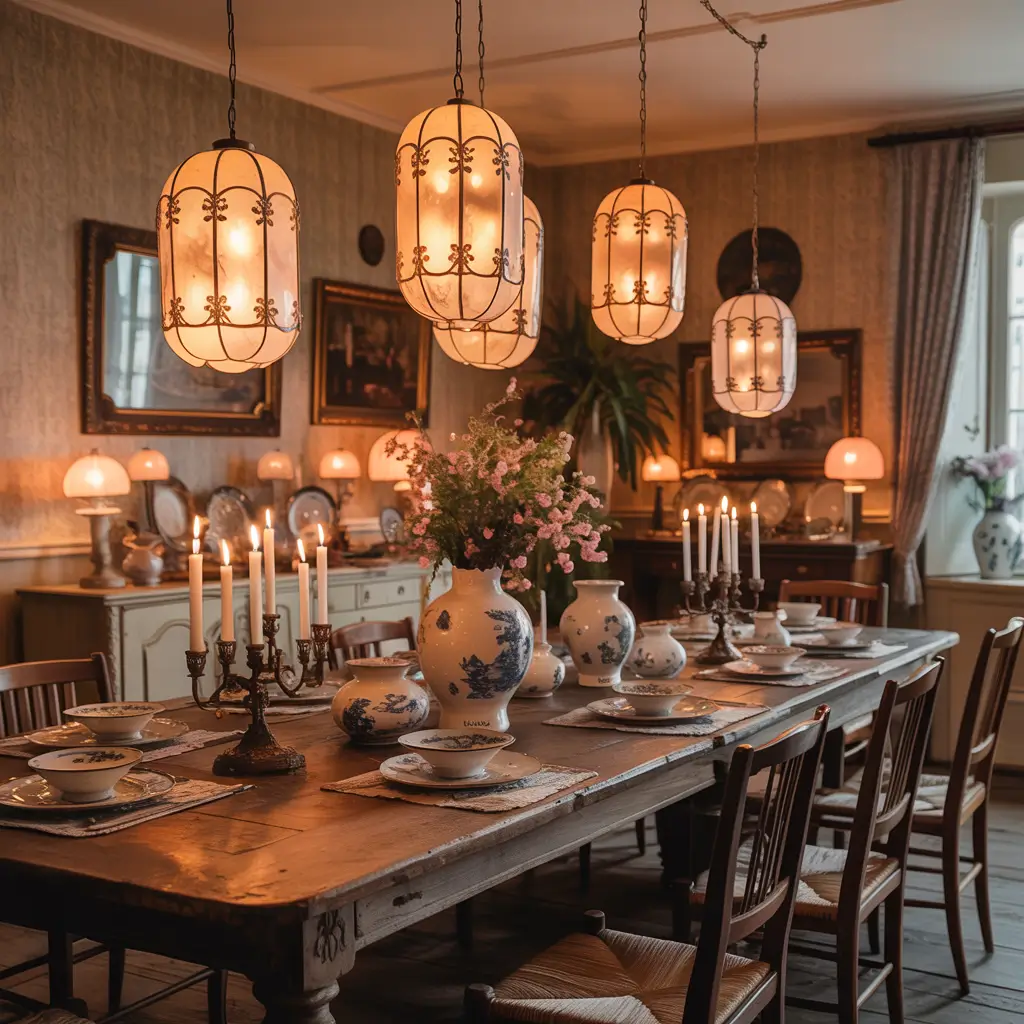
Candlelit Rustic Charm
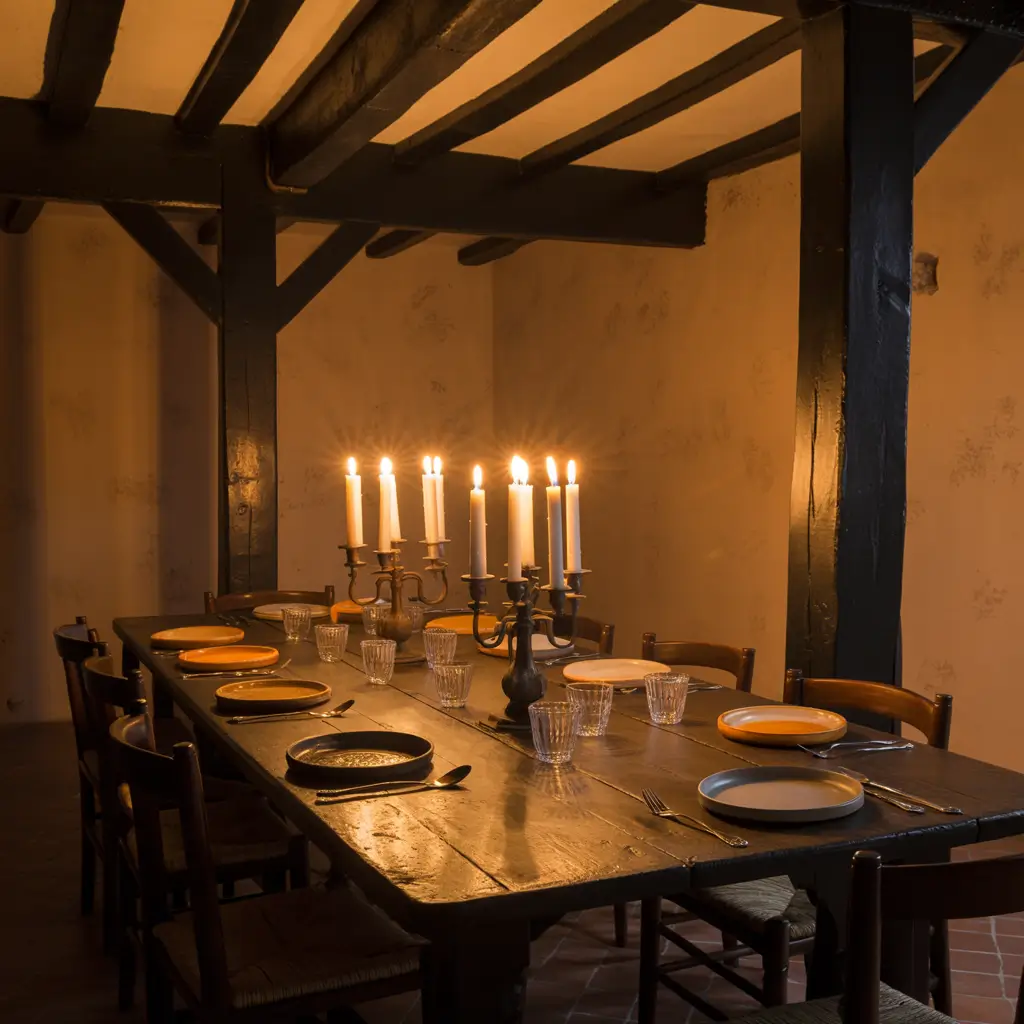
Who says moody can’t be rustic? A candlelit rustic dining room combines rough-hewn textures with strategic darkness to create something genuinely magical. Think old European farmhouse meets modern moody aesthetic.
This style is all about embracing imperfection and celebrating natural materials in their raw state. The moodiness comes from darker stains, strategic lighting, and lots of candlelight rather than painted walls. I’m obsessed with how this creates warmth while maintaining that sought-after atmospheric quality.
Essential elements include:
- Reclaimed or distressed wood (dining table, ceiling beams, accent walls)
- Dark wood stains in walnut, espresso, or ebony
- Wrought iron or black metal accents
- Multiple candle arrangements (lanterns, candlesticks, hurricanes)
- Neutral, natural textiles in linen, burlap, or cotton
- Stone elements like a fireplace surround or accent wall
- Exposed brick if you’re lucky enough to have it
The trick is avoiding the “country kitsch” trap. You want rustic elegance, not roosters-on-everything vibes. Keep it authentic with real materials, skip the artificial distressing, and let the natural beauty of wood and stone create the atmosphere. When you light all those candles at dinner? Swoon.
Plum & Gold Opulence

Ready to feel like royalty? Plum and gold is the most opulent, luxurious moody combination you can choose. It’s bold, it’s dramatic, and it makes zero apologies for being extra.
I’ll be honest—this isn’t for the faint of heart. You’re making a statement with plum and gold, and that statement is “I have exquisite taste and I’m not afraid to show it.” But if you’re willing to commit, the payoff is a dining room that feels like it belongs in a palace.
Create your opulent space with:
- Deep plum walls (we’re talking rich, saturated purple)
- Gold or gilded accents everywhere (frames, fixtures, hardware)
- Luxe fabrics like silk, velvet, or brocade
- Crystal chandelier or elaborate light fixture
- High-contrast elements like white marble or black accents
- Ornate details in furniture and architectural elements
The balance here matters. Too much plum and gold together gets overwhelming fast. I recommend choosing one as dominant (usually plum on walls) and using the other as strategic accent. Also, excellent lighting is non-negotiable—you need to show off all that richness properly. This is definitely a “go big or go home” situation, and honestly? I respect that energy.
Shadowed Industrial Chic
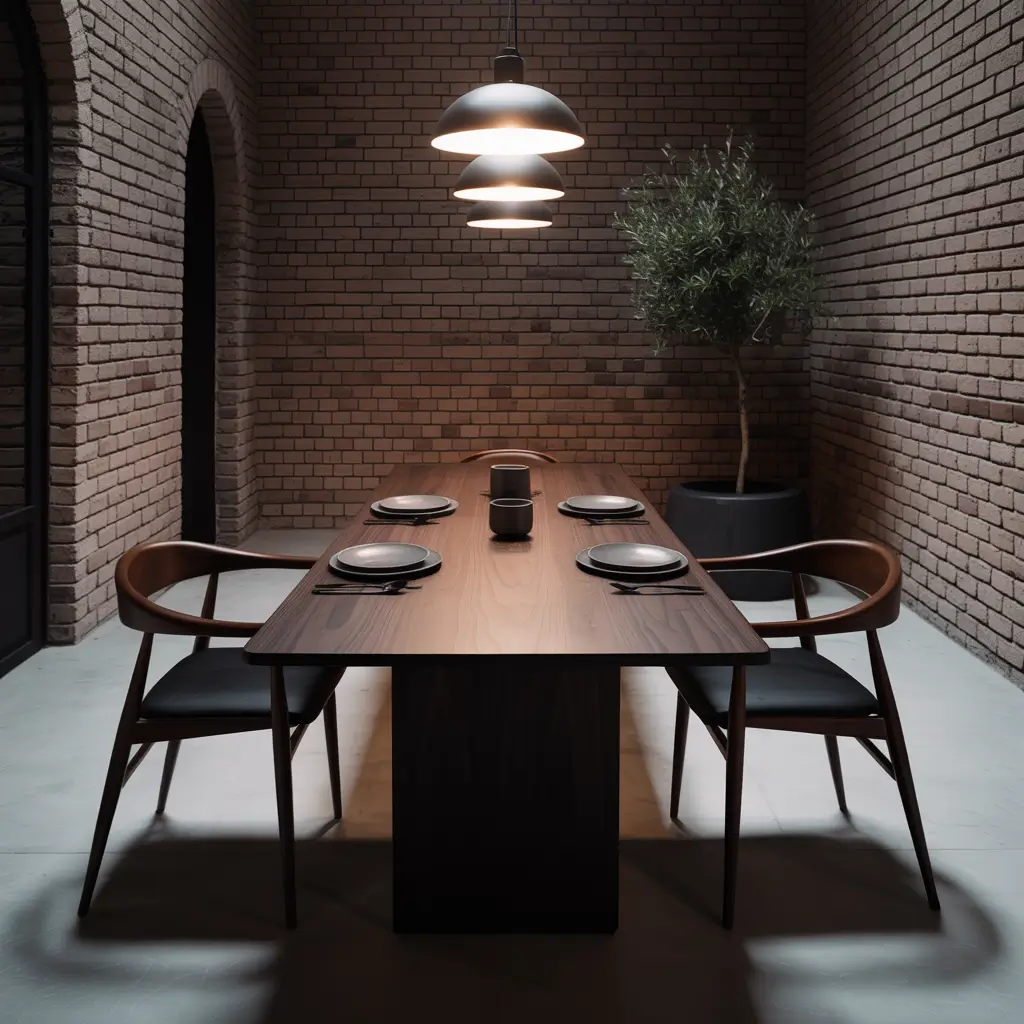
Let’s wrap up with something a bit edgier. Shadowed industrial chic takes raw, industrial elements and wraps them in moody darkness to create something unexpectedly sophisticated.
This style works brilliantly in lofts or spaces with industrial bones, but you can fake it pretty convincingly too. The combination of rough textures, metal elements, and strategic darkness creates this urban sophistication that feels current and timeless simultaneously.
Your industrial chic dining room needs:
- Exposed elements (brick, concrete, pipes, ductwork)
- Dark, moody walls in charcoal, black, or deep gray
- Metal furniture and fixtures in black iron, steel, or brushed nickel
- Edison bulbs or industrial-style lighting
- Minimal, functional furniture with clean lines
- Concrete, metal, or reclaimed wood dining table
- Limited color palette (stick to blacks, grays, and browns)
What makes this moody rather than just industrial is the commitment to darker tones and dramatic lighting. You’re creating shadows and depth intentionally. The rawness of industrial design gets elevated through thoughtful darkness. I’ve seen people nail this with something as simple as painting exposed brick black—instant transformation.
The cool thing about industrial chic is how it embraces “flaws.” Scratches on your metal table? Character. Uneven concrete? Texture. It’s low-maintenance while still looking incredibly intentional and styled.
Bringing It All Together
Look, creating a moody dining room isn’t just about slapping dark paint on walls and calling it a day. It’s about understanding how color, texture, and light work together to create atmosphere. Each of these fifteen styles offers a different approach to achieving that timeless elegance we’re all chasing.
Whether you’re drawn to the jewel-box luxury of dark emerald, the dramatic simplicity of charcoal minimalism, or the opulent richness of plum and gold, the key is committing to your vision. Half-measures don’t work with moody interiors. You need to embrace the darkness, trust the process, and remember that proper lighting can make or break the whole thing.
Here’s what I wish someone had told me before I started my moody dining room journey: test everything in your actual space. Colors look completely different depending on natural light, ceiling height, and surrounding rooms. Buy sample pots, paint large swatches, and live with them for at least a week. What looks perfect at noon might look like a cave at dinnertime (or vice versa).
Also, don’t underestimate the power of layered lighting. Overhead fixtures, wall sconces, table lamps, candles—you need multiple sources at different heights. This is what creates depth and prevents “moody” from becoming “can’t see my food.” Dimmers are your best friend here. Seriously, put everything on dimmers.
The beauty of moody dining rooms is how they make every meal feel a bit more special. Whether it’s Tuesday night pizza or a holiday feast, the atmosphere elevates the experience. Your dining room becomes a destination rather than just a functional space, and honestly? That’s worth the effort.
So pick your favorite style from this list, or mix elements from several to create something uniquely yours. The moody dining room trend isn’t going anywhere because it taps into something timeless—our desire for spaces that feel intimate, sophisticated, and just a little bit dramatic. Your dinner parties will never be the same, and your Instagram followers are about to get very jealous.