

15 Elegant Narrow Entryway Decor Ideas on a Budget
You know that awkward, skinny hallway you squeeze through every time you come home? The one where you accidentally knock over your keys trying to take off your coat? Yeah, I’m talking about that narrow entryway that’s been silently judging you since you moved in.
Look, I get it—decorating a space that’s basically the width of a yoga mat feels about as fun as assembling IKEA furniture without instructions. But here’s the thing: your entryway is literally the first thing you (and your guests) see when walking into your home, and you don’t need to drop a fortune to make it look amazing.
I’ve wrestled with my own narrow entryway for years, and I’m pretty sure I’ve tried every Pinterest hack known to humanity. After plenty of trial and error (and maybe a few holes in the wall I’d rather not discuss), I’ve figured out what actually works without requiring a second mortgage.
So grab your coffee, and let’s talk about transforming that cramped corridor into something you’ll actually want to show off.
Slim Console Table with Wall Mirror
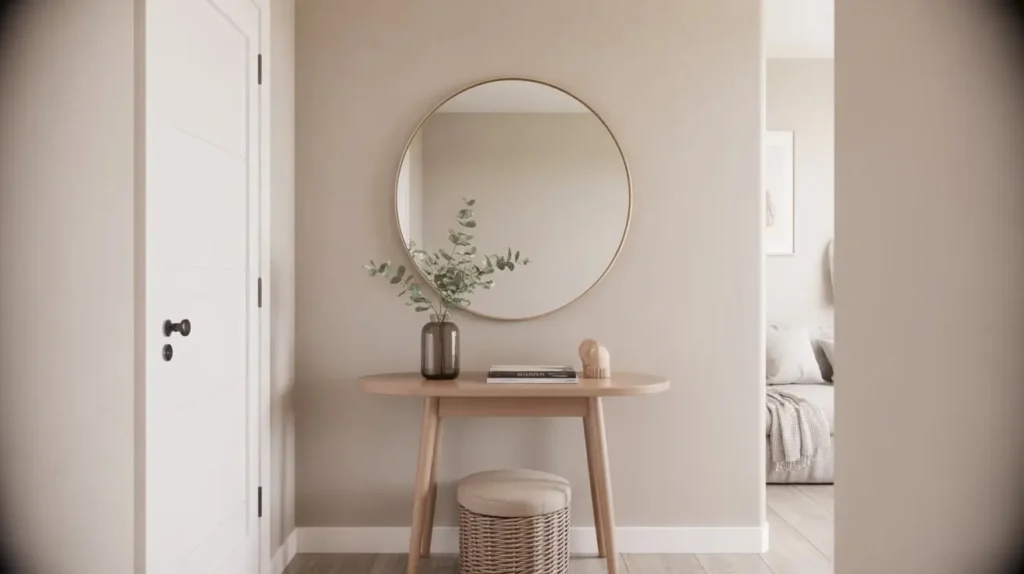
This combo is the holy grail of narrow entryways, and I’m not being dramatic. A slim console table—we’re talking 10-12 inches deep maximum—gives you just enough surface space for keys, mail, and that succulent you’ll definitely remember to water this time.
Pair it with a wall mirror hanging directly above, and you’ve created an optical illusion that makes your space feel twice as wide. I snagged a basic console from Target for like $60 and found a vintage mirror at a thrift store for $15. The whole setup cost me less than a fancy brunch, and it completely changed my entryway game.
Here’s what makes this work so well:
- The mirror bounces light around, making the narrow space feel open and airy
- You get a last-minute outfit check before heading out (you’re welcome for saving you from that spinach-in-teeth situation)
- The slim profile means you’re not bumping into it every single time you walk by
- It creates a focal point that draws the eye and looks intentional
Pro tip: Look for tables with lower shelves or drawers. That extra storage is clutch for stashing stuff you don’t want visible. And honestly? Sometimes I just shove everything in that drawer before guests arrive, and nobody’s the wiser 🙂
Floating Shelf Entryway Setup
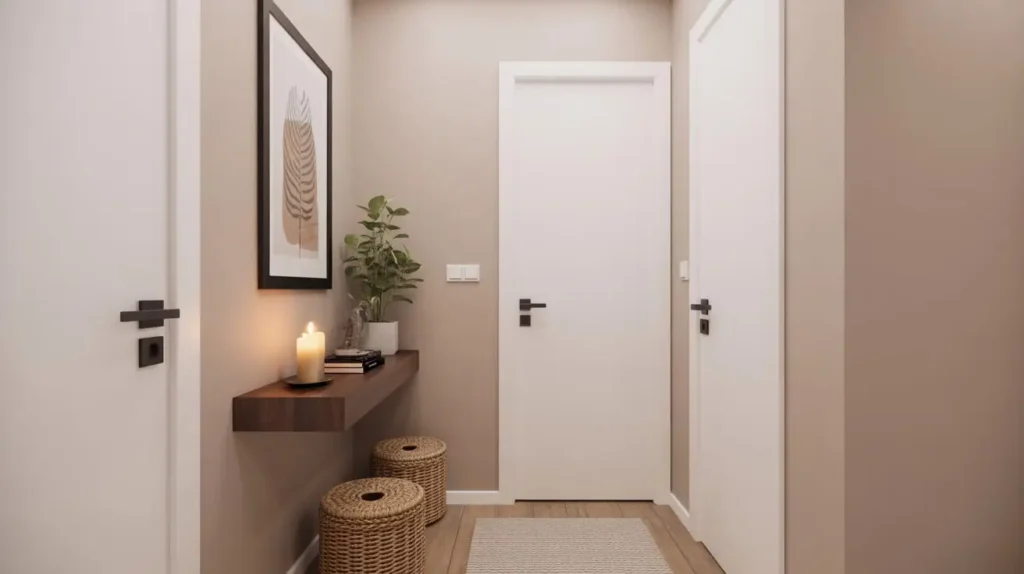
Ever wondered why floating shelves are everywhere on Instagram? Because they actually work, especially in tight spaces where floor real estate is basically nonexistent.
I installed three floating shelves at staggered heights in my entryway, and it only took about 30 minutes (and yes, I’m including the time I spent making sure they were level because crooked shelves make my eye twitch). You can grab a set of decent floating shelves for $25-40, and they create storage without eating up floor space.
The beauty of this approach is the flexibility. You can style them with:
- Small decorative baskets for gloves, sunglasses, and random junk
- A cute dish or tray for keys and change
- Small plants or faux greenery
- Picture frames with your favorite photos
- A small table lamp for ambient lighting
I rotate what’s on my shelves seasonally because I’m extra like that, but you could totally set it and forget it. The key is keeping things minimal—remember, we’re working with limited visual space here, so less is definitely more.
Vertical Coat Rack and Storage Hooks
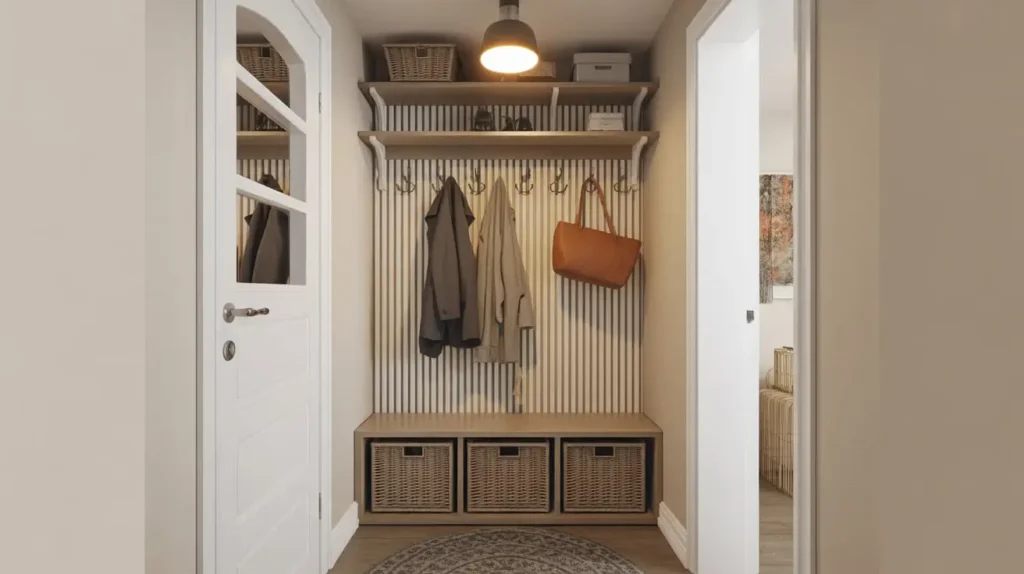
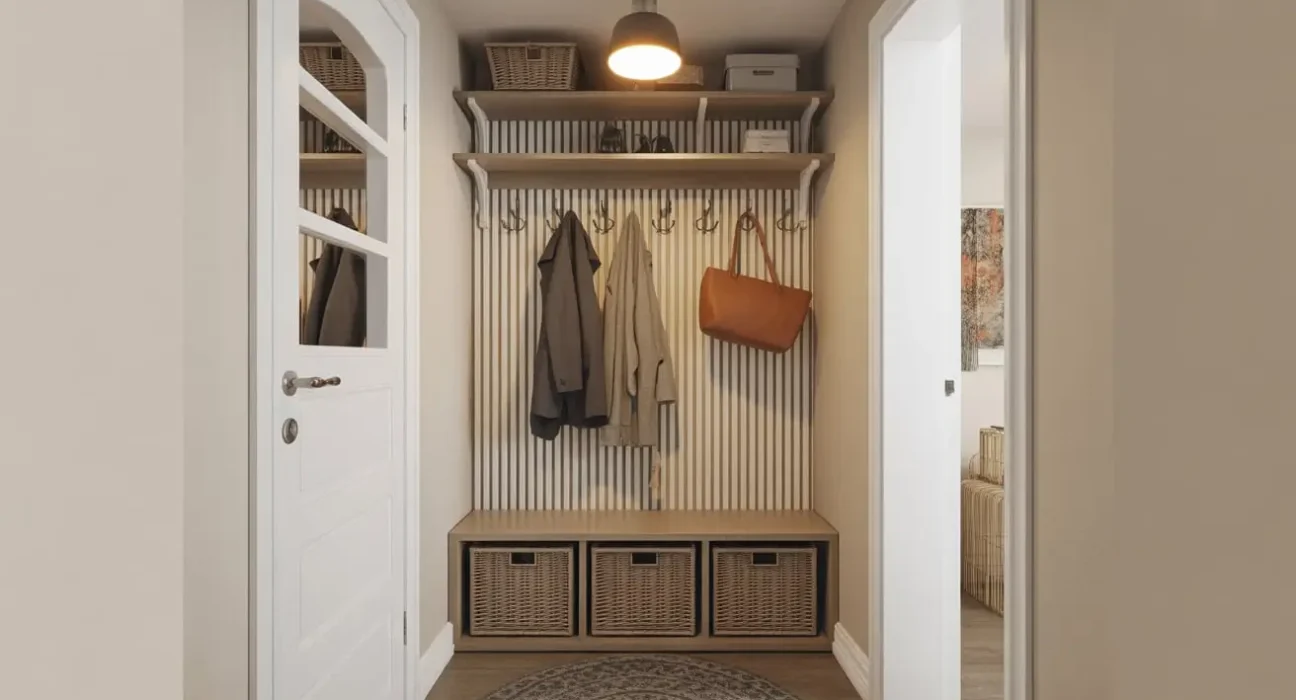
Let’s be real: coats on chairs are not a vibe. A vertical coat rack or a row of wall-mounted hooks solves your coat chaos while looking intentional instead of messy.
I mounted five sturdy hooks in a vertical line on my entryway wall, spacing them about 6 inches apart. Cost? About $20 total. Game changer? Absolutely. Now my coats, bags, and scarves have an actual home instead of creating a fabric mountain on my dining room chair.
Here’s why vertical is the way to go in narrow spaces:
- It maximizes wall height instead of width
- You can fit more hooks than you’d think
- It keeps everything easily accessible
- The vertical line creates the illusion of higher ceilings
Look for hooks with personality—brass, matte black, vintage glass knobs, whatever matches your vibe. These little details make it look designed rather than purely functional. And FYI, make sure you anchor them properly into studs or use heavy-duty drywall anchors. Nobody wants their coat rack crashing down at 6 AM on a Monday.
Minimalist Bench with Hidden Storage
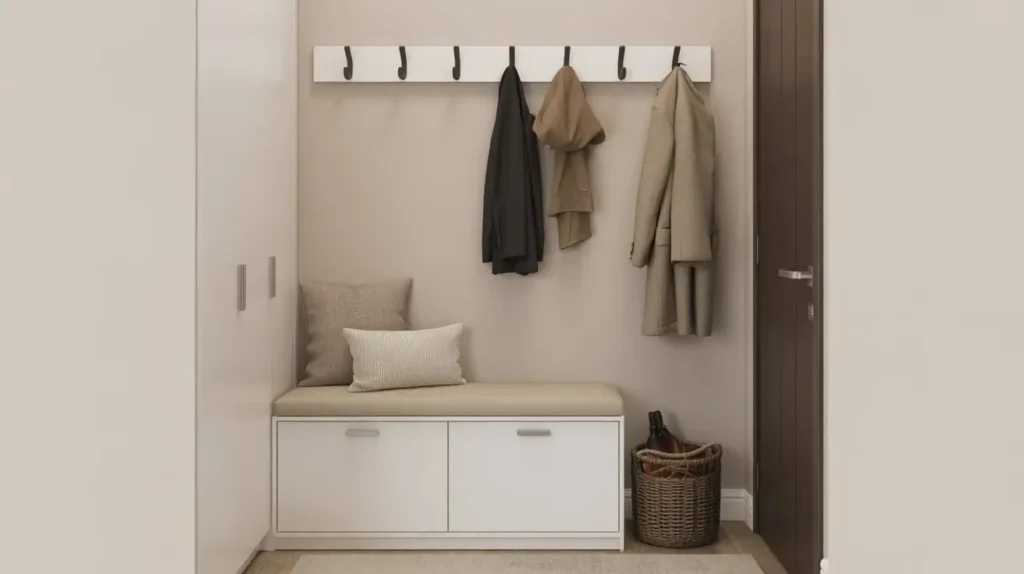
A narrow bench with storage underneath is like the Swiss Army knife of entryway furniture. You get seating for putting on shoes (because balancing on one foot while wrestling with boots is a young person’s game), plus hidden storage for all the stuff you need but don’t want to see.
I found a 12-inch deep bench at IKEA for around $50, and it fits perfectly in my narrow space. The lift-top storage hides winter accessories, dog leashes, reusable shopping bags, and approximately 47 single gloves that lost their partners somewhere in the void.
Consider these options:
- Benches with cubbies underneath for easy-access storage
- Upholstered tops for comfort (and a touch of luxury on a budget)
- Simple wooden benches you can DIY cushions for
- Vintage finds from Facebook Marketplace that just need a fresh coat of paint
The functionality here is unmatched. Plus, having a place to sit while you tie your shoes makes you feel like you have your life together, even if you absolutely don’t.
Narrow Gallery Wall Arrangement
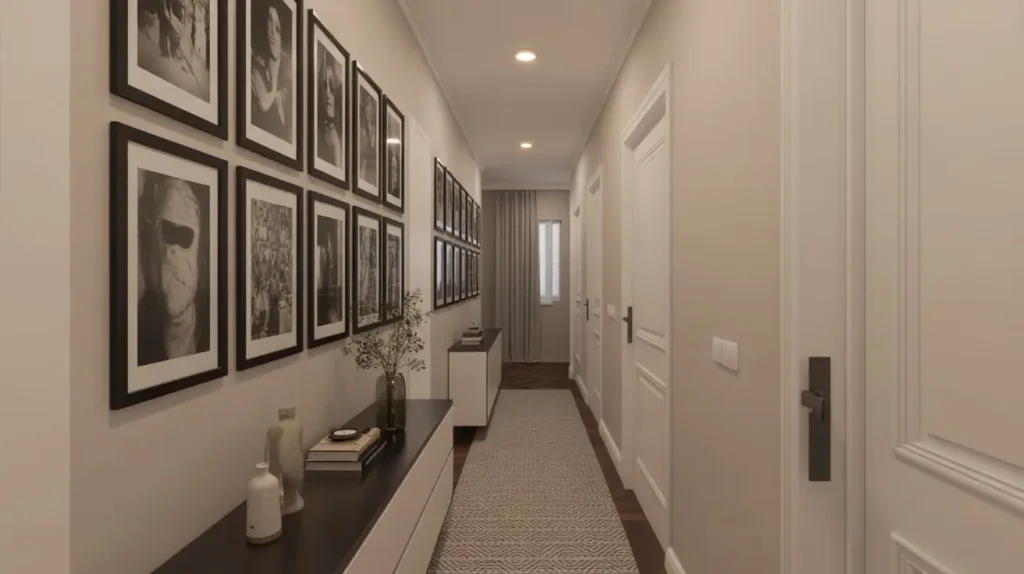
Gallery walls aren’t just for living rooms, my friend. A well-planned gallery wall in a narrow entryway adds personality and visual interest without taking up a single inch of floor space.
The trick is going vertical rather than spreading out horizontally. I created a gallery wall that runs from about waist height to near the ceiling, using a mix of frames I already owned and some cheap ones from Dollar Tree (yes, really). Total investment? Maybe $30 for new frames and printable art from Etsy.
Here’s how to nail it:
- Start with a template by laying everything out on the floor first
- Mix frame sizes and orientations for visual interest
- Keep a consistent color palette (all black frames, all white, mixed metals, etc.)
- Include different types of art: photos, prints, quotes, even small mirrors
- Maintain consistent spacing between frames (I used 2 inches)
A gallery wall makes your narrow entryway feel curated and personal. Plus, it gives guests something to look at besides the fact that your hallway could double as a bowling lane.
Also Read: 15 Graceful Church Entryway Decor Ideas to Inspire Worshippers
Light and Bright Entryway with Mirrors
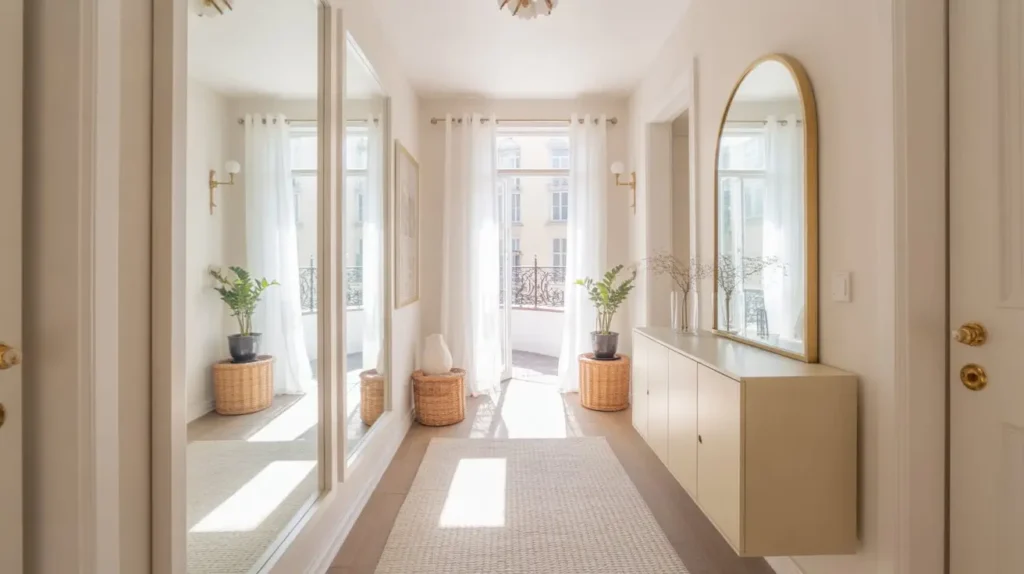
Building on the mirror idea, let’s talk about creating an entire light-and-bright aesthetic using multiple mirrors and reflective surfaces. This approach basically tricks the eye into thinking your narrow space is much larger than it actually is.
I used three mirrors of different sizes on one wall, arranged in a cluster. Combined with a light paint color (I went with a soft white), the whole entryway feels open and airy instead of like a cave. Mirrors are the ultimate budget-friendly hack because you can find them literally anywhere—thrift stores, garage sales, discount home stores.
Layer your light sources too:
- A ceiling light or pendant for general illumination
- A table lamp on your console for warmth
- Maybe a string of fairy lights if you’re feeling whimsical
- Natural light if you’re blessed with a window
The goal is eliminating shadows and dark corners that make narrow spaces feel even more cramped. Light colors on the walls, light-reflecting mirrors, and good lighting create an optical illusion that actually works.
Wall-Mounted Organizer and Mail Station
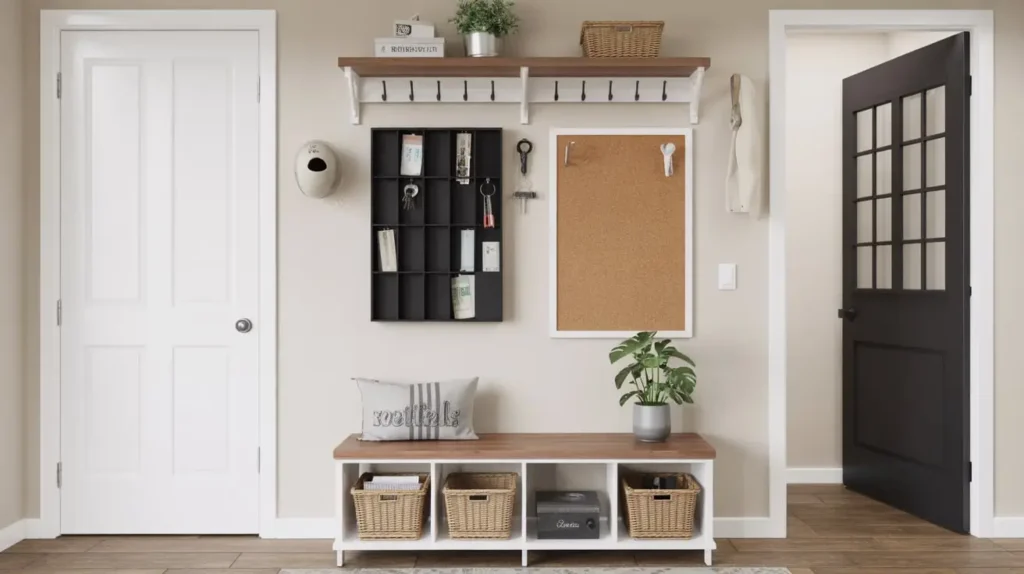
Can we talk about mail for a second? It multiplies like rabbits, and if you don’t have a system, you end up with piles of envelopes on every flat surface. A wall-mounted organizer solves this while keeping your entryway functional.
I installed a simple mail organizer with slots for incoming mail, outgoing mail, and random papers I need to deal with eventually (okay, probably never, but the intention is there). Added some small hooks below for keys, and boom—command center established.
Budget-friendly options include:
- Wall-mounted metal baskets ($15-25)
- Pegboard with clips and small containers
- Floating shelf with decorative boxes
- Repurposed vintage mail sorters from antique shops
- DIY clipboard wall with cute clips
This setup costs pocket change but makes you feel ridiculously organized. Plus, you’ll never frantically search for your keys again. Well, probably still sometimes, but less often.
Slim Shoe Cabinet with Decor Accents
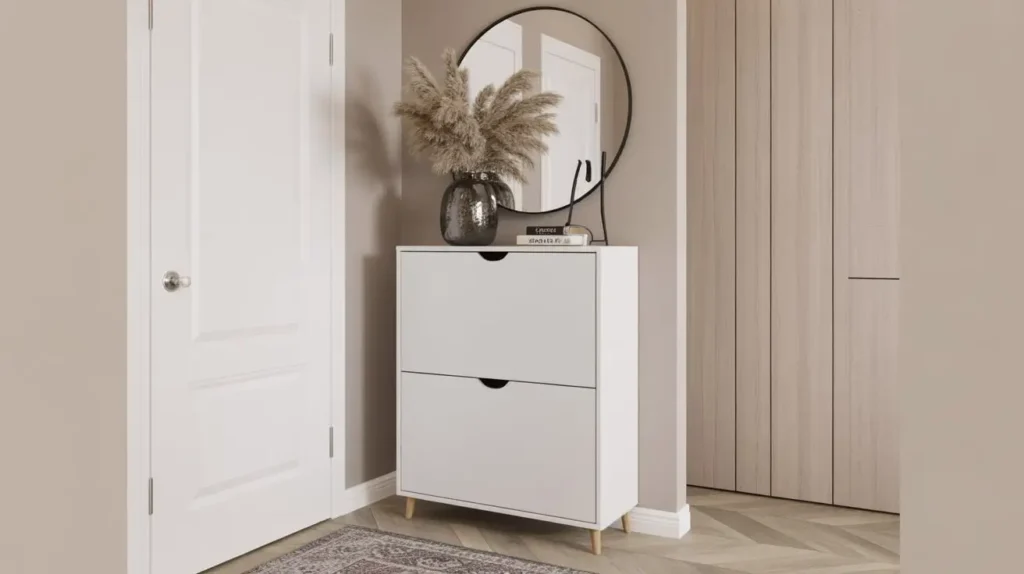
Shoe storage in a narrow entryway feels impossible until you discover slim shoe cabinets. These magical pieces are typically only 8-10 inches deep with tilting drawers that hold shoes vertically. Mind. Blown.
I bought one for about $80, and it holds approximately 12 pairs of shoes while taking up barely any space. The top surface doubles as a styling opportunity—I’ve got a small plant, a candle, and a decorative bowl up there looking all Pinterest-worthy.
Why this works:
- Shoes stay organized and out of sight
- No more tripping over sneakers in the dark
- The slim profile doesn’t obstruct the walkway
- It looks like furniture, not storage
- You can style the top surface decoratively
Look for options with compartments or adjustable shelves. Some even come with seating on top, which is basically furniture multitasking at its finest.
Neutral-Toned Narrow Entryway Styling
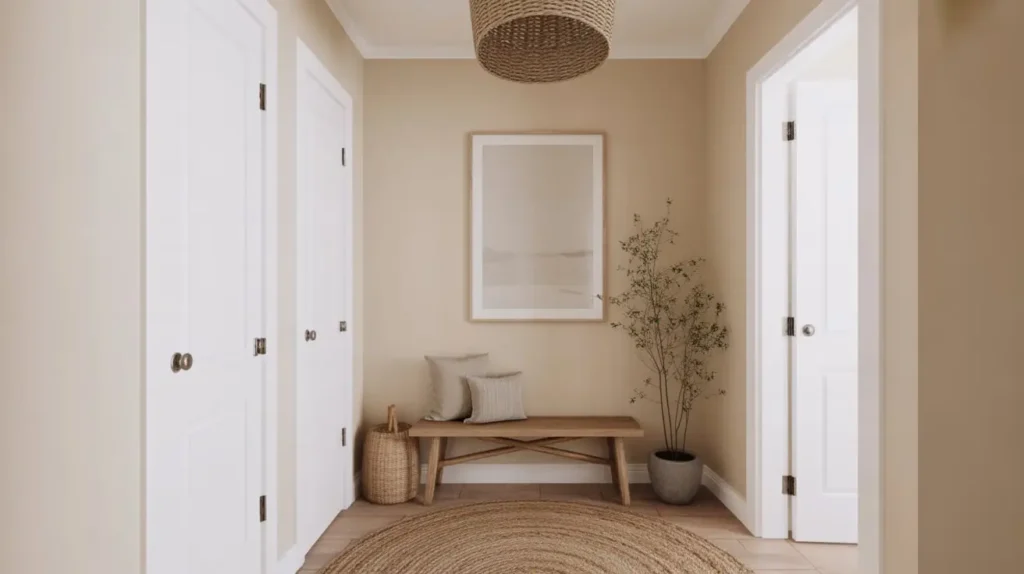
Sometimes the best approach is keeping everything neutral and simple. Whites, beiges, grays, and natural wood tones make narrow spaces feel cohesive and larger.
I went full neutral in my entryway after a brief phase where I painted one wall dark navy (learned that lesson the hard way—dark colors make small spaces feel smaller, who knew?). Now everything is soft, neutral, and calming. Neutral doesn’t mean boring, though.
Add interest through:
- Different textures: woven baskets, smooth ceramics, soft textiles
- Natural materials: wood, rattan, jute, linen
- Subtle patterns in your runner rug or art
- Greenery for a pop of life without color chaos
- Varying shades within the same color family
This approach creates a serene, spa-like vibe that makes coming home feel peaceful. Plus, neutral stuff is easier to find on a budget because it’s always in style and readily available at discount stores.
Rustic Floating Ledge Display
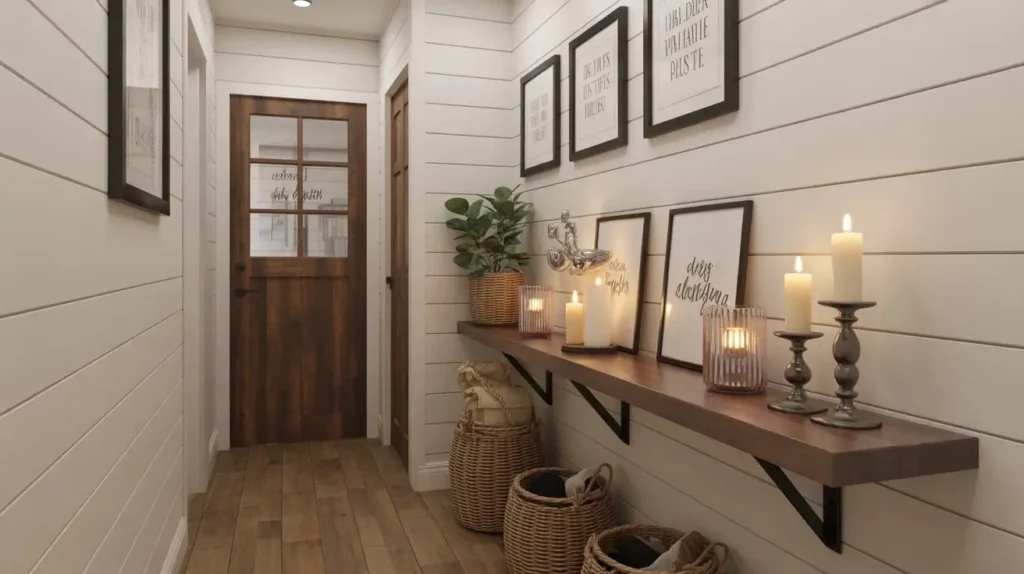
Floating picture ledges bring that rustic, farmhouse vibe without requiring much depth. These ledges are only about 4 inches deep, perfect for narrow spaces, and you can lean art and photos on them instead of making a million nail holes in your wall.
I installed two floating ledges in my entryway, and I love how easy it is to swap out what’s displayed. Feeling fall vibes? Small pumpkins and warm-toned art. Holiday season? Miniature evergreen branches and festive prints. The flexibility is unmatched.
Style your ledges with:
- Framed art and photos leaned casually
- Small potted plants or succulents
- Candles for ambiance
- Decorative objects like small vases or figurines
- Seasonal decor that’s easy to rotate
These ledges run about $15-30 each depending on length, and you can DIY them even cheaper with a simple wooden board and L-brackets. The rustic look is forgiving, so imperfections actually add character. IMO, this is one of the most versatile options on this list.
Also Read: 15 Beautiful Outdoor Entryway Decor Ideas to Impress Guests
Space-Saving Entryway with Pegboard Wall
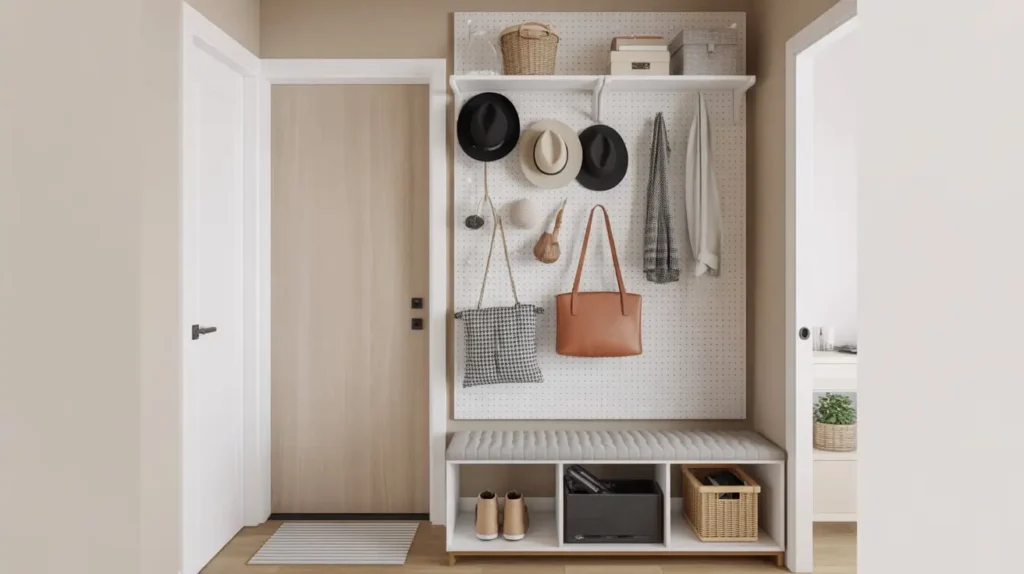
Pegboard isn’t just for garages anymore. A painted pegboard wall in your entryway creates customizable storage that you can reconfigure whenever you want.
I painted a 4×4 pegboard section in matte black, mounted it on my entryway wall, and added various hooks, baskets, and shelves. Total cost? About $35. The ability to move things around is genuinely addictive—I probably rearrange mine monthly because I’m apparently incapable of making permanent decisions.
Pegboard benefits:
- Completely customizable to your needs
- Easy to change as your storage needs evolve
- Holds way more than you’d think
- Creates visual interest on the wall
- Super budget-friendly
You can find pegboard at any hardware store, and the accessories are cheap. Paint it a fun color, keep it natural wood, or go bold with a pattern. The functional-meets-decorative vibe works perfectly in narrow spaces where every inch counts.
Statement Runner Rug for Long Hallway
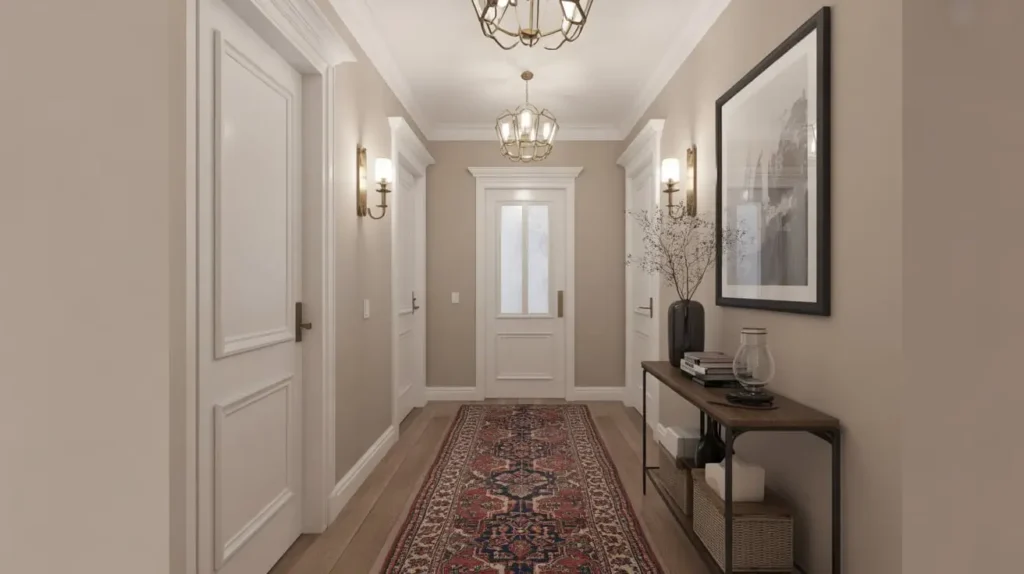
Never underestimate the power of a great runner rug. A statement rug draws the eye down the length of your entryway, creating visual flow and adding warmth underfoot.
I grabbed a washable runner from Amazon for about $60 (washable is key because entryways get dirty, let’s be honest). The pattern adds personality without overwhelming the space, and it defines the entryway as its own zone.
Choosing the right runner:
- Measure your space first (this seems obvious but trust me, measure twice)
- Consider washable or indoor/outdoor rugs for durability
- Choose patterns that don’t show dirt easily
- Make sure it’s not too wide—leave some floor visible on the sides
- Use a rug pad to prevent slipping
A good runner makes your narrow entryway feel intentional and designed. It’s one of those finishing touches that pulls everything together and costs way less than most furniture pieces.
Compact Entryway with Greenery Accents
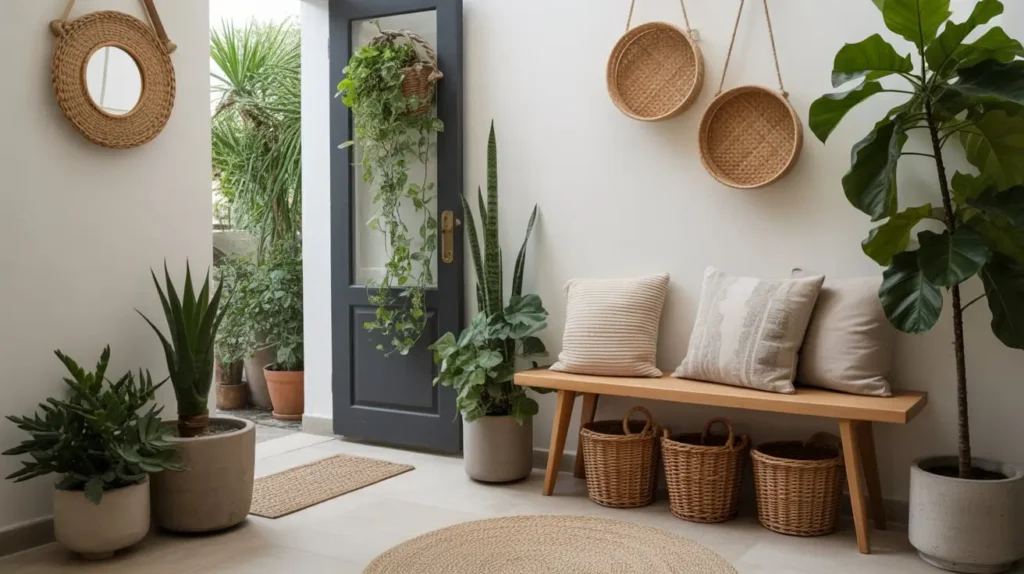
Plants make everything better. That’s just science. (Okay, maybe not actual science, but it feels true.) Adding greenery to your narrow entryway brings life and freshness without requiring much space.
I’ve got a tall snake plant in the corner that’s basically indestructible (thank goodness because my plant-parenting skills are questionable), plus a couple of small pothos on the floating shelf. Total spent on plants? Maybe $25, and they’ve lasted years.
Best plants for narrow entryways:
- Snake plants (tall, narrow, hard to kill)
- Pothos (trailing, low maintenance, looks elegant)
- Small succulents (cute, minimal care)
- Faux plants if you’re keeping it real about your plant-killing tendencies
- Eucalyptus stems in a vase for that spa aesthetic
Greenery adds:
- Visual softness to hard surfaces
- A pop of color without paint
- Better air quality (supposedly)
- A touch of nature indoors
Even if you think you have a black thumb, there are plants that can survive your benign neglect. And honestly? High-quality faux plants have come a long way. No judgment here 🙂
Layered Lighting for Narrow Spaces
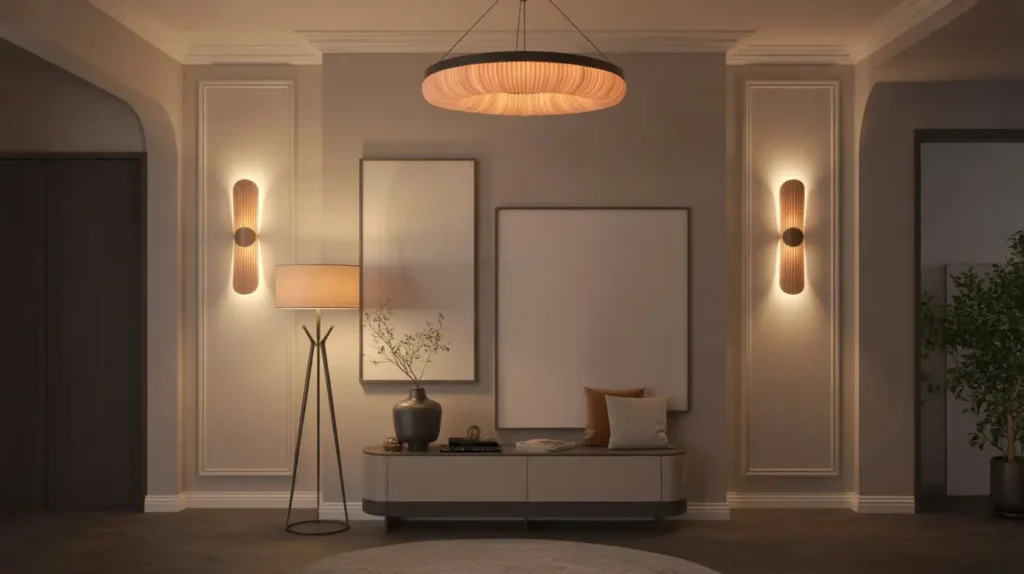
Lighting can make or break a narrow entryway. One harsh overhead light creates shadows and makes the space feel cramped and unwelcoming. Layered lighting, though? Game changer.
I replaced my builder-grade overhead light with a smaller, more attractive flush-mount fixture, then added a table lamp on my console and some subtle LED strip lighting under the floating shelf. The combination creates warmth and dimension.
Types of lighting to layer:
- Ambient lighting: Your main overhead light or pendant
- Task lighting: A table lamp or wall sconces for functionality
- Accent lighting: LED strips, picture lights, or candles for atmosphere
- Natural light: If you have a window, maximize it with sheer curtains
You don’t need to install all these at once. Start with what you have, add a table lamp (thrift stores have them for $10-15), and build from there. The soft, layered approach makes your entryway feel welcoming instead of like a hospital corridor.
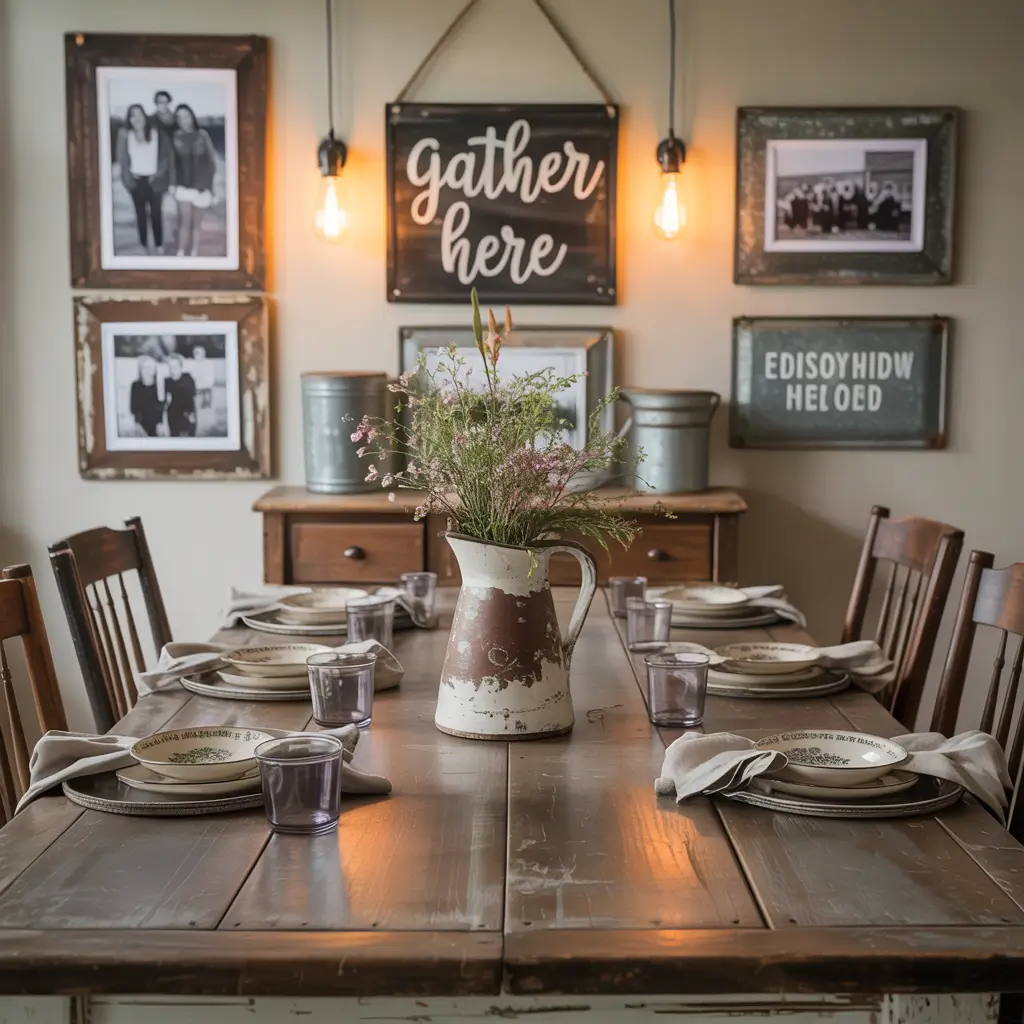
Modern Farmhouse Narrow Entryway Decor

The modern farmhouse aesthetic remains wildly popular, and for good reason—it’s approachable, warm, and works beautifully in narrow spaces.
I leaned into this style with a simple wooden bench, metal hooks, white shiplap-style paneling on the lower wall (peel-and-stick, because I’m not actually that ambitious), and some farmhouse-style decor accents. The whole look came together for under $150.
Modern farmhouse elements to incorporate:
- Natural wood tones mixed with white or cream
- Metal accents in black or galvanized finishes
- Simple, functional furniture pieces
- Vintage or vintage-inspired accessories
- Shiplap, board-and-batten, or beadboard wall treatments
- Wire baskets, enamelware, and rustic textiles
This style is forgiving and feels collected over time rather than matchy-matchy. Hit up HomeGoods, TJ Maxx, or thrift stores for affordable farmhouse decor. The beauty is in the imperfection and the mix of old and new.
You can totally DIY many elements—distress a new wooden bench with sandpaper, use peel-and-stick wallpaper that looks like shiplap, or repaint old frames in white. The modern farmhouse vibe is all about that cozy, lived-in feeling that doesn’t require perfection or a huge budget.
Making It All Work Together
Here’s the thing about narrow entryways: they force you to be intentional. You can’t just throw furniture at the problem because physics exists. But that limitation actually makes the design process easier because your options narrow down (pun intended) pretty quickly.
The real keys to success are:
- Prioritizing function—what do you actually need your entryway to do?
- Choosing furniture with slim profiles that don’t obstruct traffic flow
- Using vertical space aggressively since horizontal is limited
- Keeping things light, bright, and visually simple
- Adding personality through small, budget-friendly accents
I’ve tried probably 80% of these ideas in my own space at various times, mixing and matching based on what worked. Some things I loved, some didn’t quite fit my lifestyle (looking at you, fancy coat rack I never actually used), and some became permanent fixtures.
The beauty of decorating on a budget is that you can experiment without major financial commitment. Bought a rug that doesn’t work? Return it or try it elsewhere. Shelf placement not quite right? Patch the holes and try again. This isn’t brain surgery—it’s decorating, and it should be fun.
Budget Breakdown Real Talk
Let’s talk actual numbers because “budget-friendly” means different things to different people. For these 15 ideas, you could realistically create an elegant narrow entryway for anywhere between $100-400 depending on what you choose and where you shop.
Low-end budget approach ($100-150):
- Simple floating shelves or hooks from Target/IKEA
- Thrifted mirror or artwork
- Small rug from discount stores
- DIY elements and repurposed items
- Plants from the grocery store or cuttings from friends
Mid-range budget approach ($250-400):
- Quality slim console table
- Better lighting fixtures
- Multiple organizational pieces
- Nice runner rug
- Mix of new and thrifted decor items
The point is, you genuinely don’t need to spend thousands. I’ve seen jaw-dropping entryways created almost entirely from thrift store finds and DIY projects. Creativity and thoughtful planning beat unlimited budgets every time.
Final Thoughts
Your narrow entryway doesn’t have to be the awkward, forgettable space you rush through on your way to the “real” rooms. With some intentional design choices and budget-friendly shopping, you can create an entrance that actually makes you smile when you come home.
I’ve lived with narrow entryways in three different places, and each time I’ve gotten better at making the most of limited space. The tricks I’ve shared aren’t revolutionary—they’re practical, tested solutions that actually work in real life (not just in perfectly styled Instagram photos where nobody actually lives).
Start with one idea that resonates with you. Maybe it’s those floating shelves or that perfect runner rug. Add pieces gradually, see what works, adjust what doesn’t, and remember that your space should function for your life, not look like a magazine spread.
Your entryway sets the tone for your entire home. Make it count, make it yours, and make it happen without breaking the bank. You’ve got this—now go turn that narrow hallway into something worth showing off. And when your friends ask where you got your amazing entryway ideas? Just tell them you’ve got an eye for design. I won’t tell if you don’t 😉