

15 Trendy Small Bedroom Decor Ideas for Aesthetic Homes
Look, I get it—you’re staring at your tiny bedroom wondering how on earth you’re supposed to make it look like those Instagram-worthy spaces when you can barely fit your bed and a nightstand. Trust me, I’ve been there, sitting cross-legged on my floor surrounded by Pinterest boards and questioning my life choices. But here’s the thing: small bedrooms are actually a blessing in disguise. They force you to get creative, intentional, and honestly? They end up feeling way cozier than those cavernous rooms that echo when you walk.
I’ve spent way too much time (and money, let’s be real) experimenting with tiny bedroom setups, and I’m here to share what actually works. These aren’t just pretty ideas that look good in photos but fall apart in real life. These are legit, tested strategies that’ll transform your cramped quarters into an aesthetic sanctuary you’ll actually want to spend time in. Ready to fall back in love with your small space? Let’s get into it.
Minimal Floating Shelf Bedroom
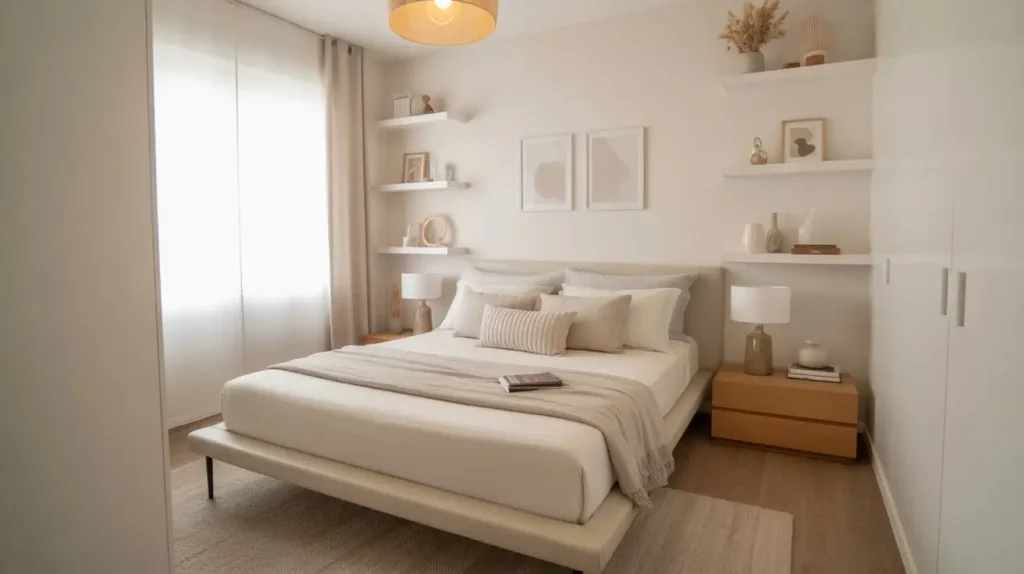
Ever notice how traditional bulky furniture eats up like half your floor space? Yeah, floating shelves completely bypass that problem.
I switched to floating shelves about two years ago, and honestly, it changed everything. Floating shelves create visual breathing room because they eliminate those chunky legs and bases that make regular furniture feel so heavy. Your walls do all the work while your floor stays gloriously open.
Here’s what you should think about with floating shelves:
- Install them at varying heights to create visual interest and avoid that boring grid look
- Use them above your bed as a headboard alternative (way cheaper and more flexible, FYI)
- Keep only your most aesthetic items on display—books, small plants, maybe a candle or two
- Paint them the same color as your walls for an ultra-minimal vibe
The beauty of this setup? You can rearrange your room layout whenever you want because you’re not locked into where your dresser or bookshelf sits. I move my bed around probably more than I should, but the flexibility feels amazing. Plus, cleaning becomes stupid easy when you’re not vacuuming around a million furniture legs.
One word of caution though: actually use proper anchors and don’t cheap out here. I learned this the hard way when a poorly installed shelf dumped my favorite mug collection at 2 AM. Not fun :/
Cozy Neutral Small Space Retreat

Neutrals get a bad rap for being “boring,” but anyone who says that hasn’t seen a well-executed neutral bedroom. Neutral palettes actually make small rooms feel bigger because they create this seamless flow that doesn’t chop up the space visually.
I’m talking creams, beiges, soft grays, warm whites—all those colors that sound boring on paper but create the most calming atmosphere you can imagine. The trick is layering different textures so everything doesn’t blur together into one beige blob.
Here’s how you make neutrals work without putting people to sleep:
- Mix textures like crazy: linen bedding, a chunky knit throw, woven baskets, maybe a jute rug
- Add warmth with wood tones—even a simple wooden tray or picture frame helps
- Use different shades of neutral instead of one flat color
- Bring in one subtle accent color through pillows or artwork (I like dusty terracotta or sage green)
The genius of neutral bedrooms? They photograph beautifully, which sounds superficial, but hear me out. When your space looks good in photos, you actually keep it cleaner and more organized. It’s like positive reinforcement for tidying up.
I’ve had friends tell me my neutral bedroom looks “expensive” when literally most of my stuff came from thrift stores and HomeGoods clearance sections. The cohesive color story does all the heavy lifting, and you don’t need to spend a fortune to pull it off.
Mirror-Focused Space-Expanding Decor
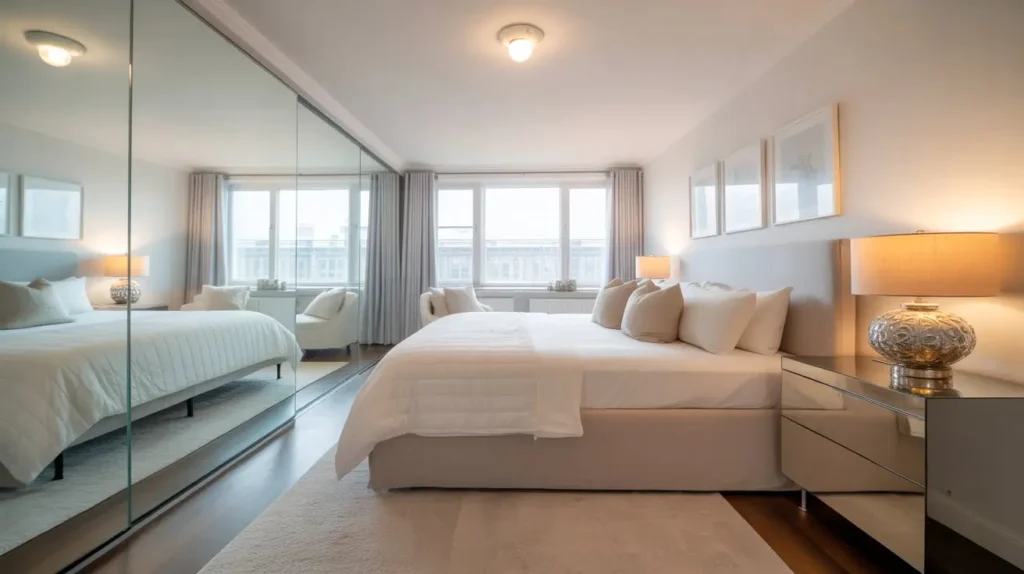
Want to know the oldest trick in the interior design book? Mirrors make rooms feel twice as big, and I’m not exaggerating.
Strategic mirror placement literally tricks your brain into thinking you’ve got more square footage. I put a huge floor mirror opposite my window, and suddenly my 10×10 bedroom feels like it has actual breathing room. The natural light bounces around, the space feels open, and bonus—I can check my outfit before I leave.
Smart ways to use mirrors in small bedrooms:
- Lean a large floor mirror against a wall instead of hanging it (looks more casual and you can move it easily)
- Place mirrors across from windows to maximize natural light
- Use mirrored furniture pieces like nightstands or a small vanity
- Try a gallery wall of smaller mirrors in different shapes for an artsy vibe
Here’s something nobody tells you: the shape of your mirror matters. Arched mirrors are having a moment right now and they add architectural interest that rectangular ones just don’t. I switched from a basic rectangular mirror to an arched one, and people actually comment on it now.
Just avoid putting a mirror directly facing your bed if you’re superstitious (or if seeing yourself first thing in the morning freaks you out—no judgment). I made that mistake once and waking up to my own confused face every morning got old real fast.
Soft Pastel Small Room Aesthetic
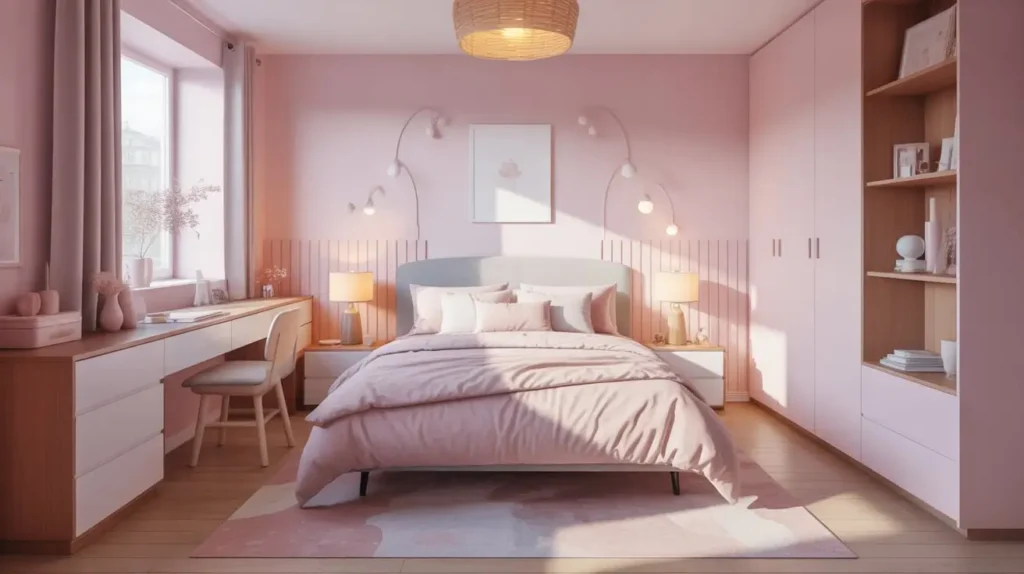
Pastels are basically the grown-up version of loving candy colors, and IMO, they’re perfect for small bedrooms.
Soft pastels create a dreamy, calming atmosphere that makes your room feel like a little escape pod from the world. I went through a serious lavender phase last year—walls, bedding, even my curtains had this soft purple tint. Did it look like a teenage dream? Maybe. Did I love it? Absolutely.
The key is committing to one or two pastel shades max:
- Blush pink and cream for a romantic, feminine vibe
- Mint green and white for something fresh and clean
- Powder blue and gray for a more sophisticated look
- Peach and cream for warmth without going full orange
You don’t need to paint your walls if you’re renting or commitment-phobic. Bedding, curtains, and accent pieces can carry the pastel theme without the permanence. I used pastel bedding with white walls and got the same effect.
Warning: pastels show dirt and stains way more than darker colors. My blush pink duvet looked amazing until I spilled coffee on it exactly once. Keep some stain remover handy, or accept that you’ll be doing laundry more often. The aesthetic is worth it, though, especially when your room feels like sleeping inside a cloud.
Also Read: 15 Aesthetic Wall Decor Bedroom Ideas for Stylish Spaces
Scandinavian Light Wood Bedroom
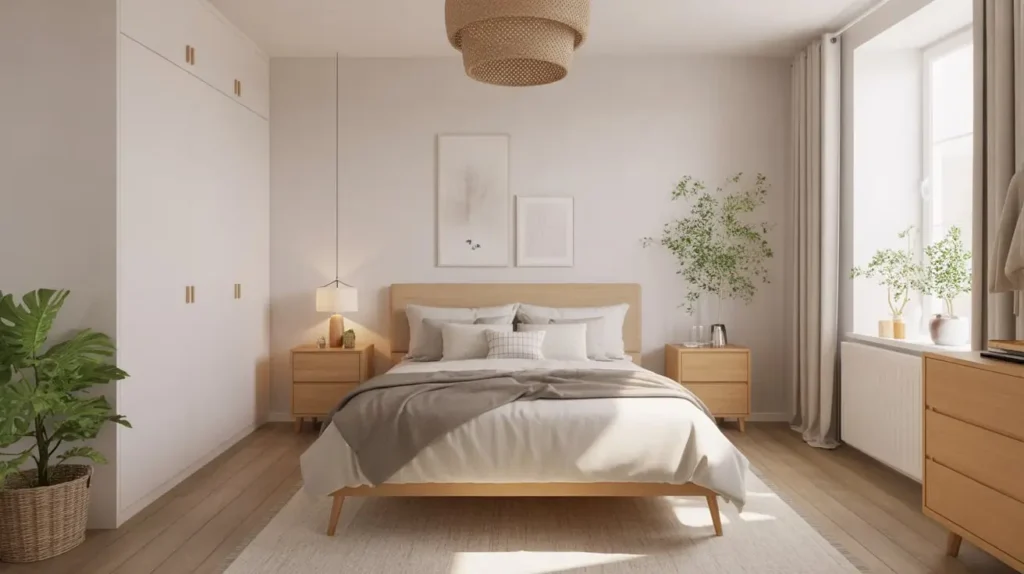
Scandinavian design basically wrote the manual on making small spaces feel functional and beautiful. Light wood tones combined with white and minimal decor create this clean, airy feeling that’s perfect for cramped bedrooms.
I switched to light wood furniture after years of dark, heavy pieces, and the difference is wild. Your room literally feels lighter—not just visually, but energetically. Something about blonde wood just makes everything feel more open and fresh.
Essential elements for nailing Scandinavian style:
- Choose light wood furniture in oak, birch, or pine finishes
- Keep walls white or very light gray
- Add warmth with textiles—think chunky knits and simple linens
- Minimize decorative objects and keep surfaces mostly clear
- Incorporate greenery through simple potted plants
The beauty of Scandinavian design? It’s inherently functional. Every piece has a purpose, which means you’re not cluttering your small space with useless decorative junk. I used to have so many little trinkets everywhere, and switching to the Scandi approach forced me to be way more intentional.
Plants are basically mandatory in Scandinavian design, and honestly, they make such a difference. Even one simple pothos or snake plant adds life to the space. Just don’t go overboard—I killed about seven plants before accepting that maybe three is my limit 🙂
Compact Boho Chic Setup
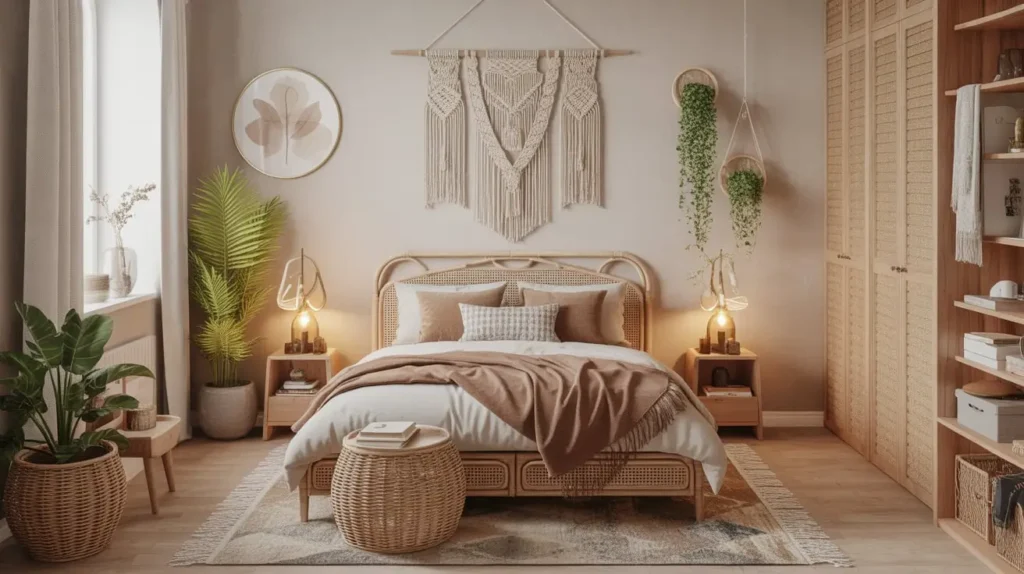
Boho gets a bad rap for being cluttered, but you can totally do bohemian style in a small bedroom without it looking like a garage sale exploded.
The secret? Curate ruthlessly. Choose your favorite boho elements instead of trying to cram every trendy piece into your room. I love the relaxed, eclectic vibe of boho design, but I learned the hard way that less is definitely more in a small space.
How to boho without the chaos:
- Start with a statement piece like a macramé wall hanging or a colorful rug
- Layer textiles—throw pillows, blankets, maybe a tapestry
- Add rattan or wicker furniture for texture
- Incorporate vintage or thrifted finds for character
- Use warm, earthy tones as your base palette
One of my favorite compact boho tricks? A hanging chair or hammock chair in the corner. It saves floor space, creates a cozy reading nook, and looks incredibly aesthetic. I got mine for like $60 online, and it’s become my favorite spot in my entire apartment.
Plants are huge in boho design, but again, be selective. Choose a few larger plants instead of a million tiny ones that create visual clutter. I have one fiddle leaf fig that makes a huge impact without overwhelming my small room.
Vertical Storage Wall Design
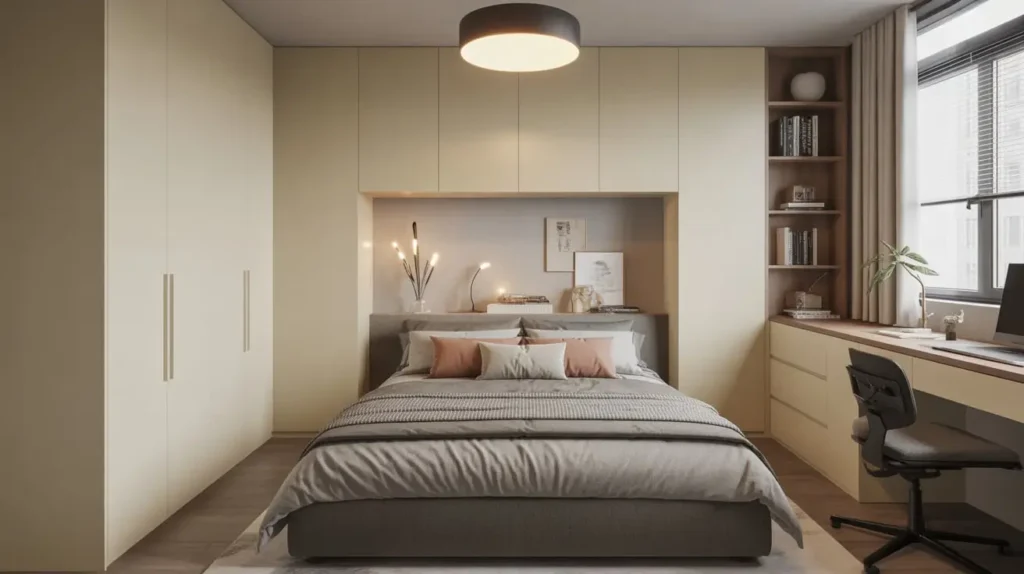
When floor space is limited, the only way is up. Vertical storage completely changed how I approach small bedroom organization.
Think about it—you’ve got all this wall space just sitting there doing nothing while you’re tripping over stuff on your floor. Vertical storage lets you use every inch of your room without it feeling cramped.
Vertical storage solutions that actually work:
- Wall-mounted shelving systems that go from floor to ceiling
- Pegboards for organizing accessories and small items
- Over-door organizers for shoes, bags, or whatever
- Tall, narrow bookcases instead of wide, squat ones
- Wall hooks for hanging bags, hats, or even folded chairs
I installed a full wall of shelving in my bedroom, and I can’t believe how much stuff it holds while barely taking up any space. Yeah, it required drilling into walls, but if you can do it (or know someone who can), it’s worth every hole you’ll eventually need to patch.
The visual trick here? Draw the eye upward, which makes ceilings feel higher and rooms feel larger. I painted my shelving unit the same color as my walls, so it feels like a built-in feature rather than added furniture.
One tip: keep your most aesthetic items at eye level and store the ugly-but-necessary stuff up high or down low. Nobody needs to see my collection of random charging cables front and center.
Under-Bed Hidden Storage Style
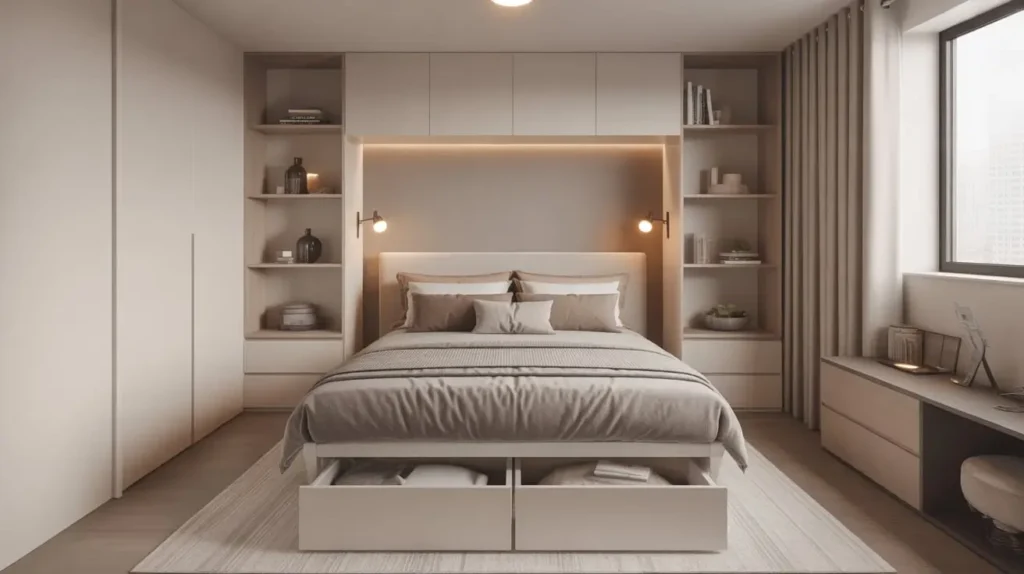
Real talk: the space under your bed is prime real estate that most people completely waste.
I used to just let dust bunnies colonize the area under my bed until I realized I could fit like half my wardrobe down there. Now I use under-bed storage for everything from off-season clothes to extra bedding to books I’m not currently reading.
Under-bed storage options to consider:
- Rolling storage bins that slide in and out easily
- Vacuum-sealed bags for bulky items like winter coats
- Bed frames with built-in drawers (game-changer, honestly)
- Shallow boxes for shoes
- Vintage suitcases for a stylish storage option
If you’re buying a new bed, seriously consider one with built-in storage. I resisted for years because I thought they looked bulky, but modern storage beds are actually super sleek. Mine has four huge drawers that hold basically my entire wardrobe.
Pro tip: use bed risers if your current bed doesn’t have much clearance. You can raise your bed a few inches and suddenly you’ve got storage space where there was none. Just make sure you get sturdy risers—I cheaped out once and my bed nearly collapsed while I was sleeping. Not cute.
Keep your under-bed storage organized with labels or clear bins. You don’t want to be pulling out five containers looking for one specific sweater. Trust me, I’ve been there, and it’s annoying.
Small Bedroom with Accent Wall
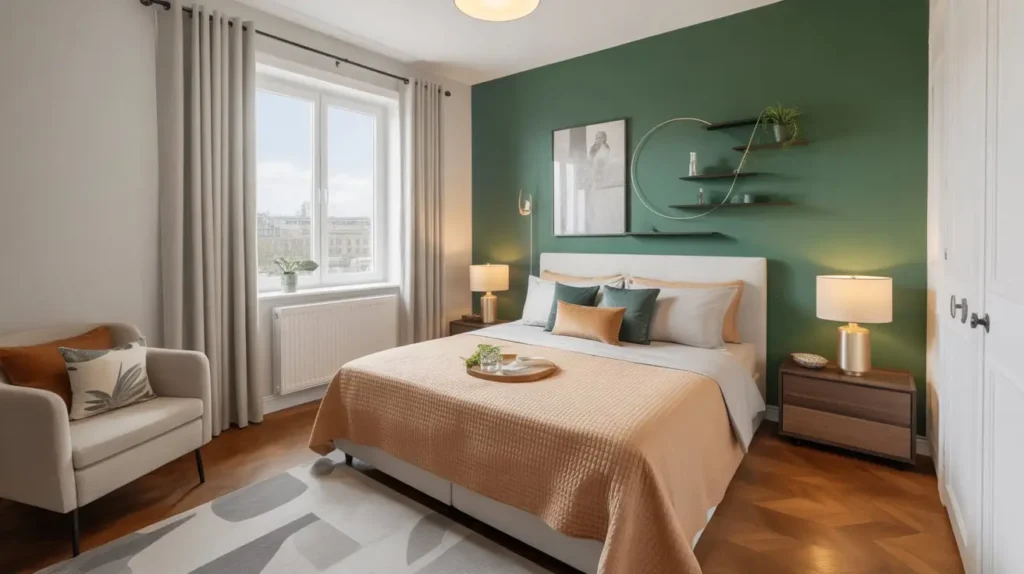
Sometimes one bold wall is all you need to completely transform a small bedroom.
Accent walls add personality and visual interest without overwhelming your space the way painting all four walls would. I was scared to try it at first because I thought it might make my room feel smaller, but the opposite happened—it created depth and made the space feel more intentional.
Accent wall ideas that work in small spaces:
- Removable wallpaper in a bold pattern (renter-friendly!)
- A paint color a few shades darker than your other walls
- Peel-and-stick wood panels for texture
- A gallery wall setup
- DIY geometric paint design
My personal favorite? Removable wallpaper behind the bed. It creates an instant headboard effect, adds personality, and you can change it whenever you want. I’ve gone through three different wallpapers in two years because I get bored easily, and it’s so easy to swap out.
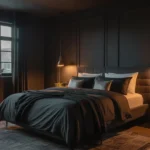
Color choice matters here. Dark accent walls can actually make small rooms feel cozier rather than smaller, which sounds counterintuitive but really works. I did a deep navy accent wall once, and my bedroom felt like a sophisticated cave (in the best way).
Just choose the right wall—typically the one your bed sits against or the wall you see when you first enter the room. Don’t waste your accent wall on the one behind your door that nobody sees.
Also Read: 15 Creative Bedroom Decor Ideas for Modern Aesthetic
Minimalist Bedframe Low-Height Look
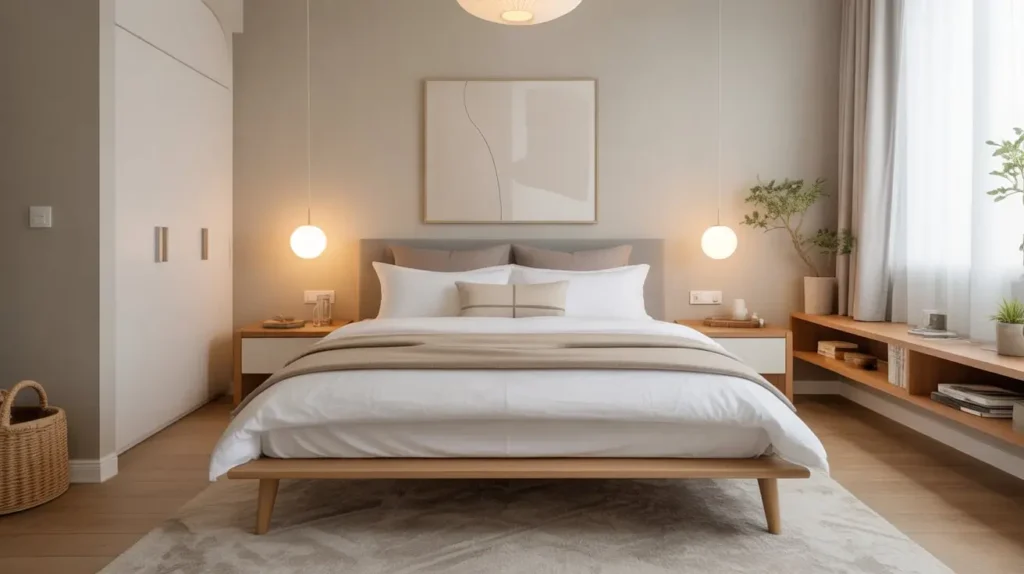
Low-profile beds are having a serious moment, and for good reason: they make your ceilings look higher and your room feel more spacious.
I switched from a tall bed with a chunky frame to a low platform bed, and the difference was incredible. Suddenly my room felt less cramped, and I stopped hitting my shin on the bed frame every morning (bonus benefit I wasn’t even expecting).
Why low-height beds work for small bedrooms:
- Create more visual space above the bed
- Make ceilings appear higher
- Easier to make the bed (no reaching up to tuck in sheets)
- Give your room a modern, minimalist vibe
- Often come with built-in storage underneath
Platform beds are perfect for this look—they sit low to the ground, they’re super minimalist, and many come with storage options. I got a simple wooden platform bed from IKEA for like $200, and it’s been perfect for three years.
The Japanese-inspired low bed aesthetic pairs beautifully with minimal decor. Keep your bedding simple, maybe add one or two low-profile pillows, and resist the urge to pile on decorative cushions. The clean lines are the whole point.
Fair warning: getting in and out of a really low bed takes some getting used to if you’re tall or have knee issues. I’m 5’3″, so it’s never been a problem for me, but my 6’2″ friend complains every time he visits. Know your limits.
Warm Lighting Cozy Corner Bedroom
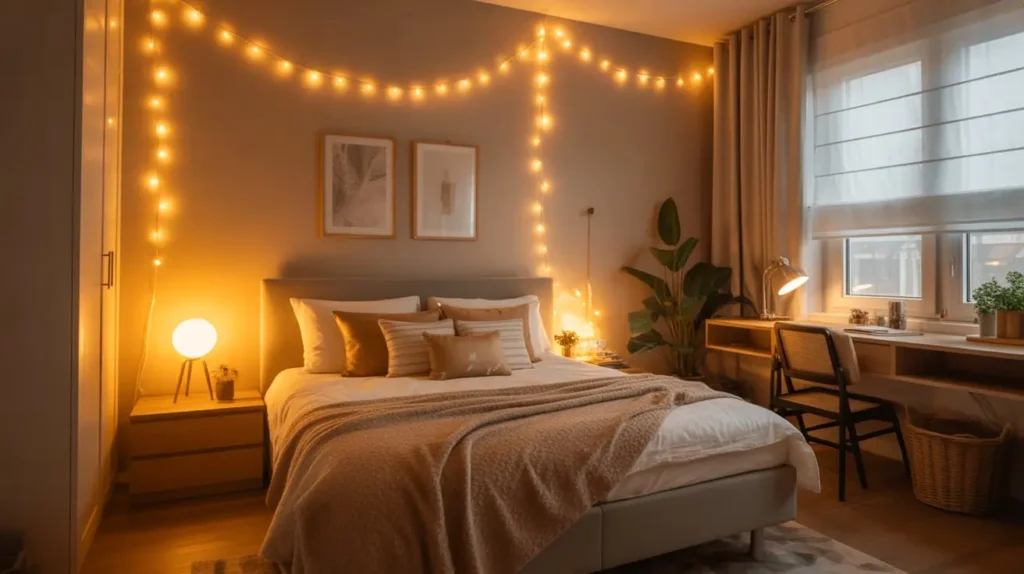
Here’s something people don’t talk about enough: lighting makes or breaks a small bedroom’s vibe.
I lived with harsh overhead lighting for way too long before I realized that warm, layered lighting could make my tiny room feel like a actual sanctuary. Now I’m slightly obsessed with creating the perfect lighting situation.
How to layer lighting in a small bedroom:
- Ditch the overhead light for ambient options (or at least stop using it as your only source)
- Add string lights for soft, warm glow
- Use table lamps or wall-mounted sconces
- Include a reading light near your bed
- Try smart bulbs so you can adjust brightness and warmth
My current setup includes string lights around my headboard area, one table lamp on my nightstand, and a floor lamp in the corner. I can mix and match depending on my mood, and my room always feels cozy and inviting.
Color temperature matters way more than you think. Warm white bulbs (around 2700K) create that cozy, relaxing atmosphere, while cool white bulbs feel harsh and clinical. I made the mistake of buying “daylight” bulbs once, and my bedroom felt like a hospital room.
Dimmer switches or smart bulbs are worth the investment. Being able to adjust your lighting throughout the day means you can have brighter light when you’re getting ready and softer light when you’re winding down. Game-changer for small spaces where one room serves multiple purposes.
Multifunctional Desk-and-Bed Layout
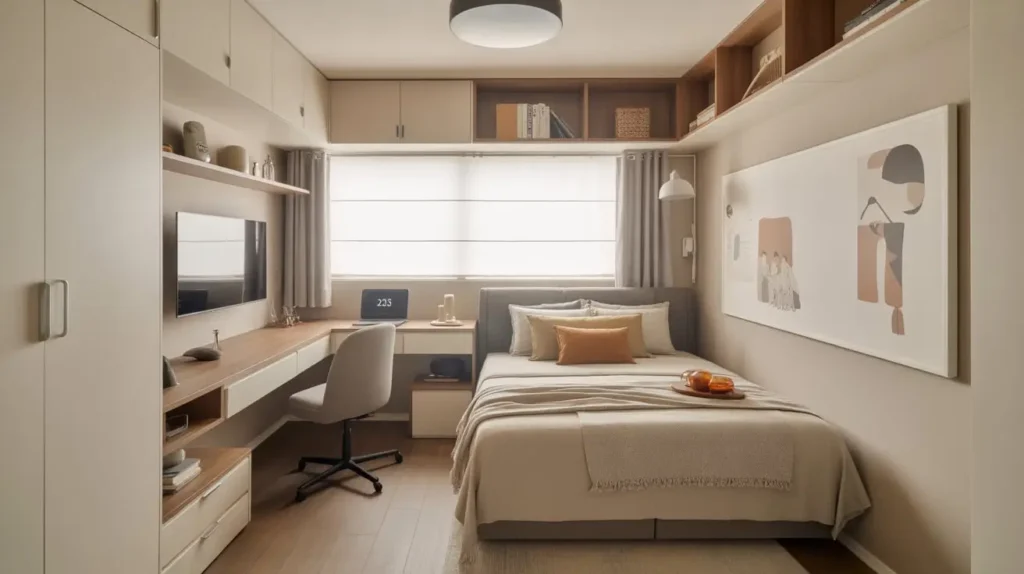
If you work from home or study in your bedroom, you need furniture that pulls double duty.
I struggled with this for years—my desk and bed competed for space, and my room always felt cramped and chaotic. Then I discovered multifunctional furniture, and everything clicked into place.
Multifunctional layout ideas:
- Wall-mounted fold-down desks that disappear when not in use
- Beds with built-in desks or shelving
- Nightstands that double as small workspaces
- Murphy beds that reveal desk space when folded up
- Floating desks that don’t take up floor space
I currently use a floating desk mounted to my wall that serves as both my workspace and vanity. I store my laptop and work stuff in a basket I slide onto a shelf when I’m done, and suddenly it’s my makeup area. Efficiency at its finest.
The key is creating visual separation between your sleep space and work space, even if they’re in the same tiny room. I use different lighting for each area—warmer light near my bed, brighter light at my desk. It helps my brain switch between work mode and relax mode.
Storage is crucial in multifunctional setups. Keep your work stuff contained and easily stowable so your bedroom doesn’t feel like an office 24/7. I learned this the hard way when I started having trouble sleeping because my workspace stress was literally staring at me from across the room.
Monochrome Small Room Decor
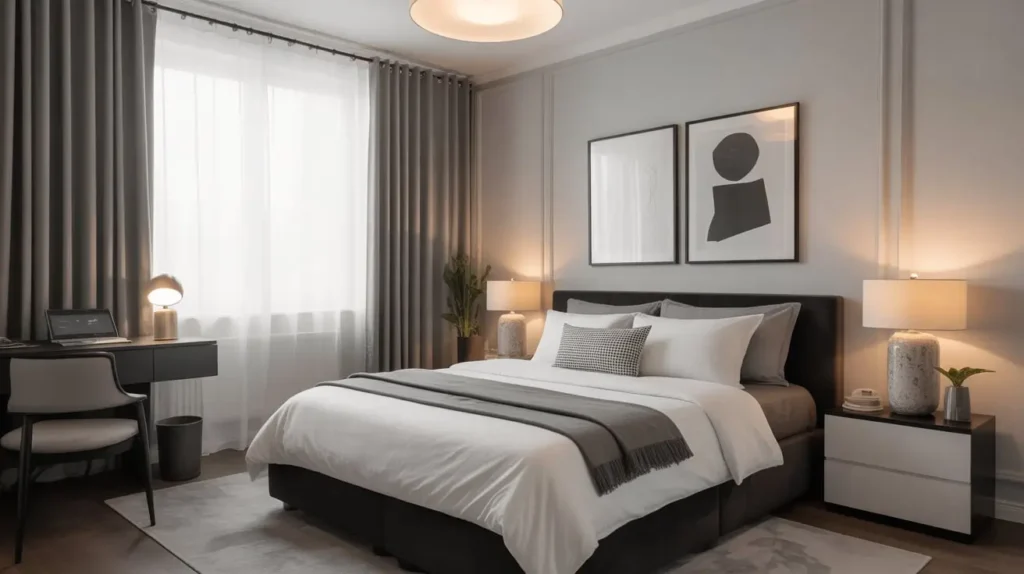
Monochrome doesn’t mean boring—it means choosing one color family and running with it.
I went full monochrome white for about six months, and while some people thought it looked sterile, I loved how clean and cohesive everything felt. Your small bedroom feels larger when everything flows together without visual interruption.
How to nail monochrome without it feeling flat:
- Layer different shades of your chosen color
- Mix textures to create visual interest
- Add dimension through patterns in the same color family
- Use lighting to create depth and warmth
- Include natural materials to break up the monotony
Black and white is the classic monochrome choice, but don’t sleep on other options. All-white, all-gray, or even all-blue can look incredibly sophisticated. I’ve seen all-pink bedrooms that look amazing and surprisingly adult.
The challenge with monochrome? It can feel cold if you’re not careful. I combat this by including lots of textiles—blankets, pillows, rugs—that add warmth and coziness. Natural wood tones also help break up the monotony without breaking the color scheme.
Monochrome spaces photograph incredibly well, which again, sounds shallow, but it genuinely motivates me to keep my space tidy. When everything matches, clutter stands out like crazy, so you’re basically forced to stay organized. Accidental life hack!
Small Bedroom with Canopy Frame
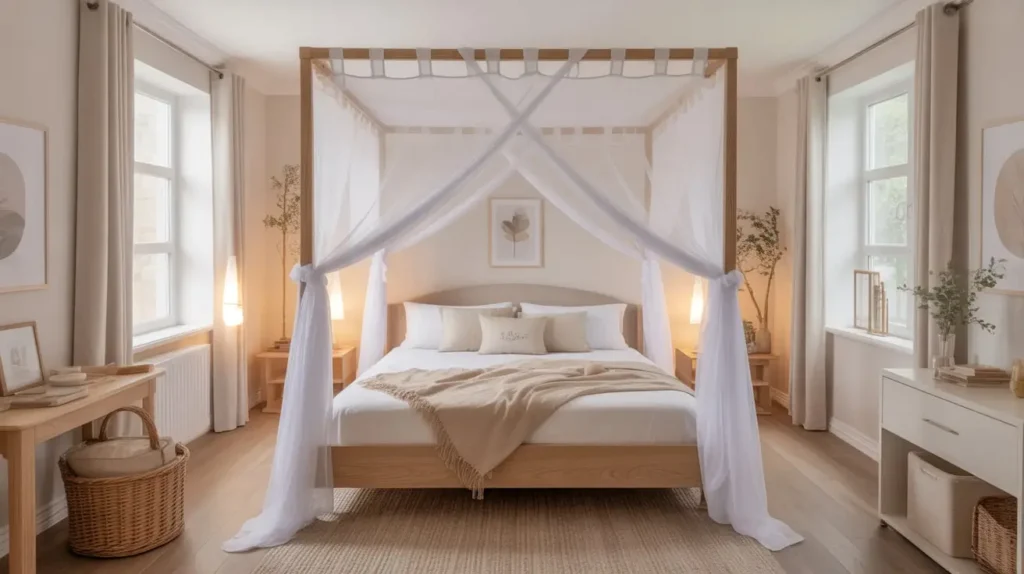
Canopy beds sound extravagant, but they actually work beautifully in small bedrooms when you choose the right style.
I was skeptical about this one—wouldn’t a canopy make my small room feel even more cramped? Turns out, the vertical lines of a canopy frame actually draw the eye upward and make ceilings feel higher. Plus, they create this cozy, intimate atmosphere that’s perfect for small spaces.
Canopy options for small bedrooms:
- Simple metal frames without heavy fabric (keeps it airy)
- DIY canopy using curtain rods and sheer fabric
- Minimal wooden frames in light finishes
- Single rail canopy attached to the ceiling
- Macramé or string light canopies for boho vibes
I went with a simple black metal canopy frame with sheer white curtains, and it’s become my favorite feature of my bedroom. You can tie the curtains back during the day for an open feel, then close them at night for extra coziness.
The fabric you choose matters. Heavy, dark fabrics will make your space feel smaller and cave-like. Stick with sheer, light-colored fabrics that let light through. I use simple white muslin curtains that cost like $15 total, and they look way more expensive than they are.
One practical benefit nobody talks about: canopy curtains can hide a multitude of sins. Your bed doesn’t need to be perfectly made if you can just close the curtains and hide the mess. Is this lazy? Maybe. Do I care? Not even a little bit.
Nature-Inspired Earthy Mini Bedroom
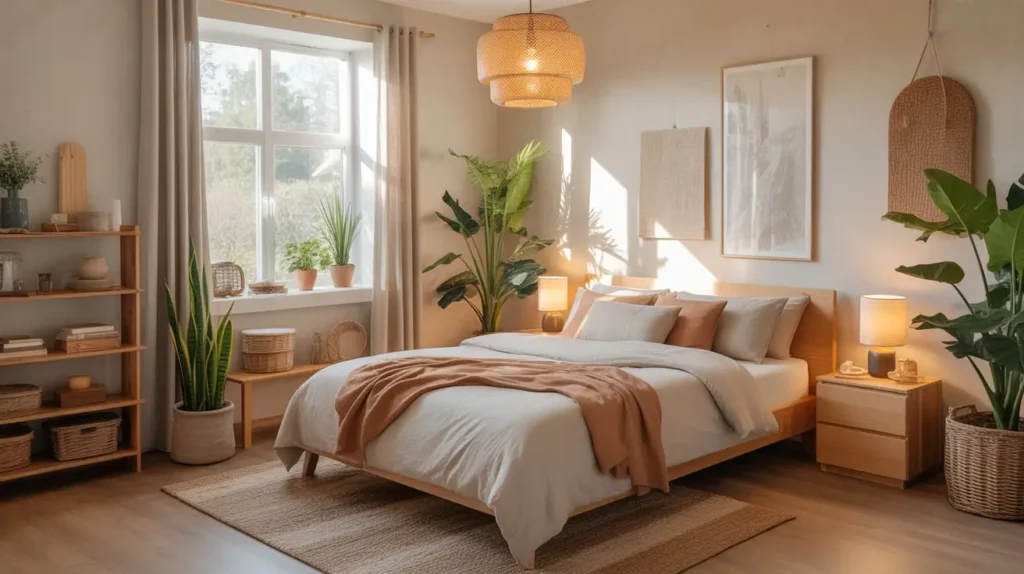
Bringing natural elements into your small bedroom creates this grounded, calming atmosphere that’s hard to achieve any other way.
I went hard on the nature-inspired aesthetic after visiting a friend’s cabin, and now my tiny apartment bedroom feels like a peaceful retreat instead of a cramped box. Natural materials and earthy colors work magic in small spaces.
Elements of a nature-inspired bedroom:
- Incorporate wood through furniture, wall art, or decorative pieces
- Use earthy color palette—terracotta, olive green, warm browns, cream
- Add plenty of plants (real or very realistic faux)
- Include natural textiles like linen, cotton, and jute
- Bring in stone or ceramic elements
My current obsession? A large piece of driftwood I mounted above my bed as wall art. It cost me exactly nothing (found it at the beach), and people always ask where I bought it. Natural elements add character that you just can’t get from mass-produced decor.
Plants are obviously crucial here, but you don’t need to become a plant parent overnight. Start with easy, low-maintenance options like snake plants or pothos. I killed roughly a dozen plants before I accepted that some of us just aren’t plant people, and honestly, high-quality faux plants look pretty convincing now.
The earthy color palette is key for making this work in a small space. Stick with muted, natural tones rather than bright greens and browns. Think forest floor, not tropical jungle. Your room should feel peaceful and cohesive, not chaotic.
Wrapping This Up
So there you have it—fifteen legit ways to make your small bedroom actually work for you instead of against you. The truth? You don’t need a massive space to create a room you absolutely love. You just need to be intentional, creative, and willing to think outside the traditional furniture arrangement box.
I’ve tried most of these approaches in my various tiny bedrooms over the years, and the biggest lesson? Your space should reflect your actual lifestyle, not just look good in photos. If you need a desk, incorporate it. If you have a million books, embrace vertical storage. If you just want a cozy cave to sleep in, go for those warm lights and low beds.
Mix and match these ideas based on what speaks to you. Maybe you want Scandinavian furniture with boho textiles and warm lighting. Maybe you’re all about that monochrome life with strategic mirror placement. There’s no rule that says you can’t combine elements from different aesthetics—your bedroom, your rules.
Start with one or two changes rather than trying to overhaul everything at once. I learned this the expensive way, and trust me, your wallet will thank you for taking it slow. Sometimes just adding better lighting or a new wall color completely transforms how you feel about your space.