

15 Charming Small Foyer Entryway Decor Designs on a Budget
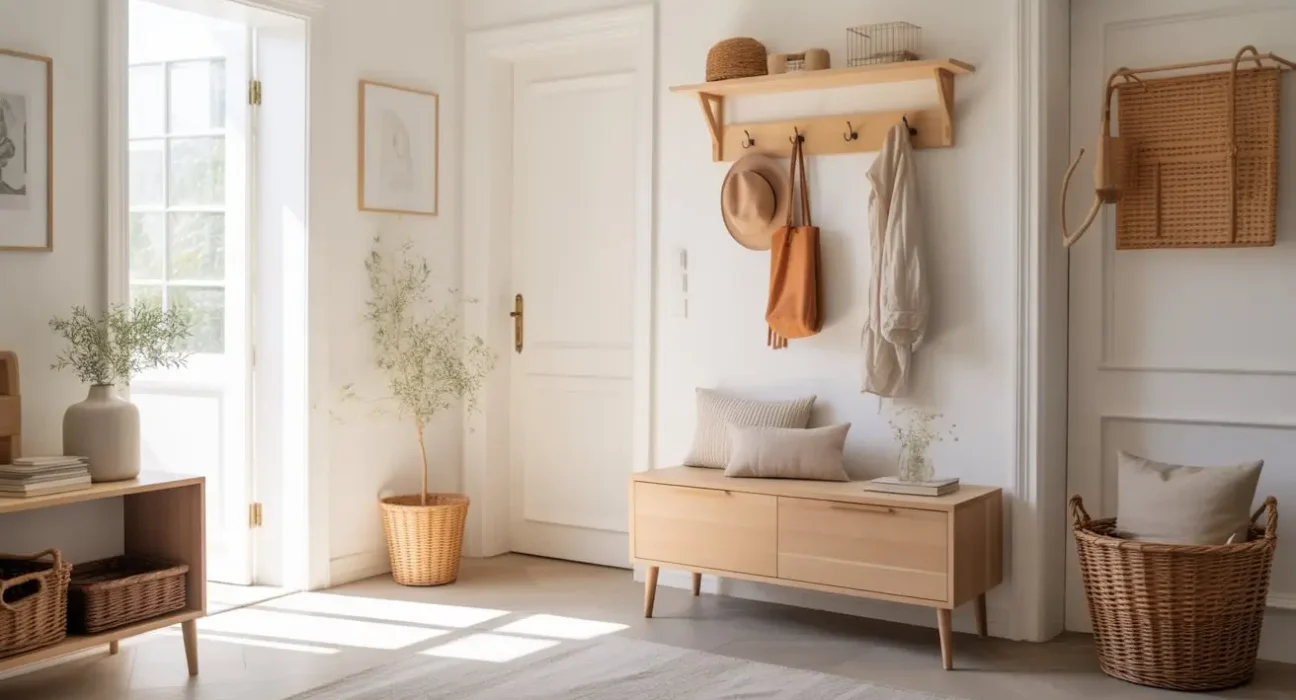
You know that awkward little space right when you walk through your front door? Yeah, that one—the spot where shoes pile up, keys mysteriously disappear, and guests stand there waiting for you to take their coat while secretly judging your organizational skills. Your foyer might be small, but trust me, it’s working overtime in the first impression department.
Here’s the thing: you don’t need to drop a fortune to make your entryway look like something straight out of a design magazine. I’ve been there, staring at my sad 3×4 foot entryway, wondering how people manage to fit actual furniture in these spaces. After years of trial, error, and more than a few Pinterest fails, I’ve cracked the code on making tiny foyers look intentional, stylish, and—here’s the kicker—functional.
So grab your coffee (or wine, no judgment), and let’s talk about 15 budget-friendly ways to transform that cramped entry space into something you’ll actually want to show off. Warning: your friends might start lingering at your doorway a little longer than necessary.
Mirror Illusion Small Foyer
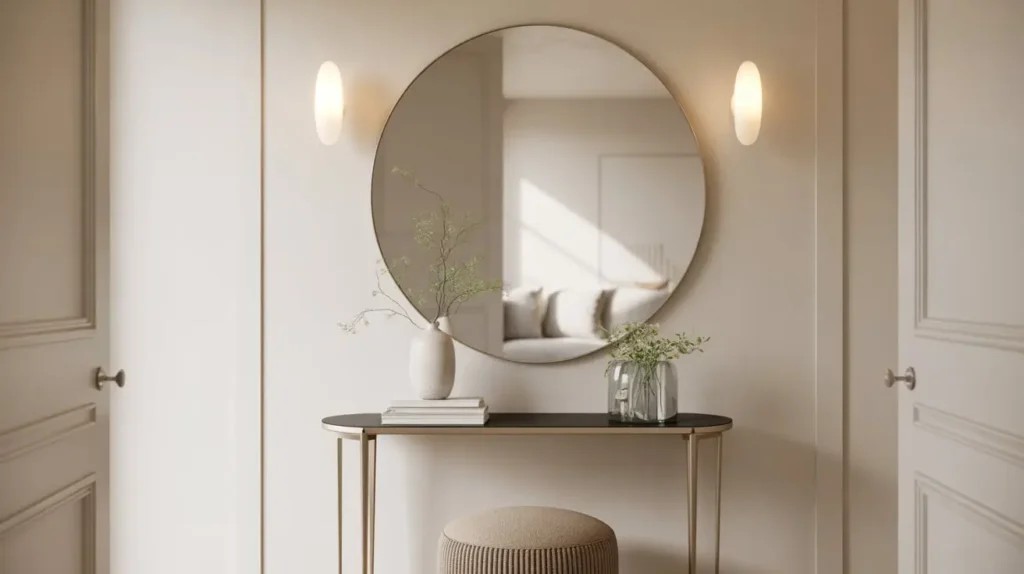
Let’s start with the oldest trick in the design playbook—mirrors. But hold up, this isn’t just about slapping any old mirror on the wall and calling it a day.
Mirrors genuinely work magic in small spaces because they bounce light around and create the illusion of depth. I learned this after living in a shoebox apartment where my foyer was basically a glorified hallway. One large oversized mirror (snagged mine from a thrift store for $25, BTW) completely changed the game.
Here’s what you need to know:
- Go big or go home: A large mirror makes more impact than several small ones in a tiny foyer
- Strategic placement matters: Position your mirror across from a window or light source to maximize brightness
- Frame it right: A bold frame adds personality without taking up physical space
- Lean vs. hang: Leaning a full-length mirror against the wall creates a casual, expensive look
The beauty of this approach? You can check yourself before heading out (goodbye, spinach-in-teeth situations), and your space instantly feels twice as large. Plus, thrift stores and discount home shops practically give away mirrors these days.
Pro tip: Clean your mirror regularly. Nothing kills the illusion faster than a dusty, fingerprint-covered surface that just screams “I gave up on adulting.” 🙂
Floating Shelf Entryway Setup
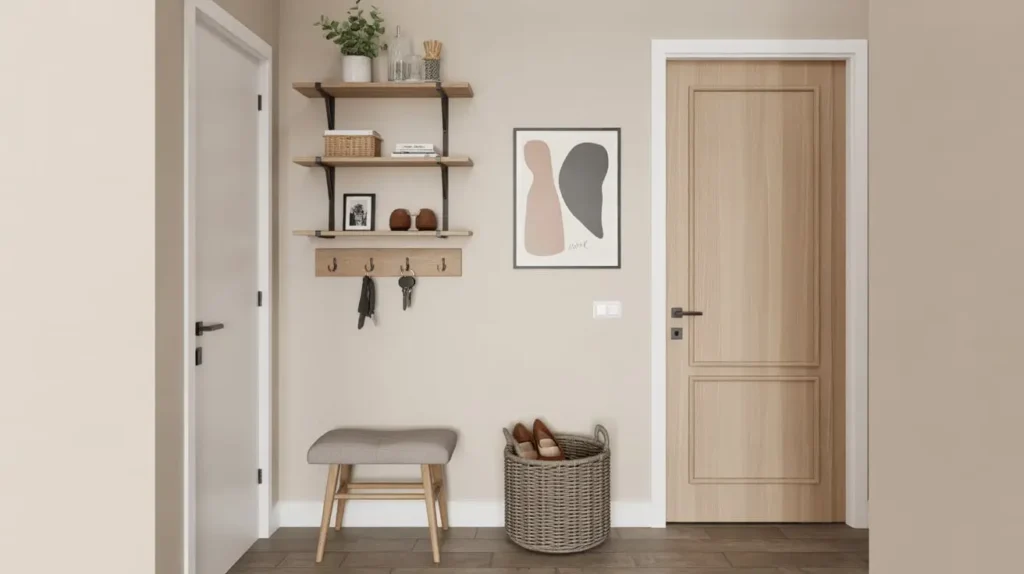
Ever wondered why floating shelves became everyone’s obsession? Because they’re ridiculously versatile and don’t eat up precious floor space.
I installed two floating shelves in my current entryway, and honestly, it solved about 90% of my organizational drama. The top shelf holds a cute basket for mail and keys, while the bottom one displays a small plant and a candle that makes my entry smell like I have my life together.
Why floating shelves work for small foyers:
- They utilize vertical space (which you have plenty of)
- You can customize the height based on your needs
- They cost roughly $15-30 per shelf at most hardware stores
- Installation takes maybe 30 minutes, even if you’re DIY-challenged
Style them with a mix of functional and decorative items—think a small tray for keys, a framed photo, and something green (real or fake, we don’t discriminate here). The key is not overcrowding them. Less really is more when you’re working with limited square footage.
And FYI, if you rent, there are damage-free options that use heavy-duty adhesive instead of drilling. Your security deposit thanks you in advance.
Minimalist Console Table Styling
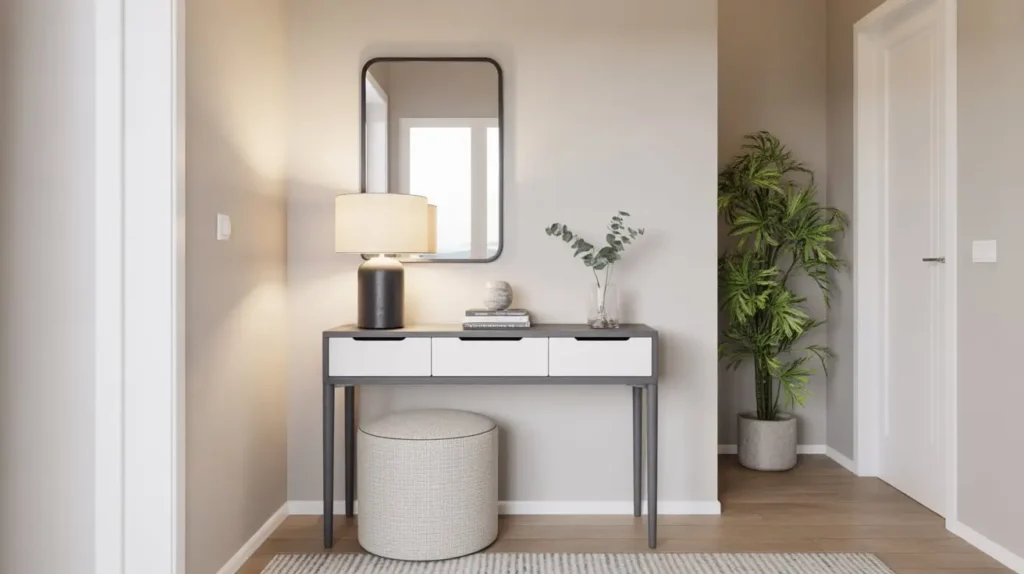
Okay, I know what you’re thinking: “A console table? In MY tiny foyer? Have you lost your mind?” Hear me out.
Slim console tables exist specifically for people like us. I’m talking about those impossibly narrow tables (some are only 8-10 inches deep) that tuck against the wall and barely register as furniture.
I found mine at a discount furniture store for $60, and it’s genuinely one of my best purchases. It gives me a surface for that critical zone where I dump everything the second I walk in—but in a way that looks intentional.
Essential elements for minimalist console styling:
- Keep it simple: A lamp, small tray, and one decorative object
- Use the space underneath for a basket or shoes
- Choose a table with clean lines and minimal fuss
- Stick to a neutral color palette so it doesn’t visually overwhelm
The minimalist approach prevents your console from becoming a junk collector (we’ve all seen those Pinterest fails where good intentions go to die under piles of unopened mail). Three items max on top—that’s my rule, and I’m sticking to it.
Vertical Storage Wall Decor
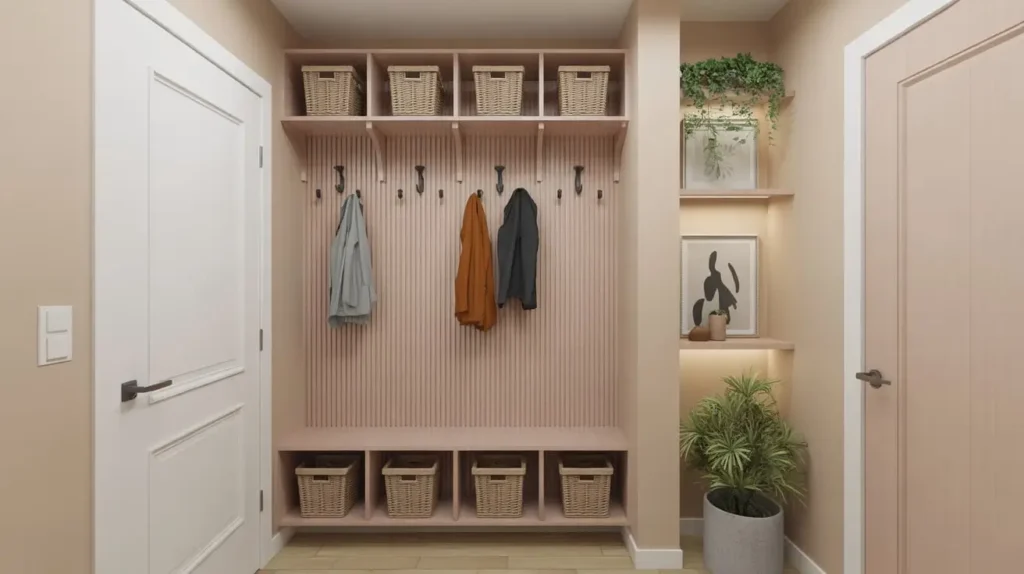
When floor space is laughing at you, look up. Seriously, your walls are basically untapped real estate.
Vertical storage solutions transformed how I think about small spaces. I mounted a series of hooks, a wall-mounted organizer, and a small shelf going up the wall, and suddenly I had room for everything.
Here’s what you can hang vertically:
- Coat hooks or a wall-mounted rack: Essential for jackets and bags
- Wall pockets or organizers: Perfect for mail, sunglasses, and dog leashes
- Pegboards: Customizable and surprisingly chic if you style them right
- Mounted key holder: Because you’ve definitely wasted 10 minutes searching for keys before
The trick is arranging everything in a visually pleasing way so it looks like intentional decor rather than a chaotic wall of stuff. I like grouping items by category and leaving some breathing room between pieces.
Paint your wall organizers the same color as your wall for a seamless look, or go bold with a contrasting color to make a statement. IMO, the bold route makes it feel more like a design choice and less like desperate storage.
Cozy Rug and Accent Lighting Combo
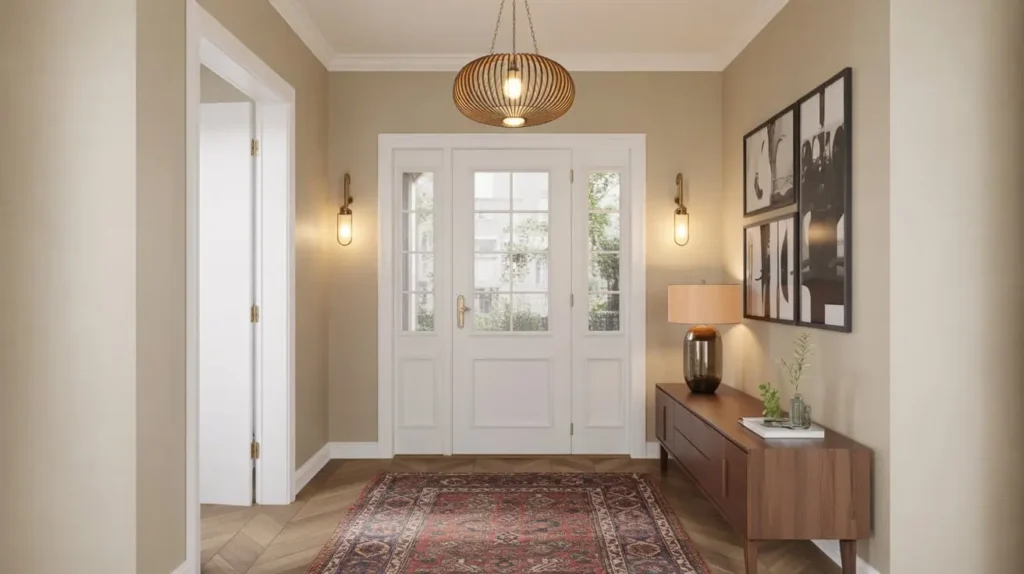
Let me tell you about the power duo that changed my entryway life: a great rug paired with proper lighting.
Rugs define spaces. In a small foyer, a well-chosen rug tells your brain, “This is the entryway, not just awkward floor space.” I grabbed a patterned runner from an online sale for $45, and it instantly made my entry feel more pulled together.
Rug selection guidelines:
- Choose a low-pile or flat-weave rug (easier to clean and less likely to trip people)
- Patterns hide dirt better than solid colors (learned that the hard way)
- Size matters—too small looks like a bath mat, too large overwhelms the space
- Opt for durable materials that can handle foot traffic and weather
Now, about that lighting. Most builder-grade foyer lights are… how do I put this nicely… absolutely tragic. Swapping out the fixture makes an insane difference.
You don’t need to rewire anything fancy. I replaced my builder basic with a semi-flush mount fixture from a home improvement store ($35 on clearance), and it took all of 20 minutes. Suddenly, my entryway went from “scary horror movie lighting” to “welcoming and warm.”
Add a small table lamp on your console if you have one, and you’ve got layered lighting that creates ambiance. Because nothing says “welcome home” like walking into a cave, right? :/
Also Read: 15 Elegant Foyer Entryway Decor Tips to Impress Guests
Hidden Shoe Storage Bench
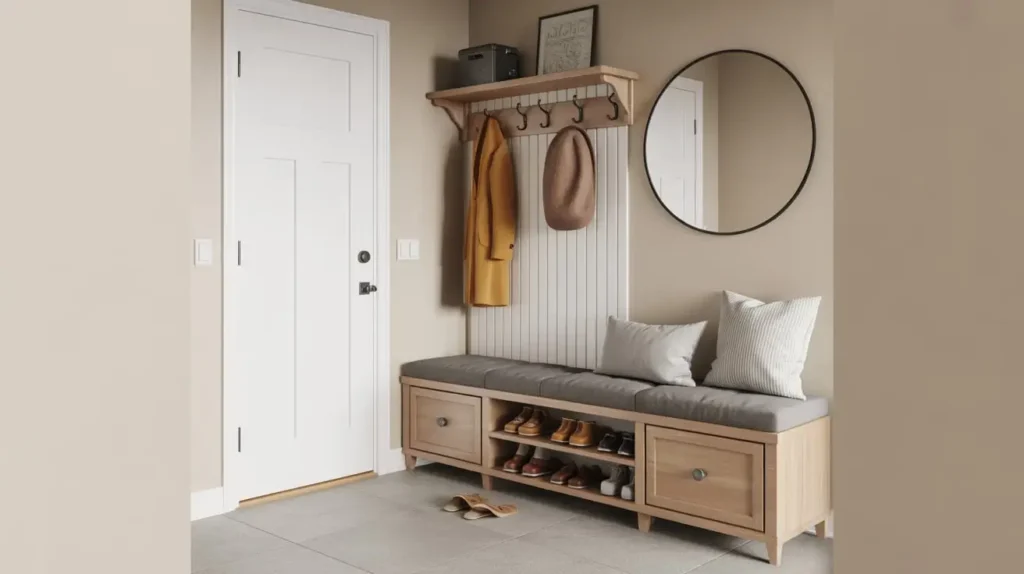
Shoes. The eternal enemy of the organized entryway.
I used to have a pile of shoes by my door that looked like a footwear graveyard. Then I discovered storage benches, and friends, I’m never going back.
A small storage bench serves double duty: it gives you a place to sit while putting on shoes AND hides the shoe chaos inside. This is what I call functional furniture that doesn’t apologize for existing in your space.
What to look for in a storage bench:
- Slim profile: You can find benches as narrow as 12 inches deep
- Lift-top or cubbies: Depends on your storage preference
- Cushioned top: Makes it comfortable for sitting
- Neutral color: Ensures it works with future decor changes
I snagged mine from a big-box store during a clearance event for $55. It holds about 6-8 pairs of shoes, plus I stash my reusable grocery bags in there (you know, the ones you always forget to bring to the store).
The sitting factor is seriously underrated. Trying to put on boots while hopping on one foot is a young person’s game, and even then, it’s not cute.
Modern Farmhouse Small Foyer Look
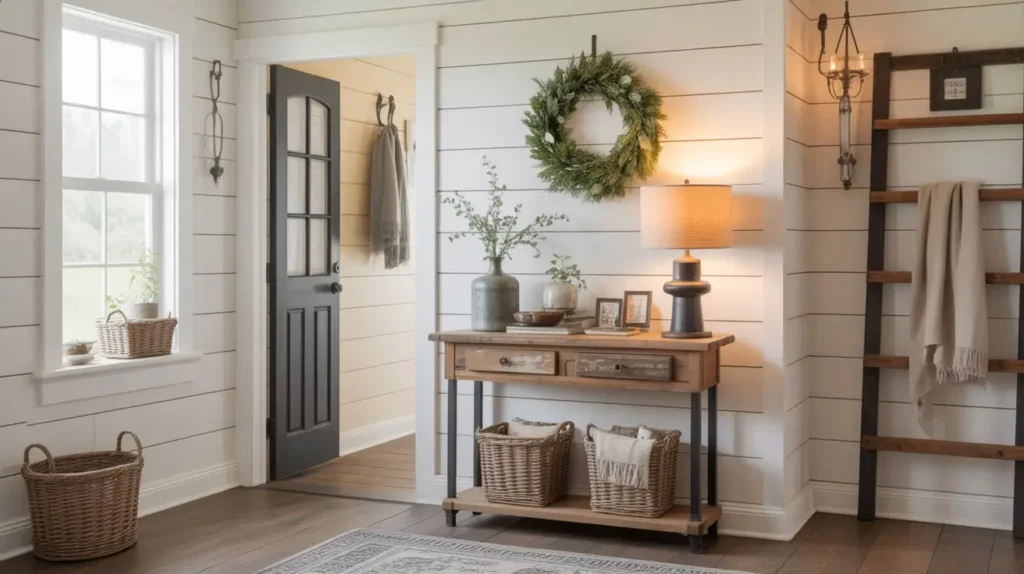
The modern farmhouse trend refuses to die, and honestly? I’m not mad about it, especially for entryways.
This look combines rustic elements with clean lines, and it’s shockingly easy to achieve on a budget. Think shiplap (or the peel-and-stick version for renters), neutral colors, and natural textures.
Budget-friendly modern farmhouse elements:
- Peel-and-stick shiplap wallpaper: One accent wall for under $40
- Wire or wicker baskets: Functional and on-theme
- Wooden elements: A rustic hook rack or wooden sign
- Galvanized metal accents: A small tray or wall pocket
- Neutral color scheme: Whites, creams, grays, and natural wood tones
I created a farmhouse-inspired entry corner with a white floating shelf, a wire basket for mail, and a simple wooden sign that says “Home” (yes, I’m basic, and I’ve made peace with it). Total cost? Around $50.
The beauty of this style is its forgiving nature. It’s supposed to look a little rough around the edges, so your imperfect DIY skills actually work in your favor. Distressed paint job? That’s called “character.”
Neutral Palette Entryway Design
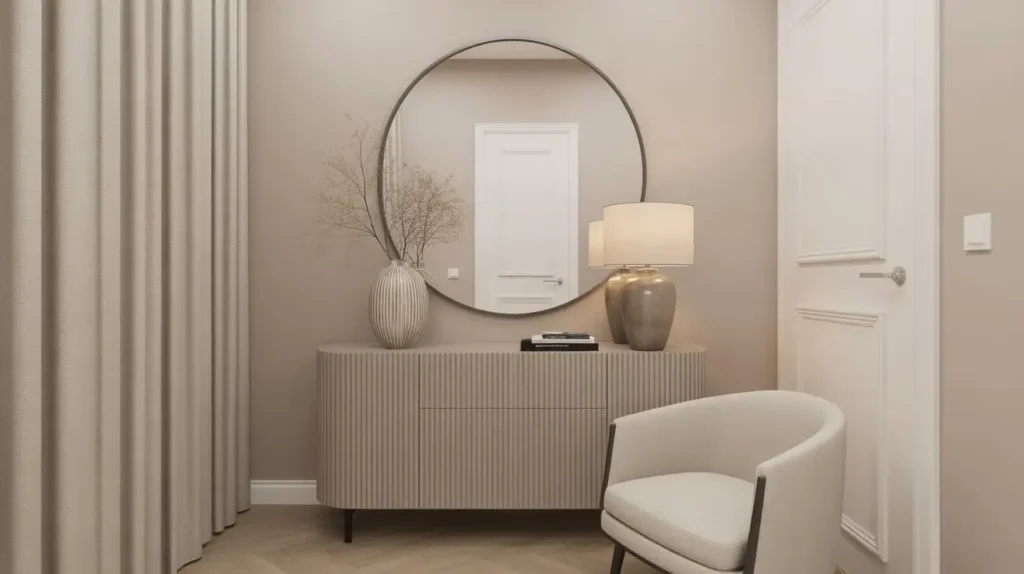
Can we talk about why neutral color schemes absolutely dominate small space design?
Neutrals don’t visually chop up your space. When everything flows in similar tones, your eye doesn’t stop and start at different colors, making the area feel larger and more cohesive.
I’ll be real with you: I used to think neutral meant boring. Then I actually tried it and realized neutral means sophisticated, calming, and way easier to decorate around.
Building your neutral entryway palette:
- Start with a base: White, cream, beige, or gray walls
- Add warmth with natural wood tones
- Layer in textures: Woven baskets, linen, jute rugs
- Include one or two muted accent colors (sage green, dusty blue, terracotta)
- Use black accents sparingly for contrast
My neutral foyer features white walls, a light wood console table, a jute rug, and black metal hooks. I rotate in seasonal touches through small decor items, but the base stays consistent.
This approach also saves you money long-term because you’re not redecorating every time you get bored. You just swap out small accessories instead of replacing entire furniture pieces.
Boho Chic Compact Entry Space

For my free spirits out there, the boho aesthetic translates beautifully to small foyers.
This style embraces mix-and-match vibes, natural materials, and that collected-over-time look that makes spaces feel personal and lived-in. The best part? Thrift stores are basically boho goldmines.
Essential boho entryway elements:
- Macramé wall hanging: Adds texture and visual interest (or DIY one for under $10)
- Rattan or woven basket: For storage with style
- Plants, plants, plants: Hanging, standing, or on shelves
- Layered textiles: A patterned rug, perhaps with a smaller rug on top
- Vintage finds: A unique mirror, old hooks, or repurposed furniture
I created a mini boho moment in my previous apartment’s entryway with a macramé hanging ($8 from a craft fair), a plant stand with a pothos, and a vintage brass hook rack I found at a yard sale for $3. The whole setup cost under $30 and got more compliments than any other decor I’ve ever attempted.
The boho style gives you permission to be a little weird with your choices. Nothing has to match perfectly, and that takes so much pressure off the decorating process.
Scandinavian-Inspired Small Foyer
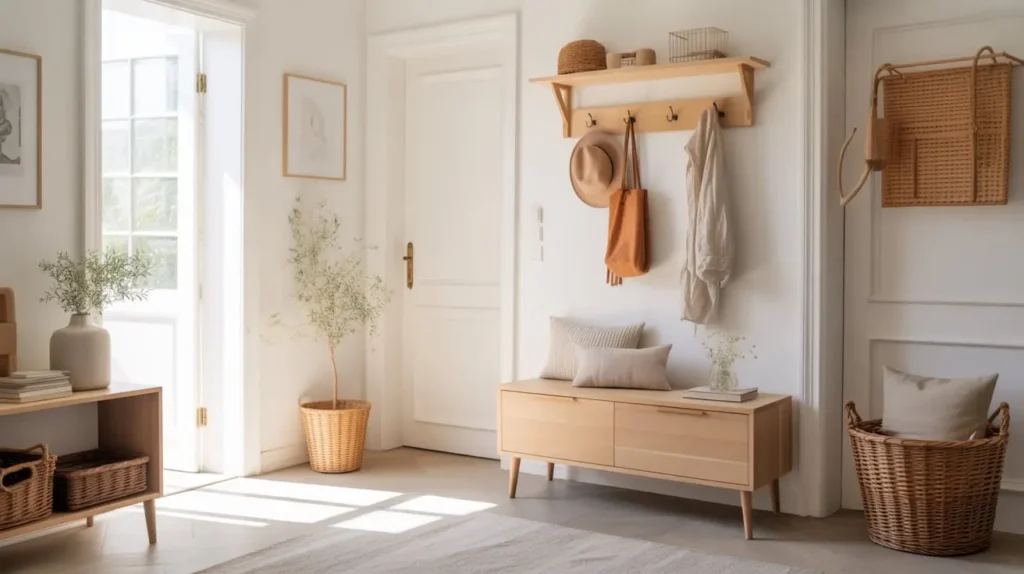
You know what Scandinavians understand that the rest of us are still figuring out? Less actually is more.
The Scandi aesthetic focuses on function, simplicity, and light, which makes it perfect for small entryways. This isn’t about being cold or sterile—it’s about being intentional with every piece you include.
Key Scandinavian design principles for foyers:
- White or light gray walls: Maximize natural light
- Clean-lined furniture: Simple shapes without ornate details
- Natural materials: Light woods, leather, wool
- Minimal accessories: Only what you need and love
- Functional decor: Everything serves a purpose
I experimented with this approach in my current space, and the difference in how it feels is wild. A simple white shelf, three wooden pegs for coats, and a single plant create this calm, uncluttered vibe that actually makes me feel less stressed when I walk in the door.
The budget-friendly angle? You need LESS stuff, so you spend LESS money. Revolutionary concept, I know.
Keep surfaces clear except for one or two carefully chosen items. Your foyer should feel like a deep breath, not a visual assault.
Vintage Charm Entryway Setup
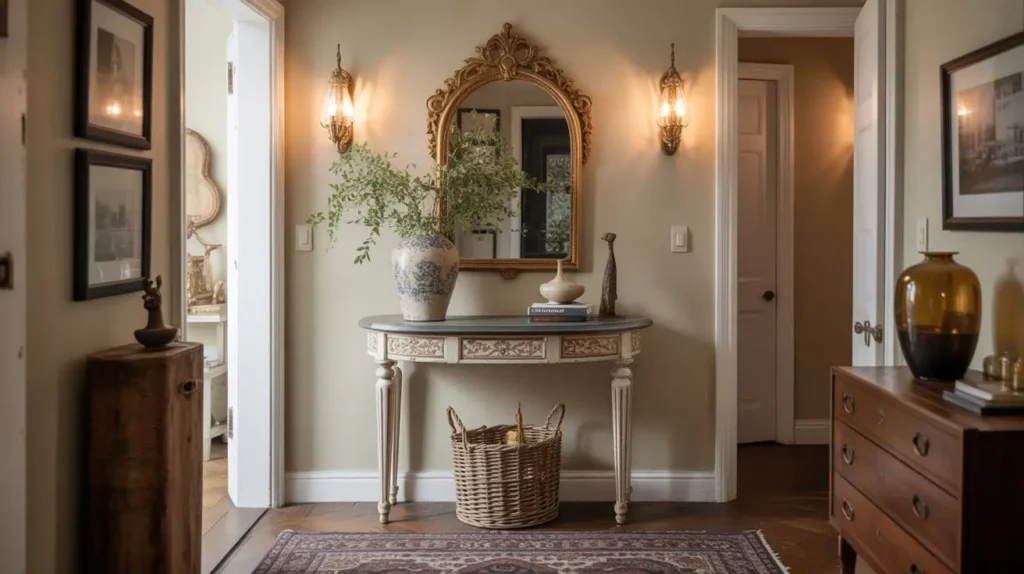
There’s something about vintage pieces that adds instant character to a space.
I’m not talking about expensive antiques here—I mean fun vintage finds from thrift stores, estate sales, and your grandma’s garage. These pieces have stories, and they make your entryway feel unique instead of catalog-generic.
Vintage elements that work in small foyers:
- Old coat rack or hall tree: Often under $30 at secondhand shops
- Vintage mirror with ornate frame: Creates a focal point
- Antique bench or chair: Provides seating with character
- Old crates or suitcases: Stack them for quirky storage
- Vintage hooks and hardware: Replace modern stuff with aged alternatives
My favorite vintage score was an old wooden stool I found for $5 that I refinished and now use as a mini side table for my keys and wallet. It’s way more interesting than anything I could buy new at that price point.
The trick with vintage is knowing when to stop. One or two vintage pieces mixed with modern elements looks curated. An entire vintage collection looks like you’re running a museum gift shop.
Also Read: 15 Elegant Narrow Entryway Decor Ideas on a Budget
Nature-Inspired Greenery Decor
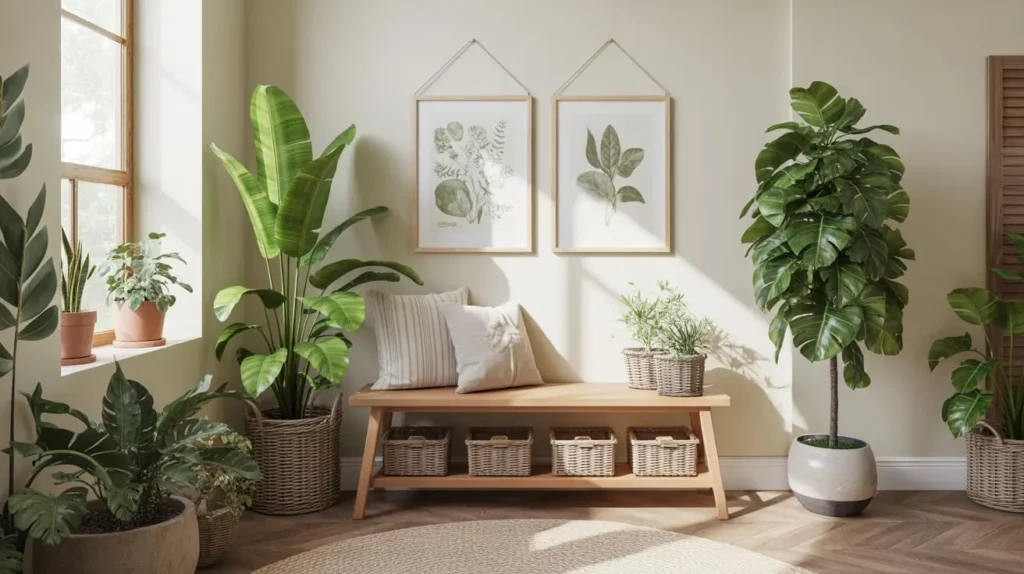
Let me share a universal truth: Plants make everything better.
Even the saddest, most cramped entryway improves with some greenery. Plants add life, color, and actual oxygen to your space. They’re also stupidly cheap compared to most decor.
Best plants for small foyers:
- Pothos: Basically indestructible and tolerates low light
- Snake plant: Thrives on neglect (my kind of plant)
- Small fiddle leaf fig: If your entry gets decent light
- Hanging plants: Save floor space and add visual interest
- Faux plants: No shame if you lack a green thumb
I keep a pothos on my floating shelf and a snake plant in the corner, and they require approximately zero effort while making my entry look intentional and fresh. Total investment? About $20 for both plants.
You can also go the faux route—today’s fake plants look shockingly realistic. I have a faux eucalyptus stem in a vase that I’ve had for two years, and guests still think it’s real.
Pro styling tips:
- Use interesting planters (thrift stores have tons for under $5)
- Vary heights for visual interest
- Group odd numbers of plants together (3 or 5)
- Include trailing plants for a lush, layered look
Nothing says “I’m a functional adult” quite like keeping a plant alive in your entryway. Or at least appearing to with a high-quality fake one.
Black and White Minimal Entryway
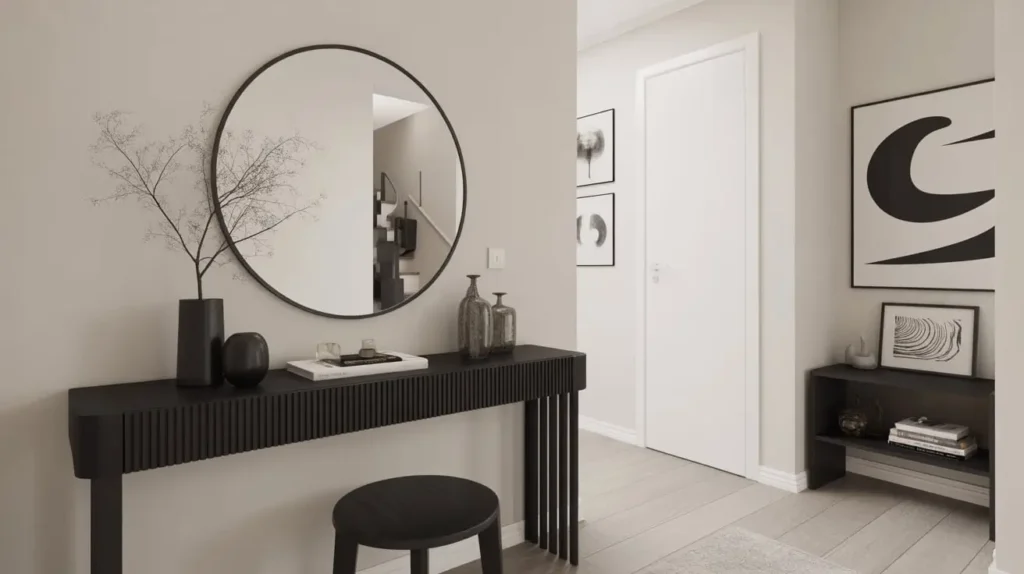
When in doubt, go black and white. This color combo is timeless, crisp, and makes even the tiniest spaces look intentional.
I’ve used this approach in multiple homes because it’s foolproof and works with literally any architectural style. Plus, you can find black and white pieces everywhere, usually at great prices.
Creating the black and white minimal look:
- White walls (obviously)
- Black metal hooks or rack
- Black-framed mirror
- White or black console table (depending on your wall color)
- Black and white photography or art
- Minimal accessories in the same color palette
The key word here is minimal. This isn’t about filling every inch of wall space—it’s about carefully choosing a few impactful pieces.
I created this look in a rental once using: white walls (already there), a black metal hook rack (12),ablack−framedmirror(12),ablack−framedmirror(18 from Target), and a small white shelf ($15). Under $50 for the whole setup, and it looked clean and modern.
Add a patterned black and white rug if you want some visual interest, or keep the floor neutral to maintain that ultra-minimal vibe.
This approach photographs really well too, so if you’re into sharing your space on social media, black and white delivers that crisp, Instagram-worthy aesthetic.
Functional Family Drop Zone
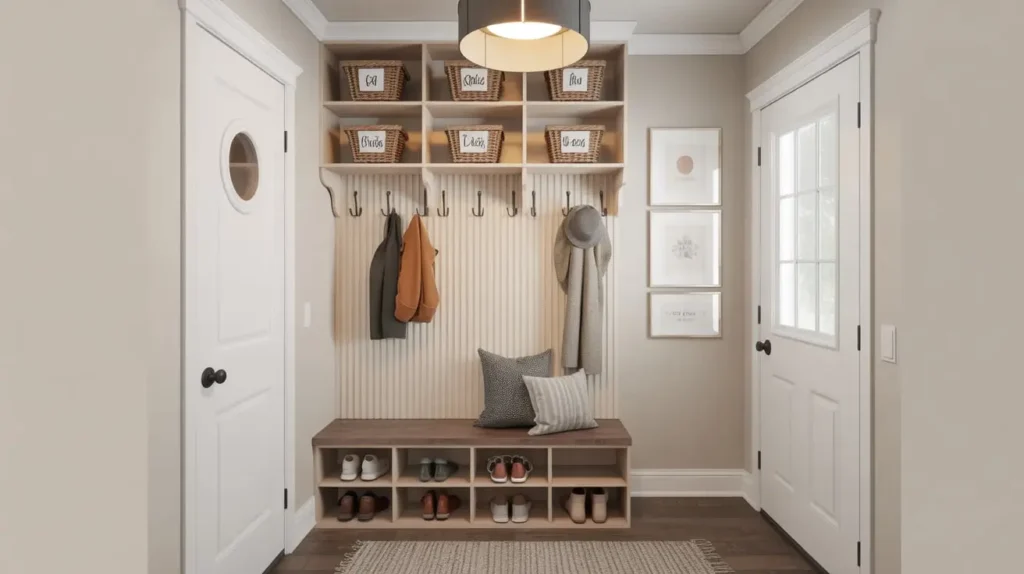
Alright, let’s get practical for a minute. If you have kids, pets, or just a lot of stuff that comes and goes from your house, you need a functional drop zone.
This isn’t about looking pretty (though it can)—it’s about creating systems that actually work for your life. Because what’s the point of a beautiful entryway if you still can’t find your kid’s school permission slip or the dog’s leash?
Essential drop zone components:
- Individual hooks for each family member: Everyone knows where their stuff goes
- Mail organizer: Stop the paper pile-up immediately
- Key hooks or tray: One designated spot
- Basket for pet supplies: Leashes, poop bags, whatever
- Small bench or stool: For the inevitable shoe situation
- Chalkboard or bulletin board: For messages and reminders
I set up a family drop zone using a pegboard (20),varioushooksandbaskets(20),varioushooksandbaskets(15 total), and a small bench ($40 on sale). Each family member got their own color-coded basket and hooks.
Does it always stay perfectly organized? Absolutely not. But does everyone know where to look for their stuff? Yes. That’s a parenting win in my book.
Budget hack: Hit the dollar store for baskets and bins. Nobody needs to know you didn’t spend $30 per basket at the fancy organizing store.
The goal is function first, aesthetics second. If your drop zone actually gets used, it’s doing its job, even if it’s not magazine-worthy.
Seasonal Decor Rotation for Small Foyers
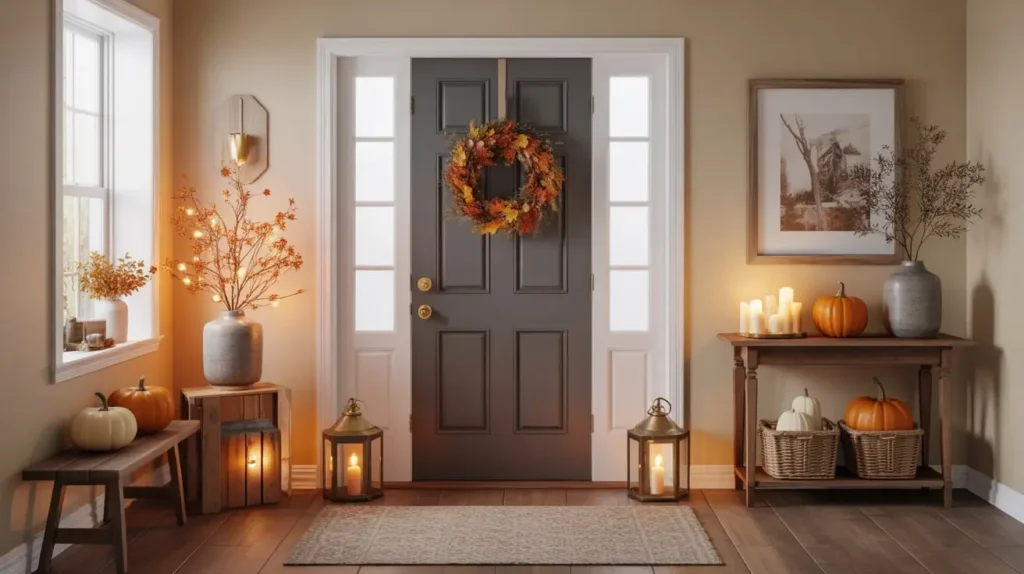
Here’s where you get to have some fun without committing to anything permanent.
Seasonal decorating lets you refresh your space throughout the year without breaking the bank or your back. The trick in a small foyer is keeping it simple—you’re swapping out accent pieces, not redesigning the entire space.
My seasonal rotation strategy:
Spring:
- Fresh flowers or faux stems in bright colors
- Lighter rug or runner
- Pastel accents in your tray or baskets
Summer:
- Bright, beachy colors
- Lightweight textures
- Beach-themed small accents
Fall:
- Pumpkins (real or faux, I’m not judging)
- Warm-toned throw blanket on bench
- Autumn wreath on the door or wall
Winter/Holiday:
- Evergreen stems or mini tree
- Cozy textures and metallics
- Holiday-specific small accents
I keep a small bin of seasonal decor for each season, and swapping things out takes maybe 15 minutes. This approach keeps your entryway feeling fresh without requiring you to buy new furniture or do major renovations.
Budget tip: Shop after-season sales to stock up for next year. I got my fall decor at 70% off in November, and it’s been serving me well for three years now.
The beauty of small spaces? You need WAY less stuff to make an impact. While people with grand foyers are buying dozens of pumpkins, you need like three. Your wallet appreciates your tiny entryway right about now.
Bringing It All Together
Look, your small foyer might not be the sprawling entry space you see in design magazines, but that doesn’t mean it can’t be awesome.
The real secret to decorating small entryways on a budget? Focus on what works for YOUR life. Not Instagram, not Pinterest, not your friend with the perfect house—just you.
Maybe you need the functional drop zone because you have three kids and a dog. Maybe you want the minimalist Scandi vibe because you crave calm in your life. Or perhaps you’re like me and you just want your entry to not look like a tornado hit it every single day.
I’ve tried most of these approaches in different homes over the years, and here’s what I’ve learned: the best entryway is the one you actually maintain. Start with function, add style, and don’t stress about perfection.
Quick recap of budget-friendly principles:
- Shop secondhand first—thrift stores, estate sales, clearance sections
- Use vertical space to maximize storage without eating floor space
- Stick to a cohesive color palette to make the space feel larger
- Invest in multi-functional pieces (storage benches, console tables with shelves)
- Don’t overcrowd—less really is more in small spaces
- Keep surfaces clear and organized
- Add plants for life and color
- Change out small seasonal accents to keep things fresh
Your entryway sets the tone for your entire home. It’s the first thing you see when you come home after a long day, and it’s the first impression guests get of your space. Making it work for you—functionally and aesthetically—is worth the effort.
And hey, if nothing else, at least you’ll always know where your keys are. That alone might be worth the price of admission.