

15 Trendy Small Living Room Ideas with Minimalist Vibes
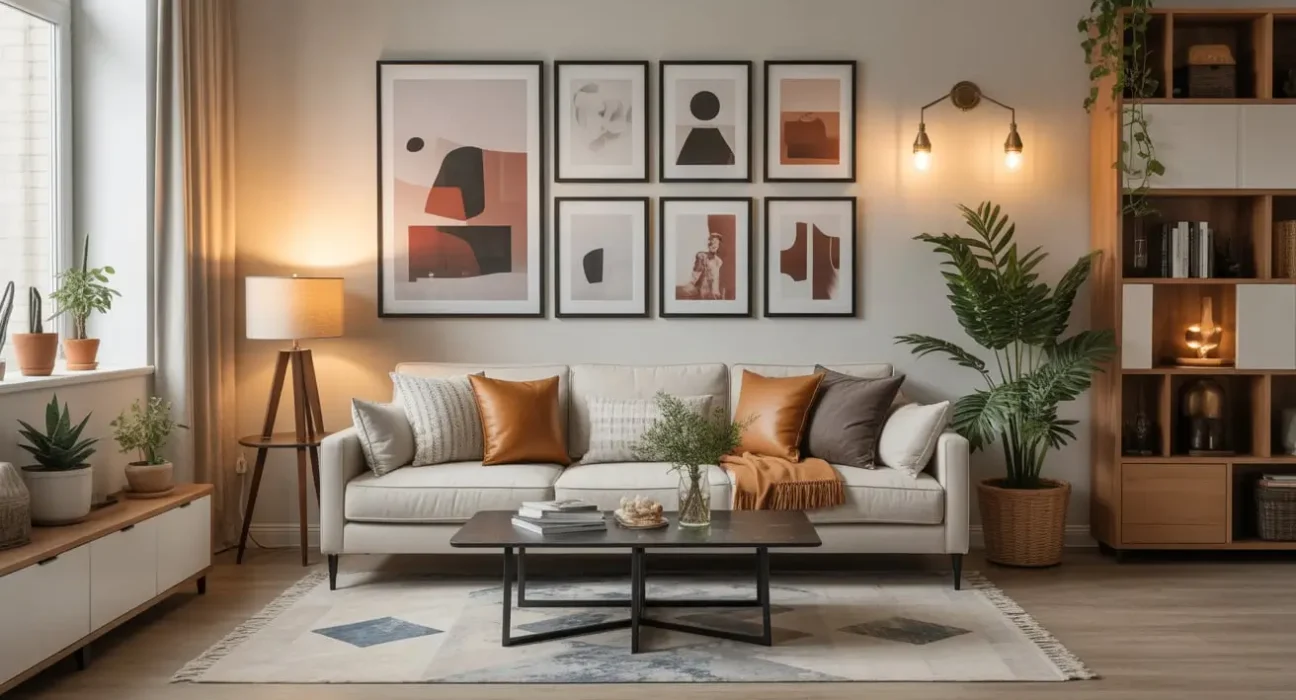
Look, I get it. You’re staring at your tiny living room wondering how on earth you’re supposed to create something Instagram-worthy when you can barely fit a couch and coffee table without feeling like you’re playing Tetris. Been there, done that, bought the oversized sectional that definitely didn’t fit (whoops).
Small living rooms aren’t a curse—they’re actually kind of a blessing in disguise. Seriously! They force you to get creative, keep things minimal, and honestly? They’re way easier to clean than those massive spaces your friends keep bragging about. Plus, minimalist vibes are totally having a moment right now, and guess what pairs perfectly with minimalism? Small spaces.
So grab your coffee (or wine, no judgment), and let’s talk about 15 ridiculously good ways to transform your compact living room into a minimalist paradise that’ll make even your design-snob friend jealous.
1. Minimalist Small Living Room Layout
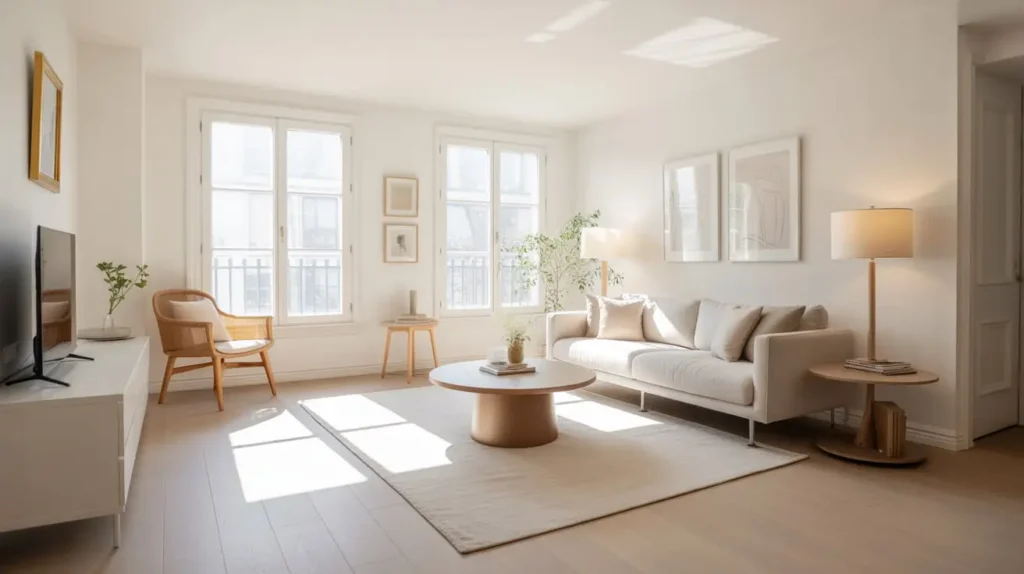
Here’s the thing about minimalist layouts—they’re not about having nothing. They’re about having exactly what you need and nothing you don’t. Revolutionary concept, right?
Start by mapping out your space and identifying your non-negotiables. For me, that’s always a comfy couch and somewhere to put my coffee cup (priorities, people). Everything else is negotiable. The key to a minimalist layout is creating breathing room between furniture pieces.
Try this: Instead of pushing everything against the walls, float your furniture slightly away from them. I know it sounds counterintuitive in a small space, but trust me on this one. It actually makes the room feel bigger because it creates visual flow and dimension.
Essential layout tips:
- Leave at least 18 inches of walking space between furniture pieces
- Position your largest piece (usually the sofa) first, then build around it
- Create a focal point—whether it’s a window, fireplace, or that gorgeous art piece you splurged on
- Keep pathways clear and obvious
The minimalist approach means saying goodbye to that extra armchair you never sit in or the decorative ladder that’s collecting dust. Does it spark joy AND serve a purpose? Keep it. Otherwise, Marie Kondo that thing outta there.
2. Multi-Functional Furniture Setup
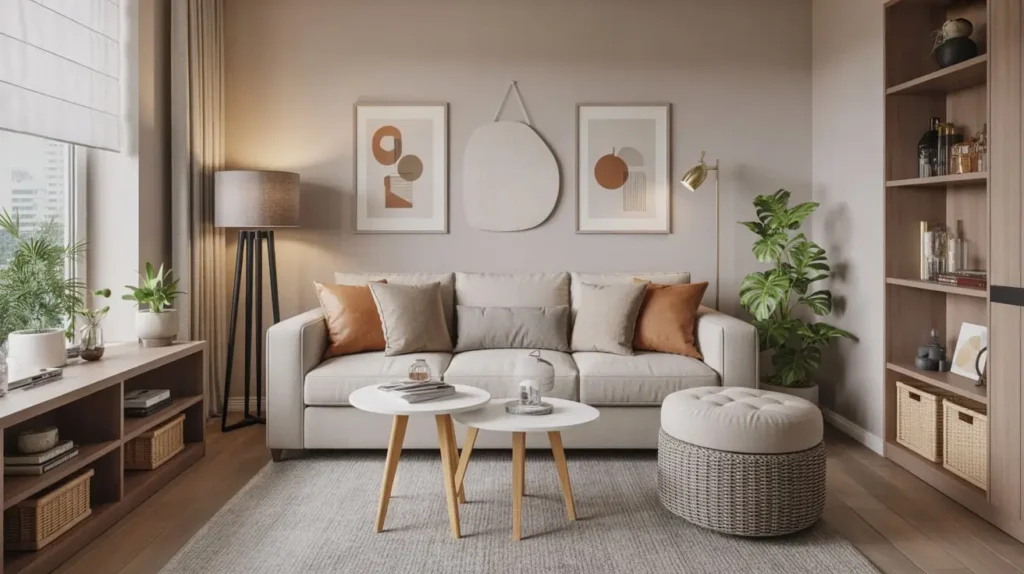
Can we talk about multi-functional furniture for a second? This stuff is literally a game-changer for small spaces. I’m talking furniture that works harder than I do on a Monday morning.
Ottomans with storage are my personal obsession. They’re like the Swiss Army knives of furniture—seating, footrest, coffee table, AND they hide all your junk. What’s not to love? I’ve got one that holds all my throw blankets, and honestly, it’s the best $150 I’ve ever spent.
Coffee tables with lift-tops are another winner. You know those moments when you’re eating dinner on the couch (again) and your neck is cramping from hunching over a low table? Yeah, lift-top tables solve that problem while giving you hidden storage underneath.
Must-have multi-functional pieces:
- Sofa beds for guests (modern ones don’t look like your grandma’s pull-out anymore)
- Nesting tables that tuck away when not needed
- Storage benches that double as seating
- Wall-mounted drop-leaf tables that fold flat
- Bookshelf room dividers that create zones while providing storage
The goal here is simple: make every piece of furniture earn its spot in your room. If it only does one thing, it better be really darn good at that one thing. 🙂
3. Light and Airy Neutral Space
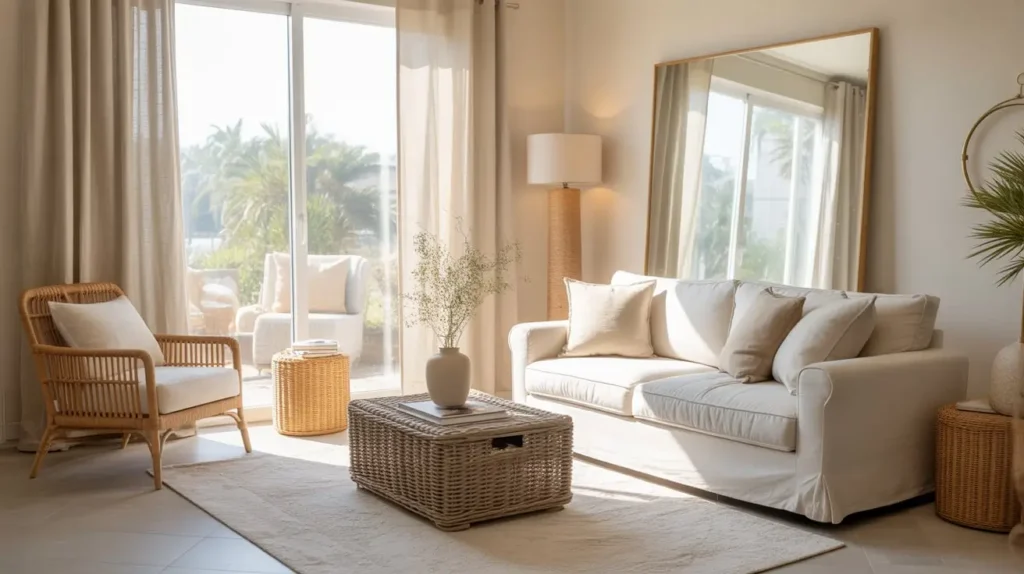
Okay, confession time: I used to think neutral spaces were boring. Like, aggressively boring. Then I actually created one, and wow, was I wrong.
Neutral doesn’t mean beige and bland—it means creating a calm, sophisticated backdrop that makes your space feel twice its actual size. Light colors reflect more light (groundbreaking observation, I know), which tricks your eye into perceiving more space.
Start with whites, creams, soft grays, and warm taupes for your walls and larger furniture pieces. Then layer in texture to keep things interesting. A chunky knit throw, linen curtains, a jute rug—these add visual interest without adding color chaos.
Natural light is your best friend here. Ditch the heavy curtains and opt for sheer panels or light-filtering blinds. If you’re blessed with big windows, show those babies off. If you’re not, strategically placed mirrors can bounce light around like nobody’s business.
Creating that airy feeling:
- Paint walls and ceilings in light, reflective colors
- Choose furniture with exposed legs (it shows more floor = feels bigger)
- Use glass or acrylic furniture pieces that visually disappear
- Layer whites and creams in different textures
- Add greenery for life without overwhelming the palette
The trick is making the space feel open and uncluttered while still being cozy. You’re going for “minimalist spa” not “abandoned dental office.”
4. Cozy Boho Corner Living Room
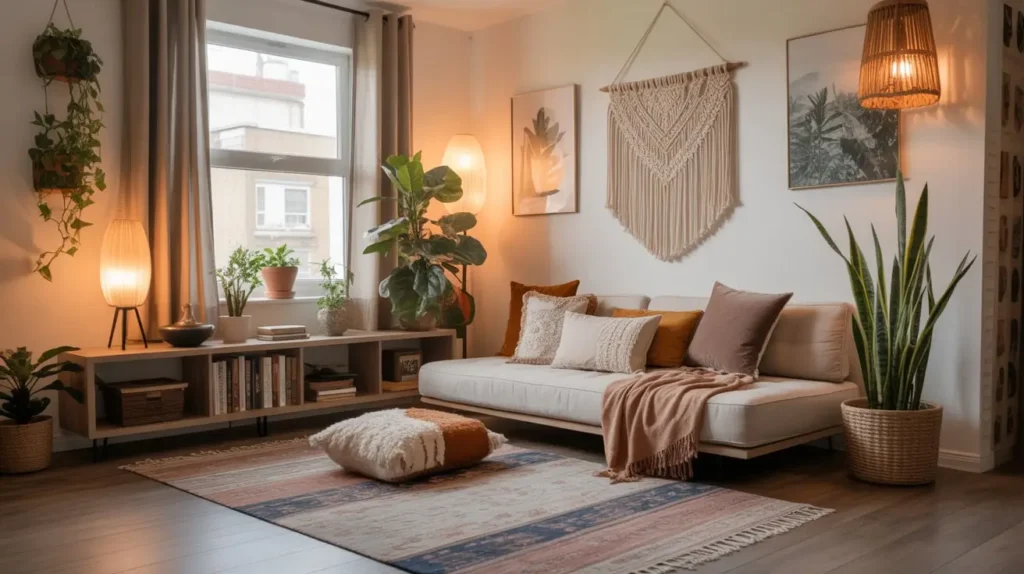
Who says minimalist can’t have personality? The boho-minimalist hybrid is totally a thing, and it’s perfect for small living rooms that need character without clutter.
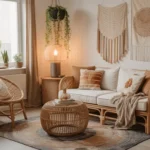
Pick one corner of your room to create a cozy boho moment. Maybe it’s a reading nook with a rattan chair, macramé wall hanging, and some plants. Or perhaps it’s a meditation corner with floor cushions and a woven pouf.
The minimalist part comes in by restraining yourself (I know, so hard) to that one designated boho zone. The rest of the room stays clean and simple, but that corner? That’s where your free spirit lives.
I’ve got a corner in my living room with a vintage leather chair, a sheepskin throw, three plants, and some brass candle holders. It’s my favorite spot to pretend I’m going to read classic literature (I usually end up scrolling Instagram, but the vibe is there).
Boho corner essentials:
- Natural materials: rattan, jute, wood, bamboo
- Textured textiles: macramé, woven baskets, kilim pillows
- Plenty of plants (but curated, not jungle-level crazy)
- Warm metals like brass or copper
- One statement piece like a hanging chair or floor mirror
The key is curating carefully. You’re creating an intentional boho accent, not a thrift store explosion. Less is definitely more here, even when going boho.
Also Read: 15 Dreamy Living Room Decor Ideas for Modern Homes
5. Modern Small Apartment Living Room
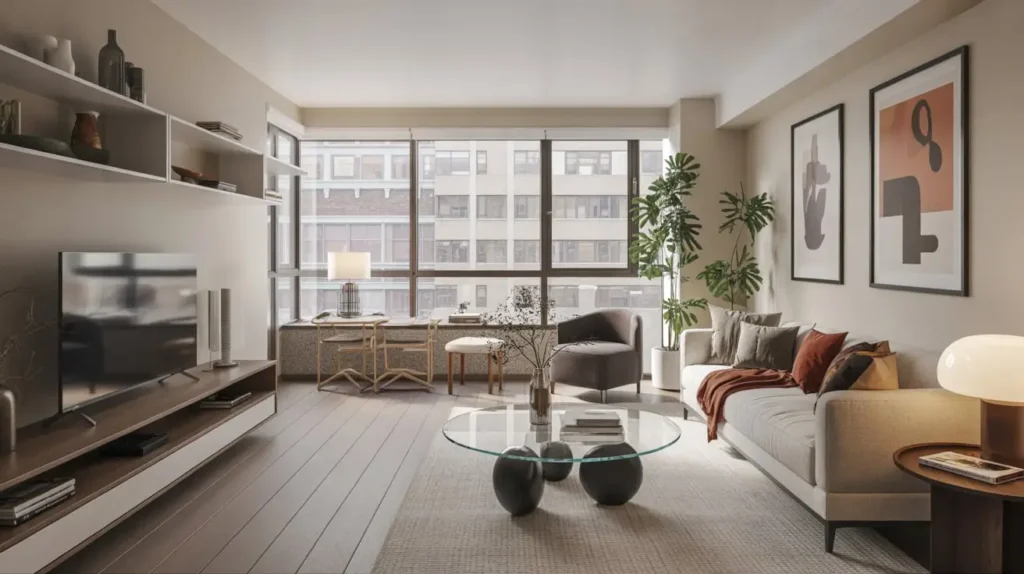
Modern minimalism and small apartments go together like Netflix and procrastination—they’re just meant to be.
Modern design loves clean lines, simple forms, and functional beauty. Think sleek sofas with track arms, geometric coffee tables, and streamlined shelving units. Nothing fussy, nothing ornate, just pure, beautiful simplicity.
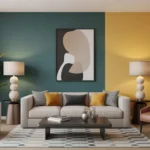
The color palette leans toward neutrals with maybe one bold accent color. Black, white, and gray form the base, then you might punch it up with navy, emerald, or burnt orange. But just one accent color—we’re not painting a rainbow here.
Materials matter in modern design. You want a mix of matte and gloss, hard and soft. A glass coffee table, velvet sofa, metal lamp, and smooth concrete planter create that modern tension that makes spaces interesting.
Modern minimalist must-haves:
- Low-profile furniture that doesn’t overwhelm
- Minimal window treatments (or none at all if you can get away with it)
- Thoughtful lighting—think arc floor lamps or pendant lights
- Hidden storage to maintain clean lines
- One statement art piece rather than gallery wall chaos
I love modern spaces because they photograph beautifully (hello, Instagram content), but they also just feel calm. There’s something about walking into a room with zero visual clutter that makes my brain relax.
6. Scandinavian-Inspired Small Space
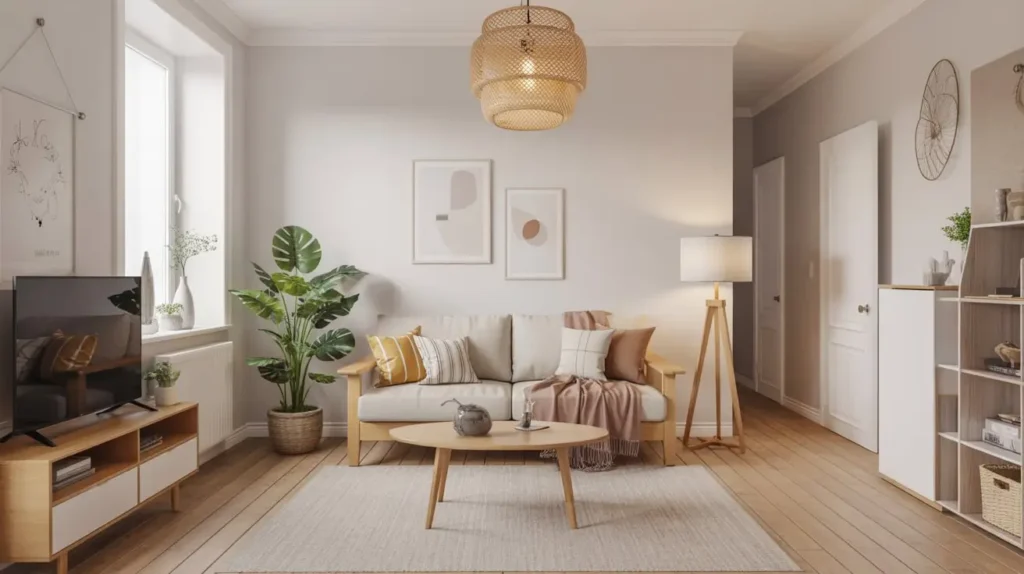
Can we just appreciate Scandinavian design for a moment? Those Nordic folks really understand how to make small, dark spaces feel warm and inviting. (I mean, they deal with long winters—they had to figure something out.)
Scandi style is basically minimalism’s cozier cousin. It’s got all the simplicity and function of minimalism but adds warmth through natural materials and hygge vibes.
The foundation is similar to other minimalist approaches: white or light gray walls, simple furniture, minimal accessories. But Scandinavian design brings in warm wood tones, cozy textiles, and just enough personality to make it feel lived-in.
Think light wood furniture with clean lines, sheepskin throws, knitted blankets, ceramic vases, and lots of candles. FYI, Scandinavians take their candle game seriously, and honestly, we should all follow their lead.
Scandi essentials:
- Light wood furniture (birch, beech, or light oak)
- White walls with warm undertones
- Layered lighting (overhead, task, and ambient)
- Natural textiles like wool, linen, and cotton
- Black accents for contrast
- Plants (they love their greenery)
The beauty of Scandinavian design is that it feels effortless. Nothing looks too designed or stuffy. It’s just naturally beautiful and functional, which is exactly what you want in a small space.
7. Smart Storage Living Room Ideas
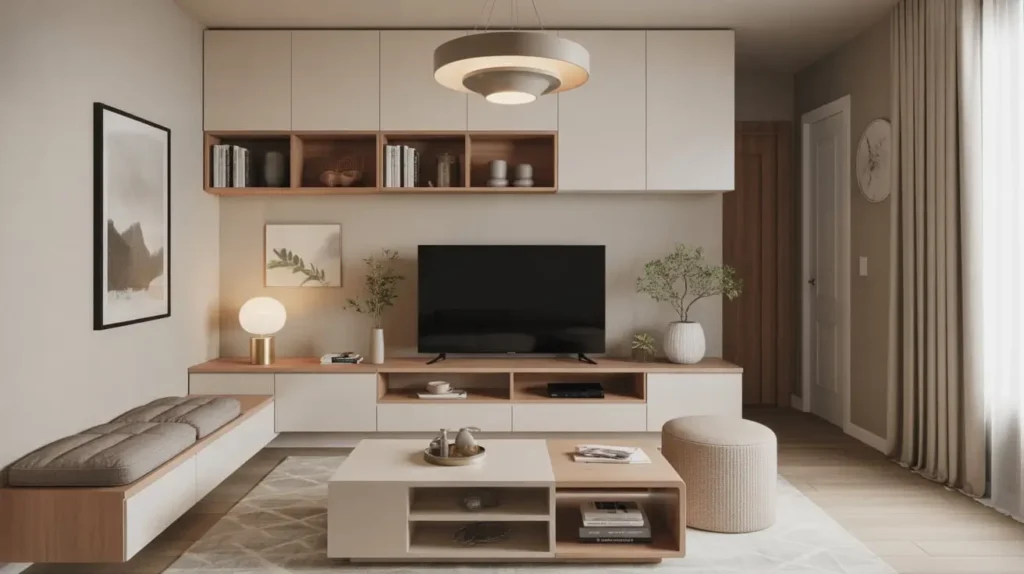
Let’s be real—storage in small living rooms is basically a sport, and we’re all competing for the gold medal.
The secret to minimalist spaces isn’t owning nothing; it’s hiding everything beautifully. Because we all have stuff. The trick is making that stuff invisible when it needs to be.
Wall-mounted cabinets are your secret weapon. They provide tons of storage without eating up floor space. I’ve got a row of sleek white cabinets mounted above my TV, and they hold everything from board games to extra phone chargers. You’d never know because they blend into the wall.
Built-in storage is worth its weight in gold if you own your place or have a cool landlord. Custom benches with storage underneath, recessed shelving, window seats with lift-up lids—these maximize every inch.
Clever storage solutions:
- Hollow ottomans and storage benches
- Coffee tables with shelves or drawers underneath
- Ladder shelves that lean against walls
- Behind-the-sofa consoles with storage
- Wall-mounted TV units with closed storage
- Storage baskets that look decorative
The minimalist vibe only works if you can actually put things away. Otherwise, you’re just messy with good intentions. Trust me, I learned this the hard way when I bought a gorgeous minimalist coffee table with zero storage. Rookie mistake.
8. Compact Living Room with Sectional Sofa
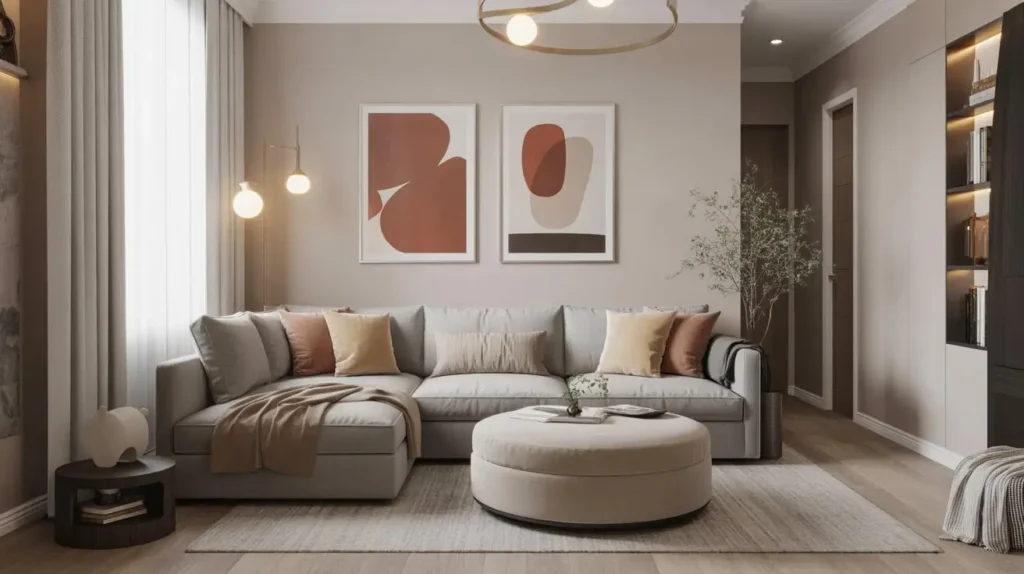
Hot take: sectionals can absolutely work in small living rooms. You just need to choose wisely, young Padawan.
Small-scale sectionals are specifically designed for compact spaces. We’re talking 70-80 inches instead of the massive 100+ inch behemoths. Look for ones with clean lines and slim arms that don’t waste precious inches.
The genius of a sectional in a small space is that it maximizes seating without requiring multiple furniture pieces. One sectional beats a sofa plus two chairs in terms of space efficiency, plus it creates that cozy, room-defining vibe.
Position it smartly, though. In small rooms, I usually put the long side against the longest wall and let the chaise float a bit into the room. This creates a natural traffic flow and makes the space feel intentional rather than cramped.
Sectional shopping tips:
- Measure your space three times (seriously, do it)
- Choose armless or low-arm styles for less bulk
- Light colors make sectionals feel less heavy
- Skip the reclining features—they add depth you don’t have
- Consider modular pieces you can rearrange
I’ve had a small sectional in my 12×14 living room for two years, and it’s literally the best furniture decision I’ve made. Eight people can comfortably hang out, or I can sprawl out for solo Netflix marathons. Versatility, baby.
9. Open Concept Small Living Room Design
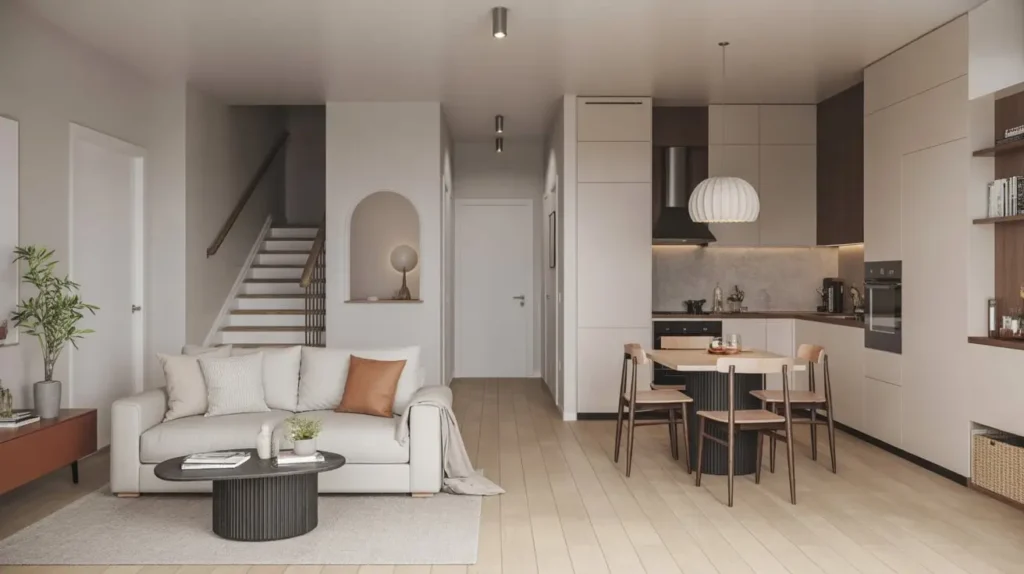
Open concept sounds like it’s only for big spaces, but actually, it’s perfect for small ones too. You’re just working with what you’ve got and making it flow.
The idea is to create zones without walls. Use furniture placement, rugs, and lighting to define your living area within a larger open space. Even if your “open concept” is just a living room that flows into a dining nook, you can use minimalist principles to make it cohesive.
Consistency is key here. If your living room furniture is mid-century modern with walnut wood, your dining chairs should probably echo that. You want it to feel like one intentional space, not a furniture showroom where everything is having an identity crisis.
Rugs are zone-creators extraordinaire. A large rug under your living room furniture visually separates it from the dining or kitchen area without needing walls or dividers.
Open concept tips:
- Use the same flooring throughout for continuity
- Stick to a cohesive color palette across zones
- Use furniture backs as subtle dividers
- Maintain sightlines—don’t block the view through the space
- Keep it decluttered (clutter multiplies visually in open spaces)
The minimalist approach works beautifully in open concepts because it prevents that overwhelming, cluttered feeling that can happen when you’re cramming multiple “rooms” into one space.
10. Rustic Chic Small Living Room
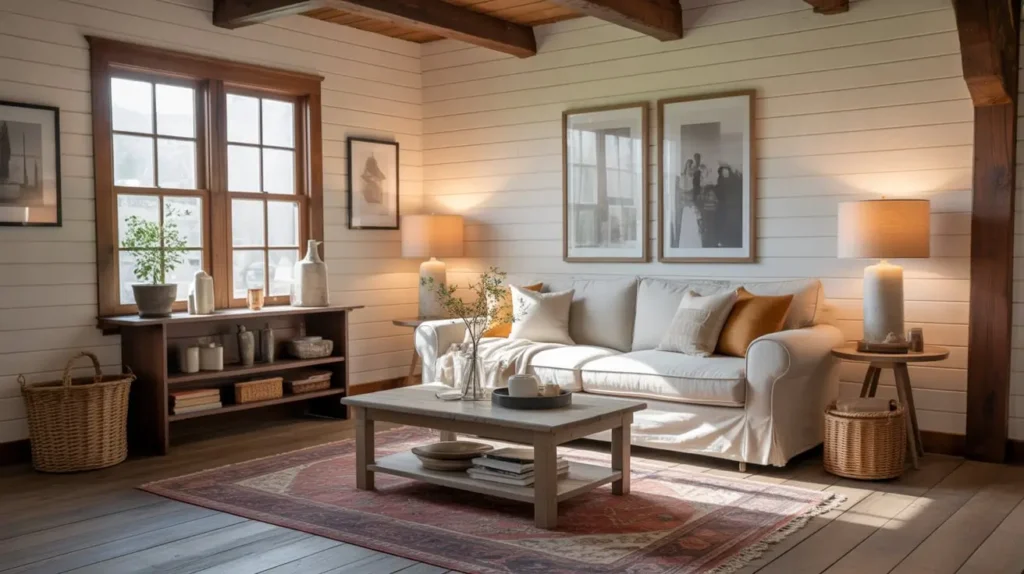
Rustic meets minimalist? Yeah, it’s a thing, and it’s gorgeous. Think less “log cabin in the woods” and more “refined farmhouse charm.”
The trick is bringing in rustic elements with restraint. A reclaimed wood coffee table, some vintage metal accents, maybe a sliding barn door if you’re feeling fancy—but all against a clean, minimal backdrop.
I love pairing rough, weathered wood with sleek modern pieces. Like, a distressed wooden bench under a modern acrylic console table. It’s that contrast that makes rustic minimalism interesting instead of just “I live in a barn.”
Keep the color palette muted. Lots of whites, creams, grays, with warm wood tones and maybe some black metal accents. The rustic pieces provide the visual interest, so you don’t need a crazy color scheme on top of it.
Rustic minimalist elements:
- Reclaimed or weathered wood furniture
- Vintage industrial lighting
- Natural fiber textiles (linen, burlap, cotton)
- Metal accents in black, bronze, or wrought iron
- Simple greenery like eucalyptus or olive branches
- Exposed brick or wood beams if you’re lucky enough to have them
This style feels collected and lived-in without feeling cluttered. It’s like minimalism that’s been around for a while and developed some character. IMO, it’s perfect for people who find stark minimalism too cold but still want that uncluttered vibe.
Also Read: 15 Charming Small Foyer Entryway Decor Designs on a Budget
11. Elegant Monochrome Small Living Room
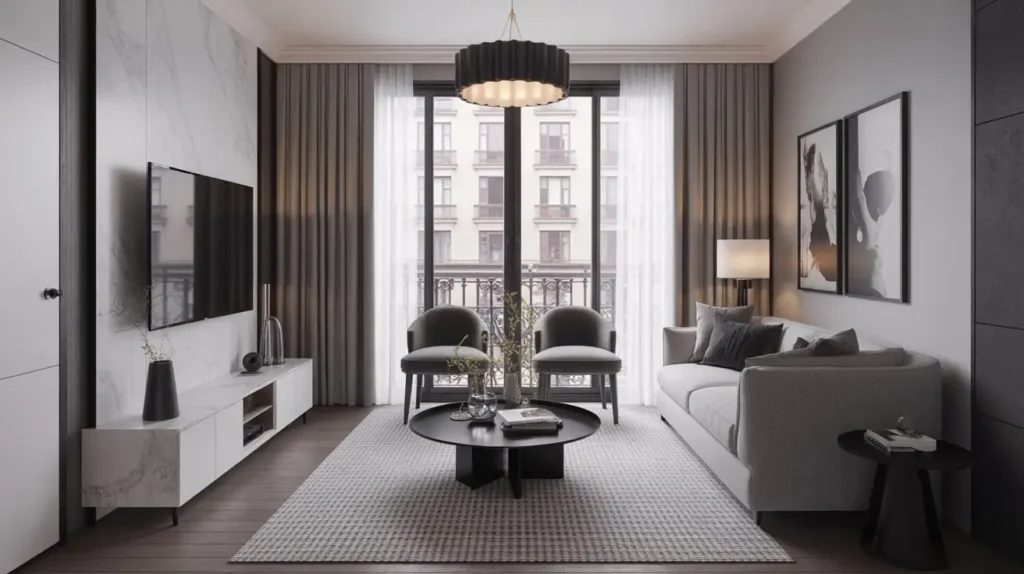
Okay, monochrome spaces are next-level sophisticated when done right. We’re talking black, white, and all the grays in between.
Monochrome doesn’t mean boring—it means letting form, texture, and light do the talking. Without color to distract the eye, you notice things like the curve of a chair arm, the weave of a throw blanket, the way light hits a glossy surface.
Start with a white or light gray base for walls and large furniture pieces. Then layer in deeper grays and blacks through accessories, art, and accent furniture. The key is creating depth through various shades rather than just picking one gray and calling it a day.
Texture becomes absolutely critical in monochrome spaces. Mix matte and glossy, rough and smooth, soft and hard. A velvet sofa, leather chair, marble coffee table, wool rug, and silk pillows—all in grayscale—create visual interest through tactile variety.
Monochrome magic:
- Use at least 5-6 different shades from white to black
- Mix textures religiously
- Incorporate patterns (stripes, geometric, abstract) in the same color family
- Add metallic accents (silver, chrome, or brushed nickel)
- Let architectural details shine
- Use lighting to create drama and depth
I’ll admit, monochrome isn’t for everyone. It requires commitment and a good eye for detail. But when you nail it? Chef’s kiss. It’s timeless, elegant, and photographs like a dream.
12. Color-Pop Small Living Room Accents
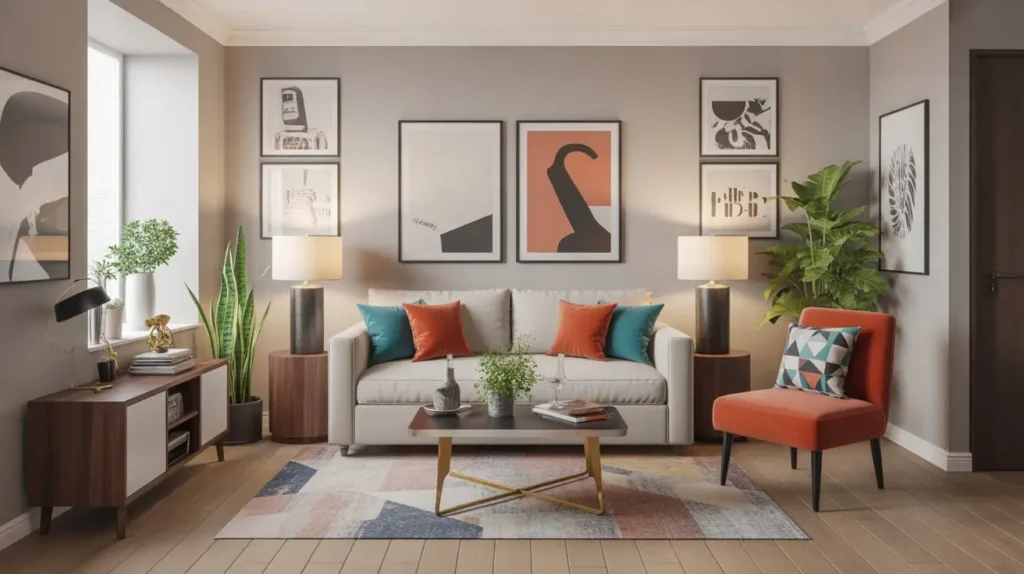
Sometimes minimalist spaces need a little personality injection, and that’s where strategic color pops come in. We’re not redecorating the whole room—we’re just adding some zing.
The rule here is simple: pick one accent color and use it sparingly but intentionally. Maybe it’s mustard yellow pillows, a cobalt blue chair, or coral artwork. Whatever you choose, it should appear in 2-3 places around the room to create cohesion.
I’ve got a thing for emerald green right now. My minimalist gray living room has an emerald velvet pillow, a green glass vase, and a small abstract painting with green tones. That’s it. Three touches, and suddenly the whole room feels more dynamic.
The beauty of this approach is that you can change your accent color seasonally or whenever you get bored without overhauling the entire space. Switch out those pillows, swap the artwork, and boom—new vibe.
Color-pop guidelines:
- Stick to ONE accent color (maybe a second if you’re brave)
- Use the 80/20 rule: 80% neutral, 20% color
- Repeat the color at least three times (but not more than five)
- Choose saturated, bold tones that make a statement
- Keep the rest of the space simple so the color shines
This is perfect for minimalist enthusiasts who worry about their space looking too sterile. That pop of color brings life and personality without sacrificing the clean, uncluttered aesthetic.
13. Small Living Room with Gallery Wall
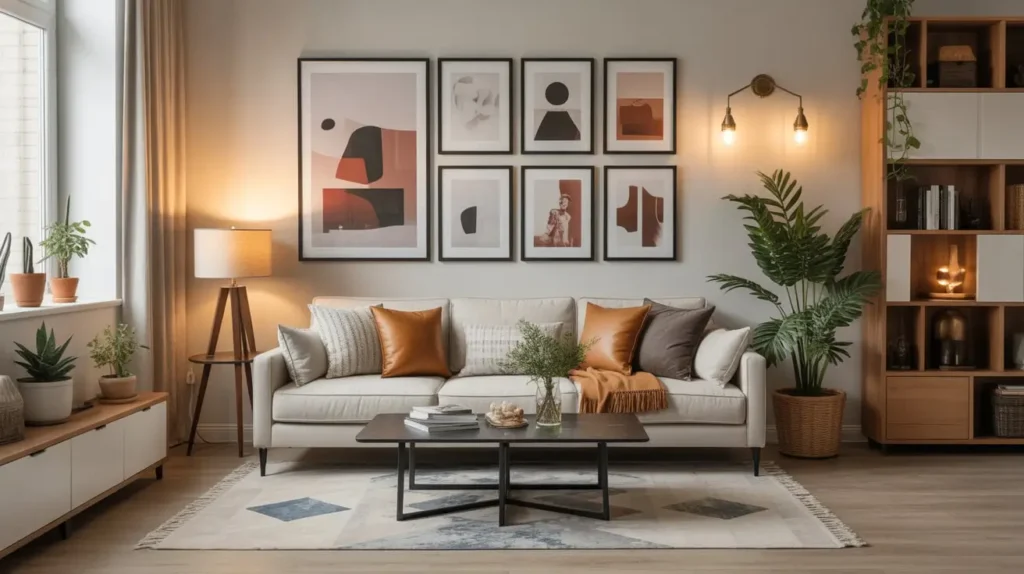
Gallery walls get a bad rap in minimalist circles, but hear me out—they can totally work if you approach them thoughtfully.
A minimalist gallery wall is curated, not collected. You’re not covering every inch of wall space with stuff. You’re creating a focused, intentional art moment that serves as the room’s focal point.
Keep it simple: same frame style (or all no-frame), consistent matting, and a cohesive theme. Maybe it’s all black and white photography, or all abstract line drawings, or all botanical prints. The repetition creates rhythm instead of chaos.
Size matters too. In a small living room, you want your gallery wall to be proportional. A tiny cluster of 4×6 photos on a big wall looks lost, but a well-planned arrangement of medium-sized pieces can be stunning.
Gallery wall tips:
- Plan the layout on the floor first
- Maintain consistent spacing (2-3 inches between frames)
- Keep the color palette limited
- Use a level (please, for the love of all things holy)
- Create a defined shape (rectangle, square, or grid)
- Less is more—5-9 pieces is plenty
I spent three hours planning and hanging my living room gallery wall, and I’ve gotten more compliments on it than any other design element in my apartment. The effort is worth it when you nail the minimalist aesthetic while still showing personality.
14. Tiny Living Room with Floating Shelves
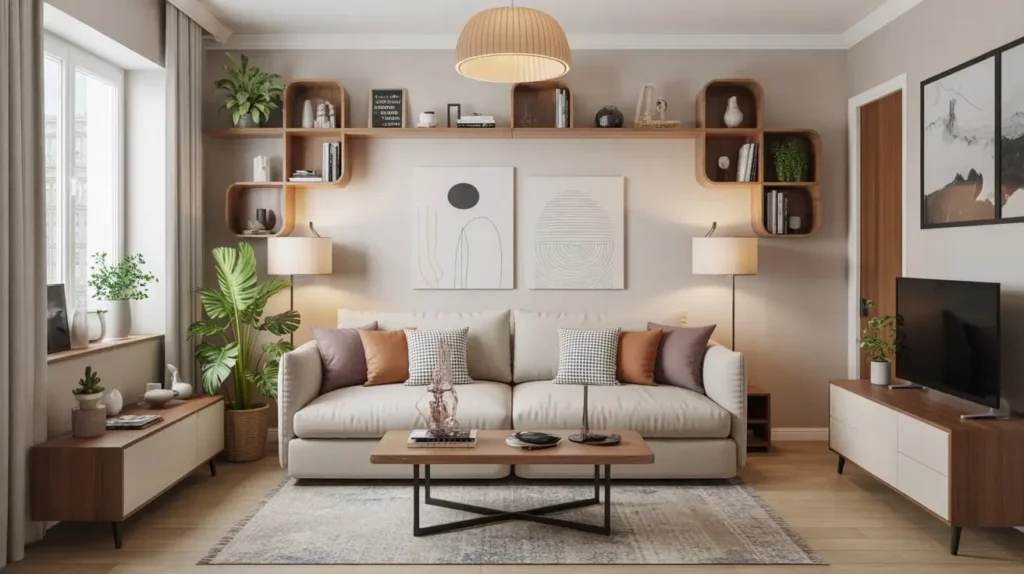
Floating shelves are basically magic for small living rooms. They provide storage and display space without the visual weight of traditional bookcases or cabinets.
The key is styling them minimally. I know the temptation to fill every inch of shelf space—I really do—but fight it. Each shelf should have breathing room. A few books, a small plant, maybe a decorative object. That’s it.
I follow the “rule of three” when styling my floating shelves. Three items per shelf, varied in height and texture, with negative space around them. Sometimes I even leave a shelf completely empty just for the visual break.
Installation is crucial here. Make sure they’re properly anchored (especially if you rent—you don’t want a shelf coming down at 2 AM). I learned this lesson when a poorly installed shelf dumped my favorite succulent and three books onto my coffee table. Fun times. :/
Floating shelf styling:
- Install them at varying heights for visual interest
- Style in odd numbers (3, 5, 7 items)
- Mix books with objects
- Keep the color palette cohesive
- Leave some empty space
- Use them functionally (not just decoratively)
Floating shelves above a sofa, flanking a TV, or in an awkward corner can completely transform a small living room. They’re practical, pretty, and perfectly minimalist when styled with restraint.
15. Budget-Friendly Small Living Room Makeover
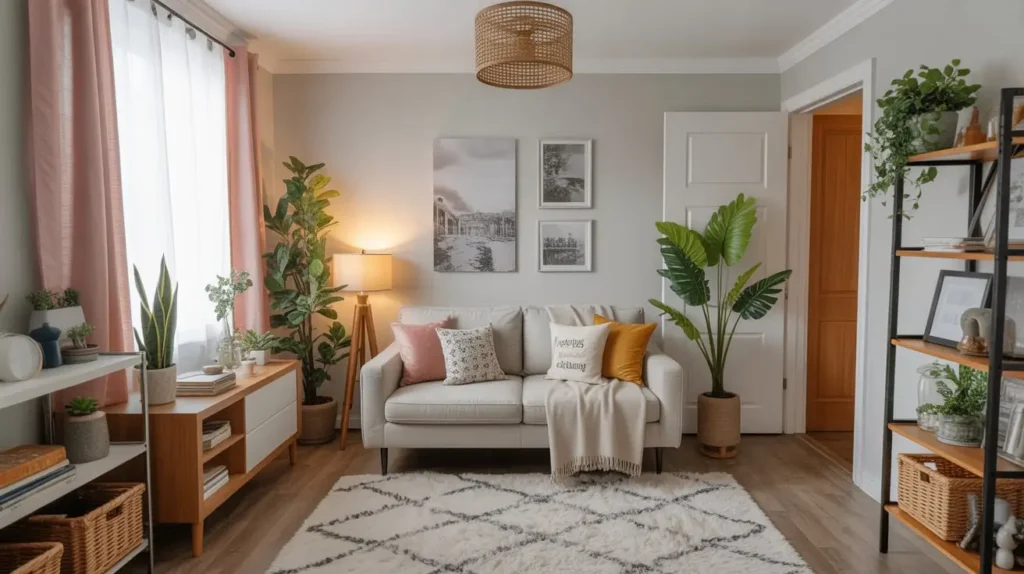
Let’s talk money, because minimalism doesn’t mean dropping your life savings at West Elm (though their stuff is gorgeous, not gonna lie).
The cheapest thing you can do? Declutter. I’m serious. Removing excess stuff costs exactly zero dollars and instantly makes your space look better. Get rid of that broken lamp, the too-small rug, the pillows you hate. Clear it out.
Paint is your next best investment. A can of white or light gray paint costs like $30 and can completely transform a space. I painted my living room walls and trim in a soft white, and it felt like moving into a new apartment.
Shop secondhand for the win. Facebook Marketplace, Craigslist, estate sales—you can find amazing pieces for nothing if you’re patient. I got my mid-century modern coffee table for $40 because someone was moving and needed it gone. Score.
Budget makeover strategies:
- Rearrange existing furniture first (free!)
- DIY what you can (spray paint, new hardware, simple projects)
- Invest in fewer, quality pieces rather than lots of cheap stuff
- Shop end-of-season sales
- Use what you have in new ways
- Focus on lighting upgrades (huge impact for small cost)
- Make your own art or print affordable designs
The minimalist approach actually saves money because you’re buying less overall. You just need to be more thoughtful about what you do buy. One great sofa beats three mediocre chairs every time, both aesthetically and financially.
Wrapping It Up
Look, creating a minimalist small living room isn’t about deprivation or living in a stark white box. It’s about being intentional with your space and letting each element serve a purpose while looking good.
Whether you go full Scandinavian hygge, sleek modern monochrome, or rustic farmhouse minimalist, the principles stay the same: keep it simple, make it functional, and create breathing room. Your small living room has potential—it just needs you to see it clearly without all the clutter in the way.
Start with one idea from this list. Maybe you’ll float your furniture away from the walls, add some smart storage, or create that cozy boho corner you’ve been dreaming about. Small changes compound into major transformations.
And remember, your space should work for YOUR life. If something doesn’t serve you, even if it looks amazing on Pinterest, ditch it. Minimalism is about living better with less, not suffering beautifully in an uncomfortable space.
Now stop reading and go rearrange some furniture. Your minimalist small living room masterpiece awaits!