

15 Gorgeous Vintage Farmhouse Kitchen Ideas and Timeless Looks
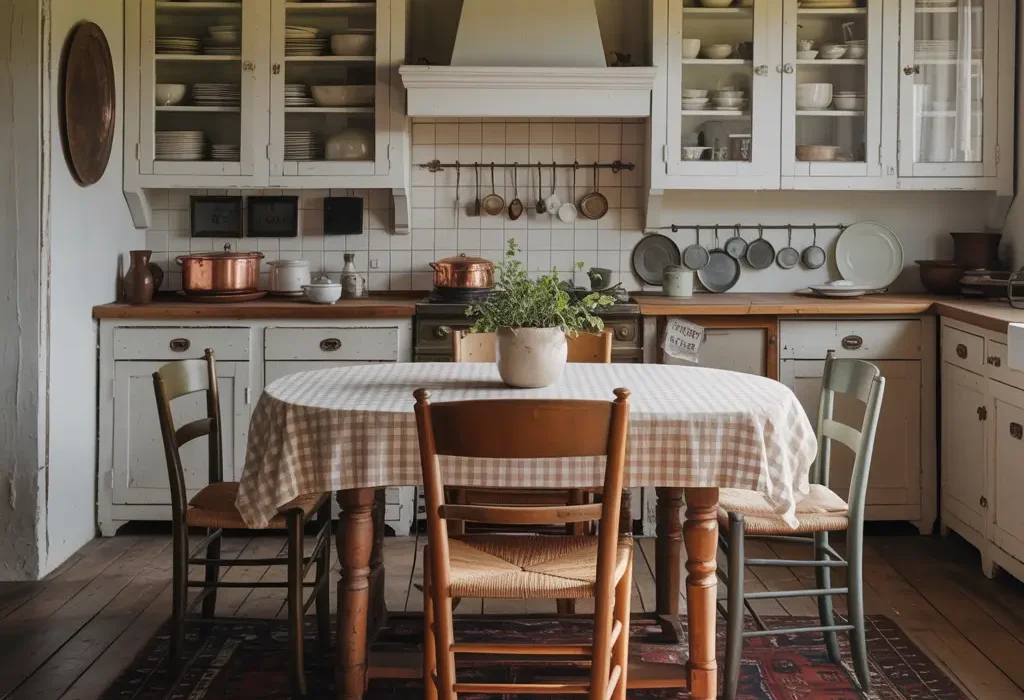
Look, I get it. You’ve been scrolling through Pinterest at 2 AM again, haven’t you? You’re obsessing over those dreamy vintage farmhouse kitchens that somehow manage to look both rustic and refined, old-school yet totally Instagram-worthy. Trust me, I’ve been there—caught in that endless scroll, wondering how people achieve that perfect balance of weathered charm and practical functionality. Here’s the thing: creating a vintage farmhouse kitchen isn’t about buying the most expensive distressed cabinet or hunting down every antique at the flea market. It’s about understanding which elements create that cozy, lived-in vibe we all crave. So grab your coffee (or wine, no judgment), and let’s talk about 15 ideas that’ll transform your kitchen into the vintage farmhouse sanctuary you’ve been dreaming about.
Rustic Wooden Cabinet Makeovers
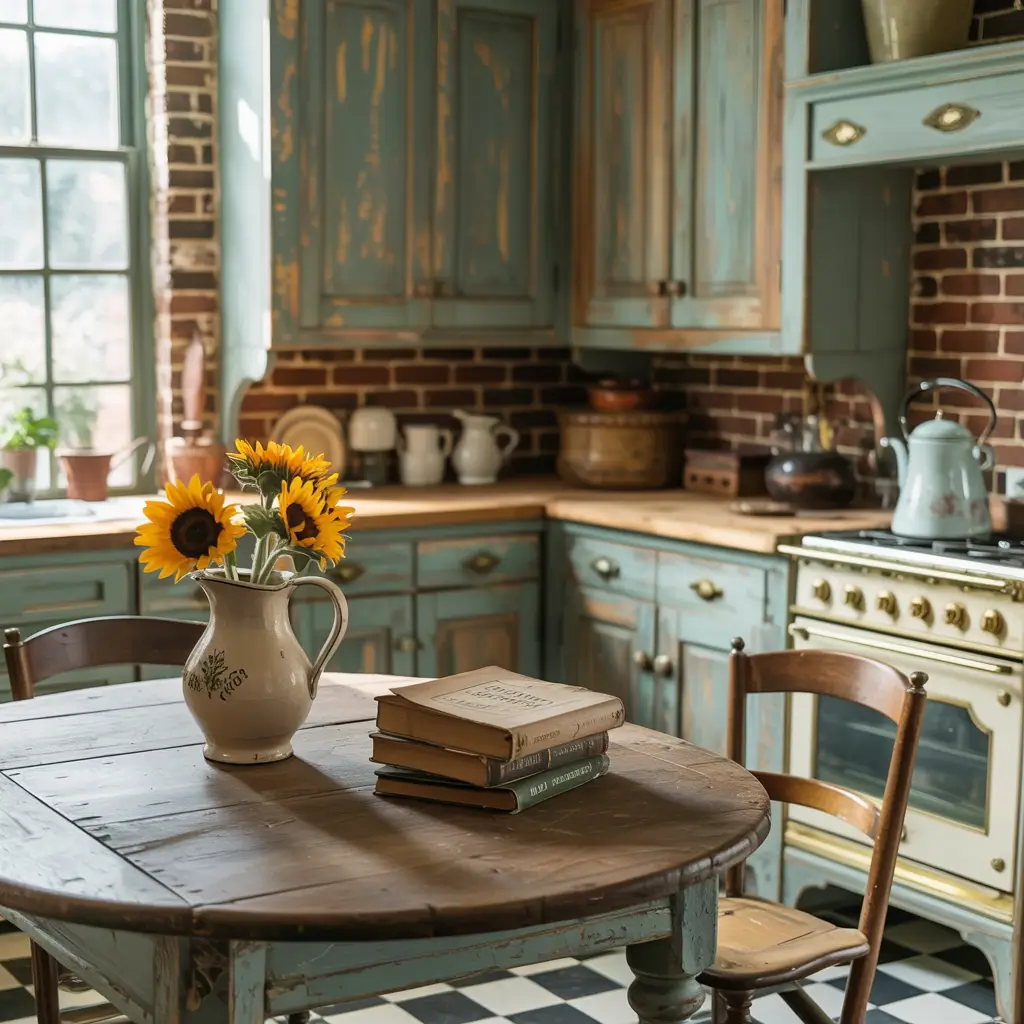
You know what makes my heart sing? Opening a cabinet door and seeing that gorgeous, weathered wood grain peeking through layers of carefully distressed paint. Rustic wooden cabinet makeovers are hands-down one of the easiest ways to inject serious farmhouse personality into your kitchen without breaking the bank.
I recently tackled my own cabinet transformation, and honestly? Best decision ever. I started with builder-grade oak cabinets (yawn) and transformed them using a combination of chalk paint and strategic sanding. The trick isn’t slapping on some white paint and calling it a day—you want to create depth and character.
Here’s what works:
- Mix and match finishes: Paint upper cabinets in soft whites or creams while leaving lower cabinets natural wood
- Distress strategically: Focus on edges, corners, and areas that would naturally wear over time
- Replace hardware: Swap modern handles for oil-rubbed bronze or antique brass pulls
- Consider glass inserts: Replace a few solid cabinet doors with glass-front options to display vintage dishware
Want to know the secret most people miss? Layering is everything. Start with a dark base coat, add your main color, then sand through to reveal that bottom layer. This creates an authentic, time-worn appearance that screams “I’ve been here for generations” rather than “I tried too hard last weekend.”
Cozy Farmhouse Breakfast Nooks

Ever wonder why farmhouse kitchens feel so welcoming? It’s because they prioritize gathering spaces, and nothing says “sit down and stay awhile” quite like a cozy breakfast nook.
I’m talking about those corner benches with plush cushions, a rustic wooden table that’s seen a thousand family dinners, and maybe some shiplap backing if you’re feeling extra. These nooks transform unused corners into the heart of your kitchen—trust me, once you install one, you’ll wonder how you ever lived without it.
Here’s how to nail the look:
- Built-in benches with storage: Kill two birds with one stone by creating seating that doubles as pantry space
- Vintage table and mismatched chairs: Scour estate sales for an old farmhouse table; pair it with chairs in complementary but different styles
- Throw pillows and cushions: Choose fabrics in classic farmhouse patterns—ticking stripes, buffalo check, or grain sack prints
- Pendant lighting overhead: Hang a vintage-inspired fixture to define the space and add ambiance
The beauty of breakfast nooks? They don’t require massive square footage. I’ve seen people create stunning nooks in spaces I wouldn’t have given a second glance. Sometimes a small corner with the right styling beats a sprawling dining room any day.
Vintage Lighting for Farmhouse Kitchens
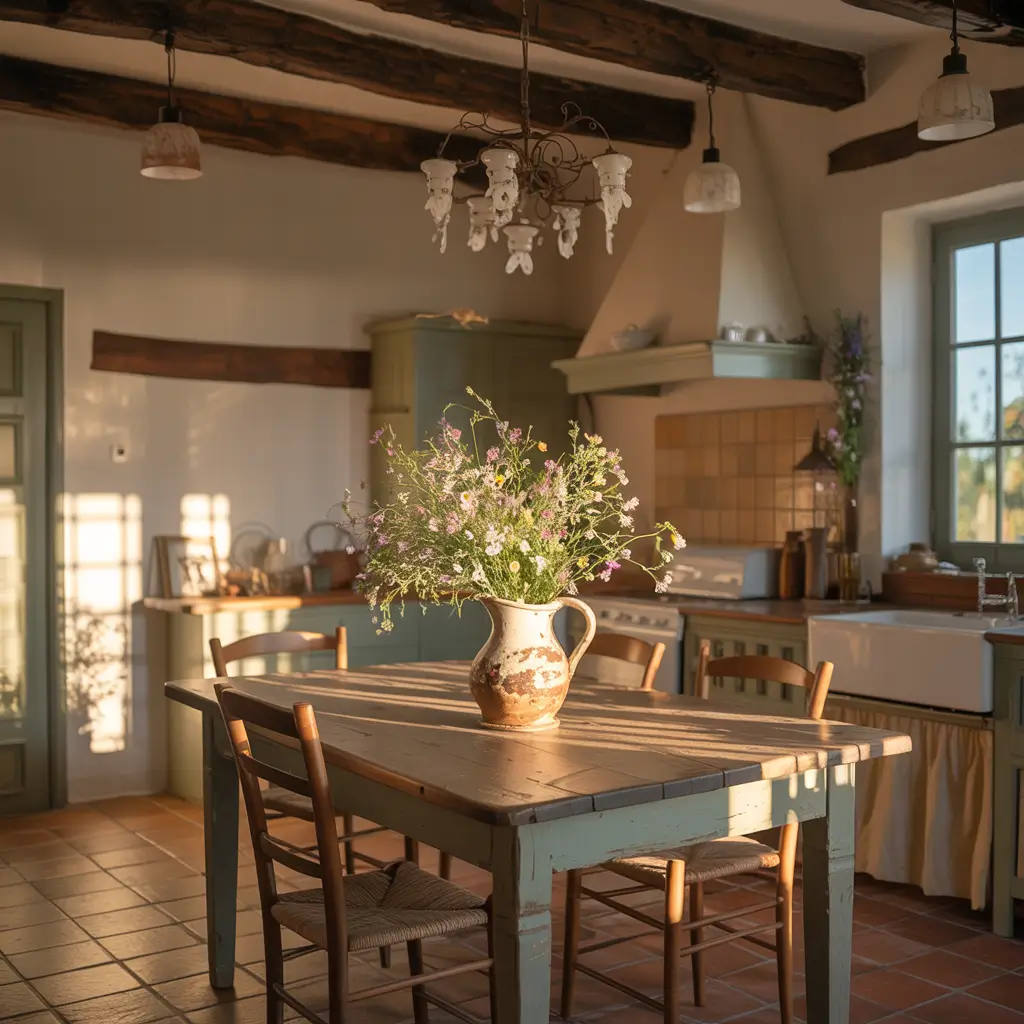
Let’s talk about lighting because, FYI, this is where many people completely blow their farmhouse vibe. You can have perfect cabinets, gorgeous countertops, and authentic accessories, but slap up some modern recessed lighting and—poof—there goes your vintage charm.
Vintage lighting fixtures are the jewelry of your farmhouse kitchen. They catch the eye, set the mood, and honestly do most of the heavy lifting when it comes to establishing that timeless aesthetic.
My personal favorites include:
- Schoolhouse pendants: Classic glass globes that work over islands or sinks
- Industrial cage lights: These add an edgy, utilitarian vibe that balances softer farmhouse elements
- Wrought iron chandeliers: Perfect for larger kitchens or over dining tables
- Gooseneck barn lights: Mount these over sinks or entryways for authentic farmhouse character
I replaced my boring flush-mount ceiling fixtures with three schoolhouse pendants over my island, and the transformation was instant. Suddenly my kitchen had dimension, warmth, and a focal point that drew people in. Pro tip: Don’t be afraid to mix metal finishes—black, bronze, and brass can all coexist beautifully in a farmhouse kitchen.
The key is choosing fixtures that look like they could’ve been original to a 1920s farmhouse. Modern replicas work great (and are way easier to wire), but hunt for vintage originals if you’re feeling adventurous. Just make sure an electrician checks them out first—nothing kills the farmhouse vibe quite like an electrical fire :/
Open Shelving with Antique Dishware
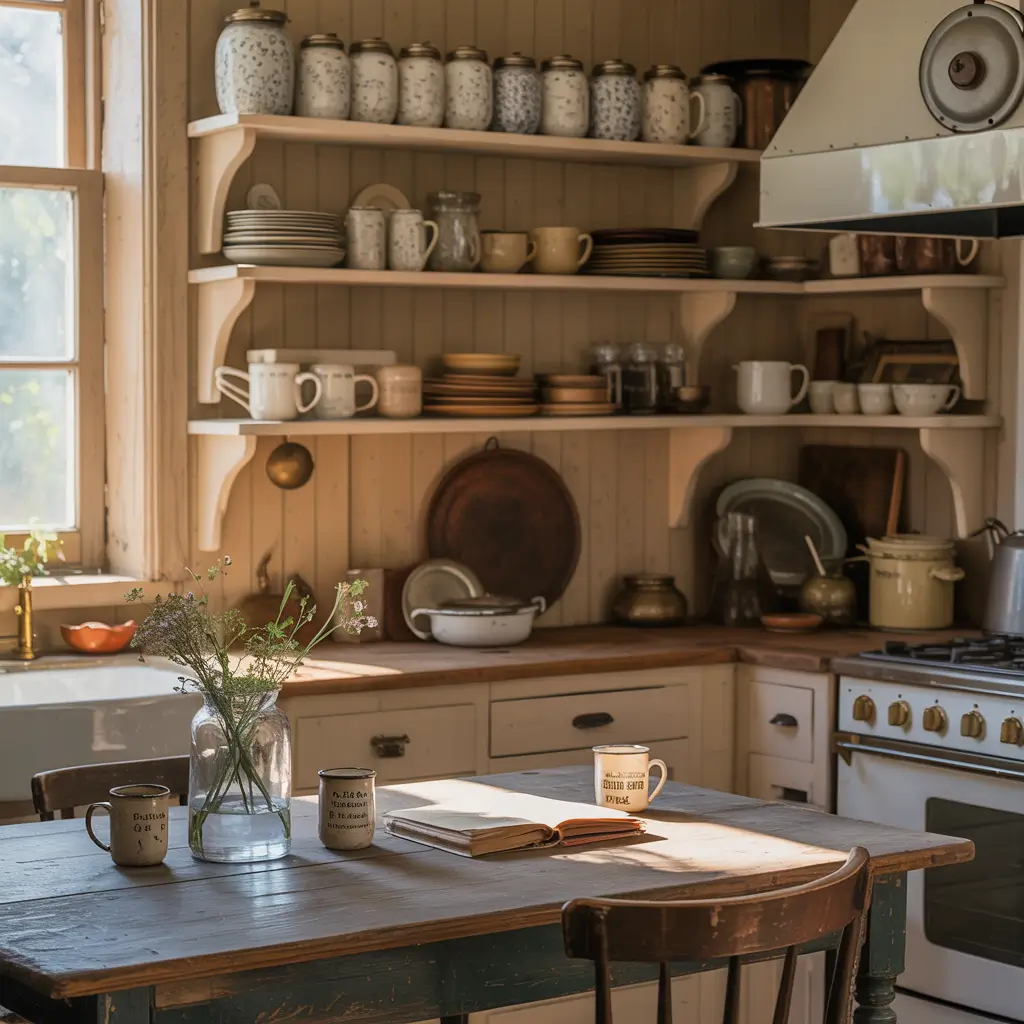
Okay, controversial opinion time: I love open shelving, but I know it’s not for everyone. Some people see it and think “dust magnet” or “my dishes aren’t pretty enough.” But here’s the thing—open shelving with antique dishware creates instant visual interest and makes your kitchen feel curated rather than cookie-cutter.
I started with just two shelves flanking my kitchen window, displaying my collection of vintage ironstone and blue-striped stoneware. It forced me to keep those shelves styled and organized, which actually made me tidier overall. Funny how that works, right?
Here’s how to make open shelving work:
- Start small: Replace one upper cabinet with shelving before committing to a full wall
- Use thick wood shelves: Think 2-inch reclaimed wood or chunky floating shelves with visible brackets
- Display items you actually use: This isn’t a museum; mix functional pieces with decorative ones
- Embrace imperfection: Mismatched vintage plates, old crocks, and weathered cutting boards tell a story
The styling formula I swear by: Stack plates vertically or use plate racks, add height variation with pitchers or jars, and leave some breathing room—don’t pack every inch. Group items in odd numbers (three or five looks better than two or four), and don’t stress about perfection.
The beauty of displaying antique dishware is that each piece carries history. That chippy cake stand? It’s not damaged; it’s character. Those mismatched teacups? They’re not random; they’re curated. See the difference?
Also Read: 15 Stunning Modern Black Kitchen Ideas for Stylish Home Inspiration
Shiplap Walls and Wood Accents
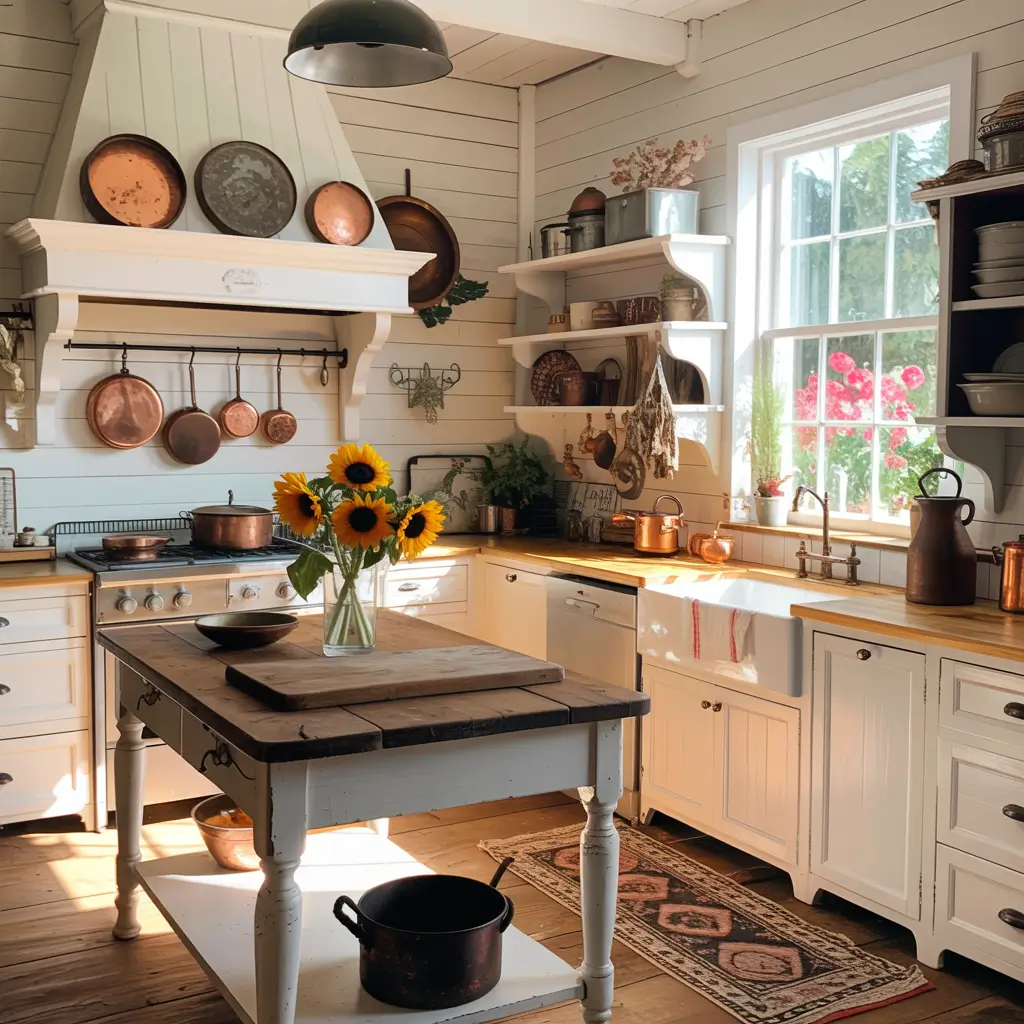
Look, I know shiplap became a thing because of a certain HGTV couple, but honestly? Shiplap walls and wood accents have been farmhouse staples for literal centuries. There’s a reason this trend caught fire—it works.
I added shiplap to my kitchen backsplash area, and it completely transformed the space. The horizontal lines create movement, the wood texture adds warmth, and it’s way easier to install than I expected (even for someone whose DIY skills are… questionable).
Where to use shiplap and wood accents:
- Feature walls: Pick one wall (maybe behind your stove or sink) for maximum impact without overwhelming the space
- Ceiling treatments: Painted white shiplap on ceilings adds character and makes rooms feel taller
- Backsplash alternative: Skip tile and go with painted or sealed shiplap for a softer look
- Island sides: Add wood planking to your island for texture and visual interest
Here’s what I learned the hard way: Not all shiplap looks the same. The spacing between boards, the width of the planks, and whether you use traditional shiplap or nickel-gap boards all create different effects. I recommend going with wider planks (6-8 inches) for a more authentic, less trendy look.
And please, for the love of farmhouse kitchens everywhere, don’t shiplap every single surface. One accent wall or area is charming; an entire room can feel like you’re living inside a wooden crate. Balance, people!
Farmhouse Farm-to-Table Countertops
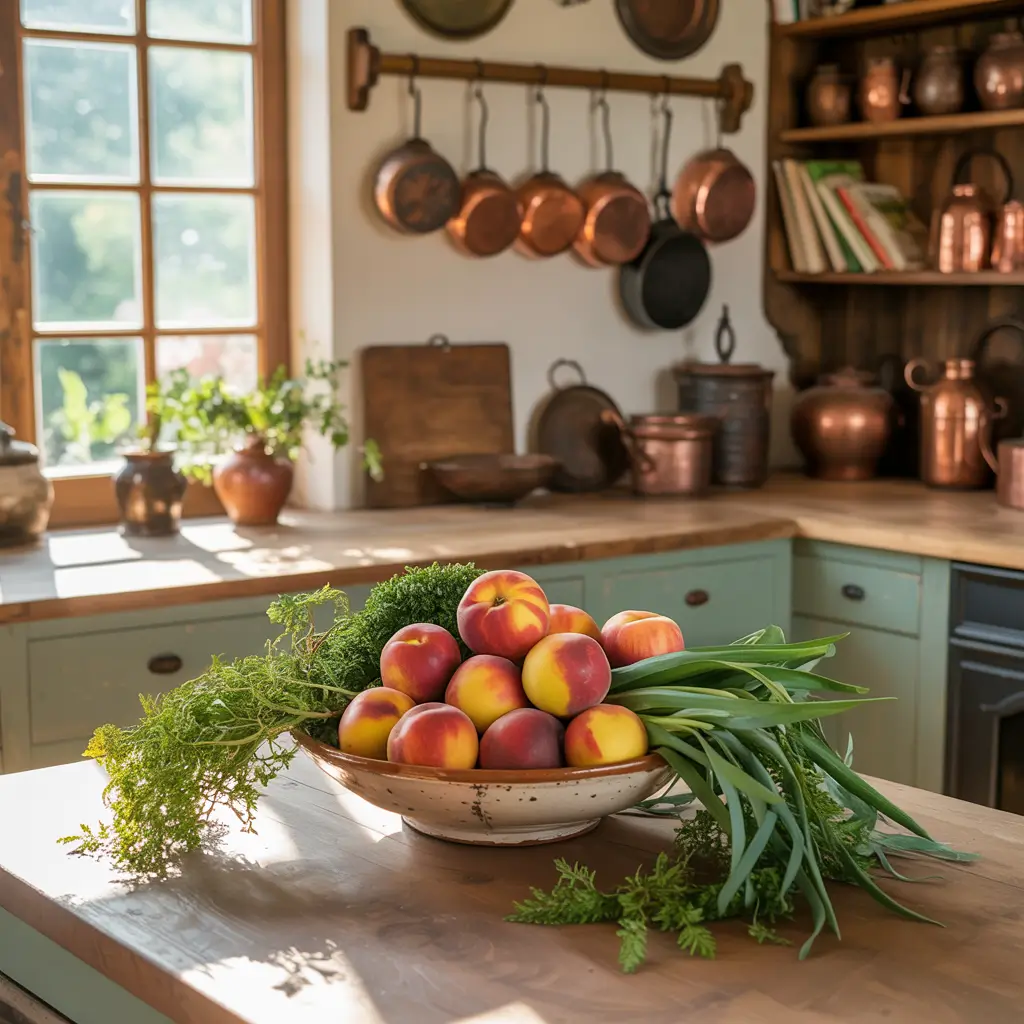
Can we talk about countertops for a second? This is where you’ll spend actual money, so it’s worth getting right. Farmhouse-style countertops need to balance durability with that organic, natural aesthetic that makes farmhouse kitchens so appealing.
I went with butcher block for my island and absolutely love it. Yes, it requires maintenance (regular oiling isn’t optional), but the warmth and character it adds is worth every minute. For my perimeter counters, I chose honed marble because I’m a glutton for punishment (kidding… mostly).
Your best farmhouse countertop options:
- Butcher block: Warm, affordable, and ages beautifully; perfect for islands
- Soapstone: Naturally darkens over time, creating an authentic vintage patina
- Honed marble or quartzite: Softer finish than polished; more forgiving with water spots
- Concrete: Industrial edge that pairs surprisingly well with farmhouse elements
- Reclaimed wood: Ultimate authenticity, though you’ll need to seal it properly for food prep areas
IMO, the biggest mistake people make is choosing countertops that are too perfect or modern. High-gloss granite with busy patterns? That’s not giving farmhouse—that’s giving 2005 McMansion. You want materials that look like they could develop a patina, show wear gracefully, and feel natural rather than synthetic.
I’m not saying you need to choose the highest-maintenance option (looking at you, marble), but don’t be afraid of materials that actually age. That’s kind of the whole point of the farmhouse aesthetic, right? Embracing the beauty of use and time.
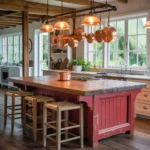
DIY Distressed Kitchen Islands
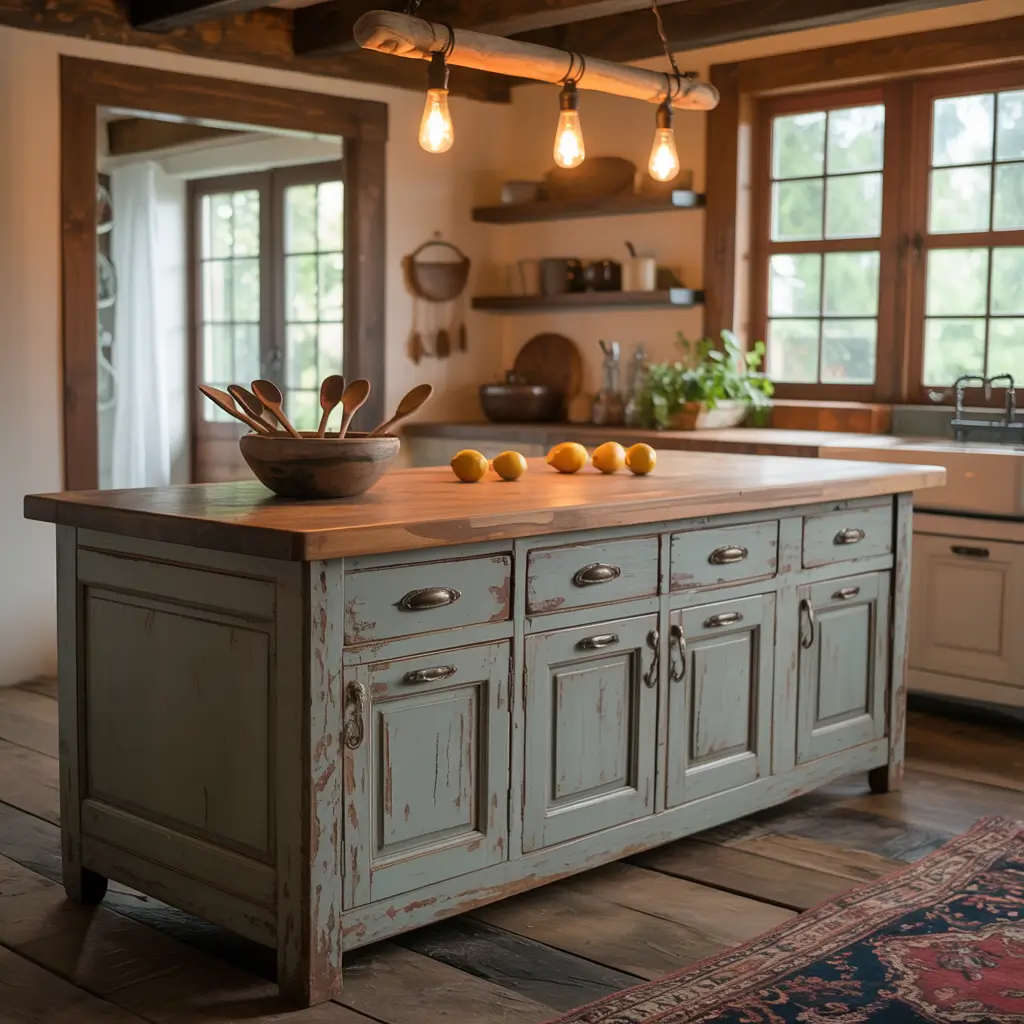
Let’s get real: your kitchen island is probably the focal point of your entire space. People gather around it, prep food on it, and judge your design choices based on it (harsh but true). A DIY distressed kitchen island can be your secret weapon in achieving that perfect vintage farmhouse look.
I built my island from an old workbench I scored at an estate sale. With some added storage, a new butcher block top, and strategic distressing, it became the centerpiece of my kitchen. People constantly ask where I bought it, and I get to smugly say “I made it” 🙂
Here’s how to create your own:
- Start with good bones: Use an existing table, dresser, or cabinet as your base
- Add architectural details: Corbels, furniture feet, or decorative molding elevate the piece
- Layer paint colors: Apply 2-3 colors, then sand strategically to reveal layers
- Seal properly: Use a durable topcoat since islands take serious abuse
- Add functional hardware: Towel bars, hooks, or wine racks increase usability
The distressing technique matters. Don’t just randomly sand all over—think about where actual wear would occur. Edges get bumped, corners get dinged, and areas near handles see more action. Sand these spots more aggressively while leaving flat surfaces relatively intact.
Want to know the easiest cheat? Buy a new island base and distress it yourself. You get the structural integrity and modern functionality with vintage character. Sometimes the best DIY project is knowing when to take shortcuts.
Vintage Farmhouse Wall Decor
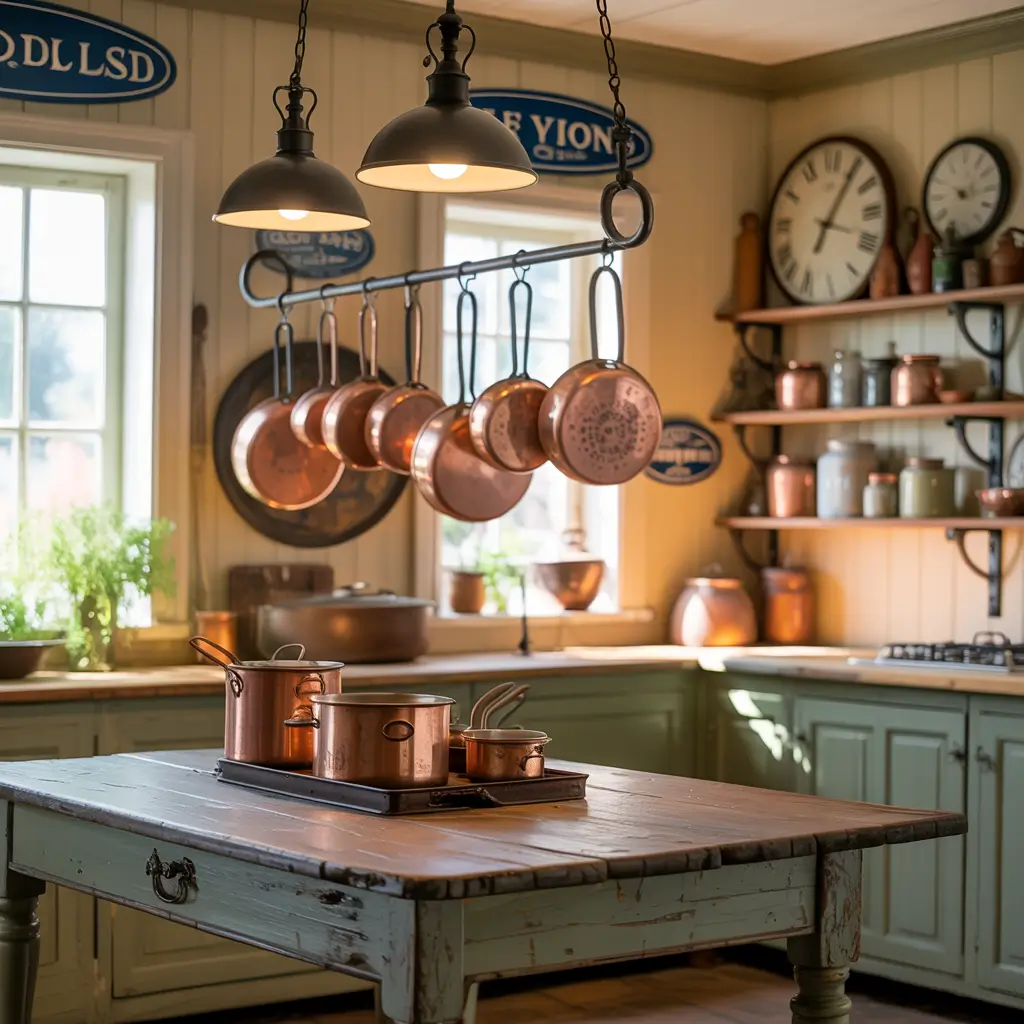
Blank walls are missed opportunities, friends. Vintage farmhouse wall decor is where you get to inject serious personality and tell your kitchen’s story. This is your chance to showcase collections, family history, or just things that make you happy.
I’ve got a whole wall dedicated to vintage kitchen tools—rolling pins, wooden spoons, antique whisks—displayed on hooks and shelves. It’s functional art that reinforces the farmhouse aesthetic while giving me easy access to tools I actually use.
Wall decor ideas that work:
- Antique signs: Old farm signs, vintage advertisements, or salvaged architectural pieces
- Plate walls: Arrange vintage plates in a gallery-style configuration
- Open shelving displays: Mix dishes with artwork, plants, and decorative objects
- Large clocks: Oversized vintage-style clocks become instant focal points
- Salvaged windows or shutters: Lean or hang old window frames for architectural interest
Here’s the trick: Create vignettes rather than randomly placing items. Group things in odd numbers, vary heights and textures, and leave some breathing room. A cluttered wall reads as messy; a curated wall reads as intentional.
I learned this the hard way after initially hanging every single vintage find I owned. Less is genuinely more. Choose pieces that matter, display them thoughtfully, and don’t be afraid of negative space. Your walls should enhance your kitchen, not compete with it.
Mason Jar Storage & Organization Ideas

Okay, I know mason jars have been done to death. Pinterest practically runs on mason jar content. But you know what? Mason jar storage and organization still works beautifully in vintage farmhouse kitchens—when done right.
I use mason jars for everything from dry goods storage to utensil holders to herb planters on my windowsill. They’re practical, affordable, and genuinely vintage (unlike the knockoffs at craft stores). Plus, they create visual cohesion when you use them consistently throughout your space.
Smart ways to use mason jars:
- Pantry organization: Store flour, sugar, pasta, and grains in clear jars with chalkboard labels
- Utensil holders: Cluster jars on your counter to hold wooden spoons, spatulas, and whisks
- Herb gardens: Line your windowsill with jars containing fresh herbs
- Soap dispensers: Convert jars into hand soap or dish soap dispensers
- Light fixtures: Yes, really—DIY pendant lights using vintage mason jars look amazing
The key to not looking like a Pinterest cliché? Use actual vintage jars (check estate sales and antique stores), skip the overly cutesy embellishments, and integrate them naturally into your space. A dozen mason jars arranged perfectly by size with matching labels screams “I tried too hard.” A mix of sizes and ages containing things you actually use? That’s authentic farmhouse.
I also love using jars for leftovers and meal prep. They’re sustainable, stackable, and seeing your food through clear glass is oddly satisfying. Plus, they’re way cheaper than those expensive “food storage systems” people sell.
Also Read: 15 Stunning Black and Gold Kitchen Ideas for Elegant Modern Style
Farmhouse Sink Styles and Inspiration
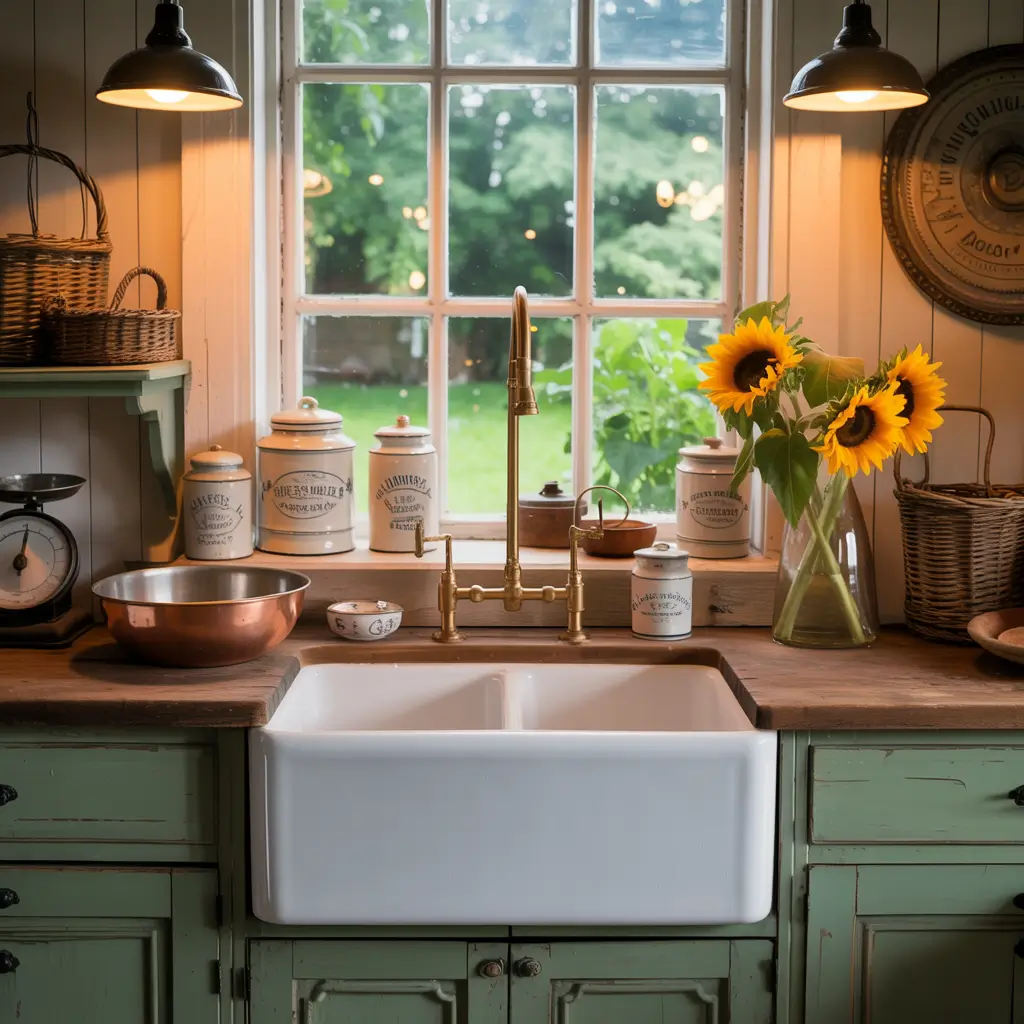
Can we just acknowledge that farmhouse sinks are probably the most iconic element of this entire aesthetic? These deep, apron-front beauties are both gorgeous and incredibly functional—a rare combination in kitchen design.
I saved for two years to install my farmhouse sink, and it was worth every penny. The extra depth means I can wash oversized pots without water splashing everywhere, and the exposed front adds instant character to my kitchen. Every single person who visits comments on it.
Farmhouse sink options to consider:
- Traditional white fireclay: Classic, timeless, and surprisingly durable
- Stainless steel: More affordable and easier to maintain; works with modern-farmhouse vibes
- Copper: Develops a gorgeous patina over time; stunning but requires specific care
- Cast iron with enamel coating: Vintage feel with modern durability
- Single vs. double bowl: I’m team single bowl for maximum functionality
Here’s what surprised me: Installation is the tricky part. Farmhouse sinks are heavy and require modified cabinets for the exposed front. You’ll likely need professional installation unless you’re genuinely handy (I’m not, so I outsourced). Factor this into your budget from the start.
Also, go bigger than you think you need. I initially wanted a 30-inch sink but went with 36 inches, and I use every bit of that space. There’s no such thing as too much sink real estate when you’re cooking for a crowd or washing massive roasting pans.
Rustic Farmhouse Flooring Ideas
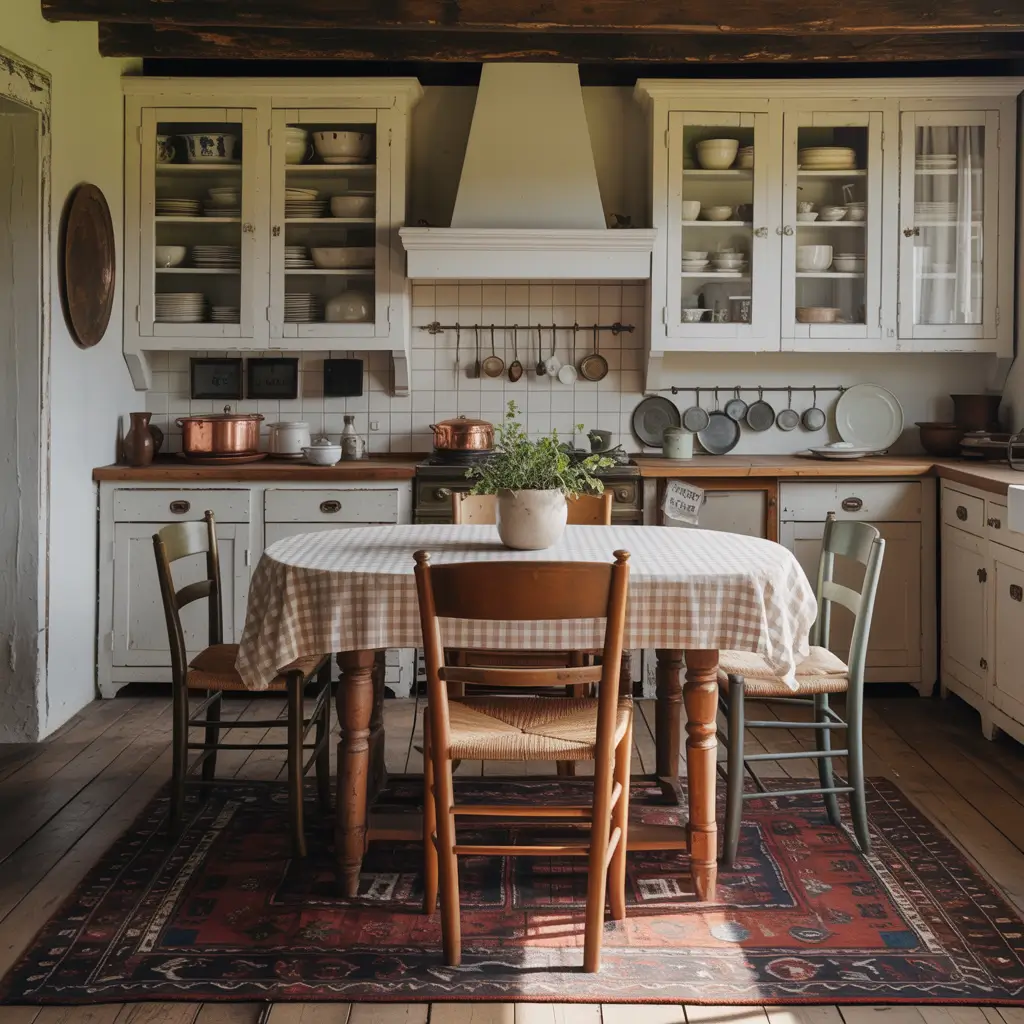
Let’s talk about what’s literally holding up your entire kitchen: rustic farmhouse flooring. This is another area where you’ll invest real money, so choosing wisely matters. The right flooring grounds your entire design and ties all those vintage elements together.
I went with wide-plank oak flooring in a weathered finish, and it’s the foundation (literally) that makes everything else work. The wide planks feel authentic to older homes, and the distressed finish means I don’t stress about every scratch or ding—they just add character.
Flooring options that nail the farmhouse aesthetic:
- Wide-plank hardwood: Oak, hickory, or reclaimed wood in wider planks (5-7 inches)
- Luxury vinyl plank (LVP): Affordable and waterproof; modern versions look surprisingly realistic
- Terracotta or clay tiles: Old-world charm with excellent durability
- Painted wood floors: Budget option that adds instant farmhouse character
- Concrete: Polished or stained concrete works for industrial-farmhouse hybrids
The finish matters as much as the material. Skip high-gloss finishes; they look too modern and show every speck of dust. Go for matte or satin finishes in medium to dark tones. Hand-scraped or wire-brushed textures add depth and hide wear better than smooth finishes.
I’ll be honest: I almost went with LVP for budget reasons, and I’m glad I stretched for real hardwood. That said, modern LVP has come a long way. If you’re budget-conscious or have a kitchen prone to water exposure, it’s a solid choice. Just choose realistic wood-look patterns rather than those weird gray tones that scream “2020 flip house.”
Retro Appliances in Vintage Kitchens
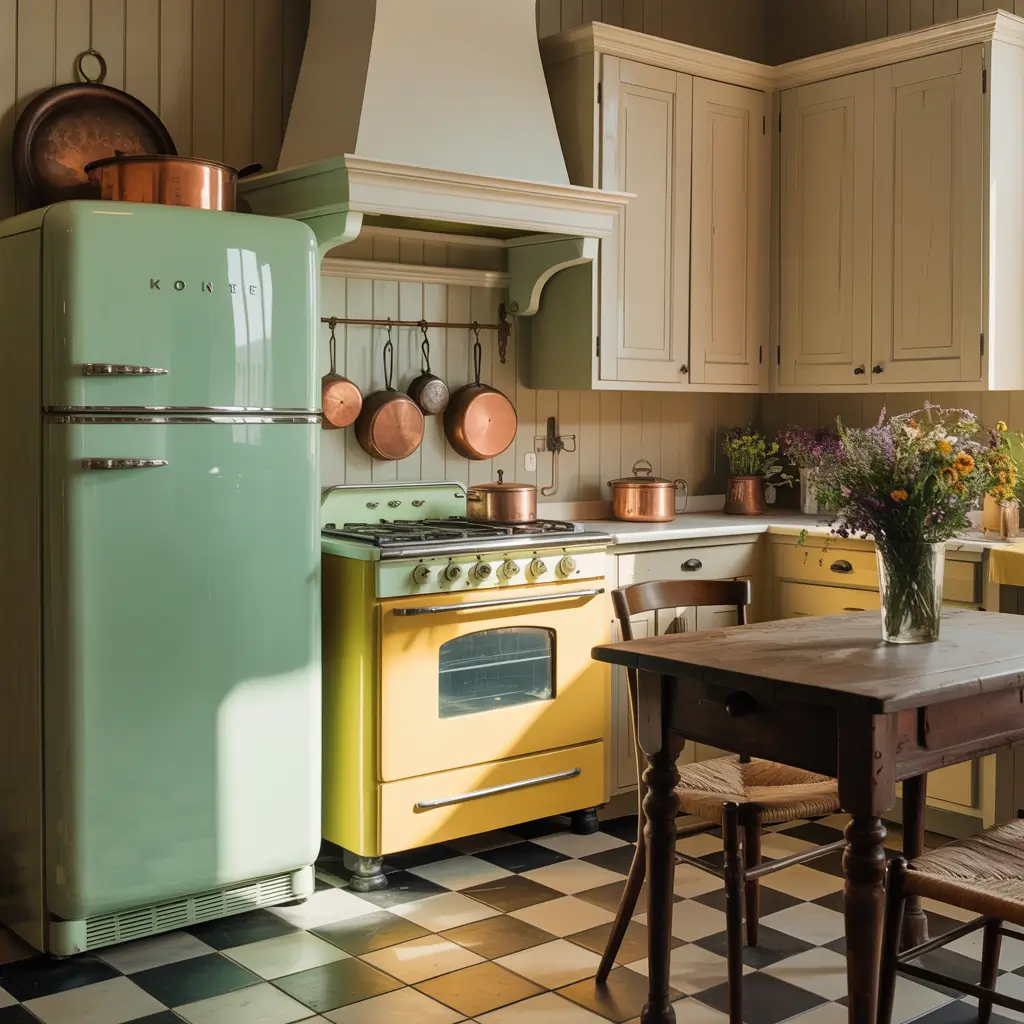
Here’s where things get fun (and potentially expensive). Retro appliances can either make or break your vintage farmhouse kitchen. Modern stainless steel appliances? They’ll stick out like a sore thumb. But authentic vintage appliances or quality reproduction pieces? Chef’s kiss.
I splurged on a vintage-style range in a creamy white with brass hardware, and it’s the star of my kitchen. Yes, it cost more than a basic stainless steel range, but it’s also a functional piece of art that makes me happy every time I cook.
Options for achieving the look:
- Reproduction vintage ranges: Brands like Big Chill or Smeg offer modern functionality with retro styling
- Panel-ready appliances: Hide modern appliances behind cabinet panels for a seamless look
- Authentic vintage pieces: Restored vintage refrigerators or ranges (verify they meet modern safety standards)
- Painted appliances: DIY option—paint standard appliances in vintage-appropriate colors
- Open shelving instead of upper cabinets: Minimize appliance visibility by storing items openly
Real talk: Most people can’t afford all vintage-style appliances, and that’s totally fine. Choose one statement piece (usually the range) and work around it. Modern dishwashers and refrigerators can be hidden with panels or placed strategically where they’re less visible.
I kept my stainless steel dishwasher but added a custom panel to match my cabinets. Problem solved, and nobody’s the wiser. Prioritize the pieces that matter most to your space and budget, then get creative with the rest.
Farmhouse Color Palettes and Paint Ideas
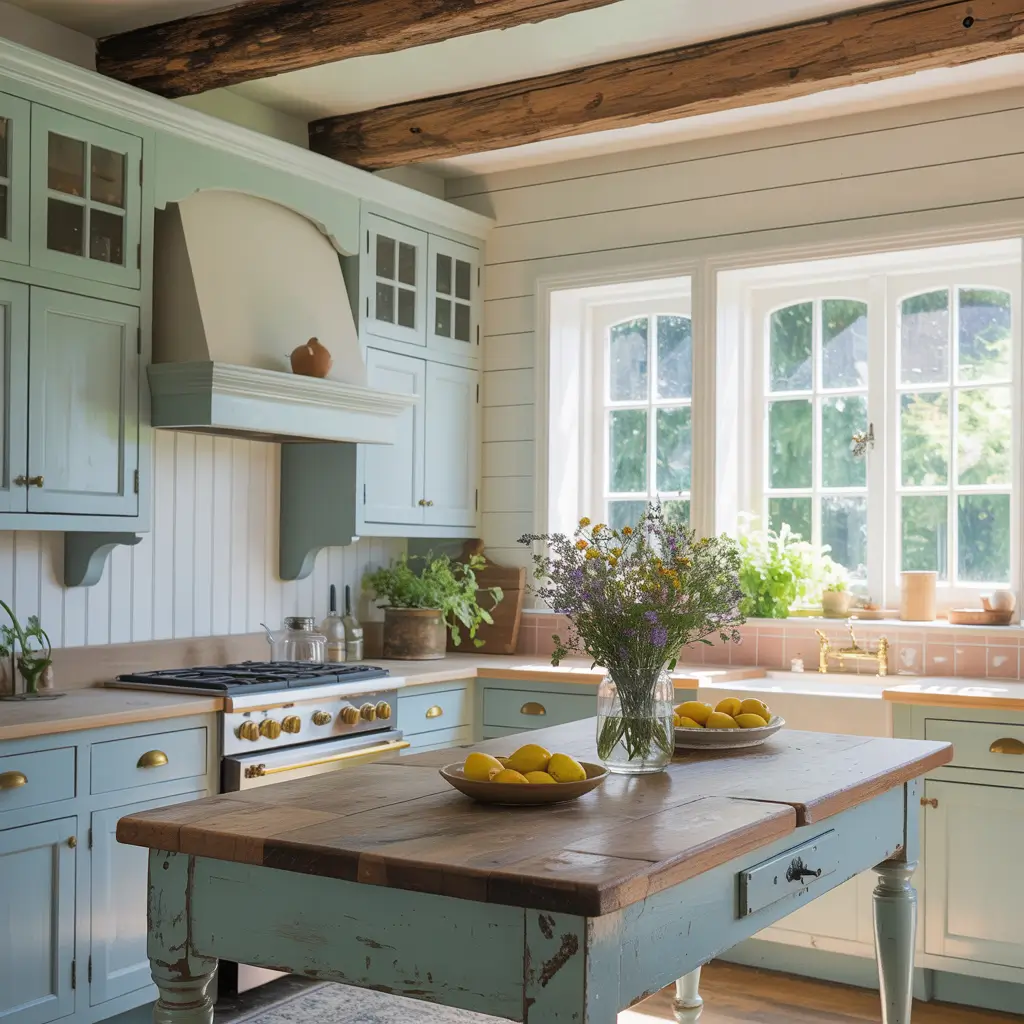
Color can make or break your entire kitchen vibe, so let’s talk farmhouse color palettes that actually work. The good news? The farmhouse aesthetic is pretty forgiving and offers more flexibility than you might think.
The classic combination is whites and creams with natural wood tones, but I’ve seen stunning farmhouse kitchens in sage green, dusty blue, and even charcoal gray. The key is choosing colors that feel organic rather than synthetic or overly vibrant.
My go-to farmhouse color palette:
- Whites and creams: Swiss Coffee, Alabaster, or Cream for main surfaces
- Warm grays: Agreeable Gray or Repose Gray for subtle contrast
- Soft blues: Palladian Blue or Quiet Moments for cabinets or accents
- Sage and olive greens: Dried Thyme or Clary Sage for earthy warmth
- Natural wood tones: Honey oak to weathered gray for texture and depth
Here’s the secret most people miss: Farmhouse kitchens work best with a layered neutral palette rather than stark contrast. Instead of bright white with jet black, try cream with warm gray and natural wood. The overall effect should feel soft and cohesive rather than high-contrast and dramatic.
I painted my walls in a warm white, my island in a dusty blue-gray, and kept my perimeter cabinets natural wood. The varied tones create interest without feeling chaotic or overly coordinated. Matchy-matchy is the enemy of authentic farmhouse style—you want things to feel collected over time, not purchased as a set.
Vintage Kitchen Rugs and Textiles

Don’t sleep on the power of vintage kitchen rugs and textiles. These often-overlooked elements add softness, warmth, and another layer of vintage character to your space. Plus, they’re relatively inexpensive and easy to swap out when you want a seasonal refresh.
I keep a vintage-style runner in front of my sink and stove (standing on hard floors while cooking is brutal), and I rotate out dishtowels and potholders seasonally. These small touches make a surprising impact on the overall feel of my kitchen.
Textile ideas that enhance farmhouse style:
- Vintage-style runners: Look for faded oriental patterns, striped designs, or traditional kilim rugs
- Grain sack fabrics: Use authentic or reproduction grain sacks as towels or pillow covers
- Linen and cotton: Natural fiber towels, curtains, and tablecloths trump synthetic materials
- Buffalo check and ticking stripes: Classic farmhouse patterns that never go out of style
- Crocheted or knitted pieces: Vintage potholders, dishcloths, or small accent rugs
Pro tip: Don’t match everything perfectly. Mix patterns and textures in a cohesive color palette. I have buffalo check towels, striped potholders, and a faded floral runner—all in creams, blacks, and muted blues. They work together because the colors coordinate, even though the patterns don’t match.
Also, natural fibers are non-negotiable for authentic farmhouse style. Those synthetic microfiber towels might be practical, but they don’t have the visual weight or texture of linen or cotton. Invest in quality natural fiber textiles; they’ll last longer and look infinitely better.
Charming Farmhouse Window Treatments
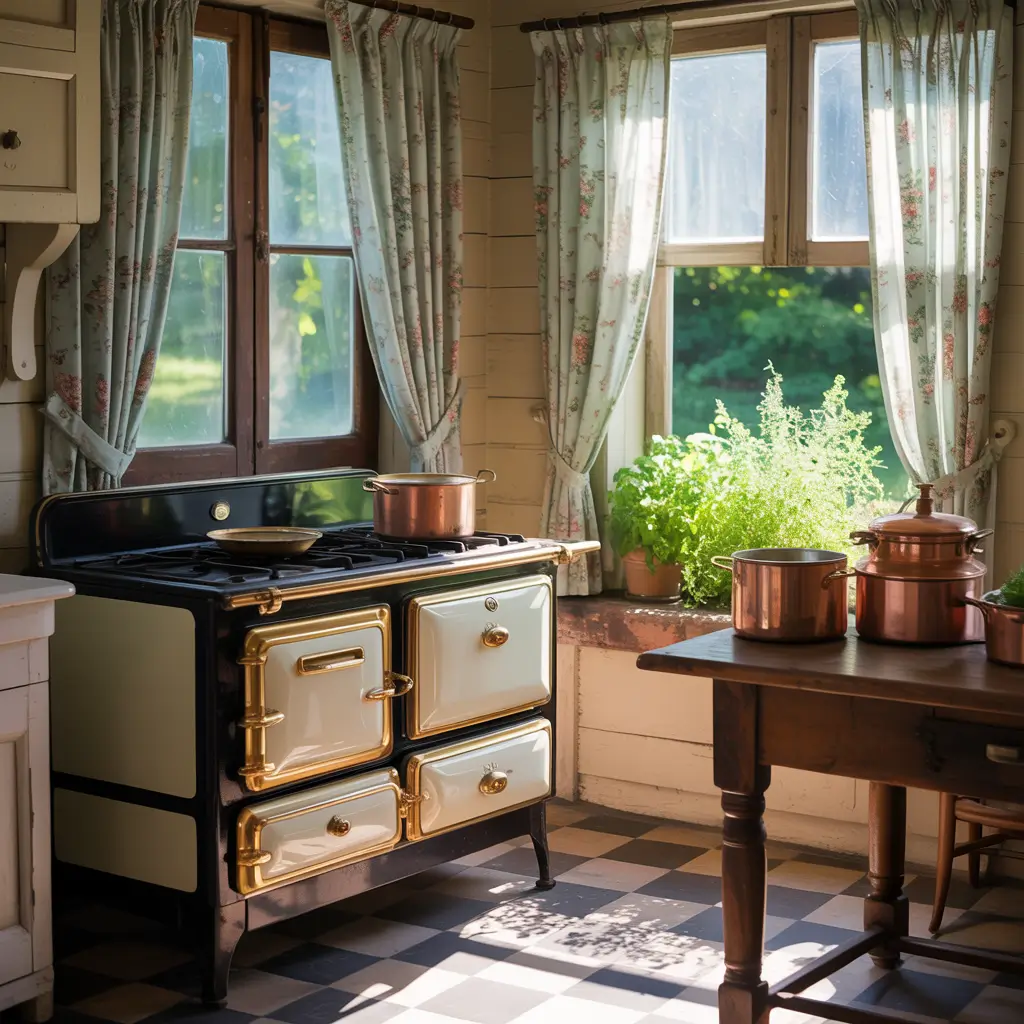
Last but definitely not least: farmhouse window treatments. This is where you soften hard surfaces, add privacy, and introduce another textile layer that reinforces your vintage aesthetic. I see so many gorgeous farmhouse kitchens with amazing details but bare windows or modern blinds, and it kills me a little inside.
I use simple linen cafe curtains on my kitchen windows—just the bottom half for privacy while letting in maximum light. They’re unfussy, classic, and exactly what you’d find in an authentic farmhouse kitchen.
Window treatment options that work:
- Cafe curtains: Cover just the bottom half of windows for privacy with light
- Simple linen panels: Floor-length or sill-length in natural colors
- Roman shades: Choose natural fabrics like linen or cotton in neutral tones
- Vintage shutters: Interior shutters painted in soft colors add architectural interest
- Wooden blinds: Simple slat blinds in natural wood or painted white
The golden rule: Keep it simple. Heavy drapery, elaborate valances, or overly formal treatments feel wrong in farmhouse kitchens. You want the window treatments to feel functional and understated rather than decorative focal points.
I almost made the mistake of hanging too-formal curtains before realizing they completely clashed with my laid-back farmhouse vibe. Sometimes the simplest solution—basic linen panels on simple rods—is the best answer. Save the fancy window treatments for your living room and keep your kitchen casual and approachable.
Bringing It All Together
So there you have it—15 ideas to create the vintage farmhouse kitchen you’ve been dreaming about. The real magic happens when you combine several of these elements in a way that feels authentic to you and your space.
You don’t need to implement every single idea (please don’t—that would be overwhelming). Instead, choose the elements that resonate with you, fit your budget, and work with your existing kitchen layout. Maybe you start with a cabinet makeover and some vintage lighting, then gradually layer in more elements over time.
The beauty of vintage farmhouse style is that it’s meant to look collected and evolving—not bought all at once from a catalog. Take your time, hunt for genuine vintage pieces when possible, and don’t stress about perfection. Those “imperfections” you’re worried about? They’re actually what gives your kitchen character and soul.
I’ve been working on my farmhouse kitchen for three years, and honestly, I don’t think I’ll ever be completely “done.” I’m always finding new vintage treasures, swapping out textiles seasonally, and tweaking little details. That’s part of the joy—creating a space that grows and changes with you while maintaining that timeless, welcoming farmhouse aesthetic.